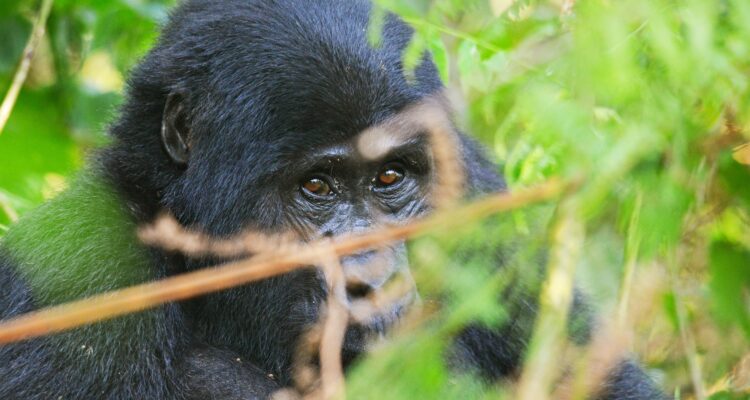
Yes, you can travel with kids on a 12-day Uganda wildlife safari, as it is a fantastic family-friendly destination with tailored activities, specialized lodges, and interconnected rooms. While children under 15 cannot trek gorillas, they can enjoy game drives, boat cruises on the Nile/Kazinga Channel, boat safaris, ziwa rhino tracking, and cultural visits.
12-days-luxury-safari-in-uganda-parks
12-days-perfect-rwanda-uganda-gorilla-trekking-safari-holiday-vacation
12-days-uganda-wildlife-primate-experience-and-lake-mutanda-vacation
12-days-all-inclusive-uganda-wildlife-and-primate-safari
12-days-uganda-birding-tour-looking-for-rift-valley-endemic-birds-west-circuit
12-days-best-uganda-rwanda-primate-safaris-and-akagera-big-five-safaris
12-days-best-uganda-safari-big-five-and-uganda-primate-safari
12-days-uganda-safari-and-tours-combined-with-zanzibar-beach-vacation
Gorilla & Chimp Trekking Age
The most critical factor to consider when planning is the strict age limit: you must be 15 years or older to trek mountain gorillas and chimpanzees. This regulation, enforced by the Uganda Wildlife Authority (UWA), is not arbitrary; it is rooted in conservation and safety. Children are more susceptible to common respiratory illnesses like colds and flu, which can be fatal to primates that share over 98% of our DNA. Additionally, the physical demand of trekking—which often involves hours of hiking through thick, steep, and muddy rainforest at high altitudes—is frequently beyond the stamina of younger children.
However, a family trip to Bwindi or Kibale is still highly rewarding for those with younger kids. While the older members head into the forest, many lodges provide "Junior Ranger" programs or guided nature walks around the park's buffer zones. These activities focus on "the small five" (insects, lizards, and birds) and medicinal plants, ensuring the children have their own supervised adventure. For families with children on the cusp of 15, it is vital to bring a passport as proof of age, as the rangers are very strict during the morning briefing sessions.
Child-Friendly Activities
Beyond the primate treks, Uganda offers a wealth of activities that are high-impact and low-stress for kids. The Uganda Wildlife Education Centre (UWEC) in Entebbe is an essential first stop; it acts as a "behind-the-scenes" sanctuary where children can see lions, rhinos, and shoebills up close before heading into the wild. In Murchison Falls National Park, the boat safari to the base of the falls is a perennial family favorite. Unlike a bumpy 4x4 game drive, the boat offers a stable platform where kids can move around, grab a snack, and watch hundreds of hippos and crocodiles from a safe, comfortable distance.
For families seeking active participation, Lake Mburo National Park is a standout destination. Because it lacks elephants and lions, it is one of the few places where you can take children horseback riding or on a guided nature walk through herds of zebras and impalas. This "out-of-car" experience is often more memorable for children than a traditional game drive. Additionally, community visits—such as traditional drumming lessons or visiting a local primary school—offer profound cultural exchanges that turn the safari into a giant, interactive classroom.
Accommodation
The "safari lodge" of 2026 is far more versatile than the rustic camps of the past. For a 12-day family journey, the choice of stay is paramount. Most mid-range and luxury lodges now prioritize family suites or interconnecting rooms, ensuring that parents have their own space while children remain within earshot. These units often come with extra lounging areas and multiple bathrooms, reducing the "morning rush" before a 6:00 AM game drive.
Perhaps the most important amenity for a family lodge is the swimming pool. In the heat of the savannah after a morning drive, the pool acts as a universal "reset button" for kids, allowing them to burn off energy while parents relax nearby. Furthermore, many lodges now offer child-friendly menus featuring familiar options like pasta, grilled chicken, and fresh fruit platters, catering to pickier eaters who might not be ready for local staples like matooke. Safe, fenced grounds allow children to explore the immediate vicinity of the lodge, spotting colorful lizards and weavers under the watchful eye of lodge staff who are culturally very welcoming to families.
Pace
The greatest luxury of a 12-day itinerary is the gift of time. In a shorter 5-day rush, families often find themselves exhausted by "transit fatigue"—the result of 6-hour drives followed immediately by 4-hour game drives. A 12-day safari allows for a relaxed, immersive pace that is vital for maintaining a positive family dynamic. This "slow travel" approach means spending 2 or 3 nights in a single location rather than moving every morning.
Rest days are strategically placed between high-energy days. For example, after the long drive to the west, you might spend a day simply enjoying the crater lakes near Fort Portal before tackling chimpanzee tracking. After the physical exertion of Bwindi, the itinerary naturally flows into Lake Bunyonyi, where the only "task" is canoeing on the calm water or birdwatching from a balcony. This pace ensures that the children (and the parents) don't become overwhelmed by the sensory input of the safari, allowing the memories of each lion sighting or cultural encounter to actually sink in. A well-paced 12-day trip ensures you return home feeling rejuvenated by the wild, rather than drained by the logistics.
12 Days Uganda wildlife safari holiday
12 Days Uganda wildlife safari holiday is the ultimate immersion into the "Pearl of Africa," offering a comprehensive loop that touches every major ecosystem in the country. This meticulously planned 2026 itinerary balances high-octane adventure with moments of serene reflection. From the thunderous power of Murchison Falls in the north to the ancient, mist-shrouded rainforests of Bwindi in the southwest, you will traverse a landscape of incredible contrast. This journey is designed to secure the "Primate Double"—mountain gorillas and chimpanzees—while providing ample opportunity to spot the Big Five across rolling savannahs. You will glide along the Kazinga Channel, track rhinos on foot at Ziwa, and search for the legendary tree-climbing lions of Ishasha. With expert guides and hand-picked lodges, this safari ensures you experience the raw beauty of the African wild without sacrificing comfort. It is more than just a vacation; it is a life-altering odyssey through one of the most biodiverse regions on Earth.
Day 1: Arrival and Lakeside Serenity
Your 12 Days Uganda wildlife safari holiday begins at Entebbe International Airport, a scenic gateway situated on the shores of Lake Victoria. Upon arrival, you will be met by your professional guide and transferred to your hotel. This day is dedicated to recovering from your flight and acclimatizing to the tropical climate. Depending on your arrival time, you can explore the Entebbe Botanical Gardens, where you might spot Great Blue Turacos and black-and-white colobus monkeys, or take a sunset boat cruise on Africa’s largest lake. The evening includes a welcome dinner and a briefing on the exhilarating journey ahead. Entebbe’s tranquil atmosphere allows you to settle into the rhythm of East Africa before the rugged adventure begins the following morning.
Day 2: Ziwa Rhino Tracking and Murchison Falls
Heading north from Entebbe, the landscape shifts from lush lakeside greenery to semi-arid savannah. The first major highlight of your 12 Days Uganda wildlife safari holiday is the Ziwa Rhino Sanctuary. Accompanied by expert rangers, you will track southern white rhinos on foot, providing a visceral "Big Five" encounter. After a local lunch, you continue to Murchison Falls National Park, entering through the southern gate. You will head straight to the "Top of the Falls," where the world’s longest river, the Nile, is forced through a narrow 7-meter gorge. The sheer power of the water creates a permanent mist and thunderous roar that serves as a dramatic introduction to Uganda’s oldest and largest national park.
Day 3: Savannah Game Drives and the Victoria Nile
The morning begins with a sunrise game drive across the northern banks of the Nile. This is the prime time to spot predators like lions and leopards alongside massive herds of Rothschild’s giraffes, elephants, and Cape buffaloes. The open plains are a photographer's dream. In the afternoon, you will board a boat for a three-hour safari upstream to the base of the falls. The riverbanks are teeming with life; you’ll pass pods of hippos, massive Nile crocodiles, and thirsty wildlife coming to the water’s edge. The boat brings you close to the "Devil’s Cauldron," where the river explodes into foam. This combination of land and water exploration ensures you see the full spectrum of Murchison’s biodiversity.
Day 4: Scenic Transit to the Primate Capital
Today is a scenic transition day as you travel from the northern savannahs toward the lush forests of the west. The drive to Kibale National Park winds through vibrant trading centers, local villages, and expansive tea plantations that carpet the rolling hills in brilliant green. Along the way, the fabled "Mountains of the Moon"—the Rwenzori Range—begin to dominate the horizon. You will stop in the town of Fort Portal for lunch before reaching the edge of the rainforest. This day highlights the geographical diversity of Uganda, moving from the heat of the plains to the cool, moist air of the primate capital. You’ll arrive at your forest lodge in the late afternoon, greeted by the sounds of the jungle.
Day 5: Chimpanzee Tracking and Bigodi Wetland
Kibale Forest is home to 13 primate species, but today the focus is on our closest relatives: the chimpanzees. Following a ranger briefing, you enter the high-canopy forest. The vocal "pant-hoots" of the chimps usually lead the way, and you will spend an hour observing their complex social lives, from grooming to acrobatic swings through the trees. In the afternoon, the 12 Days Uganda wildlife safari holiday continues with a guided walk through the Bigodi Wetland Sanctuary. This community-run project is a birdwatcher's paradise and offers chances to see eight more primate species, including the Red Colobus. The walk provides a gentle contrast to the morning’s trek and directly supports local community development and conservation projects.
Day 6: Crater Lakes and the Kazinga Channel
After breakfast, you depart for Queen Elizabeth National Park, driving through the stunning "Explosion Crater" region—a series of deep, emerald-green lakes surrounded by volcanic rims. This is one of the most photogenic landscapes in Uganda. Upon entering the park, you will check into your lodge before embarking on an afternoon boat cruise on the Kazinga Channel. This natural waterway connecting Lake Edward and Lake George hosts one of the world's highest concentrations of hippos. From the safety of the boat, you will have eye-level views of elephants, buffaloes, and hundreds of bird species drinking at the water’s edge. The channel is a tranquil highlight, offering effortless wildlife sightings against the backdrop of the setting sun.
Day 7: Lion Tracking and Savannah Secrets
The day begins in the Kasenyi Plains, the park’s primary mating ground for Uganda kob and the best place to find lions. You may participate in a lion-tracking research session, using radio telemetry to locate prides for conservation monitoring—a rare chance to get closer to the predators than a standard game drive allows. The plains are also home to giant forest hogs, warthogs, and various raptors. After lunch, the afternoon can be spent exploring the salt-mining history at Lake Katwe or a traditional game drive to search for the elusive leopard. This day is designed to showcase the park’s diverse habitats, from open savannah to swampy wetlands and volcanic craters, providing a comprehensive look at East African wildlife.
Day 8: Ishasha’s Tree-Climbing Lions
Leaving the northern sector, you drive south to the remote Ishasha sector of Queen Elizabeth National Park. This area is world-renowned for its "tree-climbing lions," a behavior seen in very few places across Africa. These lions spend the heat of the day draped over the massive branches of ancient fig trees to escape insects and catch a breeze. Finding a 400-pound cat lounging ten meters above the ground is a highlight of any 12 Days Uganda wildlife safari holiday. The landscape here is distinct, characterized by open woodland and a sense of wild isolation. You will spend the day searching the trees and riverbanks, where you might also spot topis and herds of buffalo, before retiring to a lodge within the sector.
Day 9: Into the Bwindi Impenetrable Forest
The journey continues toward the southwestern corner of Uganda, ascending into the Kigezi Highlands. Often called the "Switzerland of Africa," this region is defined by steep, terraced hills and cool mountain air. The road winds higher until you reach the edge of Bwindi Impenetrable National Park, a UNESCO World Heritage site and home to half the world's mountain gorillas. The transition from savannah to ancient, mist-laden rainforest is profound. After checking into your lodge—perched on a ridge with views over the canopy—the rest of the day is for preparation. You may take a walk to a nearby village or simply relax, listening to the sounds of the forest and anticipating the life-changing encounter with the silverbacks scheduled for tomorrow.
Day 10: Gorilla Trekking – The Ultimate Encounter
This is the pinnacle of your 12 Days Uganda wildlife safari holiday. After an early briefing on trekking etiquette, you are assigned to a gorilla family and set off into the forest. The trek can be physically demanding, lasting between two and six hours as you navigate steep slopes and thick vegetation. However, the moment you find the gorillas, all fatigue vanishes. You are allowed exactly one hour to sit quietly in their presence. Watching a silverback protect his family while infants tumble through the vines is a deeply emotional, almost spiritual experience. There are no fences—just you and the giants of the forest. You return to the trailhead to receive your "Gorilla Graduation" certificate, carrying memories of an encounter that very few people on Earth will ever experience.
Day 11: Relaxation at Lake Bunyonyi
Following the intensity of the gorilla trek, the itinerary takes a slower pace at Lake Bunyonyi. Known as the "Lake of a Thousand Islands," Bunyonyi is one of the deepest and most beautiful lakes in Africa. Its calm, bilharzia-free waters are safe for swimming and surrounded by hills terraced to the very top. You will spend the day decompressing—perhaps exploring the lake by traditional dugout canoe, visiting "Punishment Island," or birdwatching from the shore. The lake’s name translates to "Place of Little Birds," and the tranquility here is the perfect antidote to the rugged adventures of the previous week. It is a time for reflection, allowing you to process the emotional impact of the primate encounters before the final leg of the trip.
Day 12: The Equator and Farewell
On your final day, you begin the drive back toward Entebbe. The journey offers one last iconic stop: the Equator crossing in Kayabwe. Here, you can stand with one foot in each hemisphere, participate in the "Coriolis effect" water demonstration, and pick up some last-minute handcrafted souvenirs. After a farewell lunch, you continue to Entebbe. Depending on your flight schedule, you may have time for a final cup of Ugandan coffee overlooking Lake Victoria. As you are transferred to the airport, the 12 Days Uganda wildlife safari holiday is complete. You leave not just with a full camera roll, but with a deep appreciation for the complex beauty of the Ugandan landscape, the resilience of its wildlife, and the undeniable warmth of its people.
What is the minimum age for gorilla trekking on a 12-day Uganda wildlife safari holiday?
The minimum age for mountain gorilla trekking in Uganda is strictly set at 15 years. This regulation is primarily enforced by the Uganda Wildlife Authority (UWA) to protect both the endangered primates and the younger visitors. One of the primary reasons for this age limit is health-related; children are more susceptible to common childhood illnesses like colds, flu, and coughs. Because humans and gorillas share approximately 98% of their DNA, these minor human ailments can be fatal to a gorilla population that has no natural immunity. By restricting access to those aged 15 and older, authorities minimize the risk of disease transmission.
Furthermore, the physical nature of the trek can be incredibly demanding. Bwindi Impenetrable National Park and Mgahinga Gorilla National Park feature dense vegetation, steep slopes, and slippery terrain. A single trek can last anywhere from two to eight hours depending on the movement of the gorilla families. The psychological maturity required to remain calm and follow strict ranger instructions when standing just meters away from a massive silverback is also a factor. Children under 15 may find the endurance required or the sudden proximity to large wild animals overwhelming.
However, there is a degree of flexibility for children approaching their 15th birthday. If a child is 14 but will turn 15 during the year of the trek, or if they are physically fit and accompanied by parents, an appeal can sometimes be made to the UWA for a special permit. This usually requires the parent to sign a waiver and provide proof of the child's physical capability. For families traveling with younger children, many lodges offer supervised "Kid’s Clubs" or nature walks on the outskirts of the forest, allowing parents to trek while children engage in age-appropriate educational activities.
Can my children do chimpanzee tracking during the Uganda wildlife safari holiday?
Chimpanzee tracking offers a slightly more flexible age limit than gorilla trekking, with the standard minimum age usually set at 12 years. This activity, most popular in Kibale Forest National Park, Budongo Forest, and Kyambura Gorge, allows families to experience the thrill of seeing our closest living relatives in their natural habitat. The 12-year age limit is in place because chimpanzees are highly active, vocal, and sometimes unpredictable. Tracking them often involves moving quickly through the forest as they swing through the canopy or move across the ground, which requires a certain level of physical coordination and stamina.
For children under the age of 12, standard tracking permits are typically not issued; however, Uganda is increasingly catering to younger families. In Kibale Forest, for instance, there are specialized "Chimpanzee Primate Walks" designed for younger children who do not meet the age requirement for the main trek. These walks are led by rangers who focus on forest ecology, birds, and smaller primates like monkeys, providing an educational experience that mirrors the excitement of a trek without the intensity of following the chimpanzee troops deep into the bush.
When taking children aged 12 and above on a chimpanzee trek, it is important to brief them on behavior. Chimpanzees can be quite loud and boisterous, which can be startling. Following the guide’s instructions—such as maintaining a distance of 8 to 10 meters and keeping noise levels down—is essential for a successful sighting. If your children are younger than 12, visiting the Ngamba Island Chimpanzee Sanctuary on Lake Victoria is a fantastic alternative. Here, children of all ages can observe rescued chimpanzees from a safe viewing platform and learn about conservation efforts without the physical demands of a forest trek.
Are game drives safe for young children on a Uganda wildlife safari holiday?
Game drives are a cornerstone of the Uganda safari experience and are generally very safe for young children, provided they are conducted in a private, closed-top vehicle. Using a private vehicle is the most recommended approach for families because it grants total control over the schedule. If a toddler becomes restless or a baby needs a diaper change, the guide can pivot the itinerary without affecting other travelers. Closed vehicles with pop-up roofs offer an extra layer of security, keeping children safely inside the cabin while still providing excellent 360-degree views of lions, elephants, and buffalo.
The primary safety concern during game drives is not the animals themselves—as most wildlife in parks like Queen Elizabeth or Murchison Falls is habituated to the presence of vehicles—but rather the heat and the duration of the drive. Young children can quickly become dehydrated or bored during long stretches of searching for elusive leopards. Professional guides who specialize in family safaris are adept at keeping children engaged by using "safari bingo" cards, teaching them how to use binoculars, or identifying "smaller" interesting things like dung beetles, colorful birds, and unique plants.
To ensure maximum safety, parents must ensure that children remain seated while the vehicle is in motion and never lean out of the windows. It is also important to manage noise levels; high-pitched screams can startle animals or cause them to retreat. Most family-friendly safaris schedule game drives in the early morning or late afternoon when temperatures are cooler, ensuring the kids remain comfortable. By choosing a reputable tour operator that provides child seats and experienced driver-guides, a game drive becomes an educational and thrilling adventure that is perfectly safe for the entire family.
What other activities suit kids on a Uganda wildlife safari holiday?
Beyond the headline primate trekking and game drives, Uganda offers a wealth of activities tailored specifically for children. Boat cruises are perhaps the most popular family activity. A boat trip along the Kazinga Channel in Queen Elizabeth National Park or to the base of Murchison Falls allows children to see hippos, crocodiles, and elephants at the water's edge from a stable, shaded platform. These cruises are less restrictive than sitting in a car, allowing kids to move around a bit while enjoying the breeze and the spectacle of wildlife coming down to drink.
The Ziwa Rhino Sanctuary is another exceptional stop for families. Because the rhinos are tracked on foot in a controlled environment with expert rangers, it offers a tangible thrill for children. The terrain is flat, making it an easy walk even for younger legs. Additionally, many parks offer "nature walks" specifically for children. These are not about hunting for big predators but about discovering the "Little Five," learning how to track animal footprints in the mud, and identifying medicinal plants. This hands-on approach to nature is often the highlight of a trip for school-aged children.
Cultural and community visits provide a meaningful change of pace. Visiting a local primary school, participating in a traditional dance workshop, or learning how to make crafts from banana fibers can be incredibly eye-opening for children. It allows them to interact with Ugandan peers and gain a global perspective. For a more relaxed afternoon, many lodges near Lake Bunyonyi or the Nile in Jinja offer canoeing in safe areas or swimming in pools with stunning views. These activities ensure that the 12-day itinerary remains varied, balancing wildlife viewing with education, movement, and play.
Is malaria a concern for kids during a Uganda wildlife safari holiday?
Malaria is a reality in East Africa, and Uganda is classified as a high-risk zone. While this should not deter families from visiting, it does require diligent preparation. Children are more vulnerable to the complications of malaria, so the first step for any parent is to consult a travel clinic or pediatrician at least four to six weeks before departure. They will prescribe age-appropriate prophylactic medication, such as Malarone (atovaquone/proguanil), which is commonly used for children. It is vital to complete the full course of medication, including the doses required after returning home.
Prevention on the ground is equally important. Mosquitoes that carry malaria are most active between dusk and dawn. During these times, children should wear long-sleeved shirts, long trousers, and socks to minimize exposed skin. Applying a child-safe insect repellent containing an appropriate concentration of DEET or picaridin is essential. Most safari lodges and camps provide mosquito nets over the beds; parents should ensure these are tucked in tightly every night. Many high-end lodges also "smudge" the rooms (spray with insecticide) during the evening turndown service to ensure the sleeping area is clear.
It is also worth noting that malaria risk varies by altitude. High-altitude areas like the edges of Bwindi Impenetrable Forest or the slopes of the Rwenzori Mountains have lower mosquito populations due to the cooler temperatures. However, since a 12-day safari typically includes lower-altitude parks like Murchison Falls or Queen Elizabeth National Park, constant vigilance is necessary. If a child develops a fever, chills, or flu-like symptoms during or after the trip, medical attention should be sought immediately, informing the doctor of the recent travel to a malaria-endemic region. With the right precautions, the risk is highly manageable.
Are there family-friendly lodges for a Uganda wildlife safari holiday?
Uganda’s hospitality industry has evolved significantly, and there is now a fantastic selection of family-friendly lodges across all the major national parks. These accommodations understand that traveling with children requires extra space and flexibility. Many lodges offer dedicated family suites or interconnecting rooms, allowing parents to have their own space while remaining close to their children. This is particularly important in unfenced safari camps where walking between separate tents at night is not permitted without an escort.
In addition to room configurations, family-friendly lodges often provide tailored dining options. Safari chefs are usually happy to prepare kid-friendly meals like pasta, grilled chicken, or fresh fruit platters, even if they aren't on the main menu. Some lodges also offer earlier dinner times for younger children who might not be able to wait for the standard 8:00 PM safari dinner. Beyond the basics, the best family lodges feature amenities like swimming pools—a lifesaver for burning off energy between game drives—and expansive gardens where children can play safely under supervision.
Some premium lodges go a step further by offering "Junior Ranger" programs. These programs engage children in conservation-themed activities, such as bird identification, storytelling by the campfire, or basic bushcraft lessons. Staff at these lodges are often incredibly welcoming to children, frequently going out of their way to make them feel special. When booking, it is helpful to look for lodges that specifically mention "families" or "children of all ages," as some boutique camps maintain an "adults-only" or "12+ only" policy to preserve a quiet atmosphere.
Is 12 days too long to travel with children on a Uganda wildlife safari holiday?
A 12-day duration is actually often considered the "sweet spot" for a family safari in Uganda. While it might seem like a long time to be on the move, a longer itinerary allows for a much more relaxed and child-friendly pace. Shorter trips often require long, grueling drives every single day to hit the major highlights, which can lead to "safari fatigue" and cranky children. With 12 days, you can build in "double nights" (staying two or three nights at a single lodge), which reduces the stress of constant packing and unpacking and gives children time to settle into their environment.
A 12-day trip allows for a balanced mix of travel days and "buffer" days. For example, after a long drive to Murchison Falls, you can spend two full days there—one for a game drive and one for a boat cruise—allowing for midday naps or pool time. This prevents the feeling of being rushed. It also provides the opportunity to include shorter transit legs or even a domestic flight between parks to bypass some of the longer road journeys. The diversity of a 12-day route—moving from the savanna to the rainforest and then to the craters or lakes—keeps the scenery fresh and exciting for young minds.
Furthermore, a longer stay allows for a deeper connection with the culture and wildlife. Instead of just "checking off" the Big Five, children have the time to learn about the ecosystems and the people who live alongside the parks. They can spend an afternoon at a community center or take a slow walk through a botanical garden. By spreading the activities out, the holiday feels like a genuine adventure rather than an exhausting marathon. As long as the itinerary is planned with variety and rest stops in mind, 12 days is perfect for creating lasting family memories without burnout.
Can I find babysitting services during my Uganda wildlife safari holiday?
Yes, babysitting and child-minding services are quite common in Uganda’s established safari lodges, particularly in the more popular parks like Queen Elizabeth, Murchison Falls, and Lake Mburo. While most lodges do not have a formal "nanny desk" like a large resort, they are usually able to arrange for a trusted member of the staff—often from the housekeeping or kitchen team—to watch over children while parents are out on a trek or a late-evening game drive. Ugandans are famously warm and family-oriented, and staff members often take great joy in looking after young guests.
It is important to communicate your needs in advance. When booking your safari, inform your tour operator or the lodge directly that you will require child-minding services. This allows the lodge to identify the most suitable staff member and ensure they are available. While these services are generally safe, it is always a good idea to spend a bit of time introducing your child to the sitter before you depart. Most sitters will engage the children with games, drawing, or short walks within the secure perimeter of the lodge grounds.
The cost for babysitting is usually very reasonable and is often paid as a tip or a small fee directly to the staff member. This service is a game-changer for parents who wish to participate in the 15+ gorilla trekking or 12+ chimpanzee tracking. It allows parents to experience the more "extreme" parts of the safari with peace of mind, knowing their children are being entertained and cared for in a safe environment. Always check if the lodge has a fenced area or specific safety protocols for children, especially in camps where wildlife might occasionally wander through the grounds.
Should I rent a car or hire a guide for a family Uganda wildlife safari holiday?
For a family holiday in Uganda, hiring a professional driver-guide is almost always superior to renting a car for a self-drive adventure. Safety is the primary reason. Navigating Uganda’s roads can be challenging; while major highways are paved, the roads leading into and inside the national parks are often rugged, dusty, or muddy depending on the season. A professional guide is experienced in handling 4x4 vehicles in difficult terrain and knows the mechanical intricacies of the car, which is vital when you are traveling with children in remote areas.
Beyond logistics, a guide acts as an "on-the-go" educator. A good guide knows the best spots to find lions, understands animal behavior to keep the vehicle at a safe distance, and can answer the endless "why" questions that children inevitably ask. They can spot a well-camouflaged chameleon or a distant eagle that an untrained eye would completely miss. For parents, this means you can focus entirely on your children and the scenery rather than stressing over a GPS or a flat tire. The guide also handles park entry fees, forest permits, and check-ins, making the daily flow of the trip much smoother.
Hiring a guide also provides an extra layer of security and cultural bridge-building. Your guide speaks the local languages and understands the customs, which is invaluable when visiting local markets or villages. They know which stops have the cleanest restrooms and the best food for kids. While self-driving offers a sense of autonomy, the "hidden" stress of navigating an unfamiliar country often outweighs the benefits when you have a family in tow. A private guide transforms the trip from a stressful road trip into a curated, educational, and safe family expedition.
What is the best way to travel between destinations on a 12-day Uganda wildlife safari holiday?
The most practical and popular way to travel between destinations on a 12-day Uganda safari is by a private 4x4 safari vehicle. These vehicles, typically converted Land Cruisers or Safari Vans, are specifically designed for the terrain. For a family, the "private" aspect is key; it means you aren't tied to a group schedule. If the kids need to stop for a snack, a bathroom break, or just to stretch their legs and look at a roadside fruit market, you have the freedom to do so. The elevated seating and pop-up roofs ensure that even the smallest family members have a great view during both transit and game drives.
For families who want to minimize time spent on the road, "fly-in" safaris are an excellent, albeit more expensive, alternative. Uganda has a reliable network of domestic flight carriers, such as Aerolink, which connect Entebbe to small airstrips in Bwindi, Queen Elizabeth, and Murchison Falls. A flight that takes 1 hour can replace a 9-hour drive, which is a major advantage if you are traveling with toddlers or children who get motion sickness. Many families choose a "hybrid" approach: driving between some parks to see the beautiful countryside and taking a flight for the longest leg of the journey.
Regardless of the mode of transport, it is important to plan the route logically to avoid "backtracking." A 12-day itinerary usually follows a circuit—for example, heading north to Murchison Falls, then south through Kibale and Queen Elizabeth, and ending in Bwindi or Lake Mburo. This keeps the daily drive times manageable, usually between 3 to 6 hours. When driving, the journey itself becomes part of the safari, passing through vibrant villages, tea plantations, and rolling hills. With a private vehicle and a knowledgeable guide, the travel time becomes an opportunity for discovery rather than just a means to an end.
Are vaccinations required for children on a Uganda wildlife safari holiday?
When planning a family expedition to Uganda, health and safety are paramount, particularly regarding immunization requirements for children. The most critical mandatory requirement for entry into Uganda is the Yellow Fever vaccination. All travelers, including children aged nine months and older, must provide proof of vaccination via an International Certificate of Vaccination or Prophylaxis (ICVP). This is strictly enforced at all points of entry, including Entebbe International Airport. For infants under nine months, a medical exemption letter may be required, though it is essential to consult with a travel clinic well in advance.
Beyond the mandatory Yellow Fever shot, several other vaccinations are strongly recommended to ensure a safe journey through diverse environments. Routine childhood immunizations—such as Measles-Mumps-Rubella (MMR), Diphtheria-Tetanus-Pertussis, Polio, and Chickenpox—should be up to date. Additionally, healthcare providers often suggest Hepatitis A and Typhoid vaccinations, as these can be contracted through contaminated food or water, which is a risk when traveling in tropical regions. Depending on the specific areas visited and the duration of the stay, a Rabies series might also be considered, especially since children are naturally curious and may encounter animals during community visits or nature walks.
Aside from vaccinations, malaria prevention is a vital component of a family health plan. Since most of Uganda is a high-risk malaria zone, children should be prescribed age-appropriate prophylactic medication. It is also wise to pack high-quality insect repellent (DEET-based or picaridin) and lightweight, long-sleeved clothing for evenings. Finally, while not a vaccination, a certificate of a negative COVID-19 test or proof of vaccination may still be subject to changing local regulations, so checking the latest travel advisories before departure is highly recommended to ensure a smooth entry for the whole family. Consult a specialist travel clinic to ensure your family's specific health needs are met before embarking on your 12-day adventure.
Booking 12 Days Uganda wildlife safari holiday with us Roads of Adventure safaris
Booking a 12-day Uganda wildlife safari with Roads of Adventure Safaris offers a tailored experience including Gorilla trekking in Bwindi, Chimpanzee tracking in Kibale, and game drives in Murchison Falls and Queen Elizabeth National Parks. Packages generally include accommodation, transportation, and permits. Early booking (9–12 months ahead) is recommended for permits
