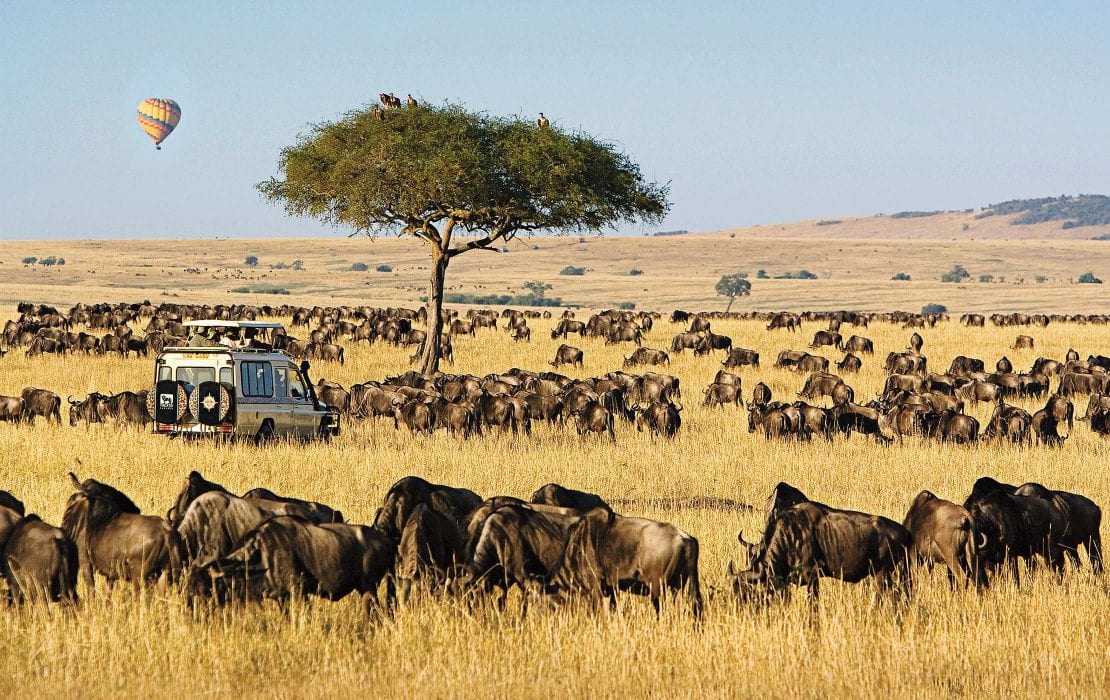
Yes, a 7-day Kenya safari is an ideal, standard duration to witness the Wildebeest Migration in the Masai Mara National Reserve. The best time to see this spectacle is between July and October, when over 1.5 million wildebeest, zebras, and gazelles are in the Mara, with August being the peak for dramatic Mara River crossings.
The Great Migration is often described as "The Greatest Show on Earth," a breathtaking display of survival and instinct that involves over 1.5 million wildebeest, 200,000 zebras, and 350,000 gazelles. Planning a 7-day safari around this event requires a deep understanding of timing, geography, and ecology. Below is a detailed breakdown of the key elements that make a migration safari successful.
Popular 7 Day Kenya safari itineraries
7-days-budget-kenya-safari-holiday-vacation-tour
7-days-amboseli-kenya-and-serengeti-fly-in-tanzania-safari
7-days-masai-mara-safari-tour-and-serengeti-safari-tour-in-kenya-and-tanzania
7-days-best-of-kenya-wildlife-safaris-itinerary
7-days-kenya-wildlife-safari-to-kenya-beach-holiday-at-diani-beach
7-days-ultimate-budget-kenya-tanzania-safari-holiday-vacation
7-days-ultimate-africa-big-cats-kenya-safari-holiday-best-parks
7-days-kenya-honeymoon-safari-holiday-and-vacation-couple-escape
7-days-kenya-family-safari-package-and-zanzibar-beach-holiday-vacation
7-days-best-africa-big-cats-safari-in-kenya
Best Time to Visit: July – October (Dry Season)
Timing is the most critical factor in a migration safari because the herds move in a continuous, albeit somewhat unpredictable, loop following the rains. For a 7-day Kenya-focused itinerary, the window between July and October is paramount. During this period, the herds have typically crossed from the Serengeti in Tanzania into Kenya’s Masai Mara in search of greener pastures.
July marks the arrival of the vanguard, with the dramatic river crossings usually peaking in August and September. By October, the herds are often grazing on the lush Mara plains before the short rains prompt them to turn south again. This period also coincides with the Long Dry Season, which is ideal for general wildlife viewing. Because water is scarce elsewhere, animals congregate around permanent water sources, making them easier to find. The grass is also trampled or eaten down by the massive herds, which improves visibility for spotting camouflaged predators like leopards and cheetahs.
Key Location: Masai Mara National Reserve
While the migration technically spans a vast ecosystem, the Masai Mara National Reserve is the theater where the most intense drama unfolds. For a 7-day safari, spending at least 3 or 4 nights in the Mara is essential. The reserve is divided into the main national reserve and several surrounding private conservancies. The main reserve is where the famous Mara River flows, the site of the legendary river crossings.
Strategically, travelers often choose to stay in the Mara Triangle or the western sectors of the park, which offer prime access to the crossing points. Staying in a private conservancy (like Mara North or Olare Motorogi) offers a more exclusive experience with fewer vehicles, though you will still drive into the main reserve for river sightings. The Mara's undulating hills and open savannahs provide the perfect backdrop for photography, ensuring that every angle of the migration is captured against a quintessentially African horizon.
What You’ll See: Herds, Crocodiles, and Predators
The spectacle of a migration safari is defined by three distinct elements. First is the sheer volume of life: the sight of tens of thousands of wildebeest and zebras stretching to the horizon is a sensory experience, characterized by a constant "lowing" sound and a perpetual cloud of dust. Second is the Mara River crossing, where herds must brave steep banks and the world's largest Nile crocodiles. Watching a wildebeest leap into the water, knowing a predator is submerged nearby, is a high-stakes moment of raw nature that few other experiences can match.
Third, the migration brings an unprecedented concentration of predators. Lions, leopards, and cheetahs follow the herds closely, as the influx of prey creates an all-you-can-eat buffet. You are likely to witness "predator-prey" interactions, such as a lioness stalking a stray calf or a cheetah utilizing its speed on the open plains. Beyond the big cats, the sky is often filled with vultures and the ground with hyenas, all playing their part in the ecosystem's nutrient cycle.
Other Potential Highlights: Amboseli and Lake Nakuru
While the migration is the main draw, a 7-day itinerary provides enough time to add "Supporting Acts" that offer a more rounded view of Kenya. Amboseli National Park is a popular addition; located at the foot of Mount Kilimanjaro, it provides a stark contrast to the Mara. Here, the highlight is the massive "tuskers" (elephants) wading through emerald-green swamps. The sight of a herd of elephants silhouetted against the snow-capped peak is arguably the most iconic image in African travel.
Alternatively, many itineraries include Lake Nakuru National Park in the Great Rift Valley. Nakuru is a world-class sanctuary for both Black and White Rhinos, fulfilling the "Rhino" requirement of the Big Five that can be harder to achieve in the Mara. The lake's alkaline shores are also famous for birdlife, including flamingos and pelicans. By combining the Mara with either Amboseli or Nakuru, you ensure that your 7-day safari covers the full spectrum of Kenya’s biodiversity—from the prehistoric power of the rhino to the majestic scale of the Great Migration.
7-day Kenya wildlife safari holiday
A 7-day Kenya wildlife safari holiday is a transformative escape into the heart of the world’s most iconic wilderness. This journey is expertly crafted to showcase the dramatic geological wonders of the Great Rift Valley and the sprawling savannahs that define the African dream. From the elephant-rich plains of Amboseli, framed by the majestic Mount Kilimanjaro, to the shimmering, bird-filled waters of Lake Nakuru and the legendary Masai Mara, this itinerary offers a comprehensive "tasting menu" of Kenya’s biodiversity. You will witness the raw drama of the wild, from the silent stalk of a leopard to the thunderous movement of the Great Migration. Beyond the animals, this holiday connects you with the vibrant Maasai culture, providing a soulful perspective on conservation and coexistence. Whether you are a first-timer or a seasoned traveler, these seven days promise a rhythmic immersion into a landscape where nature still reigns supreme.
Day 1: Arrival and Nairobi’s Conservation Icons
Your holiday begins in Nairobi, a vibrant metropolis where urban life meets the wild. After a warm welcome, you visit the Sheldrick Wildlife Trust to meet orphaned elephants being rehabilitated for the wild. Watching these playful calves enjoy their midday milk bottles provides a touching introduction to Kenya’s conservation efforts. Afterward, head to the Giraffe Centre to come face-to-face with the endangered Rothschild species. From a raised platform, you can feed these gentle giants and feel their prehensile tongues—a rare moment of tactile connection. These encounters offer vital context for the wild landscapes you will explore in the coming days. The day concludes with a traditional "Welcome Dinner," where you’ll brief with your guide under the city’s starlit sky, anticipating the vast wilderness that awaits at dawn.
Day 2: Amboseli and the Shadows of Kilimanjaro
Leaving the city behind, you drive southeast to Amboseli National Park, famous for its massive "tuskers" and scenic beauty. As you enter, the horizon is dominated by the majestic Mount Kilimanjaro, the highest peak in Africa. The park’s unique hydrology creates lush swamps in an otherwise arid landscape, attracting hundreds of elephants that wade through the marshes to feed. Your afternoon game drive offers iconic photographic opportunities of elephant herds framed by the snow-capped mountain. You will also spot buffaloes, hippos, and a variety of waterfowl in the Enkongo Narok swamp. The flat, open plains make wildlife spotting remarkably easy, ensuring a high-density viewing experience. As the sun sets, the mountain often clears of clouds, revealing its full glory while you enjoy sundowners overlooking the shimmering, golden plains.
Day 3: The Great Rift Valley and Lake Naivasha
Today, you traverse the floor of the Great Rift Valley to reach the freshwater shores of Lake Naivasha. This area offers a tranquil change of pace from the dusty savannah. In the morning, you’ll enjoy a boat safari, gliding past massive pods of grunting hippos and watching African fish eagles dive with precision to snatch tilapia from the water. Afterward, visit Crescent Island—a private sanctuary where you can take a guided walking safari. Walking among giraffes, zebras, and waterbucks without the barrier of a vehicle is a liberating experience that sharpens your senses. The absence of large predators makes this one of the few places in Kenya where you can truly "walk with the wild." The day ends at a lakeside lodge, surrounded by yellow-barked fever trees.
Day 4: Lake Nakuru’s Rhino Sanctuary
A short, scenic drive brings you to Lake Nakuru National Park, an alkaline lake once famous for millions of flamingos and now a premier rhino sanctuary. Your game drive here is focused on spotting both Black and White rhinoceroses, which are highly protected within the park’s fenced perimeter. The landscape is a beautiful mix of woodlands and rocky cliffs, home to the rare Rothschild giraffe and a dense population of leopards. Keep your eyes on the acacia branches, as Nakuru’s lions are known for their unusual habit of climbing trees to escape the heat. The "Baboon Cliff" viewpoint offers a stunning aerial vista of the lake’s shimmering shores. This park provides a compact but intense wildlife experience, ensuring sightings of waterbuck and buffalo before you retire to your lodge for the evening.
Day 5: Entering the Legendary Masai Mara
The highlight of your holiday begins as you head toward the Masai Mara National Reserve, the northern extension of the Serengeti. The vast, rolling grasslands are the quintessence of the African safari dream. As you enter the gates, you are immediately greeted by a sea of plains game: gazelles, topis, and zebras. This is the land of the "Big Cats," and your first afternoon game drive focuses on tracking the Mara’s famous lion prides. You’ll navigate through the tall grass, searching for cheetahs on termite mounds and leopards hidden in riverine thickets. The scale of the landscape is staggering, and the sense of freedom is palpable. Your evening is spent in a luxury tented camp, where the sounds of the bush provide a rhythmic backdrop to dinner.
Day 6: Full Day in the Mara and Maasai Culture
Spend a full day exploring the Mara’s diverse ecosystems, from the Sand River to the Talek. If visiting during the Great Migration, you will head toward the Mara River to witness the dramatic river crossings, where wildebeest brave crocodile-infested waters. Your guide will interpret the complex social behaviors of the animals, from elephant matriarchs leading their herds to hyena clans patrolling their territory. Midday is spent enjoying a picnic lunch under a lone acacia tree, a classic safari experience. In the afternoon, you visit a traditional Maasai village. Here, you’ll learn about their nomadic lifestyle, participate in the Adumu (jumping dance), and see how they coexist with the wildlife. It is a day of deep immersion, balancing the ferocity of nature with the rich heritage of its human guardians.
Day 7: Sunrise Safari and Return to Nairobi
On your final morning, embark on a dawn game drive to catch the predators at their most active. The early light provides a golden glow over the savannah, perfect for final photographs of the "Big Five." Watch the elephants begin their daily trek and hear the morning chorus of over 450 bird species. After a hearty bush breakfast, you begin the journey back to Nairobi. This drive allows you to reflect on the week’s encounters as you pass through bustling market towns and rural homesteads. Arriving in Nairobi in the late afternoon, you’ll have time for a final farewell meal or some last-minute souvenir shopping for Maasai beadwork and carvings. As you transfer to the airport, you carry with you the indelible spirit and wild pulse of the Kenyan plains.
Witnessing the Great Migration: A 7-Day Kenya Safari Guide
The Great Wildebeest Migration is one of the "Seven New Wonders of the World." A 7-day safari is the industry standard for experiencing this event, providing enough time to track the herds without the fatigue of a longer expedition. Below is a comprehensive guide to the logistics, timing, and spectacle of the migration.
1. Can I see the migration on a 7-day safari?
Yes, 7 days is considered the standard and ideal duration to witness the Great Migration. This timeframe allows for a strategic "slow-burn" approach. You typically spend the first few days visiting a secondary park like Amboseli or Lake Nakuru to see elephants and rhinos, before dedicating the final 3 to 4 days entirely to the Masai Mara.
Spending multiple days in the Mara is crucial because the migration is a living, breathing event, not a scheduled performance. Seven days gives you the "temporal buffer" needed to wait for the herds to gather at the riverbanks. It also ensures that if one day is quiet, you have several more opportunities to witness the high-octane predator action that follows the herds. For most first-time travelers, a week-long journey provides the perfect balance of adventure and rest, ensuring you return home having seen the best of the Mara's seasonal spectacle.
2. When is the best time to see the migration in Kenya?
The peak time for the migration in Kenya is typically from late July to October. This is when the herds have crossed the border from Tanzania’s Serengeti and settled into the lush, green pastures of the Masai Mara.
August and September are generally considered the "sweet spots" for witnessing the dramatic river crossings. By October, the herds are often spread across the golden plains of the Mara, providing incredible opportunities for "environmental photography" where thousands of animals dot the horizon. This period also coincides with the Long Dry Season, meaning the grass is short and the weather is pleasant—perfect for spotting the lions, leopards, and cheetahs that follow the migration.
3. Where do the herds come from?
The wildebeest and zebras are perpetual nomads, following a 1,800 km circular route through the Serengeti-Mara ecosystem. They spend the early part of the year in the southern Serengeti for calving season before moving north in search of water and fresh grass.
By the time they reach the Kenyan border in July, they have traveled hundreds of miles, braving predators and drought. The Masai Mara acts as a critical dry-season refuge for the herds because it stays greener longer than the Serengeti plains to the south. Understanding this ancient "survival loop" adds a layer of profound respect to your safari; you aren't just looking at animals, you are witnessing an endurance feat that has remained unchanged for millennia.
4. What is the "river crossing"?
The river crossing is the climax of the migration. As the herds move across the Mara, they must cross the Mara River—a formidable obstacle filled with steep banks and some of the world’s largest Nile crocodiles.
These crossings are scenes of raw, chaotic drama. Wildebeest gather on the banks by the thousands, hesitating for hours until a single "brave" individual leaps into the water, triggering a frantic stampede. You will often view these events from the Mara Triangle or the western sectors of the reserve. Watching a wildebeest navigate the current while a crocodile lunges is a heart-pounding experience that defines the "survival of the fittest" in the African wilderness.
5. Is the migration guaranteed?
While the presence of the herds in the Mara is a certainty between July and October, specific river crossings are never guaranteed. The movement of the animals is dictated by local rainfall and their own instinctual "urgency."
A herd might gather at the river for six hours and then suddenly decide to turn back. This is why a 7-day safari is superior to a 3-day trip; it gives you the patience required to "stake out" a crossing point. While you may need a degree of luck to see a massive crossing, being in the Mara during peak season guarantees you will see the "mega-herds" covering the plains, which is a spectacle in its own right.
6. What other animals can I see?
While the 1.5 million wildebeest and zebras are the stars, they bring an entire supporting cast with them. The migration is a "mobile buffet" for Africa’s apex predators. You will see lion prides strategically positioned near the herds, leopards watching from the riverine forests, and cheetahs utilizing the open plains to hunt gazelles.
Hyenas and vultures are also incredibly active, playing their vital role as the savannah’s cleanup crew. In the rivers, you will see the massive Nile crocodiles waiting for their seasonal feast. Beyond the predators, the Mara is home to elephants, giraffes, buffaloes, and over 450 bird species, ensuring that your 7-day journey is a comprehensive wildlife experience.
7. How many days should I spend in the Mara?
To maximize your chances of seeing the best of the migration, at least 3 to 4 days of your 7-day trip should be dedicated to the Masai Mara. This allows you to explore different sectors of the reserve—from the riverbanks to the rolling hills of the eastern Mara.
Spending four days in the Mara allows for full-day game drives with picnic lunches. This is essential for migration viewing, as it allows you to venture deep into the reserve and stay at a crossing point for several hours without having to rush back to the lodge for lunch. It also gives you the flexibility to visit a Maasai village or take a hot air balloon flight without sacrificing precious wildlife viewing time.
8. What is the best way to travel from Nairobi?
The most common and cost-effective way is by a custom-built 4x4 Land Cruiser. These vehicles are designed for the rugged Kenyan terrain, featuring pop-up roofs for 360-degree viewing and heavy-duty suspension for the "African massage" (the bumpy roads leading to the Mara).
For those with a higher budget, "Fly-in Safaris" are an excellent option. Small bush planes fly from Nairobi’s Wilson Airport directly into the Mara’s airstrips in about 45 minutes. This saves you a 5-6 hour drive and maximizes your time in the park. Most 7-day packages include professional driver-guides who act as your navigators, wildlife experts, and cultural ambassadors throughout the journey.
9. Are there other activities besides the migration?
A 7-day safari is more than just game drives. One of the most iconic "bucket list" items is a Hot Air Balloon Safari over the Mara at dawn. Drifting silently over the herds as the sun rises is an ethereal experience, followed by a champagne breakfast in the bush.
You can also visit a Maasai Manyatta (village) to learn about the culture and traditions of the people who have coexisted with this wildlife for centuries. Some camps also offer guided nature walks (usually in private conservancies) and night game drives, allowing you to see the nocturnal side of the savannah that is hidden during the day.
10. Can I combine the migration with other parks?
Yes, a 7-day itinerary is the perfect length to combine the Mara with another distinct ecosystem. A popular choice is Amboseli National Park, where you can see massive elephant herds against the backdrop of Mount Kilimanjaro.
Another frequent addition is Lake Nakuru National Park, which provides a nearly guaranteed sighting of Black and White Rhinos. Combining these parks ensures that you see the "Big Five" alongside the Great Migration. This variety keeps the safari fresh, as you move from the snowy peaks of Kilimanjaro to the alkaline lakes of the Rift Valley before ending with the grand spectacle of the Mara.
11. What are the accommodation options?
Kenya offers a range of accommodations to suit every budget. Luxury Tented Camps are the most sought-after, offering king-sized beds, en-suite bathrooms, and gourmet dining inside the reserve. They provide an intimate "Out of Africa" feel.
Safari Lodges are permanent structures (stone and timber) that offer hotel-style amenities like swimming pools and large dining halls—great for families. For those on a budget, Campsites and basic tented camps just outside the park gates offer a more rustic experience at a lower price point. Regardless of the tier, most accommodations are "Full Board," including all three meals per day.
12. Do I need to book in advance?
Yes, absolutely. Because the migration (July–October) is the peak tourist season in Kenya, the best lodges and camps fill up 6 to 12 months in advance.
If you wait until the last minute, you may find that accommodations inside the reserve are fully booked, forcing you to stay far outside the gates, which adds significant driving time to your day. Booking early also ensures you can secure the most experienced guides and the best 4x4 vehicles. If you are planning a 7-day migration safari, start your research at least a year before you intend to travel.
13. Is the migration safe to watch?
Yes, watching the migration is very safe as long as you follow the park’s strict regulations. You view the animals from the safety of your safari vehicle. At the river crossing points, there are designated viewing areas where vehicles can park at a safe distance without disturbing the animals’ movement.
It is important to remember that these are wild animals in a high-stress situation. Your guide will ensure that the vehicle does not block the "escape routes" for the wildebeest or interfere with the hunt. By respecting the animals' space, you ensure a safe experience for both yourself and the wildlife.
14. Does the migration happen at night?
While the herds are active 24/7, river crossings almost always happen during the day. Wildebeest are visual creatures and generally prefer to cross when they can see the opposite bank and the crocodiles in the water.
Most crossings occur between 10:00 AM and 4:00 PM when the sun is high. This is excellent for travelers, as it provides the best possible light for photography and allows you to witness the event during your standard game drives. Nighttime in the Mara is when the predators take over, and while you may hear the chaos of a hunt from your camp, the visual spectacle of the migration is a daytime event.
15. What should I pack?
Packing for a 7-day migration safari requires a "layering" strategy.
- Clothing: Early morning drives are surprisingly cold (10°C), so bring a warm fleece or jacket. By midday, it will be hot (30°C), so light cotton or linen clothing in neutral colors (khaki, tan, olive) is best.
- Gear: A camera with a 300mm+ zoom lens is essential for capturing those distant river crossings. Binoculars are also a must for every traveler.
- Sun Protection: The Kenyan sun is intense at the equator; bring a wide-brimmed hat, high-SPF sunscreen, and polarized sunglasses to protect your eyes from the glare of the savannah.
Booking 7 Days Kenya wildlife safari holiday with us Roads of Adventure safaris
Book a 7-day Kenya wildlife safari with Roads of Adventure Safaris for a tailored experience visiting premier destinations like the Masai Mara, Lake Naivasha, and Amboseli. These packages include expert local guides, tailored itineraries, and midrange to luxury accommodations
