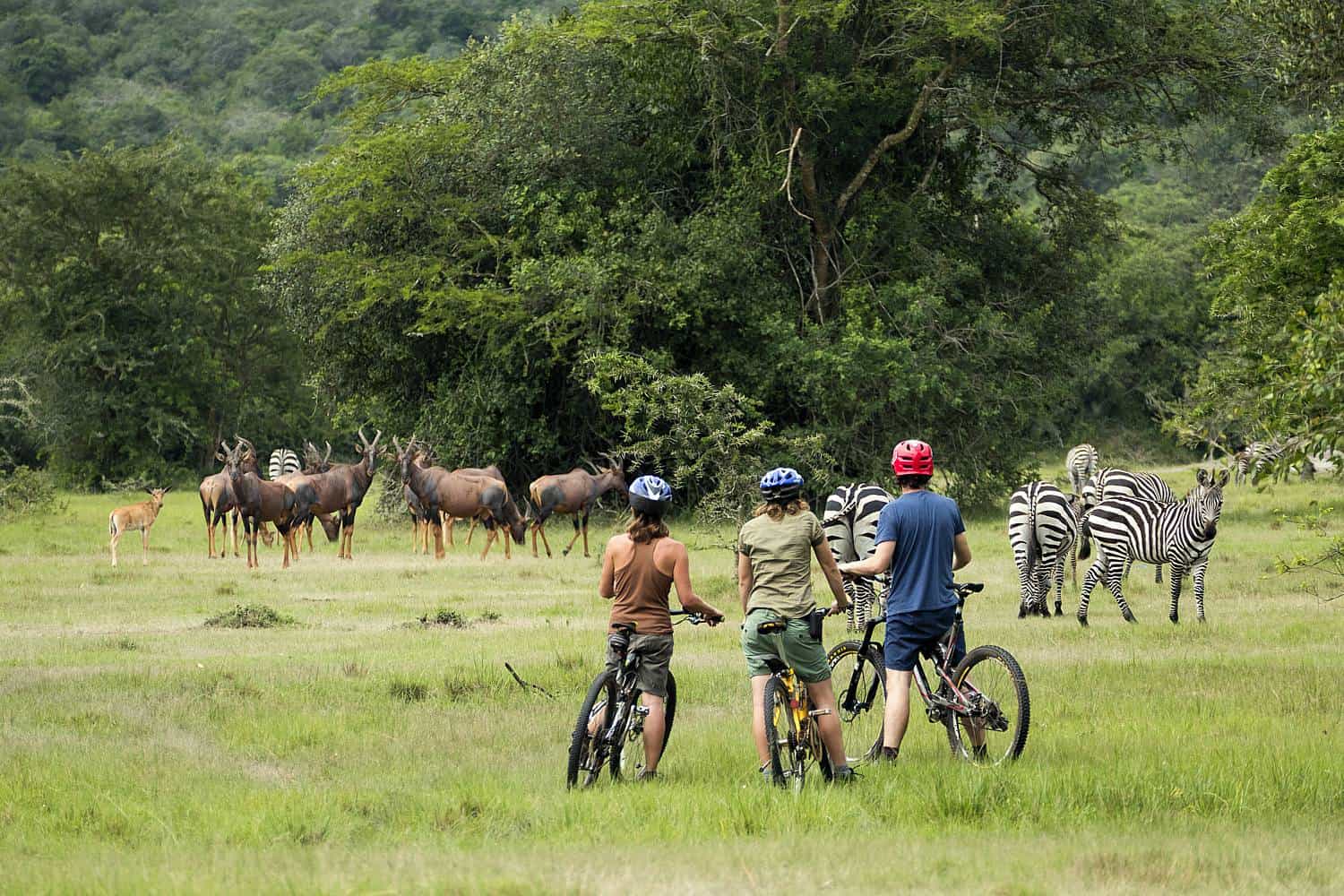
A 3-day safari in Lake Mburo National Park (the closest savannah park to Kampala/Entebbe) perfectly balances wildlife viewing and active adventures. The most popular routes feature the Equator, standard game drives, boat cruises, horseback riding, and guided walking safaris
2-days-lake-mburo-national-park-uganda-safari-holiday
3-days-lake-mburo-national-park-cycling-game-drive-and-horseback-riding
3-days-queen-elizabeth-national-park-and-lake-mburo-national-park-safari
3-days-semuliki-national-park-and-hot-springs-uganda-safari-vacation
4-days-best-gorilla-trekking-and-safari-in-uganda-lake-mburo-national-park
4-days-chimpanzee-tracking-in-lake-mburo-national-park-and-lake-mburo-safari
3 Days Classic Wildlife & Boat Safari
Embark on an unforgettable journey with our 3 Days Classic Wildlife & Boat Safari, a perfectly curated itinerary designed to immerse you in the raw beauty of East Africa's wilderness. This action-packed adventure balances thrilling game drives with a tranquil boat cruise, offering a comprehensive view of the region's diverse ecosystems. Witness majestic predators roaming the savannah, massive herds of elephants gathering at waterholes, and a vibrant array of birdlife along the riverbanks. Expertly guided and seamlessly paced, this safari is ideal for travelers seeking a deep connection with nature without spending weeks on the road. From dramatic landscapes to intimate wildlife encounters, every moment promises stunning photography and lifetime memories. Get ready to experience the iconic sights and soothing rhythms of the wild on this ultimate short escape.
Day 1: Arrival & Evening Game Drive
Your 3 Days Classic Wildlife & Boat Safari begins with a warm welcome and a scenic drive toward the park. As the modern world fades behind you, the landscape transforms into rolling savannahs dotted with iconic acacia trees. After checking into your lodge and enjoying a fresh lunch, head out for your first evening game drive. This is the magic hour when the fierce midday heat dissipates, and the wilderness stirs to life. Keep your eyes peeled for majestic lions waking from their slumber, elegant giraffes browsing the treetops, and playful herds of antelopes skipping across the plains. Your expert guide will navigate the optimal tracks, sharing fascinating insights into tracking animal behavior. As the sun sets, casting a golden glow over the horizon, return to the comfort of your lodge for a delicious dinner under the stars, completely immersed in the evening sounds of the African bush.
Day 2: Morning Savannah Safari & Boat Cruise
Wake up early to the crisp morning air for a dawn game drive, a prime time for spotting elusive predators like leopards returning from their nightly hunts. The savannah is alive with activity as the sun rises, painting the sky in brilliant hues of pink and gold. After a hearty late breakfast back at the lodge, the afternoon introduces the headline experience of your 3 Days Classic Wildlife & Boat Safari: a spectacular boat cruise. Gliding smoothly along the river, you will gain a completely unique vantage point of the wildlife. Observe massive hippos grunting in the shallows, enormous Nile crocodiles basking on the muddy banks, and elephants wading deep into the water to cool off. The riverbanks are also a paradise for birdwatchers, teeming with colorful kingfishers and majestic fish eagles. It is a peaceful yet thrilling afternoon of effortless wildlife viewing.
Day 3: Morning Nature Walk & Departure
On the final day of your 3 Days Classic Wildlife & Boat Safari, trade the safari vehicle for a guided morning nature walk. Accompanied by an armed park ranger, walking on foot allows you to connect with the wilderness on a much more intimate level. Learn to read tracking signs, identify distinct animal footprints in the dirt, and discover the fascinating medicinal uses of local plants that vehicles usually pass by. It is a sensory experience where you can truly hear the wind in the grass and the morning birdsong. After this refreshing trek, return to the lodge to pack your bags and check out. Enjoy a final lunch surrounded by the beautiful landscape before embarking on your return journey. You will head home with incredible photos, a deep appreciation for conservation, and unforgettable memories of a classic African adventure.
3 Days Active Adventure Itinerary
Ditch the traditional safari vehicle and experience the wild like never before with our 3 Days Active Adventure Itinerary. Specifically designed for thrill-seekers, this high-energy journey invites you to immerse yourself in the African bush on foot and on wheels. Located in the heart of Uganda’s wildlife havens, this safari replaces glass windows with open air, allowing you to feel the pulse of the wilderness. From cycling past herds of impalas to riding horses alongside zebras, every activity brings you closer to nature. You will explore thriving ecosystems, cruise across tranquil waters, and trek through ancient forests, all while enjoying panoramic views and crisp fresh air. Perfect for fitness enthusiasts and adrenaline lovers alike, this itinerary balances active exploration with stunning wildlife encounters. Get ready to push your boundaries, challenge your senses, and create unforgettable memories on this ultimate, action-packed three-day Ugandan adventure.
Day 1: Travel to Lake Mburo & Evening Cycling Safari
Your 3 Days Active Adventure Itinerary kicks off with a scenic drive from Kampala, heading southwest through beautiful rolling hills and vibrant local trading centers. You will cross the equator, stopping for photos and a quick stretch before arriving at the park. After checking into your lodge and fueling up with lunch, swap the safari vehicle for a mountain bike. The evening cycling safari takes you along designated park tracks as the midday heat fades. Pedaling through the savannah, you will experience the unique thrill of riding alongside herds of zebras, topis, and elands. Without the roar of an engine, you can hear the rustle of the grass and the warning calls of nearby birds. Watching the sunset over the hills while coasting on two wheels is an exhilarating start to your adventure, concluded by a hearty dinner at your lodge.
Day 2: Horseback Riding Safari & Lake Mburo Boat Cruise
Wake up early for a truly magical highlight of your 3 Days Active Adventure Itinerary: a morning horseback riding safari. Perfect for all experience levels, this activity allows you to blend seamlessly into the environment. Because wild animals view horses as fellow herbivores, you can ride incredibly close to timid zebras, curious giraffes, and waterbucks without startling them. Feeling the rhythm of your horse matching the pace of the wild herd is an unmatched adrenaline rush. After a well-deserved lunch, shift gears for a relaxing afternoon boat cruise on Lake Mburo. Relax your muscles as you glide across the water, observing massive schools of hippos, giant Nile crocodiles basking on the shores, and a vibrant array of waterbirds, including the rare African finfoot. It is the perfect blend of high-energy exploration and scenic relaxation.
Day 3: Guided Forest Hike & Return to Kampala
The final day of your 3 Days Active Adventure Itinerary begins at dawn with a guided nature hike through the dense, tropical canopy of Rubanga Forest. Accompanied by an experienced park ranger, you will explore this unique forest pocket on foot. The cool morning air is filled with the songs of elusive forest birds and the chatter of primates, including black-and-white colobus monkeys. Walking allows you to appreciate the finer details of the ecosystem, from tracking animal footprints in the soil to learning about ancient medicinal trees. After the hike, return to the lodge for a warm breakfast, pack your bags, and check out. Enjoy a final look at the beautiful landscape as you begin your journey back to Kampala, arriving in the evening with unforgettable stories of an active, up-close encounter with Uganda’s incredible wildlife.
3 Days Photography & Birding Enthusiast Itinerary
Capture the breathtaking biodiversity of Uganda with our specialized 3 Days Photography & Birding Enthusiast itinerary. Tailored for those who view the world through a lens and find joy in the call of the wild, this trip takes a slower, more deliberate pace to maximize your field time. Lake Mburo National Park serves as our magnificent backdrop, boasting an impressive roster of over 350 avian species within its diverse habitats. We avoid the rush of standard safaris, allowing ample time to adjust your exposure, stabilize your telephoto lens, and wait for that perfect, behavior-driven shot. From the golden light filtering through the acacia branches to the mirror-like reflections on the swampy fringes, every hour is optimized for creative composition. Led by a specialist guide who understands avian habits and lighting angles, this safari guarantees an exceptional portfolio of images and a deeply rewarding birding checklist.
Day 1: Drive from Entebbe to Lake Mburo & Marshland Birding
Your journey begins with a morning departure from Entebbe, tracking southwestward into the heart of Uganda's cattle corridor. The drive offers excellent opportunistic photography, featuring rolling hills and the iconic, long-horned Ankole cattle. After entering the park and settling into your lodge, spend your late afternoon exploring the marshy fringes of Lake Mburo's extensive wetland system. This ecosystem provides a sanctuary for specialized waterbirds and incredible soft-light landscapes. With your camera calibrated for the dropping sun, you will scan the papyrus reeds and mudflats. Keep an eye out for the striking papyrus gonolek, the blue-headed coucal, and the rufous-bellied heron. The slow, quiet pace allows you to observe intimate feeding behaviors without disrupting the wildlife. Conclude your day with a relaxing dinner at the lodge, prepping your gear for an early morning call.
Day 2: Morning Light Game Drive & Targeted Boat Safari
The second day centers on capturing the park's iconic inhabitants during the coveted golden hour. An early morning game drive places you in the acacia valleys just as the first rays of light cut through the morning mist, illuminating grazing zebras, impalas, and defassa waterbucks. Your guide will position the vehicle to capture ideal rim lighting and clean backgrounds.
In the afternoon, the focus shifts to the water with a private boat safari designed specifically for patient wildlife photography. We will navigate the quiet shoreline channels to target two of Africa's most sought-after avian prizes.
You will scan the overhanging root systems for the secretive, brightly footed African Finfoot. We will also scout the marshy, papyrus-lined bays where the prehistoric Shoebill Stork occasionally hunts in the shallows. The steady platform of the boat provides the perfect base for crisp, low-angle aquatic shots.
Day 3: Expert-Led Bird Walk & Scenic Exit Drive
The final morning kicks off at dawn with a specialized foot safari alongside an expert park ranger. Walking through the savanna and woodland borders gives you an intimate perspective on smaller species that are easily missed from a vehicle. Your guide’s sharp ears will help you locate and photograph target species like the red-faced barbet, green-capped eremomela, and various colorful sunbirds. The quiet approach allows for close-range framing and natural, unbothered perching compositions. Afterward, return to the lodge for a late breakfast and check-out. Your adventure concludes with a slow, scenic exit game drive toward the park gates. This final transit serves as an excellent opportunity to capture any last-minute raptors soaring overhead or mammals posing against the mid-day sky, before making the return journey back to Entebbe.
3 Days Cultural & Farm Experience
Celebrate the harmonious bond between humans and wildlife with our 3 Days Cultural & Farm Experience. Curated specifically for travelers who crave authentic human connections alongside their wilderness adventures, this immersive3 day itinerary bridges the gap between Uganda’s vibrant heritage and its untamed nature. Your journey centers around Lake Mburo National Park and the surrounding rolling hills, home to the historic Bahima pastoralists. Beyond standard wildlife viewing, you will step directly into the rhythmic lifestyle of the local communities. Discover the living history of the ancient western kingdoms, explore the deep cultural significance of the majestic Ankole long-horned cattle, and share stories with families who have preserved these traditions for generations. This safari successfully demonstrates how traditional livestock farming and wildlife conservation beautifully coexist in the modern era. Pack your curiosity and get ready for a deeply enriching, sensory travel experience that feeds both the soul and the camera lens.
Day 1: City Transfer, Equator Crossing & Igongo Cultural Centre
Your 3 Days Cultural & Farm Experience begins with a morning departure from the city, driving southwest through lush green countryside. Your first stop is at the Uganda Equator monument for a fun geographical experience and a cup of fresh Ugandan coffee. Continuing onward, you will stop at the acclaimed Igongo Cultural Centre for an immersive dive into the history of the south-western cultures. Browse through the museum’s fascinating artifacts, showcasing the ancient lifestyles of the Banyankole and Bakiga peoples, before enjoying a traditional buffet lunch featuring local delicacies like millet bread and matooke. In the afternoon, drive the short distance to Lake Mburo National Park, catching your first glimpses of wild impalas and zebras alongside rural homesteads. Check into your lodge for an evening of relaxation, listening to the peaceful night sounds of the bush.
Day 2: Morning Savannah Game Drive & Afternoon Boat Cruise
The second day seamlessly blends the park's vibrant wildlife with its scenic water systems. Rise early for a morning game drive through the acacia-dotted tracks, where the golden sunlight provides beautiful framing for photography. You will search for dynamic wildlife including large herds of elands, topis, buffaloes, and elegant giraffes browsing the tree canopies. Your guide will highlight how the park's boundaries interact with neighboring community farmlands. After a mid-day rest at your lodge, spend your afternoon on a tranquil boat cruise across Lake Mburo. This relaxing journey offers a completely different viewpoint of the ecosystem. You will get up close to schools of grunting hippos, massive Nile crocodiles resting on the banks, and an array of colorful waterbirds like fish eagles and kingfishers, making it a perfectly balanced day of classic safari exploration.
Day 3: Bahima Pastoralist Community Tour & Return Journey
The final morning delivers the true cultural heartbeat of your 3 Days Cultural & Farm Experience. Wake up at dawn to join the Bahima pastoralists at a traditional local farm. You will experience the morning routine centered around the iconic Ankole long-horned cattle, animals famous for their massive, elegant horns. Try your hand at the art of traditional hand-milking, learn how the herders communicate with individual cows using unique vocal calls, and see the traditional tools used to process milk into ghee. This intimate interaction offers deep insight into a lifestyle that has remained unchanged for centuries. Afterward, return to the lodge for a hearty breakfast and check-out. Enjoy a final scenic drive out of the conservation area, reflecting on the rich cultural heritage and beautiful wildlife encounters as you make your journey back to the city.
3 Days Equator & Queen Elizabeth Combo
Maximize your Ugandan adventure with our high-octane 3 Days Equator & Queen Elizabeth Combo, an itinerary engineered for travelers who want to experience the absolute pinnacle of East Africa’s ecological diversity in a limited timeframe. This fast-paced safari seamlessly stitches together two of Uganda’s most distinct conservation gems: Lake Mburo National Park and Queen Elizabeth National Park. In just three days, your landscapes will dramatically shift from acacia-dotted woodlands to sprawling savannahs, crater lakes, and bustling river channels. You will cross geographical milestones, trace the footsteps of diverse wildlife populations, and explore rich aquatic habitats teeming with life. This is the ultimate choice for the ambitious explorer who wants to pack big game viewing, bird watching, and iconic boat safaris into one unforgettable long weekend. Every hour is optimized for discovery, ensuring you don’t miss a single highlight of this beautiful region.
Day 1: Kampala Departure, Equator Crossing & Lake Mburo Evening Drive
Your action-packed 3 Days Equator & Queen Elizabeth Combo begins with an early morning departure from Kampala or Entebbe to beat the bustling city traffic. Driving southwest, your first milestone is the iconic Uganda Equator monument, where you will stop for photographs and a fascinating water flow demonstration. Continue your journey to Lake Mburo National Park, arriving in time for a fresh lunch and check-in at your lodge. In the late afternoon, head out for a focused evening game drive. As the temperature drops, the park's unique residents emerge. This is your prime opportunity to spot massive elands, impalas, topis, and herds of zebras silhouetted against the setting sun. Return to your lodge for dinner, falling asleep to the gentle sounds of the acacia woodlands.
Day 2: Mburo Morning Drive & Kazinga Channel Boat Cruise
Start your morning with a dawn game drive through Lake Mburo to catch early risers like leopards and hyenas returning to cover. Afterward, enjoy a quick breakfast before embarking on a scenic mid-day transfer westward toward Queen Elizabeth National Park. Watch the landscape transform into dramatic crater highlands and open savannahs framed by the Rwenzori Mountains. Arrive just in time for the ultimate afternoon highlight: a spectacular boat cruise along the famous Kazinga Channel. This natural waterway connects Lake Edward and Lake George, boasting one of the world's highest concentrations of hippos. From the safety of the boat, you will capture incredible up-close photos of massive Nile crocodiles, bathing elephants, and hundreds of vibrant waterbirds lining the shores, before heading to your new lodge for the night.
Day 3: Queen Elizabeth Savannah Safari & Return Journey
The final morning of your 3 Days Equator & Queen Elizabeth Combo kicks off at first light in the Kasenyi plains or the southern Ishasha sector. This early morning game drive targets the park’s iconic predators, specifically tracking Queen Elizabeth’s famous tree-climbing lions as they rest in the branches of fig trees, as well as solitary leopards and sweeping herds of Uganda kobs. The morning light provides a stunning backdrop for final wildlife photography. After the drive, return to the lodge to freshen up, enjoy a hearty brunch, and check out. You will then begin your return journey back to Entebbe or Kampala. The drive back offers a final chance to admire the beautiful landscapes, arriving in the city by evening with an incredible portfolio of memories.
1. Where is Lake Mburo National Park, and how do I get there from Kampala?
Lake Mburo National Park is situated in the Kiruhura district of southwestern Uganda. It remains the closest and most accessible savannah park from Uganda’s capital city, sitting roughly 230 kilometers away. Navigating to the park from Kampala is straightforward, as the entire route follows the well-maintained, fully paved tarmac of the Masaka-Mbarara highway.
Under standard conditions, a road transfer takes between 3 to 4 hours. However, drive times fluctuate depending on the notorious outbound traffic leaving Kampala’s central business district, especially on Friday afternoons or holiday weekends. The journey acts as an excellent introduction to rural western Uganda, guiding travelers past vast agricultural expanses, fruit markets, and lush swampland networks.
Travelers have two primary entry points to choose from off the main highway, depending on their booked accommodation. The first option is the Sanga Gate, accessed via the Sanga trading center, which is the most common route for those staying at lodges centered around the park headquarters. The second option is the Nshara Gate, which appears earlier along the highway when coming from Masaka and is highly convenient for lodges operating along the eastern periphery.
For international visitors or regional business travelers with tighter schedules, domestic flight connections are available. Scheduled flight operators run morning and afternoon charters out of Entebbe International Airport or Kajjansi Airfield, landing at the nearby Mbarara Airstrip (Nyakisharara). From the airstrip, a brief 30-minute road transfer gets you through the park gates, completely bypassing highway traffic.
2. Is it safe to do a self-drive safari in Lake Mburo?
Operating a self-drive safari within Lake Mburo National Park is safe and fully permitted by the Uganda Wildlife Authority (UWA). The internal track network is logically designed, cleanly maintained, and supplemented with clear directional signage at major junctions. The safety factor is further enhanced by the park's specific ecosystem structure: unlike Queen Elizabeth or Murchison Falls, Lake Mburo does not support a resident, reproducing population of large predators like lions. Because there is no imminent threat of encountering a pride of lions on the road tracks, the general risk level drops significantly, allowing for exceptional exploratory flexibility.
However, choosing a completely independent self-drive introduces distinct operational responsibilities. While saloon cars can handle the main transit roads during dry spells, a robust 4x4 vehicle featuring good ground clearance is absolutely mandatory for navigating the finer loop tracks, particularly around the muddy lake fringes and the rocky ridges of Rwonyo. Unpredictable downpours can instantly turn sandy soil into thick clay, where getting stuck without a backup vehicle or communication signals presents a real challenge.
To maximize safety and trip quality, hiring a professional driver-guide through a registered tour operator remains the gold standard. A local specialist brings an intimate knowledge of recent animal movements, handles all technical vehicle recovery, and manages entry park fees smoothly. If you decide to self-drive anyway, it is highly recommended to stop by the Rwonyo Tourism Centre on arrival to hire an armed UWA ranger-guide for a nominal fee. Having a ranger in your vehicle guarantees you will spot camouflaged wildlife while avoiding dead-end tracks.
3. What are the absolute must-do activities on a 3-day trip?
To fully capture the essence of this unique ecosystem, a balanced 3-day itinerary should combine classic vehicle scouting, water exploration, and foot safaris. The absolute foundation of any visit is a morning or late-afternoon savannah game drive. Utilizing the park's loop systems, such as the Zebra Track or the Kazuma Track, allows you to observe dense populations of Burchell’s zebras, topis, impalas, and warthogs. A vehicle safari provides the ground coverage needed to explore the dramatic acacia woodlands and open grassy valleys that define the park’s visual layout.
Second, a scheduled afternoon launch cruise on Lake Mburo is vital. This water body is the heart of a larger 14-lake wetland system, and exploring it by boat provides a completely fresh viewpoint. As you cruise along the shoreline reeds, you are guaranteed intimate, safe encounters with massive schools of grunting hippos and enormous Nile crocodiles. The boat acts as a highly stable platform for spotting rare birdlife that stays hidden from the mainland tracks.
Finally, you must take advantage of a guided walking safari. Because of the absence of dangerous large cats, Lake Mburo is one of the few national parks in Uganda where you can safely walk through the savannah on foot. Escorted by an experienced, armed UWA ranger, walking gives you an intimate look at the environment. You will track fresh animal footprints, study macro-ecosystems, and feel the thrill of standing just a few meters away from a herd of curious zebras or peaceful elands without the barrier of vehicle glass.
4. Can I do a horseback riding safari here?
Lake Mburo National Park stands alone as Uganda’s premier conservation area offering horseback riding safaris within a national park boundary. This highly specialized experience is operated exclusively by Mihingo Lodge, a high-end luxury property that maintains a dedicated stable of well-trained horses and ponies suited for all experience levels, from absolute beginners to advanced equestrian riders.
Horseback safaris provide an extraordinary, silent way to interact with the wild. Because wild herbivores view a horse and its rider simply as a single, non-threatening four-legged animal, the standard flight zone of the wildlife drops dramatically. Zebras, topis, buffaloes, and impalas will continue grazing peacefully as you ride calmly into their midst, completely unbothered by your presence. The total absence of a loud engine roar allows you to hear the genuine sounds of the bush, creating an intense sense of connection with the environment.
Operationally, these safaris are highly structured around safety and comfort. Rides can range from a gentle 30-minute introductory walk along the hills outside the park boundaries to a full 4-hour advanced trail ride deep inside the national park, complete with a bush breakfast. All rides are accompanied by expert equestrian guides who carry basic safety gear. It is important to note that a strict weight limit is enforced to protect the welfare of the horses—typically a maximum of 85 to 95 kilograms depending on the horse. Given the limited number of horses available daily, booking this experience months in advance is essential.
5. What kind of animals will I see?
While Lake Mburo is one of Uganda’s smaller savannah parks, its biodiversity is highly concentrated and features several unique species that are difficult or impossible to find in other western parks. Most notably, it is the only national park in western Uganda where you can see massive populations of impalas. These graceful, high-jumping antelopes thrive in the park’s dense acacia woodlands, filling the landscape alongside thousands of Burchell's zebras, whose striking black-and-white stripes form a classic backdrop across the open grassy plains.
The park also serves as a vital sanctuary for the common eland, Africa’s largest antelope species. Watching a herd of these massive, powerful antelopes move across the valleys is a true highlight. Other prominent herbivores roaming the park include the chestnut-colored topi, large herds of Cape buffalo, defassa waterbucks, common warthogs, and bushbucks. Rothschild's giraffes were also successfully reintroduced to the park from Murchison Falls, and they can now be seen browsing effortlessly from the crowns of the acacia trees.
The aquatic and semi-aquatic zones are equally busy. Lake Mburo itself supports a dense population of hippopotamuses that spend their days submerged in the cool shallows before moving ashore to graze at night. Massive Nile crocodiles line the muddy banks, alongside semi-aquatic sitatunga antelopes hiding in the deep papyrus swamps. While apex predators are rare, the park supports a healthy population of leopards, alongside spotted hyenas, side-striped jackals, and several small carnivores like the white-tailed mongoose and slender mongoose.
6. When is the best time of year to visit?
Lake Mburo National Park can be visited comfortably throughout the year, but the traditional dry seasons offer the most rewarding wildlife viewing conditions. The region experiences two distinct dry windows annually: the long dry season from June to September, and the shorter dry spell from January to March. During these critical months, vegetation across the savannah clears out significantly, transforming thick bush into open, low-lying grass that makes tracking and spotting camouflaged wildlife much easier.
Furthermore, as seasonal water holes deep within the backcountries dry up, animals are forced to move inward toward reliable water sources, primarily clustering along the banks of Lake Mburo and its connected permanent swamps. This predictable movement makes planning game drives simple, as large numbers of diverse species gather closely together at known watering points. The dry seasons also provide ideal trail conditions for active adventures like mountain biking, horseback riding, and guided walking safaris, ensuring your boots or wheels won’t get caught in deep, sticky clay.
Conversely, the wet seasons—spanning from April to May and October to November—bring a different kind of beauty. The park turns into an emerald-green oasis, the air becomes exceptionally crisp, and newborn animals can be seen across the plains, offering beautiful opportunities for landscape photography. The rainy months also mark the arrival of migratory bird species from Europe and northern Africa, making it the absolute peak season for dedicated bird watchers, despite the muddy tracks and occasional afternoon downpours.
7. What is the weather like?
Lake Mburo National Park features a classic equatorial, tropical climate that stays comfortably warm throughout the year. Because of its geographic positioning near the equator and an average altitude ranging between 1,220 and 1,822 meters above sea level, the park avoids the extreme, oppressive heat found in lower-lying desert regions. Average daytime temperatures consistently hover between 25°C and 30°C, making daytime exploration pleasant without causing severe heat exhaustion.
While daytime conditions are sunny and warm, temperatures drop noticeably once the sun sets over the hills. Evening and early morning temperatures frequently dip down to 14°C to 17°C. This temperature shift is particularly noticeable during dawn game drives in open-sided safari vehicles, or right after heavy afternoon rainstorms when a cool breeze sweeps off the lake surface. Packing a warm fleece jacket, windbreaker, or a traditional safari shuka scarf is highly recommended to stay comfortable during early morning departures.
Rainfall patterns in the park are bimodal, meaning there are two distinct rainy seasons each year. The heaviest rainfall typically occurs during the months of April and May, followed by a shorter wet window in October and November. Storms are usually dramatic but brief, characterized by intense afternoon downpours followed by immediate clearing and sunshine. Even during the peak dry months, unpredictable tropical showers can occur, meaning a lightweight, packable rain jacket should remain a permanent item in your daypack regardless of your travel dates.
8. Are there night game drives available?
Night game drives are fully authorized within Lake Mburo National Park and represent one of the most exciting additions you can make to a standard safari itinerary. While daytime drives showcase the park’s bustling herbivore populations, the landscape changes completely after dark. A night drive typically begins around 6:30 PM or 7:00 PM, lasting for roughly two to three hours under the guidance of an expert UWA ranger equipped with a powerful, high-intensity spotlight designed to catch animal eye-shines.
The main objective of a nocturnal safari is to spot the park's elusive predators that remain hidden during the heat of the day. Lake Mburo has an excellent track record for leopard sightings during night drives, as these solitary big cats use the cover of darkness to hunt impalas and bushbucks along the track edges. It is also your best opportunity to see spotted hyenas roaming out of their dens, white-tailed mongooses, and small nocturnal wildcats like the serval or the sleek African civet.
Beyond the larger carnivores, the night spotlights reveal a hidden world of fascinating smaller creatures. You will likely observe bushbabies (galagos) leaping nimbly through the acacia branches, their large eyes glowing brightly in the beam, alongside nocturnal birds like nightjars and eagle-owls positioned on the road tracks. The experience of moving through the pitch-black savannah with the engine idling, listening to the deep choruses of frogs, crickets, and distant hippo calls, offers an unforgettable perspective on the African bush.
9. What are the best accommodation options in the park?
Lake Mburo National Park features an excellent selection of safari accommodations, comfortably catering to luxury travelers, mid-range explorers, and budget-conscious backpackers. For those seeking absolute luxury, Mihingo Lodge is highly acclaimed. Perched high upon a massive granite kopje, this eco-luxury lodge offers expansive, panoramic views of the entire park from its private, thatched tented rooms. It features a stunning infinity pool carved into the rock face, fine dining, and operates the park's exclusive stable for horseback riding safaris. Kigambira Safari Lodge is another premium luxury option, nestled near Lake Kigambira and combining modern design with immediate wilderness access.
In the mid-range bracket, Rwakobo Rock stands out as a highly popular choice. Located on a rocky hill just outside the Sanga gate, it offers clean, comfortable thatched cottages built with natural materials that blend seamlessly into the landscape. It provides an inviting swimming pool, excellent hospitality, and a lively restaurant area where zebras frequently graze right below the deck. Alternatively, Mantana Tented Camp offers a classic, old-school safari experience with well-appointed canvas tents raised on wooden platforms within the acacia forest.
Budget travelers are also well catered to within and around the conservation area. Eagles Nest Camp sits on a high hill bordering the park, providing simple, clean safari tents under permanent thatched roofs with shared bathroom facilities, offering spectacular views at an accessible price point. For an authentic, no-frills stay deep inside the park, the Uganda Wildlife Authority operates the Rwonyo Rest Camp, which features basic wooden bandas and a dedicated campground for travelers carrying their own tents.
10. Can I do a bird watching safari?
Lake Mburo National Park is a premier destination for bird watching safaris, packing an incredible variety of avian habitats into a compact geographic area. With a verified checklist of over 350 bird species, the park allows birders to tick off specialized dry acacia woodland birds, open savannah raptors, and rare water-dependent species all within a single day of focused exploration.
The undisputed crown jewel of birding locations here is the extensive swampy shoreline of the lake and its connected river networks. Exploring these quiet water channels by boat or via the specialized wooden boardwalks at swampy sites like Miriti gives birders an excellent chance of spotting the elusive African Finfoot. This secretive water bird, known for its bright red bill and feet, behaves like a cross between a duck and a rail, hiding under overhanging river branches. The prehistoric Shoebill Stork is also occasionally sighted hunting in the stands of papyrus reeds, alongside the brilliant papyrus gonolek, blue-headed coucal, and white-winged warbler.
Moving inland away from the water, the acacia valleys host a completely different bird community. Birders can easily spot the rare red-faced barbet—a regional specialty—alongside the black-collared barbet, green-capped eremomela, bare-faced go-away-bird, and the striking long-tailed starlings. Raptors are also highly visible, with martial eagles, Bateleurs, and African fish eagles consistently soaring overhead or nesting in the old-growth trees. Exploring with a specialist UWA birding guide ensures you can quickly locate species based on their subtle morning calls.
11. What is the typical daily budget for this 3-day itinerary?
The overall financial plan for a 3-day safari to Lake Mburo National Park depends heavily on your choice of accommodation tier, transport style, and how many specialized activities you decide to add to your schedule. For budget-conscious travelers choosing to stay in basic UWA bandas or pitch their own tents at Rwonyo, utilizing public transport or a shared vehicle, a realistic entry-level budget ranges between $250 and $400 per person. This baseline covers mandatory park entry fees, standard meals, and basic entry-level park activities like a standard game drive.
For a classic mid-range safari experience—which represents the most popular choice for international vacationers—the budget scales between $600 and $900 per person. This mid-range bracket covers transport in a dedicated 4x4 safari vehicle with a professional driver-guide, fuel costs, comfortable full-board accommodation at lodges like Rwakobo Rock or Mantana, park entrance permits, a scheduled boat cruise, and a guided walking safari. It offers an excellent balance of reliable comfort and comprehensive wildlife exploration without excessive expenses.
For a top-tier luxury safari staying at premier properties like Mihingo Lodge, budgets start at $1,000 and can easily scale past $1,500 per person. This premium pricing covers high-end luxury tented suites, fine dining, private transportation in specialized safari cruisers, and exclusive, low-capacity activities such as private night game drives and multi-hour horseback safaris. When calculating any budget, remember that UWA park entrance fees are fixed at $40 per foreign non-resident adult per 24-hour window, and vehicles incur separate entry charges depending on weight.
12. Do I need to book my permits and activities in advance?
While Lake Mburo National Park doesn't face the strict, low-capacity permit caps found in Uganda's gorilla tracking destinations like Bwindi, securing your reservations well ahead of time remains highly recommended. This preparation is especially vital if your travel dates fall within the peak summer tourist seasons of June through September, or during the busy Christmas and New Year holiday weeks when regional travel spikes.
The most critical activities to lock in early are the park's highly specialized, low-capacity excursions. Because Mihingo Lodge operates the park's only horseback stable with a limited number of trained horses, daily slots for horseback riding safaris are strictly capped and fill up months in advance. Similarly, the public passenger boats managed by the Uganda Wildlife Authority have fixed seating capacities and operate on a rigid daily schedule; booking your seats early prevents you from getting stranded at the pier during busy mid-day periods.
Furthermore, coordinating your logistics through a registered tour operator ahead of time ensures that all mandatory park permits and vehicle entry fees are cleared before you arrive at the gate. The Uganda Wildlife Authority uses a cashless payment framework for park entries. Trying to navigate digital payment platforms or processing credit cards directly at remote wilderness gates can cause stressful delays, cutting into your scheduled field time. Booking in advance guarantees a seamless transition from the highway straight into your opening game drive.
13. What should I pack for this safari?
Packing correctly for a 3-day safari to Lake Mburo requires balancing functional protection from the elements with light, comfortable clothing suitable for active bush exploration. For clothing, choose lightweight, breathable fabrics in neutral, earth-toned colors such as khaki, tan, olive green, and soft brown. Avoid packing bright white clothes, which easily collect red dust, and strictly avoid dark blue or solid black garments, as these specific dark shades actively attract biting tsetse flies.
Because Lake Mburo is famous for its excellent foot safaris and guided hikes, packing a pair of broken-in, comfortable closed shoes or lightweight hiking boots with solid ankle support is non-negotiable. Protect yourself from the intense equatorial sun by packing a wide-brimmed sun hat, high-SPF sunscreen, and polarized sunglasses. A high-quality insect repellent containing DEET is also essential for protecting your skin during evening drives and marshland boat cruises.
For your electronics and optics, carrying a high-performance pair of binoculars (ideally 8x42 or 10x42 magnification) is vital for scanning distant acacia branches for leopards or identifying rare bird species along the river channels. Photographers should pack a DSLR or mirrorless camera body paired with a versatile telephoto zoom lens (minimum 300mm focal length) to safely capture crisp, detailed wildlife portraits. Finally, pack a compact, lightweight daypack with a waterproof cover to protect your delicate gear and personal documents from sudden afternoon tropical downpours.
14. Are there any cultural experiences I can add to the trip?
Integrating local cultural encounters into your wildlife schedule adds wonderful depth to a 3-day safari, highlighting how the local communities interact with the surrounding conservation areas. The most famous traditional stopover is the Igongo Cultural Centre and Museum, located in Biharwe just a short drive past the park gates toward Mbarara city. This beautifully maintained cultural site features the Erika Museum, which displays a fascinating collection of historical artifacts, traditional clothing, and ancient weaponry tracing the history of the Ankole and Bakiga kingdoms.
For a hands-on, community-based encounter, you can arrange a specialized visit to an authentic Bahima pastoralist homestead bordering the park boundaries. The Bahima people are traditional cattle keepers whose entire culture, folklore, and daily rhythms revolve around the care of the iconic Ankole long-horned cattle. These striking animals are famous for their massive, elegant horn structures that can span several feet. Joining the herders at dawn allows you to experience their traditional lifestyle firsthand.
During a homestead visit, you can try your hand at the art of traditional hand-milking directly into woven wooden gourds, and watch how milk is naturally preserved and processed into local ghee using smoke-cleansed tools. You will listen to the herders use intricate vocal poems to guide and communicate with individual animals within the herd. This immersive interaction offers rare insight into a centuries-old pastoralist culture that continues to coexist alongside the park's wild animal populations, showcasing a model of community-based conservation.
15. Is this park suitable for children?
Lake Mburo National Park stands out as one of the most practical and enjoyable family-friendly safari destinations anywhere in Uganda. When traveling with younger children, the logistical strains of remote travel can be exhausting; Lake Mburo resolves this issue by being highly accessible, located just a comfortable 3-to-4-hour drive from Kampala along a fully paved highway, removing the need for long, bumpy transits across rough dirt roads.
The park's specific wildlife population also makes it exceptionally well-suited for families. Because the park lacks large numbers of dangerous predators like lions, the overall atmosphere feels significantly calmer and less restrictive than other big game reserves. This lower risk profile allows park authorities to offer active, engaging outdoor experiences that keep kids stimulated, such as gentle family cycling safaris, short horseback treks on quiet ponies, and structured boat cruises that bring children within safe, clear viewing distance of hippos and colorful birds.
Additionally, many mid-range and luxury lodges in the region, such as Mihingo Lodge, are well-equipped to host families. They feature spacious multi-bedroom family cottages, secure swimming pools, and tailored kids' activities like specialized bushcraft courses where young travelers learn to track animal footprints and identify local plants alongside patient guides. The reliable cell service and close proximity to well-equipped medical centers in nearby Mbarara city provide extra peace of mind for parents, making it a safe, educational, and deeply rewarding introduction to the African wilderness for children of all ages.
Booking lake Mburo 3 days with us Roads of Adventure safaris
Book a 3-day Lake Mburo National Park tour with Roads of Adventure Safaris to experience guided game drives, a boat cruise, and horseback riding or cycling. The all-inclusive package covers park fees, 4x4 transport from Entebbe/Kampala, meals, and lodge accommodations
