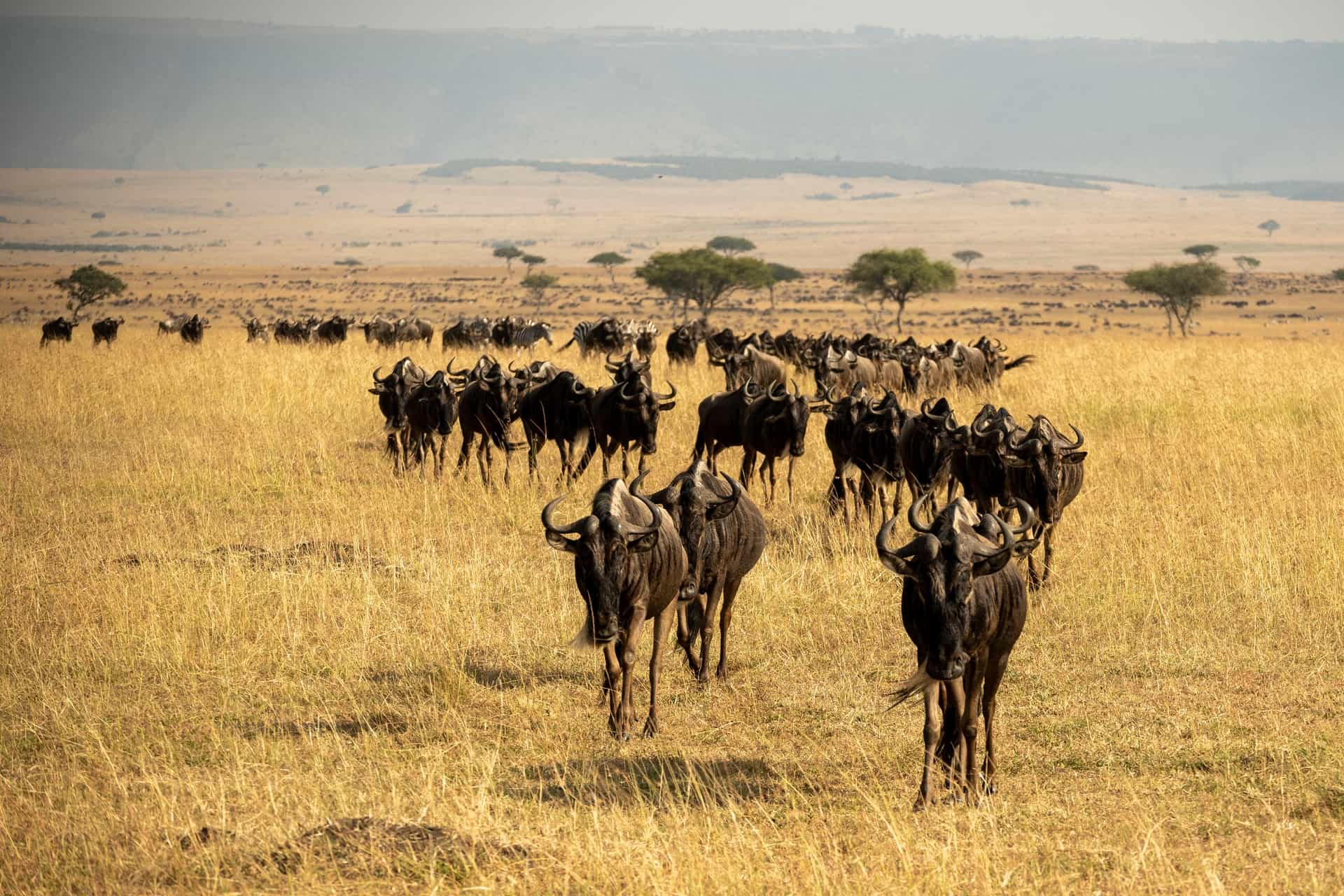
The five best 16-day Kenya and Tanzania safari itineraries range from the classic overland route focusing on the Great Migration to unique variants incorporating tropical beaches, active volcanic climbs, and tri-country primate tracking. A 16-day window provides the perfect duration to cross the Namanga or Isebania borders seamlessly without rushing.
16 Days Classic Great Migration Circuit
This 16-day expedition is the definitive East African safari, meticulously designed for first-time visitors seeking the quintessential savanna experience. By bridging the iconic landscapes of Kenya and Tanzania, this "Benchmark Route" offers unparalleled wildlife viewing, culminating in the dramatic spectacles of the Great Migration. You will traverse the sun-drenched plains of Amboseli, the avian havens of the Rift Valley, and the legendary grasslands of the Maasai Mara and Serengeti. Beyond the sheer volume of wildlife—including the elusive Big Five—this journey immerses you in the raw beauty of the African wilderness, from the baobab-studded hills of Tarangire to the ancient, caldera-contained ecosystem of the Ngorongoro Crater. This 16-days itinerary balances high-octane game drives with cultural insights, providing a profound, comprehensive introduction to the natural wonders that have defined the spirit of African exploration for generations. Prepare for a transformative journey through the very heart of the continent's most celebrated ecosystems.
Days 1–2: Amboseli National Park
Upon arrival in Nairobi, you will depart for Amboseli, a park world-renowned for its dramatic views of Mount Kilimanjaro. These two days are dedicated to tracking massive elephant herds that traverse the dry lake beds and swamps. Amboseli is famous for its "big tuskers," and you will also encounter plains game such as wildebeest, zebras, and Masai giraffes. Predators like lions, cheetahs, and spotted hyenas are frequently sighted against the backdrop of the mountain. Engage in morning and afternoon game drives, which provide the best opportunities for photography as the mountain’s peak emerges from the clouds. You will also have the option to visit a local Maasai village to learn about their pastoralist heritage, adding a vital cultural dimension to your wilderness experience.
Days 3–4: The Great Rift Valley Lakes
Transition into the Great Rift Valley, visiting Lakes Nakuru or Naivasha. Lake Nakuru is a protected haven for both black and white rhinos, which are often seen grazing in the thick acacia woodlands. The lake itself is a vibrant birding paradise, occasionally attracting hundreds of thousands of flamingos. At Lake Naivasha, enjoy a boat safari to spot hippos wallowing in the shallows and fish eagles soaring overhead. Walking safaris in nearby Crescent Island allow you to get remarkably close to giraffes and antelopes without the barrier of a vehicle. These days offer a refreshing change of pace, focusing on intimate encounters with smaller wildlife and the spectacular, high-altitude scenery of the Rift Valley’s volcanic craters and freshwater shorelines.
Days 5–7: Maasai Mara National Reserve
Travel to the Maasai Mara, the crown jewel of Kenya’s wildlife circuit. Spend three days exploring these legendary, rolling grasslands. This is prime territory for the Big Five: lions are exceptionally abundant, and you will have excellent chances of spotting leopards in the riverine forests. If your visit coincides with the Great Migration (typically July–October), witness the spectacle of thousands of wildebeest, zebras, and gazelles crossing the Mara River. Beyond the Migration, the Mara offers some of the most consistent predator action in Africa. Enjoy full-day game drives with picnic lunches, and perhaps opt for a hot air balloon safari at dawn to see the vast plains from a breathtaking, silent perspective.
Day 8: The Border Crossing
Today, you embark on the scenic drive to the Isebania border, the official gateway between Kenya and Tanzania. The journey typically takes about six hours, depending on road conditions. While it is a travel-heavy day, it provides a fascinating look at the rural landscapes and local life in the borderlands. After navigating the necessary customs and immigration procedures, you will be met by your Tanzanian guide and continue toward the Serengeti. This transition is a bridge between two worlds, setting the stage for the second half of your epic circuit. Arrive at your lodge in time for a sunset drink and a briefing on the Serengeti wilderness that awaits you.
Days 9–11: Serengeti National Park
Spend three full days navigating the "Endless Plains" of the Serengeti. This massive ecosystem supports over 1.5 million wildebeest and thousands of predators. Your time here is flexible, allowing you to track the herds across the central or northern sectors depending on their current location. Beyond the migration, the Serengeti is legendary for its lion prides and elusive leopard sightings in the yellow-barked acacia trees. You will experience the raw scale of the African savanna—a land where horizons stretch infinitely. Spend your mornings and late afternoons on game drives, the most active times for big cats. Between drives, relax at your tented camp, listening to the symphony of the bush and enjoying the unparalleled feeling of total immersion in one of the planet's last great wildernesses.
Days 12–13: Ngorongoro Crater
Ascend into the highlands to the Ngorongoro Conservation Area. The highlight is a full-day descent into the Ngorongoro Crater, a UNESCO World Heritage site and the world’s largest inactive, unbroken volcanic caldera. Its 600-meter-high walls create a unique "natural enclosure" for over 25,000 large mammals, making it one of the easiest places in Africa to tick off the Big Five in a single day. Black rhinos are a particular highlight here. You will enjoy a picnic lunch at the Ngoitokitok Springs, watching hippos splash in the water just meters away. On your second day, enjoy a guided walking safari on the crater rim, offering magnificent views down into the basin and a more meditative, intimate engagement with the highland flora and fauna.
Days 14–15: Tarangire National Park
Head south to Tarangire, a park defined by its iconic, ancient baobab trees and sprawling red-earth landscapes. Tarangire is famous for hosting Tanzania’s largest elephant population; during the dry season, the Tarangire River becomes a lifeline for thousands of these gentle giants. The park’s dense vegetation provides excellent cover for leopards, while the open plains are perfect for spotting cheetahs and lions. Spend these two days exploring the varied habitats, from riverine swamps to hilly woodlands. Tarangire is a photographer’s dream, with the baobabs providing a dramatic, silhouette-rich foreground. It is a fantastic place to conclude your safari, offering a different, more intimate feel than the vast plains of the Serengeti, and ensuring you see a diverse array of wildlife before your departure.
Day 16: Departure
After a final early morning game drive in Tarangire, you will begin your transfer back toward Arusha or directly to Kilimanjaro International Airport (JRO). If time permits, stop at a local market in Arusha to purchase authentic Tanzanian crafts, including wood carvings, beadwork, or Tanzanite jewelry. This final stretch is a time for reflection on the thousands of kilometers traversed and the countless wildlife encounters that have defined your 16-day circuit. Your guide will assist you with the final logistics, ensuring a smooth check-in for your flight home. As you depart, you take with you not just photographs, but a lasting connection to the rhythms and wild soul of East Africa.
15 Days: Bush & Beach Escapade
This 15-day journey is the quintessential East African fusion, perfectly blending the adrenaline of a high-intensity safari with the serene, turquoise beauty of Zanzibar. Designed for those who seek both adventure and restoration, this itinerary minimizes transit time while maximizing immersion. You begin by plunging into the wild heart of the Maasai Mara and the Serengeti, witnessing the raw power of the Great Migration and the legendary predator action of the savannah. After days filled with dust, game drives, and the roar of the wild, you transition seamlessly to the spice-scented air of Zanzibar. Here, the landscape shifts from golden plains to white-sand beaches, offering an idyllic conclusion to your journey. Whether you are walking through the historic, maze-like streets of Stone Town or lounging in an all-inclusive resort, this escapade balances the thrill of discovery with the ultimate tropical relaxation in a truly unforgettable, two-part experience.
Day 1: Arrival in Nairobi
Touch down at Jomo Kenyatta International Airport, where you will be met by your private driver and transferred to your boutique hotel in Nairobi. Spend the rest of the day unwinding from your flight, acclimatizing to the atmosphere of the city, and enjoying a relaxing dinner. If time permits, you might choose to visit the nearby Giraffe Centre or the David Sheldrick Wildlife Trust to get an early introduction to Kenya’s commitment to wildlife conservation. This day is designed for ease, ensuring you are refreshed and ready for your early departure into the wild tomorrow.
Days 2–4: Maasai Mara National Reserve
Fly or drive to the Maasai Mara, the world-famous theater of predator action. These three days are dedicated to immersive game drives in the reserve’s vast, open plains. The Mara is legendary for its dense population of lions, leopards, and cheetahs. You will witness the immense scale of the ecosystem, especially if you visit during the Great Migration season, when millions of wildebeest and zebras traverse the landscape. Beyond the wildlife, the Maasai Mara offers a unique opportunity to engage with the local culture; visit a traditional manyatta to learn about Maasai traditions and their harmonious coexistence with the wildlife that surrounds them.
Day 5: Cross-Border Transition to Serengeti
Today marks your journey from the Kenyan plains into the Tanzanian wilderness. Depending on your preference and logistics, you will either drive via the Isebania border crossing or take a scenic bush flight. This is a day of transition, taking you deeper into the East African landscape. As you cross into the Serengeti, the terrain shifts into the legendary "Endless Plains." You will settle into a comfortable tented camp, where the sounds of the African night provide an immediate reminder that you are now deep in the heart of the most famous wildlife reserve on Earth.
Days 6–7: Serengeti National Park
Spend two full days exploring the Serengeti’s central or northern sectors. These plains are the heartbeat of the ecosystem, supporting an incredible density of wildlife. Your guide will lead you through varied habitats—from granite kopjes (outcrops) where lions bask, to riverine forests favored by elusive leopards. You will track the herds across the vast horizon, capturing classic safari moments. The flexibility of these days allows for morning and evening game drives—the golden hours when the savanna truly comes alive. In between, enjoy the comfort of your lodge, reflecting on the sheer scale and beauty of this protected landscape.
Day 8: Ngorongoro Crater
Descend into the Ngorongoro Crater, an ancient, sunken caldera that acts as a self-contained "nature arena." This UNESCO World Heritage site boasts the highest density of wildlife in Africa. Within its 600-meter-high walls, you will likely spot the Big Five in a single day, including the rare and endangered black rhino. You will enjoy a private picnic lunch near the hippo-filled Ngoitokitok Springs, observing the complex social dynamics of the resident species. It is a day of concentrated wildlife viewing that feels intimate and exclusive, providing a stark, dramatic contrast to the sprawling open plains of the Serengeti.
Day 9: Arusha and Departure for Zanzibar
Depart the highlands and drive to Arusha, the gateway to Tanzania’s northern circuit. After a brief transition in the city, head to the airport for your domestic flight to the Zanzibar archipelago. As you land on the island, the environment changes instantly—from the scent of savanna dust to the warm, salt-tinged breeze of the Indian Ocean. A driver will meet you at the airport and whisk you away to your beach resort on the East Coast, where you will check in and begin your island escape with a sundowner overlooking the turquoise water.
Days 10–12: Zanzibar Beach Relaxation
For these three days, your schedule belongs entirely to you. Nestled on the East Coast, your resort is the perfect base to enjoy the Indian Ocean’s pristine white-sand beaches. Whether you prefer to lounge by the pool with a book, snorkel in the clear, coral-rich lagoons, or walk along the shore as the tide shifts, this is a time for total restoration. If you are feeling active, most resorts offer kayak rentals or paddleboarding. Otherwise, this is your chance to enjoy the "Hakuna Matata" lifestyle, savoring fresh tropical fruit and seafood dinners while listening to the gentle rhythm of the ocean waves.
Days 13–14: Stone Town and Spice Farm Tour
Dive into Zanzibar’s rich history and culture. On Day 13, embark on a walking tour of Stone Town, a UNESCO World Heritage site defined by its maze-like alleys, intricately carved wooden doors, and colonial landmarks like the Old Fort and the Anglican Cathedral. On Day 14, visit a working spice farm (shamba). You will learn how cloves, nutmeg, cinnamon, and vanilla are cultivated, with the chance to smell, touch, and taste the spices directly from the trees. End the day with a trip to the nearby Prison Island to visit the resident giant tortoises, blending historical insight with an unforgettable sensory experience.
Day 15: Departure
After a final breakfast on the beach, it is time to depart. A driver will transfer you to Zanzibar International Airport (ZNZ) for your flight back to Nairobi or Dar es Salaam, where you will connect with your international flight home. As you take off, look down at the archipelago’s striking coral reefs and turquoise hues—a final, beautiful memory of your 15-day journey. You leave with stories of the savannah’s intensity and the island’s tranquility, a perfectly balanced adventure that captures the very soul of East Africa.
16 Days Ultimate Wilderness & Peak Adventure
This 16-day expedition is a high-octane fusion of East Africa’s most iconic wildlife reserves and its most formidable alpine challenge. Tailored for high-fitness adventurers, this "Benchmark Route" combines the intense predator action of the Maasai Mara with the rigorous six-day Machame "Whiskey" Route trek up Mount Kilimanjaro. You begin by immersing yourself in the vast grasslands of Kenya, before crossing the border into Tanzania to conquer the Roof of Africa. The journey culminates in a celebratory, rapid-fire safari through the Ngorongoro Crater and Tarangire, offering a perfect blend of physical endurance and wildlife luxury. By balancing the raw, rugged demands of high-altitude trekking with the comfort of professional safari logistics, this itinerary promises an unparalleled sense of accomplishment. Stand atop Uhuru Peak, witness the untamed beauty of the savannah, and experience a journey that spans from the depths of the Rift Valley to the pinnacle of the continent.
Days 1–3: Maasai Mara National Reserve
Fly into Nairobi and transfer to the Maasai Mara, the undisputed king of African predator territory. Spend these three days maximizing your time in the field; the rolling grasslands provide a perfect stage for spotting the Big Five. Lions are exceptionally prolific here, and you will likely see them lounging in the shade of acacia trees. Engage in dawn and dusk game drives, when the air is crisp and the cats are active. You will also have the chance to visit a local Maasai manyatta to experience the pastoralist culture that has coexisted with this wilderness for centuries, grounding your adventure in the human history of the plains.
Day 4: Great Rift Valley Lakes
Transition from the Mara towards the Rift Valley’s scenic lake region, specifically Lake Nakuru or Naivasha. These areas serve as a refreshing "buffer" before your climb. Spend the day enjoying a boat safari on Lake Naivasha to spot hippos and fish eagles, or explore the sanctuary of Lake Nakuru, famous for its rhinos and vibrant birdlife. The relatively flatter terrain and lush, water-rich environment provide a stark, tranquil contrast to the intense predator-prey dynamics of the Mara, allowing you to rest your muscles and focus on the diverse bird species that define these alkaline habitats.
Day 5: The Road to Moshi
Today is dedicated to the border crossing from Kenya into Tanzania. Travel from the Rift Valley toward Arusha and then to Moshi, the bustling gateway town at the base of Mount Kilimanjaro. As you reach the mountain’s foothills, the scenery transforms into verdant coffee plantations and banana groves. Upon arrival in Moshi, meet your climbing team for a comprehensive gear check and briefing. Ensure all your trekking equipment is in order and hydrate well; this evening is critical for final preparation and resting before you embark on the grueling but rewarding journey toward the summit.
Days 6–11: The 6-Day Machame Route
Over these six days, you will undertake the legendary Machame Route, often called the "Whiskey Route" due to its challenging and steep nature. You start in the humid, moss-draped montane rainforest, ascending through the misty moorlands of the Shira Plateau. You will face the dramatic challenge of the Barranco Wall—a non-technical but thrilling scramble—before navigating the eerie, lunar-like landscapes of the alpine desert at Lava Tower and Barafu Camp. Each day builds toward the ultimate summit push, requiring physical stamina and mental fortitude. On the final morning, you will begin a midnight ascent through heavy scree, aiming to reach Stella Point and eventually Uhuru Peak (5,895m) by sunrise—an experience that rewards your endurance with the most magnificent view on the African continent.
Day 12: Descent and Recovery
After reaching Uhuru Peak, begin the long, careful descent back to Mweka Camp, where you will spend your final night on the mountain. The following morning, continue your descent to Mweka Gate, where you will be officially presented with your summit certificate. Transfer back to a lodge in Arusha, where a hot shower and a real bed will feel like pure luxury. Spend the rest of the day in deep recovery; your body has just performed a Herculean feat, and this time is essential to recharge your energy before the final safari leg of your trip begins.
Days 13–15: Ngorongoro and Tarangire
Celebrate your successful climb with a focused, luxury safari circuit. Spend Day 13 exploring the Ngorongoro Crater, where the concentrated wildlife allows you to see the Big Five in a single, high-density environment without the need for long drives. On Days 14–15, head to Tarangire National Park. Known for its iconic, ancient baobab trees and massive elephant herds, Tarangire offers a more intimate, "hidden" safari experience. It is the perfect place to witness lions stalking through the golden grass beneath the giant baobabs, providing spectacular photography opportunities and a serene, rewarding conclusion to your high-altitude adventure.
Day 16: Departure
After a final breakfast overlooking the Tanzanian landscape, transfer to Kilimanjaro International Airport (JRO). Reflect on your journey—from the predator-rich plains of the Mara to the frozen peak of Uhuru and the gentle giants of Tarangire. This 16-day circuit has taken you through the extremes of East African geography. As you board your flight home, you do so not just as a traveler, but as one of the few who has conquered the continent's highest point and witnessed the raw, untamed beauty of its greatest wilderness.
16 Days Hidden Tracks & Cultural Immersion Itinerary
This 16-day expedition is a profound departure from the typical "tourist circuit," specifically curated for seasoned travelers who crave the silence of the bush and the intimacy of authentic cultural exchange. By bypassing crowded mass-tourism hubs, this "Hidden Tracks" route prioritizes ecological exclusivity and deep-rooted tradition. You will venture into the arid, striking landscapes of Samburu to encounter unique, desert-adapted wildlife, then move into private conservancies that emphasize conservation over volume. The journey transitions into a rare, eye-opening exploration of Tanzania’s remote highlands, where you will live alongside—and learn from—the Hadzabe Bushmen and Datoga pastoralists, keepers of ancient ways of life. Culminating in the secluded corners of the Serengeti and the crater highlands, this itinerary offers an unfiltered connection to both the wild spirit of Africa and the indigenous communities that have called these landscapes home for millennia.
Daily Itinerary
Days 1–3: Samburu National Reserve Upon arrival in Nairobi, trade the city bustle for a light aircraft flight to the arid, rugged north. Samburu is an aesthetic marvel, where the Ewaso Ng'iro River carves a lifeline through a landscape of scrub and sun-baked earth. These days are dedicated to tracking the "Samburu Special Five"—species found only north of the equator: the reticulated giraffe, Grevy’s zebra, Somali ostrich, beisa oryx, and gerenuk. The contrast between the sparse terrain and the vivid color of the wildlife makes for exceptional photography. You will also engage with local Samburu community members, whose intricate beadwork and deep knowledge of this challenging environment provide a sophisticated introduction to the nomadic culture of Northern Kenya.
Days 4–5: Ol Pejeta Conservancy Drive or fly south to Ol Pejeta, a leading light in African conservation. This is not your standard reserve; it is the largest black rhino sanctuary in East Africa and the only place in Kenya to see chimpanzees. Spend your time here participating in specialized rhino-tracking experiences and visiting the chimpanzee sanctuary, which provides a home for rescues from the Congo Basin. Ol Pejeta’s commitment to community-based conservation and scientific monitoring makes it an ideal stop for travelers who value the "why" and "how" behind safari success. It is a high-impact experience that offers intimate wildlife encounters without the crowds of the larger national parks.
Days 6–8: Naboisho Conservancy Move to the Naboisho Conservancy, a vast, private expanse bordering the Maasai Mara. Being on private land is a game-changer; you are freed from the restrictions of national park rules. Here, you can partake in night game drives, guided bush walks, and off-road driving—all of which allow for unparalleled, up-close predator action. Naboisho’s low-density model ensures that when you find a lion pride or a hunting leopard, you are often the only vehicle there. The conservancy is a beacon for community partnership, where the land is managed in direct collaboration with local Maasai landowners, ensuring that your presence directly contributes to the preservation of the savanna.
Day 9: The Tanzanian Transition Today is a day of overland transition as you cross the border into Tanzania. After completing customs, you will leave the well-traveled safari roads behind, heading toward the saline shores of Lake Eyasi. This journey takes you through the transition of the northern highlands, providing a look at the changing architecture and agricultural practices of the local communities. It is a day to settle into the rhythm of the Tanzanian backcountry, as you move away from the high-traffic wildlife circuits and toward the quieter, more secluded regions that define the second half of your cultural journey.
Days 10–11: Hadzabe and Datoga Encounters These two days offer one of the most rare cultural experiences in Africa. Spend your time near Lake Eyasi with the Hadzabe, one of the last remaining traditional hunter-gatherer tribes in the world. You will have the unique opportunity to join them on a dawn hunt, observing their ancient tracking methods and knowledge of the bush. In contrast, spend time with the Datoga people, skilled pastoralists and master blacksmiths who have inhabited these lands for generations. Engaging with these communities provides a sobering, enlightening, and deeply human perspective on the diversity of human history and the resilience required to thrive in this challenging environment.
Days 12–14: Remote Serengeti Corridors Move into the remote, less-visited sectors of the Serengeti—either the far western corridor or the quiet plains of the east. By focusing on these hidden tracks, you will experience the "Endless Plains" in a state of near-total seclusion. Spend these three days exploring without the presence of the usual safari convoys, following the tracks of predators and the migrations of herbivores across a wilderness that feels entirely your own. With expert trackers, you will dive deep into the ecosystem's mechanics, enjoying the luxury of time and space to observe the small, nuanced behaviors of the wildlife that the crowds often speed past.
Day 15: The Crater Highlands Depart the Serengeti and head to the Ngorongoro Conservation Area, specifically focusing on the Empakaai Crater. Unlike the main Ngorongoro Crater, Empakaai is rarely visited by tourists; its rim is lush, filled with mist-covered forests, and the lake inside is a haven for flamingos. Embark on a guided hike around the rim or down to the crater floor. The air is cool, the views are expansive, and the tranquility is absolute. This is a day for high-altitude exploration and quiet reflection, offering a stunning, scenic finale to your adventure before the return to civilization.
Day 16: Departure Your final morning offers one last chance to soak in the highland views before beginning the transfer back to Arusha. En route, you may have the chance to visit a local cultural craft cooperative, where you can support regional artisans. Your journey concludes at Kilimanjaro International Airport (JRO). As you depart, you leave behind the crowded tourist routes, carrying instead the memory of the Hadzabe’s quiet forest hunting, the silence of the Naboisho plains, and the profound beauty of a journey taken on the hidden tracks of East Africa.
16 Days Tri-Country East Africa Megatour (Uganda + Kenya + Tanzania)
This 16-day megatour is the ultimate "bucket-list" expedition, meticulously engineered to capture the pinnacle of East African biodiversity in one seamless journey. By traversing the lush forests of Uganda, the legendary savannahs of Kenya, and the dramatic volcanic landscapes of Tanzania, this itinerary offers an unparalleled breadth of experiences. You begin by delving into the misty primate habitats of Uganda, home to the endangered mountain gorilla and playful chimpanzees. The adventure then pivots to the iconic plains of Kenya and Tanzania, where you will track the Big Five and witness the raw, rhythmic power of the Great Migration. This "Benchmark Route" balances high-intensity tracking with classic game drives, providing a comprehensive, life-changing encounter with the continent’s most celebrated wildlife and landscapes. Designed for the adventurous spirit, this megatour creates a profound connection to the wild heart of Africa, ensuring every day delivers a new, world-class discovery.
Daily Itinerary
Day 1: Arrival in Entebbe
Touch down at Entebbe International Airport, the gateway to your Ugandan adventure. Your guide will meet you and transfer you to your lodge, located along the tranquil shores of Lake Victoria. Use this evening to relax, enjoy a quiet dinner, and prepare for the journey ahead. If you have time, a brief visit to the Uganda Wildlife Education Centre or a sunset walk along the lake offers a perfect, gentle introduction to the "Pearl of Africa."
Days 2–3: Kibale Forest Chimpanzees
Depart for Kibale Forest National Park, a lush, tropical haven that boasts one of the highest concentrations of primates in the world. Spend your first afternoon enjoying a swamp walk in the Bigodi Wetlands, a community-run sanctuary famous for its unique birdlife and various monkey species. On Day 3, engage in your primary highlight: the chimpanzee tracking experience. Guided by experts, you will venture deep into the forest to observe our closest living relatives as they play, groom, and vocalize in the canopy. The proximity to these intelligent creatures is a powerful, intimate wildlife encounter that sets a high bar for the rest of your journey.
Days 4–5: Queen Elizabeth National Park
Travel south to Queen Elizabeth National Park, a diverse ecosystem defined by crater lakes, wetlands, and open savannah. On Day 4, enjoy an afternoon game drive in the Kasenyi Plains, where you’ll look for lions, elephants, and vast herds of Uganda kob. Day 5 features the iconic Kazinga Channel boat cruise, a two-hour wildlife spectacle where you will see hundreds of hippos, basking crocodiles, and massive elephant herds coming down to the water’s edge. Keep your binoculars ready for the incredibly diverse birdlife, including the African skimmer and saddle-billed stork, as you glide along the water.
Days 6–7: Bwindi Impenetrable Forest
Journey into the misty mountains of Bwindi Impenetrable National Park, a UNESCO World Heritage site and the sanctuary of the endangered mountain gorilla. On Day 7, you will undertake the ultimate wildlife trek. Accompanied by experienced trackers, you will hike through the dense, verdant forest to locate a habituated gorilla family. The hour spent with these majestic animals—observing their complex social structures and gentle behaviors—is universally regarded as a "life-changing" experience. The physical challenge of the trek is quickly forgotten the moment you lock eyes with a silverback in his natural, mountain home.
Day 8: Cross-Border Flight to Nairobi
Bid farewell to the Ugandan rainforest and fly from Entebbe to Nairobi, Kenya. This regional flight acts as a bridge between the forest and the savanna. Upon arrival, enjoy the vibrant, modern energy of Nairobi. Depending on your arrival time, you may visit the Giraffe Centre or the David Sheldrick Wildlife Trust to see orphaned baby elephants. Settle into a comfortable hotel in the city, ready to trade the humid forest air for the dry, golden expanses of the Kenyan plains.
Days 9–10: Maasai Mara National Reserve
Travel to the Maasai Mara, the world-famous theater of predator action. These two days are spent exploring the rolling, endless grasslands. The Mara is the heart of the Great Migration and is arguably the best place in Africa to spot lions, cheetahs, and leopards in their natural element. Enjoy full-day game drives with picnic lunches, allowing you to venture far from the lodges and deeper into the reserve’s most active corners. The sheer volume of plains game here is mind-boggling, and the sight of the Mara River meandering through the savannah creates a dramatic, cinematic backdrop for your safari photography.
Days 11–12: Serengeti National Park
Cross the Isebania border into Tanzania to enter the Serengeti, the world’s most famous wildlife sanctuary. You now stand in the heart of the "Endless Plains." For the next two days, you will track the migration herds as they move across the Serengeti’s northern or central sectors. The Serengeti is an ecosystem of massive scale; the horizon seems to stretch on forever, populated by millions of wildebeest, zebras, and gazelles. This is predator territory at its most intense, providing ample opportunities to see hunting scenes in a landscape that has changed very little over the past millennia.
Days 13–14: Ngorongoro Crater
Ascend into the mist-shrouded highlands to the Ngorongoro Conservation Area. The centerpiece of these two days is the descent into the Ngorongoro Crater, an inactive volcanic caldera that contains the highest density of wildlife in Africa. Within this "natural arena," you have an excellent chance of spotting the Big Five in a single morning. The resident population of black rhinos is a specific highlight. You will enjoy a picnic lunch on the crater floor, surrounded by the dramatic walls of the caldera, before spending your final evening reflecting on the sheer variety of habitats you have traversed.
Days 15–16: Arusha and Departure
On Day 15, drive from the crater highlands toward Arusha, passing through the scenic Tanzanian countryside. This is a time for final souvenir shopping—Tanzanite jewelry, traditional beadwork, or wooden carvings—at local markets. Enjoy a final, relaxed dinner as you recount the journey from the Ugandan forests to the Kenyan plains. On Day 16, your guide will transfer you to Kilimanjaro International Airport (JRO) for your departure flight. As you take off, look down one last time at the Great Rift Valley, marking the end of a grand 16-day expedition across the best of East Africa.
1. What are the must-visit destinations on a 16-day itinerary?
A 16-day safari allows you to traverse the absolute pinnacle of East African biodiversity. Your journey begins in Amboseli National Park, famous for its massive elephant herds that roam beneath the iconic, snow-capped backdrop of Mount Kilimanjaro. From there, your path leads into the heart of the Maasai Mara National Reserve, Kenya’s most legendary wildlife arena, renowned for its dense predator populations and the dramatic Great Migration. Crossing the border into Tanzania, the Serengeti National Park offers an expansive, endless-plain ecosystem where the horizon seems to stretch into infinity; this is the primary theater for witnessing the migration. You must then descend into the Ngorongoro Crater, a unique UNESCO World Heritage site and a self-contained "garden of Eden" where the high caldera walls protect an incredible density of wildlife. Finally, Tarangire National Park serves as your closing act. Known for its surreal landscapes filled with ancient, giant baobab trees and its reputation as the best place to find huge, seasonal elephant concentrations, Tarangire provides an intimate, scenic conclusion to your safari. Together, these five destinations create a perfect, holistic loop that covers every major habitat—from arid, dusty plains and lush riverine forests to volcanic highlands—ensuring you experience the full breadth of what makes East Africa the world’s most celebrated safari destination.
2. Is there a specific route to maximize game viewing?
To maximize your 16-day experience, a strategic loop is essential to minimize backtracking and ensure you see diverse landscapes. Starting in Nairobi, you should head immediately south to Amboseli National Park. This allows you to witness the elephants while you are fresh and eager. From there, you travel toward the Kenya-Tanzania border. The Namanga border is the most direct route if you are moving from Amboseli toward the Arusha region, whereas the Isebania border is better suited if you are coming from the Maasai Mara toward the western Serengeti. By looping through the Serengeti, you traverse the central and northern plains, which offer the best wildlife density. From the Serengeti, you naturally funnel into the Ngorongoro Crater and then down to Tarangire. This route is efficient because it flows geographically from the northeast to the southwest, ending conveniently near Arusha or Kilimanjaro International Airport (JRO). This circular circuit ensures that every day of driving is part of the scenery, avoiding repetitive travel and keeping you consistently in the "action zones" of the savanna. By working with a local operator, you can time your transit days to coincide with game drives, turning your travel time into part of the overall safari experience.
3. When is the best time to do this safari?
For a 16-day comprehensive safari, the dry season—spanning from July to October—is widely considered the "gold standard." During these months, the rains have ceased, the vegetation thins significantly, and the animals congregate around the remaining water sources, such as the Mara and Tarangire rivers. This predictability makes for spectacular, high-volume wildlife viewing. Most importantly, this window coincides with the Great Wildebeest Migration, where massive herds traverse the Serengeti and cross the Mara River in Kenya. These dramatic river crossings are the quintessential East African wildlife moment, often involving intense predator-prey dynamics as crocodiles lie in wait. While these months are peak season, leading to more safari vehicles in the popular parks, the trade-off is the absolute certainty of seeing world-class wildlife action. If you prefer quieter trails, the shoulder months of January and February are also excellent; they offer a "short dry season" when calving occurs, attracting a high number of predators to the short-grass plains. Ultimately, July to October remains the best choice for travelers wanting to experience the sheer, overwhelming scale of the migration and the most reliable big-game sightings across all five major parks.
4. What is the Great Wildebeest Migration, and can I see it?
The Great Wildebeest Migration is the largest terrestrial mammal migration on Earth, involving over 1.5 million wildebeest, alongside hundreds of thousands of zebras and gazelles. This is a perpetual, circular trek driven by the search for fresh grazing and water. Seeing it is absolutely possible on a 16-day tour, provided you align your timing and location. From July to September, the herds are typically in the northern Serengeti and the Maasai Mara. This is when the famous river crossings occur; the herds must brave the Mara River, filled with hungry Nile crocodiles, in a spectacle of raw, primal survival. Throughout the rest of the year, the herds are scattered across the Serengeti, moving south toward the Ndutu plains for the calving season in early spring. The "Migration" is not a single event, but a constant movement. A 16-day itinerary gives you a massive advantage because you are not limited to one park; you can follow the herds. By consulting with your safari operator as you plan, you can ensure your itinerary focuses on the specific Serengeti corridor where the herds are predicted to be. It is a powerful, emotional, and life-changing sight that defines the rhythm of the African savanna.
5. Can I see the "Big Five" on this tour?
Yes, this 16-day itinerary offers one of the highest probabilities of completing the "Big Five" checklist of any route in Africa. The Big Five—lion, leopard, elephant, buffalo, and the elusive black rhino—are all indigenous to the ecosystems you will visit. Lions are ubiquitous, with the Maasai Mara and Serengeti hosting massive prides. Buffaloes are frequently sighted in large herds across every park on your route. Elephants are the highlight of Amboseli and Tarangire, where you can see them in extraordinary numbers. Leopards are more solitary, but the riverine forests of the Mara and the granite kopjes (rock outcroppings) of the Serengeti provide excellent cover for them to hunt and rest. The black rhino is the most difficult to spot, but the Ngorongoro Crater acts as a protected, high-density sanctuary where your chances of seeing one are significantly higher than anywhere else on the continent. Because you are visiting five distinct parks, you have multiple opportunities and diverse habitats to find each species. Your professional guide will track recent sightings daily, ensuring you focus your time in the exact areas where these iconic animals have been recently spotted, making a successful "Big Five" encounter highly likely.
6. What is the best way to cross the border between Kenya and Tanzania?
The best way to cross the border depends entirely on your priority: time or experience. If your goal is to maximize your time in the bush, flying is the superior option. Many reputable operators can arrange for a light-aircraft charter from the Maasai Mara (Kenya) to Migori, where you cross the border, and then take a connecting flight into the Serengeti. This saves you an entire day of driving on rough, bumpy roads. However, if you are looking for the "scenic overland experience," driving through the border crossings is a fascinating, albeit long, day. The Isebania border is commonly used for those traveling between the Mara and the western Serengeti, while the Namanga border is the standard for those moving between Amboseli and the Arusha/Tarangire region. Driving allows you to see the changing rural landscapes, local villages, and the transition of the geography in a way that flying cannot replicate. Regardless of the method, your tour operator handles all customs and immigration documentation—including the transfer of your safari vehicle—so you can focus on the journey. Most travelers find that a mix of driving for immersion and flying to bypass long, dusty stretches provides the best balance for a 16-day trip.
7. What types of vehicles are used for safaris?
On a 16-day safari, the vehicle you use is essentially your "home" in the bush, and standards are high to ensure both comfort and optimal photography. The standard for East Africa is a 4x4 Land Cruiser (often the extended version) or a high-clearance safari minivan. These are purpose-built machines equipped with a pop-up roof, which is the most critical feature. It allows you to stand up safely inside the vehicle to get an unobstructed, 360-degree view of the wildlife, which is essential for capturing those perfect, eye-level photos. These vehicles also feature large, sliding windows and specialized suspension to handle the rough, uneven terrain of the savanna. It is important to note that, due to local transport regulations, you will usually have one vehicle and a dedicated driver-guide for the Kenyan leg, and a different vehicle with a different guide for the Tanzanian leg. This ensures that both your guide and vehicle are perfectly suited to the specific park rules and geography of each country. A good safari vehicle will also include amenities like charging ports for your cameras and devices, a fridge for cold drinks, and plenty of space for your gear.
8. What types of accommodation are available?
Accommodation on a 16-day safari is incredibly diverse, offering something for every style of traveler. At the entry level, you can find mid-range tented camps. These are not "camping" in the traditional sense; they are semi-permanent structures with comfortable beds, ensuite bathrooms, hot showers, and gourmet meals. They offer an incredible, immersive experience where you can hear the sounds of the bush right outside your tent. For those seeking more comfort, there are beautiful safari lodges often located with stunning views overlooking the plains or rivers. If you are looking for the "gold standard" of luxury, brands like &Beyond, Serena, and Sopa operate lodges and camps that define world-class service, featuring elegant decor, swimming pools, spa treatments, and private viewing decks. The key to a great 16-day trip is the ability to mix and match; you might choose a luxury lodge for the Ngorongoro Crater but opt for a more authentic, intimate tented camp in the Serengeti to be closer to the migration. Reputable tour operators will tailor your accommodations to your budget and interests, ensuring that every night you have a safe, comfortable, and often incredibly scenic place to rest after a long day of game drives.
9. How do I handle visas for both countries?
Navigating visas for a two-country trip might sound complex, but it is actually quite straightforward if you plan ahead. The most efficient and cost-effective option for a 16-day safari covering both Kenya and Tanzania is the East Africa Tourist Visa. This is a single, unified visa that allows for multiple entries into Kenya, Rwanda, and Uganda; however, note that it currently does not include Tanzania. For a trip that spans both Kenya and Tanzania, you should apply for the necessary individual visas for each country. Most travelers can easily handle this online via the official government immigration websites of both Kenya and Tanzania. It is vital to ensure your passport is valid for at least six months beyond your departure date and has at least two blank pages. Many reputable safari operators will provide you with clear, step-by-step guidance on which specific visa portals to use and what documentation (like your safari itinerary or flight proof) you need to upload. Applying a few weeks before your departure is the safest route. By having these digital documents saved on your phone and printed as backups, your border crossings will be a smooth, stress-free experience.
10. Do I need vaccinations for this trip?
Health and safety are paramount for a 16-day expedition, so preparation is key. Regarding Yellow Fever, it is mandatory if you are traveling from a country that is considered a "high-risk" area for transmission, or if you are crossing from one East African country to another (such as Kenya to Tanzania). Even if not strictly required, it is highly recommended to consult your travel clinic and have an updated International Certificate of Vaccination or Prophylaxis (the "Yellow Card"). Regarding Malaria, the risk is present in most parts of East Africa, especially in the humid areas near lakes and rivers. It is standard practice for travelers to take malaria prophylaxis (anti-malarial medication) as prescribed by their doctor, and to use insect repellent, wear long-sleeved clothing during dawn and dusk, and sleep under mosquito nets, which are provided in all reputable lodges. Beyond these, ensure your routine vaccinations (such as Hepatitis A, Typhoid, and Tetanus) are up to date. A simple visit to a specialized travel clinic 4 to 6 weeks before your trip will provide you with all the necessary prescriptions and health advice tailored to your specific itinerary, giving you peace of mind throughout your journey.
11. What cultural experiences can be included?
Cultural immersion is one of the most enriching parts of a 16-day safari, adding a vital human layer to your wildlife encounters. In Kenya, a visit to a Maasai village is a classic experience; you can learn about their traditional pastoralist way of life, their intricate beadwork, and their famous jumping dance, all while seeing how they coexist with the wildlife of the Mara. In Tanzania, the cultural possibilities are even more varied. Near Lake Eyasi, you have the rare opportunity to spend time with the Hadzabe Bushmen, one of the last remaining traditional hunter-gatherer tribes in the world. Joining them on a morning hunt is a profound, life-changing experience that offers a glimpse into human existence as it has been for millennia. You can also visit the Datoga people, who are skilled metalworkers and pastoralists. These are not staged "performances"—they are real, community-run visits that help support local schools and development projects. By including these, you aren't just a spectator of the landscape; you are engaging with the people who have been the stewards of this land for generations, ensuring you leave with a much deeper, more holistic understanding of East Africa.
12. Are Park fees included in the tour price?
Yes, for the vast majority of reputable safari operators, park entry and conservation fees are bundled into the total price of your tour package. These fees are significant—they are a core part of your contribution to the protection and maintenance of the national parks, the salaries of the rangers, and anti-poaching efforts. When you request a quote from an operator, it is standard for them to provide a detailed breakdown that includes accommodation, transportation, professional guide services, and all applicable government and conservation fees. However, you should always verify this during the booking process. Look for the "what’s included" section in your contract or proposal. If an operator quotes a price that seems unusually low, check if they have included all park fees, as these can easily add up to hundreds of dollars per person over a 16-day trip. A good operator will be fully transparent about these costs because they want to ensure you don't face any "hidden" charges once you arrive. Always confirm that your final quote covers all entrance fees for every park mentioned in your itinerary, so you can enjoy your safari without worrying about logistics.
13. What should I pack for a 16-day safari?
Packing for a 16-day safari requires a balance of utility and comfort. First, focus on your clothing: stick to neutral-colored items (tan, khaki, olive, or beige). These colors are best for the bush because they don't attract insects, don't show the red African dust, and help you blend into the environment. Avoid bright whites or dark blues and blacks, which are known to attract tsetse flies. Because you will be crossing different biomes, pack in layers; mornings can be surprisingly cold, especially in the high-altitude Ngorongoro Crater, so a warm fleece or light jacket is essential. For your gear, a high-quality pair of binoculars (8x42 is a great standard) will be your most valuable tool for spotting wildlife. Don't forget a wide-brimmed hat, polarized sunglasses, and high-SPF sunscreen, as the equatorial sun is very strong. Since most internal bush flights have strict luggage limits, pack your gear in a soft-sided duffel bag rather than a hard-shell suitcase, as these fit better in the vehicles and the small cargo holds of the planes. Finally, bring a small personal medical kit with basics like rehydration salts, painkillers, and antiseptic, and ensure you have a universal power adapter.
14. How much does a 16-day safari cost?
The cost of a 16-day safari is highly variable and depends on your personal "style" of travel. For a high-end, private luxury safari—which includes top-tier lodges, fly-in transfers between parks, and personalized service—you should expect to budget between $5,000 and $10,000+ per person. This price point covers the best accommodations, private 4x4 vehicles, and the highest level of logistics. If you are looking for a mid-range or group-joiner tour, prices typically start around $3,500 to $4,500 per person. In these itineraries, you might stay in high-quality tented camps, travel in smaller groups, and use more overland transport, which is a great way to see the country while managing costs. Factors that influence these prices include the season (peak season is more expensive), the number of people in your party (private trips cost more than groups), and the number of internal flights you take. It is helpful to treat your safari as an investment in an experience; reputable operators will work with you to adjust your lodge choices or transport methods to meet your specific budget, ensuring you get the most "value" out of your 16-day trip without sacrificing the core safari experience.
15. Can I add a beach extension to this itinerary?
Absolutely! Ending a 16-day intensive safari with a beach extension is perhaps the most popular way to complete an East African journey. After two weeks of early mornings, bumpy roads, and high-adrenaline wildlife encounters, Zanzibar is the perfect place to decompress. You can fly directly from Arusha (Tanzania) to Zanzibar International Airport in about an hour. Once there, you have a paradise of turquoise lagoons and white-sand beaches. Whether you want to stay at a luxurious, all-inclusive beach resort on the East Coast, explore the history of Stone Town’s spice markets, or go snorkeling and diving in the coral-rich waters of Mnemba Atoll, the island offers a completely different, slow-paced atmosphere. Most travelers choose a 3-to-4-day beach extension. It provides the necessary "reset" before your long-haul flight home. Because the infrastructure between the Tanzanian safari circuit and Zanzibar is so well-developed, adding this to your 16-day trip is incredibly easy. Your safari operator can handle the entire booking, including your internal flight and island accommodation, turning your "Bush and Beach" adventure into a seamless, perfectly balanced 19-to-20-day holiday.
Booking 16 Days Kenya Tanzania safari with us Roads of Adventure safaris
Booking a 16-day Kenya and Tanzania safari with Roads of Adventure Safaris is an excellent way to experience East Africa's iconic wildlife. Since they are locally headquartered nearby on Kampala-Entebbe Road, it is highly convenient to coordinate your trip directly with them.
