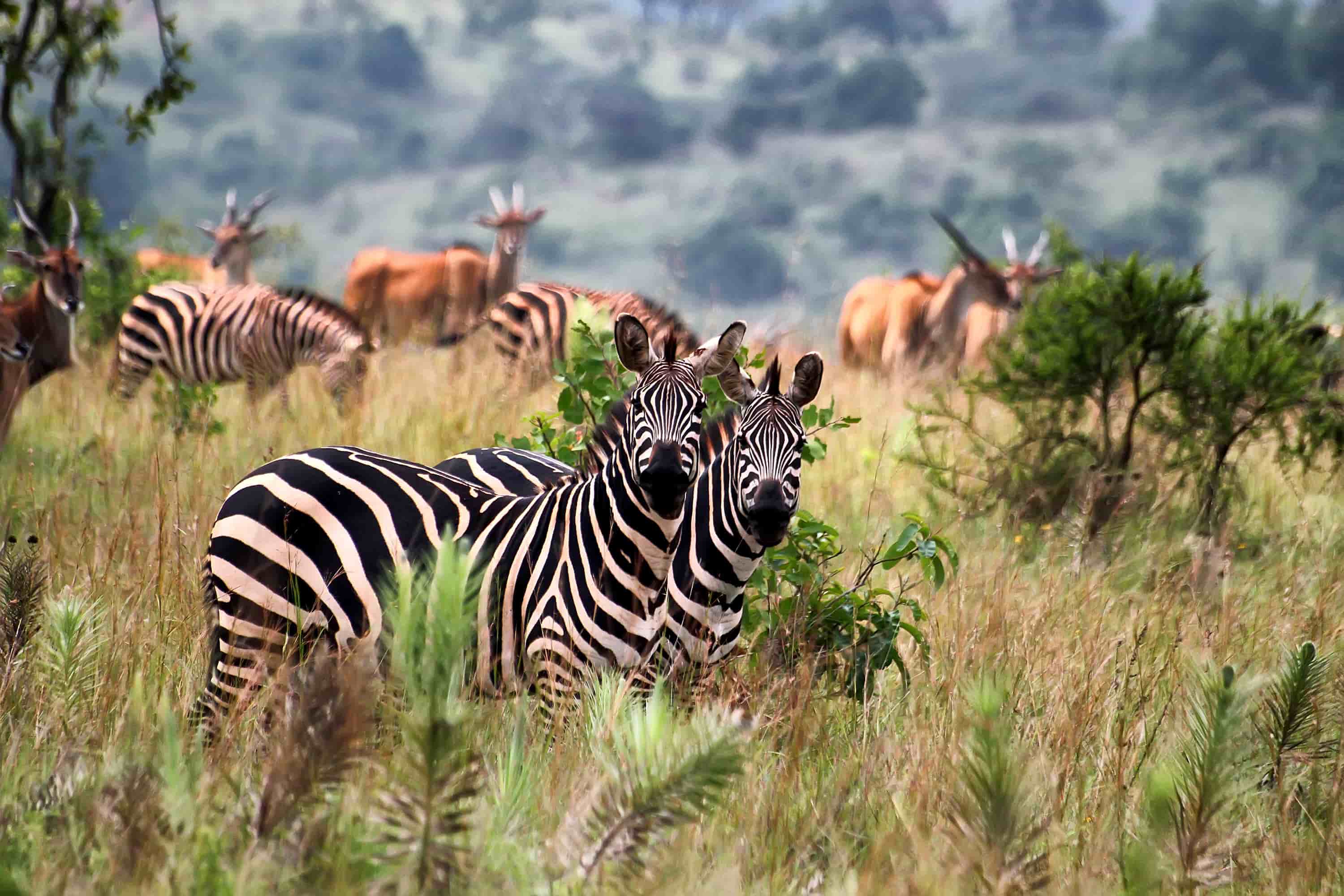
Akagera National Park in eastern Rwanda is a premier, protected savanna, established in 1934, and a remarkable conservation success story. It offers Big Five safaris, including re-introduced lions and rhinos, boat trips on Lake Ihema, and nocturnal game drives, showcasing high biodiversity—including over 8,000 large mammals and over 380 bird species—just a few hours from Kigali
21-days-rwanda-primate-safari-culture-history-and-wildlife-holiday
20-days-complete-rwanda-uganda-safari-tour-combo
14-days-luxury-rwanda-primate-safari-and-uganda-safari-tour-combo
14-days-magical-rwanda-photography-safari
12-days-best-rwanda-wildlife-safari-and-rwanda-primate-safari-vacation
11-days-classic-uganda-rwanda-tour-combined-itinerary
10-days-9-nights-midrange-rwanda-gorilla-trekking-wildlife-and-culture
9-day-romantic-honeymoon-rwanda-wildlife-safari-itinerary
9-days-best-family-rwanda-safari-holiday-big-five-canopy-walk-and-chimpanzee
8-days-best-africa-big-five-rwanda-safari-and-gorilla-trekking
6-days-rwanda-gorilla-trekking-chimpanzee-tracking-and-birdwatching
Oldest Park in Rwanda: Established in 1934 by the Belgian colonial government, it is Rwanda's oldest protected area.
Akagera National Park holds the distinction of being Rwanda’s oldest protected area, established in 1934 by the Belgian colonial administration. Originally gazetted to conserve the region’s rich flora and fauna, Akagera was set aside as a vital reserve in an era when conservation priorities were only beginning to form across Africa. Its early protection preserved a mosaic of habitats—savannah plains, wooded hills, and extensive wetlands—that would later underpin Rwanda’s rewilding and tourism efforts. Over decades the park accumulated a legacy of scientific interest, colonial-era management practices, and evolving conservation challenges. The post‑independence years and the upheaval surrounding the 1994 genocide severely impacted Akagera: human settlement, deforestation and unsustainable hunting reduced wildlife numbers and degraded habitats. Nonetheless, being the oldest park helped secure its eventual restoration; historical boundaries, legacy maps and institutional familiarity provided a foundation for rehabilitation. Partnerships formed in the 21st century—including with African Parks and the Rwanda Development Board—drew on Akagera’s long history to guide reintroduction programs, anti‑poaching innovations and community engagement. Today, its identity as Rwanda’s earliest protected area is both an emblem of conservation persistence and a reminder of how stewardship must adapt across generations.
Massive Size Reduction: The park originally covered 2,500 square kilometers but was reduced to 1,122 square kilometers in 1997 to provide land for returning refugees after the 1994 genocide.
Akagera originally spanned roughly 2,500 square kilometers, making it one of Rwanda’s largest conservation areas. However, the country’s tragic 1994 genocide and the massive population movements that followed placed intense pressure on land and resources. When refugees returned and resettlement needs arose, political and humanitarian decisions in the late 1990s led to a redrawing of Akagera’s boundaries. In 1997, approximately half the park’s territory was excised to provide land for returning families and agricultural use, reducing the protected area to about 1,122 square kilometers. This reduction had immediate and long‑term ecological consequences: habitat loss, fragmentation and increased human‑wildlife conflict in newly settled areas hampered wildlife movement and recovery. The downsized footprint also constrained options for large‑scale wildlife populations and natural reintroduction corridors. Restoration efforts in subsequent decades had to contend with these spatial limits by intensifying habitat management, focusing reintroductions in secure zones, and creating community‑conservation initiatives on the park’s margins. The shrinkage of Akagera is a poignant example of the difficult tradeoffs between urgent human needs and wildlife conservation after conflict — and it underscores the importance of integrating sustainable land‑use planning with post‑crisis recovery.
Named After a River: Its name comes from the Akagera River, which flows along the eastern boundary and feeds into several lakes.
Akagera National Park takes its name from the Akagera River, a defining hydrological feature that traces part of the park’s eastern boundary. The river is central to the park’s ecology: it feeds a chain of interconnected lakes and extensive papyrus swamps that form the backbone of Akagera’s remarkable wetland system. These lakes and waterways—most notably Lake Ihema—support dense populations of aquatic wildlife such as hippos and Nile crocodiles, and draw large numbers of waterbirds and migratory species. The riverine and lacustrine habitats create distinct ecological niches, from papyrus marshes that harbor secretive species like the sitatunga to open-water shores where wading birds congregate. The Akagera River also plays a cultural and historical role for local communities who have long depended on its waters for fishing, small-scale irrigation and traditional livelihoods. For park management, the river system is both a conservation asset and a management focus: protecting water quality, regulating human access, and managing boat‑based tourism are all shaped by the river’s dynamics. Naming the park after the Akagera underscores the inextricable link between freshwater systems and the broader savannah and woodland ecosystems that define this iconic Rwandan landscape.
Central Africa’s Largest Wetland: The park's complex system of lakes and papyrus swamps makes up over a third of its area, forming the largest protected wetland in Central Africa.
Akagera’s most distinctive ecological feature is its extensive wetland complex—an intricate network of lakes, marshes and papyrus beds that occupy more than a third of the park’s area. This wetland system, centered on Lake Ihema and its satellite waters, constitutes the largest protected wetland in Central Africa and supports exceptional biodiversity. Papyrus swamps and seasonally flooded floodplains provide habitat for specialist species such as the sitatunga and the elusive shoebill stork; the shallow lakes teem with hippos, Nile crocodiles and fish, while shorelines attract herons, storks and numerous waterfowl. Wetlands function as ecological engines: they moderate floods, filter water, store carbon and sustain surrounding dryland ecosystems during the dry season. For local people, these wetlands have traditional uses—fishing, papyrus harvesting and subtle seasonal resource cycles—that must be managed to avoid depletion. From a tourism standpoint, the wetland landscapes enable boat safaris and superb birding opportunities, broadening Akagera’s appeal beyond land‑based game drives. Conserving such a vast wetland within a single protected unit is strategically valuable for regional biodiversity; it also demands continuous management attention to control invasive species, protect water quality, and balance wildlife needs with sustainable community livelihoods.
Strategic Location: It is located in eastern Rwanda, bordering Tanzania, and is only a 2- to 3-hour drive from the capital, Kigali.
Akagera’s strategic positioning greatly enhances its conservation and tourism value. Located in Rwanda’s eastern province, the park borders Tanzania and sits within an ecological and cultural transition zone between savannah and lacustrine habitats. Its transboundary adjacency to Tanzanian ecosystems opens possibilities for regional conservation collaboration and wildlife movement across international borders. Importantly for visitors, Akagera is conveniently accessible from Kigali: most transfers take roughly two to three hours by road, making the park an ideal day‑trip or weekend destination for those combining gorilla treks in the west with a savannah experience. This short travel time reduces logistical complexity for multi‑site itineraries and supports Akagera’s role in Rwanda’s tourism portfolio as the country’s primary savannah offering. The park’s location also places it at the crossroads of local communities and agricultural zones; this creates both opportunities for community partnerships—eco‑tourism revenue sharing, education programs—and challenges such as potential human‑wildlife interactions on the park edges. Overall, Akagera’s accessibility and border location make it a linchpin for domestic tourism growth and regional conservation strategies.
The Only Savannah Park: Akagera is the only place in Rwanda where you can experience a classic African savannah safari.
Akagera stands out within Rwanda as the country’s sole true savannah ecosystem—a striking contrast to the montane rainforests and volcanic highlands common in much of the nation. Here, broad grassy plains, riverine woodland and open savannah support herds of plains species such as zebras, impala, topi and buffalo, offering a classic African game‑drive experience that complements Rwanda’s famed gorilla and primate attractions. For travelers who want the “Big Five” sightings within a single country itinerary, Akagera is the destination of choice: skillfully managed game drives and well‑placed lodges allow close encounters with elephants, rhinos, giraffes and predators. The park’s savannah character also defines seasonal wildlife movements and predator‑prey dynamics that make game viewing particularly rewarding during dry months when animals congregate around remaining water sources. As Rwanda’s only savannah park, Akagera broadens the nation’s safari offer, attracting visitors seeking diversity—forest primates plus open‑plain game—without long cross‑country travel. It is a critical piece of Rwanda’s effort to present a full complement of East African wildlife experiences within a compact, well-managed tourism framework.
Home to the Big Five: It is the only park in Rwanda where you can see all the "Big Five" animals: lion, leopard, elephant, buffalo, and rhino.
Akagera National Park is unique in Rwanda for hosting all members of Africa’s “Big Five”—lion, leopard, elephant, buffalo, and rhinoceros—providing visitors the rare chance to see this iconic assemblage within one protected area. Following years of intense restoration, including careful translocations and anti‑poaching measures, Akagera has rebuilt populations of large mammals that once disappeared from the park. Elephant herds, reintroduced or recolonized after earlier declines, now roam the savannah and woodlands; lions were reintroduced in 2015 and have since multiplied, while leopards persist as elusive predators. Buffaloes are common across grasslands, and the ambitious reintroduction of both eastern black rhinos and Southern white rhinos has returned these keystone browsers to Akagera’s plains and protected zones. For wildlife enthusiasts, the presence of the Big Five enhances Akagera’s appeal as a full-featured safari destination and supports high-value tourism revenue that funds ongoing conservation. Importantly, maintaining these populations requires sustained anti‑poaching vigilance, habitat stewardship and community engagement—efforts that Akagera’s management partnership has prioritized to ensure that Big Five sightings are both possible and sustainable.
Successful Lion Reintroduction: After being eradicated in the 1990s, seven lions were reintroduced from South Africa in 2015; the population has since grown to over 40.
The lion population at Akagera provides a conservation success story: after being lost from the park during decades of conflict and intensive poaching, lions were reintroduced in 2015 through carefully planned translocations from South Africa. Seven founding individuals were moved into secure, monitored zones where habitat suitability, prey abundance and protection measures had been assessed. The reintroduction involved close collaboration between park management, conservation NGOs and veterinary teams to ensure animal health and adaptation. Since the initial release, the lion population has reproduced and expanded, now numbering well over forty individuals. This growth reflects favorable conditions—adequate prey, reduced poaching, and proactive monitoring including GPS collars and ranger patrols. The reintroduced lions have not only restored a major ecological function as apex predators, but have also boosted Akagera’s tourism profile and the park’s revenue base. That, in turn, supports continued protection measures and community‑linked conservation benefits. The lion program serves as a model for species reintroductions in post‑conflict landscapes, demonstrating that with sustained investment and local buy‑in, large carnivores can return to restored ecosystems.
World’s Largest Rhino Translocation: In 2021, 30 Southern white rhinos were moved from South Africa to Akagera in the largest single rhino translocation ever recorded.
In 2021 Akagera National Park made headlines by receiving a historic translocation of 30 Southern white rhinos from South Africa—the largest single rhino translocation in conservation history. This large-scale operation was meticulously planned: selection of healthy donor animals, long-distance transport logistics, veterinary oversight, and careful acclimatization procedures in Rwanda. The translocation aimed at rebuilding robust, genetically diverse rhino populations in Akagera as part of a broader strategy to secure the species beyond its traditional strongholds. Such a high‑profile move was possible because Akagera’s security and anti‑poaching infrastructure had been significantly strengthened over the preceding decade, making the park a safer and more viable rhino sanctuary. The arrival of these rhinos not only marked a milestone for global rhino conservation but also demonstrated the capacity for large, multinational collaborations to achieve ambitious species-recovery goals. For Rwanda, the translocation amplified Akagera’s ecological and tourism value while underscoring the park’s role as a regional conservation hub capable of hosting and safeguarding high‑value megafauna.
Black Rhino Recovery: In addition to white rhinos, 18 Eastern black rhinoceroses were reintroduced in 2017 after the species had been locally extinct since 2007.
Reintroducing eastern black rhinoceroses to Akagera in 2017 was a landmark for species recovery in Rwanda. The black rhino, once extirpated locally due to poaching and habitat degradation, returned via a carefully coordinated reintroduction of 18 individuals sourced through international conservation partnerships. The initiative required secure release areas, veterinary care, and intensive anti‑poaching measures—elements that had been progressively reinforced in Akagera through ranger training, canine units and aerial surveillance. Black rhinos are ecological keystone browsers that influence vegetation structure and biodiversity; their return re-establishes important ecological processes and offers a compelling conservation narrative for the park. Beyond ecological effects, the black rhino reintroduction signaled Akagera’s recovery from decades of decline and its readiness to host species that need strict protection. Ongoing success depends on stringent protection, genetic management and community cooperation to ensure these vulnerable rhinos remain safe and able to reproduce within Rwanda’s only savannah park.
Elephant Population: Elephants were reintroduced in 1975 after poaching wiped them out; today, the population is thriving and growing.
Elephants in Akagera reveal a long arc of loss and recovery. Historically present, elephant numbers declined drastically due to poaching pressures, but reintroduction efforts began in 1975 to restore these keystone mammals. Over subsequent decades, and especially after enhanced protection and habitat management under joint stewardship with African Parks, elephant herds in Akagera recovered steadily. Today the park supports more than a hundred African bush elephants that roam its savannahs and riverine corridors, contributing to ecological functions such as seed dispersal and habitat modification. The growing elephant population benefits from robust anti‑poaching measures—patrols, canine units and aerial surveillance—that have been central to Akagera’s conservation turnaround. Elephants also play a major role in tourism appeal: sightings of matriarchal herds attract international visitors and generate revenue that feeds back into protection and community projects. Managing increasing elephant numbers requires balancing ecological needs, preventing overbrowsing in sensitive areas, and mitigating human‑elephant interactions on park margins—tasks the park addresses through landscape planning and community engagement.
Masai Giraffes: Originally from Kenya, Masai giraffes were introduced in 1986 and their population has increased significantly since then.
Masai giraffes were introduced to Akagera in 1986 as part of an early effort to enrich the park’s species mix and restore iconic savannah megafauna. Sourced from populations in Kenya, these giraffes adapted well to Akagera’s woodland and open-plain habitats, finding suitable browse and space to reproduce. Over time the Masai giraffe population has grown noticeably, becoming one of the park’s most visible and photogenic species. Their presence adds important ecological and tourism value: giraffes browse on tree canopies, shaping vegetation structure, while delighting game‑drive visitors with up-close viewing opportunities. Ongoing monitoring ensures genetic health and screens for disease, and park management balances giraffe conservation with habitat management practices that maintain diverse forage across seasons. The successful establishment of Masai giraffes in Akagera exemplifies how translocations can reassemble viable savannah communities when coupled with consistent protection and long-term ecological planning.
Rare Shoebill Stork: The park’s vast wetlands are one of the few places in the world where you can spot the elusive and prehistoric-looking shoebill stork.
Akagera’s extensive wetland network is a stronghold for the rare and enigmatic shoebill stork—an impressive, prehistoric-looking bird prized by birdwatchers worldwide. Shoebills favor shallow, papyrus-lined wetlands and calm lagoon edges where they hunt lungfish, catfish and amphibians with patient, iconic stillness. Sightings can be rare and often require careful boat or guided wetland excursions at dawn or dusk when birds are most active. The park’s combination of protected wetland habitat, reduced disturbance, and conservation-minded boating protocols has made it a reliable locale for shoebill observation, contributing to Akagera’s reputation as a premier birding destination in East and Central Africa. Protecting shoebill populations depends on maintaining high-quality wetland conditions—stable water levels, limited pollution and controlled human access—so park management emphasizes wetland conservation as a priority. For birders, a shoebill sighting in Akagera is often a highlight comparable to rare mammal encounters, connecting visitors to an ancient lineage of wetland life.
High Bird Diversity: With over 500 recorded bird species, it is one of Rwanda's top birding hotspots.
Akagera National Park is a birdwatcher’s paradise, boasting over 500 recorded bird species that reflect the variety of habitats—from papyrus swamps and freshwater lakes to woodlands and open savannah. This high avian diversity includes waterbirds, raptors, forest edge species and migratory visitors, making site-specific birding productive year-round. Key species for enthusiasts include the rare shoebill stork, papyrus gonolek, grey‑crowned crane, giant kingfisher and a wide array of herons, egrets and raptors that congregate around lakes and channels. Birding itineraries in Akagera often combine boat trips on Lake Ihema with early-morning game drives and guided walks in shoreline habitats, offering chances to observe feeding, nesting and display behaviors. The park’s birdlist is continually updated by researchers and guides, reflecting ongoing surveys and seasonal movements. High bird diversity not only enhances tourism revenues but also serves as an ecological indicator of wetland and savannah health; conserving this richness requires protecting varied habitats and ensuring hydrological integrity of the park’s lakes and marshes.
Unique Antelope Species: It is home to 11 antelope species, including the rare sitatunga (swamp-dwelling) and the large Cape eland.
Akagera supports an impressive diversity of antelope species—eleven distinct types—each adapted to niches across the park’s mosaic of wetlands, savannah and woodlands. Notably, the sitatunga, a semi‑aquatic antelope specialized for papyrus swamps and marshy channels, is among the park’s most distinctive inhabitants; its splayed, water‑resistant hooves and secretive behavior make sitatungas emblematic of Akagera’s wetland ecology. At the other end of the size spectrum, the Cape eland—the world’s largest antelope—inhabits more open woodlands and contributes to the park’s impressive megafaunal assemblage. Other species include roan, topi, impala, bushbuck, waterbuck and hartebeest, forming complex prey communities that sustain predators and shape vegetation through grazing and browsing. The presence of such antelope diversity signals habitat heterogeneity and functioning trophic networks in Akagera. For visitors, the variety enriches game drives with multiple sighting possibilities, while for managers it prompts targeted habitat and water management to sustain species with differing ecological needs.
Abundant Water Wildlife: Lake Ihema, the second-largest lake in Rwanda, is famous for its large schools of hippos and massive Nile crocodiles.
Lake Ihema is a central aquatic jewel of Akagera National Park—the second-largest lake in Rwanda—and serves as a focal point for water-based wildlife activity. The lake’s shallow margins and sheltered channels harbor dense schools of hippos, whose daylight congregations and nocturnal grazing create dramatic viewing opportunities from boat cruises. Nile crocodiles bask along mudflats and ambush fish along the shoreline, offering compelling predator‑prey spectacle. The lake’s rich fish populations sustain both crocs and local fishing communities, while its fringes teem with waterbirds, including herons, kingfishers and the sought-after shoebill. Boat safaris on Lake Ihema provide an intimate perspective on wetland ecology, allowing visitors to observe aquatic species, marsh-edge mammals, and shorebird concentrations with minimal disturbance. Maintaining Ihema’s ecological productivity depends on water‑quality management, preventing overfishing, and controlling invasive plants; these measures ensure that the lake continues to be a centerpiece for both biodiversity and visitor experiences in Akagera.
Joint Management: Since 2010, the park has been managed through a 20-year partnership between the Rwanda Development Board and the non-profit African Parks.
Since 2010 Akagera has been co‑managed under a 20‑year public–private partnership between the Rwanda Development Board (RDB) and African Parks, a nonprofit conservation organization. This collaborative model combined government oversight with African Parks’ operational expertise in anti‑poaching, infrastructure rehabilitation, community engagement and tourism development. The partnership brought rapid improvements: security was strengthened through ranger training, canine units and aerial surveillance; degraded habitat was rehabilitated; visitor facilities were upgraded; and ambitious species reintroductions (lions, rhinos, giraffes) were implemented. This results-driven approach transformed Akagera from a park in severe decline into a high‑functioning protected area with rising tourism numbers and increasing ecological resilience. Importantly, the partnership emphasized sustainable financing—diversifying income through tourism, concession fees and donor support—and integrated community programs that link local benefits to conservation outcomes. Akagera’s joint management stands as a prominent example of how targeted institutional collaboration can restore and sustain protected landscapes in challenging socio‑political settings.
Zero Poaching of High-Value Species: Thanks to a specialized canine unit and aerial surveillance, no high-value species like rhinos or elephants have been lost to poaching since 2010.
A pivotal achievement for Akagera since the 2010 management overhaul is the effective elimination of poaching losses among high‑value species such as rhinos and elephants. This success stems from an integrated protection strategy combining well-trained ranger teams, a specialized anti‑poaching canine unit, routine aerial surveillance, intelligence‑led operations, and community‑based reporting networks. The canine unit enhances detection of snares, contraband and illicit activity, while aerial patrols expand rapid response capacity across the park’s broad terrain. Resulting deterrence and interdiction have dramatically reduced illegal hunting and secured the safety of reintroduced megafauna. The absence of poaching losses for rhinos and elephants not only protects biodiversity but also stabilizes visitor confidence and revenue streams critical to the park’s financial sustainability. Sustaining this zero‑loss record requires continuous investment in personnel, equipment, and community relationships so that protection capacity keeps pace with evolving threats and maintains long‑term security for Akagera’s wildlife.
Sustainable Funding: Pre-COVID, the park was 80% self-financing through tourism revenue, showcasing a successful model for sustainable conservation.
Akagera’s pre‑pandemic financial model demonstrated strong progress toward sustainable conservation: approximately 80% of the park’s operating budget was generated through tourism revenue, including park fees, lodging concessions and activity charges. This high degree of self‑financing underscores how well‑managed ecotourism can directly support protection, species reintroduction, community programs and infrastructure. By aligning visitor experiences—game drives, boat cruises, birding and high-end accommodation—with conservation priorities, Akagera generated predictable income streams that funded ranger salaries, patrols, anti‑poaching units, and habitat management. The model also incentivized service quality and local employment, creating economic linkages that encourage community support for the park. The COVID‑19 downturn highlighted the vulnerability of tourism‑driven financing, but the park’s earlier success provides a scalable template: with diversified revenue (donor support, carbon finance, and sustainable concessions) and robust visitor markets, protected areas can achieve fiscal resilience that underpins long‑term biodiversity gains.
Community Involvement: More than 2,000 local schoolchildren visit the park annually as part of an environmental education program.
Community engagement is integral to Akagera’s conservation strategy, and environmental education programs play a key role. More than 2,000 local schoolchildren visit the park annually through organized outreach that introduces young Rwandans to wildlife, ecosystems and conservation principles. These educational visits—often subsidized by park funds or partner programs—foster early stewardship attitudes, link children to natural heritage, and build long‑term local support for protected areas. In addition to school excursions, community initiatives include livelihood projects, revenue-sharing schemes, and skills training, all designed to reduce pressure on park resources and create tangible benefits for neighboring populations. By investing in education and community development, Akagera strengthens social license for conservation, lowers the risk of local conflict, and cultivates a generation that values biodiversity protection. These programs demonstrate that successful conservation requires not just biological interventions but sustained investment in people who live alongside protected lands.
What is the main habitat type found on a Rwanda wildlife safari in Akagera?
Akagera National Park’s defining habitat is savannah grassland, the only extensive savannah ecosystem within Rwanda. This open, rolling landscape of grasses and scattered acacia and other broad‑leaf trees creates classic “African plains” scenery and supports large herds of grazers such as zebras, impala, topi and buffalo. Interspersed with the grasslands are important habitat mosaics—seasonally flooded papyrus swamps, permanent lakes (notably Lake Ihema), riverine forest corridors, and patches of woodland and bush. These complementary habitats expand the park’s ecological niches: papyrus and marsh channels provide habitat for specialized species like the sitatunga and attract rare waterbirds such as the shoebill and papyrus‑dependent passerines, while lake shores and channels concentrate hippos, Nile crocodiles and waterfowl. Riverine corridors function as movement routes and refuge for elephants and other species during dry spells. For safari visitors, the dominance of the savannah means game viewing often resembles classic East African safaris—wide views, easy spotting of grazing herbivores, and predator‑prey dynamics visible at waterholes and along tree lines. At the same time, boat safaris on Ihema deliver a contrasting wetland experience within the same protected area. Seasonality shapes how habitats present themselves: during the dry months wildlife aggregates near remaining water, improving sighting odds; in wetter months marshes expand and birding peaks. For conservation and management, this habitat diversity demands integrated strategies that protect both open plains and fragile wetland systems—safeguarding hydrology, preventing invasive species, and harmonizing community resource use around park edges. In short, Akagera’s main habitat—savannah grassland—forms the tourism backbone of a park that combines open‑plain spectacle with rich wetland and woodland biodiversity.
Can I see the Big Five on a Rwanda wildlife safari in Akagera National Park?
Yes—Akagera is presently the only park in Rwanda where visitors can encounter the full “Big Five” assemblage: lion, leopard, African elephant, African buffalo, and rhinoceros. This outcome is the result of decades of intensive restoration and protection work following severe wildlife declines in the late 20th century. Reintroductions and translocations have been central: lions were brought back in 2015, eastern black rhinos were reintroduced in 2017, and a landmark translocation of Southern white rhinos occurred in 2021. Elephants, buffalo and leopards have also recovered under strengthened anti‑poaching patrols, aerial surveillance and specialized canine units. For safari visitors, Big Five sightings are possible but not guaranteed—wildlife is wild, and detectability depends on season, luck, and the animal’s behavior. Lions, for example, are often found near prey concentrations and water sources; visitors increase their chances with early morning or late afternoon game drives guided by experienced local rangers. Rhinos in Akagera are typically found within secure zones and monitored areas; sightings are best arranged with park guides who know current rhino locations and movement patterns. Elephants and buffalo are more widespread and frequently encountered on drives. Leopards are present but elusive; sightings are rarer and often hinge on keen trackers and patience. The park’s management emphasizes both protection and visitor safety—many of the high‑value species are closely monitored with transmitters and patrols to prevent poaching and to enable guided, low‑impact viewing. Overall, Akagera’s restoration of the Big Five is a conservation triumph and a major draw for travelers seeking a full-spectrum savannah safari experience without leaving Rwanda
When was this key Rwanda wildlife safari destination established?
Akagera National Park was officially gazetted in 1934, during the Belgian colonial period, making it one of Rwanda’s oldest formal protected areas and among the earlier national parks established in East Africa. The early establishment reflected recognition of the region’s ecological value: a mosaic of savannah, woodland, river systems and extensive wetlands that supported diverse wildlife communities. Over subsequent decades Akagera’s history has been shaped by both conservation effort and human upheaval. In the latter half of the 20th century and especially after the 1994 genocide, the park experienced severe challenges—large‑scale settlement within park boundaries, deforestation, and heavy poaching led to dramatic declines in wildlife and habitat. By the early 2000s, important species had been locally extirpated and much of the park required restoration. The park’s long‑standing protected status, however, provided a legal and institutional basis for recovery. A pivotal turning point came in 2009–2010 when a partnership between the Rwanda Development Board and African Parks launched intensive rehabilitation: strengthening ranger capacity, implementing anti‑poaching strategies (including canine units and aerial surveillance), restoring habitat, and arranging ambitious species reintroductions. These efforts capitalized on the park’s original designation as protected land and the legacy of its early mapping and boundaries. Today, the 1934 gazettement stands as an important historical marker: it links past conservation intentions with contemporary restoration success and underlines Akagera’s role as a long‑term conservation landscape in Rwanda.
Are there lions to be spotted during a Rwanda wildlife safari in Akagera?
Yes—lions are now an established and growing population in Akagera National Park, and they represent one of the park’s most celebrated recovery stories. Following decades of decline and local extirpation driven by poaching and conflict, lions were reintroduced into Akagera in 2015 through a carefully planned translocation of seven individuals from South Africa. The reintroduction program included health screening, selection of suitable habitat with sufficient prey, and intensive post‑release monitoring using collars and direct observation. Since then, the population has bred successfully and expanded through natural reproduction. The resurgence of lions is supported by strengthened protection—regular patrols, aerial surveillance and intelligence operations—which have substantially reduced poaching pressure across the park. For safari guests, lion sightings are now common possibilities during early morning or late afternoon game drives when predators are typically more active. Pride behavior—hunting, cub rearing and territorial displays—can often be observed at waterholes or along game trails, especially during the dry season when prey concentrates near permanent water. That said, lions can also be elusive: dense cover, nocturnal habits, and wide-ranging movements mean sightings depend on timing, guide skill and a measure of luck. Night drives and guided tracking excursions increase chances of encountering nocturnal or crepuscular activity. Overall, Akagera’s lions add both ecological balance as apex predators and considerable tourism appeal, reflecting the successful long‑term investment in reintroductions and protected‑area management.
What is the largest lake found on a Rwanda wildlife safari in Akagera?
Lake Ihema is the principal and largest lake visitors experience on a safari through Akagera National Park. As the park’s most expansive water body, Ihema anchors the wetland complex and supports a dense concentration of aquatic and shore‑dependent wildlife. Hippo pods are a defining sight on Ihema—dozens to hundreds of individuals can be seen congregating in shallow channels and lagoons, often surfacing in synchronized clusters. Nile crocodiles are another conspicuous presence along the lake’s margins, where they bask and hunt. The lake’s productive fisheries sustain both wildlife and some local artisanal fishers; its shores and papyrus edges are magnets for a variety of waterbirds—herons, egrets, kingfishers—and rarities such as the shoebill. Boat safaris on Lake Ihema provide a distinctive contrast to land‑based game drives, enabling close but managed observation of wetland species with minimal disturbance. Lake Ihema’s health is central to Akagera’s overall ecological functioning: it influences the hydrology of surrounding marshes, supports nutrient cycles, and buffers seasonal variations. Conservation management focuses on maintaining water quality, regulating fishing activities, and protecting papyrus beds that stabilize shorelines. For visitors, Ihema is often the highlight of an Akagera itinerary: sunrise or late‑afternoon cruises deliver spectacular wildlife viewing and photo opportunities in a tranquil, watery setting that underscores the park’s unique savannah‑plus‑wetland character.
Are rhinoceros found in Akagera on a Rwanda wildlife safari?
Yes—rhinoceros have been successfully reintroduced to Akagera National Park, restoring these emblematic megafauna after local extirpation. There are two rhino stories in Akagera’s recovery: eastern black rhinoceroses were reintroduced beginning in 2017, while Southern white rhinos were translocated in a historic 2021 operation that moved 30 individuals from South Africa—the largest single rhino translocation ever recorded. These reintroductions were carefully planned with veterinary care, secure release areas and intensive post‑release monitoring. Rhinos in Akagera are managed within highly protected zones and are often fitted with tracking devices that allow rangers to monitor movements and respond rapidly to threats. Anti‑poaching capacity—canine units, ranger patrols, aerial surveillance and intelligence networks—has been significantly strengthened to ensure rhino safety. For safari visitors, rhino sightings are among the most sought‑after experiences: black rhinos are generally more solitary and can be shy, while white rhinos are more gregarious and sometimes easier to observe in open areas. Because rhinos are high‑value and vulnerable, guided visits that include rhino viewing are typically organized through official park channels and experienced guides to minimize disturbance and risk. The reintroduction of rhinos has not only restored a critical ecological function—rhinos shape vegetation structure through grazing and browsing—but also elevated Akagera’s conservation profile as a successful site for large mammal recovery.
How many bird species can be seen on a Rwanda wildlife safari in Akagera?
Akagera National Park is an exceptional birding destination, with more than 500 recorded species—many sources cite over 500 and some recent surveys report figures exceeding 525 species. This remarkable avifaunal richness is produced by the park’s habitat diversity: extensive papyrus swamps, open water bodies like Lake Ihema, riverine forest corridors, wetland fringes and savannah/woodland mosaics each host distinct bird communities. Waterbirds and marsh specialists (herons, egrets, kingfishers, African darter) proliferate around lakes and channels, while papyrus specialists such as the papyrus gonolek and the elusive shoebill find suitable habitat in the marshy stands. Open plains and woodlands hold raptors, hornbills and ground‑dwellers, while migratory species augment seasonal diversity. For birders, early mornings and boat trips on Ihema are particularly productive, with opportunities to observe feeding, call displays and shorebird aggregations. The park’s guides are often excellent spotters; they maintain up‑to‑date bird lists and nesting records, which enhances the experience for enthusiasts. Protecting this high bird diversity relies on maintaining hydrological integrity, preventing wetland degradation, and limiting disturbance during sensitive breeding seasons. In short, Akagera offers both quantity and quality for birdwatchers—high species counts, rare and localized marsh specialists, and varied habitats that make multi‑day birding rewarding.
How large is Akagera on a Rwanda wildlife safari?
Akagera National Park presently covers approximately 1,122 square kilometers (about 433 square miles). This reduced size reflects historical boundary changes: the park originally encompassed around 2,500 square kilometers but was reduced in the late 1990s to provide land for returning refugees following the 1994 genocide. Despite the contraction, Akagera remains Rwanda’s largest national park and the country’s premier savannah protected area, containing a rich mix of plains, woodlands and wetlands. Within these 1,122 km², a remarkable variety of habitats occurs: over a third of the park is comprised of lakes and papyrus swamps, including Lake Ihema and multiple smaller lakes that drive much of the park’s biodiversity. The manageable size makes Akagera accessible for focused safari itineraries—game drives, boat cruises and birding trips can be planned efficiently from lodges situated near key wildlife concentrations. However, the size also imposes management considerations: land constraints heighten the importance of habitat connectivity, careful placement of reintroduction sites, and community‑oriented buffer strategies to reduce human‑wildlife conflict on park margins. Overall, Akagera’s 1,122 km² pack a disproportionately high conservation and tourism value for Rwanda.
Are nocturnal game drives possible on a Rwanda wildlife safari in Akagera?
Yes—Akagera National Park offers guided night drives that provide unique opportunities to see nocturnal and crepuscular species. Night safaris typically begin around dusk and are conducted with experienced park guides who know safe routes, animal behavior, and regulations governing nocturnal operations. These drives are among the best ways to encounter animals that are rarely seen during daytime game drives: spotted hyenas and brown hyenas (where present), jackals, civets, bushbabies (galagos), serval cats, and sometimes leopards and nocturnal small carnivores. Night drives also reveal different animal activity patterns—predators returning from hunts, grazing herbivores settling, and nocturnal birds and frogs becoming active—offering a complementary perspective to daytime game‑viewing. Safety is a priority: visits follow designated tracks, use low‑impact lighting to avoid disturbing wildlife, and maintain strict group and vehicle protocols. Night drives may be subject to seasonal availability, park rules, and specific permit requirements, so booking through official park channels or accredited tour operators is recommended. For photographers and wildlife enthusiasts, night drives in Akagera provide dramatic, often intimate wildlife encounters that broaden the safari experience beyond daylight hours.
What makes a boat trip special on a Rwanda wildlife safari in Akagera?
Boat trips—commonly called boat safaris or launch cruises—on Lake Ihema are among Akagera’s signature experiences, offering an intimate, water‑level perspective of wetland wildlife and bird life that contrasts with land-based game drives. The lake’s shallow channels and papyrus fringes concentrate hippos, crocodiles and waterbirds, making boat trips exceptionally rewarding for close-up observation and photography. Hippo pods are a primary draw: from the safety of a guided boat, visitors can watch large groups of hippos loafing in the shallows, surfacing to breathe and interacting socially. Nile crocodiles lie along mudbanks and ambush small fish and waterbirds, presenting thrilling predator viewing. Avian diversity along the lake is high—kingfishers, herons, egrets, African darter and, in some areas, the rare shoebill may be encountered—so birders particularly value the silent, measured approach boats afford. Boat safaris also allow access to channels and lagoons that are inaccessible by vehicle, revealing secretive marsh species like sitatunga and marsh passerines. Guides follow strict protocols to minimize disturbance—slow speeds near wildlife, controlled distances, and eco‑sensitive access—ensuring both safety and conservation. Timing matters: early morning and late afternoon cruises often present the most active wildlife and best light for photography. Overall, a boat trip on Ihema transforms a savannah safari into a wetland adventure, showcasing Akagera’s ecological diversity and providing unforgettable close encounters with waterborne fauna.
Are giraffe species found on a Rwanda wildlife safari in Akagera?
Yes—giraffes are an iconic part of Akagera’s safari wildlife, and visitors commonly encounter Rothschild’s (sometimes classified regionally as Masai) giraffes browsing woodland canopies and open savannah. Giraffes were reintroduced to Akagera as part of species recovery efforts, and their populations have grown under improved protection and habitat management. These tall browsers play important ecological roles by feeding on tree foliage at heights unreachable to most ungulates, influencing vegetation structure and promoting tree regeneration through selective browsing. For photographers and families, giraffes provide photogenic and approachable wildlife encounters—often visible from lodge viewpoints and during game drives at relatively close range. Sightings are generally reliable in the park’s suitable habitats, and giraffes can be encountered throughout the day as they move between feeding sites and water points. Park guides often know local giraffe concentration areas and seasonal movements, increasing the chance of rewarding observations. Their presence in Akagera enriches the savannah tableau and complements sightings of other large mammals such as zebras, elephants and buffalo, contributing to the park’s classic African safari ambiance.
What is the best time to visit Akagera for a Rwanda wildlife safari?
The prime time to visit Akagera National Park is during the dry seasons—June to September and December to February—when water recedes into lakes and rivers and wildlife concentrates around remaining water sources, making animals easier to find and view. Dry conditions also improve road access within the park, permitting smoother game drives and better reach to remote viewing points. Birding is excellent year‑round, but many migrant species and shorebird congregations are most prominent in the drier months when exposed mudflats and shorelines reveal feeding opportunities. Early mornings and late afternoons during the dry season provide the best light for photography and coincide with peak animal activity. The wet season—typically March to May and October to November—brings lush scenery and verdant landscapes, and while wildlife can disperse more widely making sightings less predictable, the rains attract newborns and mating behaviors, and wetlands are at their fullest for boat excursions and papyrus habitat viewing. The wet season is also a superb time for birders, with breeding displays and vibrant passerine activity. Ultimately your choice depends on priorities: if you want concentrated big‑game viewing and easier logistics, choose the dry months; if you prefer lush landscapes, smaller crowds and peak bird activity, consider the wet season.
Is the park close to Kigali for a short Rwanda wildlife safari?
Yes—Akagera National Park is conveniently close to Kigali, typically a two‑ to three‑hour drive from the capital depending on traffic and the lodge or park entrance chosen. This proximity makes Akagera an ideal destination for a short safari from Kigali—accessible as a day trip or an overnight/weekend excursion. The relatively short transfer time reduces travel logistics for travelers who are combining Akagera with other Rwandan highlights such as gorilla treks in the northwest or cultural visits in Kigali. Roads to the park have been improved in recent years, and many lodges offer transfers and packaged itineraries that include game drives, boat safaris on Lake Ihema, and guided birding tours. The quick access also benefits domestic tourism, allowing Rwandans and regional visitors to experience a true savannah safari without long overland journeys. For visitors with tight itineraries, Akagera’s nearness to Kigali makes it a practical and high‑value option to add a contrasting savannah and wetland wildlife experience to a Rwanda trip.
How are rhinos monitored on a Rwanda wildlife safari in Akagera?
Rhino monitoring in Akagera combines active tracking technologies, dedicated ranger patrols, and strict anti‑poaching protocols to ensure the safety and well‑being of both black and white rhinos reintroduced to the park. Many rhinos are fitted with GPS or VHF transmitters (collars or tail tags) that provide real‑time or periodic location data to management teams, enabling rapid response if animals move into vulnerable zones or display unusual behavior. Rangers conduct routine ground patrols that visit rhino hotspots, check collars, inspect footprints and dung for signs of health or stress, and ensure no snares or illegal activity are present. An aerial surveillance program—using light aircraft or drones—complements ground work by covering larger areas quickly, detecting suspicious human presence, and monitoring herd movements. A trained anti‑poaching canine unit enhances detection of snares and illicit materials, while intelligence‑led operations target criminal networks rather than just individual poachers. Veterinary oversight is available for health checks, translocation support and emergency interventions. Rhino monitoring also involves community engagement—local informants and benefit‑sharing programs help reduce threats and encourage reporting of suspicious activity. For safari guests, rhino viewing is managed to minimize disturbance: guided visits adhere to strict approaches, maintain safe distances, and often coordinate with monitoring teams so that viewing is both secure and conservation‑friendly. Together, these measures create a layered protection regime that supports successful rhino recovery in Akagera.
Are there unique fishing experiences on a Rwanda wildlife safari in Akagera?
Yes—Akagera offers distinctive freshwater fishing experiences, especially on Lake Shakani, where sport fishing for species such as tilapia and catfish is a popular activity for visitors. Fishing in Akagera blends leisure with local culture: anglers can enjoy serene lakeside settings and the thrill of catching native fish species while guided by local boat crews who understand seasonal patterns and safe access points. The park sometimes organizes fishing tournaments that attract both locals and tourists, providing community engagement and additional visitor activities beyond standard game drives and boat safaris. Fishing is regulated by park authorities to ensure sustainability—limits, designated areas, and seasonal restrictions help prevent overfishing and protect aquatic ecosystems. For eco‑minded travelers, fishing excursions can be paired with broader wetland experiences—birdwatching, hippo viewing and cultural visits to lakeside communities—making for a varied day on the water. As with all activities in Akagera, bookings should be made through official park channels or accredited operators to ensure compliance with conservation rules and safety protocols. Overall, sport fishing in Akagera provides a relaxed, hands‑on complement to wildlife viewing and highlights the park’s rich freshwater resources.
Booking Rwanda wildlife safari with us Roads of Adventure safaris
Book a Rwanda wildlife safari with Roads of Adventure Safaris (based in Kampala) for tailored experiences, including 7–14 day gorilla trekking, primate tracking, and Akagera wildlife tours. They offer 4WD transport, expert guides, and manage all permits. Contact them via email at info@roadsofadventuresafaris.com or phone at +256 773 796644.
