15 fun activities to do in Uganda-on-Uganda safari with kids, a Uganda safari with kids is highly rewarding, blending thrilling wildlife viewing with gentle, interactive nature experiences. Safe, kid-friendly highlights include tracking white rhinos on foot at Ziwa Rhino Sanctuary, taking relaxing boat cruises on the Kazinga Channel in Queen Elizabeth National Park, and spotting zebras while cycling in Lake Mburo
2-days-best-gorilla-trekking-safari-tour-via-kigali-to-bwindi-impenetrable-forest-park
3-days-gorilla-trekking-safari-and-lake-bunyonyi-relaxation-itinerary
3-days-affordable-uganda-budget-gorilla-trekking-via-kigali
4-days-ultimate-gorilla-and-uganda-safari-and-chimpanzee-tracking
4-days-ultimate-gorilla-and-uganda-safari-and-chimpanzee-tracking
4-days-uganda-gorilla-safari-with-golden-monkey-tracking-from-rwanda
4-days-luxury-gorilla-trekking-safari-in-bwindi-fly-in-all-inclusive-tour
5-days-gorilla-and-uganda-safari-and-golden-monkey-trekking-tour-from-kigali
5-days-un-matched-uganda-gorilla-safari-and-chimpanzee-tour-itinerary
7-days-safari-to-uganda-queen-elizabeth-park-gorillas-trekking-and-lake-mburo
7-days-perfect-uganda-primate-safari-itinerary
7-days-uganda-tour-to-murchison-falls-via-ziwa-kibale-and-queen-elizabeth-national-park
7-day-ultimate-uganda-primate-safari-chimpanzees-and-game-drives
7-days-best-uganda-safari-tour-to-popular-safari-parks
7-days-perfect-road-trip-uganda-safari-tour
7-days-best-uganda-birding-safari-tour
7-day-uganda-safari-to-kidepo-valley-via-jinja-and-sipi-falls
7-days-murchison-falls-uganda-safari-trip-via-ziwa-rhinos-kidepo-valley-and-jinja
10-days-uganda-rwanda-primate-safari-vacation-and-game-drive-safari
10-days-best-uganda-big-five-safaris-and-primate-experience
10-days-best-uganda-birding-safari-and-wildlife-experience
10-days-best-of-uganda-and-rwanda-all-big-five-animal-and-gorilla-trekking
10-days-uganda-safari-all-big-five-gorilla-and-chimpanzee-tracking-adventure
10-days-budget-uganda-safari-holiday-vacation-tour-road-trip
Wildlife Encounters & Nature
Visit the Uganda Wildlife Education Centre (UWEC)
Conveniently located on the shores of Lake Victoria in Entebbe, the Uganda Wildlife Education Centre (UWEC) is an exceptional introduction to a family-oriented Uganda safari. Commonly known as the Entebbe Zoo, this facility is a dynamic conservation education hub rather than a traditional zoo. For families arriving in the country, it provides young children with an up-close look at the identical species they will later scout in the national parks, including rescued lions, rhinos, giraffes, elephants, and playful chimpanzees.
The center specializes in nursing orphaned or injured wildlife back to health, offering an educational environment where kids can learn about biodiversity and regional conservation challenges. For an immersive experience, families can book the Behind-the-Scenes tour. This hands-on program allows children to assist keepers in preparing nutritional meals and safely feeding select herbivores under expert supervision. The center features beautifully maintained walking paths shaded by indigenous trees, an active playground, and an adjacent beach area, making it a highly rewarding, stress-free first stop for parents looking to balance educational depth with open-air family fun.
Rhino Tracking at Ziwa Rhino Sanctuary
Situated in the Nakasongola district, the Ziwa Rhino Sanctuary is the only location in the country where travelers can experience wild rhinos on foot, making it a vital highlight of a comprehensive Uganda safari. This private sanctuary serves as the cradle for reintroducing southern white rhinoceroses back into Uganda's protected ecosystems. For families traveling north toward Murchison Falls, it provides a safe walking excursion.
Equipped with sturdy shoes, your family will explore the savannah woodlands alongside an expert, armed Uganda Wildlife Authority (UWA) ranger. The rangers track the rhinos' exact morning locations, guiding your children to a safe, respectful distance from these massive mammals. Because the tracking is conducted at a slow, deliberate pace, it is highly manageable for younger children. Walking through the tall grasses and observing a mother rhino protect her calf teaches children about anti-poaching initiatives and habitat preservation. The flat terrain ensures children do not tire quickly, and the thrill of stepping out of the vehicle to face a prehistoric giant creates an unforgettable educational memory.
Boat Cruise on the Kazinga Channel
The boat cruise along the Kazinga Channel in Queen Elizabeth National Park is a premier aquatic game-viewing experience. This 40-kilometer-long natural channel connects Lake Edward and Lake George, supporting one of the planet's highest concentrations of hippopotamuses. For families on a Uganda safari, this launch trip provides a welcome break from standard bumpy vehicle drives.
Children can relax on the open, double-decker boat decks, safely observing dynamic wildlife interactions along the shoreline without the restrictions of a car seat. The channel shores are a bustling haven where massive herds of elephants wade deep into the cool water to bathe, buffaloes wallow in the muddy shallows, and giant Nile crocodiles rest with their jaws agape. The slow, smooth movement of the boat is perfect for children, keeping them engaged as they count lazy monitor lizards and spot hundreds of colorful waterbirds like pink-backed pelicans and kingfishers. It is an effortless, low-stress adventure that guarantees safe, front-row photography of iconic African animals.
Horseback Riding in Lake Mburo
Lake Mburo National Park stands alone as a premier destination for experiencing a horseback riding safari within an active savannah ecosystem. Operated by the upscale Mihingo Lodge, this activity offers an alternative to vehicle-bound tracking, making it an excellent choice for families with older children and teenagers on a Uganda safari. The lodge maintains a stable of well-trained horses and ponies, catering to all rider profiles from absolute beginners to advanced equestrians.
Because wild herbivores naturally perceive a horse and its rider as a single, non-threatening herbivore, the standard flight zone of the wildlife drops significantly. Your family can ride quietly into the middle of grazing herds of Burchell’s zebras, topis, impalas, and buffaloes, observing their natural social interactions from an intimate perspective. Without the vibration and noise of a diesel engine, children can hear the grass crunching and birds calling. Each trail ride is led by experienced guides who enforce strict safety rules, ensuring a memorable ride across the beautiful acacia woodlands.
Chimpanzee Island Tour
Ngamba Island Chimpanzee Sanctuary offers a heartwarming primate encounter on Lake Victoria. Managed by the Chimpanzee Sanctuary and Wildlife Conservation Trust, this forested 100-acre island serves as a permanent home for orphaned and confiscated chimpanzees rescued from illegal bushmeat and pet trades. The adventure begins with a speedboat or traditional motorized canoe trip from the Entebbe pier, crossing the equator to reach the island.
For families seeking a primate-focused Uganda safari, this island tour provides a safe environment for children to observe chimpanzees up close. Visitors stand securely on raised viewing platforms overlooking the large forested sanctuary area to watch the chimpanzees during their scheduled daily feedings. Children can observe the distinct personalities, vocalizations, and clever tool use of individual chimpanzees as they gather for fruits. The on-site caregivers provide educational talks detailing the rescue stories of the primates and the importance of protecting wild rainforests, inspiring a deep appreciation for wildlife conservation in young minds.
Entebbe Botanical Gardens Nature Walks
Established in 1898 along the shores of Lake Victoria, the historic Entebbe Botanical Gardens offer a peaceful, shaded retreat perfect for families seeking a gentle nature walk. This expansive green space features distinct micro-habitats, including a pocket of tropical rainforest, open grassy lawns, and marshy lake borders. It is an excellent destination for a relaxed afternoon stroll before or after a long Uganda safari.
As your family wanders beneath the towering, century-old tree canopies, children can spot troops of wild black-and-white colobus monkeys and playful vervet monkeys leaping through the branches. The gardens are also a paradise for bird watching, where children can spot colorful great blue turacos, broad-billed rollers, and hornbills. The flat, cleanly manicured pathways are highly practical for families traveling with strollers or toddlers who need space to burn off energy. Local guides are available at the entrance to point out unique plants, including medicinal vines and trees used in traditional folklore, making it an engaging sensory walk for all ages.
Guided Bush Walks
Lake Mburo National Park and select sections of Queen Elizabeth National Park offer unique opportunities for families to step out of the vehicle for a guided bush walk. Escorted by an experienced, armed UWA park ranger, these short walking safaris are customized to match the walking pace and energy levels of young children.
While vehicle safaris focus heavily on tracking big game, walking allows children to focus on the intricate, smaller details of the African bush. Rangers teach children how to read tracking signs, identify fresh animal footprints in the dirt, and safely examine fascinating structures like giant termite mounds or armor-plated dung beetles. Walking alongside herds of zebras or antelopes from a safe distance provides a thrill that helps build confidence in young explorers. It is an educational experience where children can actively touch, smell, and listen to the savannah, transforming a standard vacation into an active, field-based science lesson.
Murchison Falls Launch Trip
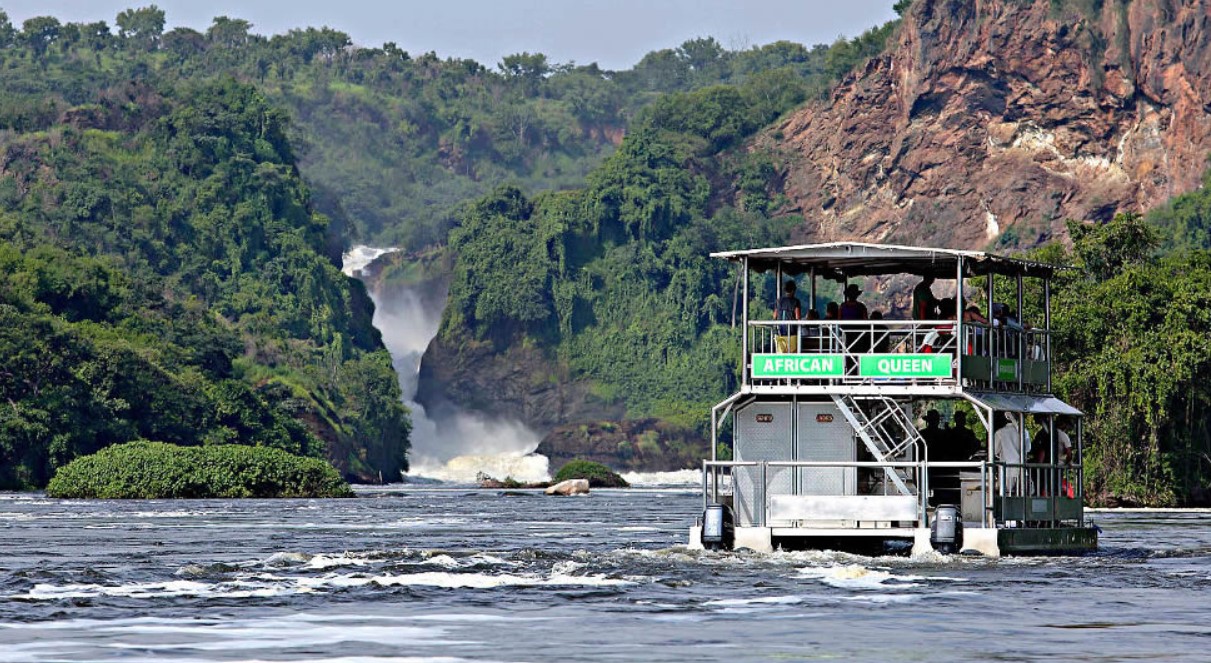
The iconic launch trip along the Victoria Nile to the base of Murchison Falls is a highlight of northern travel. This boat safari glides up the historic river canyon, heading toward the spot where the Nile forces its way through a narrow seven-meter gap in the rocks. For a family on a Uganda safari, this classic river cruise blends dramatic scenery with excellent wildlife viewing.
The riverbanks host a high concentration of wildlife, providing children with clear views of massive elephants drinking at the water’s edge, waterbucks, and pods of hippos spraying water. Giant Nile crocodiles, some growing up to five meters long, can be seen basking on the sunny mudflats. The boat maintains a safe distance from the turbulent waters at the base of the falls, allowing families to admire the view and feel the cool mist on their faces. The stable boat platform ensures a smooth ride, keeping children comfortable and fully entertained throughout the three-hour journey.
Action & Adventure
Source of the Nile Boat Cruise
Jinja, widely recognized as the adventure capital of East Africa, offers families the chance to stand at the geographic origin of the world’s longest river. The Source of the Nile boat cruise takes families on a boat ride out into the waters where Lake Victoria flows into the Nile River, tracking the path documented by explorer John Hanning Speke in 1858.
The boat ride uses stable, canopy-covered motorized vessels equipped with child-sized life jackets, ensuring safety for all ages. Along the way, experienced local boat captains share historical trivia and point out the abundant birdlife, including fish eagles and kingfishers nesting on the river islands. The trip stops at a small, specialized island monument marking the exact point where underwater springs bubble up to feed the river. This excursion provides an excellent opportunity for an outdoor geography lesson, allowing children to connect history books with a real-world adventure.
Quad Biking in Jinja
For families traveling with older children and teenagers who want an adrenaline boost, quad biking along the banks of the Nile in Jinja is a fantastic option. Organized by experienced adventure operators, these guided all-terrain vehicle (ATV) tours are designed to accommodate all skill levels, with no prior driving experience required.
Before heading out onto the trails, all participants undergo a thorough safety briefing and practice session on a dedicated training track. Children can ride their own fully automatic quad bikes (subject to age restrictions), while younger kids can ride safely as passengers with their parents or an expert guide. The scenic trail rides wind through local farmlands, rural trading centers, and forest paths running parallel to the river. This off-road journey gives families an authentic look at rural life, as local children run out to wave, making it a wonderful blend of active adventure and informal cultural exchange.
Mabira Forest Canopy Zip-Lining
Located just 44 kilometers east of Kampala along the main highway to Jinja, the Mabira Central Forest Reserve hosts the Super Skyway canopy zip-line adventure. Based at the Griffin Falls Camp, this high-flying eco-adventure sends participants soaring across a network of five zip-lines suspended high above the floor of a tropical rainforest.
Outback Adventure Safaris+ 1
The course is designed to international safety engineering standards, utilizing imported climbing harnesses and a dual-cable belay system managed by trained sky guides. Participants are secured before climbing into the canopy platforms, where they glide 250 meters across the Musamya River valley. From this elevated vantage point, families can look down on the ancient tree crowns, often spotting grey-cheeked mangabeys and red-tailed monkeys jumping through the branches. While the main course is popular with teenagers and parents, guides can easily adjust the lines and assistance levels to ensure brave younger children can participate safely, making it a memorable treetop challenge.
Beyond Travel Africa
Family Cycling Safaris
For active families looking to explore without the barrier of a vehicle window, family cycling safaris offer a refreshing option. These eco-tours are popular in the tranquil hills of the Ssese Islands on Lake Victoria and along the well-signposted multi-use tracks of Lake Mburo National Park.
Adventure operators provide mountain bikes fitted for children, along with mandatory safety helmets and support vehicles for longer routes. Cycling through the savannah or along sandy island beaches allows families to set their own pace, stopping to take photos whenever they like. In Lake Mburo, riding past herds of zebras and topis on two wheels provides a thrilling, personal connection with the environment. The routes are carefully chosen to avoid steep climbs and difficult terrain, ensuring that the ride remains a fun, healthy, and accessible family outing throughout your safari.
Culture & Community
Visit Cultural Villages
Integrating an interactive visit to a traditional cultural village adds wonderful depth to a family vacation. Excellent community centers across western and central Uganda offer specialized, child-friendly cultural programs designed to preserve and showcase the diverse heritages of the country's ancient kingdoms.
These visits avoid boring lectures, focusing instead on lively, interactive participation. Children are invited to join local performers in learning basic steps to traditional dances, trying out handmade percussion instruments, and listening to animated storytellers share ancient folktales under thatched roofs. Many centers offer simple craft workshops where children can try their hand at weaving small banana-fiber mats or shaping clay pots on manual potter's wheels. These colorful, high-energy interactions help children appreciate global diversity while supporting local community development initiatives.
Local Farm Visits
A hands-on visit to a rural family farm provides children with a wonderful opportunity to experience the countryside lifestyle. These tours are popular in the southwestern cattle corridor, where families can visit traditional Bahima pastoralist farms famous for their iconic, long-horned Ankole cattle.
Children can wake up at dawn to participate in the morning farm routines. Under the patient guidance of local herders, kids can try their hand at traditional hand-milking, help herd goats into their evening pens, and see how fresh milk is processed into local ghee using traditional gourds. Many farms also feature crop production, allowing children to harvest matooke (cooking bananas) or dig up sweet potatoes using traditional tools. This muddy, tactile experience helps children understand where food comes from, fostering a respect for sustainable farming practices and creating a fun connection with local families.
Try Local Drumming Lessons
Music is the true heartbeat of Ugandan culture, and booking a private drumming and dance lesson at a specialized cultural hub—such as the acclaimed Ndere Cultural Centre in Kampala—is a fantastic family experience. These rhythm-focused workshops are led by professional musicians who excel at engaging children of all ages.
Ndere Cultural Centre
Each family member is provided with their own traditional drum, such as the skin-headed engalabi or bakisimba drum. The instructors break down complex polyrhythms into simple, easy-to-learn patterns, allowing children to quickly find the beat. Drumming serves as an excellent emotional and physical outlet for children after a long flight or vehicle drive, helping build coordination and listening skills through call-and-response musical games. The high-energy, laughter-filled session typically concludes with a mini-performance where the family plays together, leaving everyone with a deep, personal connection to the musical traditions of East Africa.
1. Is Uganda safe for a family safari?
Uganda is widely recognized as a safe, welcoming, and highly secure destination for a multi-generational family vacation. The country’s tourism industry is deeply professionalized, with the government placing the highest priority on the protection of national parks and conservation reserves. When embarking on a family-focused Uganda safari, potential security concerns are mitigated by traveling with a reputable local tour operator, utilizing private 4x4 vehicles, and staying in well-established, secure safari lodges.
The Uganda Wildlife Authority (UWA) deploys trained, armed park rangers to monitor and protect all tourism zones, trail systems, and accommodation perimeters. These professional rangers manage wildlife boundaries and escort all walking or boat-based excursions, ensuring total safety. Furthermore, the local communities surrounding the conservation parks are exceptionally warm and hospitable toward children. By sticking to standard park regulations, avoiding unguided nighttime urban walks, and coordinating transportation through a licensed operator, families can look forward to a seamless, comfortable, and completely secure holiday.
2. What are the best national parks for younger children?
When designing an itinerary for families traveling with younger children, the best destinations are those that offer shorter transit times, flat terrain, and diverse, low-stress activities. Lake Mburo National Park is an ideal first stop for a family Uganda safari. Situated just a comfortable three-to-four-hour paved drive from Kampala, it completely avoids the long, exhausting driving days that can tire younger children. Because it lacks a resident population of large predators like lions, the park features a relaxed atmosphere where families can safely step out of the vehicle for gentle nature walks, pony rides, and cycling safaris.
Queen Elizabeth National Park is another spectacular choice for younger families. It offers a classic savannah environment where children can view iconic big game from the absolute safety of a vehicle or a large, stable water boat. The park's well-maintained network of tracks allows for excellent wildlife viewing without the need to drive over rough, off-road terrain. Combining these two western parks creates a balanced, high-yield itinerary that keeps children thoroughly entertained without causing travel fatigue.
3. Can kids go gorilla trekking?
The official minimum age requirement for tracking mountain gorillas in Bwindi Impenetrable National Park and Mgahinga Gorilla National Park is strictly set at 15 years old. This regulation is firmly enforced by the Uganda Wildlife Authority during the mandatory 7:00 AM passport and document briefing at the park headquarters. The age limit is not arbitrary; it is a critical conservation policy designed to safeguard both the endangered mountain gorillas and the children.
Primate World Safaris+ 1
Mountain gorillas share approximately 98% of human DNA, making them highly susceptible to human airborne illnesses, including common childhood viral infections like measles or flu, which can threaten an entire wild gorilla family. Additionally, children under 15 may lack the emotional self-control needed during a close-range primate encounter. If a massive silverback performs a mock charge, sudden screaming or running can trigger a dangerous defensive response from the gorilla. The physical terrain of Bwindi also requires navigating steep, slippery ridges and thick undergrowth for up to six hours, which typically exceeds the physical stamina of younger children.
4. What can younger kids do while parents go gorilla trekking?
Families traveling on a Uganda safari with children under 15 do not need to skip the bucket-list experience of gorilla trekking. While parents head into the dense rainforest, premier lodges and local community groups provide specialized, pre-arranged junior explorer programs to keep children safe and entertained. Many high-end lodges employ dedicated, child-certified staff who host interactive activities, including cooking lessons, traditional board games, and storytelling sessions.
Gorilla Tracking Uganda
The Uganda Wildlife Authority also offers Junior Ranger programs near the park boundaries. Under the supervision of a patient park ranger, children can participate in short, flat forest walks to study colorful butterflies, look for monkeys, and learn to identify animal footprints in the soil. Nearby community initiatives offer child-friendly cultural workshops, such as basket weaving, clay pottery molding, and basic drumming lessons. This "split-trek" strategy allows parents to explore the jungle with peace of mind, knowing their children are experiencing a fun, educational day of their own.
5. Are there boat safaris suitable for families?
Boat safaris are among the most successful and stress-free activities you can include in a family Uganda safari. Unlike standard game drives where children must remain confined inside a vehicle, a boat launch cruise allows kids to move around freely, stretch their legs, and enjoy panoramic views from a stable deck. The premier destination for this is the famous Kazinga Channel cruise in Queen Elizabeth National Park.
These large, canopy-covered boats glide smoothly through the water, bringing families safely within meters of massive schools of hippos and giant Nile crocodiles. Children can watch herds of elephants and buffaloes coming down to the riverbanks to drink and play in the shallows. The absolute smoothness of the water prevents motion sickness, making it accessible for toddlers. Another iconic option is the Murchison Falls launch trip, which pairs wildlife viewing with views of the powerful waterfall, ensuring an engaging afternoon for the whole family.
6. Can children participate in walking safaris?
Children can safely participate in guided walking safaris, provided the activity takes place in designated, low-risk national parks and is tailored to their fitness levels. Lake Mburo National Park is the top choice for a family-focused foot safari in Uganda. Because the park lacks large predators like lions, the environment is safe for walking, allowing children to step out of the vehicle and connect with the bush on foot.
Every walking safari is escorted by an armed UWA park ranger who customizes the pace, route, and length to match the physical abilities of the children. Walking through the acacia woodlands allows children to get close to herds of zebras, impalas, and giraffes. The ranger transforms the walk into a fun safari lesson, showing kids how to identify different tracks, examine giant termite mounds, and learn about medicinal plants. This active, educational exploration provides a wonderful alternative to traditional game drives.
7. Are horseback riding safaris available?
Horseback riding safaris are a highly specialized and memorable addition to a family Uganda safari, offered exclusively at the luxury Mihingo Lodge in Lake Mburo National Park. The lodge maintains an excellent stable of well-trained horses and ponies, with trails specifically mapped out to accommodate all experience levels, from absolute beginners to confident riders.
Horseback riding provides an incredibly peaceful way for families to explore the park. Because wild animals naturally view a horse and its rider simply as another harmless, four-legged herbivore, they do not run away. Your family can ride alongside herds of zebras, elands, and impalas, observing them behave completely naturally without the noise of an engine. For younger children, the lodge offers gentle, staff-led pony rides around the property grounds, ensuring that even the youngest travelers can share in the equestrian adventure.
8. Can kids see rhinos in Uganda?
Children can certainly see rhinos in Uganda by visiting the Ziwa Rhino Sanctuary, located in the Nakasongola district along the main highway leading north toward Murchison Falls. This 70-square-kilometer sanctuary is the only place in Uganda where white rhinos roam free in the wild, making it a highly educational stopover for any family Uganda safari.
The sanctuary offers a specialized, on-foot rhino tracking experience that is highly engaging for children. Accompanied by expert sanctuary rangers, your family will take a short drive before walking through the savannah woodlands to find the rhinos. The flat terrain makes the walk easy for children, and the rangers ensure the family maintains a safe, respectful distance from these massive giants. Standing on foot to observe a 2-ton white rhino quietly grazing provides a wonderful opportunity for children to learn about wildlife conservation, anti-poaching efforts, and habitat protection.
9. Is there a place to see animals up close without going into the deep bush?
For families seeking close-up wildlife encounters without the long transits of the deep bush, the Uganda Wildlife Education Centre (UWEC) in Entebbe is the perfect solution. Located just minutes from Entebbe International Airport, this facility is a spacious wildlife rehabilitation and conservation center set within native forest surroundings.
UWEC serves as a sanctuary for orphaned, injured, or rescued animals, providing a safe environment where children can see lions, rhinos, giraffes, leopards, and chimpanzees up close. The center offers highly interactive family experiences, such as the "Zookeeper for a Day" program. Under the guidance of an experienced animal caretaker, children can help prepare fresh meals, learn about animal diets, and assist with feeding the herbivores. With its paved walking paths, large shade trees, and an onsite playground, UWEC offers a fun, educational, and accessible day out for families.
10. Can we take our kids on standard game drives?
Standard game drives are a core element of a Uganda safari and are fully open to children of all ages in premier parks like Murchison Falls, Queen Elizabeth, and Kidepo Valley. These drives take place in customized 4x4 safari vehicles featuring pop-up roofs, allowing children to stand safely on the seats to get clear views of lions, leopards, giraffes, and elephants.
To ensure a successful game drive with children, parents should plan shorter, focused routes rather than all-day excursions. It is highly recommended to bring along child-friendly binoculars, wildlife checklists, and field guide books so kids can actively check off animals as they spot them. Packing plenty of familiar snacks, juices, and small handheld toys helps keep younger children happy during quieter periods on the tracks. Booking a private safari vehicle gives your family complete control over the schedule, allowing you to head back to the lodge for a swim whenever the kids need a break.
11. What are the cultural experiences available for kids?
Integrating interactive cultural encounters into a family Uganda safari is a fantastic way for children to connect with the local communities and traditions. Ugandan culture is exceptionally warm, and local centers focus heavily on hands-on, high-energy participation that keeps children fully engaged.
Families can visit traditional homesteads near the parks, where children can participate in daily farm activities like hand-milking Ankole cattle, gathering fresh crops, or feeding farm animals. Cultural centers, such as the Ndere Cultural Centre in Kampala, offer specialized workshops where kids can learn basic steps to traditional dances, try out local percussion instruments, and listen to animated folktales. Children can also try simple crafts like weaving mats from banana fibers or molding pots from clay. These shared experiences foster cross-cultural friendships and leave children with wonderful memories of the local people.
12. Is there any bird watching suitable for children?
With an incredible checklist of over 1,000 avian species, Uganda is a world-class destination for bird watching, an activity that can easily be turned into a fun game for children. Birding on a Uganda safari is highly engaging for kids because the species are incredibly colorful, dynamic, and easy to spot around the safari lodges and water bodies.
Parents can easily turn bird watching into an exciting competition by giving each child a notebook to track their sightings, or by setting up a scavenger hunt to find specific colors. Children will love spotting iconic species like the massive ground hornbill, the bright green African emerald cuckoo, and various iridescent sunbirds. Boat cruises along the Kazinga Channel or the Nile present perfect platforms for spotting giant kingfishers and majestic fish eagles diving for fish. This active, detail-oriented focus keeps children observant and helps build a great appreciation for the finer details of nature.
13. What is the best time of year to travel to Uganda with kids?
The absolute best time of year to plan a family Uganda safari is during the country's two distinct dry seasons: from June to September and from December to February. These months provide the most comfortable and reliable travel conditions, which is crucial when navigating the countryside with children.
During the dry seasons, the weather is consistently sunny and warm, ensuring that unpaved park tracks remain dry and easy to navigate, minimizing the risk of getting stuck in deep mud. The low-lying savannah grass clears out significantly during these months, making it much easier for children to spot wildlife from the vehicle windows. Furthermore, because seasonal water holes dry up, animals gather in large numbers around permanent water sources like rivers and lakes, guaranteeing high-yield wildlife viewing and excellent photography opportunities for the family.
14. What should we pack for a family safari?
Packing correctly for a family Uganda safari requires balancing sun protection, insect defense, and comfortable clothing for active outdoor days. Choose lightweight, breathable fabrics in neutral, earth-toned colors like khaki, tan, and green. Avoid packing solid black or dark blue clothing, as these specific dark shades can attract biting tsetse flies in certain wooded park sectors.
Essential items for the family checklist include:
- Sturdy, closed-toe walking shoes or light trainers for nature walks.
- Broad-brimmed sun hats, sunglasses, and high-SPF sunscreen for equatorial sun protection.
- A high-quality insect repellent containing DEET or Picaridin.
- A lightweight, packable rain jacket for unexpected tropical showers.
- Child-sized binoculars to ensure the kids feel like active explorers during game drives.
- A small daypack for carrying personal water bottles, wet wipes, and favorite snacks.
15. How do we keep the itinerary from becoming exhausting?
The secret to a successful and stress-free family Uganda safari lies in careful pacing and avoiding the temptation to rush through too many destinations. Children tire easily from long, consecutive hours over bumpy road tracks, so parents should design an itinerary that limits driving times and builds in plenty of downtime.
When planning your journey, try to stay at least two or three nights at each safari lodge rather than moving to a new location every morning. Choose family-friendly lodges that feature swimming pools, large green gardens, or dedicated play areas where children can relax and burn off energy between activities. Balance high-energy morning game drives with relaxed, shaded afternoon boat cruises or quiet down-time at the lodge. Prioritizing a slower, more deliberate travel pace ensures that everyone stays healthy, happy, and fully energized throughout your Ugandan adventure.
Booking Uganda safari activities for Kids with us Roads of Adventure safaris
Booking a Uganda safari for kids with Roads of Adventure Safaris involves crafting a custom itinerary that includes age-appropriate activities, child-friendly lodges, and private 4x4 transport. You can easily start planning your bespoke family adventure by contacting their travel consultants directly
