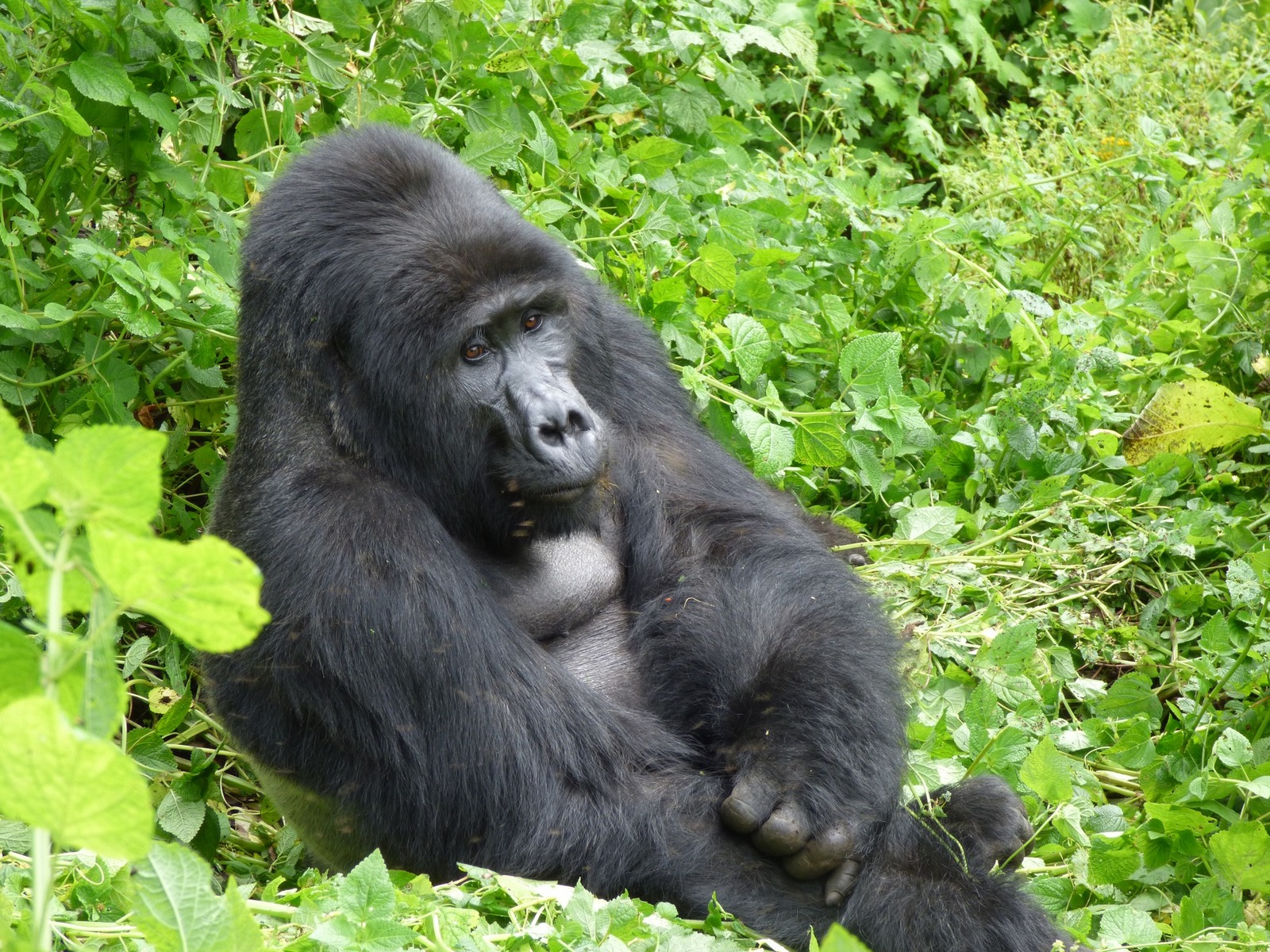
Uganda offers thrilling adventures, with top activities including mountain gorilla trekking in Bwindi Impenetrable National Park, white-water rafting on the Nile River in Jinja, chimpanzee tracking in Kibale Forest, and hiking the Rwenzori Mountains. Other highlights include bungee jumping, hot air balloon safaris, and volcano hiking.
2-days-best-gorilla-trekking-safari-tour-via-kigali-to-bwindi-impenetrable-forest-park
3-days-gorilla-trekking-safari-and-lake-bunyonyi-relaxation-itinerary
3-days-affordable-uganda-budget-gorilla-trekking-via-kigali
4-days-ultimate-gorilla-and-uganda-safari-and-chimpanzee-tracking
4-days-ultimate-gorilla-and-uganda-safari-and-chimpanzee-tracking
4-days-uganda-gorilla-safari-with-golden-monkey-tracking-from-rwanda
4-days-luxury-gorilla-trekking-safari-in-bwindi-fly-in-all-inclusive-tour
5-days-gorilla-and-uganda-safari-and-golden-monkey-trekking-tour-from-kigali
5-days-un-matched-uganda-gorilla-safari-and-chimpanzee-tour-itinerary
7-days-safari-to-uganda-queen-elizabeth-park-gorillas-trekking-and-lake-mburo
7-days-perfect-uganda-primate-safari-itinerary
7-days-uganda-tour-to-murchison-falls-via-ziwa-kibale-and-queen-elizabeth-national-park
7-day-ultimate-uganda-primate-safari-chimpanzees-and-game-drives
7-days-best-uganda-safari-tour-to-popular-safari-parks
7-days-perfect-road-trip-uganda-safari-tour
7-days-best-uganda-birding-safari-tour
7-day-uganda-safari-to-kidepo-valley-via-jinja-and-sipi-falls
7-days-murchison-falls-uganda-safari-trip-via-ziwa-rhinos-kidepo-valley-and-jinja
10-days-uganda-rwanda-primate-safari-vacation-and-game-drive-safari
10-days-best-uganda-big-five-safaris-and-primate-experience
10-days-best-uganda-birding-safari-and-wildlife-experience
10-days-best-of-uganda-and-rwanda-all-big-five-animal-and-gorilla-trekking
10-days-uganda-safari-all-big-five-gorilla-and-chimpanzee-tracking-adventure
10-days-budget-uganda-safari-holiday-vacation-tour-road-trip
Top Adventurous Activities in Uganda
Gorilla Trekking
Gorilla trekking stands as Uganda's premier, bucket-list adventure. It takes intrepid travelers deep into the ancient, dense jungles of Bwindi Impenetrable National Park or the volcanic slopes of Mgahinga Gorilla National Park. This high-endurance trek involves navigating steep, slippery terrain, tangled vines, and thick undergrowth at elevations ranging from 1,160 to 2,600 meters above sea level. The physical exertion is demanding, but the reward is unparalleled: a face-to-face encounter with a family of endangered mountain gorillas in their wild, natural habitat.
Uganda is home to roughly half of the world's remaining mountain gorilla population, making it a critical global sanctuary for primate conservation. Led by expert Uganda Wildlife Authority (UWA) rangers, tracking teams follow fresh footprints, broken branches, and nesting sites to locate a specific habituated gorilla family. The search can last anywhere from one to six hours depending on where the primates moved the previous night.
Once the family is located, the adrenaline of the hike transforms into quiet awe. Visitors are permitted exactly one hour to observe the family's complex social dynamics. You will watch powerful silverbacks guard their terrain, mothers nurse their infants, and juveniles playfully tumble through the foliage. Strict conservation protocols require maintaining a ten-meter distance and wearing face masks to protect the gorillas from human diseases. This profound connection with one of humanity's closest evolutionary relatives makes gorilla trekking a transformative journey that balances intense physical adventure with deep environmental conservation.
White-Water Rafting (Jinja)
White-water rafting in Jinja is the ultimate adrenaline rush for water sports enthusiasts worldwide. Jinja is widely celebrated as the adventure capital of East Africa, sitting right at the historic source of the River Nile. Rafting here offers an exhilarating progression of rapids that range from rolling Class III waves to thunderous, high-velocity Class IV and Class V rapids. The warm equatorial waters and massive volume of the Nile create some of the most powerful, explosive pool-drop rapids on earth, making it a world-class destination for extreme river running.
The adventure typically begins with a comprehensive safety briefing and paddle practice conducted by certified, international river guides. Participants can choose between a "wild" paddle raft, where everyone actively rows to conquer the waves, or a "mild" safety boat option. As the raft plunges into massive rapid complexes with dramatic names like The Bad Place and Overtime, rafters experience heart-stopping drops, massive white-water walls, and the high probability of a thrilling flip into the river.
Safety is paramount during these excursions. Every trip is closely flanked by a fleet of professional safety kayakers who quickly scoop up swimmers from the water. Between the chaotic, roaring rapids, the river transitions into calm, glassy stretches. These flat pools allow rafters to swim in the gentle current, marvel at the lush green islands, and spot a wide variety of river birds, including kingfishers and fish eagles. Combining intense physical teamwork, jaw-dropping natural scenery, and raw river power, rafting the Nile is a high-octane sensory experience.
Chimpanzee Tracking
Chimpanzee tracking provides a fast-paced, highly kinetic wildlife adventure through the pristine rainforests of East Africa. While Kibale Forest National Park is the undisputed capital for this activity—boasting the highest density and diversity of primates on the continent—tracking can also be done in Budongo Forest and Kyambura Gorge. Unlike the quiet, methodical search for mountain gorillas, tracking chimpanzees is a loud, dynamic chase that mirrors the energetic lifestyle of our closest living relatives.
The adventure begins at dawn when the forest canopy is alive with morning mist and birdsong. Escorted by knowledgeable UWA trackers, visitors follow a network of dirt trails, guided primarily by the unmistakable vocalizations of the chimps. The forest echoes with a chaotic symphony of pant-hoots, screams, and the thumping of tree buttresses as the community communicates across the canopy. Tracking requires agility, as chimps move quickly on the ground and through the treetops, forcing trackers to hike briskly to keep pace.
Once you catch up with a habituated troop, you are granted one hour to witness their fascinating community behavior. Chimpanzees are highly social, expressive, and intelligent. You will observe them grooming each other to reinforce social bonds, squabbling over territory, tool-using to extract insects, and swinging effortlessly through the high branches. For those seeking a deeper dive, Kibale also offers a Full-Day Chimpanzee Habituation Experience (CHEX). This allows you to accompany researchers from nest-to-nest, observing the primates from the moment they wake up until they build new nests at dusk.
Mountaineering & Hiking
For high-altitude trekking enthusiasts, Uganda offers some of the most rugged, wild, and visually spectacular alpine terrain in Africa. The ultimate mountaineering challenge is found in the Rwenzori Mountains, famously known as the Mountains of the Moon. Straddling the border with the Democratic Republic of Congo, this UNESCO World Heritage site features the third-highest peak in Africa, Margherita Peak on Mount Stanley, which towers at 5,109 meters. Unlike Kilimanjaro, the Rwenzori range is highly technical, demanding a multi-day expedition (typically 7 to 12 days) that navigates through deep bogs, dense bamboo forests, steep rock faces, and permanent glaciers.
The landscape of the Rwenzoris feels otherworldly. Trekkers walk among giant lobelias, colossal heather trees, and moss-covered valleys that look frozen in time. The raw physical challenge of conquering the mud, cold, and altitude makes reaching the snow-capped summit an elite achievement for global climbers.
For those seeking shorter yet intensely rewarding mountain adventures, Eastern Uganda features Mount Elgon, an extinct shield volcano with the largest surface area caldera base in the world. Hiking Elgon takes 3 to 5 days, leading trekkers through spectacular waterfalls, hot springs, and deep caves. Alternatively, day-hikers can tackle the steep, dramatic muddy slopes of the Sipi Falls trail network, where you can abseil down a 100-meter waterfall cliff. Uganda’s diverse topography ensures that whether you are an amateur hiker or a seasoned alpine climber, the country's peaks deliver remote, uncrowded, and physically demanding trails.
Hot Air Balloon Safaris
Hot air balloon safaris elevate the traditional African wildlife viewing experience into an exclusive, serene aerial adventure. Available primarily in Murchison Falls National Park and Queen Elizabeth National Park, this activity offers an unmatched bird's-eye perspective over Uganda’s vast, untamed savannah landscapes. Rising above the earth at the break of dawn, passengers experience the magic of a golden African sunrise illuminating the wilderness below.
The adventure begins in the chilly pre-dawn darkness as the ground crew inflates the massive, colorful balloon with powerful burners. Once airborne, the balloon drifts silently with the wind currents, providing a smooth, unobstructed panoramic view. From heights of several hundred feet, the true scale of Uganda’s ecosystems comes into focus. You can trace the winding paths of the Victoria Nile, see the geometric patterns of crater lakes, and watch herds of elephants, buffaloes, and giraffes casting long morning shadows as they traverse the plains.
The flight is particularly famous for spotting predators like lions and leopards returning from their nocturnal hunts, actions that are often hidden by tall grass during standard ground game drives. The silence of the balloon flight is interrupted only by the occasional roar of the burner, allowing for an incredibly peaceful yet thrilling exploration. After approximately one hour of floating over the wilderness, the pilot guides the basket to a smooth landing on the open savannah. The journey concludes with a celebrated safari tradition: a glass of sparkling champagne and a freshly cooked bush breakfast in the wild.
Bungee Jumping
For pure, unadulterated adrenaline, bungee jumping over the River Nile in Jinja is one of the most extreme activities available in East Africa. Operating from a spectacular, purpose-built steel structure that juts out over a cliff face, this activity invites thrill-seekers to plunge 44 meters (144 feet) toward the swirling waters of the world’s longest river. It is a test of raw nerve that complements the white-water rafting adventures found further downstream.
The experience begins at the jump tower, where highly trained, internationally certified jump masters conduct meticulous gear checks and safety briefings. Jumpers are securely fitted with a full-body harness as well as ankle constraints attached to a heavy-duty, high-elasticity bungee cord. You can choose your level of thrill: a standard dry jump that snaps you back into the air just above the river, or a water-touch jump where your hands or head briefly kiss the cool waters of the Nile.
Standing on the edge of the precipice, looking down at the rushing river and the lush emerald banks of Jinja, is a heart-pounding moment. The countdown—"5, 4, 3, 2, 1, Bungee!"—is followed by a thrilling freefall that delivers a massive rush of endorphins. After a series of elastic bounces that provide unique upside-down views of the Nile valley, a recovery boat gently collects the jumper from below. Operating under strict international safety standards, this leap of faith provides an unforgettable highlight for any adventure itinerary.
Boat Cruises
Boat cruises in Uganda offer a unique, high-yield style of water-based safari that brings travelers incredibly close to massive concentrations of aquatic wildlife. The two most famous boat excursions are the launch trip to the base of Murchison Falls and the cruise along the Kazinga Channel in Queen Elizabeth National Park. These trips transition seamlessly from peaceful wildlife viewing to high-intensity encounters with nature's raw power.
The Murchison Falls boat cruise travels upstream along the Victoria Nile, navigating waters alive with thousands of snorting hippos and enormous Nile crocodiles basking on the sandbanks. As the boat approaches the roaring base of the falls, the river becomes turbulent and shrouded in mist. You are treated to a dramatic view of the entire Nile forcing its way through a narrow, 7-meter rock gorge before plunging 43 meters below. Adventurous travelers can disembark at the base to hike up a steep, spray-misted trail to the top of the falls.
Meanwhile, the Kazinga Channel cruise explores a 32-kilometer natural waterway that connects Lake Edward and Lake George. This cruise acts as a magnet for wildlife, especially during the dry season. Open-sided double-decker boats glide past massive herds of elephants, buffalos, and waterbucks gathering at the water's edge to drink and bathe. It is a premier photography safari, offering close-up, water-level shots of wildlife and hundreds of bird species, including the iconic African fish eagle.
Quad Biking & Horseback Riding
Exploring the rural landscape of Jinja on a quad bike or from the back of a horse offers an active, off-road adventure that takes you far beyond the standard safari vehicle. These activities allow travelers to experience the terrain along the banks of the River Nile while engaging directly with the local culture and countryside.
Quad biking (ATV safaris) is an engine-revving, muddy adventure. After a quick training session on a dedicated track, riders follow expert guides down a network of dirt paths, single-track trails, and rocky ridges. The tracks wind through local villages, vibrant agricultural farmlands, and lush forests flanking the Nile. It is a sensory experience where you can splash through mud puddles, climb to scenic viewpoints overlooking the river's rapids, and wave to enthusiastic local children cheering from the hillsides. Tours range from easy one-hour rides to challenging all-day technical treks.
For a quieter yet equally immersive adventure, horseback riding safaris provide a peaceful way to explore the area. With well-trained horses tailored to all riding levels, these safaris amble along the riverbanks, through sugarcane plantations, and into traditional Ugandan villages. Advanced riders can enjoy exhilarating canters across open hillsides with panoramic views of the Nile valley. Riding a horse allows you to get closer to local birdlife and small wildlife, as the animals are not startled by an engine sound. Both activities provide an active, outdoor perspective on Uganda's stunning landscapes.
Dugout Canoeing
For a serene, culturally authentic water adventure, dugout canoeing on Lake Bunyonyi is an absolute must. Lake Bunyonyi, located in southwestern Uganda near Kabale, is one of the deepest and most visually stunning lakes in Africa. Framed by terraced, green hillsides, the lake is dotted with 29 terraced islands, each carrying its own unique history and folklore. The lake is completely free of bilharzia, hippos, and crocodiles, making it a safe paradise for open-water exploration.
The adventure involves stepping into a traditional dugout canoe, skillfully carved from a single hardwood tree trunk. Guided by a local boatman, or paddling yourself, you glide across the glassy, mist-shrouded waters at sunrise. The rhythmic dip of the wooden paddle into the water is the only sound breaking the morning silence.
Canoeing here allows you to hop between the lake’s historic islands. You can visit Punishment Island (Akampene), where unmarried pregnant girls were historically abandoned, or Bushara Island to explore its dense eucalyptus forests. The lake’s name translates to "the place of many little birds," making the canoe ride an exceptional bird-watching platform for spotting weaver birds, herons, and grey crowned cranes. Dugout canoeing is a peaceful, slow-paced adventure that tests your balance and upper-body strength while connecting you deeply to the centuries-old transport traditions of the local Bakiga community.
Volcano Hiking
Volcano hiking in Uganda offers an intense, single-day mountaineering challenge along the dramatic Virunga mountain range. Located within Mgahinga Gorilla National Park, three extinct conical volcanoes sit along the border shared by Uganda, Rwanda, and the Democratic Republic of Congo: Mount Sabinyo, Mount Gahinga, and Mount Muhavura. Each volcano offers a distinct trail that tests a hiker's endurance, leg strength, and mental grit.
- Mount Sabinyo (3,669m): Known as "Old Man's Teeth" due to its jagged crown, this is the most adventurous hike. The trail requires climbing a series of steep wooden ladders pinned directly onto narrow, sheer rock ridges. Reaching the summit allows you to stand simultaneously in three countries: Uganda, Rwanda, and the DRC.
- Mount Gahinga (3,474m): Meaning "a pile of stones" in the local dialect, this hike takes you through a beautiful bamboo forest zone, making it an excellent trail for spotting golden monkeys and unique Albertine Rift endemic birds. The summit features a beautiful, swampy caldera base.
- Mount Muhavura (4,127m): Known as "The Guide," this is the tallest and most physically demanding of the three. It features a relentless, steep incline that rewards climbers at the summit with a cold, pristine crater lake and panoramic views of the entire Virunga chain.
All volcano hikes take between 6 to 9 hours round-trip, requiring a good level of physical fitness, sturdy hiking boots, and a walking stick to conquer the steep alpine ridges.
If you would like to proceed with planning your safari itinerary, let me know:
- Which three activities from this list are your absolute top priorities?
- What is your preferred pace of travel? (Fast-paced and active, or relaxed with rest days?)
- Do you want a custom route map linking these activities together geographically?
G
Uganda, often called the "Pearl of Africa," is a premier destination for those who want their wildlife encounters served with a side of adrenaline. Below is a detailed exploration of your questions, expanding on the logistics and the unique thrill of each experience.
1. What are the top adventure activities in Uganda?
The "big three" of Ugandan adventure are mountain gorilla trekking, chimpanzee tracking, and Nile white-water rafting. Gorilla trekking in Bwindi Impenetrable Forest is a bucket-list item, offering a face-to-face encounter with a species that shares 98% of our DNA. Chimpanzee tracking in Kibale Forest is its faster-paced cousin, involving high-speed follows through dense tropical canopies. Meanwhile, Jinja, the "Adrenaline Capital of East Africa," hosts world-class Grade 5 rafting on the Victoria Nile.
Beyond these, the country offers grueling high-altitude mountaineering. The Rwenzori Mountains (the "Mountains of the Moon") provide a technical challenge that many hikers find more difficult than Kilimanjaro due to the boggy terrain and steep ascents. For those who prefer mechanical power, quad biking along the banks of the Nile or through the rural villages of Jinja offers a muddy, high-octane way to see the countryside. Horseback riding safaris in Lake Mburo allow you to get closer to zebras and elands than a vehicle ever could, as the animals perceive the horse as a fellow grazer rather than a threat. Finally, bungee jumping over the source of the Nile and hot air ballooning over the savannahs of Murchison Falls round out a portfolio of activities that cater to every level of thrill-seeker.
2. Where can I experience the best white-water rafting?
The definitive home for white-water rafting is Jinja, situated at the source of the Nile River. This stretch of water is legendary in the global paddling community for its "big volume" rapids. Unlike the rocky, technical rivers of the Rockies or the Alps, the Nile is a deep-channel river, meaning that even when you flip in a Grade 5 rapid, you are falling into deep, warm water rather than onto jagged rocks.
The experience usually begins at "The Overlook" or similar launch points, where guides put rafters through a rigorous safety briefing and "flip drill." You then face a series of rapids with names like "The Bad Place," "Itanda Falls," and "Vengeance." Most operators offer a choice between a "safety boat" (where the guide does the heavy lifting) and a "paddle boat" (where everyone must dig in to stay upright). Despite the intensity, the pools between rapids are calm, allowing you to swim and watch the abundant birdlife. With the recent construction of dams, the rafting locations have shifted slightly downstream to the Itanda Falls area, which remains one of the most powerful and thrilling stretches of white water on the planet.
3. Is gorilla trekking physically demanding?
Yes, gorilla trekking is an intense physical undertaking that should not be underestimated. Bwindi Impenetrable Forest is aptly named; it is a steep, ancient rainforest with no formal trails. To find the gorillas, rangers must often use machetes to clear a path through thick ferns, vines, and bamboo. The elevation ranges from 1,160m to 2,607m, and the humidity can make even short walks feel taxing.
A trek can last anywhere from two to eight hours depending on where the gorilla family moved since they were last spotted at their nesting site. You are walking on uneven, often slippery ground, navigating "wait-a-bit" thorns and stinging nettles. While the "lead" group of trekkers is usually matched to their fitness levels, even a "short" trek involves significant vertical gain. However, the "Porter" system is a lifesaver; for a small fee, local community members will carry your bag and literally push or pull you up the steeper sections. This not only makes the trek accessible but also provides vital income to the families living on the edge of the park, incentivizing conservation over poaching.
4. Where can I see tree-climbing lions?
The world-famous tree-climbing lions are found in the Ishasha sector of Queen Elizabeth National Park, in the southwestern corner of the country. While lions in other parts of Africa (like Lake Manyara in Tanzania) occasionally climb trees, the Ishasha lions are unique because they do it habitually. On a hot afternoon, it is common to see an entire pride draped over the thick limbs of Sycamore-fig trees and Albizia trees.
Scientists believe they climb for two main reasons: to catch the cool breeze above the long grass and to escape the relentless biting of tsetse flies on the ground. For the traveler, this behavior offers a rare photographic opportunity to see the "King of the Jungle" in a vulnerable, almost cat-napping state. Seeing a 400-pound predator balanced precariously on a branch ten meters above the ground is a surreal sight. To find them, you need a sharp-eyed guide, as their tawny coats blend perfectly with the bark of the fig trees. Because Ishasha is a transit point between the central part of the park and Bwindi, it is an easy and essential addition to any southwestern Uganda circuit.
5. Which Park is best for quad biking and horseback riding?
Lake Mburo National Park is the premier destination for these specific activities. Unlike the larger parks where lions and hyenas make ground-based activities dangerous, Lake Mburo has a lower density of large carnivores, making it safe for horseback and quad bike safaris.
The horseback safaris, operated primarily out of Mihingo Lodge, are particularly special. Because the zebras, impalas, and buffaloes see the horses as non-threatening animals, they don't flee. You can often ride to within a few meters of a dazzle of zebras, providing an intimacy with wildlife that is impossible from a Land Cruiser. Quad biking in the same area takes you onto the ancient tracks and through local cattle-grazing land. It is a sensory experience; you feel the dust, smell the wild herbs, and navigate the rocky outcrops. These activities offer a "slow safari" feel, focusing on the smaller details of the ecosystem—the dung beetles, the whistling thorn acacias, and the intricate patterns of a giraffe’s coat—while providing the thrill of being out in the open wilderness.
6. Can I go on a hot air balloon safari?
Yes, hot air ballooning is an increasingly popular way to experience Uganda’s savannahs, primarily in Murchison Falls National Park and occasionally in Queen Elizabeth National Park. The experience begins before dawn with the dramatic sight of the balloons being inflated by massive burners. As the sun rises over the Victoria Nile or the Albertine Rift, you lift off into the cool morning air.
The perspective from a balloon is fundamentally different from a game drive. You can see the "game trails" carved into the earth by generations of elephants and hippos, appearing like a network of veins across the landscape. From the air, you can spot large herds of Rothschild’s giraffes, buffaloes, and Ugandan Kob that might be hidden by thickets on the ground. The flight usually lasts about an hour and concludes with a traditional "Bush Breakfast"—complete with champagne—in a remote part of the park. It is a silent, serene form of adventure that offers a sense of the vastness of the African wilderness, providing a peaceful counterpoint to the noise and dust of traditional safaris.
7. Where can I find the most intense chimpanzee experience?
For the ultimate primate encounter, Kibale National Park is the "Primate Capital of the World." While standard chimpanzee tracking lasts about three hours (with one hour of direct observation), the Chimpanzee Habituation Experience (CHEX) is the gold standard for enthusiasts. This is a full-day immersion where you join researchers and habituators as they follow a chimpanzee group from the moment they leave their nests at dawn (around 6:00 AM) until they build new nests at dusk (around 7:00 PM).
The intensity comes from the pace. Chimpanzees are highly mobile, often moving through the canopy or across the forest floor at speeds that require a light jog to maintain. During a CHEX day, you witness the full spectrum of social behavior: grooming, patrolling territory, hunting smaller monkeys, and the deafening "pant-hoots" that echo through the forest. It is a raw, unscripted look at our closest relatives. You learn to identify individuals by their facial features and personalities. By the end of the day, you aren't just a tourist; you are an observer of a complex, sentient society.
8. How high is the Rwenzori Mountain range for hikers?
The Rwenzori Mountains, often called the "Mountains of the Moon," reach their highest point at Margherita Peak on Mount Stanley, which stands at 5,109 meters (16,762 ft). This makes it the third-highest point in Africa, but arguably its most challenging climb. Unlike Kilimanjaro, which is a "walk-up" mountain, the Rwenzoris involve navigating permanent glaciers, steep rock faces, and a unique Afro-alpine environment characterized by giant lobelias and groundsels.
The climb is famously wet. Hikers must navigate the "Bigo Bog"—vast stretches of knee-deep mud and tussock grass—which requires gumboots (wellies) for much of the lower trek. The weather is unpredictable, with mist and rain being the norm. A typical trek to the peak takes 7 to 9 days via the Central Circuit or the Kilembe Trail. Reaching the summit requires basic mountaineering skills, including the use of crampons and ice axes for the final glacier crossing. For those who reach the top, the reward is a view of a prehistoric-looking landscape that feels utterly detached from the tropical heat of the plains below.
9. Are there bungee jumping opportunities?
Yes, for those looking for a literal leap of faith, Jinja offers a spectacular bungee jump over the source of the Nile. The jump is operated from a purpose-built 44-meter (144 ft) platform that extends over the river. What makes this jump unique is the scenery; you aren't jumping over a concrete canyon, but over the swirling, ancient waters of the world's longest river, surrounded by lush tropical greenery.
The jump offers several options, including a "water touch," where the cord is calibrated to allow your hair or hands to dip into the Nile at the bottom of the first arc. For many, the most terrifying part isn't the fall itself, but the walk out onto the platform and the view of the rapids below. The operation follows strict international safety standards, using dual-redundant harnesses. It is a short, sharp burst of adrenaline that can be easily paired with a half-day of rafting or a sunset cruise, making it a staple of the "Jinja adventure circuit."
10. What is the best time for adventurous activities in Uganda?
Uganda’s equatorial climate means it can be visited year-round, but for adventure, the two dry seasons are optimal: June to September and December to February. During these months, the trails in Bwindi and the Rwenzoris are less slippery, making trekking and climbing significantly easier and safer. Clear skies also provide better visibility for wildlife spotting on savannah game drives and better conditions for hot air ballooning.
However, there is a nuance for white-water rafters. During the dry season, the Nile’s volume can actually be lower, which sometimes makes the rapids "tighter" and more technical. In the wet season (March to May and October to November), the river rises, and the rapids become "washy" and massive, which some rafters find more exciting. For primate tracking, the dry season is preferred because the animals tend to stay in lower elevations where water and fruit are more abundant, whereas in the wet season, they may move deeper into the forest. Overall, if you want to combine gorillas, mountains, and rafting, the January-February window offers the best balance of dry weather and lush scenery.
11. Is kayaking safe on the Nile?
Kayaking on the Nile in Jinja is extremely safe, provided you go with one of the reputable professional schools. For beginners, operators offer "Tandem Kayaking," where you sit in the front of a specialized double kayak while a world-class professional paddler steers from the back. This allows you to crash through Grade 5 rapids like "The Bad Place" with the stability and expertise of a pro.
For those who want to learn the sport, Jinja is one of the best places in the world to take a kayak clinic. The warm water means you can practice your "Eskimo roll" for hours without getting hypothermia, which is the biggest hurdle in colder climates. The safety protocols are rigorous; every trip is shadowed by safety kayakers in maneuverable "playboats" who can reach a capsized paddler in seconds. Whether you are doing a gentle drift to spot kingfishers or tackling the massive standing waves of Nile Special, the combination of expert instruction and the river's forgiving depth makes it a premier spot for aquatic adventure.
12. Where can I see shoebill storks?
The most reliable place to see the prehistoric-looking Shoebill Stork is the Mabamba Swamp, located on the shores of Lake Victoria near Entebbe. This giant bird, which looks like a dinosaur with its massive clog-shaped beak and steady yellow eyes, is a "holy grail" for birdwatchers. The adventure begins with a motorized wooden canoe ride through narrow channels of papyrus and water lilies.
The hunt for the Shoebill requires stealth. Local guides, many of whom were former poachers turned conservationists, know the bird's favorite fishing spots where it stands motionless for hours waiting for lungfish. Seeing the bird take flight—a massive, slow-motion wingbeat—is a breathtaking sight. Other excellent spots include the delta area of Murchison Falls National Park, where you can spot them from a boat safari on the Nile. The experience of being punted through a silent, mist-covered swamp at dawn in search of a creature that looks like it belongs in the Cretaceous period is one of Uganda's most unique and quiet adventures.
13. What is the Gorilla Habituation Experience?
While a standard gorilla trek gives you one hour with a group of gorillas that are already used to humans, the Gorilla Habituation Experience (GHE) in the Rushaga sector of Bwindi allows for a four-hour encounter. This is not a standard "viewing" but a chance to be part of the process of teaching wild gorillas to be comfortable in the presence of researchers.
Only four people are allowed per day, making it much more exclusive than the standard eight-person trekking groups. You spend the morning following a semi-habituated family. Because they aren't fully relaxed yet, you might see more "authentic" wild behavior—chest-beating, mock charges, or the silverback keeping a closer eye on his troop. You listen to the researchers explain the individual histories and the scientific markers they use to track health and social dynamics. It is a deeper, more intellectual adventure that appeals to those who want more than just a photo; it’s an opportunity to contribute to the long-term survival of the species.
14. Are there any unique walking safaris?
Uganda offers several exceptional walking safaris that allow you to step out of the vehicle and into the wild. Lake Mburo National Park is the most famous for this, where armed rangers lead you across the savannah to stand within 50 meters of zebras, buffaloes, and giraffes. The lack of elephants and large lion prides makes this a relaxed but thrilling way to learn about animal tracks, dung, and medicinal plants.
For a more rugged experience, Kidepo Valley National Park in the remote northeast offers walking safaris in one of Africa’s last great wildernesses. Walking along the sandy Kidepo River bed or climbing the Morungole Mountains to visit the Ik people (one of the smallest ethnic groups in Africa) is a true frontier adventure. Additionally, Murchison Falls offers a "Top of the Falls" hike where you can walk alongside the erupting Nile as it squeezes through a seven-meter gap. These walks engage all your senses—the crackle of dry grass, the scent of wild sage, and the adrenaline of being on the same level as the wildlife.
15. Is a Uganda safari suitable for thrill-seekers?
Absolutely. While many people associate "safari" with sitting in a car with binoculars, Uganda has reinvented the concept as an active, multi-sport adventure. A single 10-day trip can involve the physical grind of mountain climbing, the heart-pumping fear of a Grade 5 rapid, and the raw tension of being three meters away from a 400-pound silverback gorilla in a jungle.
Uganda caters to "active adventurers" who want to do more than just observe. You can mountain bike through the Bwindi community, zipline through the Mabira Forest canopy, or take a high-speed boat to the base of the thundering Murchison Falls. The country’s geography—ranging from snow-capped mountains to tropical islands on Lake Victoria—provides the perfect playground for high-intensity activities. For those who find standard game drives too passive, Uganda offers the perfect blend of traditional wildlife viewing and high-adrenaline "human-powered" exploration. It is, without a doubt, East Africa’s most versatile destination for the modern thrill-seeker.
Booking Uganda safari with us Roads of Adventure safaris
Booking a safari with Roads of Adventure Safaris offers a direct way to experience Uganda’s wildlife and primate highlights. The local operator is based on the Kampala-Entebbe Road in Seguku, Kampala. They specialize in tailor-made itineraries, handling ground logistics, and securing high-demand permits
