Plan a 10 Days gorilla trekking safari trip across Uganda’s key protected areas, from savanna wildlife to tropical forest primates. You begin at Entebbe, then head north to Ziwa Rhino Sanctuary where you can track Uganda’s reintroduced rhinos and watch for bird species on grasslands. Continue to Murchison Falls National Park the world’s most powerful waterfalls and Uganda’s classic river landscape shaped by the Nile and its falls, with crocodiles, Nile birds, elephants, giraffes, and lions often seen on game drive routes. From there you transfer to Kibale Forest, known for 13 primate species including chimpanzees in habituated communities. Next come Queen Elizabeth National Park and the Kazinga Channel, famed for hippos and large waterbird numbers. Travel via Ishasha to reach Bwindi Impenetrable National Park, home to more than half of the remaining world population of mountain gorillas and multiple habituated trekking groups, visit Lake Bunyonyi, with terraced hills and over 200 bird species around the lake bays, your final destination will be Lake Mburo Park popular for walking safari, giraffes and zebras
Tour highlights for 10 Days gorilla trekking safari trip
Track wild rhinos
Witness booming falls
Spot majestic lions
Cruise historic Nile
See massive hippos
Watch sunning crocodiles
Trek forest chimpanzees
Observe playful primates
Explore Bigodi wetland
View climbing lions
Encounter mountain gorillas
Hike Bwindi Forest
Relax Bunyonyi shores
Identify endemic birds
Cross Uganda equator
Photograph savanna wildlife
Day by day 10 Days gorilla trekking safari trip
Day 1: Arrival & Transfer to Murchison Falls
Welcome to your 10 Days gorilla trekking safari trip with arrival at Entebbe International Airport. After immigration and briefing, you drive north toward Murchison Falls National Park. En route, you may stop at Ziwa Rhino Sanctuary in Nakasongola District for a short orientation and guided viewing on foot or by ranger-led routes. Wildlife examples you may spot include white rhino, black rhino, zebra, antelope, bushbuck, and various sunbirds and other woodland birds. Ziwa holds a large bird list, often cited above 350 bird species, so birding stops work well for early-day pictures. The drive to Murchison Falls is typically around 4 to 5 hours after Entebbe departures, depending on road conditions and stops. You arrive for lodge check-in near the park. Evening game listening can add night monkeys, civets, and potamochoerus-like wild boar sounds. Your guide explains park game-rack areas, viewing ethics, and how to read spoor along the route. Photo time fits well at riverine viewpoints before dinner and rest.
Day 2: Murchison Game Drive & Nile Launch Cruise
Today continues your 10 Days gorilla trekking safari trip with two wildlife-focused sessions. Early morning starts with a game drive inside Murchison Falls National Park, using ranger-guided tracks and known sighting corridors. Target wildlife examples include lion on open grass edges, giraffe near acacia pockets, elephant moving toward water, buffalo, hartebeest, and warthog along roadside clearings. Birdwatching is strong here as well, with many Nile-associated species recorded across the protected area and nearby Important Bird Areas. After lunch, you board a launch cruise to the base area of Murchison Falls. On the water you can look for hippos near calmer banks, Nile crocodiles sunning on edges, kingfishers, cormorants, and weaver birds fluttering along the shore. When conditions are river-calm, boat viewing is easier for photography. Travel time is usually shorter than a long drive because you remain inside the park access routes. In the late afternoon, you return to your lodge for dinner and briefing for the next transfer toward Kibale. Your guide notes seasonal roosting sites and crocodile-basking safety distances for picture opportunities.
Day 3: Transfer to Kibale Forest for Primates
On day 3 of your 10 Days gorilla trekking safari trip, you shift from savanna to forest primates. After an early breakfast, you depart Murchison Falls region and drive toward Kibale Forest National Park. The journey usually takes around 6 to 8 hours depending on road works, lunch stops, and park entry clearance points. Along the route you stop at viewpoint pull-offs where you can scan for baboons, vultures, and other open-land birds. Approaching Kibale, the vegetation becomes greener and cooler, and sightings often change. Kibale is recognized for primate diversity, including chimpanzees in habituated communities and 13 primate species in total. During the afternoon, you may take a short forest-edge walk if time allows, focusing on smaller wildlife such as red-tailed monkeys, grey-cheeked mangabeys, and colobus sightings in canopy openings. Birds may include hornbills and forest bulbuls. You also learn about chimpanzee tracking logic, such as ranger mapping of feeding zones. Arrive in the Kibale area for lodge check-in, dinner, and a clear early plan for chimpanzee and swamp-walk sessions tomorrow. Conditions can be humid, so your guide advises rain layers.
Day 4: Chimpanzee Tracking & Bigodi Wetland Walk
Your 10 Days gorilla trekking safari trip reaches the primate highlight day in Kibale Forest National Park. After an early breakfast, you meet rangers at the tracking point for chimpanzee trekking. Rangers share where chimpanzees were last observed, then you move by forest trail routes at a safe pace. Wildlife examples you may see during trek and scanning include chimpanzees, red colobus monkeys, black-and-white colobus, grey-cheeked mangabeys, L’Hoest monkey, and olive baboons. Chimpanzee sightings can occur when feeding or resting activity is active, often near fruiting trees. You also watch for vocal calls that guide direction. After lunch, you move to Bigodi Wetland Sanctuary for a guided afternoon walk focused on swamp-edge ecology. Here, picture opportunities often include blue-headed sunbirds, kingfishers, weavers, cuckoos, and primate glimpses through reeds. Boat-free wetland viewing can be excellent when rainfall has eased. Travel time remains local because Bigodi is near the Kibale tourism zone. You return to your lodge with time to review ranger notes and prepare for the next day’s long transfer toward Queen Elizabeth.
Day 5: Drive to Queen Elizabeth National Park
Day 5 of your 10 Days gorilla trekking safari trip focuses on a long scenic transfer into Queen Elizabeth National Park. After breakfast you drive south-west, often seeing the landscape open and rolling toward the Rwenzori foothills region. The journey commonly takes 5 to 7 hours depending on clearance and road conditions. Along the way, make short stops at safe pull-offs to observe roadside wildlife such as warthogs, baboons, black-and-white colobus if forest edges appear, and raptors circling. On arrival at Queen Elizabeth, you settle near a sector entrance and begin a light orientation drive. This is where you review park game-rack areas, including where vehicles stage for best viewing angles at savanna clearings and lake-adjacent edges. Wildlife examples you can look for include elephants, buffalo, lions in grassland sight-lines, topi/antelopes on open plains, and marshland birds around watering spots. Early evening birding can add hornbills, weavers, starlings, and secretary birds if conditions are right. If the day remains dry, sunset views are ideal for photographing silhouettes and skyline scenery. Dinner and rest are planned early to allow a stronger game drive tomorrow.
Day 6: Game Drive and Kazinga Channel Boat Cruise
Today is your 10 Days gorilla trekking safari trip day for both land and water wildlife. Start with a morning game drive within Queen Elizabeth National Park, covering known sighting sectors with ranger guidance. Wildlife examples to watch for include lion, elephant, buffalo, leopard (possible though not guaranteed), wart hog, hippo in peripheral grazing areas, and different antelopes at grassland edges. Bird species are also plentiful in this park system, with many woodland and savanna species present throughout the year. You may hear alarm calls that indicate predator movement. After lunch, your afternoon activity is a boat cruise on the Kazinga Channel, one of the most dependable wildlife-viewing corridors in Uganda. On the channel, wildlife examples include hippos coming up in groups, Nile crocodiles, African fish eagles, kingfishers, herons, and pelicans or similar large waterbirds depending on season. When winds are calm, boat viewing is steady and photo framing improves. If the river is choppy, the guide will adjust speed and viewing points. The boat schedule keeps you in safe viewing zones and away from aggressive animals. Return to lodge in the evening for dinner and to log the best sightings so far before moving toward Ishasha.
Day 7: Ishasha Tree-Climbing Lions to Bwindi
On day 7 of your 10 Days gorilla trekking safari trip, you travel to Bwindi Impenetrable National Park via Ishasha Sector. After breakfast, the drive typically takes 5 to 8 hours depending on road conditions and stopovers. Ishasha is best known for tree-climbing lions, so your guide will time the transfer to allow game searching in the savanna-fig tree areas. Wildlife examples you may see in Ishasha include tree-climbing lions, elephants, topi, waterbuck, buffalo, and warthog, plus many birds in the fig canopy zones. Predator sightings can happen when lions rest in branches, often during warmer daylight. Your guide keeps a careful distance because the animals may shift quickly. After Ishasha, you continue to Bwindi’s highland forest road. As altitude increases, weather can change and forest mist is possible. On arrival, you check in and receive a final briefing about gorilla trekking etiquette. You learn how the forest team marks route timing and safety rules, including staying with the ranger team and respecting habituated group space. Photo opportunities are best at lodge grounds and viewpoint clearings overlooking surrounding forest. Evening dinner is early to help you manage next day’s trek day energy.
Day 8: Gorilla Trekking in Bwindi
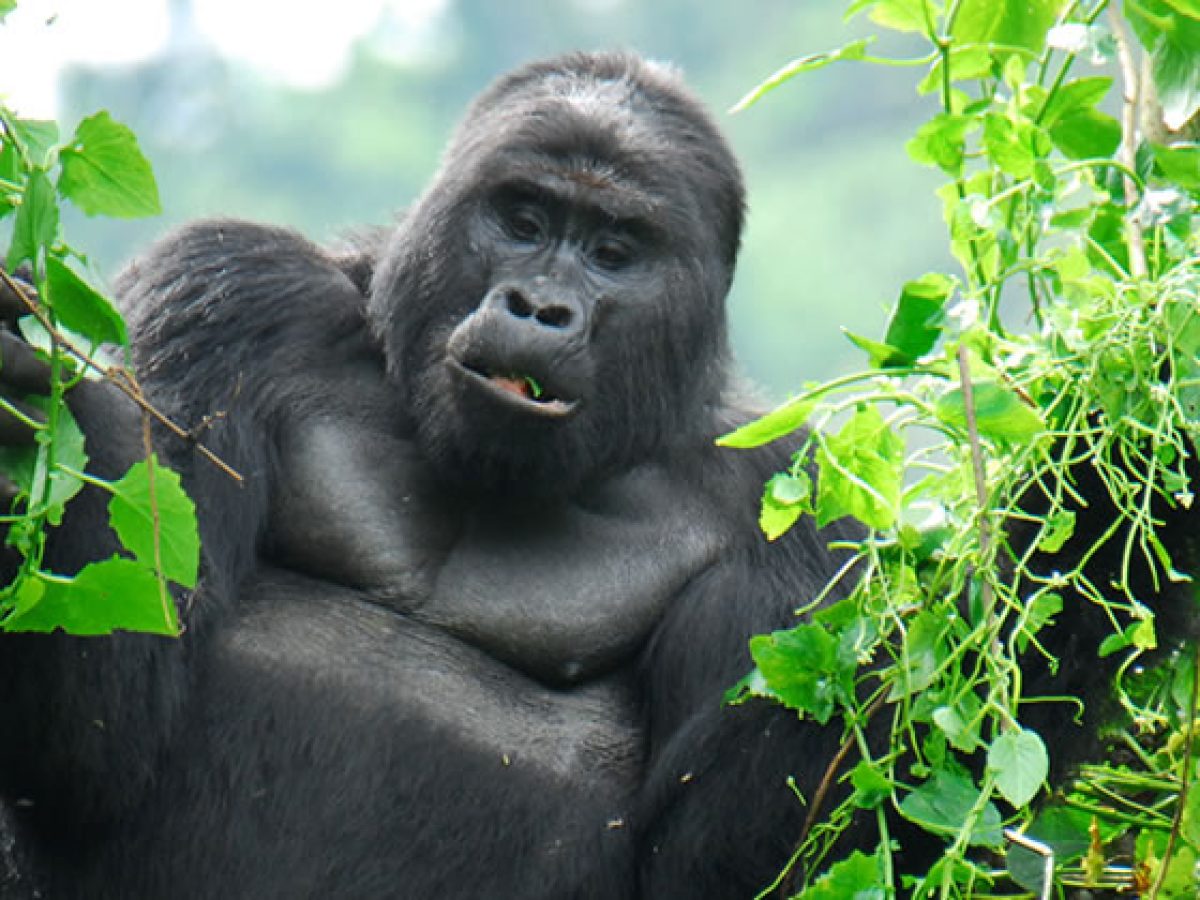
Day 8 is the main 10 Days gorilla trekking safari trip experience: gorilla trekking in Bwindi Impenetrable National Park. After breakfast, you meet rangers for permit checks and trek briefing. Bwindi is among the most important mountain gorilla areas, and habituated gorilla families are tracked daily by ranger teams. Your trekking route depends on the family location, so travel time on foot can vary, and conditions can be muddy. Expect steep forest trails, slippery leaf litter, and close forest listening. Wildlife examples during trek and forest scanning commonly include mountain gorillas (the main encounter), black-and-white colobus, red colobus, blue monkeys if present, chimpanzee calls sometimes heard from distant areas, and a range of forest birds such as turacos and sunbirds. Picture opportunities usually occur during the allotted gorilla viewing time when the family is settled and the ranger confirms it is safe for cameras. After the encounter, you descend and return to the starting area for refreshments. You then transfer back to your lodge. In the evening, you may join a short community talk on conservation and forest history, including how Bwindi communities support gorilla protection and anti-poaching measures.
Day 9: Lake Bunyonyi Relaxation
Your 10 Days gorilla trekking safari trip continues with a restorative day at Lake Bunyonyi. After gorilla trekking, mornings may feel slower, and the goal is comfort after the forest climb. You travel from Bwindi region to Lake Bunyonyi, which commonly takes 3 to 5 hours depending on the route and road conditions. On arrival, you check in and enjoy a relaxed lakeside programme. The lake is known for green terraced hills and is often described as rich in birdlife, with over 200 bird species recorded around the area. Wildlife examples on the water and shores include kingfishers, herons, weaver birds, sunbirds, and migrating or resident birds along the bays. You can also take a boat ride between the islands and viewpoints, often stopping for calm photo framing of terraced landscapes. If weather is clear, sunset colour works well for photography, but your guide chooses safe landing points. This day keeps walking gentle, so you stretch, hydrate, and enjoy local meals. Conservation discussions can continue in the form of community-guided stories about how people manage wetlands and hillside farming.
Day 10: Departure via Uganda Equator Photo Stop
Finish your 10 Days gorilla trekking safari trip with a smooth return to Kampala or Entebbe. After an early breakfast, you drive toward the capital route, typically 6 to 9 hours depending on traffic, stops, and road works. You may include a stop at the Uganda Equator area near Kayabwe, where visitors take photos and learn that the equator is the 0-degree latitude line crossing Uganda. after arriving at Entebbe, you transfer to the airport with enough buffer for luggage checks and boarding. If you fly late, you can also add a final lakeside view stop depending on time. Your safari ends with a final debrief covering gorilla trekking performance, best game-drive sightings, and key bird species recorded during the trip.
Is this 10 Days gorilla trekking safari trip suitable for families?
A 10-day gorilla trekking safari can be modified to be highly suitable for families, though it requires careful planning. The minimum age for gorilla trekking in Uganda and Rwanda is 15 years old, so younger children will not be allowed on the actual trek. However, families traveling with teenagers will find this an incredibly bonding and educational experience. For families with younger kids, alternative activities like guided nature walks, cultural community visits, and traditional wildlife game drives in customized safari vehicles can be arranged while parents’ trek. The physical demands of tracking gorillas through dense forests, steep ridges, and muddy terrain mean everyone participating should have a moderate level of fitness. Choosing family-friendly lodges with spacious suites, swimming pools, and child-safe menus ensures comfort after long days of adventure. Porter services are also available to assist family members with daypacks during the hike.
When is the best time for 10 Days gorilla trekking safari trip?
The best time for a 10-day gorilla trekking safari is during the dry seasons, which run from June to August and December to February. During these months, the forest trails are less muddy, making the steep hike to find the gorilla families significantly easier and more manageable. Wildlife viewing in neighboring savannah parks is also at its peak, as animals congregate around predictable water sources, and vegetation is thinner for clearer photography. The rainy seasons, from March to May and September to November, bring heavier downpours that make forest paths slippery and challenging. However, trekking during the wet season has its unique advantages, including lush, vibrant green scenery, less crowded trails, and lower lodging rates. Additionally, food is often abundant for the gorillas at lower altitudes during the rainy months, which can sometimes shorten the trekking time needed to locate them.
Where to stay on 10 Days gorilla trekking safari trip?
Accommodation options on a 10-day gorilla safari cater to all preferences, ranging from budget-friendly choices to ultra-luxurious eco-lodges. When tracking gorillas in Bwindi Impenetrable National Park, staying at a lodge close to your assigned trekking sector is essential to avoid long, early-morning drives. Premium luxury lodges offer stunning forest views, private balconies, cozy fireplaces, and complimentary massages to soothe aching muscles after a long trek. Mid-range choices provide excellent comfort, self-contained en-suite cottages, and warm hospitality, while budget outposts offer clean, basic rooms and shared amenities for cost-conscious travelers. For the savannah wildlife portions of your 10-day itinerary, you can choose between immersive tented camps that bring you closer to nature or permanent safari lodges featuring swimming pools and expansive observation decks. Most lodges provide full-board packages, including hearty meals and packed lunches for your day-long trekking excursions.
What to pack for 10 Days gorilla trekking safari trip?
Packing correctly is crucial for a comfortable and successful gorilla trekking safari. Essential items include sturdy, waterproof hiking boots with good traction to navigate steep, slippery terrain, along with thick wool socks. Long-sleeved shirts and lightweight, durable trousers protect your skin against stinging nettles, sharp branches, and insects. Tough gardening gloves are highly recommended for pulling yourself up steep ridges using branches. A lightweight rain jacket or poncho should always be in your daypack, as tropical forest weather is highly unpredictable. Do not forget a wide-brimmed hat, polarized sunglasses, high-SPF sunscreen, and insect repellent containing DEET. For your gear, pack a waterproof daypack to protect your camera, extra batteries, and memory cards from moisture. Binoculars are great for bird watching, and a reusable water bottle ensures you stay hydrated. Neutral safari colors like khaki, green, and tan are best, while bright colors and camouflage clothing should be avoided.
Booking 10 Days gorilla trekking safari trip with us Roads of Adventure safaris
Booking your 10-day safari with Roads Of Adventure Safaris Click to open side panel for more information guarantees a seamless, deeply enriching, and completely stress-free African adventure. As local experts based in Uganda, we handle every detail of your journey, from securing competitive gorilla permits to arranging comfortable transportation and booking top-tier accommodations. Our customized 4x4 safari vehicles are designed to navigate rugged terrain easily while providing optimal comfort and excellent wildlife viewing opportunities. We pride ourselves on our highly knowledgeable, friendly, and professional local guides who possess a deep passion for conservation and sharing East Africa's diverse wildlife, culture, and history. We tailor each itinerary to match your specific budget, pace, and interests, ensuring a highly personalized experience. By choosing us, you support sustainable tourism practices that directly benefit local communities and vital wildlife conservation initiatives. Let us turn your dream of encountering mountain gorillas into an unforgettable reality.
