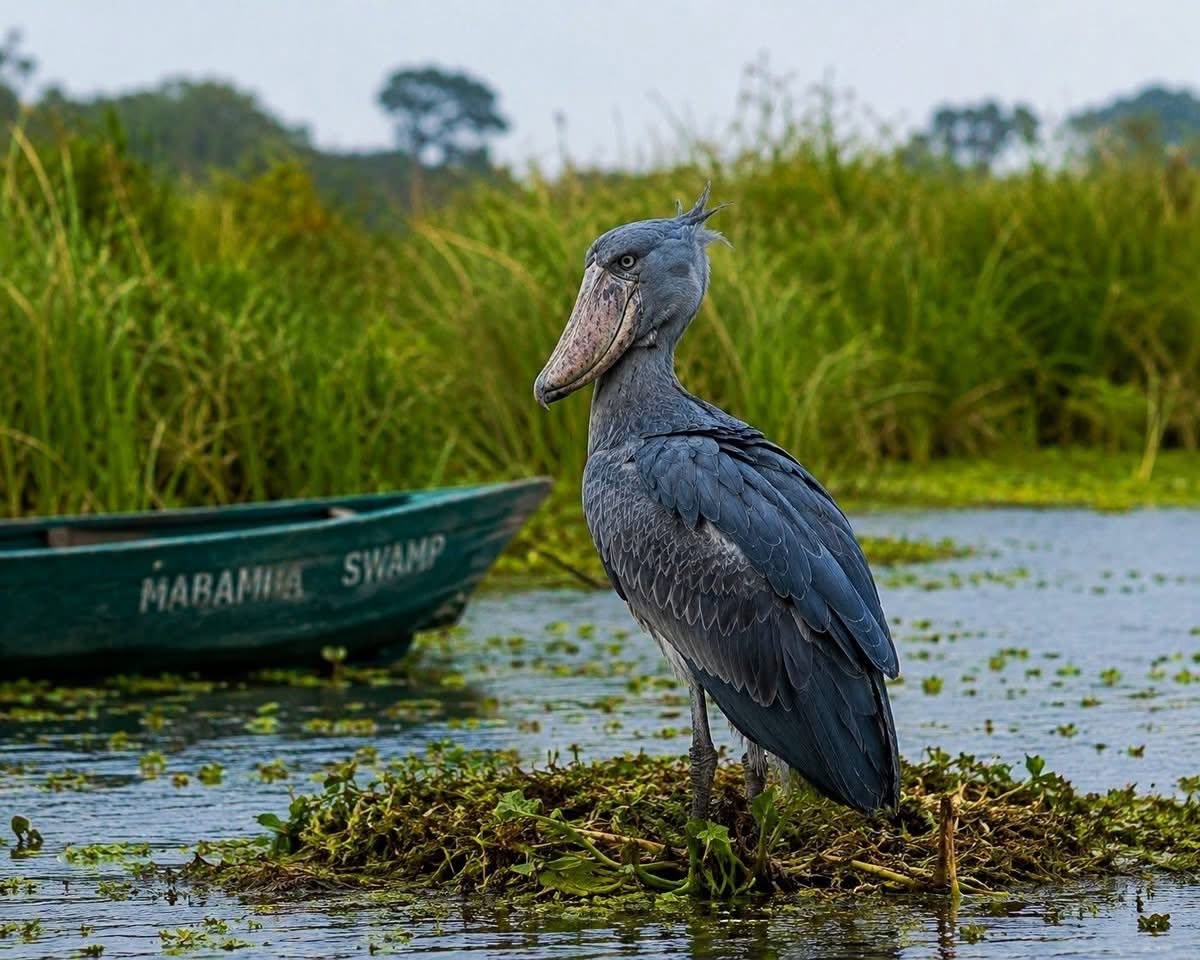
A 10-day Uganda birding safari typically focuses on the Southwestern Albertine Rift circuit to maximize species diversity, allowing you to spot over 400–500 bird species including the prehistoric Shoebill and rare Albertine Rift endemics. Because Uganda hosts over 1,080 recorded bird species across distinct habitats, the best itineraries balance papyrus wetlands, acacia savannahs, and montane rainforests.
10 Days Uganda birding safari: A 10-Day Southwestern Birding Itinerary
Explore Uganda’s top birding habitats on a 10-day route from Entebbe to Mabamba, Lake Mburo, Bwindi and Queen Elizabeth National Park. Search for the Shoebill, Albertine Rift endemics and more than 50 bird species.
This 10Days Uganda birding safari combines wetlands, savannah, lakeshore and montane forest in one rewarding journey. It’s designed for birders who want time in the field without packing every day with long drives—and it leaves room for a gorilla-trekking option in Bwindi.
At a glance: Entebbe → Mabamba → Lake Mburo → Bwindi (Ruhija and Buhoma) → Queen Elizabeth National Park → Entebbe.
Trip length: 10 days | Best for: Bird watching, Albertine Rift species and varied habitats
A note on sightings: Wild birds are never guaranteed. Your guide will adjust the pace and locations to conditions, recent sightings and your interests.
The 10-day Uganda birding safari itinerary
Day 1: Arrive in Entebbe and visit the Botanical Gardens
Meet your guide at Entebbe International Airport and settle in before an afternoon birding walk in Entebbe Botanical Gardens. It’s a gentle introduction to Uganda’s birdlife and a chance to tune into the calls and colours you’ll encounter throughout the trip.
Look for: Great Blue Turaco, Ross’s Turaco, Orange Weaver, Black-and-white-casqued Hornbill, Red-chested Sunbird and African Grey Parrot.
Day 2: Shoebill excursion at Mabamba Swamp
Set out early for Mabamba Bay Wetland, where a local boat guide will take you through papyrus channels in search of the famous Shoebill. The quiet canoe ride is part of the experience: move slowly, scan the reed edges and enjoy the wetland’s smaller birds too. After the excursion, travel west towards Lake Mburo.
Look for: Shoebill, Papyrus Gonolek, Blue-breasted Bee-eater, African Jacana, African Pygmy Goose, Malachite Kingfisher and Swamp Flycatcher.
Day 3: Lake Mburo National Park
Spend the day exploring Lake Mburo’s acacia woodland, open grassland and lakeshore. Depending on conditions, enjoy a guided walk and a boat trip—two different ways to experience the park’s wildlife and birdlife.
Look for: African Finfoot, Red-faced Barbet, Tabora Cisticola, Coqui Francolin, Southern Ground Hornbill, Lilac-breasted Roller and Rufous-naped Lark.
Day 4: Drive to Ruhija in Bwindi
Travel southwest into the highlands, arriving in the Ruhija sector of Bwindi Impenetrable National Park. Break up the journey with birding stops where time and road conditions allow. The cooler, forested landscape brings a striking change from Lake Mburo’s open habitats.
Look for: Regal Sunbird, Mountain Masked Apalis, Rwenzori Batis, Stripe-breasted Tit, Archer’s Robin-Chat and Rwenzori Turaco.
Day 5: Mubwindi Swamp Trail
Dedicate the day to the celebrated Mubwindi Swamp trail. The descent and return climb can be demanding, so allow plenty of time and follow your guide’s advice on pace, footwear and trail conditions. For many visiting birders, the chance to search for elusive Albertine Rift species makes this a trip highlight.
Look for: African Green Broadbill, Grauer’s Rush Warbler, Handsome Francolin, Red-throated Alethe, Mountain Illadopsis and Rwenzori Double-collared Sunbird.
This 10Days Uganda birding safari is especially appealing to birders hoping to explore the highland forest slowly, with time to listen as well as look.
Day 6: Bird through The Neck to Buhoma
Move from Ruhija to Buhoma through The Neck, a forested corridor between the two sectors. Make birding stops along the way, then arrive in Buhoma for a change of elevation and a fresh set of forest trails.
Look for: Black Bee-eater, Doherty’s Bushshrike, Chapin’s Flycatcher, White-tailed Ant-Thrush, Yellow-streaked Greenbul and Black-billed Turaco.
Day 7: Buhoma forest birding—or optional gorilla trekking
Choose a full day of birding on Buhoma’s forest trails, including the Waterfall Trail, or take an optional Mountain Gorilla trek if permits are available and you would like to add it. Gorilla trekking is a separate activity and requires advance planning; it replaces some of the day’s birding time.
Look for: Short-tailed Warbler, Neumann’s Warbler (Grauer’s Warbler), Narina Trogon, African Wood Owl, Bar-tailed Trogon and White-headed Woodhoopoe.
Day 8: Ishasha and the Kazinga Channel
Travel towards Queen Elizabeth National Park via the Ishasha sector, with wildlife and birding stops en route. Later, take a boat cruise on the Kazinga Channel, where the shorelines and water often attract impressive concentrations of birds.
Look for: African Skimmer, Great White Pelican, Pink-backed Pelican, African Fish Eagle, Saddle-billed Stork, Goliath Heron and African Darter.
The 10Days Uganda birding safari brings together Bwindi’s forest specials and the open-water birding of the Kazinga Channel—two very different experiences in just a few days.
Day 9: Kasenyi Plains and crater lakes
Spend the morning birding the Kasenyi Plains, scanning grassland and open country for raptors, bustards and ground-dwelling species. Later, explore the crater-lake area, adapting the stops to local conditions and your target list.
Look for: Martial Eagle, Temminck’s Courser, Black-bellied Bustard, Grey Crowned Crane, African Wattled Lapwing, Crowned Lapwing and African Pipit.
Day 10: Maramagambo Forest and return to Entebbe
If timing allows, enjoy an early birding walk in Maramagambo Forest before beginning the drive back to Entebbe. The road journey is substantial, so keep your international flight time and a generous airport buffer in mind. For an evening departure, confirm the schedule with your operator before finalising the forest stop.
Look for: Forest-edge and woodland species, with sightings depending on the route, available time and recent conditions.
Bird highlights: more than 50 species to look for
This route offers opportunities to search for well over 50 species across Uganda’s wetland, woodland, savannah and forest habitats. Along with the birds listed by day, possible sightings include:
- Wetland and waterbirds: White-winged Warbler, Winding Cisticola, African Spoonbill, Water Thick-knee and African Jacana.
- Savannah and woodland birds: Bare-faced Go-away-bird, Long-tailed Cisticola, Rufous-naped Lark, Senegal Plover and White-browed Robin-Chat.
- Forest and highland birds: Strange Weaver, Grauer’s Warbler, Shelley’s Crimsonwing, Equatorial Akalat, Black-faced Rufous Warbler and White-bellied Crested Flycatcher.
- Raptors and larger birds: African Fish Eagle, Martial Eagle, Southern Ground Hornbill and Saddle-billed Stork.
Species presence varies with season, weather and location. Some sought-after birds are naturally rare or difficult to see, so it’s best to treat the list as a set of possibilities rather than a promise.
Why choose this 10-day Uganda birding safari route?
This 10Days Uganda birding safari links several of the country’s most rewarding birding habitats without trying to cover the whole country. It offers:
- A dedicated early-morning search for the Shoebill at Mabamba.
- Forest birding in both Ruhija and Buhoma, with different elevations and trails.
- A full day to tackle the challenging Mubwindi Swamp trail.
- Savannah and lakeshore birding at Lake Mburo and Queen Elizabeth National Park.
- An optional gorilla trek for travellers who want to combine birding with a primate experience.
When comparing best itineraries and tour packages, check how much time is actually reserved for birding, whether a specialist guide is included, and how the operator handles the long transfers.
Practical planning tips for 10-day Uganda birding safari route
- Bring: Binoculars, a camera, a waterproof daypack, comfortable walking shoes, rain protection and layers for cool highland mornings.
- Prepare for the trails: Mubwindi Swamp involves a steep hike. Ask your operator about current trail conditions and be realistic about your fitness and pace.
- Plan transfers carefully: Several days include long drives. A private vehicle and flexible birding stops can make the journey more comfortable.
- Book specialist activities early: Confirm any gorilla-trekking permits and discuss Mabamba’s boat arrangements well ahead of travel.
- Go with an experienced birding guide: A knowledgeable guide can help identify calls, adjust the daily plan and focus on the species you most want to see.
Frequently asked questions 10-day Uganda birding safari route
Is this a good 10-day itinerary for birders?
Yes. The route combines wetlands, savannah and montane forest, with dedicated birding days at Mabamba and Bwindi. It suits visitors who want a broad introduction to Uganda’s birdlife in a limited time.
Will I definitely see a Shoebill?
No wild sighting can be guaranteed. Mabamba is a well-known place to search for Shoebills, and an early start with a local boat guide gives you a good opportunity to look for one.
Can I include gorilla trekking?
Yes. Day 7 is planned as either a forest-birding day or an optional gorilla trek. Arrange permits in advance and discuss how the trek will affect your birding schedule.
What makes the 10Days Uganda birding safari different from a general wildlife tour?
It gives priority to bird-rich habitats and includes time for targeted searches, particularly in Mabamba and Bwindi. The itinerary still includes classic wildlife destinations, but bird watching is the central focus.
How many bird species could I see?
The itinerary names more than 50 possible species, but the final count depends on the season, weather, time in the field and individual sightings. Your guide can help keep a trip list as you go.
Alternative 2: 10Days Uganda birding safari with Chimpanzees and Big Five Wildlife
Combine bird watching, chimpanzee tracking and classic Uganda wildlife on this 10-day route through Mabamba, Murchison Falls, Kibale and Queen Elizabeth National Park, with an optional Bwindi extension.
This 10Days Uganda birding safari is for travellers who want more than highland endemics: it pairs wetland and savannah birding with chimpanzee tracking and opportunities to search for Uganda’s Big Five. The route links Entebbe, Mabamba Swamp, Murchison Falls National Park, Kibale Forest and Queen Elizabeth National Park.
Important planning note: Fitting all those stops into 10 days is ambitious. Adding Bwindi and returning to Entebbe makes the final days especially rushed. The itinerary below follows the proposed route, but explains where extra time or a domestic flight may be needed.
At a glance
- Duration: 10 days
- Route: Entebbe → Mabamba → Murchison Falls → Kibale → Queen Elizabeth National Park → optional Bwindi
- Best for: Birders who also want chimpanzees, savannah wildlife and varied landscapes
- Key experiences: Mabamba canoe excursion, Ziwa rhino tracking, Nile Delta cruise, Kibale chimpanzee tracking and Bigodi Wetland birding
The 10-day 10Days Uganda birding safari itinerary
Day 1: Arrive in Entebbe
Arrive at Entebbe International Airport, meet your guide and settle in. If your flight arrives early and you have the energy, take a short birding walk near your accommodation or in the Entebbe area. Keep this day flexible to allow for flight delays and rest.
Possible birds: Great Blue Turaco, Ross’s Turaco, Black-and-white-casqued Hornbill and Orange Weaver.
Day 2: Mabamba Swamp and travel towards Murchison Falls
Start early for Mabamba Bay Wetland. A local boat guide will steer through the papyrus channels as you search for the Shoebill and other wetland species. After the excursion, begin the drive north towards Murchison Falls. Depending on the chosen route and road conditions, you may overnight en route rather than attempt the whole journey in one stretch.
Possible birds: Shoebill, Papyrus Gonolek, Blue-breasted Bee-eater, African Jacana, Malachite Kingfisher and African Pygmy Goose.
Day 3: Ziwa Rhino Sanctuary and Murchison Falls National Park
Continue north, stopping at Ziwa Rhino Sanctuary for a guided rhino-tracking experience if it is included in your tour package. Then travel to Murchison Falls National Park. The drive and activities can make this a full day, so confirm the schedule with your operator.
Ziwa offers a chance to track rhinos on foot, while Murchison brings a change of scenery with savannah, woodland and river habitats.
Possible birds: Abyssinian Ground Hornbill, Senegal Thick-knee, African Grey Hornbill, Northern Carmine Bee-eater and African Fish Eagle.
Day 4: Nile Delta cruise and Murchison birding
Take an early boat cruise towards the Nile Delta, a rewarding place to scan the riverbanks and papyrus edges. It offers another opportunity to search for the Shoebill, though sightings are never guaranteed. Depending on your lodge location and timing, add a game drive or a visit to the top of Murchison Falls.
Possible birds: Shoebill, Red-throated Bee-eater, Goliath Heron, African Skimmer, Saddle-billed Stork and African Jacana.
Day 5: Transfer from Murchison Falls to Kibale
Travel south to Kibale Forest National Park. This is a long overland transfer, so plan for a substantial part of the day on the road. Breaks and short birding stops can make the journey more comfortable, but avoid scheduling a demanding activity on arrival.
This 10Days Uganda birding safari trades a slower pace in each park for the chance to experience several of Uganda’s signature habitats in one trip.
Day 6: Chimpanzee tracking in Kibale Forest
Join a guided chimpanzee-tracking excursion in Kibale Forest. The time spent searching can vary, and forest conditions may be humid and muddy, so wear suitable walking shoes and follow your guide’s advice. If time allows, do some casual birding around the lodge later in the day.
Possible birds: Green-breasted Pitta, African Pitta (seasonal and difficult to find), Black Bee-eater, Yellow-spotted Barbet, Crowned Eagle and African Emerald Cuckoo.
Day 7: Bigodi Wetland Sanctuary
Spend the morning birding with a local guide in Bigodi Wetland Sanctuary. Its paths and boardwalks pass through wetland and forest-edge habitats, making it a good place to look for turacos, kingfishers and papyrus specialists. The walk also offers opportunities to see primates and learn about local conservation initiatives.
Possible birds: Great Blue Turaco, Papyrus Gonolek, White-spotted Flufftail, White-winged Warbler, Black-crowned Waxbill and Brown-throated Wattle-eye.
Day 8: Travel to Queen Elizabeth National Park
Drive to Queen Elizabeth National Park, stopping for birding and wildlife viewing where time permits. The park’s habitats include open savannah, wetlands, woodland and crater-lake country. Settle in and enjoy an afternoon game drive if your arrival time allows.
Possible birds: Grey Crowned Crane, Martial Eagle, African Wattled Lapwing, Black-bellied Bustard, Bateleur and Southern Red Bishop.
Day 9: Kazinga Channel and onward travel decision
Take a boat cruise on the Kazinga Channel, known for its concentrations of waterbirds and wildlife along the banks. After the cruise, choose between a second night in Queen Elizabeth National Park or a long onward transfer towards Bwindi.
Possible birds: Great White Pelican, Pink-backed Pelican, African Skimmer, Goliath Heron, African Darter and Pied Kingfisher.
Pace warning: Travelling from Queen Elizabeth to Bwindi after the cruise can be tiring. If you want meaningful time in both destinations, adding a day is the more comfortable option.
Day 10: Optional Bwindi visit and return to Entebbe
A short visit to Bwindi can be added only with careful transport planning. Birding in the forest and then returning to Entebbe by road on the same day would be extremely rushed and is generally not a sensible plan for an evening international departure.
For a safer schedule, either:
- Extend the trip by at least one or two nights for Bwindi birding or gorilla trekking and a more manageable return; or
- Keep the 10-day trip focused on Murchison, Kibale and Queen Elizabeth, then travel to Entebbe with an appropriate departure buffer.
A domestic flight from an airstrip near the parks may help reduce driving, but availability, route and timing must be confirmed with the operator. Do not book an international flight on the assumption that a same-day park transfer will run to schedule.
Bird highlights: more than 50 species to look for
This 10Days Uganda birding safari passes through wetland, river, forest and savannah habitats. The species below are possibilities, not guaranteed sightings; your bird list will depend on season, weather, time in the field and the skill of your guide.
Mabamba and other wetlands: Shoebill, Papyrus Gonolek, Blue-breasted Bee-eater, African Jacana, African Pygmy Goose, Malachite Kingfisher, Swamp Flycatcher, White-winged Warbler, African Marsh Harrier and African Water Rail.
Murchison Falls and the Nile: Red-throated Bee-eater, Abyssinian Ground Hornbill, Goliath Heron, African Skimmer, Saddle-billed Stork, African Fish Eagle, Senegal Thick-knee, Northern Carmine Bee-eater, Grey-headed Kingfisher, Black-headed Lapwing, Giant Kingfisher and White-backed Vulture.
Kibale and Bigodi: Great Blue Turaco, Black-and-white-casqued Hornbill, Green-breasted Pitta, African Pitta, Black Bee-eater, Yellow-spotted Barbet, African Emerald Cuckoo, Crowned Eagle, White-spotted Flufftail, Papyrus Gonolek, White-winged Warbler, Brown-throated Wattle-eye, Yellow-billed Barbet and Black-crowned Waxbill.
Queen Elizabeth National Park: Great White Pelican, Pink-backed Pelican, African Darter, Pied Kingfisher, Grey Crowned Crane, Martial Eagle, Bateleur, Black-bellied Bustard, African Wattled Lapwing, African Jacana, Long-crested Eagle and Red-billed Firefinch.
Why choose this10Days Uganda birding safari route?
This 10Days Uganda birding safari suits travellers who want a broad wildlife experience rather than a trip focused only on Albertine Rift endemics. It combines:
- A Shoebill search at Mabamba and another possible opportunity in the Nile Delta.
- Rhino tracking at Ziwa, if included and available.
- Chimpanzee tracking in Kibale Forest.
- Guided bird watching in Bigodi Wetland Sanctuary.
- A Kazinga Channel cruise and game viewing in Queen Elizabeth National Park.
When comparing best itineraries and tour packages, check how many nights are spent in each park, whether transfers are private, which activities and park fees are included, and whether Bwindi is genuinely feasible within the proposed schedule.
Frequently asked questions on 10Days Uganda birding safari
Can I see the Big Five on this 10Days Uganda birding safari trip?
The route includes a rhino-tracking opportunity at Ziwa and game viewing in Murchison Falls and Queen Elizabeth National Parks. Lions, leopards, elephants, buffalo and rhinos may be encountered, but wildlife sightings are not guaranteed.
Is the Shoebill guaranteed at Mabamba or Murchison Falls?
No. Both are well-known places to look for Shoebills, but they are wild birds and sightings cannot be promised. An early start and an experienced local boat guide improve your chances.
Does the 10Days Uganda birding safari route include gorilla trekking?
Not as a practical, guaranteed activity. Bwindi is mentioned as an optional extension, but visiting Bwindi, trekking gorillas and returning to Entebbe within the final part of this itinerary would require more time and careful logistics. Add nights and arrange any required permits in advance.
Is this 10Days Uganda birding safari itinerary suitable for a dedicated birder?
It can work for a birder who wants a mixed wildlife trip, but the transfers leave less time for focused birding than a specialist itinerary centred on Bwindi or the Albertine Rift. If bird targets are your priority, consider adding days or choosing a route with fewer parks.
What should I pack for 10Days Uganda birding safari?
Bring binoculars, a lightweight waterproof jacket, comfortable walking shoes, a hat, insect repellent and neutral-coloured clothing. For chimpanzee tracking, expect forest trails that may be muddy.
The 10Days Uganda birding safari works best when expectations match the pace: it is a wide-ranging introduction to Uganda, not a slow, exhaustive birding expedition. For a more relaxed combination of birds, primates and big game, adding a few nights is the strongest upgrade.
Choosing the Right Itinerary
Choose the Southwestern Endemic Circuit if your main goal is birding, especially searching for Albertine Rift endemics and forest specialists. Its more moderate pace focuses on southwestern Uganda and allows more time in key habitats. Target species include African Green Broadbill, Grauer’s Rush Warbler, African Finfoot and Shoebill.
The Birding & Primate Loop is a better fit if you want a broader wildlife holiday that combines bird watching with chimpanzee tracking, optional gorilla trekking and Big Five mammal viewing. It covers more of the country, but involves longer transfer days and a faster pace. Bird highlights include Shoebill, Green-breasted Pitta and Abyssinian Ground Hornbill.
In short, choose the Southwestern circuit for a more focused birding experience; choose the Birding & Primate Loop for a varied safari combining birds, primates and large mammals.
Plan Your 10-day Uganda Birding Safari with Roads of Adventure Safaris
Speak with a safari expert at Roads of Adventure Safaris to plan a birding itinerary around your target species, travel dates and preferred pace. Whether you’re seeking Albertine Rift endemics or combining bird watching with primate tracking and wildlife viewing, the team can help you choose the right route.