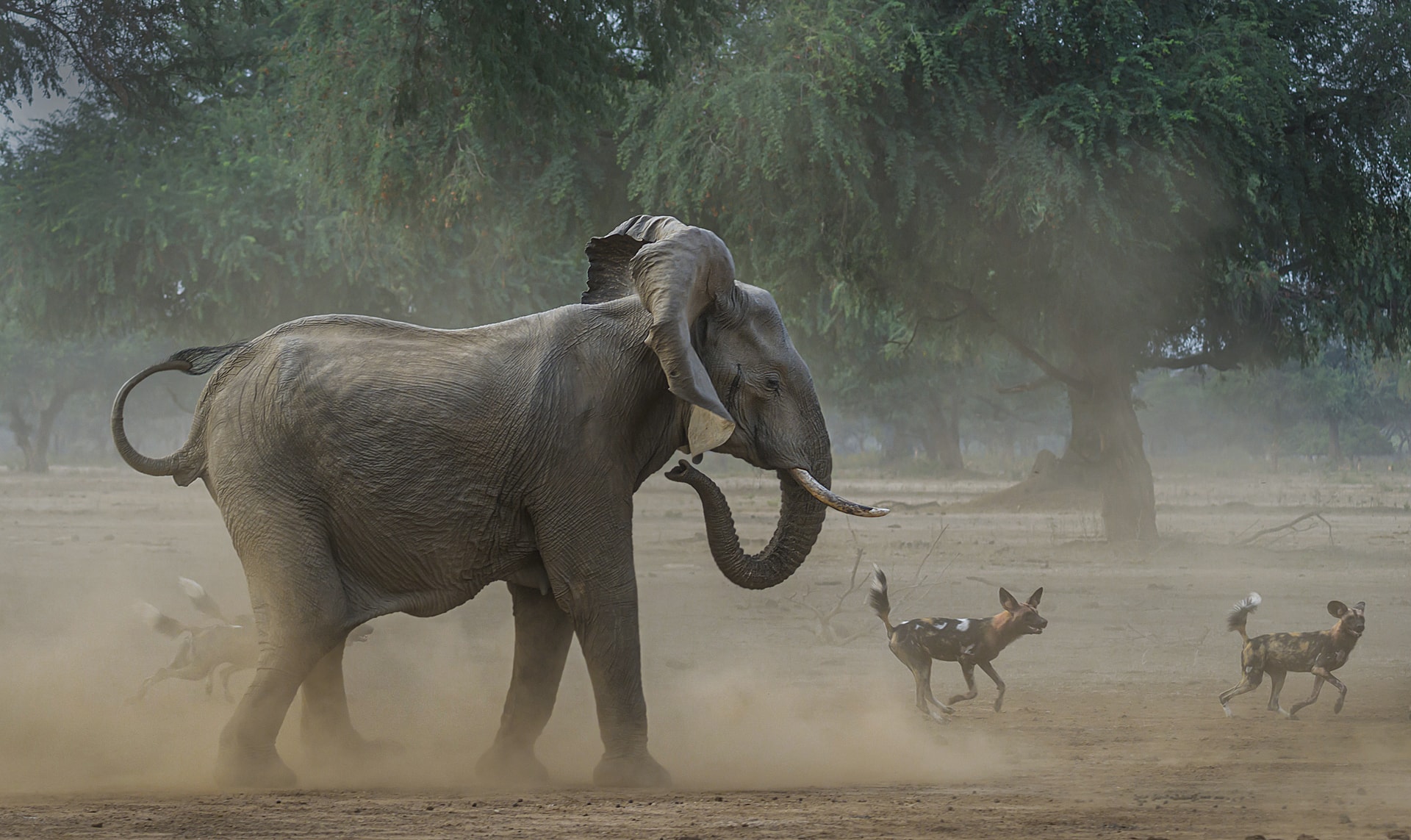
A Zambia photography safari offers an unparalleled journey into the raw, "off the beaten track" wilderness of Africa, perfect for capturing authentic wildlife moments without the typical safari crowds. Renowned for its dramatic landscapes and high predator density, Zambia is a premier destination for those seeking intimate portraits of leopards in South Luangwa, "the valley of the leopard," or elephants crossing the iconic Zambezi River.
Photographers benefit from unique vantage points found nowhere else, including the birthplace of the walking safari for eye-level perspectives and quiet canoe safaris in Lower Zambezi for low-angle reflections. Many camps feature specialized ground-level hides, ensuring you are in the exact right place at the right time for "the" shot. Whether you are chasing the golden light of the dry season or the atmospheric "mood and mists" of the emerald season, a Zambia photography safari promises a diverse and stunning portfolio from one of the continent's most photogenic ecosystems.
21-days-perfect-zambia-safari-holiday-vacation-tour-southern-africa-safari
19-day-zambia-zimbabwe-and-botswana-safari-itinerary
17-days-best-victoria-falls-tour-zambia-side-zimbabwe-and-botswana-safari-tour
15-days-best-of-zambia-safari-and-victoria-falls-tour-package
12-days-best-family-zambia-safari-holiday-and-victoria-falls-tour
11-days-best-zambia-wildlife-safari-itinerary
9-days-ultimate-zambia-safari-tour-to-best-zambia-wildlife-parks
7-days-perfect-south-luangwa-national-park-and-lower-zambezi-national-park-tour-package
When is the best time for a Zambia photography safari?
The best time for a Zambia photography safari is during the dry season, which runs from May to October. During this period, the wildlife becomes more concentrated around dwindling water sources, making it an excellent time for photographers to capture animals in their natural habitats. The months of June to September are considered peak months, as wildlife sightings are at their highest, and the lighting is exceptional for photography.
As the dry season progresses, the vegetation thins, allowing for clearer views and unobstructed shots of animals, especially during the golden hours of early morning and late afternoon. The drier conditions also make it easier to access various wildlife-rich areas.
However, it’s important to highlight that while the dry season is favored, each month presents unique attributes. For instance, early May may have lingering greenery, providing striking contrasts in your images.
Overall, planning a Zambia photography safari during the dry season will yield the richest photographic opportunities, where the combination of abundant wildlife and favorable light culminate in breathtaking imagery.
What is the "emerald season" for photography?
The "emerald season" in Zambia refers to the period from November to March when the landscape transforms into a lush paradise, characterized by vibrant greenery, vibrant flower blooms, and the emergence of newborn animals. This season is ideal for photographers seeking to capture dramatic landscapes and rich wildlife interactions.
During the emerald season, the rains rejuvenate the terrain, bringing life back to the ecosystems. However, visitors must be prepared for potential challenges, such as rain and denser bush that can obscure wildlife. Although this may pose hurdles for traditional wildlife photography, it also allows for capturing extraordinary images of animals against strikingly vivid backdrops.
Birding enthusiasts will find this season particularly rewarding, as many migratory birds flock to the region, adding color and diversity to the photographic experience. The dramatic storm clouds that often accompany the season can create excellent conditions for atmospheric landscape photography.
While fewer lodges may operate during this time due to the rains, it provides a wonderful opportunity for those who are willing to brave the elements, as the low-season rates make travel more accessible. Overall, the emerald season offers a unique perspective for photographers eager to showcase the diversity and vibrancy of Zambia’s natural beauty.
How long should I stay in Zambia?
For a comprehensive Zambia photography safari experience, a stay of 10 to 14 days is highly recommended. This duration allows for exploration of multiple ecosystems, thereby enriching your photographic opportunities. Key areas to consider visiting include South Luangwa National Park, Lower Zambezi National Park, and Liuwa Plain National Park, each offering unique landscapes and wildlife.
South Luangwa is well-known for its leopards and diverse wildlife, providing countless chances for stunning photographs. With ample time, photographers can explore various areas within the park, capturing different species and varying landscapes.
Lower Zambezi National Park offers spectacular river views and is famous for its elephant sightings. Photographers can take advantage of both land and water-based photographic opportunities, offering diverse angles and subjects.
Liuwa Plain, on the other hand, is recognized for its vast open plains and huge herds of wildebeest, along with striking aerial opportunities for landscape photography.
Staying for 10 to 14 days not only allows for adequate time spent in each location but also provides the flexibility to adapt to weather conditions and wildlife movements. This extended duration increases the likelihood of capturing unique moments and creating a well-rounded photographic portfolio that showcases the breathtaking beauty of Zambia.
Is it worth going in the rainy season?
Yes, venturing to Zambia during the rainy season can be incredibly worthwhile for photographers seeking unique opportunities and dramatic landscapes. The rainy season, typically from November to March, brings with it stunning transformations in the environment. Lush greenery envelops the landscape, creating vibrant backdrops for wildlife photography.
One of the highlights of this season is the opportunity to capture dramatic cloud formations and the interplay of light and moisture, which can yield breathtaking atmospheric shots. Photographers can also document newborn animals, which add an emotional element to wildlife imagery, showcasing the cycle of life.
However, visitors should be prepared for some challenges, as rain can lead to muddy conditions and some lodges may be closed. Staying at camps operating during this time may require more flexibility, and day's plans can change based on weather patterns. That said, fewer tourists during the rainy season can lead to more intimate wildlife experiences and less crowded photographic settings.
With the vibrant landscape and lower rates typically associated with this time, photographers who are willing to embrace the rain will find that a Zambia photography safari in the rainy season can yield some of the most compelling images and experiences, allowing them to capture the beauty and resilience of nature.
Which parks are best for a Zambia photography safari?
Several outstanding parks in Zambia are particularly suited for photography enthusiasts, each offering unique landscapes and wildlife encounters. South Luangwa National Park is often at the top of the list, celebrated for its rich biodiversity and especially for leopards and other big cats. The park's varied ecosystems provide numerous opportunities for capturing wildlife in stunning settings, including rivers, woodlands, and open plains.
Lower Zambezi National Park is another excellent choice, famous for its elephants and picturesque riverine landscapes. The ability to photograph wildlife along the Zambezi River—from elephants bathing to hippos lounging—creates dynamic compositions and diverse photographic opportunities.
Liuwa Plain National Park is a hidden gem, renowned for its vast open plains and massive herds of wildebeest. This park is less frequented by tourists, allowing for fewer distractions and more exclusive photographic chances. The unique wildlife interactions, including vultures that flock to this area, provide an exciting backdrop for capturing stunning ecological narratives.
Each of these parks offers its own unique photographic experiences and characteristics, allowing for a well-rounded Zambia photography safari. By visiting multiple parks, photographers can capture a wide range of landscapes and wildlife, contributing to a diverse and compelling portfolio.
What camera gear is essential for a Zambia photography safari?
When preparing for a Zambia photography safari, selecting the right gear is crucial for capturing stunning wildlife and landscapes. A DSLR or mirrorless camera body is essential, offering the flexibility and capabilities needed for dynamic photography. A long zoom lens, such as a 100-400mm or 70-200mm, enables you to get closer to wildlife without disturbing them, capturing detailed portraits or immersive action shots.
In addition to a long lens, a versatile lens, like a 24-70mm or a 16-35mm, is highly recommended. This will allow you to shoot landscapes and more environmental portraits, capturing the essence of the surroundings in which the wildlife resides.
A sturdy tripod is also valuable, especially for landscape photography. It provides the stability needed for long exposure shots, especially during dawn or dusk when light may be limited. Additionally, carrying plenty of memory cards is essential, as the abundant photographic opportunities may lead to numerous captures throughout your safari.
Preparing for variations in weather by bringing an appropriate rain cover for your camera gear can safeguard your equipment against the elements. By ensuring your gear is appropriate for the task at hand, you'll be better equipped to capture the breathtaking wildlife and varied landscapes that a Zambia photography safari has to offer.
Do I need a drone?
While drones can enhance photographic opportunities by providing stunning aerial perspectives, using them during a Zambia photography safari is generally not recommended due to strict regulations. Drones are often prohibited in National Parks or require expensive permits for use, which can complicate your photographic plans.
Flying drones in protected areas can pose risks to wildlife and disrupt their natural behaviors, leading to ethical concerns. As a result, many operators will advise against bringing drones to Zambia, especially if you're planning to photograph in popular National Parks like South Luangwa or Lower Zambezi.
However, for those specifically interested in drone photography, it's crucial to check regulations in advance. Special permission may be required from the Tourism and Wildlife authorities, and even with permission, your flying area may be limited and require a flight plan.
Ultimately, photographers can still capture extraordinary images without a drone by utilizing traditional camera techniques. Ground-level photography allows for intimate wildlife encounters and dynamic compositions that reflect the rich environment of Zambia. In many cases, the on-ground experience offers more meaningful connections with nature than aerial views.
What camera settings are best for a Zambia photography safari?
Achieving the best results on a Zambia photography safari often depends on the settings you choose for your camera. Generally, using high shutter speeds is preferred to freeze animal motion. Shutter speeds of 1/500 second or faster are usually ideal for capturing wildlife action, particularly when photographing animals in pursuit or active behaviors.
A wide aperture (such as f/2.8 to f/5.6) is recommended for creating a shallow depth of field, which beautifully blurs the background, helping to isolate your subject and draw attention to the animal you’re photographing. This effect can be especially striking in portrait shots of wildlife, highlighting details like the eyes and fur texture.
ISO settings also play a crucial role in determining image quality. While a lower ISO (100-400) is ideal in bright conditions, you may need to increase the ISO (800-3200) in darker situations, such as early mornings or evenings. Be mindful, though, that higher ISO settings can introduce noise, so always try to find the right balance.
In summary, a combination of high shutter speeds, wide apertures, and appropriate ISO settings can help you effectively capture the captivating moments that a Zambia photography safari presents. Understanding when to make adjustments based on the light and action will ultimately aid in creating compelling images of the region's wildlife and landscapes.
Do lodges offer charging facilities?
Yes, most safari camps and lodges in Zambia are equipped with charging facilities, which can include 220v electricity, solar generators, or inverter systems. Charging points are typically available in guest rooms or at common areas within the lodge, allowing you to keep your camera batteries and devices powered throughout your stay.
It's essential to confirm with your chosen lodge regarding the type of charging facilities available, as the options may vary. Some lodges may also provide converters or adapters if you're coming from a country with different plug types. However, it's advisable to bring your own adapters to ensure compatibility with your equipment.
Additionally, it’s wise to carry extra batteries for your camera, especially during long days on safari when opportunities for charging may be limited. This way, you can maximize your shooting potential without the stress of running out of power. Many photographers also opt for portable power banks or charging packs as a backup to recharge batteries in the vehicle or while on outings.
By preparing adequately for power management, you can focus on capturing the stunning wildlife and landscapes that Zambia has to offer, ensuring that your photographic experience remains seamless and enjoyable.
Is a beanbag necessary?
Yes, a beanbag is highly recommended for a Zambia photography safari, particularly for supporting long lenses when shooting from vehicles. Beanbags provide a stable and flexible surface that can be positioned on the edge of the vehicle, allowing you to capture wildlife without the vibrations that might be caused by traditional equipment setups.
Many specialized safari operators do provide beanbags for this purpose, allowing you to rest your camera securely while tracking wildlife. They can also help to improve your composition, as beanbags can be adjusted easily to obtain the desired angle. However, photographers are often encouraged to bring their own empty beanbag that can be filled with local materials—such as sand or rice—once they arrive in Zambia, as this ensures familiarity and comfort.
Bringing a beanbag offers several advantages over a traditional tripod, especially when working from a vehicle. Its flexibility allows for quick adjustments in shooting angles, facilitating spontaneous photographic opportunities as wildlife appears unexpectedly.
Overall, a beanbag can be an indispensable tool for wildlife photographers, enabling you to stabilize your equipment effectively while taking full advantage of Zambia's diverse and dynamic environments. This support leads to clearer images and more enjoyable photographic experiences during your safari adventure.
Are there specialized photo vehicles?
Yes, many operators in Zambia offer specialized photo vehicles designed to enhance the photography experience on safari. These vehicles typically feature open-view designs, allowing for unobstructed views of the surrounding environment and maximized shooting opportunities. Unlike traditional safari vehicles, which may have fixed seating arrangements, photo vehicles are often customized to accommodate photographers’ needs, with features like swivel mounts for cameras, adjustable seats, and ample space to maneuver between lenses and equipment.
The benefit of being in a specialized photo vehicle is the ability to change your angle quickly and effectively, enabling you to capture wildlife behaviors without losing precious moments. Experienced guides often drive these vehicles, using their knowledge of animal movements to position you in ideal locations for photography. This combination of expertise and customized design can significantly enhance your shooting experience.
Moreover, the open-top nature of these vehicles enables photographers to spot and capture wildlife interactions from a variety of vantage points. This flexibility can yield unique compositions that traditional vehicles may not offer. The aim is to provide an environment where photographers can feel comfortable and inspired, leading to more memorable photographs.
For anyone serious about wildlife photography, selecting an operator that offers specialized photo vehicles is a key consideration. This ensures you are well-equipped to make the most of your Zambia photography safari and capture the essence of the stunning natural landscapes and diverse wildlife.
What is special about a walking Zambia photography safari?
A walking Zambia photography safari offers a unique and immersive experience that dramatically enhances the way you capture the beauty of nature. Unlike traditional vehicle-based safaris, walking safaris allow for close encounters with the environment and wildlife, providing an opportunity to notice the subtleties often overlooked from a distance.
With experienced guides leading the way, you can engage in a low-angle photographic perspective, enabling you to capture intricate details of plants, insects, and small creatures that typically escape attention while in a vehicle. This intimate connection with the landscape can lead to stunning images that convey the heartbeat of the wild.
Walking safaris also facilitate a slower pace, allowing photographers to take their time composing shots and learning about the ecology of the area. The sensory experience of being on foot allows for a deeper appreciation of the surroundings, which often translates into better photographic storytelling.
Furthermore, the opportunity to approach wildlife on foot adds an element of excitement and adrenaline, as you might encounter animals up close. Your guide's expertise ensures safety while still enabling the thrill of capturing candid interactions between animals in their natural habitat.
Overall, a walking Zambia photography safari is special because it fosters a more personal connection with nature, provides unique photographic angles, and allows for a more nuanced understanding of the ecosystem, enriching the entire photographic experience.
Can I do night photography?
Yes, night photography is a thrilling aspect of a Zambia photography safari, especially in areas like South Luangwa National Park, where night game drives are often offered. These night drives are guided excursions that allow photographers to venture into the wild after sunset, providing a unique opportunity to observe and capture nocturnal species that are typically elusive during the day.
During night drives, specialized vehicles equipped with spotlights are commonly used to illuminate wildlife, resulting in striking photographic opportunities. You may encounter animals such as leopards, hyenas, and various species of owls, all engaging in their nighttime activities. The challenge of shooting in low-light conditions can create a sense of excitement, as you explore new techniques to harness the available light for compelling images.
Flash photography can be used selectively to capture fascinating details, but it's essential to balance ethical considerations regarding wildlife and avoid startling the animals. Working with guides who understand how to approach wildlife respectfully ensures a rewarding experience.
Capturing the essence of nocturnal wildlife is a unique addition to your portfolio, and the vivid contrasts of night photography can produce hauntingly beautiful images that tell a different story than daytime captures. Engaging in night photography during your Zambia safari adds an exciting dimension to your experience, showcasing the vibrant life that flourishes in the darkness.
How close can I get to the animals?
When participating in a Zambia photography safari, the distance you can get to animals depends on the guidance of experienced safari guides who prioritize safety and ethical photography practices. While Zambia’s safari guides are trained to position vehicles close to wildlife for optimal viewing and photographic opportunities, they always place the well-being of the animals and their natural behaviors first.
Many operators utilize open-roof vehicles designed for wildlife viewing, which allows for closer encounters while maintaining a safe distance. The choice of approach will abide by ethical standards, ensuring that animals are not stressed or disrupted by human presence. This is particularly important for larger and more unpredictable wildlife, such as elephants and lions.
Although the proximity to the animals may vary, the goal is to provide an intimate experience without encroaching on their space. Guides are adept at reading animal behavior, positioning the vehicle in such a way as to maintain safety while maximizing photographic angles.
Ultimately, your experience on a Zambia photography safari will provide excellent opportunities to capture stunning images of wildlife, while respecting their natural environment. A focus on responsible photography leads to richer encounters and ensures that both photographers and wildlife can coexist harmoniously in the stunning landscapes of Zambia.
What is a "hide" in a Zambia photography safari?
In the context of a Zambia photography safari, a "hide" refers to a concealed structure designed to offer photographers an undisturbed vantage point for watching and capturing wildlife. These hides are strategically located near water sources, feeding grounds, or areas where animals frequently travel, allowing for eye-level shots that can result in intimate and impactful photography.
The primary advantage of using a hide is the opportunity to be close to wildlife without disturbing them. This creates a tranquil environment where animals often exhibit natural behaviors, providing a unique chance to capture candid images. The design of hides typically includes features such as windows or openings that allow for unobstructed views while keeping photographers concealed.
Hides are especially useful for photographing shy or elusive species that might avoid human presence in more exposed settings. Whether photographing birds at a waterhole or observing larger mammals interacting in their natural habitat, these setups grant photographers the chance to create dynamic compositions that tell meaningful stories about wildlife.
Additionally, the stillness that a hide provides can lead to a more meditative photography experience, allowing for deeper observation and understanding of animal behavior. In summary, hides are valuable tools for photographers seeking to capture intimate wildlife shots in a comfortable, unobtrusive manner, enhancing the overall quality of a Zambia photography safari experience.
Booking Zambia photography safari with us Roads of Adventure safaris
Booking a photography safari in Zambia with Roads of Adventure Safaris promises intimate, expert-guided encounters in South Luangwa and Lower Zambezi, ideal for capturing wildlife in the dry season (May-October). We offer customized itineraries featuring specialized vehicles and exclusive, high-end lodges to ensure you get the best, safe, and most memorable shots.
