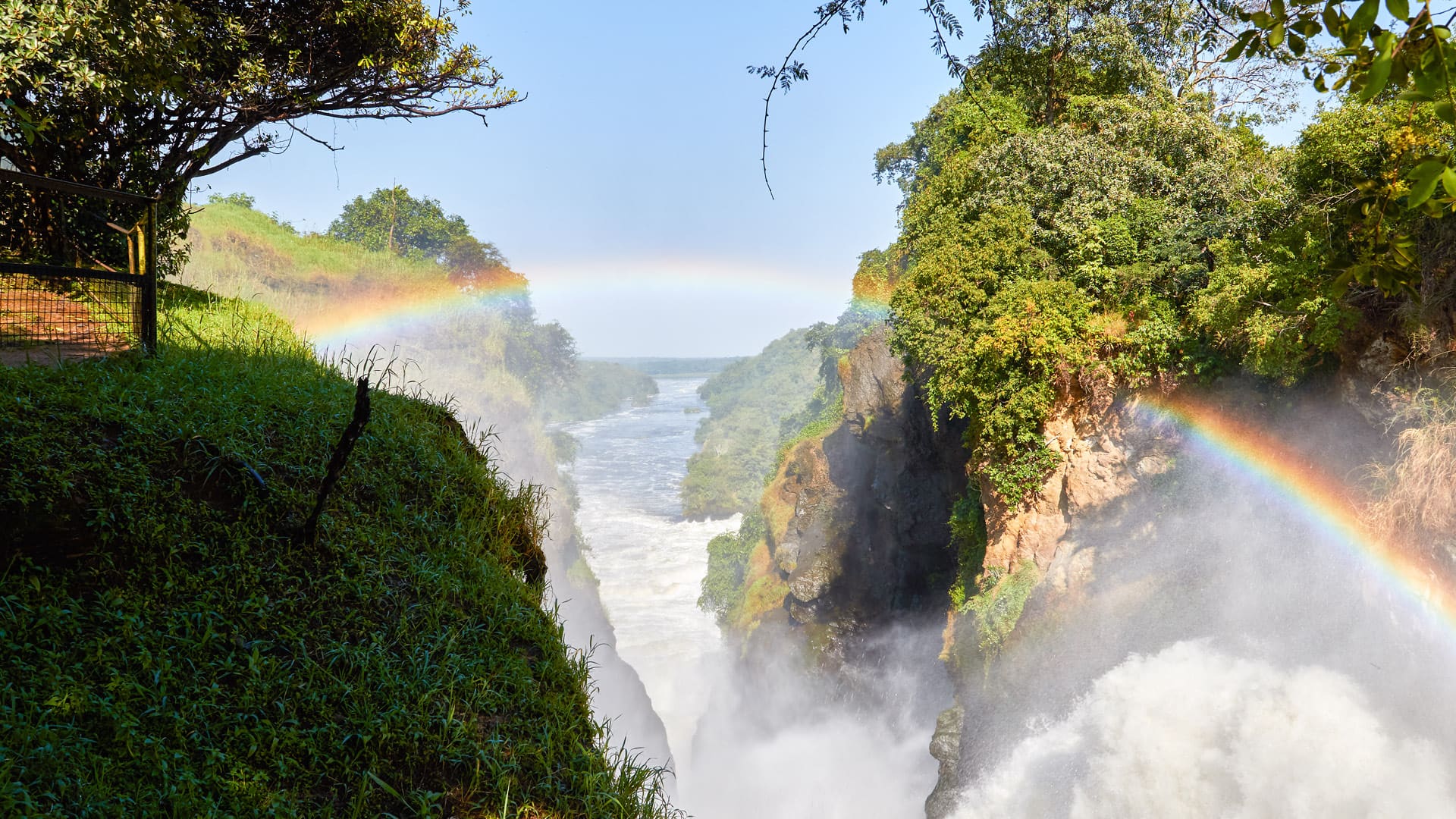
The largest national park in Uganda is Murchison Falls National Park. Covering approximately 3,893 square kilometers (1,503 square miles), it is bisected by the mighty Victoria Nile and is famous for hosting diverse wildlife—including lions, elephants, giraffes, and hippos—alongside the spectacular waterfall it is named after
3-days-chimpanzee-habituation-in-kibale-forest-park
3-days-gorilla-trekking-safari-and-lake-bunyonyi-relaxation-itinerary
3-days-murchison-falls-national-park-best-uganda-safari-road-trip
5-days-murchison-falls-safari-and-gorilla-trekking-in-bwindi
7-days-photography-uganda-safari-all-big-five-chimpanzee-and-gorillas
8-day-africa-big-five-safari-in-uganda-and-mabamba-swamp-shoebill
10-days-best-uganda-big-five-safaris-and-primate-experience
12-days-best-uganda-safari-big-five-and-uganda-primate-safari
Which is the second-largest national park in Uganda?
Queen Elizabeth National Park is the second-largest national park in Uganda, covering an expansive area of approximately 1,978 square kilometers. It is surpassed in size only by Murchison Falls National Park. Located in western Uganda, this diverse park stretches across the districts of Kasese, Kamwenge, Rubirizi, and Rukungiri. It is celebrated for its incredibly varied ecosystems, which include sprawling savanna, humid forests, fertile wetlands, and sparkling crater lakes. This rich landscape makes it a premier destination for spotting a wide array of wildlife, including elephants, buffaloes, leopards, and hippos, alongside a remarkable number of bird species.
Where is the best place to see mountain gorillas in Uganda?
The absolute best place to see mountain gorillas in Uganda is Bwindi Impenetrable National Park. This UNESCO World Heritage Site is home to roughly half of the world's remaining mountain gorilla population, offering an unparalleled tracking experience. Bwindi features four distinct trekking sectors—Buhoma, Ruhija, Rushaga, and Nkuringo—each with its own habituated gorilla families and unique terrain. For a more boutique and alternative experience, travelers can also visit Mgahinga Gorilla National Park in the Virunga Mountains. Mgahinga features one reliable habituated group called the Nyakagezi family, which ranges across the dramatic volcanic slopes.
Which Park is famously known as the Primate Capital of the World?
Kibale National Park is proudly and famously known as the Primate Capital of the World. Spanning 795 square kilometers of lush rainforest in western Uganda, it boasts the highest density and diversity of primates in all of East Africa. The park is home to 13 distinct primate species, with its crowning jewel being a thriving population of over 1,500 wild chimpanzees. Beyond the iconic chimpanzees, visitors tracking through the dense, vibrant canopy can easily spot red-tailed monkeys, L'Hoest's monkeys, black-and-white colobus monkeys, grey-cheeked mangabeys, and the endangered Ugandan red colobus.
Where can I find the famous tree-climbing lions in Uganda?
The famous tree-climbing lions of Uganda are found in the Ishasha sector, located in the remote southern region of Queen Elizabeth National Park. This particular behavioral trait is highly unusual for lions, making Ishasha one of only two places in the world where they can consistently be seen lounging high in the branches. They are most frequently spotted taking afternoon siestas in the sweeping limbs of large fig trees and sycamore-fig trees. This fascinating behavior is thought to be an ingenious adaptation to escape the heat of the ground and avoid irritating bites from tsetse flies.
What is the Kazinga Channel boat cruise famous for?
The Kazinga Channel boat cruise is internationally famous for offering some of the highest concentrations of hippos and Nile crocodiles anywhere in Africa. This natural 32-kilometer-long waterway connects Lake Edward and Lake George, slicing directly through Queen Elizabeth National Park. A standard boat safari provides unparalleled, close-up opportunities to view massive pods of hippos resting in the water and gigantic crocodiles basking along the banks. It also serves as a critical watering hole, drawing majestic herds of elephants, buffaloes, and waterbucks, alongside hundreds of vibrant waterbird species like skimmers, pelicans, and storks.
How many national parks are there in Uganda?
Uganda currently features 10 distinct national parks, all meticulously managed by the Uganda Wildlife Authority (UWA). These protected areas are beautifully spread across diverse geographic zones, showcasing the country’s remarkable ecological variety. The collection includes sweeping savanna parks like Murchison Falls, Queen Elizabeth, Kidepo Valley, and Lake Mburo; ancient, dense mist forests like Bwindi Impenetrable and Kibale; unique montane settings like Semuliki; and high-altitude, dramatic mountaineering landscapes like Mount Elgon and the legendary, snow-capped Rwenzori Mountains. While there are active governmental plans to elevate additional forest reserves into national parks, the core tally stands at ten pristine parks.
Which Park is the best destination for chimpanzee tracking?
Kibale National Park stands out as the ultimate and most successful destination for chimpanzee tracking in Uganda. The park boasts an exceptional tracking success rate of over 99%, making sightings nearly guaranteed on daily guided walks. Visitors have the unique opportunity to opt for either a standard one-hour encounter or the highly immersive Chimpanzee Habituation Experience (CHEX), which allows travelers to spend a full day accompanying researchers and habituated communities from dawn to dusk. While alternative tracking is available in places like Budongo Forest near Murchison Falls or Kyambura Gorge, Kibale remains the premier global standard.
Which Ugandan Park is a designated UNESCO World Heritage Site?
Uganda features two extraordinary national parks that are designated as UNESCO World Heritage Sites: Bwindi Impenetrable National Park and Rwenzori Mountains National Park. Both were inscribed by UNESCO in 1994 due to their exceptional natural beauty and critical biodiversity. Bwindi is globally recognized as an ancient, isolated ecological haven that provides an essential sanctuary for endangered mountain gorillas and endemic Albertine Rift birds. Meanwhile, Rwenzori Mountains National Park is celebrated for its spectacular alpine scenery, unique giant lobelia flora, and striking equatorial glaciers that crown Africa’s third-highest peak.
What is the best time of year to visit Murchison Falls National Park?
The absolute best time of year to visit Murchison Falls National Park is during the dry seasons, which run from December to February and from June to September. During these months, vegetation thins out significantly, making it much easier to spot classic big game like lions, giraffes, leopards, and elephants roaming the savanna. Wildlife also tends to congregate predictably around the banks of the Victoria Nile and permanent watering holes. Furthermore, the tracks are firm and dry, and the weather is ideal for boat cruises, making the peak dry season the perfect window for a flawless safari.
Which is the oldest national park in Uganda?
Murchison Falls National Park is the oldest national park in Uganda, originally established in 1952 alongside Queen Elizabeth National Park. It forms the core of the massive Murchison Falls Conservation Area, which also encompasses the adjacent Bugungu and Karuma wildlife reserves. The park was named after the spectacular waterfall where the mighty Nile River forces its way through a narrow 7-meter gorge before plunging 43 meters below. For decades, this historic park has stood as a beacon of African conservation, protecting a massive array of wildlife and historical landscapes.
What bird species can be spotted during a safari in Queen Elizabeth National Park?
Queen Elizabeth National Park is a premier global birding hotspot, boasting an incredible checklist of over 600 distinct bird species. During a safari, avid birdwatchers can easily spot iconic waterbirds along the Kazinga Channel, including the African skimmer, great white pelican, pink-backed pelican, saddle-billed stork, and the rare shoebill stork. The park’s diverse savannas and forest fringes also provide excellent sightings of majestic martial eagles, grey crowned cranes (Uganda's national bird), African fish eagles, palm-nut vultures, Verreaux's eagle-owls, papyrus gonoleks, and a radiant variety of kingfishers and sunbirds.
How much does a gorilla trekking permit currently cost in Uganda?
A standard gorilla trekking permit in Uganda currently costs $800 USD per person for Foreign Non-Residents. For Foreign Residents living within East Africa, the price is set at $700 USD, while citizens from the Rest of Africa pay $500 USD, and East African Community (EAC) citizens pay UGX 300,000. For travelers looking for an even deeper, more exclusive experience, the Gorilla Habituation Experience in Bwindi costs $1,500 USD, allowing four full hours in the presence of a semi-habituated family. These critical fees are directly collected by the Uganda Wildlife Authority to fund intensive daily conservation and local community projects.
Which Park offers the best hiking experience into snow-capped mountains?
Rwenzori Mountains National Park offers the absolute best, most challenging hiking experience into spectacular, snow-capped mountains. Affectionately known as the "Mountains of the Moon," this rugged park protects Africa’s third-highest peak, Margherita Peak on Mount Stanley, which rises to an impressive 5,109 meters above sea level. Trekkers can embark on iconic multi-day mountaineering routes, such as the classic 7-day Central Circuit or the technical 11-day Three-Peaks Expedition. The trails lead adventurers through surreal, otherworldly landscapes filled with giant heaths, bogs, bamboo forests, and equatorial glaciers.
What are the main differences between Murchison Falls National Park and Queen Elizabeth National Park?
The primary differences between these two iconic savanna parks lie in their defining geographic features, landscapes, and unique wildlife highlights. Murchison Falls is characterized by the dramatic Nile River cutting directly through it, creating the world's most powerful waterfall and supporting massive populations of Rothschild's giraffes, which are not found in Queen Elizabeth. In contrast, Queen Elizabeth National Park is defined by a landscape of extinct volcanic crater lakes and the open plains of the Ishasha sector, which is world-famous for its tree-climbing lions. Queen Elizabeth also features a much higher diversity of primates due to internal forest troughs like Kyambura Gorge.
Which national park in Uganda is best for viewing zebras and other plains game?
Lake Mburo National Park is the premier destination in Uganda for viewing plains zebras and specific plains game. It is one of the few places in the country where you can see large herds of Burchell’s zebras roaming the landscape. Furthermore, it is the only national park in western Uganda that is home to impalas, and it stands out as one of the best locations to spot majestic elands, topi, and Cape buffaloes. Because the park lacks free-roaming lions, it offers unique, highly intimate safari activities, allowing visitors to enjoy guided walking safaris, mountain biking, and horseback riding directly alongside the wildlife
Booking visit to Uganda national parks with us Roads of Adventure safaris
Booking a customized safari with Roads of Adventure Safaris for Uganda's national parks is a streamlined process. They specialize in custom mid-range tours (averaging $300 to $1,000 per person, per day). Popular highlights include gorilla trekking in Bwindi Impenetrable National Park and seeing tree-climbing lions in Queen Elizabeth National Park.
