Choosing between Kenya, Uganda, and Tanzania depends on whether you want a primate encounter, a classic savannah experience, or a massive migratory ecosystem. Detailed comparisons are available
2-days-best-chimpanzee-tracking-in-kibale-forest-park-tour-package
3-days-trips-to-queen-elizabeth-national-park-for-chimpanzee-tracking-in-kyambura-gorge
3-days-chimpanzee-tracking-to-kibale-forest-national-park
4-days-queen-elizabeth-national-park-and-kyambura-gorge-chimpanzee-tracking
4-days-kibale-forest-chimpanzee-tracking-and-queen-elizabeth-national-park
4-days-chimpanzee-tracking-in-lake-mburo-national-park-and-lake-mburo-safari
4-days-kibale-forest-chimpanzee-tracking-and-queen-elizabeth-national-park
4-days-murchison-falls-and-chimpanzee-tracking-in-budongo-forest
5-days-uganda-big-five-safari-and-chimpanzee-tracking-in-kibale-forest-park
6-days-jinja-white-water-rafting-gorilla-trekking-and-chimpanzee-tracking-adventure
6-days-budget-uganda-safari-and-gorilla-trekking
7-days-perfect-uganda-primate-safari-itinerary
8-days-exclusive-gorilla-trekking-chimpanzee-and-big-five
9-days-luxury-gorilla-and-uganda-safari-tour-package
Uganda: The Pearl of Africa
Uganda delivers a distinct, lush, and primate-focused alternative to traditional open-savannah itineraries. It stands out primarily as the world's premier destination for close-range primate trekking. Bwindi Impenetrable National Park harbors roughly half of all remaining mountain gorillas, while Kibale National Park offers unmatched tracking encounters with wild chimpanzees. Beyond trekking through dense cloud forests and jungle terrain, Uganda’s geography is defined by aquatic ecosystems. Water-based safaris along the Kazinga Channel in Queen Elizabeth National Park and the Victoria Nile in Murchison Falls allow visitors to view pods of hippos, massive Nile crocodiles, and elephant herds from the water. Birdwatchers flock here for rare endemics, notably tracking the prehistoric shoebill stork through the Mabamba Swamp. Uganda attracts active travelers seeking off-the-beaten-path expeditions that combine big game viewing with rare wildlife interactions.
Reason to choose Uganda for your Uganda safari
World-Capital Primate Tracking
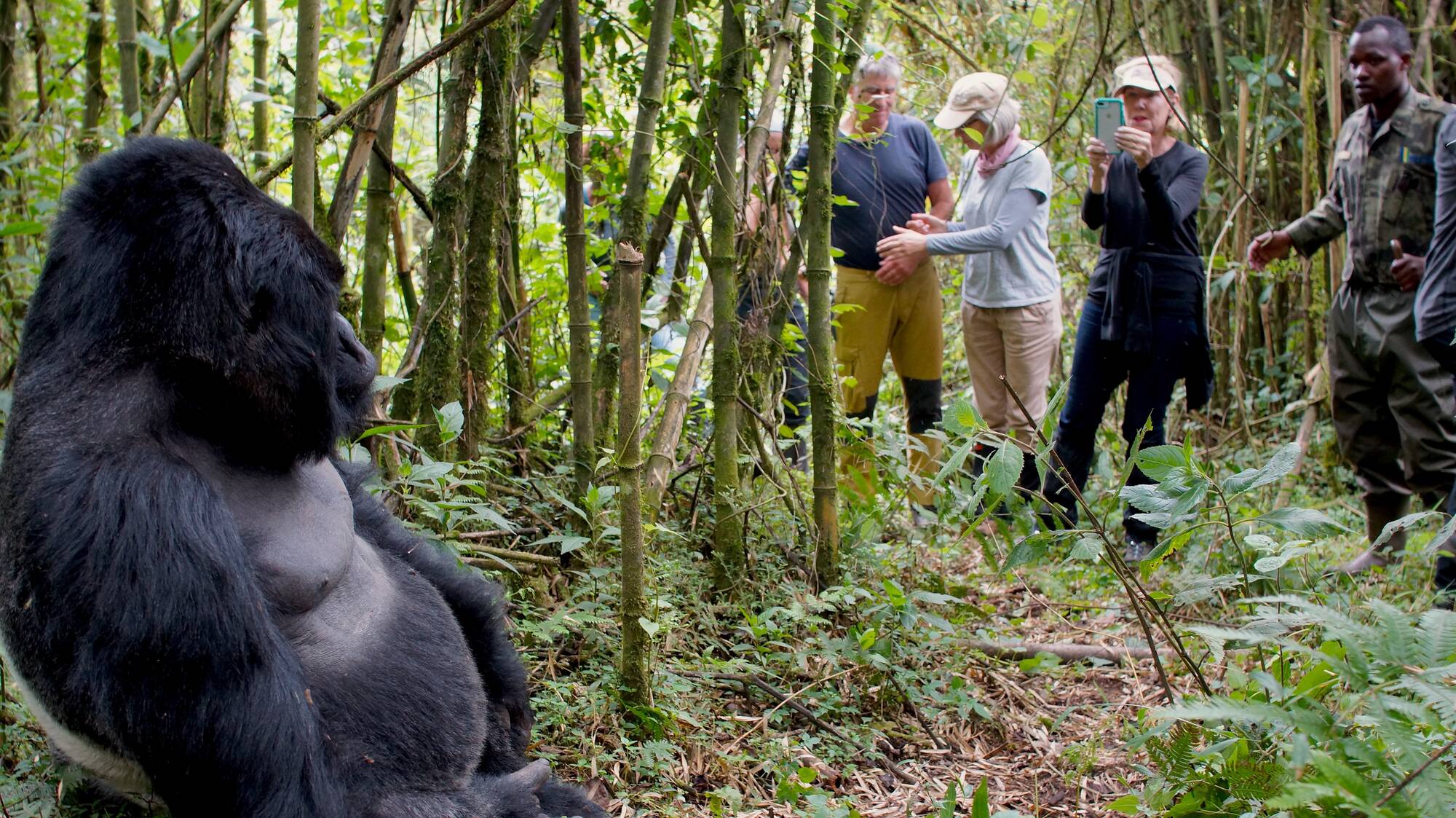
Uganda stands out globally as the premier sanctuary for wild mountain gorillas and habituated chimpanzees. In southwestern Uganda, Bwindi Impenetrable National Park shelters nearly half of the world's total mountain gorilla population amidst ancient cloud forests. An encounter with a gorilla family offers an unforgettable, face-to-face wildlife connection that few places on Earth can match.
Complementing the gorillas, Kibale National Park is widely recognized as the top chimpanzee tracking destination in Africa. Containing 13 distinct primate species, Kibale lets travelers trek through lush canopy trails alongside active habituated communities. Unlike traditional vehicle-bound game drives, gorilla and chimpanzee trekking in Uganda involves immersive on-foot hikes guided by seasoned park rangers. Because international conservation permits are strictly managed, primate tracking remains exclusive, eco-conscious, and deeply rewarding.
Water-Based Boat Safaris
Beyond terrestrial game drives, Uganda excels at dynamic, water-based safari experiences powered by its vast lakes, wetlands, and rivers. The Kazinga Channel in Queen Elizabeth National Park links Lake Edward and Lake George, creating a vibrant natural canal where wildlife converges daily. On a boat safari along the channel, travelers glide past massive pods of bathing hippos, Nile crocodiles basking on the banks, and herds of elephants refreshing at the water's edge.
Further north, Murchison Falls National Park offers dramatic boat cruises along the Victoria Nile to the base of the world's most powerful waterfall. The Nile forces its entire volume through a narrow seven-meter gorge, creating a thunderous cascade framed by misty riverbanks packed with wild game and waterfowl. These aquatic excursions provide travelers with unique vantage points, relaxing transit, and extraordinary wildlife photography opportunities without the bounce of dusty dirt roads.
Rich Biodiversity and Specialized Birding
Uganda’s location at the intersection of the East African savannah and the West African rain belt fosters extraordinary biodiversity across compact geographic boundaries. The country harbors over 1,000 distinct bird species, making it a bucket-list destination for avian enthusiasts worldwide. Headlining this rich wildlife roster is the elusive, prehistoric shoebill stork, best tracked via traditional canoe through the pristine papyrus channels of the Mabamba Swamp.
Additionally, Uganda’s core reserves feature unique big game behaviors, such as the famous tree-climbing lions sprawling across fig tree branches in Queen Elizabeth National Park's remote Ishasha sector. From the high-altitude peaks of the Rwenzori Mountains to the remote wilderness of Kidepo Valley National Park, Uganda packs savannah big five game, rainforest endemics, and tranquil crater lakes into single, seamless travel itineraries.
Kenya: The Classic East African Savannah
Kenya represents the gold standard for classic safari experiences, characterized by streamlined logistics and high-density game viewing. As the regional aviation hub centered around Nairobi, Kenya offers superior infrastructure, frequent domestic flights, and lower international transport costs. The crown jewel is the Maasai Mara National Reserve, famous for big-cat sightings and dramatic river crossings during the annual Great Wildebeest Migration. Shorter travel distances make it easy to craft multi-park itineraries combining the Mara with Amboseli's backdrop of Mount Kilimanjaro, Lake Nakuru’s birdlife, or Tsavo’s sprawling wilderness. Accommodations span high-end luxury tented camps to accessible family lodges. Kenya is ideal for first-time visitors seeking efficient travel, iconic rolling grasslands, and dependable predator action.
Reason to choose Kenya for your east Africa safari
Iconic Wildlife & The Great Migration
Kenya stands as the classic home of the traditional African savannah safari, offering density and diversity in wildlife encounters. The Maasai Mara National Reserve hosts one of nature's greatest spectacles: the annual Great Wildebeest Migration. Between July and October, over a million wildebeest, zebras, and gazelles cross the crocodile-infested Mara River, accompanied by Africa’s densest predator populations of lions, leopards, and cheetahs.
Beyond the Mara, Kenya's network of national parks and private conservancies guarantees exceptional Big Five game viewing. Parks like Amboseli offer iconic views of free-roaming elephant herds against the snow-capped backdrop of Mount Kilimanjaro. Further north in Samburu National Reserve, travelers can spot unique species known as the "Samburu Five"—including the reticulated giraffe, Grevy’s zebra, and gerenuk—making every game drive distinct.
World-Class Logistics & Accessibility
Kenya is widely considered the most accessible and seamlessly organized safari destination in East Africa, making it ideal for both first-time visitors and experienced travelers. Capital city Nairobi serves as East Africa’s central aviation hub, featuring frequent, competitive international flights and a streamlined e-visa entry system.
Once in Kenya, internal logistics are fast and flexible. An extensive network of daily bush flights connects Nairobi directly to safari airstrips in under an hour, eliminating grueling transit days. The country boasts developed tourism infrastructure, ranging from authentic budget bush camps to ultra-luxury eco-lodges. Additionally, Kenya's pioneering private conservancy model gives guests access to exclusive night game drives, guided walking safaris, and off-road tracking that standard national parks prohibit.
Seamless Bush and Beach Extensions
Few destinations match Kenya’s ability to pair high-energy wildlife game drives with world-class tropical relaxation in a single journey. Thanks to direct short flights from savannah airstrips directly to the coast, travelers can transition from tracking big cats in the morning to walking on white-sand beaches by the afternoon.
Kenya’s Indian Ocean coastline offers varied experiences:
- Diani Beach: Renowned for turquoise waters, coral reefs, and water sports like kitesurfing and deep-sea diving.
- Lamu Island: A UNESCO World Heritage site showcasing centuries of rich Swahili architecture, dhow sailing, and peaceful car-free streets.
Tanzania: Scale, Vistas & The Great Migration
Tanzania offers unmatched physical scale and vast, wild ecosystems for travelers prioritizing immense open spaces. Its Northern Circuit features the Serengeti, where millions of wildebeest and zebras traverse endless short-grass plains year-round, alongside the Ngorongoro Crater, a intact volcanic caldera teeming with dense resident wildlife. For those preferring solitude, southern and western reserves like Nyerere and Ruaha provide remote, uncrowded bush experiences. Tanzania’s geography enables seamless extensions, allowing travelers to pair rigorous game drives with trekking Mount Kilimanjaro or relaxing on Zanzibar’s tropical beaches. While logistically more expansive and costly than its neighbors, Tanzania delivers dramatic predator-prey dynamics and grand African vistas.
Reasons why you should choose Tanzania for your East Africa safari
The Great Migration on an Immense Scale
Tanzania is the ultimate destination for witnessing the Great Wildebeest Migration in its rawest, most expansive form. Nearly two million wildebeest, zebras, and gazelles spend the majority of their annual cycle moving across the vast, open plains of the Serengeti National Park.
Unlike shorter seasonal viewing elsewhere, Tanzania hosts crucial, dramatic stages of this natural spectacle year-round:
- Calving Season (Ndutu / Southern Serengeti): Between January and March, hundreds of thousands of calves are born within a matter of weeks, triggering intense predator-prey encounters with lions, cheetahs, and hyenas.
- River Crossings (Northern Serengeti): From July to October, herds braving the treacherous Mara and Grumeti Rivers face giant Nile crocodiles in high-stakes crossings.
The sheer physical scale of Tanzania’s 14,750-square-kilometer Serengeti guarantees sweeping wilderness vistas and uncrowded game viewing across distinct seasonal regions.
The Northern Circuit & Iconic Natural Wonders
Tanzania boasts some of Africa's most visually stunning and ecologically rich natural wonders, clustered seamlessly along its famed Northern Safari Circuit.
- Ngorongoro Crater: A UNESCO World Heritage Site and the world’s largest intact, unflooded volcanic caldera. This 600-meter-deep natural amphitheater shelters roughly 25,000 large mammals, providing one of the highest concentrations of wildlife in Africa and one of the best locations to spot the endangered black rhino.
- Tarangire National Park: Renowned for its dramatic landscape filled with ancient, towering baobab trees and massive elephant herds that gather along the Tarangire River during the dry season.
- Lake Manyara National Park: Famous for its scenic soda lake, flamingo colonies, and rare tree-climbing lions sprawling across acacia branches.
Remote Off-the-Beaten-Path Wilderness
For travelers seeking solitude away from traditional safari routes, Tanzania offers vast, untamed southern and western reserves.
Nyerere National Park (formerly Selous Game Reserve) and Ruaha National Park are among the largest protected wilderness areas in Africa, featuring rugged terrain, deep river valleys, and thriving populations of wild dogs, lions, and hippos. In western Tanzania along Lake Tanganyika, Mahale Mountains and Gombe Stream National Parks allow visitors to trek through wild mountain rainforests to encounter habituated chimpanzees in complete isolation.
Seamless Bush, Trek, and Beach Combination
Tanzania excels at delivering three iconic African travel experiences within a single country:
- Wildlife Safaris: High-density game drives across world-class national parks.
- Mount Kilimanjaro Treks: The highest peak in Africa and the tallest free-standing mountain in the world, attracting trekkers to summit its snow-capped peak.
- Zanzibar Archipelago: Direct, short flights from safari bush airstrips whisk travelers straight to the palm-fringed, white-sand beaches of Zanzibar, Pemba, or Mafia Island for post-safari relaxation, marine diving, and rich Swahili cultural heritage.
Is it possible to combine Uganda Kenya, and Tanzania on a Mult day East Africa safari
Yes, combining Uganda, Kenya, and Tanzania on a multi-day East Africa safari is entirely possible and highly popular.
Most multi-country itineraries start with mountain gorilla and chimpanzee trekking in Uganda (Bwindi/Kibale), then fly to Kenya to witness the Great Migration and big-cat action in the Maasai Mara. From there, you seamlessly cross into Tanzania to explore the vast Serengeti, Ngorongoro Crater, and finish on Zanzibar's beaches.
With the East Africa Tourist Visa (covering Kenya, Uganda, and Rwanda) and efficient regional flight connections between Nairobi, Entebbe, and Kilimanjaro/Serengeti airstrips, seamless transitions take just 2 to 3 weeks.
Best Time for Gorilla Trekking in Uganda
The absolute best time for gorilla trekking in Uganda is during the two dry seasons: June to September and December to February. During these months, forest trails in Bwindi Impenetrable and Mgahinga National Parks are drier, making the steep mountain hikes less slippery and much easier to navigate. Clear skies also provide optimal lighting for photography. However, because mountain gorillas live in tropical rainforests, brief rain showers can still occur year-round. For travelers seeking lower costs and fewer crowds, the wet seasons (March to May and October to November) offer discounted permit options and quieter trails.
Best Time for Wildebeest Migration in Tanzania
Tanzania hosts the Great Migration year-round, but timing depends on which event you want to experience.
- July to October (Mara River Crossings): The prime period to witness massive herds braving crocodile-infested waters in the Northern Serengeti.
- January to March (Calving Season): The best time to visit the Southern Serengeti and Ndutu plains, where over 500,000 calves are born, attracting intense predator activity.
- May to June (Grumeti River Crossings): The herds move through the Western Corridor, crossing the Grumeti River as they head north.
Best Time for Wildebeest Migration in Kenya
The best time to witness the Great Wildebeest Migration in Kenya’s Maasai Mara National Reserve is from July through October. By July, millions of wildebeest, zebras, and gazelles flood across the Tanzanian border into the lush Mara grasslands.
- August and September: The peak months for catching dramatic, high-stakes Mara River crossings, where herds leap down steep banks into predator-dense waters.
- October: The herds graze across the open plains before starting their return journey south back toward the Serengeti as the short rains begin.
Booking Your East Africa Safari with Roads of Adventure Safaris
At Roads of Adventure Safaris, we craft custom, seamless itineraries across Uganda, Kenya, and Tanzania tailored to your exact travel timing and budget. Whether you want to trek endangered mountain gorillas in Uganda's cloud forests, witness the high-octane river crossings of the Great Migration in the Maasai Mara, or explore the vast, predator-rich plains of the Serengeti, our expert local team handles every detail. From securing scarce gorilla permits and inter-park bush flights to matching you with world-class safari lodges, we turn your dream East African journey into an unforgettable reality.