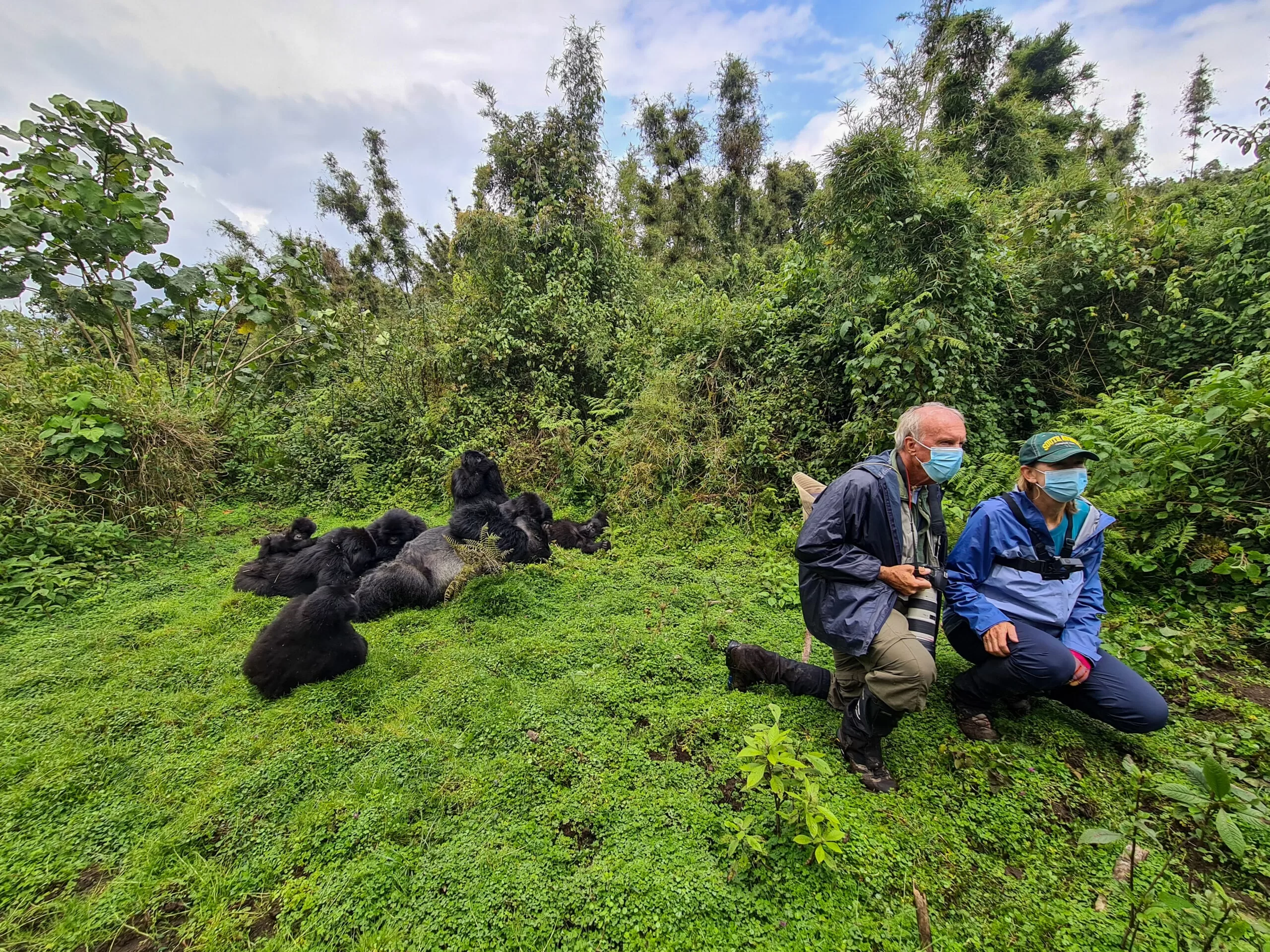
Rwanda generally offers easier and more accessible gorilla trekking terrain than Uganda. In Rwanda's Volcanoes National Park, the slopes feature more open bamboo forests with clearer, better-defined paths. In contrast, Uganda’s Bwindi Impenetrable National Park consists of a dense, rugged, and steep tropical rainforest that demands higher physical exertion
4-days-gorilla-trekking-in-volcanoes-park-combined-with-lake-kivu-trip
5-days-of-gorilla-trekking-and-chimpanzee-tracking-in-rwanda
5-day-akagera-bwindi-gorilla-trekking-lake-bunyonyi-and-batwa-experience
6-days-luxury-rwanda-gorilla-trekking-safari-tour-vacation
7-days-rwanda-safari-tour-gorilla-trekking-and-bisokey-hike-tour-package
8-days-best-luxury-rwanda-gorilla-trekking-safari-and-wildlife
Terrain and Hiking Differences
Rwanda (Volcanoes National Park):
- Open bamboo vegetation with less dense undergrowth.
- Trails are more established and easier to navigate.
- Hikes are typically shorter (averaging 1 to 3 hours), though high altitude (up to 4,000 meters) can still test your stamina.
Uganda (Bwindi and Mgahinga):
- Dense, tangled jungle and steep, slippery ridges.
- Trails can be heavily overgrown and require constant bush-wacking or thick mud navigation, especially after rain.
- Treks can last anywhere from 3 to 8 hours depending on which family you are assigned.
Logistics and Access
- Travel Time: Rwanda provides a much faster journey; Volcanoes National Park is only a 2.5-hour drive from Kigali International Airport.
- Uganda Access: Reaching Bwindi Impenetrable National Park requires an 8 to 10-hour drive from Entebbe, or a shorter 4 to 5-hour drive if you cross the border starting from Kigali.
- Cost: Rwanda charges $1,500 per permit, whereas Uganda permits are more budget-friendly at $800 per person
Which country overall has the physical edge for easier gorilla trekking?
Rwanda takes the crown for physically easier trekking. Volcanoes National Park features lighter bamboo vegetation and generally gentler bamboo-belt slopes compared to Bwindi's rainforest. In Bwindi, you are often climbing steep, muddy ridges and pushing through thick foliage. While both demand reasonable stamina, Rwanda's trails are typically less physically grueling for average hikers or older travelers.
Why is Bwindi Impenetrable Forest considered harder to hike than Volcanoes National Park?
Bwindi is a primeval rainforest characterized by dramatic elevation swings, narrow ridge walks, and dense undergrowth. There are no manicured paths; armed rangers literally cut a path through tangled vines, stinging nettles, and roots using machetes. The forest floor can be wet and slippery year-round, requiring constant balance, high knee lifts, and careful foot placement on steep inclines.
How does altitude differ between trekking in Rwanda and Uganda?
Rwanda’s Volcanoes National Park sits at a higher starting altitude, ranging between 2,300 to 4,000 meters above sea level. Uganda’s Bwindi ranges from 1,160 to 2,600 meters. While Bwindi’s terrain is steeper and denser, Rwanda’s higher elevation means thin air can make you catch your breath quicker. If you are sensitive to altitude sickness, Rwanda’s higher baseline elevation requires better acclimatization despite gentler slopes.
Is gorilla trekking in Mgahinga (Uganda) similar to Rwanda?
Yes, absolutely. Mgahinga Gorilla National Park in Uganda is part of the Virunga Massif, sharing the exact same volcanic mountain chain, vegetation, and elevation profile as Rwanda’s Volcanoes National Park. If you want Rwanda-style bamboo forest terrain and gentler slopes within Uganda—and at Uganda’s lower permit price—Mgahinga is the perfect alternative to Bwindi.
How long does an average gorilla trek take in Rwanda versus Uganda?
In Rwanda, treks typically last between 1 to 4 hours round-trip because bamboo zones allow gorillas to move along known paths closer to park boundaries. In Uganda’s Bwindi, treks range anywhere from 2 to 8 hours depending on where the family nested the previous night. Bwindi’s wild, sprawling rainforest means gorillas can trek deep into inaccessible valleys, requiring longer tracking hours.
What role do porters play in navigating difficult terrain in both countries?
Porters are local community members available for hire at park headquarters for around $15–$20. They carry your daypack, but more importantly, they offer a steadying hand over slippery roots, steep ravines, and muddy slopes. Hiring a porter dramatically reduces fatigue, renders difficult terrain manageable for almost any fitness level, and directly supports surrounding local families.
How does vegetation density impact visibility and photography during the trek?
In Rwanda, bamboo shoots dominate the lower slopes, offering open light, wider sightlines, and clearer photograph opportunities. Bwindi’s dense canopy creates darker, shaded conditions with thick vines and large leaves that often obscure line-of-sight. Photographers in Bwindi need higher ISO settings and patience, whereas Rwanda allows clearer, framed shots in natural mountain sunlight.
Which Park is better suited for seniors or travelers with mobility concerns?
Rwanda is better tailored for seniors and travelers with limited mobility. Park rangers actively assign gorilla families based on fitness levels during morning briefings. Visitors with low mobility are assigned closer, easier-to-reach habituated groups. Additionally, Rwanda offers sedan-chair stretchers carried by team porters for guests unable to hike, making the experience accessible to virtually anyone.
What are the trail conditions during the rainy seasons in Uganda vs Rwanda?
During wet seasons (March–May and October–November), both parks experience heavy rainfall. Bwindi turns into a challenging obstacle course of thick red clay mud, slick tree roots, and swollen streams. Volcanoes National Park becomes muddy as well, but its volcanic soil drains slightly better, and bamboo stalks provide convenient handholds along slippery stretches.
How does park accessibility from the airport affect overall travel fatigue?
Rwanda offers unmatched convenience: Volcanoes National Park is just a smooth 2.5 to 3-hour drive along paved roads from Kigali International Airport. In contrast, reaching Bwindi from Entebbe/Kampala requires a 8 to 10-hour overland drive or a domestic flight to Kihihi/Kisoro airstrip followed by a 1.5-hour dirt road drive. Less transit time in Rwanda leaves trekkers fresher.
Can you request an "easy" gorilla family group in Uganda?
Yes. During the morning briefing at Bwindi’s four sectors (Buhoma, Ruhija, Rushaga, Nkuringo), rangers assess guests’ age, health, and fitness levels. While gorilla movements are wild and unpredictable, rangers do their absolute best to assign closer, lower-elevation families to those who request an easier hike. Always express your physical preference clearly to your guide from Roads of Adventure Safaris.
What footwear is recommended for navigating Bwindi vs Volcanoes National Park?
For Bwindi, heavy-duty, waterproof hiking boots with deep tread ankles support are mandatory to grip wet mud and protect against twisting ankles on hidden roots. For Rwanda, lightweight, waterproof mid-cut hiking shoes work very well due to lighter undergrowth, though sturdy boots are still recommended to handle volcanic rocks and loose scree.
How does the weather and climate impact the physical strain of the trek?
Both parks are high-altitude rainforest ecosystems where weather can shift rapidly from bright sunshine to cool torrential downpours. High humidity in Bwindi combined with physical exertion causes rapid sweating and fatigue. In Rwanda, lower temperatures and mountain breezes at higher altitudes keep you cooler, though thin air increases pulmonary effort.
How many gorilla families are available for trekking in Uganda versus Rwanda?
Uganda is home to roughly half the world's mountain gorillas, with over 20 habituated family groups spread across Bwindi and Mgahinga. Rwanda has 12 habituated trekking families in Volcanoes National Park. Uganda’s higher family count offers broader permit availability, while Rwanda’s concentrated habituation area simplifies ranger tracking and reduces search times.
What gear is essential to tackle the jungle terrain safely?
Essential gear includes sturdy waterproof boots, long moisture-wicking trousers, long-sleeved shirts (to guard against stinging nettles and fire ants), durable gardening gloves (for gripping thorny vines), high-gaiters, a waterproof rain jacket, and adjustable trekking poles. Roads of Adventure Safaris provides detailed packing lists so you are completely prepared for any forest condition.
How does permit pricing reflect the terrain and overall experience?
Rwanda positions itself as an ultra-luxury eco-tourism destination, pricing gorilla permits at $1,500 per person. Uganda offers permits at $800 per person. While Rwanda’s premium price covers shorter drives, luxury lodges, and easier hikes, Uganda offers an incredible, raw, deep-jungle adventure for almost half the permit cost without sacrificing encounter quality.
Is trekking through Bwindi safe for beginner hikers?
Yes, absolutely. Even though Bwindi’s terrain is rugged, treks are led by highly trained Uganda Wildlife Authority rangers and armed escorts who clear paths, set an easy pace, and take frequent hydration breaks. Beginners can comfortably complete the trek by hiring a local porter, using trekking poles, and maintaining a steady, measured walking rhythm.
How do the four sectors of Bwindi differ in terms of terrain difficulty?
Buhoma (north) features relatively lower elevations and gentler valleys, making it the least strenuous sector. Ruhija (east) sits at higher altitudes with cold winds and steep ridges. Rushaga and Nkuringo (south) feature dramatic elevation changes with steep drops into deep valleys, offering the most physically demanding yet scenic treks in Bwindi.
Does bamboo forest in Rwanda make gorilla tracking easier for spotters?
Yes. Trackers leave early every morning to locate gorilla families from their previous night’s nests. In Rwanda’s open bamboo zones, broken stalks and distinct foot tracks make tracking straightforward. In Bwindi’s dense multi-layered canopy, gorillas eat bark, leaves, and fruit across varied tree tiers, requiring advanced tracking skills from rangers.
What physical conditioning should I do before trekking in either country?
Focus on cardio endurance and leg strength 4 to 6 weeks prior to your trip. Practice stair-climbing, lunges, squats, and walking on uneven outdoor trails while wearing your broken-in hiking boots and a weighted daypack. Building ankle stability and leg endurance makes hiking up steep mountain slopes much more enjoyable.
What happens if a trekker gets exhausted or injured on the trail?
Safety is paramount. Rangers monitor trekker stamina closely and adjust the pace accordingly. In the event of severe exhaustion or injury, rangers and porters organize a stretch-chair evacuation. A team of dedicated porters carries the guest safely back to the park trailhead. You are never left behind in the jungle.
Why do people choose Uganda despite the tougher terrain?
Uganda offers exceptional value and diversity. Beyond saving $700 per permit, visitors can easily combine gorilla trekking with golden monkey tracking, chimpanzee trekking in Kibale, classic savanna game drives in Queen Elizabeth National Park, and boat cruises along the Kazinga Channel—all within one seamless safari itinerary organized by Roads of Adventure Safaris.
Are there stinging nettles and insects along the trail?
Yes, both parks have stinging nettles and biting ants. Long pants tucked into socks or gaiters, long-sleeved shirts, and thick gardening gloves are critical. Gloves allow you to grab branches and bamboo stalks for balance without risking nettle stings, keeping your hands comfortable throughout the entire trek.
How close do you get to the gorillas in Uganda vs Rwanda?
By park regulation, visitors must maintain a 7-meter (23-foot) distance from mountain gorillas to protect them from human diseases. However, wild gorillas do not read rulebooks! In both Bwindi and Volcanoes National Park, curious juveniles or moving silverbacks frequently pass within a couple of meters of stationary trekkers.
Is there an option to fly between national parks to skip long ground drives?
Yes. For Uganda itineraries, Roads of Adventure Safaris arranges domestic scheduled flights from Entebbe International Airport directly to Kihihi or Kisoro airstrips near Bwindi, reducing a 9-hour drive to a quick 75-minute scenic flight over Uganda's rolling green countryside.
Which country is better for combining gorilla trekking with a classic wildlife safari?
Uganda is superior for an all-in-one biodiversity safari. Within a few hours' drive from Bwindi, you can spot tree-climbing lions in Ishasha, lions and hippos in Queen Elizabeth, or chimps in Kibale. Rwanda's savanna park, Akagera, is located on the opposite side of the country, requiring extra travel days across Kigali.
How does habituation affect how gorillas behave around humans on rough terrain?
Habituated gorilla groups have undergone a 2-to-3-year process of gentle human exposure led by researchers and rangers. Because of this, gorillas remain calm, feeding and resting peacefully as your group approaches. Their predictable behavior allows rangers to safely guide you around the family regardless of whether you are standing on a steep Bwindi slope or a flat Rwanda bamboo clearing.
What is the Gorilla Habituation Experience in Uganda, and how does its terrain compare?
Exclusive to Bwindi's Rushaga sector, the Habituation Experience allows guests to spend 4 full hours with a semi-habituated gorilla family alongside researchers (compared to the standard 1 hour). Because these groups move unpredictably through deep forest, the terrain is significantly tougher, wilder, and off-trail, making it best suited for fit, adventurous trekkers.
Can you cross the land border from Rwanda to trek gorillas in Uganda for easier logistics?
Yes! This is a very popular travel strategy. You can fly into Kigali Airport (Rwanda), take a scenic 4-hour paved drive across the Cyanika or Katuna land border into southern Bwindi or Mgahinga (Uganda), and enjoy Uganda’s lower $800 permit fee while benefiting from Rwanda's short airport transit time.
How do I choose the best gorilla trekking option for my personal travel style?
If luxury lodges, short driving distances, and gentler physical hiking are your main priorities, Rwanda is your ideal destination. If you seek an authentic deep-jungle adventure, rich multi-park wildlife combinations, and maximum budget value, Uganda is unbeatable. Roads of Adventure Safaris specializes in crafting customized gorilla itineraries tailored specifically to your fitness level, timing, and budget across both world-class destinations.
Booking Uganda Rwanda gorilla trekking with us Roads of Adventure Safaris
To book a Uganda and Rwanda gorilla trekking safari with Roads of Adventure Safaris, plan to secure your permits 3 to 6 months in advance. Costs vary by country, with Uganda permits priced at $800 and Rwanda at $1,500. The operator handles custom mid-range itineraries, permits, transport, and lodging.
