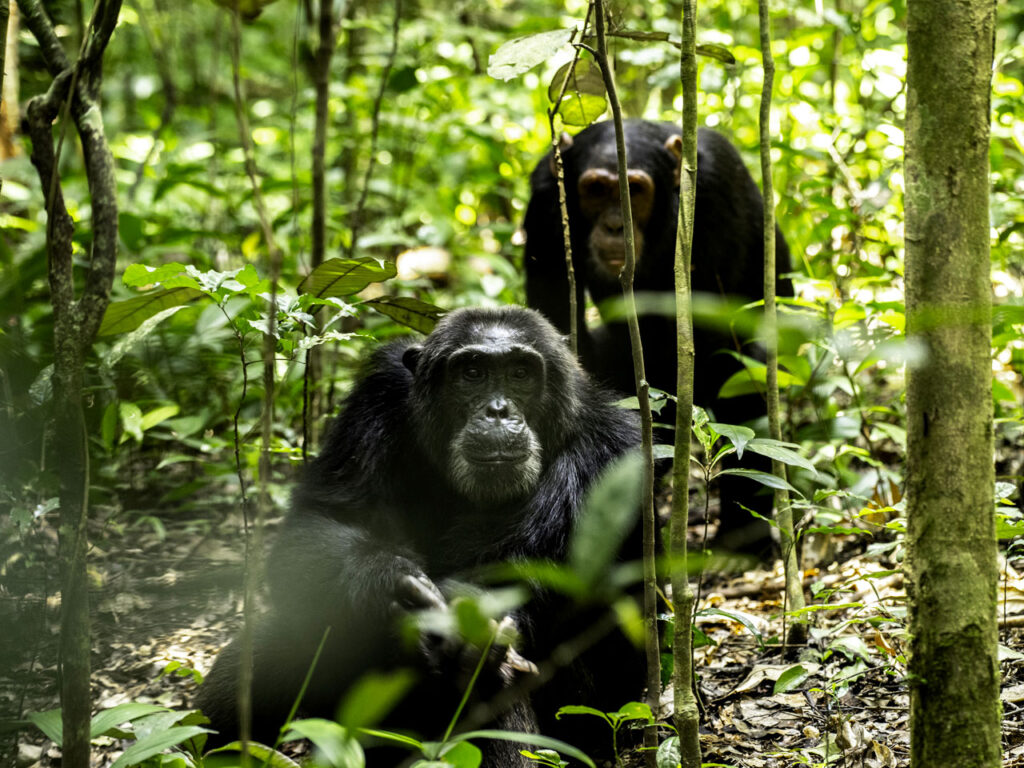
Chimpanzees in Uganda are best seen in Kibale National Park (the "Primate Capital" with over 1,500 chimps) and Budongo Forest Reserve, offering high success rates for tracking. Other key locations include Kyambura Gorge and Kalinzu Forest near Queen Elizabeth National Park, plus Ngamba Island for rescued chimpanzees.
20-days-uganda-birding-safari-wildlife-gorilla-and-chimpanzee-tracking
20-days-uganda-birding-safari-to-uganda-national-park
20-days-uganda-safari-holiday-tour-package-itinerary
19-days-best-photography-uganda-birding-safari-and-wildlife-adventure
19-days-incredible-uganda-safari-tour-big-five-chimpanzees-and-mountain-gorillas
18-days-best-of-uganda-safari-holiday-vacation-to-all-best-parks
17-days-uganda-honeymoon-safari-holiday-tour
17-days-uganda-birding-safari-itinerary
17-days-best-safari-in-uganda-ending-in-kigali-rwanda
16-days-ultimate-uganda-safari-to-rwanda-safari-tour-package-combo
16-days-best-of-uganda-birding-safari-holiday-extravaganza
7-day-ultimate-uganda-primate-safari-chimpanzees-and-game-drives
6-days-best-gorilla-trekking-and-safari-uganda-parks
Kibale National Park
Often hailed as the "Primate Capital of the World," Kibale National Park stands as the premier destination for chimpanzee tracking in East Africa. The park’s lush, moist evergreen and semi-deciduous forest provides an ideal habitat for approximately 1,500 chimpanzees, representing the highest density of these primates in Uganda. What sets Kibale apart is the reliability of the experience; with a success rate hovering near 95%, visitors are almost guaranteed an encounter. The park features multiple habituated communities, meaning the chimpanzees are accustomed to human presence and continue their daily routines—foraging, grooming, and social squabbling—undeterred by observers.
For those seeking a more profound connection, Kibale offers the Chimpanzee Habituation Experience (CHEX). Unlike the standard one-hour encounter, CHEX allows a small group of visitors to accompany researchers and habituators as they follow a chimpanzee family from the moment they wake up and leave their nests at dawn until they build new nests at dusk. This full-day immersive journey provides a front-row seat to the complexity of chimpanzee society, from high-canopy hunting expeditions to the intricate nursing of infants. Beyond the "big draw," Kibale is home to 12 other primate species, including the rare Red Colobus and L’Hoest’s monkey, making every trek a multi-layered wildlife experience within one of the most beautiful forest canopies in the Albertine Rift.
Budongo Forest (Murchison Falls)
Located within the boundaries of the Murchison Falls Conservation Area, the Budongo Forest is a stunning expanse of mahogany trees and ancient woodland that serves as a vital sanctuary for roughly 600 to 800 chimpanzees. Tracking here typically takes place at the Kaniyo Pabidi sector. Budongo is widely respected for its high viewing success rates, which consistently range between 80% and 85%. The terrain is relatively flat compared to the steep ridges of the southwestern parks, making it an excellent option for travelers who prefer a slightly less strenuous hike while still enjoying a deep-forest atmosphere.
The tracking experience in Budongo is often praised for its educational depth, as it is closely linked to the Budongo Conservation Field Station, a world-renowned research center. Visitors are often accompanied by guides who are deeply familiar with the individual histories and personalities of the "Kaniyo Pabidi" community. During the dry season (June to September), the chimpanzees tend to stay in the lower reaches of the forest in search of water and specific fruits, often resulting in shorter treks. Because Budongo is located on the way to the Murchison Falls savannah, it provides a perfect "forest interlude" to a traditional "Big Five" safari, allowing travelers to witness the transition from the golden plains to the shadowy, mahogany-scented world of the Great Apes.
Kalinzu Forest
The Kalinzu Forest is one of Uganda’s best-kept secrets for primate enthusiasts. Situated just outside the boundaries of Queen Elizabeth National Park, this forest offers a high-quality chimpanzee tracking experience that is often more budget-friendly and less crowded than Kibale. Despite its smaller size, Kalinzu boasts a remarkably high sighting probability. The forest is home to a habituated community of approximately 70 individuals who reside in a relatively small and accessible area. This concentration means that trackers often locate the group within 1 to 2 hours, making it an efficient option for those on a tight schedule.
What makes Kalinzu unique is the biodiversity of its trekking trails. As you navigate the forest floor, you are likely to encounter not only chimpanzees but also blue monkeys, red-tailed monkeys, and black-and-white colobus monkeys. The forest is also a haven for birdwatchers, with over 370 species recorded, including the Great Blue Turaco. Because Kalinzu is located along the Kasese-Ishaka road, it is an easy "add-on" for travelers visiting the Queen Elizabeth savannah or heading south toward Bwindi. The guides in Kalinzu are known for their exceptional tracking skills, often following the sound of the chimpanzees' rhythmic "pant-hoots" echoing through the valley to lead visitors to a spectacular, intimate encounter.
Kyambura Gorge
Known dramatically as the "Valley of the Apes," the Kyambura Gorge offers one of the most visually stunning trekking experiences in Africa. Located within the heart of Queen Elizabeth National Park, the gorge is a 100-meter-deep "scar" in the savannah floor, carved over millennia by the Kyambura River. Inside this sunken valley lies a lush, subterranean tropical rainforest that stands in stark contrast to the sun-scorched plains above. The gorge is home to a small, isolated community of about 30 chimpanzees who are "trapped" within this emerald oasis, surrounded by a sea of grassland.
Tracking in Kyambura is as much about the adventure and scenery as it is about the primates. Descending into the gorge feels like entering a "Lost World," with steep slopes, river crossings, and towering ferns. Because the population is small and the habitat is dense, the sighting probability is lower than in Kibale—around 60%. However, the thrill of finding them here is unparalleled. When the chimpanzees vocalize, the sound echoes off the canyon walls, creating an atmosphere of primeval tension. Even if the chimpanzees remain elusive, the chance to see hippos wallowing in the river at the bottom of a forest, or to spot the rare birdlife endemic to the gorge, ensures that a trek into Kyambura is never a wasted journey.
Ngamba Island Chimpanzee Sanctuary
For travelers seeking a guaranteed sighting combined with a deep conservation message, Ngamba Island Chimpanzee Sanctuary is an essential destination. Located on a forested island in Lake Victoria, about 23 kilometers from Entebbe, this 100-acre sanctuary is dedicated to the care of orphaned and rescued chimpanzees who cannot be returned to the wild. Managed by the Chimpanzee Sanctuary and Wildlife Conservation Trust (CSWCT), Ngamba provides a secure and semi-natural home for over 50 chimpanzees, most of whom were rescued from the illegal pet trade or bushmeat markets.
A visit to Ngamba is an educational tour rather than a traditional forest trek. Visitors arrive by boat and observe the chimpanzees from a raised platform during their twice-daily feeding sessions. Watching the group’s social hierarchy play out—from the dominant alpha male ensuring his share to the clever youngsters trying to outmaneuver their elders—provides fascinating insight into their intelligence and social complexity. The sanctuary offers half-day, full-day, and even overnight stays in luxury tents. For those who want to "give back," Ngamba offers "voluntourism" programs where you can help prepare food and learn about the daily veterinary care required to sustain this vital refuge. It is the perfect, low-impact way to see chimpanzees up close while directly supporting the welfare of individuals who have survived the darkest side of human-wildlife interaction.
Which national park offers the best chimpanzee trekking experience in Uganda for visitors?
Kibale National Park is undisputed as the premier destination for chimpanzee trekking in Uganda. Spanning over 795 square kilometers, this tropical rainforest is home to the highest density and diversity of primates in Africa. With over 1,500 chimpanzees, the park offers an unparalleled success rate of nearly 95% for sightings. Unlike other locations where groups may be nomadic or small, Kibale features several large, well-habituated communities that allow visitors to witness authentic social behaviors—such as grooming, hunting, and complex vocal communication—at relatively close range.
The "Kibale experience" is enhanced by the professionalism of its ranger guides and the accessibility of its terrain. While the forest is dense, the trails are well-maintained, and the park’s central location makes it easy to integrate into a broader "Pearl of Africa" itinerary. Beyond the chimpanzees, the park is a biodiversity hotspot where you can spot 12 other primate species, including the rare Red Colobus and L’Hoest’s monkey. For travelers seeking the most reliable, educational, and immersive primate encounter, Kibale remains the gold standard, providing a profound window into the lives of our closest biological relatives.
How much does a chimpanzee trekking permit cost for foreign non-residents in Uganda?
In 2026, the cost of a chimpanzee trekking permit for foreign non-residents varies significantly depending on the location, reflecting the demand and the level of habituation of the groups. In Kibale National Park, the premier site, a permit currently costs $250 USD. This fee includes park entry for the day, the services of an armed ranger-guide, and the one-hour encounter with the chimpanzees. For those seeking the more intensive Habituation Experience (CHEX) in Kibale, which allows for a four-hour stay with the primates, the permit price is $300 USD.
Other locations offer more budget-friendly alternatives. At Budongo Forest (within Murchison Falls) and Kalinzu Forest (near Queen Elizabeth Park), permits typically range between $100 and $130 USD. It is important to note that these fees are critical for conservation; the revenue pays for the 24-hour monitoring of the communities, anti-poaching patrols, and community development projects in the surrounding villages. By paying for a permit, tourists directly contribute to the survival of the species, ensuring that the forests remain protected from encroachment and that local communities see the tangible benefits of wildlife preservation.
What is the best time of year to go for chimpanzee trekking in Uganda?
The dry seasons, which run from June to September and December to February, are the optimal times for chimpanzee trekking. During these months, the forest floor is less muddy, making the hike significantly easier and less slippery. Additionally, the thinning of the lower vegetation improves visibility, allowing for clearer views and better photography opportunities when the chimpanzees are moving on the ground. The weather is generally more predictable, with sunny skies that make the overall forest experience more comfortable for travelers.
However, the wet seasons (March to May and October to November) offer a unique ecological advantage. During the rains, food—especially wild figs and other fruits—is abundant at the lower levels of the forest. Consequently, the chimpanzees do not have to travel as far or as high into the canopy to feed. This often results in shorter trekking times, as the groups can frequently be found near the trailheads. While you must be prepared for rain and more challenging hiking conditions, the "Emerald Season" is also the quietest time in the parks, offering a more solitary experience and occasionally lower accommodation rates for those who don't mind a bit of mud.
How long do tourists spend with the chimpanzees after finding them in the forest?
Once your guide successfully locates the chimpanzee community, visitors are permitted to spend exactly one hour in their presence. This "Golden Hour" is a strictly enforced conservation rule designed to balance the benefits of tourism with the well-being of the animals. Limiting the encounter time minimizes the stress placed on the group and prevents the chimpanzees from becoming overly habituated to or reliant on human presence. It also serves as a vital health precaution, reducing the window for potential cross-species disease transmission.
During this hour, you are encouraged to observe the primates' social dynamics, capture photographs, and listen to the guide’s expert commentary on individual histories and behaviors. The time passes quickly, especially if the group is active, moving between trees, or engaged in vocal "pant-hoot" sessions. For those who feel one hour is insufficient, the Chimpanzee Habituation Experience is a popular alternative, allowing for a four-hour encounter. This extended time is perfect for serious photographers and researchers who want to witness a broader range of behaviors, from morning foraging to midday rest periods.
Is it possible to see chimpanzees and mountain gorillas during the same safari trip?
Yes, combining chimpanzee and mountain gorilla trekking is one of the most popular and rewarding safari itineraries in East Africa. Because the habitats of these two great apes are geographically close in Southwestern Uganda, it is quite easy to transition from the "Primate Capital" of Kibale to the misty ridges of Bwindi Impenetrable National Park. Typically, a 5-to-7-day "Primate Safari" allows enough time to visit both parks, usually with a stop in Queen Elizabeth National Park in between to see savannah wildlife like lions and elephants.
This "double-trek" offers a fascinating comparative study of our closest relatives. While gorillas are generally calm, sedentary, and ground-dwelling, chimpanzees are high-energy, vocal, and arboreal. Seeing both in their natural environments provides a comprehensive understanding of primate evolution and behavior. Logistically, many travelers choose to fly between airstrips like Kasese and Kihihi to maximize their time, though the drive through the scenic "Switzerland of Africa" (the Kigezi Highlands) is a highlight in itself. Combining these two encounters is often described as the "ultimate bucket list" experience for wildlife enthusiasts.
What is the difference between chimpanzee trekking and the chimpanzee habituation experience in Uganda?
The primary difference lies in the duration and the intent of the encounter. Standard Chimpanzee Trekking involves visiting a community that is already fully habituated—meaning they are completely comfortable with human presence. These treks are designed for general tourism; you find the group, spend one hour observing them, and return. It is a predictable, high-quality experience perfect for most travelers and photographers who want to see the "highlights" of chimpanzee behavior in a concise time frame.
The Chimpanzee Habituation Experience (CHEX) is a more immersive, "behind-the-scenes" encounter. It involves visiting a group that is still in the process of becoming habituated. During this experience, you spend four hours with the chimpanzees alongside researchers and trackers. The goal is not just to observe, but to help the chimpanzees become more accustomed to humans. Because the group isn't yet fully "polished," they may be more mobile or shy, requiring more active tracking. CHEX is ideal for those who want a deeper understanding of primate science, more time for photography, and the thrill of being part of a vital conservation process.
Is there a minimum age requirement for children participating in chimpanzee trekking in Uganda?
In Uganda, the standard minimum age for chimpanzee trekking is 12 years old, though in some parks like Kibale, the rule is strictly set at 15 years old. These age limits are not arbitrary; they are critical for both the safety of the children and the health of the primates. Younger children are more likely to carry common "childhood diseases" like mumps, chickenpox, or even a simple cold. Because chimpanzees share about 98.8% of our DNA, they have no natural immunity to human viruses, and a minor human ailment can quickly become a fatal epidemic for a primate community.
Furthermore, the trek requires a level of discipline and physical stamina. The forest can be a noisy, overwhelming environment, and once the chimpanzees are located, visitors must remain calm, follow instructions, and keep their voices low. A sudden scream or an impulsive movement from a frightened child could startle the group or provoke a defensive reaction from an alpha male. For families traveling with younger children, many lodges offer childcare or "nature walks" outside the park boundaries, allowing parents to trek while ensuring their children are safe and entertained in a less sensitive environment.
Where can I see chimpanzees near Entebbe if I have limited time in Uganda?
For travelers with only a day or two in Uganda, the Ngamba Island Chimpanzee Sanctuary is the best and most accessible option. Located on a lush, forested island in Lake Victoria, the sanctuary is just a 45-to-90-minute boat ride from Entebbe. This 100-acre refuge was established to care for orphaned and rescued chimpanzees that were victims of the illegal pet trade or bushmeat markets. Because these individuals cannot be safely returned to the wild, the sanctuary provides them with a semi-natural habitat where they receive veterinary care and social support.
At Ngamba, sightings are guaranteed. Visitors view the chimpanzees from a raised, secure platform during their scheduled feeding times. Watching the group’s complex social hierarchy—the power plays, the communal sharing, and the playful antics of the juveniles—is both entertaining and deeply educational. The sanctuary offers half-day and full-day tours, providing an excellent alternative for those who cannot make the long journey to the western forests. It is also a powerful way to learn about the darker challenges facing chimpanzee conservation and the dedicated efforts being made to give these resilient animals a second chance at life.
How strenuous is the chimpanzee trekking activity in the forests of Uganda and Rwanda?
Chimpanzee trekking is generally considered a moderately strenuous activity. Unlike mountain gorillas, which tend to stay in one place once found, chimpanzees are highly mobile and spend a significant amount of time in the high canopy. This means that a trek can involve "fast-walking" through the forest as the group moves in search of food. You will be hiking off-trail, navigating thick undergrowth, tangled vines, and occasionally steep or muddy slopes. A typical trek can last anywhere from 2 to 5 hours depending on the location of the community.
While you don't need to be an elite athlete, a basic level of fitness and good mobility are essential. The humidity of the tropical rainforest can also be taxing, so it is important to pace yourself and stay hydrated. Most parks provide walking sticks at the trailhead, which are highly recommended for balance on the uneven forest floor. For those with significant mobility concerns, Kibale is often the best choice as the terrain is relatively flatter than the dramatic gorges of Kyambura or the steep forests of Rwanda’s Nyungwe. Hiring a porter is another excellent way to reduce the physical load, allowing you to focus entirely on the sights and sounds of the jungle.
What is the chance of seeing chimpanzees when visiting Kyambura Gorge in Queen Elizabeth Park?
The chance of spotting chimpanzees in the Kyambura Gorge is approximately 60%, which is lower than the near-certainty of Kibale. This "lower probability" is due to the unique nature of the habitat. The gorge is a deep, sunken tropical forest surrounded by open savannah, and it is home to a relatively small, isolated community of about 30 chimpanzees. Because the population is small and the terrain is steep and densely forested, locating them requires a bit more luck and effort.
However, what Kyambura lacks in "guaranteed sightings," it more than makes up for in drama and atmosphere. Known as the "Valley of the Apes," the trek involves descending 100 meters into a hidden world that feels prehistoric. Even if the chimpanzees remain elusive, the experience of hiking through this subterranean forest—seeing hippos in the river below and spotting rare birds—is spectacular. The vocalizations of the chimpanzees often echo off the gorge walls, creating a hauntingly beautiful soundtrack. For many adventurers, the "challenge" of Kyambura makes a successful sighting feel even more rewarding, making it a favorite for those who value scenery and a sense of discovery.
Do I need to book my chimpanzee trekking permit in advance for Kibale National Park?
Yes, booking your chimpanzee trekking permit for Kibale National Park months in advance is absolutely essential. As the most famous primate destination in Uganda, permits for Kibale are in extremely high demand, especially during the peak tourist seasons of June through September and December through February. The Uganda Wildlife Authority (UWA) strictly limits the number of permits issued per day to ensure the sustainability of the forest and the well-being of the habituated communities.
Waiting until you arrive in the country to secure a permit is a high-risk strategy that often leads to disappointment. Most reputable tour operators recommend booking at least 4 to 6 months ahead, particularly if you are part of a larger group or have specific dates in mind. Pre-booking ensures that you are assigned to a morning session—the time when chimpanzees are most active and vocal—and allows you to coordinate your accommodation in the correct sector of the park. Securing your permit early is the first and most important step in guaranteeing that your primate safari is a success.
What should I wear for a chimpanzee trekking safari to ensure comfort in the jungle?
To stay comfortable and protected in the "impenetrable" forest, your clothing should be functional and layered. Long trousers and long-sleeved shirts are mandatory to protect your skin from stinging nettles, thorny vines, and the "safari ants" that are common on the forest floor. A popular tip among rangers is to tuck your trousers into your socks to prevent insects from crawling up your legs. Lightweight, moisture-wicking fabrics are best to help manage the high humidity of the rainforest.
Sturdy, waterproof hiking boots with a good grip are perhaps the most important item, as you will be navigating slippery mud and uneven roots. A lightweight rain jacket or poncho is also essential, as tropical showers can occur at any time, even in the dry season. Consider bringing a pair of gardening gloves, which allow you to grab onto branches for support without getting pricked or scratched. Finally, wear a wide-brimmed hat and use insect repellent with a high DEET concentration. Dressing correctly ensures that you can focus on the chimpanzees rather than the discomforts of the jungle environment.
Can I use a flash camera while photographing chimpanzees in their natural habitat in Uganda?
No, flash photography is strictly forbidden during chimpanzee trekking encounters. Chimpanzees are highly sensitive to sudden bursts of bright light, which can startle them, provoke aggressive behavior, or cause them to retreat into the high canopy, ruining the experience for everyone. In the dim, shaded light of the forest, a flash is perceived as a threat. Repeated use of flash would also cause the primates to become "un-habituated" over time, making them wary of human visitors and undermining years of conservation work.
To get the best shots in the low-light conditions of the canopy, you should use a camera with good high-ISO performance and a "fast" lens with a wide aperture (such as f/2.8). Set your ISO to 800 or 1600 before you enter the forest to ensure you can use a fast enough shutter speed to capture the primates' quick movements. If you are using a smartphone, double-check that your flash is manually turned OFF. Patience is key; wait for the chimpanzees to move into a "light gap" in the trees or descend to the ground, where the lighting is more consistent, to capture those iconic, close-up portraits.
Is it possible to do chimpanzee tracking in Budongo Forest within Murchison Falls National Park?
Yes, the Budongo Forest is a world-class destination for chimpanzee tracking and is often considered one of the best alternatives to Kibale. Located within the southern reaches of the Murchison Falls Conservation Area, the tracking primarily takes place in the Kaniyo Pabidi sector. This forest is famous for its towering mahogany trees and its resident population of over 600 to 800 chimpanzees. The success rate for sightings here is very high, often exceeding 80%, and the terrain is generally flatter and easier to navigate than many other forests.
One of the unique advantages of tracking in Budongo is its proximity to the savannah. Many travelers choose to do a morning chimpanzee trek in the forest before continuing north for a traditional game drive or a boat cruise to the base of Murchison Falls. This allows for a "complete" safari experience—forest and savannah—in a very short time frame. Budongo is also a major center for primate research, so the guides are exceptionally knowledgeable about the social lives and individual histories of the habituated communities, making for a deeply educational encounter.
Are there any specific safety rules to follow while tracking chimpanzees in Uganda?
Safety is paramount during any primate encounter, for both the visitors and the animals. The most important rule is to always follow your guide’s instructions without question. You must maintain a minimum distance of 8 meters (25 feet) from the chimpanzees at all times. If a curious youngster approaches you, move back slowly as instructed. You are also strictly prohibited from eating, drinking, or smoking in the presence of the chimpanzees, as dropped crumbs or food odors can cause aggressive competition among the group or lead to the transmission of bacteria.
If you need to cough or sneeze, turn your head away and use a tissue or your elbow to prevent the spread of droplets. If the chimpanzees become vocal or display aggressive behavior—such as drumming on tree buttresses or screaming—stay calm, keep your voice low, and do not run; the guides are trained to read these signals and will ensure the group remains safe. Finally, never attempt to touch a chimpanzee, even if they are within reach. They are wild animals with strength far exceeding a human's, and a respectful, "no-contact" policy is the only way to ensure a safe and successful encounter.
Booking Chimpanzee tracking with us Roads of Adventure safaris
Roads of Adventure Safaris offers tailored chimpanzee tracking in Uganda, primarily in Kibale National Park, with options for 4 to 17-day itineraries that include private 4x4 transport, permits, and accommodation. Bookings can be initiated through their official website or by contacting them directly, with a 30% deposit required.
