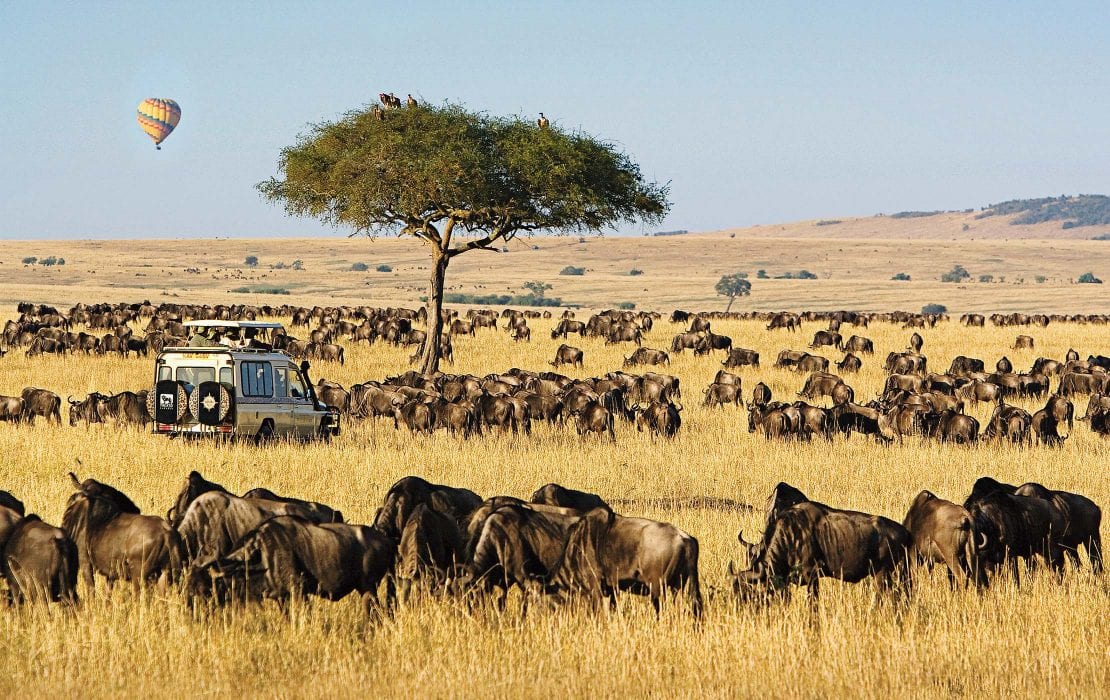
For a 7-day Kenya safari, pack lightweight, neutral-colored layers (khaki, beige, olive) in a soft-sided duffel bag to meet strict 15kg/32lb bush plane weight limits. Essential items include long-sleeved shirts, long trousers for protection against insects/sun, a warm fleece for cool early mornings, sturdy walking shoes, sunscreen, insect repellent, and binoculars.
Popular 7 Day Kenya safari itineraries
7-days-budget-kenya-safari-holiday-vacation-tour
7-days-amboseli-kenya-and-serengeti-fly-in-tanzania-safari
7-days-masai-mara-safari-tour-and-serengeti-safari-tour-in-kenya-and-tanzania
7-days-best-of-kenya-wildlife-safaris-itinerary
7-days-kenya-wildlife-safari-to-kenya-beach-holiday-at-diani-beach
7-days-ultimate-budget-kenya-tanzania-safari-holiday-vacation
7-days-ultimate-africa-big-cats-kenya-safari-holiday-best-parks
7-days-kenya-honeymoon-safari-holiday-and-vacation-couple-escape
7-days-kenya-family-safari-package-and-zanzibar-beach-holiday-vacation
7-days-best-africa-big-cats-safari-in-kenya
7-day Kenya safari holiday
A 7-day Kenya safari holiday is a transformative journey into the heart of the world’s most iconic wilderness. This expedition is expertly crafted to showcase the dramatic geological wonders of the Great Rift Valley and the sprawling savannahs that define the African dream. From the elephant-rich plains of Amboseli, framed by the majestic Mount Kilimanjaro, to the shimmering, bird-filled waters of Lake Nakuru and the legendary Masai Mara, this itinerary offers a comprehensive "tasting menu" of Kenya’s biodiversity. You will witness the raw drama of the wild, from the silent stalk of a leopard to the thunderous movement of the Great Migration. Beyond the animals, this holiday connects you with the vibrant Maasai culture, providing a soulful perspective on conservation and coexistence. Whether you are a first-time adventurer or a seasoned traveler, these seven days promise a rhythmic immersion into a landscape where nature still reigns supreme.
Day 1: Arrival and Nairobi’s Conservation Icons
Your holiday begins in Nairobi, a vibrant metropolis where urban life meets the wild. After a warm welcome, you visit the Sheldrick Wildlife Trust to meet orphaned elephants being rehabilitated for the wild. Watching these playful calves enjoy their midday milk bottles provides a touching introduction to Kenya’s conservation efforts. Afterward, head to the Giraffe Centre to come face-to-face with the endangered Rothschild species. From a raised platform, you can feed these gentle giants and feel their prehensile tongues—a rare moment of tactile connection. These encounters offer vital context for the wild landscapes you will explore in the coming days. The day concludes with a traditional "Welcome Dinner," where you’ll brief with your guide under the city’s starlit sky, anticipating the vast wilderness that awaits at dawn.
Day 2: Amboseli and the Shadows of Kilimanjaro
Leaving the city behind, you drive southeast to Amboseli National Park, famous for its massive "tuskers" and scenic beauty. As you enter, the horizon is dominated by the majestic Mount Kilimanjaro, the highest peak in Africa. The park’s unique hydrology creates lush swamps in an otherwise arid landscape, attracting hundreds of elephants that wade through the marshes to feed. Your afternoon game drive offers iconic photographic opportunities of elephant herds framed by the snow-capped mountain. You will also spot buffaloes, hippos, and a variety of waterfowl in the Enkongo Narok swamp. The flat, open plains make wildlife spotting remarkably easy, ensuring a high-density viewing experience. As the sun sets, the mountain often clears of clouds, revealing its full glory while you enjoy sundowners overlooking the golden plains.
Day 3: The Great Rift Valley and Lake Naivasha
Today, you traverse the floor of the Great Rift Valley to reach the freshwater shores of Lake Naivasha. This area offers a tranquil change of pace from the dusty savannah. In the morning, you’ll enjoy a boat safari, gliding past massive pods of grunting hippos and watching African fish eagles dive with precision to snatch tilapia from the water. Afterward, visit Crescent Island—a private sanctuary where you can take a guided walking safari. Walking among giraffes, zebras, and waterbucks without the barrier of a vehicle is a liberating experience that sharpens your senses. The absence of large predators makes this one of the few places in Kenya where you can truly "walk with the wild." The day ends at a lakeside lodge, surrounded by yellow-barked fever trees and the peaceful sounds of the water.
Day 4: Lake Nakuru’s Rhino Sanctuary
A short, scenic drive brings you to Lake Nakuru National Park, an alkaline lake once famous for millions of flamingos and now a premier rhino sanctuary. Your game drive here is focused on spotting both Black and White rhinoceroses, which are highly protected within the park’s fenced perimeter. The landscape is a beautiful mix of woodlands and rocky cliffs, home to the rare Rothschild giraffe and a dense population of leopards. Keep your eyes on the acacia branches, as Nakuru’s lions are known for their unusual habit of climbing trees to escape the heat. The "Baboon Cliff" viewpoint offers a stunning aerial vista of the lake’s shimmering shores. This park provides a compact but intense wildlife experience, ensuring sightings of waterbuck and buffalo before you retire to your lodge for the evening.
Day 5: Entering the Legendary Masai Mara
The highlight of your holiday begins as you head toward the Masai Mara National Reserve, the northern extension of the Serengeti. The vast, rolling grasslands are the quintessence of the African safari dream. As you enter the gates, you are immediately greeted by a sea of plains game: gazelles, topis, and zebras. This is the land of the "Big Cats," and your first afternoon game drive focuses on tracking the Mara’s famous lion prides. You’ll navigate through the tall grass, searching for cheetahs on termite mounds and leopards hidden in riverine thickets. The scale of the landscape is staggering, and the sense of freedom is palpable. Your evening is spent in a luxury tented camp, where the sounds of the bush provide a rhythmic backdrop to dinner.
Day 6: Full Day in the Mara and Maasai Culture
Spend a full day exploring the Mara’s diverse ecosystems, from the Sand River to the Talek. If visiting during the Great Migration, you will head toward the Mara River to witness the dramatic river crossings, where wildebeest brave crocodile-infested waters. Your guide will interpret the complex social behaviors of the animals, from elephant matriarchs leading their herds to hyena clans patrolling their territory. Midday is spent enjoying a picnic lunch under a lone acacia tree, a classic safari experience. In the afternoon, you visit a traditional Maasai village. Here, you’ll learn about their nomadic lifestyle, participate in the Adumu (jumping dance), and see how they coexist with the wildlife. It is a day of deep immersion, balancing the ferocity of nature with the rich heritage of its human guardians.
Day 7: Sunrise Safari and Return to Nairobi
On your final morning, embark on a dawn game drive to catch the predators at their most active. The early light provides a golden glow over the savannah, perfect for final photographs of the "Big Five." Watch the elephants begin their daily trek and hear the morning chorus of over 450 bird species. After a hearty bush breakfast, you begin the journey back to Nairobi. This drive allows you to reflect on the week’s encounters as you pass through bustling market towns and rural homesteads. Arriving in Nairobi in the late afternoon, you’ll have time for a final farewell meal or some last-minute souvenir shopping for Maasai beadwork and carvings. As you transfer to the airport, you carry with you the indelible spirit and wild pulse of the Kenyan plains.
Preparing for a 7-day Kenyan safari is an exercise in strategic minimalism. The diverse climates—ranging from the chilly mornings of the high-altitude Mara to the humid Rift Valley—require a versatile wardrobe and specific gear. Below is a comprehensive guide to packing for your African adventure.
Clothing (Think Layers)
The "layering" philosophy is the golden rule of safari packing. Your day will typically begin at 6:00 AM in temperatures around 10°C (50°F) and peak at 30°C (86°F) by noon. Neutral-colored clothing in khaki, taupe, or beige is essential; these earth tones help you blend into the savannah and, practically, show less dust. Crucially, they do not attract tsetse flies, which are drawn to dark colors.
Long-sleeved shirts and trousers are your primary defense against the intense equatorial sun and evening mosquitoes. Lightweight, breathable fabrics like linen or moisture-wicking synthetics are ideal for T-shirts and light tops. For those brisk early game drives, a fleece or warm jacket is non-negotiable—sitting in an open-air vehicle at 40 km/h makes the air feel much colder than it is. While shorts are fine for lounging at the lodge, they are discouraged for walking safaris where tall grass can scratch your legs. Don't forget a swimsuit for lodge pools, casual evening wear for dinner, and a rain jacket for sudden tropical downpours. Finally, pack enough underwear and thick socks to cushion your feet during nature walks.
Footwear
On a safari, your feet need to be prepared for two very different environments: the rugged bush and the polished lodge floor. The most critical item is a pair of comfortable walking shoes or hiking boots. These do not necessarily need to be heavy-duty mountaineering boots, but they must be sturdy, closed-toe, and, most importantly, broken-in. Wearing brand-new boots on a three-hour walking safari in the Mara is a recipe for blisters that could ruin your trip.
When you return from a long game drive, you will want to transition immediately out of your dusty boots. Sandals or flip-flops are essential for relaxing around the camp, walking to the dining hall, or lounging by the pool. They are also useful for the "in-between" moments, like the drive from Nairobi to the parks. Because space is limited in safari vehicles and small planes, try to limit yourself to these two types of shoes—one for action and one for recovery.
Essential Safari Gear
To truly see the wild, you need more than just your eyes. Binoculars are perhaps the most underestimated item on a packing list; while your guide will have a pair, having your own allows you to stay focused on a leopard’s tail or a rare bird without waiting. For many, camera gear is the priority. Ensure you have a telephoto lens (at least 300mm), extra batteries (charging can be limited in eco-camps), and more memory cards than you think you’ll need.
A small daypack is necessary to keep these items, along with your sun protection (high-SPF sunscreen, polarized sunglasses, and a wide-brimmed hat), within reach during the drive. Insect repellent with a high DEET concentration is a must, especially for the "sundowner" hours when mosquitoes are most active. This gear ensures that you aren't just a passive observer but an active participant in the wildlife experience, capable of spotting a cheetah on a distant mound before the guide even points it out.
Toiletries and Health
Medical facilities in the African bush are few and far between, making a small first-aid kit a logistical necessity. This should include personal prescriptions, antiseptic wipes, painkillers, and plasters for minor abrasions. Malaria tablets are a standard recommendation for Kenya; you should consult your doctor well in advance to find the right variety for you.
Because safaris are notoriously dusty, wet wipes and hand sanitizer will become your best friends. A quick wipe-down after a game drive can make you feel human again before lunch. Pack travel-sized toiletries to save space, and don't forget high-quality lip balm with SPF, as the dry wind and sun can quickly cause chapping. These small items maintain your comfort and hygiene in an environment that is naturally rugged and unforgiving.
Practical Items
Weight and space are the primary constraints of a safari vehicle or a "bush plane." You must use a soft-sided bag or duffel; rigid, hard-shell suitcases are often rejected by small aircraft because they cannot be wedged into irregular cargo holds. Inside, a power bank is vital for keeping your phone and camera charged during 10-hour days in the field where the vehicle's charging ports may be in high demand.
A flashlight or headlamp is essential for navigating your tented camp at night, as many eco-lodges dim their lights to save power. For financial transactions, carry cash in small denominations. Kenyan shillings are great for local markets, but for tipping, new-generation US dollars (printed after 2015) are the preferred currency. Finally, a reusable water bottle helps reduce plastic waste in the parks—most lodges provide filtered water stations to refill your bottle, supporting Kenya's strict anti-plastic initiatives.
What NOT to Pack
Knowing what to leave behind is just as important as knowing what to bring. Dark blue and black clothing should be strictly avoided; these colors are biological magnets for tsetse flies, whose bite can be painful. Similarly, brightly colored or neon clothing acts as a visual "red flag" to wildlife, potentially causing them to retreat before you get a good view.
Camouflage clothing is a significant "no-go." In many African nations, including Kenya, camouflage is reserved strictly for the military and police; wearing it as a civilian can lead to uncomfortable questioning or even arrest. Finally, leave your valuable jewelry at home. A safari is a dusty, bumpy, and active experience; expensive watches or diamond rings are not only unnecessary but are at high risk of being lost or damaged in the bush. Keep it simple, functional, and respectful of the environment.
The Essential Safari Packing Guide: Preparing for 7 Days in Kenya
Packing for a safari is a balancing act between utility and comfort. Because you will be moving between different environments—from dusty plains to high-altitude lodges—every item in your bag serves a specific purpose. Here is a detailed breakdown of your packing essentials.
1. What colors should I wear?
When packing for a 7-day safari, your color palette should be dictated by the landscape. Neutral colors like beige, khaki, taupe, and olive green are the industry standard for a reason: they are highly functional. These "earth tones" allow you to blend into the savannah, making you less conspicuous to wildlife and increasing your chances of a close encounter.
Beyond camouflage, neutral colors are incredibly practical for the "African Massage" (the bumpy, dusty roads). A khaki shirt can withstand layers of fine red dust and still look relatively clean, whereas a darker or brighter garment would show every speck. Choosing these colors also helps you stay cool; light earth tones reflect the equatorial sun rather than absorbing it. By sticking to this palette, you ensure you are dressing for the environment, not just for the photos.
2. What colors should I avoid?
There are three categories of colors to leave at home: brights, whites, and darks. Bright colors like neon yellow, red, or electric blue can "spook" wildlife. Animals have keen eyesight, and a flash of an unnatural color can cause a timid cheetah or a herd of gazelles to flee before you’ve even turned off the engine.
White is impractical because it will turn orange or brown within hours of your first game drive due to the pervasive dust. Most importantly, dark blue and black must be avoided at all costs in areas like the Masai Mara or Samburu. These specific shades are biological magnets for tsetse flies, which have a painful bite and are attracted to dark moving objects. By avoiding these colors, you are taking a proactive step in insect bite prevention and ensuring you don't become the most popular target in the safari vehicle.
3. Should I bring long-sleeved clothes?
Yes, long-sleeved shirts and trousers are arguably the most important items in your suitcase. While it may seem counterintuitive to wear long sleeves in Africa, they serve as your primary defense against two major elements: the sun and the insects. The Kenyan sun at the equator is incredibly intense; a lightweight, breathable long-sleeve shirt provides a physical barrier that sunscreen alone cannot match.
Furthermore, long sleeves are essential for insect protection. Mosquitoes and other biting insects are most active during the "sundowner" hours and early morning game drives. If you are participating in a walking safari, long trousers protect your legs from stinging nettles, sharp acacia thorns, and tall grass. Look for "technical" safari clothing made of moisture-wicking fabric with built-in SPF for the best experience.
4. Do I need a jacket?
A common misconception is that Kenya is always hot. In reality, safari regions like the Masai Mara sit at high altitudes (around 1,500m to 2,000m), and temperatures can drop significantly at night and in the early morning. When you head out for a 6:30 AM game drive in an open-sided vehicle, the wind chill is substantial.
A warm fleece or a lightweight, windproof jacket is essential. You will likely wear it for the first two hours of the morning and again after sunset. Many travelers find that a "layering" system works best: a t-shirt, topped by a long-sleeve shirt, topped by a fleece. As the sun rises and the savannah heats up, you can shed layers to stay comfortable. Without a jacket, those golden hour sunrise drives can be a shivering, uncomfortable experience rather than a magical one.
5. What footwear is best?
Your footwear needs to be as versatile as your itinerary. For the majority of your time—sitting in a vehicle—lightweight trainers or comfortable walking shoes are perfect. However, if your 7-day tour includes a walking safari or a visit to a Maasai village, you need something sturdier with good grip, such as hiking boots. These should be well broken-in before you arrive to avoid blisters.
When you return to the lodge or camp, you’ll want to get out of your dusty shoes immediately. Sandals or flip-flops are essential for lounging around the pool, walking to the dining hall, or simply giving your feet a break. Avoid high heels or formal shoes; even the most luxury lodges have uneven, dirt, or gravel paths where "safari chic" means practical and comfortable.
6. Do I need to bring binoculars?
While your safari guide will almost certainly have a pair of binoculars, having your own is a game-changer. A pair of 8×42 binoculars is the gold standard for birding and wildlife. This magnification allows you to see the "hidden" details: the eyelashes of an elephant, the spots on a leopard’s throat, or the intricate feathers of a Lilac-breasted Roller.
On a 7-day safari, you will often find yourself looking at animals that are several hundred meters away. Without binoculars, a distant cheetah is just a "yellow speck." With them, you can witness the social cues and facial expressions that make wildlife viewing so intimate. They are also invaluable for scanning the horizon yourself, turning you from a passive passenger into an active tracker.
7. What camera equipment is recommended?
To capture the majesty of the Big Five, a smartphone often isn't enough. A camera with a good optical zoom lens (at least 300mm) is highly recommended. Wildlife is often at a distance, and "digital zoom" on a phone will result in grainy, unusable photos.
Beyond the lens, you must pack extra memory cards and a cleaning kit. The dust on a Kenyan safari is relentless; it gets into every crevice. A blower brush and microfiber cloth are essential for keeping your lens clear. Also, consider a "beanbag" or a small tripod; many safari vehicles provide beanbags to rest your camera on, which helps stabilize long-range shots when the engine is running or when you're zoomed in on a distant predator.
8. Do I need a power bank?
A high-capacity power bank is a vital piece of safari tech. While many modern safari vehicles have USB charging ports, they can be slow or shared among six other passengers. Furthermore, some eco-camps and tented camps run entirely on solar power, meaning electricity in the tents might be limited to certain hours or only available in the main mess tent.
Having your own power bank ensures your camera batteries and phone stay charged during 10-hour days in the field. You don’t want to miss a shot of a lion hunt because your battery died at 3:00 PM. Look for a rugged power bank that can withstand heat and dust, and remember to keep it in your daypack for easy access during the drive.
9. What type of bag is best?
In the world of safari, soft-sided duffel bags reign supreme. There are two main reasons for this. First, safari vehicles have limited and oddly shaped luggage compartments; a soft bag can be squashed and maneuvered to fit, whereas a hard-shell suitcase cannot.
Second, if your 7-day itinerary includes a "bush flight" (a small internal flight between parks), these aircraft have extremely strict weight and space limits. They often forbid hard-shell suitcases entirely because they won't fit in the small cargo pods. A durable, water-resistant duffel bag with wheels is the perfect middle ground, providing ease of transport through airports while remaining flexible enough for the bush.
10. Do I need a daypack?
Yes, a small daypack (15-20 liters) is your "survival kit" inside the vehicle. Once you leave the lodge in the morning, you might not return for several hours, or even the whole day if you’re taking a picnic lunch.
Your daypack should hold everything you need within arm's reach: your camera, extra batteries, binoculars, sunscreen, insect repellent, a hat, and a reusable water bottle. It also serves as a place to store your fleece or jacket as the day warms up. Choose a bag with a rain cover if possible, as it doubles as a "dust cover" to protect your gear while driving over the dry, powdery plains of the Mara.
11. What toiletries should I pack?
Safari toiletries are all about protection and recovery. Sunscreen (SPF 30+) and lip balm with SPF are mandatory; the sun at the equator is deceptively strong even on cloudy days. You also need a high-quality insect repellent with DEET to ward off mosquitoes and tsetse flies.
Because the environment is incredibly dusty, wet wipes and hand sanitizer are the unsung heroes of the trip. A quick wipe-down of your face and hands after a game drive feels incredibly refreshing. Also, consider bringing a small bottle of biodegradable soap; some camps are eco-friendly and appreciate guests using products that don't harm the local groundwater. Keep your toiletries in a clear, waterproof bag to protect them from the fine dust that manages to penetrate almost everything.
12. What medications are essential?
A personal medical kit is a must-have, as pharmacies are non-existent in the national reserves. This should start with malaria prophylactics as prescribed by your doctor. Even if you are staying in luxury camps, Kenya is a malaria-risk zone, and prevention is key.
In addition to malaria pills, pack pain relievers (ibuprofen/paracetamol), antihistamines for insect bites or hay fever, and an antiseptic cream for small scratches. Travelers' diarrhea is a common (though usually mild) issue, so include an anti-diarrheal medication and rehydration salts. If you wear contact lenses, bring plenty of rewetting drops, as the dust and wind can be very irritating to the eyes; many people find switching to glasses for the week is more comfortable.
13. Do I need special sun protection?
Beyond sunscreen, physical barriers are essential. A wide-brimmed hat is non-negotiable. Look for one with a chin strap (a "toggle"), as safari vehicles are often open and move at speeds that will blow a standard baseball cap right off your head. The brim should be wide enough to protect your ears and the back of your neck.
Polarized sunglasses are also vital. They don’t just protect your eyes from UV rays; they cut the intense glare of the savannah and the shimmer off the lakes (like Nakuru or Naivasha), making it much easier to spot animals in the distance. Without good eye protection, you’ll likely end the day with a "squinting headache" caused by the relentless African light.
14. What documents are must-haves?
Documentation is the "gatekeeper" of your trip. You must have a passport with at least six months' validity and at least two blank pages. Most nationalities now require an eTA (Electronic Travel Authorisation), which replaced the traditional visa and must be applied for online before you fly.
Additionally, carry your yellow fever vaccination card (especially if you are traveling from or through a country with a risk of yellow fever) and proof of comprehensive travel insurance. Insurance is critical on safari; it should cover medical evacuation, as the nearest high-quality hospitals are in Nairobi. Keep digital copies of all these documents on your phone, but always have physical printouts as well, as signal and power in the bush can be unreliable.
15. How much cash should I bring?
Kenya’s economy is a mix of digital (M-Pesa) and cash. For a tourist, US Dollars are the preferred currency for tipping and large souvenir purchases. However, there is a strict rule: the bills must be newer than 2013, crisp, and untorn. Banks in East Africa often reject older or damaged US currency.
Expect to tip your safari guide roughly $10–$15 per person per day, and lodge staff about $5–$10 per day (often via a central "tip box"). While USD is king in the parks, having some Kenyan Shillings is very useful for small purchases at local markets, roadside stalls, or for buying a cold "Tusker" beer at a small shop. You can withdraw Shillings from ATMs at Nairobi airport or in major towns like Narok or Arusha before you head into the wilderness.
Booking Kenya safari holiday with us Roads of Adventure safaris
Booking a Kenya safari holiday with Roads of Adventure Safaris offers tailored, mid-range to luxury experiences, often featuring 4x4 guided game drives in iconic destinations like the Maasai Mara and Amboseli National Park. Based in Kampala, Uganda, and holding a 5-star rating on SafariBookings, they specialize in creating customized itineraries that focus on Big Five viewing, birdwatching, and cultural visits
