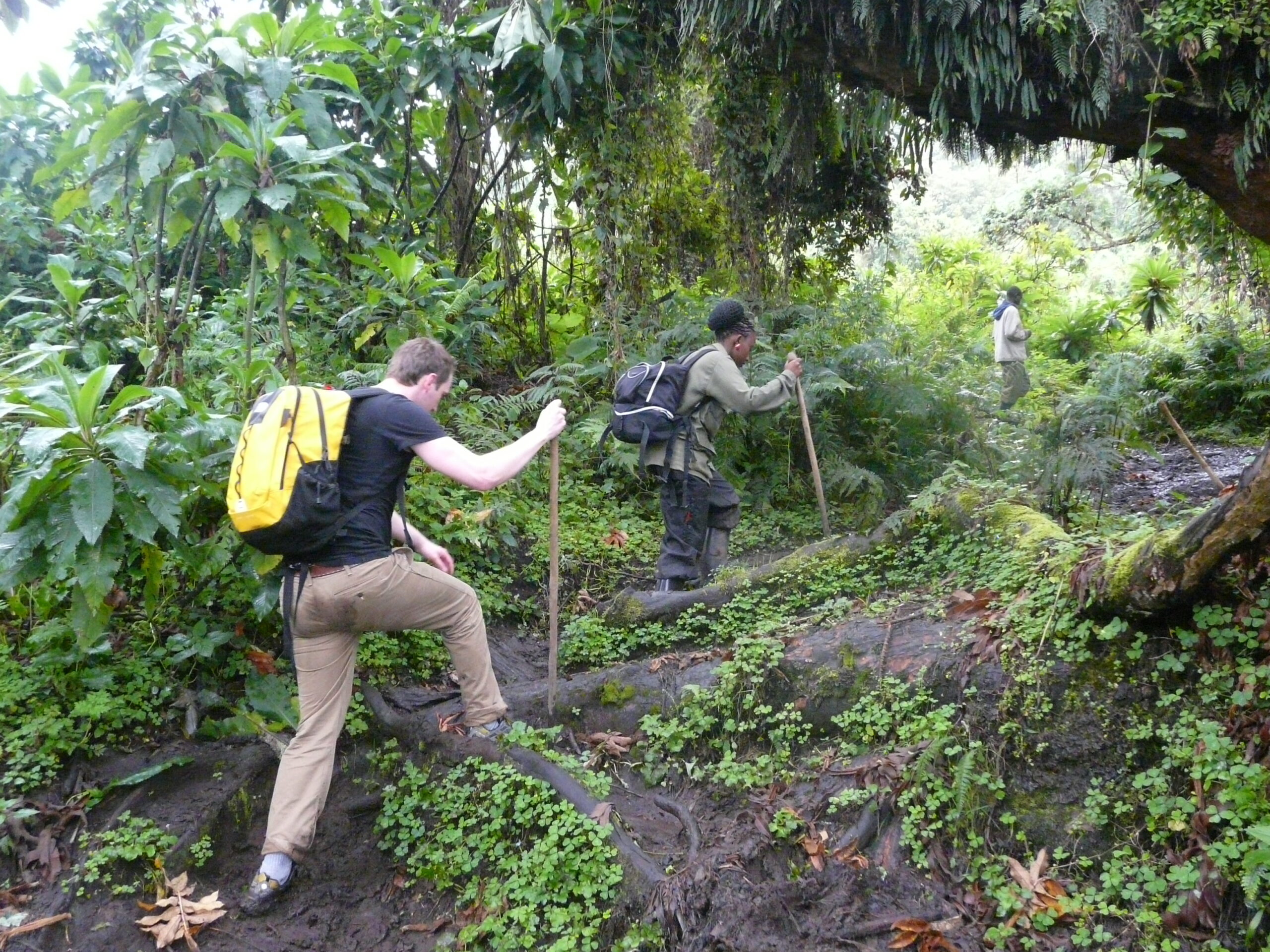
The Dian Fossey hike in Rwanda’s Volcanoes National Park is a 3-4 hour, moderate-to-challenging trek (2,900m–3,000m elevation) honoring the famous primatologist. It features steep, often muddy trails through Hagenia-Hypericum forests, leading to her former Karisoke Research Center, her grave, and the tomb of her favorite gorilla, Digit.
5-days-rwanda-primate-safari-dian-fossey-hike-and-ibyiwachu-cultural-centre-visit
6-days-luxury-rwanda-gorilla-trekking-safari-tour-vacation
7-days-best-gorilla-trekking-and-other-highlights-of-rwanda-tour
9-days-budget-rwanda-gorilla-trekking-safaris
Key Details for the Hike
Duration
The duration of the hike to Dian Fossey's site typically spans from 1.5 to 3 hours, with the possibility of extending up to 4 hours depending on various factors such as individual fitness levels, trail conditions, and group dynamics. This trek generally begins at around 7:00 AM, allowing hikers to take advantage of the cool morning temperatures and achieve their objective before the peak heat of the day sets in.
The hike’s moderate length makes it accessible to many, though participants should be prepared for the varying challenges presented by the terrain. This includes steep slopes and potential muddy sections, particularly after rainfall, which can affect both pace and stamina. The pre-trek briefing provides essential guidelines, ensuring that hikers understand what to expect and can prepare accordingly.
During this time, hikers can take in the breathtaking beauty of Bwindi Impenetrable Forest itself, which is known for its dense greenery and rich biodiversity. Along the way, trekkers often have opportunities to spot a variety of wildlife, including forest elephants, buffalos, and vivid bird species that are endemic to the Albertine Rift. The diverse flora and fauna contribute to the overall richness of the experience, making it not only a physical journey but also an enlightening one.
Ultimately, the hiking duration strikes a balance between being challenging enough to satisfy adventurous spirits while remaining doable for those with reasonable fitness levels. This variety allows individuals to reflect on their personal limits while engaging with the compelling historical and ecological context of the trek.
Difficulty
The difficulty level of the hike to Dian Fossey’s research site is generally rated as moderate to strenuous. This classification stems from the challenging terrain, which features steep slopes, uneven paths, and the possibility of muddy conditions that can affect progress. Hikers should possess a reasonable level of physical fitness to tackle the trails effectively, as the trek requires both stamina and determination.
Many participants will find themselves climbing through dense forest, maneuvering around obstacles like tree roots and rocks. The elevation gain, combined with the potential for slippery paths, means that even seasoned hikers should prepare adequately. Walking poles can be beneficial for maintaining balance and reducing strain on the knees, especially during the descent.
Despite its challenges, the rewarding nature of this hike should not be overlooked. The opportunity to encounter mountain gorillas and other wildlife can serve as motivation for many. Moreover, the emotional weight of visiting a site associated with Dian Fossey’s groundbreaking conservation efforts adds a unique significance to the journey. The combination of physical exertion and historical context makes the hike a dynamic experience.
While not everyone may find the trek easy, proper preparation—including training, selecting suitable gear, and being mentally prepared—can make a significant difference. Those who put in the effort to meet the hike’s challenges are often rewarded with unforgettable views and a deeper understanding of gorilla conservation, making the journey truly worth the strain.
The Experience
The experience of hiking to Dian Fossey’s site is an enriching journey into both the natural world and the historical context of conservation. As hikers ascend through the lush greenery of Bwindi Impenetrable Forest, they have the chance to connect with a visually stunning and ecologically diverse environment. The lush canopy, the sound of rustling leaves, and the calls of unique bird species create an immersive atmosphere that captivates the senses.
Wildlife encounters are a notable highlight, with opportunities to spot forest elephants, buffalos, and various bird species endemic to the Albertine Rift. Each trek offers something unique; no two journeys are alike as the forest is alive with movement and sound. Travelers often find that the trek becomes an adventure filled with unexpected sightings, where each bend in the trail can lead to new wildlife experiences.
The hike also serves as a pilgrimage that pays homage to Dian Fossey, who dedicated her life to the study and protection of mountain gorillas before her tragic murder in 1985. Hikers are often filled with a sense of reverence as they approach the site where Fossey established her research, leading to a profound emotional connection with her legacy. This aspect of the experience transcends the physical journey, adding layers of meaning and reflection.
Ultimately, the combination of physical challenge, wildlife encounters, and poignant historical significance creates a unique and fulfilling experience. Hikers emerge with a greater appreciation for not just the beauty of the forest but also the importance of conservation efforts, making the trek a transformative adventure in every sense.
Important Gear
Proper gear is crucial for ensuring a successful and enjoyable hike to the Dian Fossey site, as the conditions can vary significantly throughout the trek. Hikers should invest in sturdy, waterproof hiking boots that can handle the rugged and often muddy terrain—these are essential for providing ankle support and maintaining grip on slippery surfaces. Given the trip’s physical demands, well-fitted boots can make a substantial difference in comfort and performance.
In addition to footwear, wearing long pants and long-sleeved shirts is advisable to protect against stinging nettles and biting insects, which can be prevalent in the forest environment. These clothing choices not only provide an added layer of protection but also help hikers cope with fluctuating temperatures throughout the day.
Weather can be unpredictable in the forests of Bwindi, making a good-quality rain jacket an important addition to your gear. This will keep hikers dry, particularly during sudden rain showers that are common in the area. Gloves can also be beneficial, especially for those navigating rough patches or using trekking poles; they provide warmth and protect hands from scratches.
Finally, while not strictly gear, bringing energy snacks and adequate hydration is essential for stamina throughout the hike. Maintaining energy levels ensures that participants can fully enjoy the experience without feeling fatigued.
In summary, equipping oneself with suitable gear enhances not only safety but also enjoyment during the hike to the Dian Fossey site. Preparation enables travelers to focus less on discomfort and more on the captivating beauty and historical context of their surroundings.
Porters
Hiring local porters to assist with the hike to the Dian Fossey site is highly recommended and offers numerous benefits, both for the hikers and the local community. The terrain in Bwindi Impenetrable Forest can be challenging, often featuring steep slopes and uneven ground that can make the trek physically taxing. Local porters, who are familiar with the trails, can provide invaluable assistance in navigating these difficult sections, allowing hikers to focus more on enjoying the experience rather than stressing about the logistics of the trek.
Moreover, employing porters contributes to the local economy, providing jobs and financial support to communities surrounding the national park. Many of these porters come from local villages and are intimately familiar with the region's culture and the flora and fauna of the forest. Their knowledge can enrich the hiking experience, as they may share insights about local wildlife, plants, and conservation efforts.
Additionally, hiring a porter helps to lighten the load for trekkers, who can allocate more energy to the hike itself. Porters can carry supplies like water, snacks, and gear, allowing hikers to traverse the trails comfortably. This not only enhances the physical experience but also allows for a more enjoyable and less strenuous trek.
In essence, hiring local porters is a mutually beneficial arrangement. Hikers gain support for navigating the challenging terrain while supporting local livelihoods and conservation initiatives. This practice fosters a sense of community and cooperation that adds depth to the overall experience in Bwindi Impenetrable Forest.
Cost
The cost associated with hiking to the Dian Fossey site requires a permit, which is approximately USD 75. This fee covers not only the guided experience but also contributes to the conservation efforts aimed at protecting the endangered mountain gorillas and their habitats. Gorilla trekking permits are essential for controlling visitor numbers, ensuring that wildlife experiences remain sustainable and that the impact on the habitats is minimized.
Considering the financial aspect, the price of the permit offers exceptional value compared to alternative trekking locations. It grants access to the serene beauty of the Bwindi Impenetrable Forest while providing insights into Dian Fossey’s historical legacy and the ongoing efforts in gorilla conservation. This approach enables hikers to appreciate both the ecological and cultural importance of their experiences.
Budgeting for the trek should also include considerations for gear, local porter fees, and additional costs for transportation and accommodations, especially if hikers plan to stay in the vicinity of the park. While the permit cost is reasonable, understanding the total trip expenses will help travelers prepare adequately.
Ultimately, the financial commitment made for the hike is an investment in the preservation of an iconic natural ecosystem, and the experiences gained are often priceless. The opportunity to witness mountain gorillas in their natural habitat, coupled with the emotional weight of visiting a site of significant historical context, makes the fee worthwhile for those with a passion for wildlife and conservation.
Cultural Context
The hike to the Dian Fossey site serves as a culturally rich pilgrimage that connects visitors to the legacy of one of the world’s most renowned conservationists. Dian Fossey established her research in the early 1960s, dedicated her life to studying and protecting mountain gorillas, and her story is steeped in both triumph and tragedy. She was tragically murdered in 1985, which adds a palpable weight to the journey for those who venture into the forest.
Walking towards the site where Fossey conducted her pivotal research offers a deeply emotional experience. Hikers often find themselves reflecting on her passionate commitment to gorilla conservation, fostering a profound respect for the work that continues today. This historical context heightens the significance of the trek, transforming it from a simple hike to a meaningful journey rooted in conservation history.
Moreover, the surrounding communities, including the Batwa people, have their own rich cultural narratives that intertwine with Fossey’s legacy. The Batwa, formerly forest dwellers, were displaced from their homes in Bwindi and now serve as cultural ambassadors, sharing their traditional lifestyles and practices with visitors. Engaging with these communities enriches the experience and provides insight into the socio-economic challenges facing both the local inhabitants and the gorillas they coexist with.
Ultimately, the cultural context of the hike enhances its value, offering participants a chance not only to connect with nature but also to understand the intricate relationship between conservation, community, and the legacy of Dian Fossey. This multifaceted journey creates a lasting impact on hikers, who leave with a deeper appreciation for the ongoing work necessary to preserve the endangered mountain gorillas and their ecosystems.
What is the Dian Fossey hike?
The Dian Fossey hike is an emotional and educational trek that leads visitors to the site of the former Karisoke Research Center, a significant location in the history of gorilla conservation. Nestled between the majestic peaks of Mount Karisimbi and Mount Bisoke in Rwanda, this hike serves as both a tribute and educational journey relating to the life and work of the renowned primatologist Dian Fossey.
Dian Fossey dedicated much of her life to studying and protecting mountain gorillas, making critical contributions to conservation efforts from the 1960s until her tragic murder in 1985. The trek allows visitors to engage intimately with her legacy, providing insights into the challenges faced by both Fossey and the mountain gorillas she sought to protect.
The hike involves ascending through lush montane forests, characterized by dense vegetation and an array of wildlife. While the primary destination is the grave of Dian Fossey and her beloved gorilla, Digit, the journey offers a deeper understanding of the ecological significance of the area and the ongoing conservation struggles.
Visiting the grave serves as a poignant reminder of Fossey's commitment to wildlife protection, and guides often share personal stories and historical context during the trek. This combination of physical activity and emotional reflection creates a powerful experience, encouraging hikers to consider their role in conservation.
Overall, the Dian Fossey hike is a unique opportunity that blends adventure, history, and nature, allowing participants to honor a beacon of wildlife conservation while gaining personal insights about gorilla protection.
How long does the Dian Fossey hike take?
The duration of the Dian Fossey hike typically spans around 3 to 4 hours for a round trip. However, the exact time may vary depending on various factors, including the pace of the group, individual fitness levels, and specific trekking conditions on the day of the hike.
Starting at the Volcanoes National Park headquarters in Kinigi, participants embark on the trek after a comprehensive briefing. They are then driven to the base of Mount Bisoke before beginning the ascent into the forest. The trail is marked by varying degrees of steepness, and trekkers must navigate potentially muddy sections, which can slow progress.
For those who may be less physically fit or require more time to acclimatize to the altitude, the journey could extend up to 4 hours. Conversely, experienced hikers may complete it more quickly, especially if they find themselves in good weather conditions and manageable terrain.
While the hike's duration may present challenges, it also offers ample opportunities for reflection and appreciation of the stunning surroundings. The trek not only allows for personal fitness goals but also encourages participants to immerse themselves in the beauty and complexity of the Rwandan landscape.
Is the Dian Fossey hike physically demanding?
The Dian Fossey hike is considered moderately challenging, making it suitable for individuals with a reasonable level of physical fitness. Above all, hikers should be prepared for the varying terrain that includes steep ascents, uneven paths, and the likelihood of encountering muddy sections, particularly during rainy seasons.
The trail’s steep slopes can demand significant stamina and strength, particularly as trekkers ascend through the dense forest. Hikers may find themselves climbing uphill for prolonged periods, which can be physically demanding, especially for those unaccustomed to rigorous exercise.
Additionally, the potential for slippery conditions adds a layer of complexity to the hike. Rain can render portions of the trail muddy, requiring careful footing and balance. Thus, wearing appropriate gear and taking the time to establish a steady pace can significantly enhance the experience and reduce the risk of injury.
However, despite the physical challenges, the journey also rewards trekkers with the opportunity to witness breathtaking views and potentially spot various wildlife species, including forest elephants and golden monkeys. These encounters can motivate hikers, transforming physical exertion into an adventure filled with memorable experiences.
While it’s vital for participants to be prepared for the hike’s physical demands, the emphasis should also be on enjoying the journey. Those who take the time to appreciate their surroundings and the historical significance of the trek often find that the challenges become just another part of a meaningful exploration.
What is the starting point for the Dian Fossey hike?
The starting point for the Dian Fossey hike is the Volcanoes National Park headquarters, located in Kinigi, Rwanda. This facility serves as the hub for various trekking activities, including the Dian Fossey hike and gorilla trekking adventures.
Upon arrival at the headquarters, participants receive a detailed briefing that includes essential guidelines on safety, trekking procedures, and conservation practices. This briefing is vital to ensure that hikers understand the respect required for both the wildlife and the natural environment they will be navigating.
Following the briefing, participants embark on a drive to the trailhead at the base of Mount Bisoke. This short drive offers an opportunity for participants to take in the stunning landscapes that characterize the region. After arriving at the trailhead, hikers can begin their ascent toward the site of the former Karisoke Research Center.
The trek starts with the anticipation of visiting the grave of Dian Fossey and her beloved gorilla, Digit. Given the hike's emotional context, beginning at the park headquarters sets the stage for a deeply meaningful journey. The center provides not only the logistical framework for the hike but also represents the broader conservation efforts underway in the region.
Ultimately, the Volcanoes National Park headquarters is not just a starting point; it is the gateway to an unforgettable experience that pays homage to Fossey’s enduring legacy in gorilla conservation.
How high up does the Dian Fossey hike go?
The trail for the Dian Fossey hike ascends to an elevation of approximately 2,900 to 3,000 meters (about 9,500 to 9,800 feet) above sea level. This altitude offers unique challenges and breathtaking views, as trekkers move through the misty forests that define the landscape of the Virunga region.
As participants ascend, they experience a noticeable change in environmental conditions. The air becomes thinner, and the temperature may fluctuate, making proper acclimatization essential. Hikers should be prepared for both cooler temperatures at higher altitudes and the possibility of encountering varying weather conditions, including rain or fog.
The elevation gain also means that trekkers need to be mindful of their physical fitness as they navigate the steep trail. The hike to the site of Fossey’s research center can be strenuous, but it rewards those who persevere with stunning vistas and an opportunity to engage deeply with the rich biodiversity of the region.
In addition to the tangible challenges posed by the altitude, the hike to this elevation provides a sense of accomplishment. Reaching the site where Fossey conducted her groundbreaking research is a profound moment for participants, fostering a connection to the significant conservation work that continues in the area.
Overall, the altitude reached during the Dian Fossey hike is integral to the trekking experience, offering both physical challenges and the chance to reflect on the historical significance of the landscape.
What should I wear on the Dian Fossey hike?
When preparing for the Dian Fossey hike, wearing appropriate clothing and gear is crucial for ensuring comfort, safety, and effective navigation of the trail. Most importantly, sturdy hiking boots are essential, as they provide the necessary support and traction needed to navigate the potentially slippery and uneven terrain.
Long pants are recommended to protect against stinging nettles and other plant species that hikers may encounter. Wearing long-sleeved shirts also offers an added layer of protection against insects and biting vegetation, while helping to regulate body temperature as hikers ascend into elevations where it can get cooler.
A rain jacket is vital for keeping dry, given the unpredictable weather conditions often experienced in the forests. Sudden rain showers may occur, and being prepared with waterproof gear can enhance the overall trekking experience. Additionally, packing gloves is advisable to further protect hands against any prickly plants and cold weather at higher altitudes.
It’s also important to consider personal comfort when selecting clothing. Lightweight, breathable fabrics can prevent overheating and discomfort. Layering options allow hikers to adjust their attire based on fluctuating temperatures and exertion levels during the trek.
Ultimately, ensuring that hikers dress appropriately for the unique conditions of the Dian Fossey hike enhances both safety and enjoyment. Being well-prepared allows participants to focus on their adventure rather than discomfort, ensuring that the journey is filled with meaningful connections to the environment and the historical context of Fossey’s critical work.
Can I see gorillas on the Dian Fossey hike?
While the primary objective of the Dian Fossey hike is to visit the grave of Dian Fossey and her beloved gorilla, Digit, there is indeed a chance to encounter various wildlife, including primates along the trail. Although sightings of mountain gorillas are not the main focus of this hike, it’s common for trekkers to spot other fascinating species during their journey through the lush surroundings of Bwindi Impenetrable Forest.
As participants navigate the forest, there are opportunities to see golden monkeys, a lovely species that inhabits the area, as well as various bird species unique to the Albertine Rift region. Additionally, wildlife enthusiasts may encounter forest elephants and buffaloes, adding to the biodiversity experience that the trek offers.
The chance to see these animals depends significantly on the day's conditions and the particular paths taken during the hike. Wildlife sightings can be unpredictable, making the journey feel even more adventurous. Rangers accompanying the trek possess extensive knowledge about the forest ecology and its inhabitants, offering invaluable insights into the wildlife along the way.
Although the hike does not guarantee gorilla sightings, the adventure remains immersive and enriching, allowing hikers to engage with the diverse ecosystem surrounding the site of Dian Fossey's research. The combination of emotional reflection and potential wildlife encounters creates a well-rounded experience that resonates long after the trek concludes.
What is the cost of a Dian Fossey hike permit?
As of 2026, the cost for a permit to participate in the Dian Fossey hike is approximately USD 75 for foreign non-residents, with reduced rates applicable for local residents. This fee grants participants access to the guided trek to Fossey's grave site and supports the conservation efforts within the Volcanoes National Park, ensuring the continued protection of mountain gorillas and their habitats.
The permit cost is relatively modest in comparison to other wildlife experiences, particularly when considering the significance of the historical context surrounding the hike. The funds collected from permits directly contribute to the ongoing conservation efforts being carried out by the Rwanda Development Board and local organizations.
Booking the permit in advance is essential, especially during peak tourist seasons when demand is high. Many travelers choose to arrange their permits through reputable tour operators, simplifying the process and ensuring that all logistics for the trek are handled efficiently.
Overall, the cost of the Dian Fossey hike permit provides excellent value for a unique experience that blends adventure, history, and wildlife conservation. Engaging in this trek becomes not just a physical journey but also an investment in the ongoing efforts to protect one of the world’s most endangered species, the mountain gorilla.
Do I need a guide for the Dian Fossey hike?
Yes, an experienced guide is essential for the Dian Fossey hike. Participants are always accompanied by an armed park ranger who is responsible for ensuring the safety of the group while sharing historical insights and information about the environment along the trail.
The guides possess in-depth knowledge of both the flora and fauna of the Bwindi Impenetrable Forest and the life of Dian Fossey. This expert guidance enhances the experience, as they are able to provide context about the trek’s ecological importance and the significant work that Fossey accomplished during her time in the area.
Safety is a top priority during the hike, particularly given the potential for wildlife encounters. The presence of an armed ranger assures trekkers that they are well-protected against any unexpected encounters with wild animals. The ranger's expertise in animal behavior also ensures that the group can navigate the forest safely and responsibly.
In summary, having a guide not only enhances the educational aspect of the hike but also provides peace of mind. Travelers can immerse themselves in the beauty of the forest and the history of conservation without the added stress of navigating the terrain alone. This collaborative effort contributes to a well-organized and enriching hiking experience.
Is it possible to hire a porter for the Dian Fossey hike?
Yes, hiring a porter for the Dian Fossey hike is both possible and highly recommended. Local porters can be hired at the start of the trail, providing valuable assistance by carrying backpacks and other essential items during the hike. This option is particularly beneficial for those who may struggle with the steep sections of the trail or those who prefer to lighten their load.
Typically, the cost of hiring a porter is around USD 10, and the investment supports the local economy, creating jobs for community members who often rely on tourism for their livelihoods. Engaging local porters fosters a sense of community and encourages the sharing of cultural experiences throughout the trek.
Porters are typically well-versed in the trails and can enhance the hiking experience by offering insight into the local ecology and potentially sharing stories about the area. Their familiarity with the terrain means they can navigate through challenging sections and help ensure a smoother trek.
In essence, hiring a porter not only eases the physical demands of the hike but also deepens the connection to the local community and their livelihood. This support often translates into a more enjoyable trekking experience, allowing hikers to focus on the surrounding beauty and historical context rather than the logistical challenges.
What kind of history will I learn during the Dian Fossey hike?
During the Dian Fossey hike, participants gain profound insights into the life and work of Dian Fossey, her groundbreaking research on mountain gorillas, and her unwavering commitment to conservation. The experienced guides accompanying trekkers provide a wealth of historical context, recounting her journey from her early days in the 1960s to her tragic death in 1985.
Visitors learn about Fossey's pioneering studies, where she developed methods of gorilla habituation that allowed her to closely observe and understand these magnificent creatures' behaviors and social structures. The guides share engaging anecdotes and personal stories, illustrating the challenges Fossey faced, including her battles against poachers and habitat destruction.
Historical accounts of her time at the Karisoke Research Center, where she lived and conducted her research amidst the mountains, provide deeper understanding and appreciation of her dedication to wildlife protection. Additionally, visitors may hear about the legacy she left behind, which continues to inspire conservationists worldwide and informs current efforts to protect mountain gorillas.
The thought-provoking journey through this emotionally charged landscape encourages hikers to reflect on the ethical responsibilities of wildlife preservation and inspires a commitment to conservation actions. The hike becomes not only a personal journey but an opportunity to engage with a powerful narrative that underpins ongoing wildlife protection efforts.
In summary, the historical lessons learned during the Dian Fossey hike offer invaluable perspectives on conservation’s evolution, making this trek a unique blend of physical adventure and intellectual enrichment focused on one of the most influential figures in wildlife conservation history.
What should I bring on the Dian Fossey hike?
When preparing for the Dian Fossey hike, it's essential to pack items that ensure comfort, safety, and an enriching experience. First and foremost, participants should bring plenty of drinking water—hydration is crucial, especially while engaging in physical activity at high altitudes.
Energy-boosting snacks, such as granola bars or trail mix, are also recommended to replenish energy levels during the trek. Having these snacks on hand allows hikers to maintain stamina during the hike and enjoy brief breaks while immersing themselves in the natural surroundings.
A rain jacket is a key item to pack, given the unpredictable weather conditions in the forest. Being prepared for sudden showers will ensure hikers remain comfortable and can fully engage with the experience without being distracted by discomfort due to wet clothing.
Other important items to bring include a fully charged camera or smartphone to capture the beautiful scenery and any wildlife encounters along the way. However, having a pair of binoculars can enhance wildlife viewing without causing disturbances.
Lastly, it may be a good idea to include a small backpack to carry these essentials, along with any additional items like trekking poles, which can help maintain balance on the uneven terrain. Preparing well ensures that travelers are equipped to enjoy the journey while embracing the physical and emotional aspects of the hike.
Is the Dian Fossey hike dangerous?
The Dian Fossey hike is generally considered safe, primarily because participants are accompanied by experienced park rangers throughout the journey. These guides are well-trained in handling wildlife encounters and are equipped to manage any potential risks involved in the trek.
While the trail may pose physical challenges, including steep and muddy conditions, the guides prioritize the safety of the group and provide advice on navigating difficult sections. Their presence offers reassurance and allows trekkers to focus more on the enjoyment of the experience rather than concerns about potential dangers.
It’s important to heed the guidance provided by the rangers, especially regarding wildlife interactions. They help educate participants on respectful distances to maintain from animals, minimizing any risk of disturbances for both the hikers and the wildlife.
As with any outdoor activity involving hiking in rugged terrain, being prepared and following safety protocols is key. Adopting a cautious mindset, wearing appropriate gear, and paying attention to the trail can mitigate most dangers during the hike.
Overall, the combination of expert guidance and proper preparation makes the Dian Fossey hike a rewarding experience that emphasizes safety while honoring the rich history of conservation in Rwanda.
How do I book the Dian Fossey hike?
Booking the Dian Fossey hike can be done through the Rwanda Development Board (RDB) or via reputable tour operators specializing in wildlife experiences in Rwanda. Reservations through these channels ensure that hikers secure their permits in advance, which is essential given the limited availability, especially during peak tourist seasons.
Typically, visitors can reach out to tour operators directly through their websites, by phone, or via email. It’s important to confirm the details of the hike, any additional packages, and the associated costs involved, ensuring that the arrangements meet the expectations of the participant.
Should travelers prefer to book independently, they may do so directly through the RDB, which oversees gorilla trekking permits and can assist in managing logistics. This option might offer more flexibility but requires more effort in terms of understanding the processes involved.
Given the emotional significance of the hike, planning in advance is recommended. Early bookings not only secure permits but also allow travelers to fine-tune their itineraries, ensuring they experience all aspects of Rwandan wildlife conservation and culture.
Overall, whether through tour operators or directly with the RDB, booking the Dian Fossey hike is a vital step in ensuring a rewarding and enriching experience that pays tribute to the life and legacy of Dian Fossey.
Can I combine the Dian Fossey hike with gorilla trekking?
Yes, it is possible to combine the Dian Fossey hike with gorilla trekking, and many travelers choose to do so as part of a longer safari itinerary in Rwanda. These activities often complement each other, as they both focus on the incredible mountain gorillas and the conservation efforts surrounding them.
Many visitors typically opt for the Dian Fossey hike on a separate day from their gorilla trekking experience, allowing for a full day dedicated to each activity. This approach means participants can fully immerse themselves in the rich history of Dian Fossey’s conservation efforts while still engaging in the exhilarating experience of tracking mountain gorillas in their natural habitat.
Tour operators can help arrange seamless transitions between the two activities, facilitating bookings and logistics. Often, packages will include guided experiences for both the Fossey hike and gorilla trekking, which can add value and make the entire process more efficient.
Additionally, combining both activities enriches the overall experience, allowing travelers deeper insights into the lives of the mountain gorillas and the commitment required to protect such a vulnerable species. It can also enhance understanding of the region's biodiversity and the cultural stories that accompany Rwandan wildlife conservation.
In summary, combining the Dian Fossey hike with gorilla trekking creates a well-rounded itinerary that celebrates the beauty and significance of Rwanda’s rich ecological and cultural landscapes, leaving participants with lasting memories and insights into conservation efforts.
Booking Dian Fossey hike and gorilla trekking with us Roads of Adventure safaris
Book your 3 or 4-day Rwanda Gorilla Trekking and Dian Fossey Hike with Roads of Adventure Safaris for an unforgettable experience in Volcanoes National Park. We provide professional, accredited guides, 4x4 transportation, and secure all necessary gorilla and hiking permits in advance. Packages include luxury or comfortable accommodation, meals, and a visit to the Dian Fossey grave, plus optional cultural tours. Our team ensures a seamless, safe adventure tracking mountain gorillas and exploring the legacy of conservation, perfect for a 3000-meter hiking adventure. Contact us today to customize your Rwandan safari.
