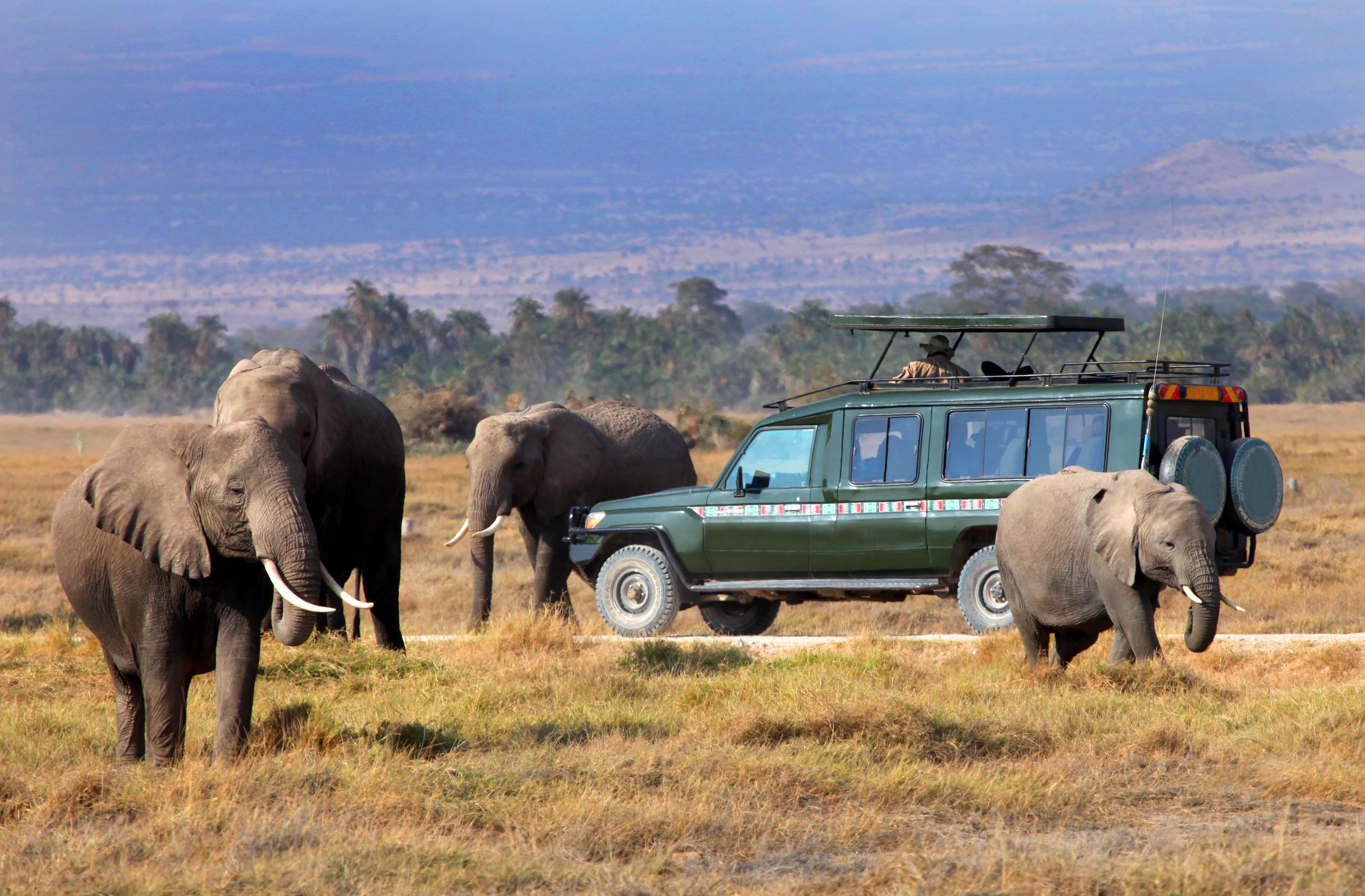
A 7-day Kenya safari offers an action-packed itinerary, typically covering the Maasai Mara, Amboseli, and Lake Nakuru, allowing you to experience Big Five game drives, witness the wildebeest migration (seasonally), and visit Maasai villages. You can also enjoy hot-air ballooning, bird watching, boat rides, and guided nature walks
Popular 7 Day Kenya safari itineraries
7-days-budget-kenya-safari-holiday-vacation-tour
7-days-amboseli-kenya-and-serengeti-fly-in-tanzania-safari
7-days-masai-mara-safari-tour-and-serengeti-safari-tour-in-kenya-and-tanzania
7-days-best-of-kenya-wildlife-safaris-itinerary
7-days-kenya-wildlife-safari-to-kenya-beach-holiday-at-diani-beach
7-days-ultimate-budget-kenya-tanzania-safari-holiday-vacation
7-days-ultimate-africa-big-cats-kenya-safari-holiday-best-parks
7-days-kenya-honeymoon-safari-holiday-and-vacation-couple-escape
7-days-kenya-family-safari-package-and-zanzibar-beach-holiday-vacation
Top Activities on a 7-Day Safari in Kenya
Kenya remains the quintessential home of the African safari, offering a diverse palette of ecosystems ranging from the snow-capped peaks of Mount Kilimanjaro to the golden savannahs of the Mara. A seven-day itinerary provides just enough time to witness the "Big Five," engage with ancient cultures, and experience the thrill of the Great Migration. Below is a detailed look at the top activities that define a premier Kenyan expedition.
Thrilling Game Drives
The heartbeat of any Kenya safari is the traditional game drive. In the Masai Mara National Reserve, the concentration of predators is unmatched anywhere else in East Africa. Visitors spend hours navigating the rolling plains in search of the "Big Cats"—lions, leopards, and cheetahs. The Mara is particularly famous for its high density of pride lions, often seen lounging under acacia trees or stalking the vast herds of wildebeest.
Moving toward Amboseli National Park, the landscape shifts dramatically. Here, the game drives are defined by the presence of "Tuskers"—massive African elephants—set against the iconic, snow-dusted backdrop of Mount Kilimanjaro. The park's swamps act as a magnet for wildlife, providing a stark contrast to the dusty plains. Meanwhile, Lake Nakuru National Park offers a sanctuary for both black and white rhinoceroses. A game drive along the lake's shores provides a rare opportunity to see these prehistoric-looking creatures alongside Rothschild giraffes. Each region offers a unique "theater of the wild," where every turn of the track could reveal a leopard hauling its kill into a tree or a hyena clan competing for a carcass.
Hot Air Balloon Safari
For those seeking a perspective that a 4WD vehicle simply cannot provide, a hot air balloon safari over the Masai Mara is the ultimate luxury experience. The adventure begins in the pre-dawn chill, where you can watch the massive balloons being inflated by rhythmic bursts of fire. As the sun begins to peek over the horizon, you lift off silently into the air.
From above, the scale of the Mara ecosystem becomes clear. You glide over the Mara River, watching hippos splash in the water and crocodiles basking on the banks. During the Great Migration, the sight of thousands of wildebeest and zebras forming long, winding lines across the plains is nothing short of spiritual. The silence of the flight is only broken by the occasional roar of the burner, allowing you to hear the distant calls of wildlife below. The experience typically concludes with a "Bush Breakfast," complete with champagne, served in the middle of the savannah. It is a moment of pure serenity, offering a bird's-eye view of the circle of life in its most raw and beautiful form.
Cultural Experiences
Kenya’s wildlife is inseparable from its people, particularly the Maasai. A visit to a traditional Manyatta (village) is not merely a tourist stop; it is an invitation to understand a culture that has coexisted with predators for centuries. Clad in vibrant red Shukas and adorned with intricate beadwork, the Maasai welcome visitors with the Adumu—the famous jumping dance. This traditional ritual is a display of strength and endurance among the young warriors (Morans).
During a village visit, you are often invited into their homes, constructed from mud, sticks, and cow dung, to learn about their social structure, traditional medicine, and the importance of livestock. You’ll see how fire is made using two sticks and how the community manages to protect their cattle from lions without modern fences. Engaging with the Maasai provides a necessary layer of context to your safari; it reminds you that the savannah is not just a park, but a home. Supporting these communities through the purchase of handmade crafts also ensures that the local people benefit directly from conservation and tourism.
Boat Rides & Bird Watching
While the savannahs get the most glory, Kenya’s freshwater and soda lakes offer a tranquil change of pace. Lake Naivasha, located in the Great Rift Valley, is a bird-watcher's paradise. A boat ride across its calm waters brings you within meters of massive hippo pods. The sound of their grunting echoes across the water as they surface to breathe.
Looking up, the trees lining the shore are often draped with African Fish Eagles, which are known for their haunting, iconic cry. These raptors are frequently seen diving into the water to snatch tilapia with incredible precision. Beyond the eagles, you might spot kingfishers, herons, and the giant goliath heron. The lake is also home to over 400 species of birds, making it a critical site for ornithologists. The gentle rocking of the boat and the cool breeze offer a meditative break from the dusty roads of the national parks, allowing you to appreciate the smaller, winged wonders of the Kenyan wilderness.
Walking Safaris
To truly feel the "pulse" of Africa, you must step out of the vehicle. Walking safaris, often conducted in Hell’s Gate National Park or private conservancies, strip away the metal barrier between you and the environment. Led by an armed ranger or a local guide, you learn the art of tracking—interpreting the "morning newspaper" written in the sand. You’ll learn to identify the difference between a fresh hyena print and a leopard track, and how to tell how long ago an elephant passed by based on the moisture in its dung.
In Hell’s Gate, the absence of large predators like lions allows you to walk or cycle alongside giraffes, zebras, and warthogs. The experience is sensory: you smell the wild sage, hear the crunch of dry grass under your boots, and feel the heat of the African sun. It is a humbling experience that highlights the vulnerability and interconnectedness of the ecosystem. These walks also focus on the "Little Five"—the elephant shrew, ant lion, rhinoceros beetle, buffalo weaver, and leopard tortoise—reminding you that the smallest creatures are just as vital to the park’s health as the largest.
Nairobi City Tour
Nairobi is one of the few cities in the world where you can see a skyscraper and a giraffe in the same frame. A city tour is the perfect way to bookend your safari. The Giraffe Centre allows for an up-close encounter with the endangered Rothschild giraffe, where you can feed them from a raised platform and feel their long, sandpaper-like tongues.
Just a short drive away is the Sheldrick Wildlife Trust, a world-renowned elephant orphanage. Here, you can watch rescued calves being bottle-fed and playing in the mud. The stories of these orphans, many of whom lost their mothers to poaching, are heartbreaking yet hopeful, as the trust prepares them for eventual release back into the wild. For history buffs, the Nairobi National Museum offers a deep dive into Kenya’s paleontological history and ethnic diversity. These urban stops provide a vital understanding of the conservation efforts required to keep the wild places you just visited thriving.
Visit the Samburu National Reserve
For the seasoned safari-goer, Samburu in Northern Kenya offers a rugged, arid beauty that contrasts with the lush Mara. The reserve is famous for the "Samburu Special 5," species adapted to this harsh environment that you won't find in the southern parks. The Reticulated Giraffe features a striking, geometric hide, while the Grevy’s Zebra is distinguished by its large ears and narrow stripes.
The most unusual of the five is perhaps the Gerenuk, a long-necked antelope that stands on its hind legs to reach acacia leaves. You will also see the blue-legged Somali Ostrich and the elegant Beisa Oryx. The Ewaso Ng'iro River is the lifeblood of this park, attracting large numbers of elephants and Nile crocodiles. The Samburu culture is also distinct from the Maasai, with their own unique traditions and colorful attire. This region feels more remote and wild, offering a sense of solitude that is harder to find in the more popular southern circuits.
Photo Safaris
Every Kenya safari is, in essence, a photo safari, but specific focus on photography can elevate your trip. Between July and October, the Great Migration provides the ultimate photographic challenge and reward. Capturing a "River Crossing"—where thousands of wildebeest plunge into the croc-infested waters of the Mara River—requires patience, timing, and a bit of luck.
Professional photo safaris often use specially modified vehicles with low-angle mounts to get "eye-level" shots of predators. The golden hour, just after sunrise and before sunset, provides the soft, warm light that makes the Kenyan landscape glow. Whether you are using a high-end DSLR or a smartphone, the goal is to capture the raw emotion of the wild: the intensity in a lioness's eyes during a hunt, the playfulness of a cheetah cub, or the silhouettes of acacia trees against a blood-red African sunset. These images become more than just pictures; they are the tangible memories of a journey into the heart of the natural world.
7 Days Safari in Kenya parks
An expedition through Kenya’s legendary wilderness is a journey into the soul of Africa. This seven-day safari is meticulously designed to showcase the dramatic geological shifts and biological diversity of the Great Rift Valley. From the open, golden savannahs of the Masai Mara to the pink-hued shores of Lake Nakuru and the towering silhouette of Mount Kilimanjaro in Amboseli, you will experience the full spectrum of the "Big Five" territory. Kenya offers more than just wildlife; it provides an immersive cultural encounter with the Maasai people and a front-row seat to nature’s most raw spectacles. Whether you are witnessing the dust rise behind a herd of a thousand elephants or watching a leopard vanish into the acacia branches, this itinerary captures the quintessential spirit of the continent. Prepare for a week of breathtaking sunrises, exhilarating chases, and the profound silence of the bush that stays with you long after you return home.
Day 1: Arrival and Nairobi’s Conservation Icons
Your adventure begins in Nairobi, East Africa’s vibrant safari hub. After a warm welcome, you dive straight into conservation history at the Sheldrick Wildlife Trust. Here, you witness the heart-wrenching yet hopeful work of rehabilitating orphaned elephants. Watching the calves enjoy their midday milk bottles and mud baths offers a touching introduction to the challenges facing Africa's giants. Next, visit the Giraffe Centre to come face-to-face with the endangered Rothschild species. From an elevated platform, you can feed these gentle giants, gaining a unique perspective on their towering elegance and prehensile tongues. These encounters provide vital context for the wild landscapes you will explore in the coming days. The afternoon concludes with a briefing over a traditional Kenyan dinner, as the distant calls of the city fade into the anticipation of the great wilderness ahead.
Day 2: Into the Great Rift Valley – Lake Nakuru
Today, you descend the steep escarpment of the Great Rift Valley, stopping for panoramic photos before reaching Lake Nakuru National Park. Known as an ornithologist’s paradise, the lake's edge is often draped in a shimmering lace of pink flamingos. Beyond the birds, Nakuru is one of Kenya’s most successful private sanctuaries for both Black and White Rhinos. Your afternoon game drive provides an excellent opportunity to spot these prehistoric-looking creatures grazing near the shoreline. Keep your eyes on the yellow-barked acacia trees, as Nakuru is also famous for its elusive tree-climbing lions and a healthy leopard population. The park’s compact size ensures high-density wildlife viewing, including herds of waterbuck, zebras, and the rare Rothschild giraffe. As evening falls, settle into your lodge overlooking the lake, surrounded by the sounds of the African night.
Day 3: Lake Naivasha and Hell’s Gate Adventure
A short drive takes you to the freshwater shores of Lake Naivasha. This morning, you swap the 4WD for a boat, gliding past massive pods of grunting hippos and catching glimpses of African fish eagles diving for prey. After the boat cruise, head to Hell’s Gate National Park, one of the few places in Kenya where you can explore on foot or by bicycle. This dramatic landscape of towering cliffs and steam vents inspired the scenery of The Lion King. Cycling alongside zebras, giraffes, and hartebeests without the barrier of a vehicle is a liberating experience that sharpens your senses. In the afternoon, take a guided walk through the deep, winding gorges where geothermal activity creates a mystical atmosphere. It is a day of physical engagement with nature, offering a raw, tactile connection to the Earth’s volcanic power.
Day 4: The Great Migration – Masai Mara Entry
The journey continues to the world-renowned Masai Mara National Reserve, the crown jewel of Kenyan conservation. As you enter the gates, the vastness of the plains becomes overwhelming. This is the stage for the Great Migration, where millions of wildebeest and zebras navigate a treacherous path in search of greener pastures. Your first game drive in the Mara is an introduction to its unmatched predator density. You might encounter a pride of lions lounging in the tall grass or a cheetah scanning the horizon from a termite mound. The sheer volume of life here is staggering; everywhere you look, there is movement. After a sunset that turns the sky into a palette of bruised purples and fiery oranges, you arrive at your tented camp, where the distant roar of a lion serves as your nightly lullaby.
Day 5: Full Day in the Heart of the Mara
Spend a full day exploring the Mara’s diverse ecosystems, from the riverine forests to the rolling savannahs. You will head toward the Mara River, the site of the dramatic "river crossings" where crocodiles lie in wait for the migrating herds. Your expert guide will help you track the "Big Five," focusing on the behavior and social dynamics of the animals. Midday is spent enjoying a picnic lunch under a lone acacia tree, surrounded by the infinite horizon. In the afternoon, visit a traditional Maasai village to learn about their ancient customs, vibrant beadwork, and the harmonious relationship they maintain with the surrounding wildlife. Watching the Maasai warriors perform the Adumu (jumping dance) provides a rhythmic heartbeat to your safari. This day is a deep immersion into the cycle of life that has remained unchanged for millennia.
Day 6: Amboseli – In the Shadow of Kilimanjaro
After a final sunrise drive in the Mara, you fly or drive to Amboseli National Park, located at the foot of Mount Kilimanjaro. This park is famous for being the best place in the world to get close to free-ranging elephants. The sight of a massive bull elephant with tusks reaching the ground, framed by the snow-capped peak of Africa’s highest mountain, is the ultimate safari photograph. The park’s center is dominated by the Enkongo Narok swamp, a permanent water source that attracts buffaloes, hippos, and a variety of waterfowl. Your evening game drive focuses on these marshlands, where the light of the setting sun reflects off the water, creating a serene, ethereal atmosphere. Amboseli’s flat, open plains make wildlife spotting remarkably easy, ensuring that your final full day of safari is packed with high-quality sightings.
Day 7: Sunrise over the Peak and Departure
On your final morning, wake up early to catch Kilimanjaro at its clearest before the clouds gather around the summit. This last game drive is a time for reflection and final sightings of predators returning from their nightly hunts. Watch the elephants begin their daily trek toward the swamps, their massive silhouettes ghostly in the morning mist. After a hearty bush breakfast, you begin your journey back to Nairobi. There is time for a final stop at a local market to pick up handcrafted souvenirs—ebony carvings or colorful textiles—that will serve as tangible reminders of your journey. As you reach Jomo Kenyatta International Airport for your departure, you leave with a transformed perspective, carrying the wild rhythm of the Kenyan plains and the majestic gaze of its creatures in your memory forever.
1. What is the typical daily routine on a 7-day Kenya safari?
A safari follows the rhythm of the natural world, which means early starts are non-negotiable. Your day usually begins around 5:30 AM with a "wake-up call" consisting of coffee or tea brought to your tent. By 6:30 AM, you are out on a dawn game drive. This is the most critical time for wildlife viewing; predators like lions and leopards are often still active after their nightly hunts, and the soft "golden hour" light is perfect for photography.
Around 9:30 AM, you return to the lodge for a hearty breakfast, followed by some downtime. The midday period (11:00 AM to 3:00 PM) is typically too hot for animals and humans alike. Most wildlife retreats into thick thickets to sleep, and the harsh overhead sun makes for poor photos. You can use this time to swim in the lodge pool, read, or take a siesta. At 4:00 PM, after "afternoon tea," you head out for the second game drive. As the temperature drops, the park comes alive again. You return to camp just before dark for dinner and drinks around the campfire, sharing stories of the day's sightings before retiring early for the next day's adventure.
2. Which parks are generally included in a 7-day Kenya itinerary?
A well-rounded 7-day itinerary aims to provide a diverse cross-section of Kenya’s ecosystems without spending too many hours in transit. The "Classic Circuit" usually begins with Amboseli National Park. Located at the foot of Mount Kilimanjaro, it is world-renowned for its "big tusker" elephants and iconic views of Africa’s highest peak. This provides a dramatic start to the trip and excellent sightings of swamp-dwelling wildlife.
From there, most travelers head to the Great Rift Valley, stopping at either Lake Nakuru or Lake Naivasha. Nakuru is a fenced sanctuary, making it one of the most reliable places in Kenya to see both Black and White Rhinos, as well as tree-climbing lions. Naivasha offers a water-based reprieve where you can enjoy boat safaris. The grand finale is always the Masai Mara National Reserve. This is the northern extension of the Serengeti and offers the highest predator density in the country. By combining these three areas, you experience the snowy backdrop of Kilimanjaro, the alkaline lakes of the Rift Valley, and the rolling golden savannahs of the Mara, ensuring a comprehensive wildlife experience.
3. What is the best time of year for a 7-day safari in Kenya?
Kenya is a year-round destination, but your experience will change significantly depending on the season. The Peak Season occurs from July to October. This coincides with the world-famous Great Migration, when over 1.5 million wildebeest and zebras cross the Mara River. If your goal is to see high-octane river crossings and a massive concentration of predators, this is the time to go. However, be prepared for more crowds and higher lodge prices.
The Short Dry Season from January to February is arguably the best time for general game viewing. The weather is hot and dry, forcing animals to congregate around permanent water holes, which makes them very easy to find. The grass is also shorter, improving visibility for spotting elusive cats like leopards. The "Green Season" (March to May) brings the long rains. While some roads can be muddy, the landscape is lush and emerald green, birdwatching is at its peak, and prices are significantly lower. This is also the "birthing season," where you can see many young calves and lambs—though this also attracts high predator activity.
4. What wildlife am I guaranteed to see in Kenya over seven days?
In the wild, there are no "guarantees," but a 7-day safari in Kenya comes very close. Thanks to the expertise of professional guides and the high density of animals in parks like the Masai Mara, you are virtually certain to see the "Big Four": lions, elephants, buffaloes, and leopards. Lions are social and plentiful in the Mara; elephants are the kings of Amboseli; and buffaloes are ubiquitous across all parks. Leopards, being solitary and nocturnal, are the hardest of the four, but guides are expert at spotting their tails hanging from acacia branches.
Beyond the Big Five, you will see an incredible volume of "plains game." This includes thousands of zebras, giraffes (both Masai and Rothschild), wildebeest, and various antelopes like impalas, gazelles, and the massive eland. Hippos and crocodiles are easily spotted in the Mara and Talek rivers. Hyenas, jackals, and vultures are common sights at kill spots. While "guaranteed" is a strong word, it is almost impossible to spend seven days in these premium parks without seeing several hundred individual animals and dozens of different species.
5. What is the difference between a tented camp and a safari lodge?
This is a common point of confusion for first-time travelers. A Safari Lodge is a permanent structure, much like a hotel but built with rustic materials like stone and timber. They often have large dining halls, swimming pools, and dozens of rooms. Lodges provide a sense of "solid" security and usually offer more amenities, making them popular with families or those who prefer a more traditional hotel environment.
A Tented Camp, on the other hand, offers a more intimate "Out of Africa" experience. Do not let the word "tent" fool you; these are often high-end luxury suites with canvas walls. They are built on raised wooden platforms and feature real beds, hardwood furniture, and en-suite bathrooms with flushing toilets and hot showers. The primary advantage of a tented camp is the immersion. Without solid walls, you can hear the sounds of the bush at night—the whoop of a hyena, the rustle of an elephant grazing nearby, or the distant roar of a lion. Tented camps are usually smaller (10–20 tents), offering a more personalized service and a closer connection to the wilderness.
6. How long are the game drives during a 7-day itinerary?
On a standard day, game drives are split into two sessions of about 3 to 4 hours each. The morning drive starts at dawn and ends by mid-morning, while the afternoon drive starts at 4:00 PM and ends at dusk. This schedule is designed to maximize wildlife activity while keeping you comfortable during the midday heat.
However, in the Masai Mara, you will often have the option for a Full-Day Game Drive. This involves leaving the lodge after an early breakfast with a "picnic lunch" packed in the vehicle. You spend 7 to 8 hours in the field, allowing you to venture deep into the reserve toward the Mara River or other remote corners that are unreachable on shorter drives. Full-day drives are particularly popular during the Migration season, as they allow you to "stake out" river crossing points for several hours. While long days in a 4WD can be tiring due to the "African massage" (bumpy roads), they offer the best chance of witnessing rare behaviors, such as hunts or maternal interactions, that require time and patience to observe.
7. Do I need to fly between parks during a 7-day safari?
Most 7-day safaris are road-based. Driving between Nairobi, Amboseli, and the Masai Mara allows you to see the changing Kenyan landscape, pass through small villages, and witness the daily life of the local people. It is significantly more cost-effective and allows for a higher luggage weight than small bush planes. The drives can be long (5–6 hours between some parks), but the vehicles are designed for comfort with pop-up roofs and charging ports.
If your budget allows, you can opt for "Fly-in Safaris." This involves taking light aircraft (Safarilink or Airkenya) between Nairobi and the bush airstrips. A 6-hour drive is reduced to a 45-minute flight. This maximizes your time in the parks and minimizes fatigue. Many travelers choose a "hybrid" option: they drive the first leg of the trip to save money and enjoy the scenery, but fly from the Masai Mara back to Nairobi on the final day to avoid the long, bumpy road back to the city. This allows for a final morning game drive and a relaxing end to the journey.
8. How much cash should I carry for tips and souvenirs?
While your safari package usually covers accommodation, meals, and park fees, you will need cash for "extras." Kenya’s economy is a mix of cash and mobile money (M-Pesa), but tourists should carry US Dollars (printed after 2006) or Kenya Shillings (KES).
Tipping is a significant part of the safari culture, as it supplements the income of the hard-working staff. For your Professional Safari Guide, a standard tip is $10–$20 per day per group. For lodge staff (porters, waiters, and cleaners), a tip of $5–$10 per day is usually placed in a "communal tip box" in the lobby. For Souvenirs, the amount depends on your shopping habits. A high-quality Maasai blanket or hand-carved ebony statue can cost $20–$50. If you visit a Maasai village, there is often a market at the end where you can buy beadwork ($5–$20). We recommend carrying roughly $300–$500 in small denominations for a 7-day trip to ensure you aren't stuck without change in remote areas where ATMs are non-existent.
9. Is it safe to do a walking safari in Kenya?
Yes, walking safaris are safe, provided they are conducted in designated areas with authorized experts. In major parks with high predator densities, walking is strictly forbidden except in very specific circumstances. However, in places like Crescent Island (Lake Naivasha), Hell’s Gate National Park, or private conservancies surrounding the Masai Mara, walking safaris are a highlight.
On these walks, you are always accompanied by an armed ranger or a highly trained naturalist guide. These guides understand animal behavior and know exactly how much distance to maintain. You won't be "hunting" lions on foot; instead, the focus is on the flora, birdlife, and non-predatory animals like giraffes, zebras, and waterbucks. Walking through a herd of giraffes is a surreal experience that makes you realize how tall they truly are. The safety protocol is simple: follow the guide’s instructions, stay in a single file, and never run. The goal is to observe the wilderness quietly and respectfully without disturbing the natural balance.
10. What kind of food is served on a 7-day Kenya safari?
One of the biggest surprises for first-time visitors is the high quality of the food. Safari lodges and camps cater to international tastes, offering a mix of European, Asian, and traditional Kenyan cuisine. Breakfast is usually a buffet with eggs made to order, pancakes, fresh fruit, and sausages. Lunch and dinner are often three-course affairs or elaborate buffets featuring soups, fresh salads, grilled meats (beef, chicken, or lamb), and pasta dishes.
Vegetarians and those with dietary restrictions (gluten-free, vegan) are well-catered for, provided you inform the lodge in advance. You will also have the chance to try Ugali (the local maize-based staple) and Nyama Choma (roasted meat), which are central to Kenyan culture. On full-day game drives, you will be given a "packed lunch" box. These are surprisingly substantial, usually containing a piece of chicken, a sandwich or wrap, fruit, juice, and a treat. Drinking water is always provided in the vehicles and at the camps, as it is not safe to drink tap water in Kenya.
11. Is there electricity available in the safari camps?
Most modern safari camps and lodges have reliable electricity, but the way they generate it varies. Many camps are "eco-friendly" and rely on solar power arrays with battery backups. Larger lodges may use diesel generators. In more remote or authentic tented camps, the power might be "timed." For example, the generator may only run from 6:00 PM to 10:00 PM and for a few hours in the morning.
Even in timed camps, there is always a central charging station in the lounge or mess tent where you can charge your cameras, phones, and power banks. Most luxury camps now provide 24-hour power in the tents for small devices, though high-wattage items like hair dryers are often discouraged because they can trip the solar system. Kenya uses the Type G plug (three-pin rectangular, same as the UK), so you should bring a universal adapter. It is always a good idea to bring a portable power bank as a backup for long days in the bush.
12. What are the best photography tips for a Kenyan safari?
Wildlife photography requires both the right gear and a bit of technique. Gear-wise, a smartphone is great for landscapes, but for animals, you need a "zoom." A lens with a focal length of at least 300mm is essential for capturing the details of a lion’s whiskers or a bird’s plumage. Because you are shooting from a vehicle, a tripod is often too bulky. Instead, bring a beanbag. You can rest it on the edge of the pop-up roof to stabilize your camera, which is vital when using long zoom lenses.
Technique-wise, always aim for the eyes. If the eyes are in focus, the photo will feel alive. Be patient; some of the best shots happen when you wait for an animal to look up or react to a sound. Don't just take "portraits"—try to capture the animal in its environment to tell a story. Finally, remember to put the camera down occasionally. Seeing a leopard through a lens is one thing; seeing it with your own eyes and feeling the atmosphere of the savannah is what you will truly remember.
13. Do I need vaccinations for a Kenya safari trip?
Health preparations are vital for a stress-free trip. While I am an AI and not a doctor, the standard medical advice for Kenya is quite clear. Malaria prophylaxis is strongly recommended for almost all safari destinations in Kenya. This usually involves taking a daily or weekly pill (like Malarone or Doxycycline) starting before you arrive.
Regarding vaccinations, Yellow Fever is the most significant. If you are traveling to Kenya from a country where Yellow Fever is endemic (like Ethiopia or Uganda), you must show proof of vaccination (the "Yellow Card") to enter. Even if you are arriving from Europe or the US, it is often recommended. Other routine vaccinations like Hepatitis A, Typhoid, and Tetanus should be up to date. We strongly advise visiting a travel clinic at least 6–8 weeks before your departure to get the most current medical advice tailored to your specific health history and the regions you are visiting.
14. What should I pack for a 7-day safari in Kenya?
The golden rule of safari packing is layers and neutral colors. Early mornings in Amboseli or the Mara can be surprisingly cold (around 10°C / 50°F), requiring a warm fleece or light down jacket. By midday, the temperature can soar to 30°C (86°F), so you’ll want light, breathable cotton or linen underneath.
Avoid bright colors (which can startle animals) and dark blue or black (which attracts Tsetse flies). Stick to khaki, tan, olive, and grey. You don't need heavy hiking boots for most safaris; a pair of sturdy sneakers or trail shoes is fine. Essential "small" items include a high-SPF sunscreen, a wide-brimmed hat with a chin strap (to keep it from flying off the vehicle), polarized sunglasses, and binoculars. Most lodges offer laundry services (sometimes for a small fee), so you don't need to pack seven different outfits. Three or four sets of clothes are usually plenty for a week-long trip.
15. Can I see the Big Five in 7 days?
Yes, it is highly possible to see all of the Big Five—lion, leopard, elephant, buffalo, and rhino—on a 7-day Kenya safari, provided your itinerary is strategically planned. The "secret" is including Lake Nakuru or a private conservancy like Ol Pejeta. While lions, elephants, and buffaloes are common in the Masai Mara, rhinos are very elusive there. By spending a day in a dedicated rhino sanctuary like Nakuru, you tick off the hardest member of the group early.
The leopard remains the "wildcard." Even in the best parks, they are masters of camouflage. However, with seven days and a professional guide who communicates with other drivers via radio, your odds are excellent. Most travelers find that by Day 4 or 5, they have seen four of the five, and the final days become an exciting "hunt" for the remaining species. Even if you miss one, the sheer volume of other wildlife—from cheetahs to giraffes—ensures that your safari will feel complete and deeply rewarding.
Booking 7 days safari in Kenya with us Roads of Adventure safaris
Booking a 7-day safari with Roads of Adventure Safaris offers a comprehensive journey through Kenya's most iconic wildlife destinations. Their standard itinerary typically covers the Masai Mara, Lake Nakuru, and Amboseli, providing a high probability of seeing the Big Five.
