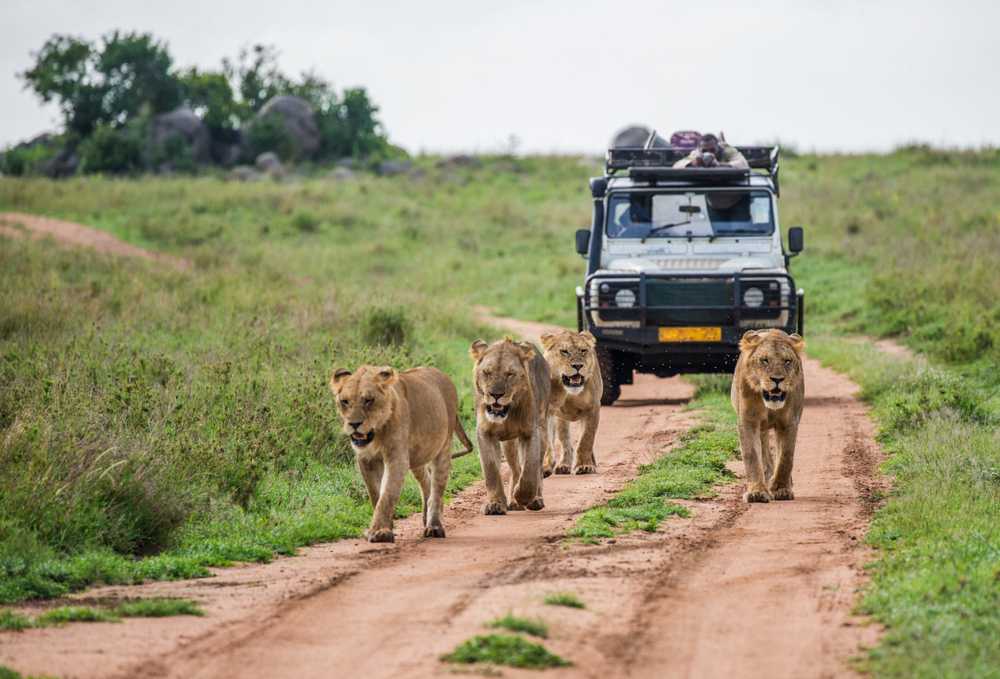
A 6-days safari in Tanzania typically covers the "Northern Circuit" (Serengeti, Ngorongoro, Tarangire, and Lake Manyara offering high-density wildlife viewing, including the Big Five, and a chance to witness the Great Migration. Expect daily 4x4 game drives, packed picnic lunches, stunning volcanic landscapes, and opportunities for cultural visits to Maasai villages
6-days-best-northern-circuit-tanzania-safari-to-best-tanzania-safari-parks
6-days-family-zanzibar-beach-holiday-tour-and-out-door-activities
6-days-best-of-tanzania-safari-to-nyerere-mikumi-and-udzungwa-mountains
6-days-ultimate-kilimanjaro-climb-via-machame-route
6-days-kilimanjaro-climb-via-umbwe-route
6-days-ndutu-migration-and-tanzania-safari-itinerary
6-days-ultimate-budget-tanzania-safari-tour-holiday-vacation
6-days-lake-manyara-ngorongoro-crater-and-serengeti-tour-package
6-days-luxury-safari-in-tanzania-northern-circuit-parks-experience
6-days-fly-in-safari-from-zanzibar-tarangire-serengeti-ngorongoro-crater-and-lake-manyara
Tarangire National Park: The Land of Giants
Often the first stop on a 6-day itinerary, Tarangire National Park offers a landscape that feels prehistoric. It is defined by its ancient, skeletal Baobab trees—some over a thousand years old—and the life-giving Tarangire River. This park is famous for having one of the highest concentrations of elephants in the world. It is not uncommon to see herds of 300 or more congregating along the riverbanks, a sight that is as humbling as it is photogenic.
Beyond the "giants," Tarangire is a haven for dry-country antelope and over 500 species of birds. During the dry season (June to October), the river becomes a magnet for migratory wildlife, including wildebeest, zebra, and buffalo, which draw in predators like lions and leopards. Because the vegetation is somewhat thicker than the Serengeti, the safari experience here feels more intimate and rugged. You’ll spend your day navigating through scrubland and acacia woodland, searching for tree-climbing lions or the elusive leopard draped over a branch. Expect a "wild" introduction to the bush where the silence is only broken by the trumpeting of an elephant or the call of a red-billed hornbill.
Lake Manyara: The Emerald Gem of the Rift
Lake Manyara National Park provides a stunning visual contrast to the open savannahs. This park is defined by a lush groundwater forest fed by underground streams from the Rift Valley escarpment. Driving through it feels like entering a tropical jungle, where massive mahogany and fig trees provide deep shade for troops of baboons and blue monkeys. It is an intense, visually diverse park that transitions from dense forest to marshy lakeshore in a matter of minutes.
The park is named after its alkaline soda lake, which, depending on the water levels, is often feathered pink with thousands of flamingos. While it is a birdwatcher’s paradise, the mammalian highlights are equally famous. Manyara is world-renowned for its tree-climbing lions, a rare behaviour thought to be a way for the cats to escape ground-level insects or catch a cool breeze. You can also expect to see pods of hippos wallowing in the "Hippo Pool" and giraffes browsing among the acacias. Because the park is compact, a game drive here is highly concentrated, offering frequent sightings against the dramatic backdrop of the 600-metre-high Rift Valley wall.
Serengeti National Park: The Endless Plains
The Serengeti is the quintessential African safari destination and the heart of the 6-day circuit. Its name comes from the Maasai word Siringet, meaning "the place where the land moves on forever." The sheer scale of the horizon is breathtaking, offering an unobstructed view of the Great Wildebeest Migration. This is a year-round drama where over 1.5 million wildebeest and 200,000 zebras follow the rains in search of fresh grass. Depending on the month, you may witness the high-stakes river crossings at the Mara River or the calving season on the southern plains.
A typical day in the Serengeti involves early morning and late afternoon game drives when the "Big Cats"—lions, leopards, and cheetahs—are most active. You’ll explore "kopjes," large granite outcrops that serve as lookout points for predators. The Serengeti offers some of the best chances in the world to witness a hunt in real-time. Even outside of the migration season, the resident wildlife population is staggering. Nights here are spent in tented camps under a canopy of stars, accompanied by the distant roar of a lion or the "whoop" of a hyena, offering a true immersion into the raw African wilderness.
Ngorongoro Crater: Africa’s Eden
The Ngorongoro Crater is a geological marvel—the world’s largest inactive, intact, and unfilled volcanic caldera. Dropping 600 metres down from the rim into the crater floor is like entering a "Lost World." Because of its enclosed nature, the 20-kilometre-wide floor has created its own self-sustaining ecosystem with an incredibly high density of wildlife. It is one of the few places on Earth where you can realistically see the "Big Five" (lion, leopard, elephant, buffalo, and rhino) in a single day.
This is arguably the best place in Tanzania to spot the endangered Black Rhino, which finds refuge in the crater’s central plains and Lerai Forest. The floor is a tapestry of short-grass plains, yellow-fever tree forests, and the salt-crusted Lake Magadi. You can expect to see prides of lions, spotted hyenas, and golden jackals patrolling the lake's edge, while massive "tusker" elephants roam the wooded areas. Because the animals are accustomed to vehicles, the sightings are often exceptionally close. The combination of the sheer concentration of animals and the dramatic, soaring crater walls makes it one of the most unique and unforgettable safari experiences on the planet.
What wildlife can I expect to see on a 6 days safari in Tanzania?
A 6-day safari in the Northern Circuit is a journey through some of the most wildlife-dense regions on the planet. The primary objective for many travellers is the Big Five: lion, leopard, elephant, buffalo, and the black rhino. While lions and elephants are abundant across the Serengeti and Tarangire, the black rhino is a specialist sighting, most commonly found within the protective walls of the Ngorongoro Crater.
Beyond these iconic species, you will encounter an incredible variety of plains game. Expect to see massive herds of wildebeest and zebra, alongside various antelope species like topi, eland, and Grant’s gazelle. The Serengeti is also a premier location for cheetah sightings, often spotted scanning the horizon from the top of termite mounds. In the waterways of Lake Manyara and the Serengeti's Retima Pool, you will find pods of hippos and enormous Nile crocodiles. For bird enthusiasts, the sky is filled with everything from the tiny, colourful lilac-breasted roller to the massive martial eagle, ensuring that every moment of your game drive offers something new and spectacular to witness.
What is the typical itinerary for a 6 days safari in Tanzania?
The 6-day itinerary is strategically designed to minimise "dead" travel time while maximising your presence in the high-action areas. Most tours begin in Arusha, the gateway to the parks.
- Day 1: Typically involves a drive to Tarangire National Park, where you spend the afternoon among the baobabs and elephants.
- Day 2: You travel toward the Serengeti, often stopping for a glimpse of the Ngorongoro Crater from the rim view point.
- Day 3 & 4: These are your "deep dive" days into the Serengeti Plains. Depending on the time of year, your guide will position you in the central or northern regions to find the highest concentration of predators and migratory herds.
- Day 5: You begin your slow exit from the Serengeti, game-driving as you head toward the Ngorongoro Conservation Area for an overnight stay on the crater rim.
- Day 6: A breathtaking morning descent into the Ngorongoro Crater for a half-day game drive before a final drive back to Arusha for your onward flight.
Will I see the Great Migration on a 6 days safari in Tanzania?
Whether you witness the Great Migration depends entirely on the timing of your trip and your location within the Serengeti. The migration is a perpetual, rain-driven cycle involving nearly two million animals. From July to September, the herds are typically in the Northern Serengeti, where you have the best chance of seeing the high-drama Mara River crossings. From January to March, the migration settles in the Southern Serengeti and Ndutu regions for the calving season, a period of incredible abundance and high predator activity.
During the "transition" months of April to June and October to December, the herds are on the move. Even if you don't witness a river crossing, a 6-day safari almost certainly puts you in contact with the "Mega-herd." You will see columns of wildebeest stretching to the horizon, creating a moving tapestry of life that is truly humbling. Your guide will use real-time radio updates to ensure your 6-day route intersects with the herds wherever they are currently grazing.
What kind of accommodation is provided on a 6 days safari in Tanzania?
Accommodation on a 6-day safari is highly flexible and can be tailored to your budget and preferred level of "immersion."
- Public Camping: For the adventurous, this involves sleeping in high-quality dome tents in designated park campsites. You are accompanied by a private chef who prepares all meals over a campfire.
- Mid-Range Tented Camps: This is the most popular choice. These are large, walk-in canvas tents with "real" furniture, comfortable beds, and en-suite bathrooms with hot showers. They offer the thrill of hearing a lion roar at night with the comfort of a hotel.
- Luxury Lodges: These are permanent structures, often featuring stunning architecture, infinity pools, and gourmet dining. Places like the Ngorongoro Serena or Four Seasons Serengeti provide world-class luxury in the heart of the bush.
Regardless of the tier, most safaris are full-board, including breakfast, a picnic lunch, and a three-course dinner.
Is a 6 days safari in Tanzania suitable for families?
Absolutely. A 6-day safari is often cited as the "sweet spot" for families; it is long enough to see the highlights but short enough to avoid "safari fatigue" in younger children. Most lodges are fenced or have 24-hour security, and many offer family rooms or interconnected tents.
The educational value for children is immense. Beyond the "Lion King" factor, they learn about ecology, animal tracking, and different cultures. Many camps offer "Junior Ranger" activities, such as learning to make fire with sticks or identifying animal tracks in the sand. It is important to note that drive times between parks can be 3 to 5 hours, so bringing books or offline games is recommended for the transit segments. For families with children under five, we recommend private vehicles to allow for more frequent breaks and a flexible schedule.
What should I pack for a 6 days safari in Tanzania?
Packing for Tanzania requires a "function over fashion" mindset. The golden rule is layers. The temperature can swing from $10^\circ C$ on a pre-dawn game drive to $30^\circ C$ by midday.
- Clothing: Pack lightweight, breathable fabrics in neutral tones like khaki, tan, or olive. Avoid camouflage (which is reserved for the military) and dark blue or black (which attracts tsetse flies).
- Outerwear: A warm fleece or "puffer" jacket is essential for the Ngorongoro Crater rim, which is at high altitude and significantly colder than the plains.
- Essentials: Bring a wide-brimmed hat, high-SPF sunscreen, and a good insect repellent.
- Gear: High-quality binoculars are a must—do not rely solely on the guide’s pair. A camera with a 300mm+ zoom lens will ensure you capture those distant leopard sightings. Finally, bring a power bank; while vehicles have chargers, having your own backup is vital for long days in the bush.
What kind of vehicle is used for a 6 days safari in Tanzania?
The workhorse of the Tanzanian safari is the 4x4 Toyota Land Cruiser. These vehicles are legendary for their durability and ability to navigate deep mud and rocky inclines. They have been specially modified for tourism, featuring extended chassis for extra legroom and large windows.
The most important feature is the pop-up roof. This allows passengers to stand up during game drives for an elevated, 360-degree view of the wildlife—perfect for photography and spotting animals in tall grass. Inside, the vehicles are equipped with a small refrigerator to keep your water and sodas cold, an inverter with UK-style sockets for charging your devices, and a long-range radio which the guide uses to exchange location tips with other drivers. Most vehicles seat 5 to 7 passengers, ensuring everyone has a window seat.
Will I have a private guide during my 6 days safari in Tanzania?
On most 6-day itineraries, you will have a private professional guide and vehicle. This is one of the greatest luxuries of a Tanzanian safari. Your guide is your driver, navigator, animal spotter, and local historian all in one.
Having a private guide means the schedule is entirely yours. If you want to spend three hours watching a cheetah family, you can. If you prefer to head back to the lodge early to swim, that’s your choice. These guides undergo rigorous training in animal behaviour, botany, and birding. They can identify a bird from a single feather or predict exactly where a lion will walk based on the "alarm calls" of nearby baboons. By the end of your 6 days, your guide often feels less like a service provider and more like a trusted friend.
What is included in a 6 days safari in Tanzania package?
Standard 6-day safari packages are designed to be virtually all-inclusive once you land in Tanzania. A typical package includes:
- All Park & Conservation Fees: These are significant (often over $500 per person for this circuit).
- Transportation: A private 4x4 vehicle with unlimited mileage and fuel.
- Professional Guide: All wages and expenses for your driver-guide.
- Accommodation: 5 nights of lodging, ranging from tents to luxury suites.
- Meals: 3 meals a day, usually starting with lunch on Day 1 and ending with lunch on Day 6.
- Drinking Water: Unlimited bottled or filtered water in the vehicle.
- Transfers: Pickup and drop-off at Kilimanjaro (JRO) or Arusha (ARK) airports.
Items usually not included are international flights, the Tanzania entry visa ($50-$100), travel insurance, alcoholic drinks, and tips for your guide (customary but optional).
How much game driving is done on a 6 days safari in Tanzania?
Expect to spend a significant portion of your 6 days in the vehicle—this is, after all, where the magic happens. A typical day starts with an "Early Bird" drive at 6:00 or 6:30 AM. This is the best time to see predators finishing a hunt before they retreat to the shade.
Many days are "full-day" drives, where you take a picnic lunch box and eat at a designated site inside the park. This allows you to explore deeper into the Serengeti without having to return to camp at midday. On average, you might spend 6 to 8 hours a day game-driving. However, your private guide will always consult you; if you’ve had a long day and want to skip the afternoon drive for a "sundowner" on your lodge balcony, the itinerary is flexible enough to accommodate your needs.
When is the best time for a 6 days safari in Tanzania?
Tanzania is a year-round destination, but the experience changes with the seasons.
- Dry Season (June to October): Generally considered the "best" time. The grass is short, making animals easier to spot, and wildlife congregates around the few remaining water sources. It is also the best time for the Mara River crossings.
- Short Rains (November to December): A beautiful "shoulder" season. The dust is settled, the scenery turns green, and prices are often lower.
- Calving Season (January to February): Ideal for those interested in predator action, as the wildebeest give birth in the south.
- Long Rains (March to May): Often called the "Green Season." While some roads can be muddy, the parks are empty of other tourists, the air is crystal clear for photography, and luxury lodges offer significant discounts.
Are there any cultural experiences on a 6 days safari in Tanzania?
Yes, and many travellers find these moments just as memorable as the wildlife. The most common experience is a visit to a Maasai Boma. You will be welcomed with traditional singing and dancing, learn about their pastoralist way of life, and see the interior of their mud-and-thatch homes.
Another fantastic option is a visit to Mto wa Mbu, a vibrant village near Lake Manyara where over 120 tribes coexist. You can take a guided walk or bicycle tour through banana plantations, visit a local brewery, and see woodcarvers at work. For those heading toward the Serengeti, a stop at the Olduvai Gorge museum provides a fascinating look at the "Cradle of Mankind," where some of the oldest hominid fossils were discovered. These interactions provide essential context to the relationship between Tanzania’s people and its wilderness.
Is it possible to take a balloon safari on a 6 days safari in Tanzania?
Yes, and it is frequently described as the highlight of the trip. A hot-air balloon safari typically takes place in the Central Serengeti. You are picked up before dawn and driven to the launch site. As the sun rises, you lift off and float silently over the plains.
From the air, you get a true sense of the vastness of the Serengeti. You can spot leopard kills in the tops of trees or watch the migration herds from a perspective that vehicles simply cannot provide. The flight usually lasts about an hour, followed by a traditional Champagne Bush Breakfast—a full English breakfast served in the middle of the wilderness with white linens and silverware. While it is an expensive add-on (approx. $550-$600 USD), the silence and scale of the experience are unparalleled.
What should I wear during a 6 days safari in Tanzania?
The goal for safari wear is comfort, protection, and temperature regulation.
- Daytime: Lightweight trousers and short-sleeved shirts. Technical "wicking" fabrics are excellent for the heat.
- Evening/Morning: You will need a sweater or a medium-weight jacket. Even in summer, the wind in an open-sided vehicle can be biting at 6:00 AM.
- Footwear: You do not need heavy hiking boots unless you are doing a walking safari. Comfortable trainers or sturdy sandals are perfectly fine for game drives.
- Protection: A wide-brimmed hat is essential to protect your face and neck from the equatorial sun.
- Etiquette: Tanzanian culture is relatively conservative. While "safari gear" is the norm in the parks, if you are spending time in Arusha or local villages, it is respectful to wear clothing that covers your shoulders and knees.
Is malaria prophylaxis needed for a 6 days safari in Tanzania?
Yes, Tanzania is a high-risk malaria zone, and it is strongly recommended that you take preventative medication. You should visit a travel clinic 4 to 6 weeks before your departure to discuss the best options for you (such as Malarone, Lariam, or Doxycycline).
In addition to medication, you should practice "bite avoidance." This means wearing long sleeves and trousers from dusk onwards, applying a high-quality DEET-based repellent to exposed skin, and ensuring you sleep under the mosquito nets provided at every lodge and camp. Most lodges also "spray" the rooms during the turndown service. While the risk is manageable with the right precautions, it is essential to take the threat seriously and follow a strict medication schedule as prescribed by your doctor.
Booking 6 days safari in Tanzania with us Roads of Adventure safaris
Book an unforgettable 6-day Tanzania safari with Roads of Adventure Safaris, exploring the Serengeti, Ngorongoro Crater, Tarangire, and Lake Manyara. This Northern Circuit adventure offers stunning wildlife viewing, including the Big Five and great migration. Enjoy expert guiding, comfortable, high-quality lodge accommodations, and personalized service tailored to your budget. Experience breathtaking landscapes, from vast plains to ancient baobabs, with professional, friendly staff ensuring a safe and memorable journey. Secure your private or group safari today for an adventure that exceeds expectations.
