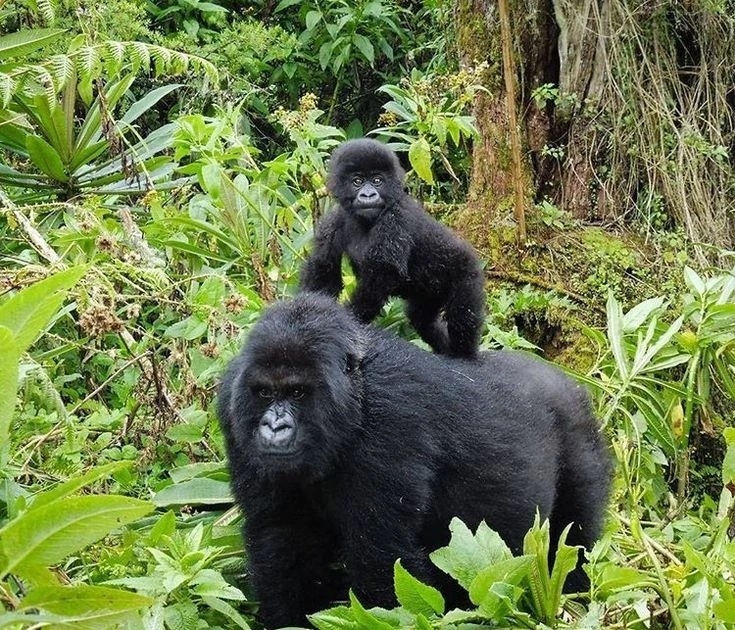
A 12-day Rwanda safari typically offers a comprehensive, high-end primate and wildlife experience covering Volcanoes, Nyungwe, and Akagera National Parks, alongside cultural tours. Expect challenging gorilla and chimpanzee treks, canopy walks, Big Five game drives, and scenic relaxation on Lake Kivu. This itinerary often includes Kigali City and the Genocide Memorial.
12-days-classic-rwanda-uganda-africa-safari-tour-package-combo
12-days-rwanda-primate-safari-vacation-and-akagera-national-park
12-days-best-rwanda-wildlife-safari-and-rwanda-primate-safari-vacation
12-days-rwanda-uganda-safari-and-rwenzori-climb-and-hiking
12-days-perfect-rwanda-birding-safari-itinerary
Key Highlights and What to Expect
Gorilla Trekking (Volcanoes National Park)
Gorilla trekking in Volcanoes National Park is the spiritual center of a Rwandan safari. Located in the northwest corner of the country, this park is part of the Virunga Massif and was the base for Dian Fossey’s pioneering research. The experience begins promptly at 7:00 AM with a briefing at the Kinigi park headquarters. For many, the physical demand is the first true test; depending on the location of your assigned gorilla family, the hike can last anywhere from one to six hours. You will navigate through bamboo forests and thick, tangled vegetation on steep slopes that reach altitudes of over $2,500\text{meters}$.
Once the trackers locate the group, the exhaustion of the climb immediately vanishes. You are granted exactly one hour to stand in the presence of these gentle giants. Watching a silverback supervise his family while juveniles play in the trees is a profound experience that highlights our shared evolutionary history. Because Rwanda focuses on high-value, low-impact tourism, the groups are limited to eight people, ensuring an intimate and quiet encounter. The $1,500$ permit fee directly supports the conservation of these endangered primates and the surrounding community, making this encounter a vital part of the species' survival story.
Chimpanzee & Primate Tracking (Nyungwe National Park)
Nyungwe National Park is one of Africa’s oldest and most well-preserved montane rainforests, serving as a vital watershed for both the Nile and Congo rivers. Tracking wild chimpanzees here is a high-energy contrast to the steady pace of gorilla trekking. Chimps are highly mobile and vocal; you will likely hear their "pant-hoots" echoing through the forest long before you see them. Because they spend much of their time in the high canopy, tracking requires a keen eye and a bit of luck as they swing through the ancient mahogany and fern trees.
Beyond the chimpanzees, Nyungwe is a primate enthusiast's paradise, hosting 13 different species. One of the most spectacular sightings is the Colobus monkey tracking. These monkeys live in massive "super-groups" that can number in the hundreds, creating a stunning visual of black-and-white coats moving through the emerald greenery. The forest is also a haven for endemic birds and rare orchids, making every trek a comprehensive botanical and zoological expedition. The cooler, misty climate of Nyungwe provides a refreshing atmosphere, but the steep trails ensure that it remains a physically engaging and rewarding wilderness experience.
Canopy Walkway
The Canopy Walkway in Nyungwe National Park is an architectural and engineering marvel that provides a unique perspective on the rainforest. Suspended 50 meters above the forest floor, the 160-meter-long bridge offers a bird’s-eye view of the ancient canopy that is impossible to achieve from the ground. This activity is perfect for those who want to see the "upper stories" of the rainforest, where specialized birds and primates reside. It consists of three sections, the longest being a 90-meter stretch that provides a thrilling, slightly swaying walk above the giant ferns and hardwood trees.
From this height, you can appreciate the immense scale of Nyungwe's biodiversity. The walkway is particularly popular with photographers and birdwatchers, as many of the park's 300+ bird species are more easily spotted at eye level with the treetops. The journey to the bridge involves a guided walk along the Igishigishigi trail, which is beautiful in its own right. Standing in the middle of the suspension bridge as the mist rolls over the mountains provides a sense of solitude and scale that is often the highlight for those seeking a more adventurous, panoramic experience of Rwanda’s high-altitude jungles.
Big Five Safari (Akagera National Park)
Akagera National Park represents one of Africa’s great conservation success stories. Located in the east along the border with Tanzania, it is a landscape of swamps, lakes, and savanna—a sharp contrast to the mountainous west. After years of restoration, Akagera is once again a "Big Five" destination. Following the reintroduction of lions in 2015 and black rhinos in 2017, the park now hosts thriving populations of elephants, buffaloes, and leopards. A game drive across the rolling hills and open plains offers sightings of Masai giraffes, topis, and zebras against a backdrop of stunning aquatic scenery.
What makes Akagera unique is its water-based safari component. A boat trip on Lake Ihema is essential for any visitor. As the second-largest lake in Rwanda, Ihema is home to massive pods of hippos and some of the largest Nile crocodiles in East Africa. For birdwatchers, the park is a premier destination, with over 480 species recorded, including the rare Shoebill stork in the surrounding papyrus swamps. Because Akagera is managed by African Parks in partnership with the Rwandan government, it is highly organized, with excellent infrastructure and a strong focus on community-led conservation, providing a classic savanna experience in the "Land of a Thousand Hills."
Cultural Experience
A Rwandan safari is incomplete without acknowledging the resilience and vibrant traditions of its people. The Iby'iwacu Cultural Village (also known as the Gorilla Guardians Village) located near Volcanoes National Park is the primary hub for this. What makes this village special is its history: many of the performers and guides are former poachers who have been incentivized to protect the gorillas by sharing their heritage with visitors. Here, you can witness the famous Intore dance—the "Dance of Heroes"—characterized by rhythmic drumming and the graceful, jumping movements of dancers wearing traditional grass manes.
Beyond the dance, visitors can engage in community interactions that provide insight into traditional life. You can learn how to shoot a bow and arrow, see how traditional medicine is prepared from forest plants, and even participate in the "crowning of a king" ceremony. These interactions offer a human dimension to the wildlife conservation story, showing how local communities are directly benefiting from tourism. It is a celebratory and educational environment that fosters a deep respect for Rwandan culture, ensuring that travelers leave with a holistic understanding of the country’s past and its hopeful, conservation-focused future.
Physical Demands
It is important for travelers to realize that a Rwandan safari is one of the most physically demanding trips on the continent. Unlike the flat plains of the Serengeti, Rwanda’s primary attractions are located in high-altitude, mountainous terrain. Gorilla and chimpanzee trekking involve navigating steep, muddy slopes at altitudes ranging from $2,000$ to $3,000\text{ meters}$. The air is thinner, which can lead to faster exhaustion for those not accustomed to the height. There are no paved paths in the forest; you will be walking over tangled roots, through thick bamboo, and often in humid, rainy conditions.
Good physical fitness is highly recommended to fully enjoy the experience. Even "short" treks can be taxing if the ground is slippery after a tropical downpour. However, the system is designed to be inclusive; rangers often group travelers based on their perceived fitness levels, and porters are available for hire at the park gates. Hiring a porter for approximately $20$ is one of the best investments you can make. Not only do they carry your daypack, but they provide a steady hand on the most difficult parts of the trail. This physical engagement makes the eventual encounter with the primates feel like a true achievement, adding a sense of adventure that a vehicle-based safari cannot match.
Essential Gear
Packing the correct gear is the difference between a comfortable adventure and a difficult one in the Rwandan rainforest. Waterproof hiking boots with excellent grip and ankle support are the most critical item; the forest floor is often a mix of mud, loose rocks, and slippery roots. For clothing, the "long and thick" rule applies: you need long-sleeved shirts and long trousers to protect against stinging nettles, thorns, and biting ants. Many travelers choose to tuck their trousers into their socks to create a barrier against ground insects—a classic "trekking look" that is highly functional.
Another essential and often overlooked item is a pair of gardening gloves. When navigating steep slopes, you will naturally reach out to grab vines or branches for balance; these gloves protect your hands from thorns and stinging plants. A high-quality, breathable rain jacket is mandatory, as it can rain at any time in the montane forests, even during the dry season. Finally, don't forget a sturdy daypack with a waterproof cover for your camera gear and binoculars. While the lodges provide luxury, the forest is unforgiving, and having the right equipment ensures that your focus remains on the wildlife rather than your own discomfort.
Accommodation & Transport
Rwanda has positioned itself as a world-class luxury destination, and the accommodation options reflect this "high-end" strategy. Near Volcanoes National Park, you will find some of the most exclusive lodges in Africa, such as Bisate Lodge or Singita Kwitonda, which offer private villas, fine dining, and unparalleled views of the Virunga volcanoes. For those on a more modest budget, there are excellent mid-range lodges that provide cozy fireplaces and warm hospitality, which are essential in the cool mountain evenings. In Akagera and Nyungwe, the lodges are designed to blend into the landscape, offering a sense of "luxury in the wild."
Transport within Rwanda is almost exclusively in private 4x4 vehicles. While Rwanda is a small country, the "thousand hills" mean that driving times can be longer than they appear on a map. The roads are generally in excellent condition, but the mountainous terrain requires a slow and steady pace. A typical safari day might involve several hours of driving through spectacular scenery, passing vibrant tea plantations and terraced farms. Your driver-guide is a vital part of the experience, serving as your navigator and cultural translator. Whether you are flying between parks by helicopter or driving through the winding hills, the logistical infrastructure in Rwanda is top-tier, ensuring a smooth and safe journey throughout.
12-day Rwanda safari expedition
A 12-day Rwanda expedition offers the most profound way to explore the "Land of a Thousand Hills," providing a seamless blend of high-altitude adventure and heartfelt cultural immersion. While many travelers visit for a quick glimpse of the mountain gorillas, this extended itinerary allows you to appreciate the full spectrum of Rwanda's dramatic transformation and its three distinct national parks. From the vibrant, clean streets of Kigali to the savannahs of Akagera and the ancient rainforests of Nyungwe, you will experience a country that has become a global leader in conservation and luxury eco-tourism.
This journey is designed for the traveler who seeks a balanced pace. By spending twelve days, you avoid the fatigue of rapid transit, allowing for moments of reflection on the shores of Lake Kivu and deep engagement with local communities. Whether you are eye-to-eye with a silverback or soaring above the canopy on a suspension bridge, this itinerary captures the resilient spirit and breathtaking beauty of Rwanda in total depth.
Day 1: Arrival in Kigali and City Tour
Your journey begins in Kigali, widely regarded as Africa's cleanest and most organized city. After being greeted by your private guide, you will embark on a city tour that balances Rwanda’s complex history with its optimistic present. A visit to the Kigali Genocide Memorial provides a somber but essential understanding of the country's past and its remarkable journey toward reconciliation. Afterward, explore the vibrant Kimironko Market, where the sights of colorful kitenge fabrics and the scents of local produce offer a sensory welcome. You will also visit the Inema Arts Center to witness the thriving contemporary art scene that defines modern Kigali. The evening is spent at a boutique hotel, enjoying fine Rwandan coffee and gourmet cuisine while overlooking the city’s twinkling hills, setting a sophisticated tone for the adventure ahead.
Day 2: Travel to Akagera National Park
After an early breakfast, you head east toward the border with Tanzania to reach Akagera National Park. The landscape shifts from the steep, terraced hills of the central region to the low-lying plains and sprawling wetlands that characterize the park. Upon arrival, you will check into your lodge and enjoy an introductory game drive. Akagera is a story of ecological restoration; once depleted, it is now a thriving "Big Five" destination. As the sun begins to set, the savanna comes alive with zebras, giraffes, and various antelope species like the topi and impala. The evening concludes with a sundowner at your lodge, where the silence of the wilderness is only broken by the distant calls of nightjars, marking your first true immersion into the Rwandan wild.
Day 3: Game Drives and Lake Ihema Boat Cruise
Day three is dedicated to exploring the diverse ecosystems of Akagera. A morning game drive takes you to the northern plains, the best area for spotting lions, leopards, and the re-introduced black rhinos. The park’s unique mix of acacia woodlands and open grassland makes for stunning photography. In the afternoon, the safari shifts to the water with a boat cruise on Lake Ihema, Rwanda’s second-largest lake. From the safety of the boat, you will see massive pods of hippos and some of the largest Nile crocodiles in East Africa. For birdwatchers, this is a highlight, with opportunities to see fish eagles, kingfishers, and the rare shoebill stork in the papyrus marshes. The day offers a classic African savanna experience, perfectly contrasted by the shimmering blue of the park's many lakes.
Day 4: Transfer to Nyungwe Forest
Today involves a scenic drive across the southern part of the country as you head toward Nyungwe National Park. This journey takes you through rolling tea plantations that carpet the hills in vibrant green, providing some of the most iconic landscapes in Rwanda. You will pass through Huye, the former colonial capital, where a stop at the Ethnographic Museum offers a deep dive into Rwanda’s pre-colonial social and cultural history. As you approach Nyungwe, the air becomes cooler and the vegetation denser, signaling your entry into one of the oldest montane rainforests in Africa. This forest is a vital watershed, feeding both the Nile and the Congo rivers. You will check into a lodge nestled on the edge of the forest, surrounded by the sights and sounds of 13 different primate species.
Day 5: Chimpanzee Tracking and Canopy Walk
An early start takes you into the heart of Nyungwe for chimpanzee tracking. These primates are highly active and vocal; following them through the thick undergrowth is a heart-pounding adventure that requires agility and a keen ear for their "pant-hoots." After spending an hour with our closest relatives, you return for lunch before heading to the famous Canopy Walkway. Suspended 50 meters above the forest floor, this 160-meter-long suspension bridge offers a bird’s-eye view of the ancient canopy. It is a thrilling way to see specialized bird species and primates that rarely descend to the ground. The mist rolling over the ancient mahogany trees creates a mystical atmosphere, making this one of the most photographed spots in the country. The day combines the adrenaline of the hunt with the serene majesty of the treetops.
Day 6: Colobus Monkey Tracking
On day six, you explore a different side of Nyungwe’s primate diversity by tracking the Black-and-White Colobus monkeys. Unlike the chimps, these monkeys live in massive "super-groups" that can number over 300 individuals. Watching them move through the emerald-green foliage—their long white tails trailing behind them like silk—is a spectacular visual experience. The trek is generally less strenuous than chimpanzee tracking, allowing for more time to appreciate the forest’s botanical wonders, including rare orchids and giant ferns. Your guide will share insights into the complex social structures of these primates and the conservation efforts that keep this ancient forest protected. The afternoon is yours to relax at the lodge, perhaps enjoying a spa treatment or a guided birding walk along the forest fringe to spot some of the 300+ species that call Nyungwe home.
Day 7: Relaxation at Lake Kivu
Leaving the rainforest behind, you drive to the shores of Lake Kivu, specifically the charming town of Kibuye or Gisenyi. This is the "rest and recuperation" phase of your 12-day journey. Lake Kivu is one of the African Great Lakes and is famously beautiful, surrounded by steep terraced hills that fall directly into the emerald water. You can spend the afternoon taking a boat ride to Napoleon Island to see the fruit bat colony or simply relaxing on the beach. For the more active, kayaking along the shoreline provides a peaceful perspective of the rural fishing villages. The lake is bilharzia-free and safe for swimming. In the evening, watch the "singing fishermen" head out in their traditional three-hulled boats, their rhythmic chants echoing across the water as they prepare for a night of sambaza fishing under the moonlight.
Day 8: Transfer to Volcanoes National Park
After a leisurely morning by the lake, you begin the drive north toward the Virunga Mountains. This route offers spectacular views of the volcanic chain that marks the border between Rwanda, Uganda, and the DRC. As you ascend toward Volcanoes National Park, the landscape becomes more dramatic, with the peaks of Bisoke, Karisimbi, and Sabinyo dominating the horizon. This is the land of the mountain gorillas and the former home of Dian Fossey. Upon arrival in the village of Kinigi, you will visit the Iby'iwacu Cultural Village. Here, former poachers now serve as cultural ambassadors, showcasing traditional dances, archery, and medicine. This visit provides vital context to the conservation story of the park, showing how local communities have moved from being a threat to the gorillas to being their primary protectors.
Day 11: Hike to Dian Fossey Tomb or Mt. Bisoke
On your penultimate day, you choose between two iconic mountain challenges. The hike to the Dian Fossey tomb at Karisoke is a pilgrimage for those inspired by her work; you will see the ruins of her original research station and the gorilla cemetery where she is buried alongside her beloved Digit. Alternatively, the hike up Mount Bisoke is a more physical challenge, leading to a stunning crater lake at the summit ($3,711\text{m}$). Both treks are demanding and require a good level of fitness, as they involve navigating muddy, steep trails at high altitudes. Regardless of your choice, the day provides a deep connection to the volcanic landscape that makes Rwanda unique. You return to your lodge for a final evening in the mountains, reflecting on the incredible journey through the "Land of a Thousand Hills" before your return to the city.
Day 12: Transfer to Kigali for Departure
Your final day begins with a gentle morning in the mountains before the two-hour drive back to Kigali. Depending on your flight schedule, you may have time for some last-minute souvenir shopping at the Caplaki Craft Village or a visit to a local coffee roastery to bring home a taste of Rwanda. Your guide will then transfer you to Kigali International Airport for your departure. You leave with a heart full of memories—from the powerful roar of a silverback to the quiet mist of the Nyungwe canopy—having experienced the very best of Rwanda’s wildlife, culture, and scenery over twelve unforgettable days. This journey marks not just a holiday, but a deep immersion into the soul of one of Africa’s most resilient and beautiful nations.
What is the main highlight of a 12-day Rwanda safari holiday and gorilla trekking?
The undisputed pinnacle of a 12-day Rwanda safari holiday and gorilla trekking is the face-to-face encounter with the endangered mountain gorillas in Volcanoes National Park. This experience is more than just wildlife viewing; it is a profound connection with a species that shares 98% of our DNA. While the gorillas are the primary draw, the 12-day duration transforms the trip into a "Primate Double Bill" by including chimpanzee tracking in the ancient Nyungwe National Park. This combination allows you to witness the two most iconic great apes of Africa in two completely different ecosystems—the misty, high-altitude bamboo forests of the Virungas and the dense, multi-layered montane rainforest of the south.
The 12-day format also ensures that you experience the full ecological diversity of Rwanda. Beyond the primates, you will explore the savannahs of Akagera National Park, completing the "Big Five" circuit. This creates a holistic safari that covers rainforest, volcanic peaks, and open plains. By the time you reach the gorilla trekking segment toward the end of your trip, you will have a deep appreciation for Rwanda’s commitment to conservation, making the one hour spent with a habituated gorilla family feel like the grand finale of a complex and beautiful story.
How challenging is the gorilla trekking during a Rwanda safari holiday and gorilla trekking?
Gorilla trekking is a physically demanding activity that requires a "can-do" attitude and a reasonable level of stamina. During a 14-day Rwanda safari holiday and gorilla trekking, you will find that the difficulty varies based on where the gorillas are located on that specific day. You may find a family after a gentle 45-minute stroll, or you may be required to hike for 4 to 6 hours through thick, tangled vegetation and over slippery, muddy slopes. The terrain is often steep, and you will be navigating at altitudes between 2,500 and 3,000 meters, where the air is noticeably thinner.
To manage this challenge, the Uganda Wildlife Authority (UWA) rangers group travelers by fitness levels during the morning briefing. If you have concerns about your mobility, your guide will advocate for you to be assigned a "nearby" family. Regardless of the difficulty, the environment is wild; you will be walking off-trail, stepping over roots, and pushing through bamboo. The reward, however, is worth every drop of sweat. Standing in the presence of a silverback in the very mountains where Dian Fossey worked makes the physical exertion feel like a small price to pay for such an exclusive privilege.
How many times can I go gorilla trekking on a 12-day Rwanda safari holiday and gorilla trekking?
While a standard 12-day Rwanda safari holiday and gorilla trekking typically includes one permit, you are welcome to purchase as many as your schedule and budget allow. Many travelers opt for two treks to see different gorilla families. Each gorilla troop has its own unique social dynamic—some have multiple playful juveniles, while others may be led by a particularly massive and majestic silverback. Going twice also provides "insurance" against bad weather; if it rains heavily during your first trek, your second trek might offer clearer light for photography.
In 2026, a single gorilla permit in Rwanda costs $1,500. For a 12-day itinerary, adding a second trek usually happens on Day 9 or 10. This "Double Trek" approach allows you to put the camera away during the second encounter and simply soak in the atmosphere, a luxury that most one-time trekkers don't have. If you decide to do multiple treks, your guide can request different sectors of the park, ensuring that you see a variety of landscapes within the Volcanoes National Park, from the bamboo zones to the higher lobelia meadows.
What other wildlife can I see on a 12-day Rwanda safari holiday and gorilla trekking?
A common misconception is that Rwanda is only for primates, but a 12-day Rwanda safari holiday and gorilla trekking proves otherwise. In Akagera National Park, you will experience a classic savanna safari. Since the reintroduction of lions and rhinos, Akagera is once again a "Big Five" destination. You can expect to see elephants, buffaloes, and leopards, along with Masai giraffes, zebras, and various antelopes like the eland and topi. A boat trip on Lake Ihema will reveal massive pods of hippos and some of the largest Nile crocodiles in East Africa.
In the south, Nyungwe National Park is a primate haven. Beyond the chimpanzees, you will track the Black-and-White Colobus monkeys, which live in spectacular "super-groups" of over 300 individuals. The forest also hosts L’Hoest’s monkeys, blue monkeys, and golden monkeys (the latter specifically in Volcanoes NP). For birdwatchers, Rwanda is a dream; with over 700 species recorded, including several Albertine Rift endemics like the Great Blue Turaco, your 12-day journey will be filled with constant avian activity, from the savanna plains to the high-altitude cloud forests.
What is the best time to book a Rwanda safari holiday and gorilla trekking?
The "Golden Window" for a 12-day Rwanda safari holiday and gorilla trekking is during the two dry seasons: June to September and December to February. These months offer the best hiking conditions, as the forest trails are less muddy and the skies are generally clearer for photography. Because the vegetation is less dense during the dry months, primates like chimpanzees and gorillas are often easier to spot and photograph. Additionally, the dry season is the best time for game drives in Akagera, as animals congregate around the permanent lakes and watering holes.
However, Rwanda is a year-round destination. The "Green Season" (March to May and October to November) offers its own rewards. The landscape is incredibly lush and vibrant, and the dust of the savanna is gone. For those looking for a more exclusive feel, the parks are much quieter during these months. Regardless of when you choose to go, you should book your permits 6 to 12 months in advance. With only 96 permits available per day in Rwanda, the peak months sell out nearly a year ahead of time, making early planning the most critical factor in your safari's success.
What should I pack for a Rwanda safari holiday and gorilla trekking?
Packing for a 12-day Rwanda safari holiday and gorilla trekking is all about utility and protection. The "trekking uniform" consists of sturdy, waterproof hiking boots with good ankle support and thick socks (you will tuck your trousers into your socks to prevent ants from crawling up). You need long-sleeved shirts and long trousers in neutral colors like khaki or green to protect against stinging nettles and thorns. A pair of gardening gloves is a "pro-tip" inclusion; they allow you to grab onto branches and vines for support without getting stung or scratched.
Because you will be in a rainforest, a high-quality, breathable rain jacket is essential even in the dry season. For the savanna of Akagera, pack a wide-brimmed hat, high-SPF sunscreen, and effective insect repellent. Since many of the luxury lodges offer laundry services, you don't need to pack a different outfit for every day. Focus on high-quality, moisture-wicking fabrics that dry quickly. Finally, don't forget a pair of binoculars and a camera with a good zoom—though for gorillas, you will often find that a standard lens is sufficient because you are so close!
Is it safe to go on a Rwanda safari holiday and gorilla trekking?
Yes, Rwanda is widely recognized as one of the safest and most stable countries in Africa. The government places a massive premium on the safety of tourists, as tourism is a cornerstone of the national economy. During a 12-day Rwanda safari holiday and gorilla trekking, you will notice a visible but discreet security presence. In the national parks, every trekking group is accompanied by professional armed rangers. These rangers are not there because of human threats, but rather to ensure safety in the event of an encounter with wild, non-habituated animals like forest elephants or buffaloes.
The cities, including Kigali, are remarkably safe to walk in, even at night. The tourism infrastructure is highly regulated, and the driver-guides provided by reputable operators are extensively trained in safety protocols and defensive driving. Rwanda has also invested heavily in health safety; the 7-meter distance rule during gorilla trekking is strictly enforced to protect the primates from human respiratory illnesses. When you travel to Rwanda, you can focus entirely on the beauty of the landscape and the majesty of the wildlife, knowing that you are in a country that prides itself on order and hospitality.
What is the age limit for a Rwanda safari holiday and gorilla trekking?
The minimum age for gorilla trekking in Rwanda is 15 years old. This rule is strictly enforced by the Rwanda Development Board (RDB) and is primarily based on two factors: safety and health. Children under 15 are more likely to carry common childhood illnesses (like coughs or colds) to which gorillas have no immunity. Furthermore, the trekking environment can be unpredictable and physically demanding; a 15-year-old is generally considered mature enough to follow the rangers' instructions—such as staying calm and avoiding eye contact—should a silverback make a mock charge.
For a 12-day Rwanda safari holiday and gorilla trekking, families with younger children can still have a wonderful experience. While the parents are trekking, many luxury lodges offer specialized "Junior Ranger" programs or cultural activities led by staff. Children can also participate in boat cruises in Akagera (which have no strict age limit) and enjoy the cultural village tours. If your children are 12 years or older, they can participate in the chimpanzee tracking in Nyungwe, providing a great "middle-ground" primate experience before they are old enough for the gorillas.
How close can I get to the gorillas on a Rwanda safari holiday and gorilla trekking?
The official rule for a 12-day Rwanda safari holiday and gorilla trekking is that you must maintain a distance of 7 meters (23 feet) from the mountain gorillas. This distance is a critical conservation measure designed to minimize the risk of disease transmission from humans to gorillas. Since we are so closely related, a simple human cold can be fatal to a gorilla troop. You will also be asked to wear a surgical mask during the one hour you spend with the gorillas to further reduce this risk.
However, the gorillas do not know the rules. It is quite common for curious juveniles to approach travelers or for a silverback to brush past you as he moves through the undergrowth. If this happens, your ranger will instruct you to remain still and submissive—look down, don't make eye contact, and let the gorilla move at its own pace. You are strictly prohibited from touching the gorillas, even if they touch you. The rangers are experts at reading gorilla body language and will constantly adjust your group’s position to ensure that the 7-meter gap is respected as much as the terrain allows.
What is the included in the permit for a Rwanda safari holiday and gorilla trekking?
A gorilla permit is your "golden ticket" to the forest, and for a 12-day Rwanda safari holiday and gorilla trekking, it is the most valuable document you will carry. The $1,500 permit fee is all-inclusive of several critical services. First, it covers the expertise of the advance trackers who head into the forest at dawn to locate the gorilla families. Second, it pays for the professional park guides and armed rangers who lead your group, provide educational briefings, and ensure your safety throughout the trek.
Most importantly, the permit fee is a direct investment in conservation. A significant portion of the $1,500 goes toward the protection of the habitat, anti-poaching patrols, and veterinary care for the gorillas (via the Gorilla Doctors). Additionally, 10% of the revenue is shared with the local communities living around the park boundaries to fund schools, hospitals, and infrastructure. This ensures that the local people see the gorillas as a source of prosperity rather than a threat to their crops. When you purchase a permit, you aren't just buying an hour of viewing; you are personally funding the survival of an entire species.
What cultural experiences can I expect on a 12-day Rwanda safari holiday and gorilla trekking?
Rwanda is a country with a deep soul, and a 12-day Rwanda safari holiday and gorilla trekking provides ample time to engage with its people. A cornerstone of the experience is the Iby’iwacu Cultural Village (also known as the Gorilla Guardians Village) near Volcanoes National Park. This center was founded by former poachers who now share their traditions through music, dance, and demonstrations of ancient hunting and weaving techniques. You can try your hand at archery, witness the "Intore" dance, and learn about traditional medicine from a local healer.
In Kigali, you will visit the Genocide Memorial centers, which are essential for understanding the resilience and unity of modern Rwanda. Far from being "dark tourism," these visits show the incredible progress the country has made in reconciliation. Throughout your 12 days, you will also pass through vibrant local markets and terraced farming communities. Your guide will often stop to let you interact with coffee farmers or visit a local school. These moments of human connection are often just as memorable as the wildlife, providing a complete picture of a nation that has transformed itself into a beacon of hope and conservation.
What is the accommodation like on a 12-day Rwanda safari holiday and gorilla trekking?
Accommodation on a 12-day Rwanda safari holiday and gorilla trekking ranges from "rustic-chic" to "ultra-luxury," and is among the best in Africa. Near Volcanoes National Park, the lodges are designed to be sanctuaries of comfort after a long day of trekking. You can expect features like private fireplaces in your room (essential for the cool mountain nights), deep soaking tubs, and balconies with panoramic views of the Virunga volcanoes. Many of these lodges, like Bisate or Singita Kwitonda, are world-renowned for their sustainable architecture and high-end service.
In Akagera and Nyungwe, the lodges are designed to blend seamlessly with the environment. You might stay in a luxury safari tent overlooking a lake or a forest villa where monkeys play on your deck. Most lodges are situated as close to the park headquarters as possible to minimize early morning transit times. Regardless of the price point, Rwandan hospitality is legendary. You will often return from a muddy trek to find your boots have been cleaned and a hot drink is waiting for you—a level of personalized service that defines the "luxury eco-tourism" model that Rwanda has perfected.
Can I visit other volcanoes during a Rwanda safari holiday and gorilla trekking?
Yes, the "Volcanoes" in the park's name refers to a chain of five dormant peaks, and a 12-day Rwanda safari holiday and gorilla trekking often includes activities on these other slopes. A popular alternative to gorilla trekking is tracking the Golden Monkeys. These beautiful, endangered primates live in the bamboo zones of Mount Sabinyo and are much more active and "photogenic" as they jump through the canopy. This is a shorter, less strenuous trek that serves as a perfect "warm-up" for the gorillas.
For those seeking a physical challenge, you can hike Mount Bisoke ($3,711\text{ meters}$). This hike takes about 6 hours round-trip and leads to a stunning, mist-covered crater lake at the summit. Another option is the hike to the Dian Fossey Tomb and Karisoke Research Center, located in the saddle between Mount Bisoke and Mount Karisimbi. This hike is a pilgrimage for many, offering a chance to see where Fossey lived and worked for 18 years. Including these activities ensures that you experience the full volcanic majesty of the Virunga Massif, not just its most famous inhabitants.
Do I need to be fit for a Rwanda safari holiday and gorilla trekking?
You do not need to be an elite athlete, but a moderate level of physical fitness is highly recommended for a 12-day Rwanda safari holiday and gorilla trekking. The ability to walk for several hours on uneven, slippery, and steep terrain is key. If you are comfortable with a 3-mile hike in your local hills, you can manage the gorillas. The most important thing is to have good "functional" fitness—strong ankles and knees for the descent, and a steady heart rate for the ascent at altitude.
If you are worried about the physical demand, the porter system is a game-changer. For a fee of approximately $20 to $25, you can hire a local porter at the park gates. They will carry your heavy camera bag and provide a "push or pull" on the steepest parts of the trail. Hiring a porter is also a great way to support the local economy directly. Most travelers find that with a porter's help and the "slow and steady" pace set by the rangers, the trek is manageable. By the time you find the gorillas, the sense of accomplishment usually far outweighs any physical fatigue you might feel.
What is the role of the guides on a Rwanda safari holiday and gorilla trekking?
Your guides are the "engine" that drives your 12-day Rwanda safari holiday and gorilla trekking. In the national parks, the specialized UWA rangers are your primary educators. They spend every day in the forest and have an intimate knowledge of the gorilla families' personalities. They use a variety of vocalizations (grunts and hums) to communicate with the gorillas, signaling that the human group is "peaceful." They are also responsible for your safety and for ensuring that the 7-meter rule is respected.
Outside the parks, your private driver-guide is your constant companion. They handle all the logistics, from navigating the "thousand hills" to ensuring your permits are validated. A good guide is a storyteller who can explain the history of the tea plantations you pass, identify a rare bird from its call, and help you navigate the local markets. In Rwanda, guides are highly respected professionals who undergo rigorous training. By the end of your 12 days, your guide will likely feel more like a friend, having shared in the emotional highs of your wildlife encounters and the quiet beauty of the Rwandan landscape.
Booking 12 Days Rwanda safari with us Roads of Adventure safaris
Book a 12-day Rwanda-Uganda safari with Roads of Adventure Safaris for a comprehensive, tailor-made, and expertly guided experience. Highlights typically include gorilla trekking in Volcanoes National Park, chimpanzee tracking in Nyungwe or Kibale, and wildlife viewing in Akagera or Queen Elizabeth National Park. A 30% deposit is required to secure your booking, with early reservation (9-12 months) highly recommended
