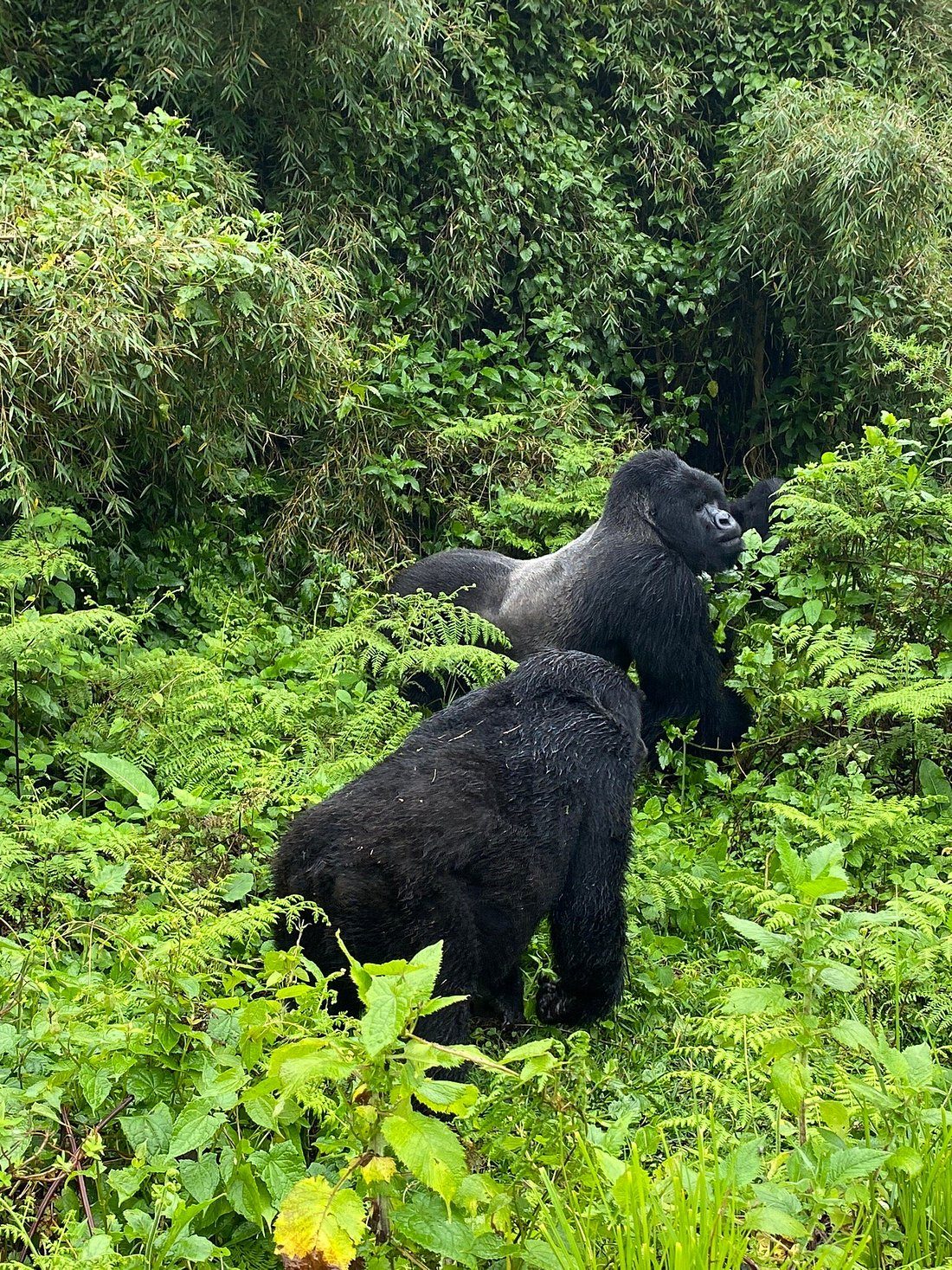
A 10-day Uganda photography safari focuses on primate trekking (gorillas/chimpanzees), savanna game drives, and scenic boat cruises, typically covering Bwindi, Queen Elizabeth, and Kibale National Parks. Expect daily wildlife encounters, including tree-climbing lions, birdlife, and high-altitude rainforest photography, often with specialized guides for intimate, low-light, and action shots
10-days-best-photography-uganda-wildlife-safari-holiday-and-gorilla-trekking
10-days-uganda-rwanda-primate-safari-vacation-and-game-drive-safari
10-days-luxury-uganda-gorilla-trekking-safari-and-big-five-safari-vacation
10 Days Uganda wildlife safari holiday
This 10 Days Uganda wildlife safari holiday is a definitive exploration of the most biodiverse landscapes in East Africa. From the thunderous cascades of the Nile to the mist-shrouded peaks of the gorilla highlands, the route offers an unparalleled tapestry of natural wonders. This 10 Days Uganda wildlife safari holiday is meticulously designed to bring you face-to-face with the continent’s most iconic primates and savannah giants. You will transition from the open plains of Murchison Falls to the dense, ancient canopy of Kibale and Bwindi, witnessing the successful protection of endangered rhinos and mountain gorillas along the way. Beyond the wildlife, the itinerary immerses you in the vibrant cultural heritage of the Batwa people and the serene beauty of Uganda’s crater lakes. Every mile is curated to ensure that your experience is as profound as it is adventurous, providing a comprehensive and deeply moving encounter with the heart of Africa.
Day 1: Entebbe Arrival and the Gateway North
Your 10 Days Uganda wildlife safari holiday begins in the lush, lakeside town of Entebbe. Upon arrival, you are welcomed by the fresh breezes of Lake Victoria, a gentle introduction to the "Pearl of Africa." After settling in, you begin the journey northward through a landscape of vibrant green hills and bustling rural markets. This initial stage is about transitioning from the modern world to the wild rhythms of the bush. As you leave the urban sprawl behind, the air becomes clearer and the horizons widen. You will spend your first night in anticipation of the diverse ecosystems that lie ahead, from the riverine forests to the vast savannahs. This first day of your 10 Days Uganda wildlife safari holiday sets a steady, expectant tone for the grand primate and wildlife encounters that define the Ugandan experience.
Day 2: Ziwa Rhino Tracking and Murchison Falls
The second day of your 10 Days Uganda wildlife safari holiday focuses on the return of a legend. You will visit the Ziwa Rhino Sanctuary for a guided walking safari to track the endangered Southern White Rhino. Seeing these prehistoric giants on foot, just meters away, is a visceral reminder of the importance of conservation. Afterward, you continue to Murchison Falls National Park, where the world’s longest river is forced through a narrow seven-metre cleft. The sight of the Nile exploding into a thunderous "devil’s cauldron" is a sensory highlight of the 10 Days Uganda wildlife safari holiday. You will stand at the top of the falls, feeling the spray and hearing the roar of the water, a powerful display of nature’s raw energy that marks your entry into Uganda’s oldest and largest protected area.
Day 3: Journey to the Primate Capital
Leaving the falls behind, your 10 Days Uganda wildlife safari holiday turns southward toward the lush foothills of the Rwenzori Mountains. The drive takes you through the Albertine Rift, offering panoramic views of Lake Albert and traditional homesteads. You are heading for Kibale Forest National Park, the "Primate Capital of the World." This ancient rainforest is home to 13 different species of primates, the highest density in Africa. As the vegetation thickens into a deep, tropical canopy, you will feel the atmosphere shift. The afternoon is spent settling into your forest lodge, where the calls of Red-tailed Monkeys and Great Blue Turacos provide a melodic soundtrack. This transition from the savannah to the forest is a pivotal chapter in your 10 Days Uganda wildlife safari holiday, preparing you for intimate primate encounters.
Day 4: Chimpanzee Trekking in Kibale Forest
This is a high-energy day of primate exploration on your 10 Days Uganda wildlife safari holiday. You enter the forest with expert trackers to locate a community of Chimpanzees. The experience is dynamic; you will follow their vocalizations through the undergrowth until you find them grooming, playing, or feeding in the high branches. Seeing our closest living relatives in their natural habitat is a profound and often humorous experience. You will also look for Grey-cheeked Mangabeys and L'Hoest's Monkeys along the forest floor. In the afternoon, a walk through the Bigodi Wetland Sanctuary offers a chance to spot rare birds and aquatic primates like the Sitatunga. This day highlights the complex social structures of the forest dwellers, providing a deep intellectual dimension to your 10 Days Uganda wildlife safari holiday.
Day 5: Savanna Secrets of Queen Elizabeth NP
Your 10 Days Uganda wildlife safari holiday moves into the diverse landscapes of Queen Elizabeth National Park. This park is a mosaic of volcanic craters, grassy plains, and tropical forests. After a morning game drive across the Kasenyi plains, where you will look for Elephants, Uganda Kob, and Lions, you will head toward the remote Ishasha sector. This area is world-famous for its Tree-climbing Lions, which are often seen lounging in the sprawling branches of ancient fig trees to escape the midday heat. The sight of a massive male lion draped over a branch is a rare and iconic image of the Ugandan wild. This day emphasizes the adaptability of Africa’s apex predators and provides a dramatic contrast to the forest-dwelling primates encountered earlier in your 10 Days Uganda wildlife safari holiday.
Day 6: Kazinga Channel and Aquatic Life
The sixth day of your 10 Days Uganda wildlife safari holiday focuses on the vital waters of the Kazinga Channel. A two-hour boat safari along this natural waterway allows you to glide past massive pods of Hippos and giant Nile Crocodiles basking on the banks. The channel is an ornithologist’s paradise, attracting hundreds of bird species, including the African Skimmer and the Yellow-billed Stork. You will watch families of elephants come down to the water’s edge to drink and bathe, providing incredible low-angle photography opportunities. The boat provides a peaceful, stable platform for observing the dense concentrations of wildlife that depend on the channel. This aquatic perspective is a cornerstone of the 10 Days Uganda wildlife safari holiday, highlighting the incredible biodiversity supported by the Rift Valley’s freshwater systems.
Day 7: The Climb to the Gorilla Highlands
Today, the 10 Days Uganda wildlife safari holiday reaches its most dramatic geographical transition as you climb into the Kigezi Highlands. The road winds through "the Switzerland of Africa," characterized by terraced hillsides and mist-covered valleys. You are heading for the Bwindi Impenetrable National Park, a UNESCO World Heritage site and home to half of the world’s remaining Mountain Gorillas. As the altitude increases, the air becomes cool and crisp. You will settle into your lodge on the edge of the ancient forest, looking out over a canopy that has survived for over 25,000 years. The sense of anticipation here is palpable, as you prepare for the physical and emotional highlight of your 10 Days Uganda wildlife safari holiday—the trek to find the gentle giants of the mist.
Day 8: The Gorilla Encounter in Bwindi
This is the pinnacle of your 10 Days Uganda wildlife safari holiday. After a briefing by park rangers, you enter the "impenetrable" forest in search of a habituated gorilla family. The trek can be challenging, involving steep ridges and thick vines, but the reward is life-changing. When you finally encounter the Mountain Gorillas, you will spend a quiet, magical hour observing their human-like interactions—the playful infants, the protective mothers, and the sheer presence of the massive Silverback. There are no fences between you, only a respectful distance and a profound sense of connection. For those seeking more, the Gorilla Habituation Experience offers four hours of observation. This encounter is the emotional heart of your 10 Days Uganda wildlife safari holiday, a moment of pure clarity in the presence of greatness.
Day 9: Cultural Heritage and Lake Bunyonyi
Following the intensity of the gorilla trek, the 10 Days Uganda wildlife safari holiday turns toward cultural immersion and scenic relaxation. You will visit a local Batwa (Pygmy) community, the original forest keepers, to learn about their ancient hunting techniques, medicinal plants, and traditional songs. This exchange provides a vital human context to the conservation of the forest. Afterward, you head to Lake Bunyonyi, one of the deepest and most beautiful lakes in Africa. Dotted with 29 islands, the lake is a tranquil haven for birdwatchers and photographers. You might take a dugout canoe to explore the islands or simply relax and enjoy the "Lake of Little Birds." This day offers a peaceful space to reflect on the extraordinary experiences of your 10 Days Uganda wildlife safari holiday.
Day 10: The Equator and the Journey Home
The final day of your 10 Days Uganda wildlife safari holiday involves a scenic drive back toward Entebbe. You will pass through the rolling hills of Ankole, famous for its long-horned cattle, and stop at the Equator for a final photographic memento and a demonstration of the Coriolis effect. This is a great opportunity to pick up local handicrafts and souvenirs from the vibrant roadside markets. You will arrive in Entebbe in the late afternoon, where a final meal overlooking Lake Victoria concludes your journey. As you transfer to the airport for your departure, you leave with a profound appreciation for the beauty and resilience of Uganda’s wildlife and people. This concludes your transformative 10 Days Uganda wildlife safari holiday, leaving you with memories that will last a lifetime.
1. What can I expect to photograph on a 10 days Uganda photography safari?
A 10 days Uganda photography safari offers an incredibly diverse portfolio that spans multiple ecosystems, from the prehistoric looking shoebill in the swamps to the powerful silverbacks in the mist. You will capture the "Big Five" in a unique way, including the rare Tree-climbing Lions of Ishasha and massive Nile Crocodiles along the riverbanks. The primary highlights are the primates: the expressive faces of Chimpanzees in Kibale and the soulful eyes of Mountain Gorillas in Bwindi. The rainforests provide a moody, ethereal aesthetic with filtered light and emerald foliage, while the savannahs of Murchison Falls offer wide-angle landscapes featuring the iconic Borassus palms and the thundering Nile. For bird enthusiasts, the "Pearl of Africa" provides vibrant subjects like the Great Blue Turaco and the African Skimmer. Every day of a 10 days Uganda photography safari presents a new texture, from the iron-rich red soils of the north to the mist-shrouded volcanic peaks of the south, ensuring a comprehensive and visually stunning collection of African wildlife and landscapes.
2. Which national parks are included in a 10 days Uganda photography safari?
A typical 10 days Uganda photography safari follows the "Western Circuit," connecting the country’s most photogenic protected areas. It starts with Murchison Falls National Park, where the Nile River provides a dramatic backdrop for savannah game and aquatic life. You then move to Kibale Forest National Park, the premier location for primate photography, specifically chimpanzees. The journey continues to Queen Elizabeth National Park, offering a mix of crater lakes, the Kazinga Channel, and the lion-rich plains of Ishasha. The pinnacle of the 10 days Uganda photography safari is Bwindi Impenetrable National Park, a UNESCO World Heritage site and home to half the world's mountain gorillas. Some itineraries also include Lake Mburo National Park for zebras and impalas or the Ziwa Rhino Sanctuary for close-up shots of rhinos on foot. This route ensures that you document the full transition from open riverine plains to dense, ancient tropical rainforests.
3. What is the best time to book a 10 days Uganda photography safari?
The timing of your 10 days Uganda photography safari is essential for both lighting and accessibility. The dry seasons—from June to September and December to February—are the most popular. During these months, the forest trails are less slippery for gorilla and chimp trekking, and the savannah grass is shorter, which improves visibility for spotting predators. The light is often crisp and clear, though you may encounter some haze from dust. Conversely, the "green season" (October to November and March to May) offers spectacular, dramatic skies and lush, vibrant backgrounds that make colors "pop." While the rains can make forest photography more challenging due to low light and humidity, the absence of crowds allows for more intimate sessions with your subjects. Ultimately, the best time for a 10 days Uganda photography safari depends on whether you prefer the ease of the dry season or the rich, saturated tones of the rainy season.
4. What kind of vehicle is used on a 10 days Uganda photography safari?
The success of a 10 days Uganda photography safari often relies on the vehicle. You will travel in a specialized 4x4 Safari Land Cruiser or a heavy-duty jeep, specifically modified for photographers. These vehicles feature a pop-up roof, which allows you to stand and shoot from an elevated position, and large windows that can be fully opened for low-angle shots. Most professional safari vehicles are equipped with power points for charging batteries and bean bags to stabilize long telephoto lenses when a tripod isn't practical. The 4x4 capability is non-negotiable, as it allows you to navigate the rugged, muddy tracks of the rainforests and the sandy trails of the savannah. The seating is typically limited to ensure every photographer has a "window seat" and ample room for gear bags, making the vehicle a mobile studio throughout your 10 days Uganda photography safari.
5. How strenuous is the gorilla trekking on a 10 days Uganda photography safari?
Gorilla trekking is the most physically demanding part of a 10 days Uganda photography safari. Bwindi's terrain is characterized by steep ridges, thick undergrowth, and varying altitudes (up to 2,500 metres). The trek can last anywhere from two to seven hours depending on the movement of the gorilla family. You will be hiking through "impenetrable" vegetation, often off-trail, which requires a reasonable level of fitness. However, the pace is set by the slowest member of the group, and porters are available to carry your heavy camera bags and offer a steady hand on the slopes. Despite the exertion, the payoff is unparalleled: an hour of eye-to-eye contact with a Silverback. For photographers, the challenge lies in managing your breathing and pulse after a climb to ensure sharp images once you reach the gorillas. It is a rugged, sweaty, and ultimately life-changing highlight of the 10 days Uganda photography safari.
6. Do I need specialized camera equipment for a 10 days Uganda photography safari?
Yes, a 10 days Uganda photography safari requires a versatile kit to handle vastly different environments. For the savannah and boat cruises, a long telephoto lens (e.g., 200-600mm or 100-400mm) is essential for capturing distant lions or birds. However, in the dense rainforests of Bwindi and Kibale, you are often quite close to the primates in very low-light conditions. Here, a "fast" lens with a wide aperture (e.g., a 70-200mm f/2.8) is the gold standard, as it allows for a fast shutter speed without excessive noise. A second body with a wide-angle lens (24-70mm) is useful for environmental portraits and the spectacular landscapes of the Rift Valley. Because tripods are cumbersome on forest trails, a sturdy monopod or a bean bag for the vehicle is recommended. Bringing plenty of extra batteries and high-capacity, weather-sealed memory cards is also critical for a successful 10 days Uganda photography safari.
7. Can I bring a drone on my 10 days Uganda photography safari?
Drone photography in Uganda is strictly regulated and requires significant planning. To fly a drone during your 10 days Uganda photography safari, you must obtain prior authorization from the Uganda Civil Aviation Authority (UCAA) and the Uganda Wildlife Authority (UWA) if you intend to fly within national parks. This process involves a formal application, a vetting period, and often a fee. Flying a drone without permits can lead to the confiscation of equipment or legal penalties. Even with permits, flying near sensitive wildlife like gorillas or chimpanzees is usually prohibited to avoid distressing the animals. If you are determined to capture aerial footage of the Murchison Falls or the crater lakes, it is best to work with your tour operator months in advance to secure the necessary paperwork. For most travelers, the ground-level wildlife and landscape opportunities on a 10 days Uganda photography safari are more than enough to fill their portfolios.
8. What lighting conditions should I expect for photography on a 10 days Uganda photography safari?
Lighting is one of the biggest challenges—and rewards—of a 10 days Uganda photography safari. On the open savannahs of Murchison Falls and Queen Elizabeth, you will chase the "Golden Hour" light at sunrise and sunset, which bathes the animals in a warm, amber glow. However, midday light can be incredibly harsh and flat, often requiring you to focus on black-and-white photography or high-contrast compositions. In the rainforests, the situation is the opposite; you will face low-light conditions under a dense canopy, often coupled with high contrast where the sun breaks through the leaves. This requires a mastery of high ISO settings and wide apertures. On the Kazinga Channel, the water creates beautiful reflections but can also lead to overexposure if not managed correctly. Learning to work with these shifting light dynamics is a key part of the professional growth you will experience on a 10 days Uganda photography safari.
9. Will there be bird photography opportunities on a 10 days Uganda photography safari?
Uganda is an absolute paradise for bird photography, boasting over 1,000 species. A 10 days Uganda photography safari provides countless opportunities to capture everything from the gargantuan to the tiny. The "holy grail" for most is the Shoebill Stork, which you can often find in the Mabamba Swamp or Murchison Falls. These birds often stand motionless for long periods, allowing for incredible detail shots. Along the Kazinga Channel, you can photograph African Skimmers, Kingfishers, and Yellow-billed Storks from the stable platform of a boat. The rainforests offer the chance to shoot the vibrant Great Blue Turaco and various Sunbirds. Because many Ugandan birds are habituated to human presence in the parks, you can often get surprisingly close. Whether you are a dedicated birder or a general wildlife photographer, the avian diversity will be a major highlight of your 10 days Uganda photography safari.
10. How close can I get to animals on a 10 days Uganda photography safari?
Proximity is a hallmark of the Ugandan experience. During Gorilla and Chimpanzee trekking, you are officially required to maintain a distance of 7 to 10 metres, which is close enough to see the individual hairs on a Silverback's arm and capture intimate portraits with a 70-200mm lens. On Boat Safaris in Murchison Falls or the Kazinga Channel, the boat can glide remarkably close to Hippos, Crocodiles, and Elephants drinking at the water's edge, offering unique water-level perspectives. During vehicle-based game drives, animals like lions and buffaloes are often habituated to the jeeps, sometimes walking right past the tires. While your guide will always prioritize safety and animal welfare, a 10 days Uganda photography safari is famous for offering some of the most intimate, face-to-face wildlife encounters in Africa, allowing you to move beyond "record shots" into the realm of fine-art animal portraiture.
11. What is the accommodation like on a 10 days Uganda photography safari?
The lodges on a 10 days Uganda photography safari are chosen not just for comfort, but for their proximity to the action and their own photographic potential. You will stay in a mix of luxury tented camps and wooden lodges, many of which are built on the boundaries of the parks. In Bwindi, lodges often sit on ridges overlooking the forest canopy, providing spectacular sunrise and mist-covered valley shots right from your balcony. In Murchison Falls, you might stay in a lodge along the Nile, where you can photograph Hippos from the dining area. Most accommodations are equipped with charging stations in the rooms or a central lounge, ensuring your gear is ready for the next day. The food is typically a high-quality mix of international and local cuisine, providing the necessary fuel for the early starts and long treks that characterize a 10 days Uganda photography safari.
12. Is there a professional photography guide on a 10 days Uganda photography safari?
Many specialized 10 days Uganda photography safaris include a professional photography guide in addition to your local driver-guide. These professionals are experts in both wildlife behavior and technical photography. They can assist with camera settings in the challenging low-light of the forest, suggest creative compositions, and help you anticipate animal movements. Even if your tour is lead by a standard wildlife guide, these individuals are often highly experienced in spotting camouflaged subjects and positioning the vehicle for the best light. They understand that a photographer needs to stay with a subject for longer than a typical tourist, allowing you the "patience of the lens" required to capture a specific behavior or light. This specialized support is what elevates a standard trip into a true 10 days Uganda photography safari, maximizing your chances of returning with a world-class portfolio.
13. What should I pack to protect my gear on a 10 days Uganda photography safari?
Protecting your equipment is a major logistical concern on a 10 days Uganda photography safari. You will face two main enemies: dust on the savannah and humidity/rain in the forest. High-quality rain covers for your camera and lenses are essential for trekking, as Bwindi can live up to its name with sudden tropical downpours. Inside your gear bag, silica gel packs help manage the moisture. For the savannah, a blower brush and a sensor cleaning kit are necessary to combat the fine red dust that can penetrate even weather-sealed bodies. Many photographers also bring a simple "buff" or a light cloth to drape over the camera while driving. Finally, a rugged, padded backpack with a comfortable harness is a must for the gorilla trek, as you will be hiking for hours. Taking these precautions ensures that your gear remains functional for the duration of your 10 days Uganda photography safari.
14. Are there cultural photography opportunities on a 10 days Uganda photography safari?
Beyond the wildlife, a 10 days Uganda photography safari offers rich opportunities for portrait and lifestyle photography. Most itineraries include a visit to the Batwa (Pygmy) community near Bwindi. These former forest-dwellers have a vibrant culture, and capturing their traditional dances, fire-making techniques, and expressive faces is a highlight for many. You may also visit local fishing villages along the Nile or vibrant rural markets in the Rift Valley. These sessions allow for authentic human connection and environmental portraiture. It is important to always ask for permission and, in most cases, your guide will handle the cultural etiquette and any community fees. These human stories provide a vital context to the landscapes you are photographing, making your 10 days Uganda photography safari a holistic documentation of the "Pearl of Africa."
15. Can I use a flash for gorilla photography on a 10 days Uganda photography safari?
This is a critical rule: Flash photography is strictly prohibited during gorilla and chimpanzee trekking. Primates, especially the gorillas, are highly sensitive to sudden bursts of light, which can startle or even aggravate them, potentially leading to a charge. This means that for the most important hour of your 10 days Uganda photography safari, you must rely entirely on your camera's sensor and your lens's aperture. This is where "fast" glass (f/2.8 or f/4) and modern bodies with excellent high-ISO performance come into play. You will often find yourself shooting at ISO 3200 or even 6400 to maintain a fast enough shutter speed to freeze the movement of a gorilla in the shadows. Mastering these settings before you reach the forest is essential for ensuring that your primary targets are sharp and well-exposed without the use of artificial light on your 10 days Uganda photography safari.
Booking Uganda photography safari with us Roads of Adventure safaris
Book your unforgettable Uganda photography safari with Roads of Adventure Safaris, specializing in tailored primate tracking, Big Five game drives, and birding in Bwindi and Queen Elizabeth National Park. Our expert-guided, specialized vehicles offer optimal positioning for stunning photography. We provide customized itineraries—ranging from short trips to extensive 14-day expeditions—designed for photographers of all skill levels. Enjoy seamless logistics, expert, knowledgeable driver-guides, and customized, secure travel to Uganda's premier spots. Book today for a personalized, sustainable, and truly remarkable wildlife photography adventure in the Pearl of Africa.
