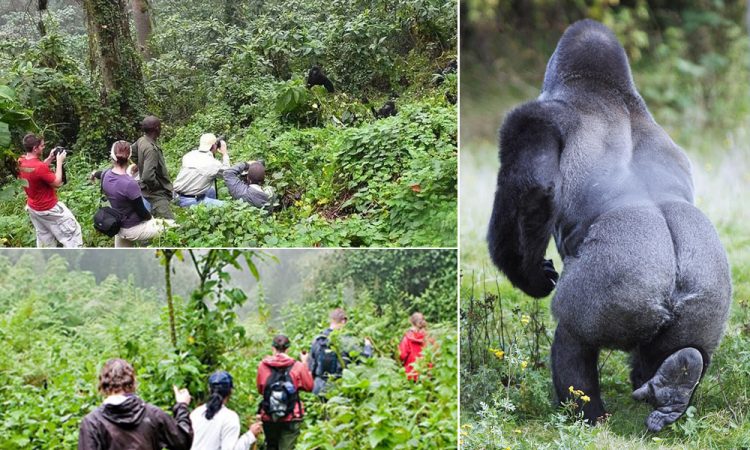
To capture Uganda's contrasting environments—from the open, dusty savannas of Queen Elizabeth National Park to the dim, humid rainforests of Bwindi Impenetrable Forest—your camera equipment needs to balance versatility, speed, and low-light performance.
Bring a versatile, weather-sealed mirrorless or DSLR camera body paired with a 100–400mm telephoto lens and a fast 24–70mm mid-range lens to handle both open savanna wildlife and low-light primate forests.
3-days-affordable-uganda-budget-gorilla-trekking-via-kigali
3-day-budget-gorilla-trekking-safari-in-uganda
2-days-affordable-budget-uganda-safari-to-queen-elizabeth-national-park
2-days-budget-uganda-safari-to-murchison-falls-park
4-days-budget-queen-elizabeth-park-and-chimpanzee-tracking-in-kalinzu-forest
6-days-budget-uganda-safari-and-gorilla-trekking
7-days-budget-uganda-safari-tour-package
10-days-luxury-uganda-gorilla-trekking-safari-and-big-five-safari-vacation
9-days-luxury-gorilla-and-uganda-safari-tour-package
8-days-luxury-uganda-wildlife-safari-tour-package
4-days-luxury-gorilla-trekking-safari-in-bwindi-fly-in-all-inclusive-tour
4-days-luxury-murchison-falls-and-jinja-uganda-safari-vacation
16-days-classic-uganda-photography-safari
10-days-uganda-photography-safari
Essential Camera Bodies and Lenses
- Weather-sealed body: Protects against fine savanna dust and sudden tropical downpours.
- Telephoto zoom lens (100–400mm or 200–600mm): Essential for capturing distant lions, giraffes, and birds safely and sharply.
- Mid-range zoom (24–70mm or 24–105mm): Ideal for family portraits, dramatic landscapes, and close-range encounters like gorilla or chimpanzee trekking.
Support and Stability Gear
- Beanbag: Drapes over safari vehicle window frames for steady telephoto shots without a bulky tripod.
- Monopod: Helpful if older children or adults want extra stability during nature walks or forest hikes where tripods are impractical
Power, Storage, and Maintenance
- Spare batteries: Bring at least three fully charged batteries per camera body, as cold jungle mornings and heavy video use drain power quickly.
- High-speed memory cards: Pack multiple fast cards (128GB or larger) to accommodate rapid burst modes.
- Cleaning kit: Pack a rocket air blower, microfiber cleaning cloths, and lens wipes to combat dust and moisture.
- Portable SSD or laptop: Allows for daily image backups so you never risk losing memories.
Optics and Family Additions
- Binoculars (8x42 or 10x42): Bring a pair for each family member, including lightweight or compact options for younger children.
- Rugged daypack: A comfortable, weather-resistant backpack keeps gear, snacks, and extra layers safe during transfers and treks.
What is the ideal camera body setup for a luxury Uganda family safari?
For a high-end family safari across Uganda’s diverse habitats, a dual mirrorless camera body setup per primary photographer is optimal. Mirrorless systems from Sony, Canon, or Nikon offer fast subject-tracking autofocus, silent electronic shutters, and lightweight bodies crucial for jungle trekking. Having two bodies eliminates the need to swap lenses in dusty savanna environments or humid rainforests, ensuring you never miss a fleeting animal moment. For family members, pairing a flagship full-frame body with a crop-sensor (APS-C) body provides extra reach via crop factors while keeping weight manageable. Silent shutters are essential during gorilla and chimpanzee encounters to avoid disturbing primates.
Which focal length telephoto zoom lens is best for Uganda safari game drives?
A 100-400mm or 150-600mm telephoto zoom lens is the most versatile optic for Ugandan savanna game drives in Murchison Falls, Queen Elizabeth, and Lake Mburo. These focal ranges allow you to frame distant big cats, elephants, and tree-climbing lions while zooming out quickly when wildlife approaches your 4x4 Land Cruiser. Lenses featuring fast internal image stabilization (IS/VR/OSS) are vital for shooting from vehicle pop-up roofs without a bulky tripod. A maximum aperture of f/4 to f/5.6 balances light gathering with weight, making it comfortable for teenagers and adult family members to handle during multi-hour game drives.
What lens works best for gorilla trekking in Bwindi Impenetrable Forest?
Gorilla trekking in Bwindi requires a fast zoom lens with a wide aperture, such as a 70-200mm f/2.8. Mountain gorillas inhabit dense rainforest canopies where ambient light levels are extremely low. The fast f/2.8 aperture permits higher shutter speeds to freeze subtle movements without forcing your camera's ISO into noisy territories. Because visitors stay within 7 to 10 meters of the gorilla family, super-telephoto lenses above 400mm are often too narrow and heavy for dense jungle tracking. A 70-200mm f/2.8 coupled with image stabilization offers the ultimate combination of low-light capability, sharp subject isolation, and manageable weight.
Should we bring a wide-angle lens on a family safari?
Yes, a 24-70mm f/2.8 or 16-35mm f/2.8 wide-angle lens is indispensable for environmental portraits, landscape vistas, and luxury lodge photography. Wide focal lengths capture sweeping views of Murchison Falls, the Kazinga Channel, terraced hills around Lake Bunyonyi, and dramatic volcanic crater lakes. Furthermore, wide-angle lenses allow family members to take contextual shots that include both wildlife and loved ones inside the safari vehicle. They are also ideal for photographing luxury lodge interiors, private bush dinners, and intimate group photos against dramatic African sunsets without stepping back into thick brush.
How important are fast apertures (f/2.8 or f/4) in Ugandan environments?
Fast apertures like f/2.8 or f/4 are critical in Uganda due to thick forest canopies and golden-hour safari schedules. In Kibale and Bwindi forests, dense foliage blocks up to 80% of sunlight, creating challenging, dim shooting conditions even at high noon. On savanna game drives, peak animal activity occurs during dawn and dusk when natural light is minimal. Lenses with wider apertures allow significantly more light to hit the camera sensor, enabling sharp, noise-free images at lower ISOs and faster shutter speeds necessary to freeze moving primates or hunting predators.
Is a prime telephoto lens necessary, or are zoom lenses sufficient for families?
High-end telephoto zoom lenses (like 100-400mm or 200-600mm) are generally superior to fixed prime lenses for family safaris. While prime lenses (such as 500mm f/4 or 600mm f/4) offer razor-sharp image quality, they are heavy, rigid, and difficult to maneuver in shared safari vehicles or on steep jungle trails. Zoom lenses grant flexible framing when animals move unexpectedly toward or away from the vehicle. For families traveling with teenagers or non-professional shooters, the flexibility, lighter weight, and ease of handling provided by modern zooms outweigh the slight image quality edge of heavy super-telephoto primes.
How can children and teenagers participate in safari photography?
Engaging younger family members in safari photography enhances their travel experience through hands-on participation. Equip kids with compact premium point-and-shoot cameras, bridge cameras with large optical zooms (such as 24-600mm equivalents), or durable mirrorless setups. These lightweight systems allow young travelers to photograph birds and big game without struggling under heavy glass. Setting cameras to intelligent auto modes or shutter-priority allows teenagers to focus on framing and spotting wildlife. Giving children their own camera encourages mindfulness, patience, and active engagement with Uganda's rich biodiversity throughout game drives and boat safaris.
What camera gear is suitable for boat safaris on the Nile and Kazinga Channel?
Boat safaris along the Victoria Nile and Kazinga Channel require flexible zoom ranges and strong image stabilization due to boat movement and water reflection. A 100-400mm lens paired with a full-frame body provides excellent reach for shore-bound hippos, crocodiles, and waterbirds. Monopods or beanbags rested on boat railings help stabilize heavy gear against engine vibrations and water chop. Ensure all camera gear is packed in weather-sealed, splash-proof bags to protect electronics from water spray, river mist, and sudden tropical downpours encountered while navigating water channels.
Are camera monopods, tripods, or beanbags best for safari vehicles?
Beanbags are the most effective stabilization tool inside safari Land Cruisers, while monopods excel on foot. Traditional tripods are too bulky and impractical inside crowded safari vehicles with pop-up roofs. Specially designed safari beanbags rest securely over vehicle doors, window frames, or roof rails, providing a stable cushion for heavy telephoto lenses without transferring engine vibrations. For walking safaris in Lake Mburo or gorilla treks in Bwindi, lightweight carbon fiber monopods or trekking poles with camera mounts offer ground stability without adding excessive backpack weight.
What storage media and memory cards should we bring for a multi-day safari?
Family safaris generate high volumes of photos and high-definition video, requiring fast, high-capacity memory cards. Pack multiple 128GB or 256GB tough-series SDXC or CFexpress cards with high write speeds (V60 or V90 rated) to handle continuous burst shooting and 4K video recording. Distributing shots across several smaller cards reduces the risk of total data loss if a single card fails or gets damaged. Store filled memory cards in waterproof, dustproof hard cases kept inside personal hand luggage during transit across parks.
How should we handle backing up safari photos while on the road?
A solid daily backup strategy is vital for preserving family memories in remote regions. Bring a lightweight laptop or tablet paired with two rugged external Solid State Drives (SSDs), such as SanDisk Extreme or LaCie Rugged drives. At the end of each day's game drive, copy memory cards to the laptop and clone them across both external SSDs. Store one drive in your primary photo bag and give the second drive to another family member to carry in a separate bag, ensuring redundancy against loss or damage during travel.
What power and battery management strategies work best in Ugandan safari lodges?
Cold jungle mornings and intense burst shooting quickly drain camera batteries, making power management essential. Pack at least 3 to 4 spare batteries per camera body. Luxury lodges offer reliable charging stations in main lounge areas or rooms, but bringing a multi-bay USB battery charger paired with high-capacity power banks allows family members to charge batteries directly inside safari vehicles via 12V cigarette lighter adapters or USB ports while driving between park sectors.
What plug adapters and power strips are required in Uganda?
Uganda uses Type G electrical outlets (the standard UK three-pin plug operating at 240V and 50Hz). Bring at least two universal travel adapters equipped with built-in surge protection. Packing a compact power strip allows your family to charge multiple camera batteries, laptops, tablets, power banks, and phones simultaneously from a single wall outlet in your luxury lodge room overnight, eliminating arguments over limited power sockets.
How do we protect sensitive camera equipment from dust on savanna game drives?
Savanna game drives in Murchison Falls and Queen Elizabeth generate fine alkaline dust that penetrates unsealed electronics. Protect gear by keeping camera bodies and lenses inside closed neoprene covers, dustproof wraps, or sealed camera bags when driving between wildlife sightings. Use protective clear UV filters on front lens elements to prevent scratch damage during cleaning. Carry a soft blower bulb, camel-hair brush, and microfiber cloths in your pocket to wipe down equipment frequently throughout game drives.
How do we safeguard camera gear against humidity and rain in rainforests?
Bwindi Forest and Kibale National Park experience frequent tropical rainfall and high relative humidity. Protect gear using custom-fit silicon rain covers, dry bags, or heavy-duty waterproof dry sacks. Insert silica gel packets into camera bags to absorb ambient moisture and prevent lens fungus growth. Never change lenses inside wet rainforest environments; seal your camera with your primary gorilla tracking lens attached before entering the jungle canopy to keep internal sensors dry and dust-free.
What camera accessories make gorilla trekking photography easier?
For gorilla trekking, ergonomic gear transportation is critical over steep, muddy terrain. Use a comfortable dual-shoulder camera harness or chest rig to keep camera bodies weightless and hands-free for balancing on slippery slopes. A comfortable neoprene neck strap, rain cover, microfiber lens cleaning cloth attached to your jacket, and lightweight carbon fiber monopod complete a streamlined trekking photography kit that won't overburden you or your hired porter.
Should we bring a drone for aerial safari photography in Uganda?
Private drone use is strictly prohibited inside all Ugandan national parks and protected wildlife areas by the Uganda Wildlife Authority (UWA) without explicit, complex government permits. Flying drones frightens wildlife, disturbs nesting birds, and annoys fellow safari guests. Leave personal drones at home to avoid confiscation by customs officials or park authorities at airport entry points and park checkpoints. Stick to ground-based camera gear for legal and hassle-free photography.
What lens protection filters are recommended for safari conditions?
Equip every lens with a high-quality, multi-coated UV or clear protective filter. In addition to absorbing atmospheric haze, these filters serve as a physical barrier against flying road gravel, sharp vegetation during jungle treks, windblown sand, mud splashes, and fingerprints. Replacing a scratched $80 protective filter is vastly preferable to replacing a damaged front glass element on a multi-thousand-dollar telephoto zoom lens.
How do circular polarizers improve safari photography in East Africa?
Circular polarizing filters (CPLs) enhance safari photography by cutting harsh atmospheric glare, enriching blue skies, and deepening green foliage color saturation. They are especially useful during midday game drives and boat cruises on the Nile or Kazinga Channel, where intense equatorial sun reflects off water surfaces and dry grasslands. Rotating a CPL cuts reflections from wet animal hides and river surfaces, helping reveal underwater hippos and crocodiles clearly.
What cleaning supplies should be in a safari photo maintenance kit?
A comprehensive safari lens cleaning kit includes an air blower bulb, lens cleaning solution, pre-moistened lens wipes, microfiber cloths, a sensor swab kit, and a soft dusting brush. Dusty savanna roads coat gear in fine powder, while humid forests leave condensation water spots. Clean lens surfaces only after using an air blower to dislodge abrasive grit, preventing fine dust particles from scratching glass coatings when wiped with microfiber cloths.
What are the best camera bag designs for luxury family travel?
Backpack-style camera bags with padded, customizable dividers and integrated rain covers are ideal for luxury family safaris. Look for bags with side-access zippers that permit quick camera retrieval without placing the bag on wet ground. For light aircraft transfers between Ugandan parks, choose camera bags that comply with strict soft-sided carry-on dimensions (typically under 15 kg total weight) so precious electronics stay with you in the aircraft cabin rather than hold baggage.
How do bush planes and luggage limits impact photo gear packing?
Internal safari flights across Uganda (such as Aerolink flights connecting Entebbe, Kihihi, and Kasese) enforce strict weight limits—typically 15 kg (33 lbs) per passenger in soft-sided duffel bags. Heavy camera gear must be audited carefully. Consolidate family camera gear into lightweight backpacks, wear heavy lenses on camera straps around your neck during boarding, and choose versatile zoom lenses over multiple heavy primes to respect aircraft safety limits without sacrificing photographic capabilities.
Is flash photography allowed during gorilla and chimpanzee tracking?
Flash photography is strictly prohibited during gorilla and chimpanzee tracking in Bwindi and Kibale National Parks. Sudden bright flashes scare wild primates, provoking defensive behavior or causing habituated groups to retreat into thick brush. Ensure your camera's pop-up flash is disabled and external speedlights are left behind at the lodge. Rely on wide-aperture lenses (f/2.8) and higher ISO settings to capture sharp images under low light in jungle environments.
What camera settings work best for fast-moving wildlife on savanna game drives?
For savanna wildlife, shoot in Shutter Priority (Tv/S) or Manual mode with Auto ISO. Set a fast shutter speed—at least 1/1000s for static animals and 1/2000s or faster for birds in flight or hunting predators. Utilize continuous autofocus (AI Servo/AF-C) paired with animal eye-detection tracking to keep animal eyes sharp. Keep drive modes on high-speed continuous burst shooting to capture dynamic action sequences like jumping antelopes or hunting lions.
What camera settings excel for forest primate photography?
In dim forest canopies, balance shutter speed and ISO carefully. Use Aperture Priority (Av) at your widest setting (f/2.8 or f/4) or Manual mode. Maintain a minimum shutter speed of 1/250s to prevent blur from subtle primate head movements. Allow ISO to scale automatically up to ISO 3200 or 6400; modern mirrorless sensors handle high ISO noise well, and noise reduction software can clean up images later, whereas motion blur cannot be corrected.
How can family members capture action shots of birds in flight?
Bird photography in Uganda's wetland environments requires rapid response settings. Set your camera to its maximum continuous burst rate and enable animal eye-AF or broad-zone tracking. Maintain shutter speeds of at least 1/2500s to freeze wing motion on fast-flying species like kingfishers or fish eagles along the Kazinga Channel. A 100-400mm or 150-600mm lens gives the reach needed to fill frames with small avian subjects without startling them from boats or vehicles.
Should we rent specialized safari camera gear before traveling?
Renting high-end telephoto lenses and secondary camera bodies from specialized camera rental houses before departing home is a cost-effective solution for luxury safaris. Purchasing expensive 400mm f/2.8 or 200-600mm lenses for a single trip can be cost-prohibitive. Renting allows family members to access flagship optical gear and professional backup bodies for a fraction of the retail price, elevating family safari photos without permanent capital outlay.
How can we capture high-quality video alongside still photography on safari?
Modern mirrorless cameras allow seamless switching between high-resolution stills and 4K/60p video. Assign a dedicated custom button to instantly start video recording. Utilize internal camera image stabilization paired with stabilized lenses to capture smooth handheld video clips of gorillas or passing elephant herds. Bring a directional shotgun microphone equipped with a deadcat wind muff to capture clear natural audio—such as lion roars or jungle sounds—without wind noise interference.
What non-camera optical gear should every family member carry?
High-quality binoculars are as important as camera bodies for every family member on safari. While photographers frame shots through camera viewfinders, other family members need personal 8x42 or 10x42 waterproof binoculars to spot distant leopards, birds, and primates independently. Compact, lightweight binocular models equipped with chest harnesses ensure children and adults keep optics accessible around their necks without strain throughout full-day game drives.
How do local drivers and guides facilitate better photography?
Experienced safari driver-guides from local ground operators like Roads of Adventure Safaris are instrumental in securing exceptional photographs. Professional guides understand light direction, animal behavior, and vehicle positioning, maneuvering the 4x4 Land Cruiser to place the morning sun behind your shoulder and position you at eye level with wildlife. Communicating your photographic goals to your guide ensures tailored positioning and patient waiting at prime sightings throughout your luxury Ugandan journey.
