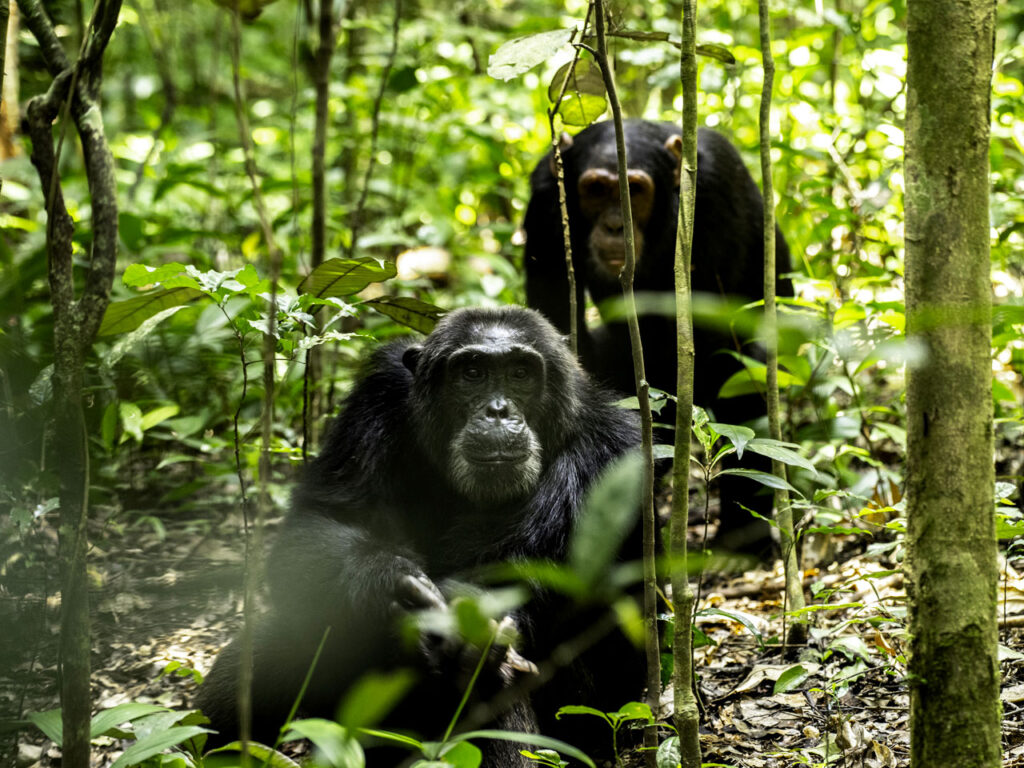
Nyungwe National Park is Rwanda's premier destination for primate safaris, famous for hosting 13 species—25% of Africa's total—including habituated chimpanzees and large troops of Ruwenzori black-and-white colobus monkeys. As one of Africa's oldest rainforests (8+ million years), its high-altitude biodiversity, canopy walk, and 500+ chimpanzees make it a crucial, biodiverse Rwanda attraction.
21-days-rwanda-primate-safari-culture-history-and-wildlife-holiday
20-days-complete-rwanda-uganda-safari-tour-combo
14-days-luxury-rwanda-primate-safari-and-uganda-safari-tour-combo
14-days-magical-rwanda-photography-safari
12-days-best-rwanda-wildlife-safari-and-rwanda-primate-safari-vacation
11-days-classic-uganda-rwanda-tour-combined-itinerary
10-days-9-nights-midrange-rwanda-gorilla-trekking-wildlife-and-culture
9-day-romantic-honeymoon-rwanda-wildlife-safari-itinerary
9-days-best-family-rwanda-safari-holiday-big-five-canopy-walk-and-chimpanzee
8-days-best-africa-big-five-rwanda-safari-and-gorilla-trekking
6-days-rwanda-gorilla-trekking-chimpanzee-tracking-and-birdwatching
1. Chimpanzee Trekking
Chimpanzee trekking is the heartbeat of Nyungwe. As one of the oldest forests in Africa, it provides a stable and rich habitat for the Eastern Chimpanzee. Unlike the mountain gorillas, which are relatively sedentary, chimpanzees are highly mobile, vocal, and energetic, making the trek a more "active" adventure.
The experience usually begins at dawn. Two main groups are habituated for tourism: one in the Uwinka area and another in the Cyamudongo forest fragment. Trekking here is an exercise in sensory awareness; often, you hear their pant-hoots echoing through the valleys before you see them. Once found, you spend an hour observing their complex social dynamics—mothers grooming infants, young males competing for status, and the incredible agility they display while swinging through the high canopy. Because they share roughly 98% of our DNA, the facial expressions and hand gestures of Nyungwe’s chimps offer a profound, mirror-like connection to human evolution.
2. The Unique Canopy Walkway
Suspended 70 meters (about 230 feet) above the forest floor, the Canopy Walkway is a marvel of eco-tourism engineering and the only one of its kind in East Africa. It consists of a 160-meter-long bridge divided into three sections, providing a perspective of the rainforest that is usually reserved for birds and monkeys.
For primate lovers, this is a strategic advantage. Many of Nyungwe’s species, such as the Grey-cheeked Mangabey or the Blue Monkey, spend the majority of their lives in the upper layers of the forest. Walking at eye-level with the treetops allows visitors to spot these arboreal specialists without the neck strain of looking up from the ground. Beyond primates, the walkway offers breathtaking views of the rolling green hills of Rwanda and the distant, shimmering waters of Lake Kivu, all while surrounded by the mist-covered ancient ferns and massive mahogany trees.
3. High Primate Biodiversity (13 Species)
Nyungwe’s fame is rooted in its sheer numbers. It is home to 13 different primate species, which accounts for about 25% of all primate species found in Africa. This density makes it one of the most important conservation sites on the continent.
The variety is staggering. You might encounter the L’Hoest’s Monkey, which is endemic to the Albertine Rift and easily identified by its striking white "beard" and chestnut-colored back. Along the roadsides, Vervet Monkeys and Olive Baboons are common sights. Deeper in the forest, the elusive Golden Monkey (though more famous in the volcanoes) and the Red-tailed Monkey thrive. For nocturnal enthusiasts, guided night walks may reveal the Bushbaby (Galago) or the Potto, small primates with massive eyes adapted for life in the dark. This "biodiversity hotspot" status ensures that every hike in Nyungwe feels like a biological treasure hunt.
4. Colobus Monkey Tracking
While chimpanzees are the star attraction, the Angola Colobus (Rwenzori Colobus) monkeys provide one of the park's most visually stunning spectacles. Nyungwe is home to "super-groups" of these primates that can number over 400 individuals—the largest recorded groups of arboreal primates in the world.
Tracking these monkeys is generally less strenuous than chimpanzee trekking, as they tend to stay in more accessible areas. Seeing a sea of black-and-white fur moving through the emerald-green canopy is an unforgettable sight. Unlike the noisy and sometimes aggressive chimps, Colobus monkeys are more serene. They are herbivores, spending much of their time lounging and feeding on leaves. Their long, flowing white tails and distinct white whiskers make them a favorite for photographers, especially when a large group decides to leap across a forest gap in a synchronized display of "flying" fur.
5. Exceptional Biodiversity and Birding
Beyond the primates, Nyungwe is a botanical and ornithological paradise. It is classified as an Important Bird Area (IBA) by BirdLife International, boasting over 300 species. For birders, the "Holy Grail" is the Great Blue Turaco, a massive, colorful bird that looks almost prehistoric. Of the species present, 29 are endemic to the Albertine Rift, meaning they are found nowhere else on Earth.
The plant life is equally impressive. The park contains over 1,000 plant species, including 140 types of orchids and giant lobelias. The forest acts as a massive sponge, supplying 70% of Rwanda’s freshwater. This ecological richness creates a multi-layered safari experience; even when the primates are quiet, the forest floor is alive with rare butterflies, colorful amphibians, and the scent of wild flowers. It is this "total immersion" in a pristine, prehistoric ecosystem that cements Nyungwe’s reputation as a world-class destination.
1. What makes Nyungwe National Park the primary destination for chimpanzee trekking on a Rwanda primate safari?
Nyungwe National Park stands as the primary destination for chimpanzee trekking in Rwanda due to its status as one of the oldest and largest montane rainforests in Central and East Africa. While the northern reaches of Rwanda are dominated by the volcanic habitats of mountain gorillas, Nyungwe’s sprawling 1,019 square kilometers of dense canopy provide the ideal sanctuary for approximately 500 chimpanzees. This population is significant not just for its size, but for the success of long-term habituation programs that allow humans to observe these great apes in their natural setting.
The "wild" nature of Nyungwe adds a layer of authenticity to the trek. Unlike more manicured parks, Nyungwe offers a true jungle experience. Travelers typically track two main habituated groups: one located in the Uwinka section and another in the smaller, detached Cyamudongo forest. Because chimpanzees are highly mobile and spend much of their time high in the canopy or moving quickly on the ground, the trek is often described as an exhilarating pursuit.
The fame of Nyungwe’s chimpanzee trekking also stems from the sensory immersion. Visitors don't just see the chimps; they hear them. The "pant-hoot" vocalizations of a troop communicating across a valley is a sound that defines the Rwandan safari experience. Sharing roughly 98% of human DNA, these primates exhibit complex social structures, tool-sharing behaviors, and emotional depth that create a profound connection for the observer. The park’s commitment to sustainable tourism ensures that these encounters are strictly regulated, with limited group sizes and time spent with the chimps, preserving the primates' welfare while providing a high-quality, intimate experience for visitors.
2. How does the high concentration of diverse primate species contribute to Nyungwe’s fame in Rwanda?
Nyungwe’s reputation as a "primate capital" is mathematically supported: it hosts 13 distinct species, which represents nearly 25% of Africa’s total primate diversity. For a single park, this concentration is extraordinary and serves as a major draw for researchers, photographers, and wildlife enthusiasts who want to see more than just the "flagship" species like chimpanzees.
The presence of rare and localized species like the Owl-faced monkey and the L’Hoest’s monkey provides a level of exclusivity that few other African destinations can match. The Owl-faced monkey, with its distinct vertical white stripe and shy demeanor, is a prize find for many trekkers. Meanwhile, the L’Hoest’s monkey, often seen foraging near the forest floor with its striking white ruff, offers fantastic photographic opportunities.
Furthermore, the sheer volume of primates creates a multi-layered ecosystem. On a single hike, a traveler might see Blue monkeys darting through the mid-canopy, Vervet monkeys playing near the park boundaries, and Grey-cheeked Mangabeys crashing through the high branches. This variety ensures that even if a chimpanzee trek proves challenging, the forest remains alive with activity. The park acts as a living laboratory for evolution, where different species have adapted to specific niches—from the ground-dwelling baboons to the highly arboreal colobus. This diversity cements Nyungwe's fame because it offers a "complete" primate story, showing how various species coexist within a single, ancient rainforest.
3. Is the canopy walkway in Nyungwe Forest the only one of its kind in Rwanda primate safaris?
Yes, the Canopy Walkway in Nyungwe is a unique architectural and ecological feat, standing as the only one of its kind in Rwanda and one of the few in all of East Africa. Suspended 70 meters above a deep, mist-filled ravine, this 160-meter-long bridge system allows tourists to step out of the shadows of the forest floor and into the sunlight of the upper canopy.
On a standard primate safari, most sightings occur from the ground looking up, often leading to "binocular neck" and obscured views through thick foliage. The canopy walk completely changes this dynamic. By elevating visitors to the level of the treetops, it provides a "monkey's-eye view" of the forest. Many of Nyungwe’s residents, particularly the smaller monkeys and various bird species, rarely descend to the ground. From the walkway, you are at eye-level with their world.
The experience is divided into three sections of varying lengths, the longest being 90 meters. It serves as a bridge between the Uwinka visitor center and the surrounding forest trails. Beyond primate viewing, the walkway offers a panoramic perspective of the ancient hardwoods, giant tree ferns, and the rolling "thousand hills" that define Rwanda's landscape. For many, it is the highlight of their safari—not just for the wildlife, but for the sheer adrenaline and beauty of standing above a prehistoric forest that has remained largely unchanged for millions of years.
4. Why do tourists choose Nyungwe National Park for tracking Black-and-white Colobus monkeys during Rwanda primate tours?
While many parks across Africa have Colobus monkeys, Nyungwe is world-famous for its "Super-groups." Specifically, the Rwenzori Colobus (a subspecies of the Angola Colobus) can be found here in staggering numbers. Some troops in Nyungwe have been recorded at over 400 individuals, making them the largest groups of arboreal primates ever documented on the continent.
Tourists choose Nyungwe for this specific activity because it offers a visual spectacle unlike any other. Seeing a few monkeys is one thing; seeing hundreds of black-and-white bodies leaping through the emerald-green canopy is another entirely. This creates a "snowfall" effect of white fur and long tails against the dark forest backdrop. These monkeys are also generally more relaxed than chimpanzees, allowing for longer, more peaceful observation and better photography.
The Colobus tracking experience is also highly accessible. While chimpanzee trekking can involve hours of hiking through rugged terrain, the Colobus troops often frequent the edges of the forest or areas near the tea plantations that border the park. This makes it an excellent option for families or those who want a rewarding primate encounter without the physical intensity of a deep-forest trek. The social nature of these monkeys—watching them groom, play, and leap in massive, synchronized movements—provides a fascinating insight into primate behavior that differs significantly from the more individualistic or small-group dynamics of other species.
5. What makes the Nyungwe rainforest ecosystem special compared to other national parks in Rwanda?
Nyungwe is a biological time capsule. While other parks in Rwanda, like Volcanoes or Akagera, are defined by their volcanic peaks or savannah plains, Nyungwe is defined by its age and resilience. It is one of the oldest rainforests in Africa, having survived the last Ice Age. Scientists estimate the forest is over 8 million years old, meaning it served as a "refugium" for plants and animals when much of the rest of the continent became arid.
This ancient lineage has allowed for the development of incredible levels of endemism. The park is home to over 1,000 plant species, including 140 types of orchids, many of which are found nowhere else on earth. The sheer complexity of the ecosystem is visible in its massive hardwoods and prehistoric-looking tree ferns that reach towering heights.
Furthermore, Nyungwe is a critical water catchment area. It supplies 70% of Rwanda’s freshwater and is located on the divide between the Nile and Congo river basins. This means the park isn't just a tourist destination; it is the lifeblood of the region’s climate and agriculture. The high altitude (reaching up to 2,950 meters) creates a unique "cloud forest" environment where mist clings to the trees until midday. For a traveler, this creates an atmosphere of mystery and primordial beauty that feels fundamentally different from the rest of Rwanda. It is a place where you can truly feel the weight of deep time.
6. How many distinct species of primates can travelers expect to encounter within Nyungwe National Park?
Travelers in Nyungwe can expect to encounter up to 13 distinct primate species, a number that solidifies the park’s status as a global biodiversity hotspot. This variety ensures that a primate safari here is never a "one-note" experience. The list includes a wide range of sizes, behaviors, and habitats within the forest.
The most sought-after are the Chimpanzees and the Angola Colobus, but the supporting cast is equally fascinating. You have the L’Hoest’s Monkey, an Albertine Rift endemic; the Silver Monkey, known for its beautiful coat; and the Grey-cheeked Mangabey, which is easily identified by its shaggy appearance and loud vocalizations. Others include the Red-tailed Monkey, Blue Monkey, Vervet Monkey, and the Olive Baboon.
For those interested in the more obscure, the park hides three species of nocturnal primates: the Small-eared Galago (Bushbaby), the Greater Galago, and the Potto. Seeing these requires a guided night walk, where their reflective eyes glow in the dark of the undergrowth. Finally, the Owl-faced Monkey and the Dent’s Mona Monkey round out the list. Encountering all 13 in a single visit would be a rare feat, but even a standard three-day safari usually yields sightings of at least five or six different species, making Nyungwe the most "efficient" place in Rwanda to see a wide breadth of our primate relatives.
7. What is the cost of a chimpanzee trekking permit in Nyungwe Forest National Park for Rwanda visitors?
As of current 2026 regulations, a chimpanzee trekking permit in Nyungwe National Park is priced at $150 for foreign non-residents, $75 for foreign residents (with valid work permits/visas), and approximately RWF 25,000 for Rwandan citizens. These prices are inclusive of park entrance fees and the services of an expert ranger-guide and trackers.
When compared to the $1,500 cost of a mountain gorilla permit in Volcanoes National Park, Nyungwe offers an exceptionally high-value wildlife experience. It allows travelers to engage with a "Great Ape" at a fraction of the cost, making it a cornerstone for budget-conscious but wildlife-focused itineraries.
It is important to note that these permits should be booked in advance through the Rwanda Development Board (RDB) or a licensed tour operator, as the number of visitors allowed to trek each group per day is strictly limited to ensure conservation standards. The revenue from these permits is vital; it goes directly toward the protection of the forest, the salaries of the rangers who prevent poaching, and community projects in the villages surrounding the park. By purchasing a permit, visitors are not just buying an experience; they are actively funding the survival of the Eastern Chimpanzee. Additionally, porters are available at the trailheads for a small additional fee, which is a great way to support the local economy while making your trek more comfortable.
8. How long does it typically take to travel from Kigali to Nyungwe for a primate safari?
The journey from Kigali, Rwanda’s capital, to Nyungwe National Park typically takes between 4 to 5 hours by road. While the distance is only about 225 kilometers, the drive is slow due to the winding, mountainous terrain and Rwanda's strict (but safe) speed limits.
Far from being a tedious drive, the journey is often considered a "rolling safari" of its own. Travelers pass through the scenic "land of a thousand hills," witnessing the vibrant terraced agriculture that covers the slopes. Major stops along the way often include the Ethnographic Museum in Huye (formerly Butare) and the King’s Palace in Nyanza, which provide essential cultural context to the Rwandan experience.
For those who prefer to save time, domestic flights are available. Akagera Aviation offers helicopter transfers that can whisk you from Kigali to the park in about 45 minutes, providing stunning aerial views of the forest canopy. However, most travelers choose the road to soak in the local culture and changing landscapes. The final stretch of the drive is particularly breathtaking as the road winds directly through the edge of the rainforest, with ancient trees towering over the asphalt. This transition from the bustling city of Kigali to the silent, misty depths of the southern forest is one of the most dramatic environmental shifts you can experience in East Africa.
9. What is the best time of year to visit Nyungwe National Park for a chimpanzee trekking safari?
Nyungwe is a rainforest, meaning rain is a possibility every single day of the year. However, the "best" time depends on what you want to experience. The Dry Season (June to September) is the most popular time. During these months, the trails are less muddy, and the trekking is physically easier. This is also a great time for birdwatching and photography, as the light is more consistent.
Interestingly, many seasoned guides suggest that the Wet Season (October to May) is actually the best for chimpanzee trekking. During the rains, food is abundant on the lower slopes of the forest. This means the chimpanzees don't have to travel as far or as high into the mountains to find fruit. Consequently, the trekking times are often shorter, and the chimps are more stationary as they feast.
The "shoulder months" of January and February also offer a dry window that is excellent for those looking to avoid the peak season crowds. Regardless of when you visit, the park’s high altitude keeps temperatures cool and refreshing—usually between 15°C and 25°C. The key to a successful visit is not just the month, but the gear: a good raincoat and waterproof boots make the "best time" anytime you are there.
10. Are there any habituated Owl-faced monkeys found within the biodiversity of Nyungwe National Park?
Yes, Nyungwe is one of the very few places in the world where efforts have been made to habituate the rare and elusive Owl-faced monkey (also known as Hamlyn's monkey). These primates are notoriously difficult to spot because they are "semi-terrestrial," meaning they spend a significant amount of time on the ground in dense bamboo or primary forest thickets, and they are naturally quite shy.
The Owl-faced monkey is easily recognized by its flat, owl-like face and a distinct vertical white stripe that runs down the nose to the lip. Because they occupy a specific niche in the forest, their habituation has been a slow and careful process led by Rwanda’s park rangers. Having them available for tracking adds a significant "prestige" factor to Nyungwe.
For the serious primate enthusiast, the chance to track an Owl-faced monkey is often more exciting than seeing a chimpanzee, simply because they are so rarely seen elsewhere in Africa. Tracking them usually involves smaller groups and a slower pace, focusing on the dense undergrowth where they forage for fruit and seeds. Their presence highlights Nyungwe’s role as a vital sanctuary for Albertine Rift endemics—species that evolved in this specific mountain range and are found nowhere else. It reinforces the park's reputation as a destination for "connoisseurs" of primate biodiversity.
11. What kind of packing list is recommended for a comfortable primate safari in Nyungwe National Park?
Packing for Nyungwe requires a focus on moisture management and protection. Because it is a high-altitude rainforest, you should expect cool temperatures and sudden downpours, even in the dry season.
- Footwear: High-quality, waterproof hiking boots are the most important item. The terrain is steep and can be slippery; good ankle support is vital.
- Clothing: Think in layers. Wear long-sleeved shirts and long trousers (tucked into socks) to protect against stinging nettles and "safari ants." Lightweight, moisture-wicking fabrics are better than cotton, which stays heavy when wet.
- Protection: A sturdy, breathable raincoat or poncho is essential. Don't forget a hat and sunscreen for the high-altitude sun, even on cloudy days.
- Gear: Bring a pair of high-quality binoculars for spotting primates in the high canopy. A waterproof cover for your camera or phone is a must.
- Health & Energy: Pack a reusable water bottle and energy-dense snacks like nuts or dried fruit. Your lodge will usually provide a packed lunch for longer treks.
- Support: Consider garden gloves for gripping vegetation on steep climbs and a walking stick (often provided at the trailhead).
Booking Rwanda primate safari with us Roads of Adventure safaris
Booking a Rwanda primate safari with Roads of Adventure Safaris offers tailored, private, and memorable experiences focusing on gorilla trekking and chimpanzee tracking in Rwanda and Uganda. As a reputable local tour operator based in Kampala, Uganda, they specialize in creating custom mid-range to luxury itineraries for individuals and groups.
