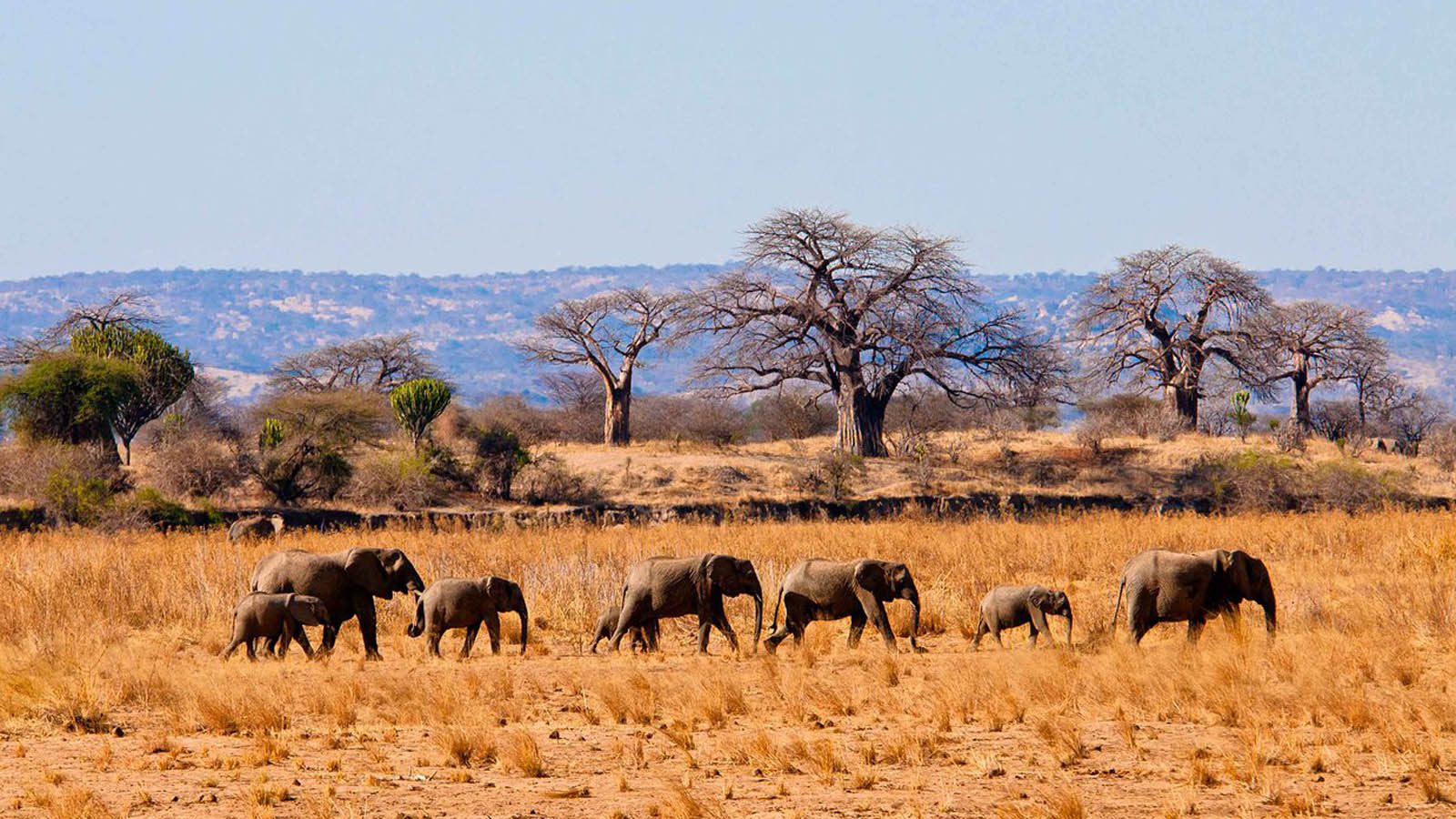
The Great Migration is the annual, circular movement of over 1.5 million wildebeest, zebras, and gazelles across the Serengeti-Mara ecosystem in search of green grazing and water. On a 10-day Tanzania safari, the best time to see river crossings is July to September (Northern Serengeti), while January to February is ideal for calving in the Southern Serengeti.
10-days-best-kilimanjaro-hike-serengeti-safari-tour-and-ngorongoro-tour-combo
10-days-perfect-tanzania-safari-itinerary
10-days-tanzania-safari-and-zanzibar-beach-holiday-gateway
10-days-incredible-tanzania-wildlife-safari-and-cultural-experience
10-days-luxury-gorilla-trekking-masai-mara-serengeti-and-ngorongoro-crater
10-days-ultimate-budget-tanzania-safari-holiday-vacation
10-days-family-tanzania-safari-tour-to-lake-manyara-serengeti-ngorongoro-crater-and-tarangire
10-days-tanzania-safari-to-all-northern-circuit-safari-parks-expedition
10-days-tanzania-wildlife-safari-and-optional-visit-to-masai-tribe-or-hadzabe
10-days-best-tanzania-safari-tour-and-zanzibar-beach-holiday-itinerary
10-days-best-tanzania-honeymoon-safari-with-3-days-zanzibar-beach-holidays
Best Times for a 10-Day Migration Safari:
- July – September (Peak Time): Witness dramatic Grumeti and Mara River crossings in Northern Serengeti as herds move toward Kenya.
- January – February (Calving Season): Herds are in the Southern Serengeti/Ngorongoro area (Ndutu Plains) for the birthing of thousands of calves daily.
- October – November: The herds begin moving back south, often providing action-packed sightings in the North before returning to the central plains.
10 Days Tanzania safari and Great migration
10 Days Tanzania safari and Great migration expedition is a profound journey into the heart of the world’s most celebrated wildlife theater. This itinerary is meticulously designed to follow the pulse of the Serengeti ecosystem, centering on the prehistoric rhythm of the Great Migration—a continuous loop of over two million wildebeest, zebras, and gazelles. Over ten days, you will traverse diverse landscapes, from the ancient baobab forests of Tarangire to the dramatic caldera of the Ngorongoro Crater, before immersing yourself in the vastness of the Serengeti. This duration allows for the strategic flexibility needed to track the herds across the migratory corridors, whether they are calving on the southern plains or braving river crossings in the north. It is an odyssey of survival, predator-prey drama, and breathtaking scale, offering a front-row seat to the most iconic natural spectacle on Earth, delivered with the unparalleled expertise of Tanzanian bush hospitality.
Day 1: Arrival in Arusha
Your Tanzanian odyssey begins with a warm welcome at Kilimanjaro International Airport. After a smooth transfer to Arusha, you will arrive at a tranquil lodge nestled within lush coffee plantations. This first day is dedicated to relaxation and acclimatization, providing a peaceful environment to recover from your journey while enjoying views of Mount Meru. You will meet your expert safari guide for an in-depth briefing, where you will discuss the current movement of the Great Migration and finalize the technical details of your adventure. The crisp highland air and a fresh, locally sourced dinner set a serene tone for the expedition ahead. It is a moment of quiet anticipation, spent preparing your gear and resting before you depart the bustling gateway city for the raw, untamed wilderness of the northern safari circuit tomorrow morning.
Day 2: Tarangire’s Elephant Empire
The adventure officially starts with a drive to Tarangire National Park, a land defined by its massive baobab trees and colossal elephant herds. During the dry season, the Tarangire River becomes a magnet for wildlife, drawing thousands of animals to its banks. Your game drives will reveal a rugged landscape where you can spot lions, leopards, and unique species like the fringe-eared oryx. While Tarangire is not part of the primary migration route, it offers a dense concentration of resident wildlife that serves as a spectacular introduction to Tanzania’s biodiversity. You will spend the afternoon watching multi-generational elephant families interact near the swamps, a truly humbling sight. As the sun sets behind the iconic baobab silhouettes, you will retreat to your lodge, falling asleep to the distant, rhythmic sounds of the African night.
Day 3: Lake Manyara and the Rift Valley
On day three, you head to Lake Manyara National Park, a lush sanctuary at the base of the dramatic Great Rift Valley escarpment. This park is world-famous for its tree-climbing lions, which lounge in the branches of ancient acacias. You will navigate through a dense groundwater forest, home to massive troops of baboons, before the landscape opens to a vast alkaline lake fringed by thousands of pink flamingos. The birdlife here is staggering, and the park’s compact nature allows for a high-intensity viewing experience. You will look for hippos in the Simba River and giraffes browsing in the thickets. This day offers a vibrant, green contrast to the arid plains of Tarangire, providing a sensory transition as you move closer to the volcanic highlands and the legendary plains of the Serengeti.
Day 4: Journey to Central Serengeti
Today, you ascend the Ngorongoro Highlands before descending onto the legendary "endless plains" of the Serengeti. The scale of this landscape is overwhelming, and as you head toward the Seronera Valley, you enter one of the most predator-rich environments on Earth. This central region is a year-round stronghold for lions, leopards, and cheetahs. Your afternoon game drive will focus on the riverine areas and granite "kopjes," which predators use as lookout points. Staying in the heart of the park allows you to fully experience the raw spirit of the savanna. The evening air is often filled with the calls of hyenas and the distant roar of lions, marking the beginning of your deep immersion into the world’s most famous wildlife sanctuary during this peak migration window.
Day 5: Tracking the Migration Herds
The fifth day is dedicated entirely to tracking the massive herds of the Great Migration. Depending on the season, your guide will navigate toward the "mega-herd," where over a million wildebeest and zebras move in a prehistoric cycle. Witnessing a sea of life stretching to the horizon is a humbling experience that defines the Serengeti. You will spend the entire day in the field, carrying a picnic lunch to maximize your time in the most active zones. Whether you are observing the synchronized calving on the southern plains or the high-tension movement toward the western corridor, the sheer volume of animals is staggering. The migration draws in every predator in the region, and you will likely witness the high-stakes drama of survival as lions and hyenas shadow the moving herds.
Day 6: Northern Serengeti Corridors
Continuing through the Serengeti, you move into the more remote northern sectors, such as Kogatende or Lamai. This region offers a more exclusive safari experience, characterized by rolling hills and riverine forests. The focus here remains on the intense predator activity that follows the migration, particularly the large lion prides and solitary leopards that patrol the rocky outcrops. You will explore hidden valleys and riverbanks, looking for rare species like the serval cat or the bat-eared fox. The Northern Serengeti offers a rugged, wilder aesthetic that provides a striking contrast to the flat central plains. By evening, you will return to your luxury tented camp, where a "bush dinner" under the stars allows you to recount the day's sightings while immersed in the profound silence of the deep African wilderness.
Day 7: Mara River Crossings
If your safari falls between July and October, today focuses on the Mara River, the stage for the migration’s most dramatic chapter. You will spend hours with your guide at strategic crossing points, waiting for the herds to gather their courage. The tension is palpable as the "leaders" stand on the banks, dodging giant Nile crocodiles. When the first wildebeest finally leaps, a thunderous, chaotic stampede follows. This life-and-death struggle is the rawest form of nature’s power. Outside of crossing season, this day is spent exploring the remote northern reaches, where the high-density resident wildlife ensures world-class sightings without the crowds found in the south. The Northern Serengeti’s beauty is timeless, and the sheer unpredictability of the crossings makes every moment at the riverbanks a heart-stopping experience.
Day 8: Ngorongoro Conservation Area
Leaving the Serengeti, you head toward the Ngorongoro Conservation Area, a UNESCO World Heritage site. The drive is a "game drive in transit," crossing the vast plains and climbing toward the lush crater highlands. As the altitude increases, the air becomes noticeably cooler and the vegetation more dense. You will arrive at the crater rim in the late afternoon, where the first glimpse into the massive, 600-meter-deep caldera is often a profound emotional experience. This self-contained "Eden" is home to over 25,000 large animals. You will stay at a lodge positioned on the rim, providing panoramic views of the ancient volcanic bowl below. The evening is spent in anticipation of tomorrow's descent into one of the most concentrated wildlife sanctuaries on Earth, marking the penultimate chapter of your journey.
Day 9: The Ngorongoro Crater Floor
Today is dedicated to a full-day exploration of the Ngorongoro Crater floor. After an early descent into the caldera, you will enter a prehistoric world where the "Big Five" are often seen in a single morning. This is one of the best places in Africa to spot the endangered black rhino grazing in the open. You will traverse the Lerai Fever Tree forest, search for massive "tusker" elephants, and observe hippos congregating in the swamps. The crater is a self-contained ecosystem where the wildlife is resident year-round, ensuring high-density encounters in a compact area. After a picnic lunch by the hippo pool, you will ascend the crater walls and head to the nearby town of Karatu. This high-impact day of wildlife viewing provides a dense and monumental conclusion to your safari.
Day 10: Arusha and Departure
On the final day of your safari, you enjoy a leisurely breakfast before driving back toward Arusha. You will stop at the Cultural Heritage Centre, an impressive gallery where you can purchase authentic Tanzanite gemstones and local wood carvings as souvenirs. After a final lunch in Arusha, you will be transferred back to Kilimanjaro International Airport for your departure flight. As you fly over the African continent, the memories of the Serengeti’s endless horizons and the thunderous hooves of the Great Migration remain with you. You leave Tanzania not just with photographs, but with a transformed perspective on the resilience of nature and the timeless beauty of the wild, concluding an epic ten-day odyssey through the heart of the world's most spectacular and untamed wildlife theater.
What exactly is the Great Migration in Tanzania and which animals participate in this annual movement?
The Great Migration is the largest terrestrial mammal movement on the planet. It is a year-long, circular journey driven by the search for water and fresh grazing land across the vast Serengeti-Mara ecosystem. The primary participants are roughly 1.5 million wildebeest, but they are joined by approximately 400,000 zebras and hundreds of thousands of Grant’s and Thompson’s gazelles.
Unlike a point-to-point migration, this is a continuous loop. The animals are following the rains; when the grass in one area is depleted, they move to the next. The wildebeest act as the "engine" of the migration, while the zebras provide strategic advantages. This massive biomass of herbivores creates a mobile feast for Africa's apex predators, ensuring that wherever the migration goes, lions, leopards, cheetahs, and hyenas follow closely behind.
When is the best time to see the Great Migration herds on a 10-day Tanzania safari?
While the migration is a year-round phenomenon, a 10-day safari offers the best results when timed with the two most dramatic chapters of the cycle. January to March is the "calving season" in the Southern Serengeti and Ndutu plains. During this window, the herds are relatively stationary, taking advantage of the nutrient-rich volcanic soils to give birth.
Alternatively, July to October is considered the peak "action" season. This is when the herds reach the northern Serengeti and are forced to cross the Mara River to reach greener pastures in the Maasai Mara. A 10-day trip during these months provides enough time to spend several days near the riverbanks, increasing your odds of witnessing a crossing. Outside of these peaks, from November to December and April to June, the herds are on the move through the central and western corridors, offering a more tranquil but equally impressive viewing experience.
Where should I stay during a 10-day safari to maximize my chances of seeing the migration?
To stay in the heart of the action, you should prioritize seasonal mobile luxury camps. Unlike permanent lodges, these camps are dismantled and moved two to three times a year to follow the herds' predicted path. For a 10-day itinerary from January to March, you should look for camps in the Ndutu or Southern Serengeti regions.
From July to October, you should position yourself in the Kogatende or Lamai sectors of the Northern Serengeti. Staying in these remote areas allows you to be at the riverbanks or on the plains by sunrise, often before the "day-trippers" arrive from lodges located further away. For the "shoulder" seasons, a camp in the Central Seronera area is a safe bet, as the herds often pass through this predator-rich valley twice a year on their way north and south.
Can I see the migration on a 10-day itinerary during the months of April and May?
April and May are the "long rains" in Tanzania, often referred to as the Green Season. While many travelers avoid this time, a 10-day safari during these months offers a unique and private migration experience. During this time, the herds move from the south toward the Western Corridor and the Grumeti region.
The landscape becomes a vibrant, emerald green, and the air is remarkably clear, which is perfect for photography. Because this is the "low season," you will find significantly fewer vehicles, and many luxury camps offer reduced rates. While the rains can make some secondary roads muddy, a skilled guide in a 4x4 Land Cruiser can still navigate to the herds. You may witness the "rutting season" in May, where males compete fiercely for mates—a high-energy spectacle that most tourists miss.
What makes the calving season in the Southern Serengeti a highlight of a 10-day Tanzania safari?
The calving season, occurring between January and March, is a time of incredible abundance and high-stakes drama. In the short-grass plains of Ndutu, approximately 8,000 wildebeest calves are born every single day. The sight of thousands of wobbly-legged newborns finding their feet within minutes of birth is a moving experience.
However, this abundance draws in every predator in the region. Lions, cheetahs, and hyenas take advantage of the vulnerable young, leading to some of the most intense predator-prey interactions you will ever see. For a 10-day traveler, this season offers the best "Big Cat" photography, as the predators are highly active and the short grass makes them easy to spot. The open plains also allow for off-road driving in some areas, enabling you to get closer to the action than is possible in the thicker bush of the north.
What is the best way to witness the river crossings in the Northern Serengeti during my safari?
Witnessing a river crossing requires a combination of expert guiding and immense patience. Between July and October, the herds gather on the banks of the Mara River. They may stand on the edge for hours, or even days, as the tension builds. The "crossing" begins when one brave wildebeest finally leaps into the water, triggering a chaotic, thunderous stampede.
To see this, your 10-day itinerary should include at least three to four nights in the Kogatende region. Your guide will pack a picnic lunch, and you will spend most of your day parked at various "crossing points" along the river. You must remain quiet and keep a respectful distance so as not to spook the "leaders" of the herd. Watching the wildebeest navigate the steep banks and dodge giant Nile crocodiles is a heart-stopping event that represents the rawest form of the struggle for survival.
Why do zebras and wildebeest move together during this incredible Great Migration journey?
The partnership between zebras and wildebeest is one of the most successful symbiotic relationships in the animal kingdom. They move together because they have complementary feeding habits and defensive skills. Zebras are "pioneer" grazers; they have strong teeth that allow them to eat the tall, tough, and dry tops of the grass.
Once the zebras have cleared the upper layers, they reveal the tender, nutrient-rich shoots underneath, which are the preferred food for wildebeest. Furthermore, zebras have an excellent memory for migration routes and better eyesight to spot predators from a distance, while wildebeest have a keen sense of smell to locate underground water. By traveling together, they increase the overall safety of the group, as more eyes and ears are scanning for lions and hyenas across the open savanna.
How far do the herds travel during their, roughly, year-long journey through the Serengeti ecosystem?
The Great Migration is an arduous trek covering a total distance of over 1,000 kilometers (600 miles). The journey is a grueling test of endurance, with animals facing constant threats from predators, exhaustion, and thirst. The circuit begins on the southern plains, moves up through the western corridor, crosses into the north, and eventually loops back down through the eastern side of the park.
For the animals, this isn't a leisure trip; it’s a race against time. They must reach the next grazing area before the previous one is completely depleted. During a 10-day safari, you only see a snapshot of this journey, but seeing the dust clouds raised by thousands of hooves and hearing the constant, low-frequency "gnu" calls of the wildebeest gives you a profound sense of the epic scale of their movement across the Tanzanian wilderness.
Are there chances of missing the migration during my 10-day trip to Tanzania?
Because the migration is a natural event dictated by unpredictable weather patterns, there is always a small chance that the herds will not be exactly where "the map" says they should be. If the rains come early or late, the herds will shift their timing accordingly.
However, a 10-day itinerary is specifically designed to mitigate this risk. By spending more time in the park and visiting multiple regions (such as combining the Central Serengeti with the North or West), you significantly increase your "coverage." A professional guide is also in constant radio contact with other rangers and camps to track the herds' movements in real-time. Even if you aren't in the middle of the "mega-herd," the Serengeti is home to vast numbers of resident animals—lions, leopards, and elephants—that stay in their territories year-round, ensuring a world-class safari regardless of the migration's precise location.
What is the typical herd location and activity on a 10-day safari during the month of June?
In June, the migration is typically in a state of transition. As the southern and central plains begin to dry out, the herds move toward the Western Corridor. This is often when the first major water obstacle occurs: the Grumeti River. While not as famous as the Mara River crossings, the Grumeti provides dramatic sightings as the wildebeest encounter the river's resident giant crocodiles.
The "Rut" (mating season) is also in full swing during June. You will see males being incredibly territorial, defending small patches of grass and engaging in noisy displays to attract females. For a 10-day safari traveler, June offers a great balance; the weather is cooling down, the dust is still manageable, and you can catch the herds in a very active and vocal phase of their journey before they head into the more crowded northern sectors.
How do I combine the Great Migration with a visit to the Ngorongoro Crater in ten days?
A 10-day itinerary is the perfect length to combine the Serengeti Migration with the Ngorongoro Crater without feeling rushed. A typical flow begins with two days in Tarangire or Manyara, followed by a drive to the Ngorongoro Highlands. You would spend one full day descending into the Crater—which is a resident ecosystem and does not host the migration herds, though it offers the best chance to see the Big Five in a single day.
From the Crater, you would then head into the Serengeti for the remaining five to six days. You might split this time between the Central Serengeti (to see the resident big cats) and the Northern or Southern sectors (to see the migration herds). This "loop" ensures you see the high-density wildlife of the Crater and the vast, moving spectacles of the Serengeti, providing a comprehensive overview of Tanzania's diverse ecosystems.
What are the differences in migration viewing between the Southern Serengeti and Northern Serengeti regions?
The experience of the migration varies wildly between the North and South. The Southern Serengeti (Ndutu) is characterized by wide-open, flat plains. During the calving season (Jan-Mar), the herds are spread out in a massive, shimmering carpet of life. The viewing is "horizontal," and the open terrain makes it easy to track predators like cheetahs.
In contrast, the Northern Serengeti is more broken and hillier. From July to October, the herds are more concentrated as they funnel toward the river. The viewing here is "vertical" and dramatic, focused on the riverbanks and the intense life-and-death struggle of the crossings. While the South feels vast and serene, the North feels high-octane and crowded. A 10-day safari allows you to understand these different "moods" of the migration, particularly if you visit during a transition month.
Is the migration a continuous event throughout the year, or does it stop at any point?
The Great Migration never stops. It is a perpetual motion machine fueled by the rains. There is no "start" or "end" point; it is a closed-loop cycle that has been occurring for thousands of years. Even when the herds are "stationary" during the calving season, they are still moving locally to find the best grass.
The misconception that the migration only happens during the "river crossings" leads many to miss the beauty of other phases. For a 10-day traveler, knowing that the migration is always "on" means you can plan a trip at almost any time of year and find the herds somewhere in the ecosystem. The "best" time simply depends on whether you want to see newborns and predators (Jan-Mar), massive movement and rutting (May-June), or dramatic river crossings (July-Oct).
How do predators like lions and crocodiles affect the movement and timing of the migration herds?
Predators are the "sculptors" of the migration's behavior. In the Southern Serengeti, the presence of high-density lion prides and cheetahs forces the wildebeest to stay in the open plains where they have better visibility. They give birth in a "synchronized" manner—all within a few weeks—to overwhelm predators; there are simply too many calves for the lions to eat them all.
In the North, the Nile crocodiles of the Mara River act as a psychological barrier. The herds will gather by the thousands on the banks, hesitant to enter because they know the crocodiles are waiting. This "hesitation" creates the dramatic build-up that safari-goers love to watch. Predators don't necessarily change the path of the migration—which is dictated by grass and water—but they certainly dictate the pacing and the intense, cautious social behavior of the herds as they move through "danger zones."
Booking 10 Days Tanzania safari with us Roads of Adventure safaris
Booking a 10-day Tanzania safari with Roads of Adventure Safaris typically covers the renowned Northern Circuit, including the Serengeti, Ngorongoro Crater, Tarangire, and Lake Manyara. As a custom tour operator, they tailor itineraries based on your specific budget—from budget camping to luxury lodges.
