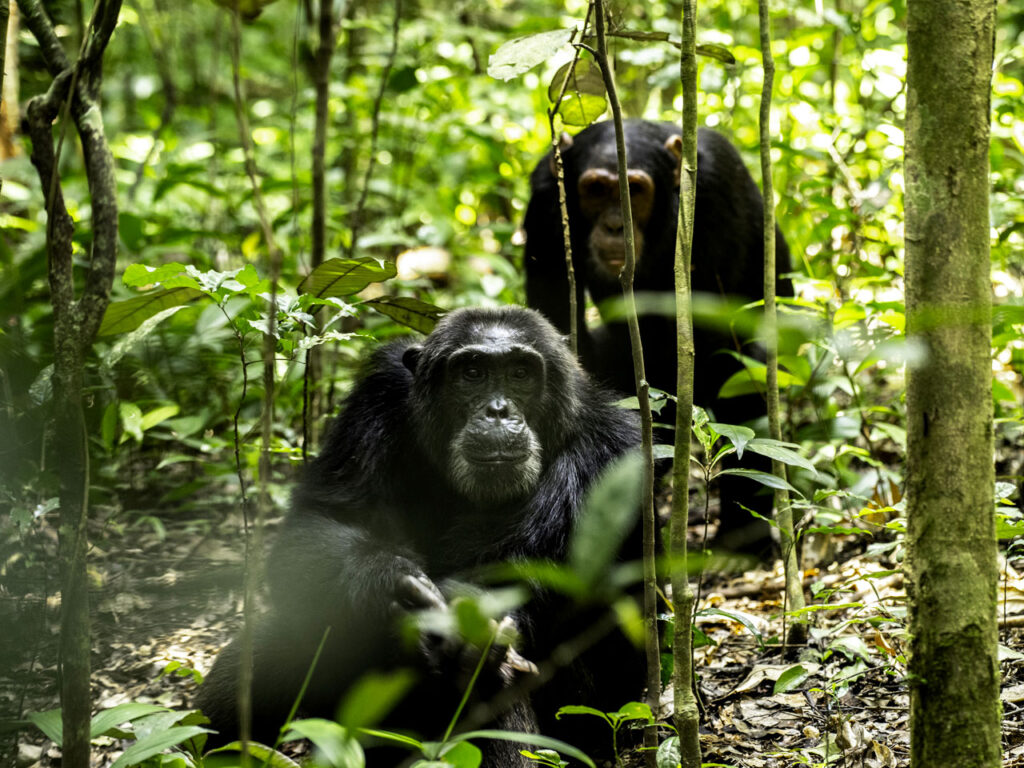
A 3-day chimpanzee-tracking safari in Kibale Forest National Park for 2026 typically costs between $690 and $1,350+ per person, largely depending on accommodation choices (budget, midrange, or luxury) and group size. The core cost includes a chimpanzee permit, which is priced at roughly $200-$300 for foreign non-residents for a one-hour encounter
3-days-chimpanzee-tracking-to-kibale-forest-national-park
3-days-chimpanzee-habituation-in-kibale-forest-park
3-days-chimpanzee-tracking-in-kibale-forest-park-from-kigali
3-Day Package Cost Breakdown (Per Person)
- Budget: Approx. $750 - $850
- Mid-range: Approx. $950 - $1,235
- Luxury: $1,300+
What is Included in a 3-Day Tour?
- Permits: Chimpanzee trekking permit (1 hour with chimpanzees).
- Accommodation: 2 nights (usually at Kibale Forest Camp, Turaco Tree Tops, or similar).
- Transport: 4x4 vehicle with a driver-guide.
- Park Fees: Park entry fees for Kibale National Park
2026 Permit Pricing Details
- Foreign Non-Residents: $200 - $300 (New 2026-2027 rates)
- Foreign Residents: $150
- East African Citizens: UGX 150,000
- Chimpanzee Habituation Experience: ~$250-$300 (Allows 4 hours with chimps)
3 Days Chimpanzee tracking in Kibale Forest Park
Embarking on a 3-day adventure into the heart of Kibale Forest National Park—the "Primate Capital of the World"—is a transformative journey through one of East Africa’s last remaining expanses of pre-montane forest. Home to an astonishing 13 species of primates, including over 1,500 chimpanzees, Kibale offers the highest concentration and diversity of primates in the region. This itinerary is designed to immerse you in the vibrant sights and sounds of the rainforest, from the thunderous hoots of habituated chimpanzee communities to the serene, bird-rich wetlands of the Bigodi Sanctuary. Beyond the wildlife, the trip winds through the scenic crater lakes and lush tea plantations of Western Uganda, offering a perfect blend of high-adrenaline animal encounters and tranquil landscape exploration. Whether you are a photography enthusiast or a nature lover, these three days provide a profound connection to the natural world, all while supporting vital community conservation efforts.
Day 1: Journey to the Forest & Bigodi Wetland
Your expedition begins with a scenic drive from Kampala toward the legendary Rwenzori Mountains. As the city bustle fades, the landscape transforms into rolling green hills dotted with tea estates and vibrant local markets. Upon arriving in the Kibale region and checking into your lodge, your first immersion into the ecosystem is the Bigodi Wetland Sanctuary. This community-run project is a masterpiece of local conservation and a birder’s paradise. Guided by local experts, you will walk along boardwalks and jungle paths, often spotting eight different primate species, including the striking Red Colobus and the Great Blue Turaco. The afternoon light filtering through the canopy provides a magical introduction to the forest's biodiversity. The evening is spent relaxing at your lodge, surrounded by the nocturnal chorus of the jungle, as you prepare for the next morning’s main event: the chimpanzee trek.
Day 2: The Chimpanzee Tracking Experience
Today is dedicated to meeting our closest biological relatives. Following an early breakfast, you head to the Kanyanchu Visitor Center for a mandatory briefing by Uganda Wildlife Authority (UWA) rangers. You will then venture into the deep forest, guided by expert trackers who follow the chimps' vocalizations and nesting sites. The moment of encounter is electric; you are granted one hour to observe a habituated community as they groom, feed, play, and swing through the towering ancient trees. Seeing their social hierarchy and human-like expressions up close is a rare privilege. After a packed lunch in the forest, the afternoon offers flexibility for a guided nature walk to see "The Naked Tree" or a visit to the nearby Crater Lakes, where you can enjoy panoramic views of Lake Nkuruba and the "Top of the World" vista point before dinner.
Day 3: Cultural Heritage & Return to Kampala
On your final morning, delve into the local culture with a visit to the Amabere Ga Nyina Mwiru Caves. These stalactite-filled limestone caves are steeped in local folklore and history, offering a cool, mystical start to the day. Nearby, a short hike reveals a series of hidden waterfalls and stunning crater vistas that define the Fort Portal region. After a final traditional Ugandan lunch in town—perhaps sampling local favorites like matooke and peanut sauce—you begin the return journey to Kampala. The drive back provides a final opportunity to witness the daily life of the Ugandan countryside, passing through Mubende and Mityana. You will arrive back in the capital by late afternoon, carrying with you the unforgettable memories of the forest's residents and the lush, emerald beauty of the Albertine Rift.
What is the price of a Kibale chimpanzee trekking permit in 2026?
As of the latest Uganda Wildlife Authority (UWA) tariff updates for 2026, the standard chimpanzee trekking permit for Foreign Non-Residents is $300. For Foreign Residents (expats living in East Africa), the fee is $250, while East African Citizens pay UGX 180,000. It is important to note that a new "Rest of Africa" category has been introduced at $150 to encourage continental tourism. Interestingly, UWA has introduced discounted "Low Season" permits for the months of April, May, and November, where Foreign Non-Residents can secure a permit for $200. These prices include the services of an armed ranger guide and the daily park entrance fee for the day of the trek itself.
What is included in the 3-day safari package cost?
A standard 3-day professional safari package is designed to be comprehensive. It typically covers round-trip transportation from Kampala or Entebbe in a 4x4 safari vehicle (usually a van or Land Cruiser), a professional driver-guide, and fuel. In terms of activities, the chimpanzee permit and park entrance fees are mandatory inclusions. Most packages also cover two nights of accommodation (full board, including breakfast, lunch, and dinner) and drinking water in the vehicle. Some operators also bundle in the Bigodi Wetland Sanctuary walk, though you should always verify if "optional" activities like the crater lake hikes or cultural visits are included in the final quote or require an extra out-of-pocket payment.
What is the difference in cost between budget and luxury?
The price gap is primarily driven by your choice of accommodation and vehicle. A Budget 3-day safari usually costs between $650 and $850 per person (based on double occupancy), utilizing shared safari vans and eco-camps or basic lodges like Kibale Forest Camp. Mid-range tours fall between $900 and $1,150, offering private 4x4 Land Cruisers and more comfortable lodges like Turaco Treetops. Luxury safaris start at $1,400 and can exceed $2,500 per person. These high-end packages feature exclusive lodges like Kyaninga or Chimpundu Lodge, where you enjoy private decks, plunge pools, and gourmet dining, often including domestic "fly-in" transfers to the Kasese airstrip to avoid the 5-hour drive.
How much is the Chimpanzee Habituation Experience?
The Chimpanzee Habituation Experience (CHEX) is a more immersive alternative to standard tracking, allowing you to spend 4 hours (instead of 1) with a community that is still undergoing the habituation process. For 2026, the permit fee for Foreign Non-Residents is $300-$400 (depending on the specific booking date and UWA's latest seasonal adjustments). Foreign Residents pay approximately $300, while East African Citizens pay UGX 250,000. Because this activity involves following the chimps from their de-nesting in the early morning or until they nest at night, it is more physically demanding and requires a higher level of fitness, but offers unparalleled photographic opportunities and behavioral insights.
Do permit prices change based on the season?
While UWA historically maintained fixed permit prices year-round, 2026 has seen the formal implementation of seasonal discounting. During the wet months of April, May, and November, standard trekking permits for international visitors are reduced by $50-$100 to stimulate travel during the "off-peak" periods. However, the costs for accommodation often see even more significant seasonal fluctuations; luxury lodges may offer "stay 3, pay 2" deals or flat 30% discounts during these rainy months. If you are willing to brave the occasional tropical downpour, the low season offers a much more private experience in the forest at a significantly lower total trip cost.
Does the permit price include photography?
Standard photography for personal use (using handheld cameras or smartphones) is fully included in your permit fee. You are free to take as many photos and videos as you like during your hour with the chimpanzees, provided you do not use a flash, which can agitate the animals. However, professional filming or commercial photography is a separate category. Crew members must each possess a trekking permit and the production must pay a professional filming fee to UWA (often 40% of the permit price or a flat fee per day). Additionally, commercial crews must secure media accreditation from the Uganda Media Council and a filming permit from the National Forestry Authority if filming outside specific UWA zones.
What is the cost of hiring a porter?
Hiring a porter is a highly recommended way to support the local community directly. Porters are available at the Kanyanchu briefing point and typically charge $15 to $20 (approx. UGX 60,000–80,000) per trek. They will carry your backpack, help you across slippery logs, and assist you on steep inclines. Even if you feel physically fit, hiring a porter allows a local resident to earn a fair wage, which in turn discourages poaching and encourages forest conservation. Most travelers also provide a small additional tip of $5 if the porter provides exceptional assistance, such as helping with camera gear or steadying you during a difficult section of the forest.
Are tips included in the 3-day tour cost?
No, tips are never included in the base price of a safari and are handled at the traveler’s discretion. It is customary in Uganda to tip your driver-guide separately at the end of the 3 days; a standard rate is $10–$20 per day from the group. For the UWA ranger-guides who lead your forest trek, a tip of $10–$15 per group is appreciated. Lodge staff (waiters, housekeepers) are usually tipped via a communal "tip box" at the reception, where $5–$10 per night is a kind gesture. Carrying small-denomination USD bills or Ugandan Shillings makes this process much smoother and ensures that the hardworking staff are directly rewarded for their hospitality.
What is the cost of travel from Kampala to Kibale?
If you are booking a private safari, the transport cost is bundled into the total package. However, if you are looking at the line items, a private 4x4 vehicle with a driver costs roughly $150 to $250 per day, including fuel and the driver’s allowance. For a 3-day trip, the transport component alone usually totals between $450 and $750. For those on a strict budget, public transport remains the cheapest option; a bus from Kampala to Fort Portal costs about $10, followed by a $5 shared taxi to the park. While self-driving is an option, it is often discouraged for first-time visitors due to the complexity of navigating rural roads and the benefits of having a professional guide to spot wildlife along the way.
Do I need a separate fee to visit Bigodi Wetland Sanctuary?
Yes, the Bigodi Wetland Sanctuary is managed by the Kibale Association for Rural and Environmental Development (KAFRED), not UWA, so it requires a separate entrance and guide fee. As of 2026, a guided nature walk costs $25 (UGX 50,000) for tourists and $20 for foreign residents. This fee goes directly toward community projects, such as the local school and a women’s group that produces handmade crafts. Since it is located just outside the park boundaries, many 3-day itineraries include this on Day 1 or Day 2. It is considered an essential "add-on" because it offers the best chance to see the Great Blue Turaco and up to eight other primate species not always seen in the deep forest.
How early should I book the 3-day tour?
For travel in 2026, it is strongly advised to book at least 3 to 6 months in advance, especially if you plan to visit during the peak dry seasons (June–August or December–February). While chimpanzee permits are more numerous than gorilla permits, they still have a daily limit to prevent over-stressing the animals. Furthermore, the most popular mid-range and budget lodges near the park have limited capacity and often fill up half a year in advance. If you are targeting the "low season" (April/May), you can often get away with booking 4–6 weeks out, but securing your permits early remains the only way to guarantee your tracking date.
Are there any hidden costs?
The most common "hidden" expenses are extra-curricular activities and drinks. Most lodges include water with meals, but sodas, beer, and wine are billed separately at the end of your stay. If you decide to do a night forest walk (which costs $40), a community coffee tour, or a visit to the Amabere Caves, these will be extra. Additionally, be mindful of laundry services at lodges, which can be pricey. Finally, ensure your tour quote includes VAT (18%) and all government taxes; reputable operators will include these, but some "too-good-to-be-true" quotes might leave them out to be collected later. Always clarify if the "park fee" on your permit covers your vehicle’s entry, which is usually $50 per entry.
What is the best way to reduce the cost?
The most effective way to lower the per-person cost is to travel in a group of 2 to 4 people. Since the vehicle, driver, and fuel costs are fixed, splitting them four ways instead of two can save you hundreds of dollars. Additionally, choosing a safari van instead of a Land Cruiser and opting for standard trekking over habituation will keep the budget in check. Staying in community-managed campsites or budget guest houses in Bigodi instead of luxury lodges inside the park can also slash your accommodation bill by 70%. Lastly, paying for local items (like tips, snacks, and crafts) in Ugandan Shillings instead of USD avoids the unfavorable exchange rates often applied by vendors.
Is the 3-day trip worth the expense?
Absolutely. Kibale Forest is widely regarded as the premier location for primate viewing in Africa. Unlike other forests where sightings can be sporadic, Kibale has a nearly 95% success rate for chimpanzee encounters. The 3-day timeframe is the "sweet spot"—it allows enough time for the journey from Kampala, the main trek, and at least one secondary activity like the Bigodi swamp walk or the Crater Lakes hike. For many, the thrill of standing just meters away from a drumming, hooting community of wild chimpanzees is a life-changing experience that justifies the permit cost. It also directly funds the protection of this 795-square-kilometer rainforest, ensuring the survival of these endangered primates.
What is the cost of children's permits?
In 2026, the strict minimum age for chimpanzee trekking in Kibale remains 12 years old. Children who meet this age requirement pay the full adult permit price of $300 (non-resident); there are no discounted "child permits" for the actual trek. For families traveling with younger children, the park entrance fee for children under 12 is $20, which allows them to participate in general nature walks on the forest fringe or the Bigodi Wetland walk (which has a more flexible age policy). Many lodges can also arrange for a "child-minder" to stay with younger children at the lodge for a small fee ($10–$20) while the parents go on the 4-hour trek.
Booking 3 Days Chimpanzee tracking with us Roads of Adventure safaris
Book a 3-day Chimpanzee tracking safari to Kibale National Park with Roads of Adventure Safaris for a comprehensive primate experience. This tour typically includes trekking with Kibale's 1,500+ chimps, Bigodi Wetlands visits, and community tours. Packages are customizable for various budgets and group sizes.
