Accommodation on a 14-day Uganda gorilla trekking trip is diverse, featuring a mix of luxury safari lodges, comfortable mid-range hotels, and rustic budget bandas designed to blend with the natural environment. Most lodges, such as Four Gorillas Lodge or Mahogany Springs, offer stunning, secluded forest views, en-suite bathrooms, and farm-to-table dining
14-days-family-uganda-safari-holiday-vacation-escape
14-days-uganda-and-rwanda-safari-tour-itinerary
14-days-classic-uganda-birding-safari-expedition
14-days-complete-uganda-safari-tour-and-primate-safari-experience
14-days-uganda-primate-safari-and-jinja-white-water-rafting
14-days-best-africa-big-five-safari-in-uganda-and-best-gorilla-trekking-adventure
14-days-luxury-uganda-primate-safari-holiday
Luxury Accommodation
Luxury lodges in Uganda, such as Clouds Mountain Gorilla Lodge in Bwindi or Chobe Safari Lodge in Murchison Falls, are designed to offer an "integrated luxury" experience. These properties are often built using local materials like volcanic stone and hand-woven thatch, ensuring they blend seamlessly into the environment. A stay in this tier includes spacious private cottages or villas, often with expansive decks that offer unobstructed views of the rainforest canopy or the Nile. Inside, guests find high-end amenities such as en-suite bathrooms with standalone tubs, fireplaces for the chilly highland nights, and premium linens.
The service at this level is highly personalized, frequently featuring dedicated butler services to handle everything from cleaning mud-caked trekking boots to arranging private sundowners. Many luxury lodges also boast world-class spas, infinity pools overlooking the savanna, and gourmet "farm-to-table" dining experiences. Beyond comfort, these lodges are often the leaders in conservation and community partnership, with a portion of the high nightly rates directly funding local clinics or schools. For a 14-day traveler, these lodges provide a seamless, stress-free cocoon that allows for maximum recovery between physically demanding treks and long savanna game drives.
Mid-Range Accommodation
Mid-range lodges, exemplified by properties like Turaco Treetops in Kibale or Mweya Safari Lodge in Queen Elizabeth Park, are the most popular choice for a 14-day safari. They strike a perfect balance between comfort, service, and price. These lodges typically feature well-equipped individual cottages or permanent safari tents with en-suite facilities, hot running water, and solar-powered lighting. While they may lack the private butlers of the luxury tier, the staff-to-guest ratio remains high, ensuring personalized and warm Ugandan hospitality.
The dining experience in mid-range lodges is a highlight, usually featuring three-course meals that blend international cuisine with local flavors. These properties are almost always situated in prime scenic locations—either just inside the park boundaries or on the immediate periphery—ensuring that you are never far from the action. Many feature elevated dining decks or bar areas designed for wildlife spotting; it is not uncommon to see elephants or monkeys from your breakfast table. For a two-week itinerary, mid-range lodges offer a "home-away-from-home" feel, providing all the essential comforts and a touch of local charm without the ultra-premium price tag of the top-tier estates.
Budget Accommodation
Budget accommodations in Uganda provide a raw and authentic safari experience for the adventurous traveler. This tier often utilizes tented camps or rustic bandas (traditional circular huts). While "budget" implies lower cost, these locations—such as Red Chilli Rest Camp or Bush Lodge (tented site)—often occupy some of the most enviable real estate within the national parks. The focus here is on functionality and cleanliness rather than opulence. Guests can expect comfortable beds, mosquito nets, and either private or shared "eco-friendly" bathroom facilities.
The atmosphere in budget camps is often social and communal, featuring central dining areas where travelers share stories of their daily sightings. Power is usually provided via solar panels, with centralized charging stations for cameras and phones. For a 14-day safari, budget options allow for a significantly lower total trip cost while keeping you heart-to-heart with nature. You will fall asleep to the sounds of hippos grunting and wake up to the dawn chorus of tropical birds. This tier is ideal for those who view the lodge simply as a place to rest their heads between dawn and dusk adventures, prioritizing the wildlife experience and the authenticity of the African bush over material luxury.
Key Features During a 14 Days Uganda gorilla trekking trip
Prime Locations: Efficiency in the Wilderness
To ensure travelers spend their time watching wildlife rather than sitting in transit, safari accommodations are meticulously positioned near key park infrastructure. In the Buhoma and Rushaga sectors of Bwindi, elite lodges are located within walking distance of the Uganda Wildlife Authority (UWA) briefing points. This is critical for gorilla trekking, which begins promptly at 8:00 AM; being "on-site" eliminates the stress of navigating misty mountain roads in the pre-dawn hours. Similarly, in Queen Elizabeth National Park, lodges are clustered along the Kazinga Channel or the Kasenyi Plains. This strategic placement allows for "instant" game drives where you are in predator territory within five minutes of leaving the lodge gates. By minimizing travel time, these prime locations effectively add several hours of actual wildlife viewing to your 14-day itinerary, ensuring you are always in the right place for the golden morning light.
Atmosphere: The Heart of the Lodge
The architectural "soul" of a Ugandan lodge is its central lounge area, typically designed to foster a communal spirit among travelers. Most lodges feature an elevated main building with a wrap-around viewing deck that overlooks the forest canopy or the savanna plains. These decks are equipped with high-quality binoculars and spotting scopes, allowing you to observe elephants or monkeys from the comfort of a lounge chair. As the sun sets, the focus shifts to the central fireplace, or "Boma," where guests gather to share stories of their daily sightings over a drink from the well-stocked bar. This cozy, fire-lit atmosphere is not just for aesthetics; it provides essential warmth in high-altitude areas like Bwindi or Mgahinga, where temperatures drop significantly at night. The blend of rustic materials—like local volcanic stone and hand-carved wood—with soft, ambient lighting creates a space that feels both wild and profoundly secure.
Amenities: Modern Comfort in Remote Settings
Despite their remote locations, Ugandan lodges in 2026 offer a surprising array of modern amenities tailored to the needs of international travelers. Free Wi-Fi is now a standard feature in central areas, allowing you to upload your photography or stay in touch with family. For rejuvenation after long treks, properties like Bird Nest Bunyonyi or Mweya Safari Lodge feature swimming pools—Bird Nest famously offers a "natural ecological pool" right on the lake’s edge. Many lodges also provide complimentary laundry and boot-cleaning services, which are indispensable after a muddy gorilla trek. You will also find 24-hour charging stations for camera batteries and drones, en-suite bathrooms with "rain showers," and private safes for travel documents. These amenities ensure that while the environment is untamed, your personal comfort and technological needs are meticulously managed throughout the two-week loop.
Local Experience: Sustainable and Integrated
Uganda’s tourism model is built on the principle of "Responsible Tourism," where the lodge operates as a vital part of the local ecosystem. Most lodges employ up to 80-90% of their staff from the immediate surrounding villages, providing professional training and stable incomes to former hunters or subsistence farmers. This local connection enhances your experience, as your guides and waiters share intimate stories of the land and its culture. Eco-friendly practices are the norm; most properties run on solar power for lighting and water heating, and maintain a "zero plastic" policy by providing reusable water bottles. A unique feature of the 14-day trip is the customized catering; because tracking days in Bwindi or Kibale can be unpredictable in length, lodges provide "safari lunch boxes" containing high-energy, fresh local produce. This commitment to local sourcing and environmental stewardship ensures that your journey leaves a positive footprint on the communities and habitats you visit.
14-day Uganda gorilla trekking safari
14-day Uganda gorilla trekking safari is the ultimate "Grand Circuit" expedition, meticulously designed to showcase the full spectrum of the "Pearl of Africa." This comprehensive journey bridges the gap between the thundering savannas of the north and the ancient, misty rainforests of the south. Over two weeks, you will experience the visceral power of Murchison Falls, the primate-rich corridors of Kibale Forest, and the iconic plains of Queen Elizabeth National Park. The itinerary reaches its emotional peak with mountain gorilla trekking in Bwindi before offering a tranquil retreat at Lake Bunyonyi. This is more than a wildlife tour; it is a deep immersion into a land where the East African savanna meets the West African jungle. Guided by experts and staying in hand-picked lodges, travelers will discover a seamless narrative of conservation, community, and untamed natural beauty, ensuring every bucket-list encounter—from the "Big Five" to the Great Apes—is checked with grace, depth, and a relaxed, immersive pace.
Day 1: Arrival in Entebbe
Your journey begins at Entebbe International Airport, situated on the lush shores of Lake Victoria. Upon arrival, your guide will transfer you to your hotel for a briefing. Entebbe is a serene peninsula characterized by botanical gardens and a cooling lake breeze. This first day is essential for recovery from international travel and acclimatizing to the equatorial climate. You might enjoy a sunset cruise on the lake or a visit to the local markets to experience the warm Ugandan hospitality. The quiet atmosphere provides a gentle transition into the adventure ahead, allowing you to rest before the road trip begins.
Day 2: Ziwa Rhino Tracking and Murchison Falls
Traveling north, you stop at the Ziwa Rhino Sanctuary, the only place in Uganda to see rhinos in the wild. Accompanied by rangers, you will track these prehistoric giants on foot, a thrilling "Big Five" start. After lunch, you continue to Murchison Falls National Park, Uganda’s largest protected area. The landscape shifts into expansive savannas dotted with Borassus palms. You arrive at your lodge in time for dinner, listening to the distant roar of the Nile. This day marks your official entry into the untamed wilderness of the northern circuit.
Day 3: Murchison Falls Game Drive and Nile Cruise
A sunrise game drive across the northern bank reveals "towers" of Rothschild’s giraffes, elephants, and lions. The park’s biodiversity is staggering, with golden grasslands hosting countless antelopes. In the afternoon, you board a boat cruise upstream toward the base of Murchison Falls. You will see massive Nile crocodiles and hippos lining the banks. The highlight is the "Devil’s Cauldron," where the river explodes through a narrow gap. You may hike to the top of the falls to feel the ground vibrate under the pressure of the water.
Day 4: Transfer to the Kibale Forest Region
Today is a scenic drive south through the Albertine Rift escarpment. You will pass through vibrant rural villages and vast tea estates that carpet the rolling hills of Fort Portal in vivid green. This transition from the dry northern savannas to the humid, tropical rainforests of the west is visually spectacular. You reach the foothills of the Rwenzori Mountains, the "Mountains of the Moon," and check into your forest lodge. The evening is filled with the vocalizations of primates, signaling your arrival in the primate capital of the world.
Day 5: Chimpanzee Tracking and Bigodi Walk
You enter Kibale Forest for an encounter with our closest relatives—the chimpanzees. Tracking these vocal primates through the dense canopy is a high-energy experience. Once found, you spend an hour observing their social dynamics and acrobatic movements. In the afternoon, you visit the Bigodi Wetland Sanctuary, a community-led project rich in birdlife and home to eight primate species. You might spot the Great Blue Turaco or the rare Red Colobus monkey. This day provides a deep dive into the complex biodiversity of Uganda’s primary rainforests and successful community conservation.
Day 6: Queen Elizabeth National Park Exploration
Moving to Queen Elizabeth National Park, you cross the equator and enter a landscape of volcanic crater lakes and open savannas. A game drive in the Kasenyi Plains offers sightings of lions, buffaloes, and the iconic Uganda kob. The park's backdrop of the Rwenzori range makes for stunning photography. In the afternoon, you explore the salt-crater lakes of Katwe, learning about traditional mining techniques. This segment of the tour balances classic big-game viewing with unique geological features, showcasing the diverse habitats that make this park a UNESCO Biosphere Reserve.
Day 7: Kazinga Channel Boat Safari
The morning begins with a game drive to spot elusive leopards or hyenas returning from their night hunts. The afternoon highlight is the boat cruise along the Kazinga Channel, which connects Lake Edward and Lake George. This channel hosts the world’s highest concentration of hippos and incredible birdlife. You will glide past elephants and buffaloes cooling off at the water’s edge. The perspective from the water allows for intimate wildlife viewing without the noise of a vehicle, offering a peaceful yet thrilling observation of the park’s aquatic ecosystem.
Day 8: Ishasha Sector – Tree-Climbing Lions
Heading south within the park, you reach the remote Ishasha Sector. This area is world-famous for its tree-climbing lions, which lounge in ancient fig trees to escape the ground heat. Scanning the sprawling branches for a tail or a paw is a highlight of the western circuit. Ishasha also hosts the leggy Topi antelope and large herds of buffalo. The atmosphere here is rugged and quiet, providing a "true wilderness" feel. You spend the night in this southern sector, perfectly positioned for the transition to the gorilla forests.
Day 9: Journey to Bwindi Impenetrable Forest
You leave the savannas behind and ascend into the Kigezi Highlands, often called the "Switzerland of Africa." The road winds through steep, terraced hills and misty valleys until you reach the edge of the Bwindi Impenetrable National Park. This ancient, UNESCO-listed forest is a biological island that has survived for over 25,000 years. After checking into your lodge, which often clings to the forest’s edge, you can relax and soak in the cool mountain air. The anticipation for the following day’s gorilla trek is the focus of the evening briefing.
Day 10: The Ultimate Gorilla Trekking Experience
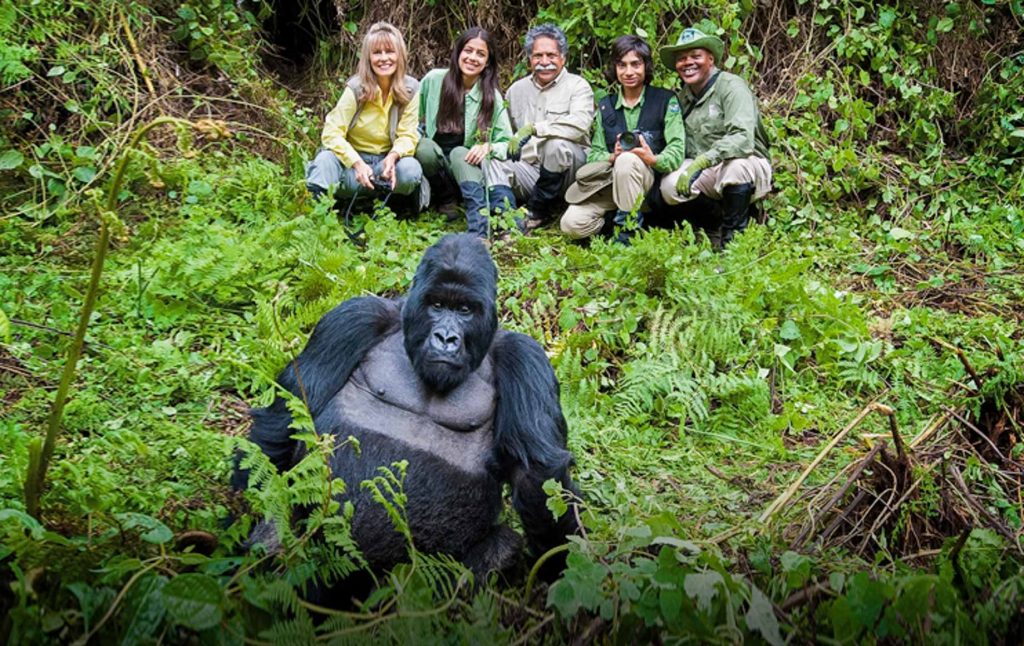
Today is the emotional peak of the safari. After a briefing, you enter the "Impenetrable" forest to track a habituated family of mountain gorillas. The trek can be physically demanding but rewarded by a silent, one-hour encounter with these gentle giants. Watching a silverback watch you while juveniles play nearby is a life-altering experience. The profound connection felt in the presence of these endangered apes is the core of Ugandan conservation. You return to the lodge for a celebratory evening, reflecting on an encounter that few people on earth ever witness.
Day 11: Relaxation at Lake Bunyonyi
Following the physical exertion of trekking, you transfer to Lake Bunyonyi, the deepest and most beautiful lake in Uganda. Surrounded by 29 islands and terraced hills, Bunyonyi is bilharzia-free and safe for swimming. You can spend the day canoeing in a traditional dugout, visiting island communities, or simply enjoying the temperate climate from your balcony. It is a day of deep relaxation and scenic beauty, allowing the magnitude of the gorilla encounter to sink in. The peaceful waters provide the perfect "buffer" before the final leg of the journey.
Day 12: Lake Mburo National Park
The journey continues to Lake Mburo, a compact savanna park known for its acacia woodlands. En route, you pass through Mbarara, the heart of the Ankole cattle culture. Lake Mburo is the only park in the south where you can see zebras and impalas. Because the park lacks elephants and lions, you can enjoy a guided nature walk, getting closer to the wildlife on foot than anywhere else. The evening game drive often yields sightings of leopards, which are particularly active in this park’s rocky outcrops and thickets.
Day 13: Walking Safari and Equator Crossing
The morning offers a unique walking safari among zebras and elands, providing a tactile connection to the African bush. Afterward, you begin the drive back toward the capital. A mandatory stop at the Uganda Equator in Kayabwe allows for photographs and the famous water drainage experiment. You can browse the local craft markets for high-quality handmade souvenirs. You spend your final night in Entebbe or Kampala, enjoying a farewell dinner and sharing memories of the diverse landscapes and wildlife encountered over the past two weeks.
Day 14: Final Departure
On your final day, depending on your flight schedule, you might visit the Ngamba Island Chimpanzee Sanctuary or the Entebbe Zoo for a last look at Uganda’s wildlife. Your guide will transfer you to the airport, marking the end of your 14-day odyssey. You leave with a profound understanding of why Uganda is the "Pearl of Africa," having successfully navigated the Nile, tracked the great apes, and witnessed the Big Five. The memories of the misty forests and golden savannas remain a testament to a journey of unparalleled depth.
The accommodation landscape for a 14-day safari in Uganda is a sophisticated network designed to bridge the gap between untamed wilderness and human comfort. Because you are traversing diverse biomes—from the humid Nile basin to the chilly, high-altitude rainforests of the Albertine Rift—the lodges act as essential sanctuaries for physical and mental recovery.
1. What types of accommodation are available?
On a 14-day Ugandan odyssey, you will encounter a diverse spectrum of lodging tiers: Luxury, Mid-range ($$$), and Budget ($$). Luxury options, such as Clouds Mountain Gorilla Lodge or Bwindi Lodge, offer high-end, eco-friendly stone cottages with personal butler services and gourmet dining. Mid-range lodges, like Turaco Treetops or Haven Lodge, provide the most popular balance, featuring comfortable en-suite rooms, excellent local and international cuisine, and stunning views of the forest canopy. For the more adventurous or budget-conscious, there are "Lazy Camping" setups and rustic bandas (traditional huts) that offer clean beds and basic facilities. These options are often supplemented by tented camps that provide a classic safari feel, ensuring that regardless of your price point, you are deeply immersed in the natural environment.
2. Are the lodges close to the gorillas?
Yes, strategic placement is a hallmark of Ugandan safari planning. Lodges are clustered around the four main trekking sectors of Bwindi: Buhoma, Ruhija, Rushaga, and Nkuringo. Because trekking begins promptly at 8:00 AM, most reputable accommodations are located within a 5-to-15-minute drive of the Uganda Wildlife Authority (UWA) briefing points. Some luxury lodges, particularly in the Buhoma sector, are situated so close that the start of the trailhead is practically at their doorstep. This proximity is vital; it allows you to enjoy a full breakfast and avoid navigating treacherous, misty mountain roads in the pre-dawn hours. Being "on-site" ensures you are energized for the trek rather than exhausted by a long commute before the physical challenge even begins.
3. Do the accommodations have private bathrooms?
The vast majority of mid-range and luxury lodges featured on a 14-day itinerary offer private, en-suite bathrooms. These facilities typically include flushing toilets, washbasins, and showers with hot running water—essential for washing off the mud after a day in the forest. In many high-end lodges, you may even find standalone bathtubs with panoramic views of the forest. However, it is important to note that some budget camps or rustic guesthouses may utilize shared "eco-friendly" bathroom blocks. In these cases, the facilities are kept meticulously clean but are situated a short walk from your sleeping quarters. When booking your 14-day trip, confirming "en-suite" status is a standard step to ensure your personal comfort preferences are met throughout the diverse locations.
4. Is electricity available in the lodges?
Electricity is widely available, but the source and duration vary by location. Because many lodges are in remote areas, they operate on solar power systems or diesel generators rather than the national grid. Most lodges provide 24-hour lighting in the rooms, but high-voltage power for charging cameras and laptops might be restricted to central communal areas during specific hours (usually 6:00 PM to 10:00 PM). It is a common "safari ritual" to see a row of batteries charging at the bar while guests share stories of their gorilla encounters. While most lodges can handle phone and camera charging, they often cannot support high-draw appliances like hair dryers or travel irons, so it is best to plan your tech needs around these scheduled "power windows."
5. Do I get laundry services?
Most mid-range and luxury lodges offer laundry services, which is a logistical lifesaver on a 14-day journey. Given the nature of gorilla and chimpanzee trekking, your clothes will inevitably get muddy and damp. Most lodges employ local staff who can wash and hand-press your clothes, often returning them within 24 hours. While a small surcharge is usually applied, some luxury lodges include this service in their nightly rate. However, a cultural note: most lodges do not wash "smalls" (undergarments) due to local customs; you will often find a small basin and detergent in your room for personal use. Utilizing these services allows you to pack lighter, which is crucial when traveling in smaller safari vehicles across the country.
6. What kind of meals are served?
Dining on a 14-day safari is a highlight that blends international standards with local Ugandan flavors. Most lodges operate on a full-board basis, offering three-course dinners and buffet or à la carte breakfasts. You will encounter fresh, organic produce—Uganda is famous for its fruit, particularly pineapple and avocado. Typical meals include grilled meats, fresh Tilapia from the Nile, and local staples like matooke (steamed green bananas) or groundnut sauce. Crucially, for trekking days in Bwindi or Kibale, lodges provide high-energy packed lunches. These usually consist of sandwiches, boiled eggs, fruit, and chocolate, designed to be eaten in the forest during your break. Lodges are also very adept at handling dietary restrictions (vegan, gluten-free, or allergies) if notified in advance of your arrival.
7. Can I find Wi-Fi in the accommodation?
Yes, but with caveats. Most lodges provide Wi-Fi in communal areas such as the lounge, bar, or dining room. Due to the remote mountain and savanna locations, the connection is usually satellite-based or relies on cellular signals, meaning it can be slow and "patchy," especially during rainstorms. You should expect enough bandwidth to send WhatsApp messages or check emails, but streaming movies or uploading large high-resolution video files may be frustrating. Very few lodges offer Wi-Fi in the individual cottages, as the goal is often to encourage guests to disconnect and enjoy the natural surroundings. If you require a constant, high-speed connection for work, it is recommended to purchase a local SIM card (MTN or Airtel) in Entebbe, though even then, forest coverage is inconsistent.
8. Are the rooms comfortable?
Comfort is a priority in Ugandan hospitality. Even in the more rustic lodges, you can expect clean, high-quality mattresses, mosquito netting, and cozy bedding. Luxury and mid-range rooms are often designed as "cottages," featuring local wooden furniture, hand-woven rugs, and private verandas that act as your personal wildlife viewing deck. Because the gorilla highlands can get quite cold at night, lodges place a high premium on "coziness." You will often return from dinner to find your bed turned down with a hot water bottle tucked under the blankets—a much-loved Ugandan safari tradition. The design philosophy usually leans toward "organic luxury," where the architecture complements the forest rather than competing with it, providing a peaceful and restorative atmosphere.
9. Do I need to book accommodation far in advance?
For a 14-day safari, booking 4 to 8 months in advance is highly recommended, particularly for travel during the peak dry seasons (June–August and December–February). The primary bottleneck is not just the lodge capacity, but the Gorilla Permits. Because only eight people can visit a gorilla family per day, permits sell out nearly a year in advance for peak dates. Since your accommodation choice depends on which sector your permit is for (Buhoma vs. Rushaga, for example), you must secure the permits and the nearby lodges simultaneously. Last-minute bookings are sometimes possible in the "green" (rainy) seasons, but for a 14-day comprehensive trip, early planning is the only way to ensure you get your first choice of the most scenic and well-located lodges.
10. What amenities are included in luxury lodging?
Luxury lodges in Uganda, such as Chobe Safari Lodge or Sanctuary Gorilla Forest Camp, offer amenities that rival high-end boutiques globally. You can expect spacious stone or wood cottages with private lounge areas, fireplaces, and large en-suite bathrooms with deep soaking tubs. Gourmet, multi-course dining is standard, often accompanied by a wide selection of premium wines. Many luxury properties feature on-site spas where you can get a "post-trek massage" to soothe sore muscles. Other features include infinity pools overlooking the Nile or the forest, personal butler services, and nightly "Boma" fires where sundowners are served. These lodges focus on "exclusivity and intimacy," often hosting only 8 to 12 guests at a time, ensuring that your 14-day journey is punctuated by absolute privacy and top-tier service.
11. Is there heating available in the lodges?
Because Bwindi and Mgahinga are located at high altitudes (above 2,000 meters), the nights and early mornings are surprisingly cold. While centralized heating is rare, lodges use creative and charming methods to keep you warm. Most provide hot water bottles (locally known as "Ugandan heaters") in your bed during evening turn-down service. Higher-end lodges often feature private wood-burning fireplaces in the rooms, which are lit by staff while you are at dinner. In some modern luxury setups, you may find electric blankets or eco-friendly radiant heaters. It is always advised to pack a warm fleece or light down jacket for the evenings, as the drop in temperature once the sun sets over the rift valley is significant and immediate.
12. Can I get single rooms?
Yes, single rooms or single-occupancy tents are available at almost all lodges. However, be aware of the "Single Supplement" surcharge. Most safari lodges price their rooms based on "double occupancy" (two people sharing). If you are traveling solo on a 14-day safari, lodges usually charge an extra fee to cover the cost of the room being occupied by only one person. This surcharge can range from 20% to 50% of the per-person sharing rate. Some lodges may waive this during the "low" (rainy) season to attract solo travelers. If you are joining a group tour, the operator might offer to pair you with another traveler of the same gender to avoid this cost, but for private tours, the single supplement is a standard industry practice.
13. Accommodation: Rwanda vs. Uganda?
The accommodation experience between these two neighbors is a study in "opulence vs. authenticity." Rwanda has positioned itself as a "high-end, low-volume" destination, hosting ultra-luxury global brands like One&Only and Singita. These lodges are architectural masterpieces with price tags to match, often exceeding $2,000 per night. Uganda, by contrast, offers a more "earthy and rustic" experience. While Uganda's luxury sector is growing rapidly with beautiful properties, the general vibe is more about "safari charm" and integration with nature. Uganda offers a much wider range of mid-range and budget options, making it more accessible for a 14-day trip. If you want "red-carpet" luxury, Rwanda is the leader; if you want a diverse, value-driven, and "wild" feel, Uganda’s lodges are second to none.
14. Are there mosquitoes in the lodges?
While malaria is a risk in Uganda, the risk in the gorilla highlands (Bwindi and Mgahinga) is relatively low due to the high altitude and cooler temperatures, which mosquitoes generally dislike. However, you will encounter them in the lower-altitude savanna parks like Murchison Falls and Queen Elizabeth. To ensure your safety, almost all lodges provide mosquito nets over the beds or have insect-proof screens on the windows. Staff often perform a "turn-down service" where they spray the room and drop the nets while you are at dinner. It is still essential to take malaria prophylaxis, wear long sleeves in the evenings, and use repellent, but you can rest assured that your sleeping environment is designed to be a bug-free zone.
15. Do the lodges provide hair dryers?
Generally speaking, no. Most lodges in the parks run on limited solar or generator power that cannot support high-wattage appliances like hair dryers, which can "trip" the entire lodge's electrical system. If you absolutely require one, some of the top-tier luxury lodges in larger towns (like Entebbe or Fort Portal) may have them, or they might have a high-power socket in the main office. However, for the majority of your 14-day safari, you should plan to "air dry" your hair. The breeze and the sun are usually sufficient! If you do bring your own, ensure it is a dual-voltage travel version and always ask the lodge manager before plugging it in to avoid damaging the lodge’s sensitive power grid.
Booking 14 days Uganda gorilla trekking with us Roads of Adventure safaris
Booking a 14-day Uganda gorilla trekking safari with Roads of Adventure Safaris (based on search results from late 2025/early 2026) offers a comprehensive, personalized experience covering major national parks, including Bwindi Impenetrable National Park. Their packages typically include gorilla and chimpanzee permits, transportation, and accommodation, designed for both luxury and budget travelers
