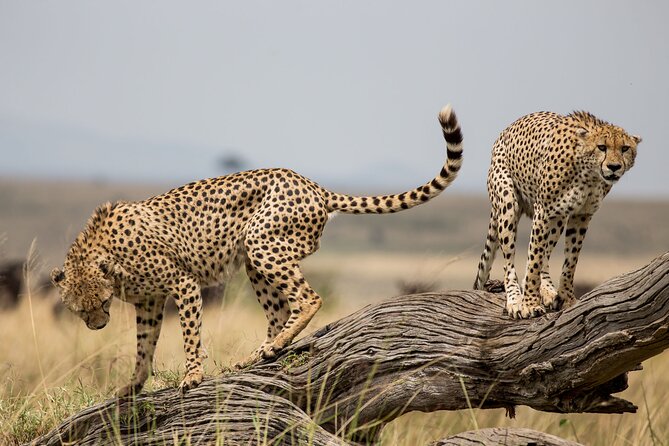
Accommodation on a 7-day Kenya safari typically includes a mix of luxury, midrange, or budget-focused lodges and permanent tented camps. These options often provide full-board meals, en-suite bathrooms with hot showers, and, in some cases, swimming pools. The lodges are usually positioned inside or near national parks to maximize wildlife viewing.
Popular 7 Day Kenya safari itineraries
7-days-budget-kenya-safari-holiday-vacation-tour
7-days-amboseli-kenya-and-serengeti-fly-in-tanzania-safari
7-days-masai-mara-safari-tour-and-serengeti-safari-tour-in-kenya-and-tanzania
7-days-best-of-kenya-wildlife-safaris-itinerary
7-days-kenya-wildlife-safari-to-kenya-beach-holiday-at-diani-beach
7-days-ultimate-budget-kenya-tanzania-safari-holiday-vacation
7-days-ultimate-africa-big-cats-kenya-safari-holiday-best-parks
7-days-kenya-honeymoon-safari-holiday-and-vacation-couple-escape
7-days-kenya-family-safari-package-and-zanzibar-beach-holiday-vacation
7-days-best-africa-big-cats-safari-in-kenya
Types of Accommodation on 7 Days Kenya tour
A Deep Dive into Safari Accommodations
When booking a safari, the structure you sleep in is just as important as the vehicle you scout in. In Kenya and Uganda, accommodations are categorized by their level of "permanence" and the degree of immersion they offer. Whether you want the nostalgic feel of a canvas tent or the solid security of a stone building, understanding these tiers will help you set the right expectations for your wilderness retreat.
Permanent Tented Camps
Permanent tented camps represent the quintessential "glamping" experience. Far from the rugged, DIY camping of the past, these are sophisticated structures built on raised wooden or concrete platforms. They feature high-quality canvas walls and ceilings but include all the creature comforts of a luxury hotel room, such as hardwood furniture, king-sized beds with premium linens, and private, en-suite bathrooms with flushing toilets and hot showers.
The primary appeal of a tented camp like Ashnil Mara Camp or Flamingo Hill Tented Camp is the sensory connection to the environment. Because the walls are made of canvas, the sounds of the African night—the chirping of cicadas, the distant "whoop" of a spotted hyena, or the rustle of wind through the acacia trees—are barely filtered. This creates a thrilling sense of being part of the ecosystem while remaining completely safe and pampered. Many of these camps are strategically located along riverbanks, such as the Mara River, allowing guests to view hippos or elephants from their private veranda. They often pride themselves on a smaller guest-to-staff ratio, offering a more intimate, personalized atmosphere where dinner is served under the stars and stories are shared around a communal "bush TV" (the campfire).
Safari Lodges
Safari lodges are permanent, solid structures built from stone, brick, and timber. They are essentially full-service hotels located in the heart of the wilderness. Because of their robust construction, lodges like Mara Serena Safari Lodge or Sarova Mara Game Camp (which blends lodge-style amenities with high-end tented structures) often feature more extensive facilities than smaller camps. You can expect large swimming pools, expansive dining halls, gift shops, and sometimes even spa facilities.
Lodges are particularly well-suited for families with young children or travelers who might feel uneasy about sleeping behind canvas walls. The solid walls provide excellent soundproofing and temperature control, making them a "safe haven" after a long day in the sun. Architects often design these buildings to blend into the landscape; for example, the Mara Serena is inspired by a traditional Maasai Manyatta (village), featuring domed roofs and organic shapes that mimic the surrounding hills. Because they can accommodate more guests, lodges typically offer elaborate buffet-style meals with a wide variety of international cuisines. They provide a "guaranteed" level of comfort and security, ensuring that even in the middle of a national reserve, you have the amenities of a four-star city hotel.
Budget Options
For the adventurous traveler or those on a strict budget, rustic camps and basic guesthouses provide an affordable way to access the world’s most famous wildlife arenas. Options like Talek Bush Camp or various community-run campsites cater to those who prioritize the safari experience over luxurious linens. These accommodations are often located just outside the main park gates, which helps lower the cost while still providing quick access for early morning game drives.
Budget options are typically simple: you might have a basic tent with two twin beds or a small stone cottage. In some cases, bathrooms may be shared or "open-air," and electricity might be limited to specific hours via a generator. However, these camps are almost always clean, safe, and staffed by incredibly knowledgeable locals who know the land better than anyone. Staying at a budget camp often feels more like a "real" expedition; you are closer to the local communities and often have a more raw, unscripted experience. It is a fantastic choice for students, backpackers, or photography enthusiasts who plan to spend 12 hours a day in their vehicle and only need a clean place to recharge their camera batteries and sleep for a few hours. Choosing budget options also allows many travelers to extend their stay from three days to seven, increasing their chances of spotting the elusive Big Five.
Key Features and Amenities of Safari Accommodations
The magic of a Kenyan or Ugandan safari lies in the balance between rugged adventure and refined hospitality. Safari lodges and camps are designed to be sanctuaries that complement the wild environment rather than intrude upon it. From the placement of the buildings to the specific services offered, every detail is tailored to enhance your connection with the African bush.
Locations
The philosophy of a safari lodge is "location is everything." Unlike standard hotels, these properties are strategically positioned to serve as front-row seats to nature’s most spectacular shows. Many lodges are built overlooking permanent waterholes or salt licks. This creates a "stationary safari" experience; while you relax on your balcony or in the dining hall, animals such as elephants, zebras, and buffaloes often wander within meters of the lodge to drink, providing constant wildlife viewing without you ever having to leave the premises.
Furthermore, in the Masai Mara, the most prestigious camps are located along primary migration routes or near key river crossing points. Being situated inside the reserve or in a bordering private conservancy allows guests to be the first on the scene during the Great Migration (July–October), avoiding long transit times from park gates. In Amboseli, locations are chosen specifically to frame the majestic, snow-capped peak of Mount Kilimanjaro, ensuring that every sunrise offers a world-class photographic opportunity. These settings aren't just scenic; they are ecologically vital hubs where the rhythm of the lodge is dictated by the movement of the animals.
Full Board
A hallmark of the safari experience is the Full Board (FB) meal plan, which is almost universally standard. Because lodges are located in remote areas with no external restaurants or supermarkets, they provide all three daily meals: breakfast, lunch, and dinner. The culinary standards are surprisingly high, often featuring international gourmet dishes alongside local Kenyan specialties like sukuma wiki or nyama choma.
The timing of these meals is synchronized with wildlife activity.
- Breakfast: Often served as a "Bush Breakfast" in the middle of the savannah during a morning game drive, featuring portable tables, fresh fruit, and hot coffee.
- Lunch: Usually a relaxed buffet at the lodge during the heat of the day, or a "Picnic Lunch" box for full-day expeditions.
- Dinner: The day’s social highlight, typically a multi-course affair served in a communal dining room or under the stars. Most lodges are also highly accommodating to dietary restrictions, such as vegan, gluten-free, or Halal diets, provided they are notified in advance. This all-inclusive approach to dining removes logistical stress, allowing you to focus entirely on the wilderness.
Facilities
Safari accommodations go beyond basic shelter to provide spaces for relaxation and reflection. The Lounge and Bar areas are usually the heart of the property, designed with open fronts to allow the breeze and the views of the plains to flow through. The most iconic facility, however, is the Fire Pit. Every evening, as the sun sets, a fire is lit—a tradition known as the "Sundowner" hour. Guests gather with cocktails to watch the sky change color and swap stories of their day’s sightings, creating a unique sense of camaraderie.
In the heat of the afternoon, Swimming Pools (or "plunge pools" in private suites) offer a necessary reprieve. Many of these pools are "infinity" style, overlooking the savannah so you can cool off while watching a herd of giraffes on the horizon. Additionally, many high-end camps now include Photographic Hides (underground blinds for close-up wildlife shots), small libraries filled with African history and wildlife guides, and even luxury spas where you can receive a massage while listening to the distant grunting of hippos. These facilities ensure that your time between game drives is just as enriching as the drives themselves
Services
Despite their remote locations, safari lodges provide world-class service delivered by highly professional staff, many of whom come from local communities like the Maasai or Samburu. These teams include not only waiters and housekeepers but also expert trackers and armed rangers who ensure your safety within the camp's unfenced perimeter. Room cleaning occurs twice daily, often including a "turndown service" where mosquito nets are lowered and hot water bottles are placed in your bed on chilly nights.
Electricity and Power are managed with impressive ingenuity. Most modern camps are "green," utilizing Solar Power systems to provide silent, renewable energy. While some camps may have "power windows" (restricting heavy usage to specific hours of the day), they always provide central charging stations for cameras and phones. For water, many lodges use sophisticated filtration systems and solar heaters to ensure you have a hot, high-pressure shower after a dusty day on the plains. These services provide a seamless, high-tech backbone to a low-tech, ancient environment, ensuring that the "wild" experience never comes at the cost of essential comfort.
7-day Kenyan safari
A 7-day Kenyan safari is an immersive plunge into the "Cradle of Mankind," where the raw rhythm of nature dictates the pace of life. This expedition is meticulously crafted to showcase the dramatic diversity of the Great Rift Valley, spanning from the elephant-rich marshes of Amboseli to the shimmering alkaline lakes and the legendary plains of the Masai Mara. Kenya offers an unparalleled theater of wildlife, where the "Big Five" roam freely against backdrops as iconic as the snow-capped Mount Kilimanjaro. Beyond the wildlife, this journey invites you into the heart of the Maasai culture, offering a profound understanding of a people who have coexisted with predators for centuries. Whether you are witnessing the dust of a thousand zebras or the silent stalk of a leopard, these seven days promise a transformative connection to the wild. Prepare for breathtaking sunrises, exhilarating chases, and the soul-stirring silence of the African bush that lingers long after you return.
Day 1: Nairobi’s Sanctuary and Conservation
Your journey begins in Nairobi, a unique capital where skyscrapers overlook a national park. After a warm reception, you visit the Sheldrick Wildlife Trust to meet orphaned elephants being rehabilitated for the wild. Watching these playful calves enjoy their midday milk bottles provides a touching introduction to Kenya’s conservation efforts. Afterward, head to the Giraffe Centre to come face-to-face with the endangered Rothschild species. From a raised platform, you can feed these gentle giants and feel their prehensile tongues, a rare moment of tactile connection. These encounters offer vital context for the wild landscapes you will explore. The day concludes with a traditional Kenyan "Welcome Dinner," where you’ll brief with your guide under the city’s starlit sky, anticipating the vast wilderness that awaits you at dawn in the Great Rift Valley.
Day 2: Amboseli and the Shadows of Kilimanjaro
Leaving the city behind, you drive southeast to Amboseli National Park, famous for its massive "tuskers" and scenic beauty. As you enter, the horizon is dominated by the majestic Mount Kilimanjaro, the highest peak in Africa. The park’s unique hydrology creates lush swamps in an otherwise arid landscape, attracting hundreds of elephants that wade through the marshes to feed. Your afternoon game drive offers iconic photographic opportunities of elephant herds framed by the snow-capped mountain. You will also spot buffaloes, hippos, and a variety of waterfowl in the Enkongo Narok swamp. The flat, open plains make wildlife spotting remarkably easy, ensuring a high-density viewing experience. As the sun sets, the mountain often clears of clouds, revealing its full glory while you enjoy sundowners at your lodge overlooking the shimmering plains.
Day 3: The Great Rift Valley and Lake Naivasha
Today, you traverse the floor of the Great Rift Valley to reach the freshwater shores of Lake Naivasha. This area offers a tranquil change of pace from the dusty savannah. In the morning, you’ll enjoy a boat safari, gliding past massive pods of grunting hippos and watching African fish eagles dive with precision to snatch tilapia from the water. Afterward, visit Crescent Island—a private sanctuary where you can take a guided walking safari. Walking among giraffes, zebras, and waterbucks without the barrier of a vehicle is a liberating experience that sharpens your senses. The absence of large predators makes this one of the few places in Kenya where you can truly "walk with the wild." The day ends at a lakeside lodge, surrounded by yellow-barked fever trees and the peaceful sounds of the water.
Day 4: Lake Nakuru’s Rhino Sanctuary
A short, scenic drive brings you to Lake Nakuru National Park, an alkaline lake once famous for millions of flamingos and now a premier rhino sanctuary. Your game drive here is focused on spotting both Black and White rhinoceroses, which are highly protected within the park’s fenced perimeter. The landscape is a beautiful mix of woodlands and rocky cliffs, home to the rare Rothschild giraffe and a dense population of leopards. Keep your eyes on the acacia branches, as Nakuru’s lions are known for their unusual habit of climbing trees to escape the heat. The "Baboon Cliff" viewpoint offers a stunning aerial vista of the lake’s shimmering pink-hued shores. This park provides a compact but intense wildlife experience, ensuring sightings of waterbuck, buffalo, and a vibrant array of birdlife before you retire to your lodge.
Day 5: Entering the Legendary Masai Mara
The highlight of your safari begins as you head toward the Masai Mara National Reserve, the northern extension of the Serengeti. The vast, rolling grasslands are the quintessence of the African safari dream. As you enter the gates, you are immediately greeted by a sea of plains game: gazelles, topis, and zebras. This is the land of the "Big Cats," and your first afternoon game drive focuses on tracking the Mara’s famous lion prides. You’ll navigate through the tall grass, searching for cheetahs on termite mounds and leopards hidden in riverine thickets. The scale of the landscape is staggering, and the sense of freedom is palpable. Your evening is spent in a luxury tented camp, where the sounds of the bush provide a rhythmic backdrop to a gourmet dinner under the stars.
Day 6: Full Day in the Mara and Maasai Culture
Spend a full day exploring the Mara’s diverse ecosystems, from the Sand River to the Talek. If visiting during the Great Migration (July–October), you will head toward the Mara River to witness the dramatic river crossings, where wildebeest brave crocodile-infested waters. Your guide will interpret the complex social behaviors of the animals, from elephant matriarchs leading their herds to hyena clans patrolling their territory. Midday is spent enjoying a picnic lunch under a lone acacia tree, a classic safari experience. In the afternoon, you visit a traditional Maasai village. Here, you’ll learn about their nomadic lifestyle, participate in the Adumu (jumping dance), and see how they coexist with the wildlife. It is a day of deep immersion, balancing the ferocity of nature with the rich heritage of its human guardians.
Day 7: Sunrise Safari and Return to Nairobi
On your final morning, embark on a dawn game drive to catch the predators at their most active. The early light provides a golden glow over the savannah, perfect for final photographs of the "Big Five." Watch the elephants begin their daily trek and hear the morning chorus of over 450 bird species. After a hearty bush breakfast, you begin the journey back to Nairobi. This drive allows you to reflect on the week’s encounters as you pass through bustling market towns and rural homesteads. Arriving in Nairobi in the late afternoon, you’ll have time for a final farewell meal or some last-minute souvenir shopping for Maasai beadwork and ebony carvings. As you transfer to the airport for your flight home, you carry with you the indelible spirit and wild pulse of the Kenyan plains.
Guide to Accommodations on a 7-Day Kenya Safari
The quality of your rest is just as important as the quality of your sightings. In Kenya, safari accommodations have evolved into sophisticated sanctuaries that balance the raw beauty of the wilderness with the expectations of modern travelers. Below is a detailed look at what to expect during your week-long adventure.
1. What types of accommodation are on a 7-day Kenya safari?
A typical 7-day itinerary offers a blend of Safari Lodges and Permanent Tented Camps. Lodges are solid, hotel-style structures built from stone and timber. They often feel like traditional resorts but are designed with African aesthetics, such as thatched roofs and organic shapes. These are ideal for those who prefer the security of solid walls and extensive facilities like gift shops and multiple dining areas.
Permanent Tented Camps, on the other hand, offer the "luxury under canvas" experience. These are not portable tents; they are permanent suites built on raised platforms with wooden floors. They feature canvas walls that allow you to hear the nocturnal sounds of the bush while maintaining total privacy. Both types of accommodation prioritize the "En-suite" experience, meaning every room or tent has its own private bathroom attached. This diversity ensures that over seven days, you experience both the grandeur of traditional lodges and the intimate charm of tented camps.
2. Are safari tents comfortable on a 7-day tour?
Many first-time travelers are surprised to find that "tents" in the Masai Mara or Amboseli are often more luxurious than standard hotel rooms. These are often referred to as "Tented Suites." They are constructed on permanent foundations, ensuring they are level and bug-proof. Inside, you will find king-sized or twin beds with high-thread-count linens, bedside tables, wardrobes, and even writing desks.
The comfort extends to the bathroom, which is a partitioned area at the back of the tent. These bathrooms feature ceramic sinks, flushing toilets, and walk-in showers with pressurized hot water. The canvas walls are fitted with mesh windows that allow for excellent ventilation while keeping insects out. On a 7-day tour, staying in these tents is often cited as a highlight because it offers a "glamping" experience that feels authentic yet entirely indulgent. You can wake up to the sunrise through your tent flap without ever sacrificing the comfort of a high-end resort.
3. Do lodges offer private bathrooms?
In the modern Kenyan safari industry, private en-suite bathrooms are the gold standard for mid-range and luxury tiers. It is extremely rare to find shared bathroom facilities unless you are specifically booking a "budget" or "backpacker" camping trip where you pitch your own tent. In standard lodges, the bathrooms are built into the room structure and function exactly like those in a city hotel.
These bathrooms usually provide a full range of amenities, including biodegradable soaps, shampoos, and lotions (to protect the park's ecosystem). Hot water is generally available 24/7, though some eco-friendly camps may use solar heaters, meaning the water is hottest in the late afternoon and evening. Whether you are staying in a stone lodge or a canvas tent, you can expect a private sanctuary where you can wash off the dust of the savannah in complete comfort and privacy.
4. Are meals included in the 7-day accommodation?
Yes, almost all 7-day safari packages are sold on a Full-Board (FB) basis. This means your accommodation price includes breakfast, lunch, and dinner. Because lodges are located in remote areas where there are no local restaurants or grocery stores, the lodge becomes your sole provider of nutrition.
The quality of the food is remarkably high. Breakfast is usually a buffet with an "egg station" for fresh omelets. Lunch can be a buffet at the lodge or a high-quality "picnic box" if you are out on a full-day game drive. Dinner is the main event—a multi-course meal often served in a dining room or around a campfire. Many lodges also offer "Bush Dinners," where tables are set up in the wilderness for a meal under the stars. Drinking water is provided in your room and during game drives, though alcoholic beverages and sodas are typically billed separately as "extras."
5. Is there electricity in the camps?
Providing power in the middle of a national reserve is a feat of engineering. Most camps and lodges use a combination of Solar Power and Generators. In eco-conscious tented camps, solar panels charge large battery banks during the day to provide silent lighting and power through the night.
While you will have electricity for lights and charging devices (phones, cameras, laptops), there are often restrictions on high-wattage items like hair dryers or electric kettles, which can trip the system. Some camps may turn off the main power for a few hours in the middle of the night to conserve energy, but they always provide flashlights or lanterns. Charging stations are usually located in each room, though some smaller camps may have a central charging point in the main lounge. Kenya uses the Type G (UK-style) plug, so bringing a universal adapter is recommended.
6. Can I find luxury accommodations on a 7-day safari?
Absolutely. Kenya is the birthplace of luxury safaris. If you opt for a "Luxury" or "Premium" tier, the experience is elevated to a world-class level. Luxury lodges and camps offer private plunge pools on your deck, 24-hour personal butler service, and fine-dining menus designed by executive chefs.
In these high-end settings, the "tents" may feature freestanding copper bathtubs, outdoor showers, and expansive glass fronts for uninterrupted views of the plains. These accommodations are often located in private conservancies rather than the main national reserve, meaning you have exclusive access to wildlife without the crowds. Luxury here isn't just about gold faucets; it’s about intimacy and space. With only 6 to 10 rooms per camp, the service is deeply personalized, ensuring your 7-day journey feels like a private expedition rather than a group tour.
7. Do tents have heating or air conditioning?
Because safari camps are designed to be environmentally friendly and often rely on solar power, Air Conditioning is extremely rare in canvas tents. However, the design of the tents—with high ceilings and mesh windows—allows for natural cross-ventilation that keeps the rooms surprisingly cool during the day. Many camps also provide high-quality ceiling fans or floor fans.
In terms of heating, the savannah can get quite chilly at night and in the early morning. Instead of central heating, camps use more "romantic" methods to keep you warm. You will often find a hot water bottle (known locally as a "bush baby") tucked into your sheets during the evening turndown service. Heavy duvets and cozy blankets are provided, and many lodges have roaring fireplaces in the communal lounge areas where you can warm up with a drink before bed.
8. Are there swimming pools at safari lodges?
Most mid-range and luxury lodges, as well as many permanent tented camps, feature swimming pools. These are a welcome luxury during the midday heat (the "siesta" hours) between 12:00 PM and 3:30 PM when it is too hot for game drives.
Safari pools are often "infinity" designs that overlook a waterhole or the open plains, allowing you to watch giraffes or zebras grazing in the distance while you swim. However, note that in some high-altitude areas like the rim of the Ngorongoro Crater (if your tour crosses borders) or certain parts of the Laikipia plateau, the water can be quite chilly as many pools are not heated. Regardless, the poolside deck is always a favorite spot for travelers to relax, sunbathe, and journals about their morning sightings.
9. Where are the accommodations located on a 7-day itinerary?
The location of your stay is strategically chosen based on the parks you visit. In the Masai Mara, lodges are either located inside the reserve (central for migration crossings) or in private conservancies bordering the park (quieter and more exclusive).
In Amboseli, lodges are often situated on the park boundaries to provide the best possible views of Mount Kilimanjaro. At Lake Nakuru, lodges are located within the park’s fenced sanctuary, offering views of the lake's shoreline. The goal of the 7-day itinerary is to keep you as close to the "action" as possible. Being located inside or near the park gates means you can be the first on the tracks at sunrise, which is the best time to see predators before they retreat into the shade.
10. Do I stay in the same place for seven days?
No. A 7-day safari is a multi-location journey. To see the full diversity of Kenya’s wildlife, you will move between different ecosystems. A typical circuit might involve 2 nights in Amboseli, 1 night in Lake Nakuru, and 3 nights in the Masai Mara, with the final night back in Nairobi or at a different Mara camp.
Changing locations allows you to see different species—for example, rhinos in Nakuru and massive elephant herds in Amboseli—that you might not find in the Mara alone. Your safari vehicle and guide will transport you between these locations. While packing and unpacking can be a bit of a chore, the lodges handle your luggage (porters will carry your bags to and from the vehicle), making the transition between "homes" seamless and exciting.
11. Are the camps safe from wildlife?
This is the most common concern for first-time safari-goers. The short answer is yes. While many camps are "unfenced" to allow for the natural movement of animals, they are highly secure. Animals generally view a tent or building as a solid object and do not try to enter.
For your safety, Maasai warriors or trained security guards (known as Askaris) patrol the grounds 24/7. After dark, you are not allowed to walk between your tent and the dining hall alone; an escort will always accompany you with a powerful flashlight. These guards are experts at spotting eyes in the dark and ensuring a safe distance between guests and any wandering wildlife. While you might hear a hippo munching grass outside your tent or see a monkey on your balcony, following the camp's safety protocols ensures a thrilling but safe experience.
12. Is there Wi-Fi available at lodges?
Most lodges and camps in Kenya now provide Wi-Fi, but you should manage your expectations. Connectivity is usually restricted to the communal areas like the lounge, bar, or reception, and it is rarely available inside the individual tents or rooms.
The connection is often via satellite or cellular data, meaning it can be slow and prone to outages during storms or high-usage times. It is sufficient for sending WhatsApp messages, checking emails, or posting a photo to social media, but it is rarely strong enough for streaming video or large downloads. Many travelers find that the "patchy" Wi-Fi is a blessing in disguise, encouraging a "digital detox" that allows them to fully immerse themselves in the sights and sounds of the African bush.
13. What is a "tented camp" experience?
The tented camp experience is often described as "Out of Africa" luxury. It is designed to evoke the nostalgia of early 20th-century expeditions but with 21st-century comforts. The "magic" lies in the thinness of the walls; because you are behind canvas, you are not isolated from the environment. You can smell the rain on the dry earth and hear the "sawing" call of a leopard nearby.
It blends this authenticity with high-end service. You might be in a tent, but you are sleeping on a mahogany bed and drinking chilled wine from crystal glasses. It is an experience that appeals to the soul, providing a sense of adventure that a standard hotel room simply cannot match. For many, the transition from the bustling modern world to the quiet, canvas-enclosed sanctuary of a safari camp is the most transformative part of the trip.
14. Do I need to pack linens?
No. All standard safari lodges and tented camps operate like high-end hotels. They provide fresh bed linens, pillows, duvets, and bath towels. Most also provide basic toiletries like soap and shampoo.
If you are going on a high-end luxury safari, you may even find bathrobes and slippers in your room. The only thing you might want to bring is a personal washcloth if you use one, as these are sometimes not provided. Additionally, many lodges offer laundry services (often for a small fee, though sometimes included in luxury packages), which means you can pack light and have your clothes washed and pressed during your stay. Note that for cultural reasons, many lodges do not wash "undergarments," but they provide laundry soap in the room for guests to use.
15. Can dietary requirements be accommodated?
Yes, Kenyan safari lodges are exceptionally good at accommodating dietary needs. Because they cater to an international clientele, they are well-versed in preparing vegetarian, vegan, gluten-free, dairy-free, and Halal meals.
The key is advance notice. Since lodges are remote and fly in or truck in their supplies, they need to know your requirements at the time of booking. Once you arrive, the chef or camp manager will usually meet with you to discuss the menu. Whether you have a nut allergy or follow a kosher diet, the kitchen staff will go out of their way to ensure your meals are safe, delicious, and varied. On a 7-day safari, you can expect a different menu every night, ensuring that even with dietary restrictions, your culinary experience is a highlight of the trip.
Booking 7 days Kenya tour with us Roads of Adventure safaris
Booking a 7-day Kenya tour with Roads of Adventure Safaris offers a tailored, comprehensive wildlife experience, often featuring Masai Mara, Lake Nakuru, and Amboseli. They provide customized itineraries, expert guides, and diverse lodging, handling logistics like park fees and transportation. Contact them directly via their website to design your journey
