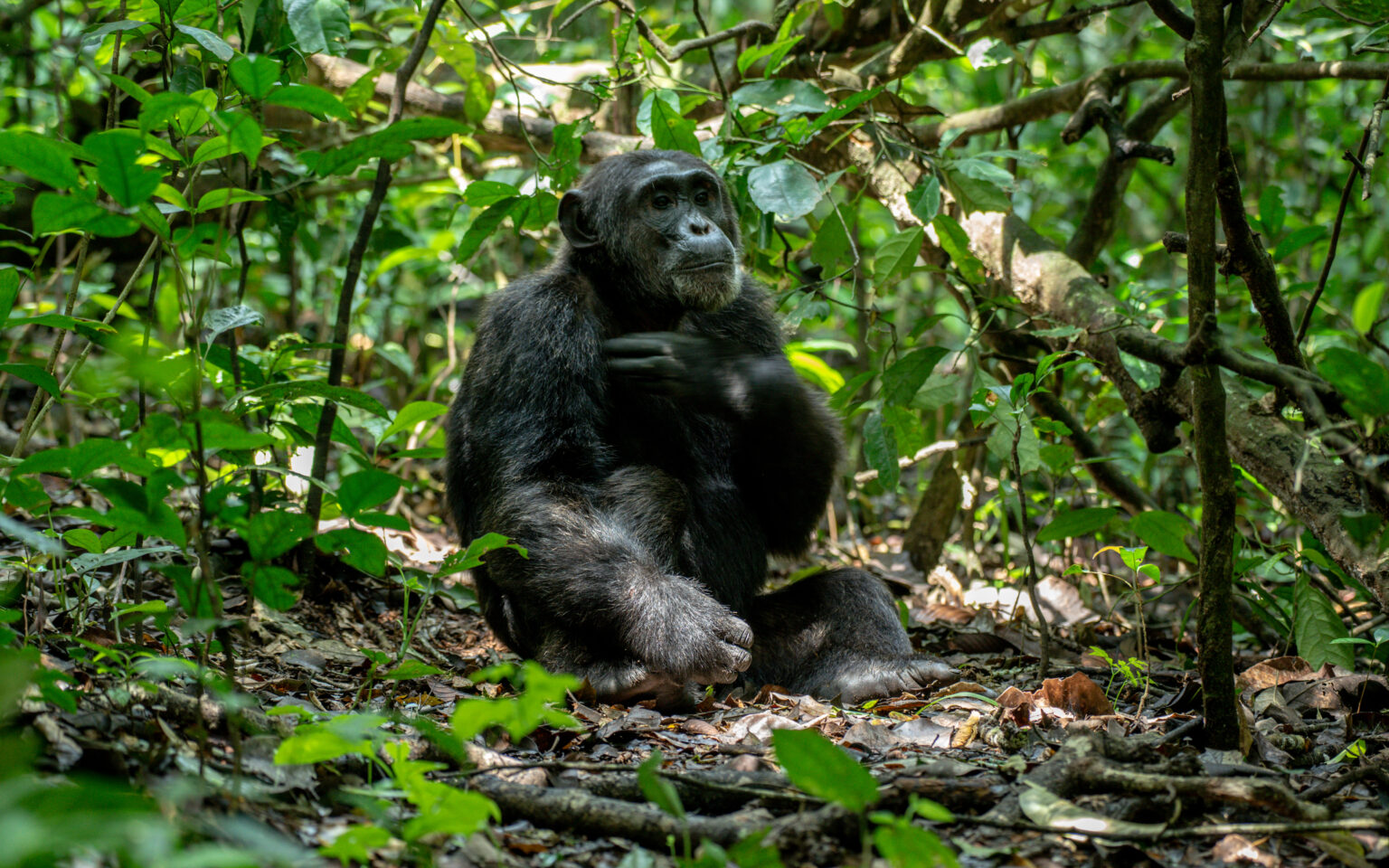
While sighting success in Kalinzu Forest Reserve reaches over 90% to 95%, tracking wild animals in a dense rainforest environment always carries an element of unpredictability. Here are 30 detailed questions and responses covering policies, expectations, alternative activities, and logistics if chimpanzees are not located during your excursion.
4-days-budget-queen-elizabeth-park-and-chimpanzee-tracking-in-kalinzu-forest 14-days-uganda-and-rwanda-safari-tour-itinerary
14-days-luxury-uganda-primate-safari-holiday
14-days-uganda-primate-safari-and-jinja-white-water-rafting
14-days-classic-uganda-birding-safari-expedition
14-days-best-africa-big-five-safari-in-uganda-and-best-gorilla-trekking-adventure
20-days-uganda-birding-safari-wildlife-gorilla-and-chimpanzee-tracking
20-days-uganda-birding-safari-to-uganda-national-park
20-days-uganda-safari-holiday-tour-package-itinerary
19-days-best-photography-uganda-birding-safari-and-wildlife-adventure
19-days-incredible-uganda-safari-tour-big-five-chimpanzees-and-mountain-gorillas
18-days-best-of-uganda-safari-holiday-vacation-to-all-best-parks
17-days-uganda-honeymoon-safari-holiday-tour
17-days-uganda-birding-safari-itinerary
17-days-best-safari-in-uganda-ending-in-kigali-rwanda
16-days-ultimate-uganda-safari-to-rwanda-safari-tour-package-combo
16-days-best-of-uganda-birding-safari-holiday-extravaganza
7-day-ultimate-uganda-primate-safari-chimpanzees-and-game-drives
6-days-best-gorilla-trekking-and-safari-uganda-parks
What Happens Next
- No Refunds: Permit fees and park charges are non-refundable once the trek begins because the funds directly support conservation and guide services.
- High Success Rate: Sightings in Kalinzu Forest are very reliable, boasting an estimated success rate of over 90% to 95%.
- Alternative Exploration: If chimpanzees cannot be located, you still enjoy a guided nature walk through the rich biodiversity of the jungle, observing other primates, birds, and plant species.
What is the statistical likelihood of not finding chimpanzees in Kalinzu Forest?
The odds of missing chimpanzees in Kalinzu Central Forest Reserve are remarkably low, generally sitting under 5% to 10%. Kalinzu is home to over 320 wild chimpanzees, with at least two habituated communities dedicated to eco-tourism and scientific research. Because these habituated groups are monitored daily by experienced National Forestry Authority (NFA) trackers, the park guides possess an intimately detailed understanding of their territory, feeding ranges, and seasonal nesting behavior. Trackers enter the forest early every morning around 6:00 AM to locate the precise trees where the chimps slept the previous evening, communicating via radio with your lead guide before you even step onto the trail. However, because these primates live in a fully wild, unfenced 147-square-kilometer reserve connected to Queen Elizabeth National Park, 100% guarantees are impossible. Factors such as sudden heavy rainstorms, territorial clashes with non-habituated chimp communities, or rapid migrations toward deep fruiting trees on the distant rift escarpment can occasionally cause a group to slip away undetected. Understanding that a missed sighting is a rare exception rather than the norm helps put realistic expectations on your wilderness journey.
Do visitors get a refund if no chimpanzees are seen during the trek?
Under standard National Forestry Authority (NFA) guidelines, chimpanzee tracking permit fees are non-refundable once you step foot into the reserve and embark on the trek. The tracking permit covers the operational costs of conservation, forestry management, ranger protection, and professional guide services rather than guaranteeing a captive animal viewing experience. Unlike commercial zoos, wild rainforest tracking is an authentic wildlife adventure where unpredictable animal behavior is inherent to the experience. That said, if your group hikes diligently for hours alongside assigned trackers without hearing or seeing any chimpanzees, the park management evaluates the situation on a case-by-case basis. While cash refunds are almost never issued on-site, the NFA reception desk at Nkombe station often offers a complimentary second attempt during the afternoon tracking session or on the following morning, subject to permit availability and guide scheduling. Tour operators like Roads of Adventure Safaris always work closely with park authorities to advocate on behalf of travelers to explore every reasonable alternative option if an unlucky tracking session occurs.
Can travelers attempt a second chimpanzee tracking session on the same day?
Yes, attempting a second tracking session on the same day is often possible if you miss the chimpanzees during the morning trek. Kalinzu Forest operates two daily tracking shifts: an early morning session starting at 8:00 AM and an afternoon session starting around 3:00 PM. If your morning expedition returns to the Nkombe station around midday without a sighting, your lead guide can immediately approach the head warden to request permission to join the afternoon tracking group. If space permits and trackers are available, visitors are frequently allowed to try again without paying for an entirely new full-price permit. The afternoon session offers a completely different tracking dynamic because chimpanzees are often resting, grooming, or feeding high in the canopy to avoid the midday sun. While joining an afternoon track requires extra physical stamina after walking all morning, it provides an immediate opportunity to turn a missed sighting into a triumphant success before leaving the region for your next safari destination.
How do park guides determine that a chimpanzee track has officially failed?
A chimpanzee tracking excursion is officially deemed unsuccessful only after guides and advance trackers have exhausted all reasonable search strategies over a span of 3 to 5 hours. When you start the hike, your guide relies on radio calls from trackers who follow fresh knuckle prints, dung samples, chewed fig pulp, and loud vocalizations like pant-hoots echoing through the canopy. If these signs go quiet, the lead guide doesn't give up right away; they alter routes, descend into alternative river valleys, and coordinate with secondary trackers searching nearby forest sectors. The search is called off only when physical exhaustion limits the safety of the group, extreme weather sets in, or the chimps have moved into dangerous, impassable terrain beyond the reserve's reachable boundary. At that point, the guide gathers the group, explains the situation, and begins the return walk to the forest station to log the event officially with the warden.
What alternative wildlife and natural sights can you appreciate if chimps remain elusive?
Missing the chimpanzees can feel disappointing, but Kalinzu Forest remains an extraordinary, highly biodiverse ecosystem packed with alternative natural attractions. Kalinzu is home to six other primate species, meaning your trek can easily yield fantastic sightings of black-and-white colobus monkeys executing dramatic leaps through the canopy, bright red-tailed monkeys, blue monkeys, and L'Hoest's monkeys foraging on the forest floor. Avian enthusiasts will find a paradise holding over 370 bird species, including the spectacular Great Blue Turaco, Black-and-white-casqued Hornbill, and elusive African Emerald Cuckoo. As you walk, your NFA guide translates the hidden life of the rainforest, pointing out medicinal trees like Prunus africana, giant strangler figs, colorful butterflies numbering over 260 species, and fresh tracks left by forest elephants or bushbucks. Framing the hike as a rich, holistic nature walk rather than a single-species search ensures that every step through the ancient rainforest yields memorable discoveries.
Does weather play a major role in missed chimpanzee sightings?
Weather is perhaps the single biggest environmental factor leading to missed chimpanzee sightings in Kalinzu Forest. During sudden tropical downpours—which occur most frequently in the wet seasons of March to May and October to November—chimpanzees alter their behavior dramatically. Rather than moving actively across the forest floor or calling out loudly to communicate, chimps seek shelter under thick foliage, huddle high in tree forks, and remain completely silent to conserve body heat. Downpours also muffle sounds, making it nearly impossible for trackers to locate them by sound. Furthermore, rain washes away fresh knuckle prints and scent trails, stripping trackers of their primary navigation clues. Clay trails turn into slick, muddy slides, slowing human movement significantly and preventing groups from reaching distant sectors before the chimps move on. Equipping yourself with quality rain gear allows you to keep moving comfortably when showers strike, giving your guide every opportunity to keep searching.
Can you rebook a tracking permit for the following day if you miss the chimps?
If space is available on the park register, rebooking a tracking permit for the following morning is a straightforward process. Because Kalinzu Forest is managed by the National Forestry Authority (NFA) rather than the heavily booked Uganda Wildlife Authority (UWA) national parks, permit availability is generally much more flexible compared to locations like Kibale or Bwindi. If your initial hike fails to yield a sighting, you can talk to the park warden upon returning to the Nkombe station. If permits are available for the next day, you can purchase a replacement permit on the spot or, in cases of verified park tracking difficulty, secure a heavily discounted or complimentary rebooking pass at the warden's discretion. Having a flexible safari itinerary that includes an extra night in nearby Queen Elizabeth National Park or Bushenyi gives you the buffer needed to take advantage of a second-day rebooking without disrupting your broader travel schedule.
How do trackers handle situations when chimps cross into non-habituated territory?
Chimpanzees are fiercely territorial primates that actively defend their home ranges against neighboring rival communities. Kalinzu Forest contains several wild, non-habituated chimp troops alongside the two habituated communities. Occasionally, a habituated group will be chased deep into non-habituated territory during a boundary conflict or while fleeing rival aggressive patrols. When this happens, rangers and guides must exercise extreme caution. Non-habituated chimpanzees are unaccustomed to human presence and can react with defensive aggression, loud charging displays, or rapid flight deeper into impenetrable thickets. If trackers confirm that the habituated troop has crossed into a risky, non-habituated zone, the lead guide will prioritize human safety and halt the chase. Instead of pushing into dangerous territory, the guide will redirect the group toward secondary feeding sites or wait at a safe boundary distance to see if the troop loops back into familiar, accessible forest trails.
What administrative step should you take at the park office if you do not see chimps?
If your tracking group returns to headquarters without finding chimpanzees, the first administrative step is ensuring your guide formally logs the outcome in the official NFA visitor register. Request a brief meeting with the head forest warden or senior tourism officer at the Nkombe station. The warden will review the tracking log, speak directly with the head ranger who accompanied your group, and issue an official incident report confirming that no chimpanzees were located despite full trekking efforts. Obtaining this written confirmation or official stamp is critical if you intend to request a complimentary re-track, claim a permit adjustment through your tour operator, or submit a travel insurance claim for missed itinerary activities. Maintaining a polite, collaborative demeanor with station staff goes a long way, as forest wardens have considerable discretion to arrange alternative guided walks or complimentary re-tracking options on the spot.
Is travel insurance helpful if you miss a chimpanzee tracking experience?
Standard travel insurance policies generally do not cover missed wildlife sightings, as wild animal behavior is classified as an inherent, uninsurable risk of nature travel. Insurance companies view tracking permits as non-refundable access passes to a natural environment rather than a guaranteed entertainment event. However, travel insurance can prove extremely valuable if your missed sighting was caused by external covered disruptions. For example, if severe road washouts, vehicle breakdowns, or medical emergencies prevent you from reaching Kalinzu Forest in time for your scheduled briefing, trip interruption or delay coverage may reimburse the cost of your unused permit and transport. Additionally, if you suffer an injury on the trail while searching for chimps, comprehensive travel medical insurance covers emergency care and evacuation. Always review your policy fine print and carry written statements from park wardens to support any claims related to trip delays.
How does the experience in Kalinzu compare to backup primate destinations nearby?
If you miss chimpanzees in Kalinzu and cannot extend your stay, several excellent backup primate destinations exist within easy driving distance. The most prominent alternative is Kyambura Gorge, situated just 45 minutes away in Queen Elizabeth National Park. Known as the "Valley of Apes," Kyambura features a habituated chimp community enclosed in a dramatic, sunken forest canyon. Another nearby alternative is Kibale National Park, located roughly 2 to 3 hours north, which boasts a 99% chimpanzee sighting success rate across its vast tropical forest. Additionally, the nearby Maramagambo Forest offers guided walking safaris focused on bat caves, forest monkeys, and rich birdlife. While permit costs and availability vary—Kibale permits are significantly more expensive than Kalinzu's—having neighboring options means your driver-guide can quickly pivot to secure a second primate tracking experience elsewhere in Western Uganda.
Why do chimpanzees sometimes move so fast that hikers cannot catch up with them?
Chimpanzees are exceptionally agile, semi-arboreal mammals capable of traveling across the forest floor at speeds up to 25 kilometers per hour, while effortlessly swinging through the canopy above. On days when chimps are actively patrolling territory boundaries, hunting small mammals like red colobus monkeys, or traveling to distant fruiting trees, their pace far exceeds human walking capacity. While trackers can hear their distant pant-hoots echoing across valleys, physically closing the gap through dense underbrush, thick vines, and slippery mud can prove impossible for a human trekking group. In these scenarios, hikers might technically be "on the trail" of the chimps, finding warm nests and fresh fruit rinds, without ever catching a direct visual sight of the moving troop. Guides must continually evaluate group stamina, turning back if the fast-paced chase poses safety risks or physical exhaustion for the hikers.
What role do forest fruiting seasons play in tracking difficulty and success?
Food availability directly dictates where chimpanzees spend their time and how easily they can be found in Kalinzu Forest. During peak fruiting seasons—when massive fig trees (Ficus species) and wild fruits ripen in centralized blocks—chimpanzee troops gather in large, noisy family groups. During these months, chimps stay in localized areas for days at a time, making tracking short, easy, and almost 100% successful. Conversely, during periods of food scarcity, chimp troops break apart into small, scattered subgroups (a social dynamic called fission-fusion). These smaller parties travel vast distances individually to find scattered food sources, remaining unusually quiet to avoid competition. During lean fruiting months, trackers must cover significantly more ground, and the chances of missing a quiet, moving subgroup increase. NFA guides monitor fruit trees closely and adapt daily tracking routes based on seasonal botanical cycles.
Can you pivot to a nature or waterfall walk if chimpanzees cannot be located?
Yes, pivoting to a guided forest nature walk or waterfall trail is the standard, highly rewarding backup plan offered by NFA guides when chimpanzees prove elusive. Kalinzu Central Forest Reserve features several well-maintained nature trails that branch off from the main tracking paths. The Waterfall Trail, for instance, takes hikers through deep river valleys to scenic forest cascades while offering opportunities to spot rare orchids, ancient hardwood trees, and colorful forest birds. The Palm Trail and River Trail wind past massive terrestrial ferns and crystalline streams home to forest otters and kingfishers. Transitioning your trek into an educational botany and birding walk allows your guide to share fascinating insights about rainforest ecology, traditional herbal medicines, and local forest folklore, ensuring your hours spent in the woods remain engaging, educational, and physically rewarding.
How does the skill of NFA trackers impact the likelihood of a successful hunt?
The expertise of National Forestry Authority (NFA) trackers is the single greatest asset preventing missed sightings in Kalinzu. Many of these trackers have spent decades walking the exact same forest paths, developing an almost intuitive understanding of individual chimp personalities, vocal signatures, and movement patterns. They can distinguish between a 2-hour-old knuckle print and a 20-minute-old print in damp clay, identify fresh feeding debris by checking moisture levels on discarded fruit rinds, and pinpoint the exact ridge a pant-hoot call originated from kilometers away. Trackers also maintain habituation continuity by spending hours with the chimps daily, ensuring the primates remain comfortable around human observers. Relying on their deep local knowledge means that even when chimps try to hide or move unexpectedly, the trackers' tracking skills almost always lead your group straight to the troop.
What should you do mentally to avoid disappointment if a trek falls through?
Maintaining a positive, adaptable mindset is key to enjoying wild eco-tourism in East Africa. When embarking on a safari, framing the chimpanzee trek as an immersive rainforest adventure rather than a guaranteed performance eliminates unnecessary frustration if the animals don't cooperate. Remind yourself that you are walking through a pristine, wild ecosystem that supports hundreds of interconnected plant and animal species, not visiting a controlled wildlife park. Appreciating the crisp forest air, the towering ancient trees, the calls of exotic birds, and the physical challenge of the hike itself ensures you find value in the journey. Wildlife enthusiasts often find that the suspense of searching through raw wilderness makes eventual sightings—whether on that trek or a subsequent safari drive—feel far more rewarding and earned.
Is it possible to hear chimpanzees without actually seeing them during a hike?
Yes, hearing chimpanzees without seeing them is a relatively common outcome on challenging tracking days. Chimpanzee pant-hoots are among the loudest vocalizations in the animal kingdom, capable of carrying over two kilometers through dense forest canopy. On days when chimps are perched high in thick, leafy emergent trees or moving quickly through deep ravines, you may spend hours listening to their dramatic calls, chest-thumping on buttress tree roots, and branch-shaking displays without getting a clear line of sight. While missing a visual connection can feel tantalizing, experiencing the thunderous, spine-tingling sound of a wild chimp chorus echoing through an ancient tropical rainforest is an awe-inspiring wildlife encounter in its own right, offering a raw glimpse into their complex social communication.
How does group walking speed influence the chances of finding chimps?
Your tracking group's collective walking speed and physical fitness directly impact your overall success rate. Because chimpanzees travel quickly across rugged terrain, a group that moves at a brisk, steady pace can cover more ground and close the distance faster when trackers radio in a location update. Conversely, if a group walks very slowly, requires frequent long rest stops, or struggles on slippery inclines, the chimps may move miles ahead before the hikers reach the designated search area. Park guides do their best to pace the hike according to the slowest walker's capabilities to keep everyone safe. If you know you walk slowly or have mobility challenges, informing your guide during the morning briefing allows them to assign you to a chimp troop known to be resting near main, easily navigable trails.
Are there seasonal times of year when missed sightings occur more frequently?
Missed chimpanzee sightings correlate slightly with the peak heavy rainy seasons in Western Uganda, specifically April to May and October to November. During these months, frequent prolonged downpours make chimps less vocal and keep them sheltered deep within dense tree canopies, while slick trail conditions slow human tracking groups down considerably. Furthermore, when fruit is wildly abundant across the entire forest during rainy cycles, chimps do not need to congregate at primary feeding sites, scattering into small, silent parties across a wider geographic area. In contrast, the dry seasons from June to August and December to February offer firmer trails, clearer weather, and more predictable chimp movements around central water sources and primary fruiting trees, yielding the highest overall sighting success rates of the year.
What happens if you get injured or too tired while searching for chimps?
If a hiker suffers an injury, severe fatigue, or medical distress during a challenging search, the safety of the guest immediately takes priority over finding the chimpanzees. NFA guides and armed rangers are trained in wilderness first aid and carry communication radios to coordinate support. If you twist an ankle or feel overwhelmed by physical exertion, the guide will stop the group in a safe clearing, administer basic first aid, and assess whether you can continue after a rest. If you cannot walk back, rangers call for stretcher assistance from the Nkombe forest station, where staff carry injured guests back along main trails. The rest of the tracking group may continue searching with an assistant guide, or the entire group may return depending on ranger availability and the severity of the medical situation.
Do children or older adults face higher risks of missing chimps due to fitness?
Age and physical fitness play a clear role in tracking success because of the unpredictable demands of off-trail bushwhacking. The official minimum age for chimpanzee tracking in Uganda is 15 years old, partly to ensure all participants possess the physical stamina and emotional maturity required for fast-paced forest walking. Older adults or less fit travelers who struggle with steep inclines, deep mud, or thick underbrush may find it difficult to keep up when chimps are moving rapidly. However, advanced age alone does not preclude success; many active seniors complete the trek effortlessly. To maximize success for older or less fit hikers, hiring a local porter at the trailhead is highly recommended. Porters carry your heavy daypack and offer a steady hand across tricky terrain, preserving your energy for the push to reach the chimps.
How does staying at a nearby lodge help if you need to re-track the next day?
Logistically, staying at a safari lodge or guesthouse located close to Kalinzu Forest provides a massive advantage if you need to schedule a backup tracking session. The most popular lodge is Kalinzu eco lodge and other Lodges situated around the crater lakes of Rubirizi, near the Nkombe forest edge, or within the Ishaka/Bushenyi region sit just 10 to 30 minutes away from the park briefing center. If your morning track yields no sightings, returning to a nearby lodge allows you to shower, enjoy a hot meal, recharge camera batteries, and rest comfortably before trying an afternoon or next-morning session. Conversely, if your lodge is located hours away in distant sectors of Queen Elizabeth National Park or Fort Portal, commuting back and forth adds immense transit fatigue, making a spontaneous second tracking attempt far more difficult to execute.
What is the role of your tour operator if chimpanzees are not found?
A professional safari operator plays a vital protective role in managing logistics, advocacy, and itinerary adjustments if your tracking session is unsuccessful. Experience operators—such as Roads of Adventure Safaris—build flexible safari schedules that anticipate potential wildlife delays. If you return to Nkombe station without seeing chimps, your professional driver-guide steps in immediately to liaise with NFA forest wardens, negotiate secondary permit access, or rearrange afternoon game drives in Queen Elizabeth National Park to accommodate a second tracking attempt. Your operator also handles any additional transport logistics, re-aligns lodge meal times, and ensures your overall travel experience remains seamless and stress-free, turning an unexpected challenge into a well-managed wilderness adventure.
How do radio communications between advance trackers and guides work?
The behind-the-scenes success of Kalinzu's tracking operations relies heavily on a coordinated radio network between advance trackers and lead guides. Long before visitors arrive at Nkombe station, team trackers hike deep into the forest interior equipped with shortwave two-way radios. Once they find fresh nests or hear vocal pant-hoots, they transmit exact grid coordinates and landmark descriptions back to the briefing center. As your guided group hikes into the forest, your lead guide stays in continuous radio contact with these advance teams. If the chimps suddenly move or split into subgroups, the advance trackers radio updated directions in real time, allowing your guide to adjust your hiking route dynamically. This real-time intelligence network drastically reduces search time and prevents groups from wandering aimlessly through empty sectors.
Can habituation status affect how chimps react if you finally locate them?
Yes, the habituation status of the chimpanzee community directly dictates how long and how well you can observe them once found. "Habituation" is a gentle, multi-year process where wild chimps are gradually accustomed to the peaceful presence of human researchers and tourists without changing their natural wild behaviors. Kalinzu Forest features fully habituated communities that tolerate human observers at a safe 8-meter distance for up to one hour. However, if trackers inadvertently lead a group to a semi-habituated or wild troop, or if the habituated troop is stressed by external factors, the chimps may react by melting silently into dense thickets, climbing to extreme heights in the canopy, or displaying aggressive vocalizations before moving away rapidly. Guides carefully monitor primate body language to ensure visitors only interact with calm, comfortable habituated groups.
What impact does human noise level have on missing chimpanzees during the hike?
Maintaining strict noise control while walking through Kalinzu Forest is essential to tracking success. Chimpanzees possess exceptionally sharp hearing and acute awareness of their environment. If a tracking group talks loudly, rustles plastic wrappers, snaps dry branches carelessly, or allows cell phones to ring, wild chimps will detect human approach from hundreds of meters away. While habituated chimps tolerate human presence, sudden or loud artificial noises can startle them, prompting the troop to slip away quietly into thick underbrush before you ever spot them. During the morning briefing, NFA guides emphasize the "rule of silence," instructing visitors to speak only in hushed whispers and walk softly on leaf litter. Keeping noise levels low dramatically increases your chances of surprising a troop while they are feeding or grooming peacefully on the ground.
Are there specific forest sectors in Kalinzu where chimps are harder to track?
Kalinzu Forest Reserve features varied topography, and certain geographic sectors present far tougher tracking conditions than others. The central sectors near the Nkombe station and main research trail networks feature relatively accessible terrain with gently rolling hills and clear paths. However, if the chimpanzees move toward the western boundary along the steep escarpments overlooking the Albertine Rift Valley, or descend into the deep, densely tangled ravines along the Kajojo River basin, tracking becomes significantly more arduous. In these rugged, remote sectors, thick vine tangles, steep mud banks, and razor-sharp elephant grass slow human movement to a crawl. If trackers report that a troop has moved into these extreme sectors, your guide will assess whether your group has the physical capability and daylight hours required to pursue them safely.
How does the length of contact time work if chimps are found late in the hike?
Park conservation regulations strictly limit human contact time with habituated chimpanzees to exactly one hour per group per day. This rule protects the primates from chronic stress, behavioral disruption, and potential disease transmission. If your tracking group spends three or four hours searching through dense forest and finally locates the chimps late in the morning or near midday, your one-hour observation clock begins the moment you make clear visual contact with the troop. Even if the search was long and tiring, you are still granted your full 60 minutes to observe, photograph, and enjoy the primates, provided daylight and weather permit. Once the hour expires, your guide will instruct everyone to pack away camera gear and begin the steady return walk back to the forest station.
What educational insights do guides share to keep the hike engaging if chimps are absent?
NFA forest guides are highly trained naturalists who excel at turning a difficult tracking search into an immersive ecological masterclass. If chimpanzees remain hidden, your guide shifts focus toward interpreting the broader rainforest environment. They will point out fascinating botanical marvels, such as ancient strangler fig trees enveloping host trunks, Spathodea flame trees, and rare medicinal bark used by local communities to treat ailments. Guides explain the intricate relationships between forest primates, seed dispersal, and canopy regeneration, while pointing out hidden insect life, colorful forest fungi, and bird calls echoing through the trees. Learning about the forest’s history as a protected reserve, local cultural folklore, and ongoing primate habituation research ensures that even without a chimp sighting, your walk remains rich, educational, and deeply rewarding.
What is the ultimate takeaway for travelers preparing for a Kalinzu chimp tracking safari?
The ultimate takeaway for any safari traveler heading to Kalinzu Forest is that while chimpanzee sightings are statistically almost guaranteed, preparing mentally and logistically for the unpredictable nature of wild wilderness yields the best possible experience. Kalinzu offers one of the most authentic, intimate, and budget-friendly primate tracking adventures in East Africa. By wearing proper waterproof gear, building flexibility into your travel itinerary, maintaining a positive mindset, and relying on experienced tour operators like Roads of Adventure Safaris, you set yourself up for an unforgettable journey. Whether you encounter a booming troop of vocalizing chimps on your first hour or spend a rewarding day exploring the ancient biodiversity of a pristine tropical rainforest, Kalinzu Reserve delivers a profoundly authentic taste of wild Africa.
Booking chimpanzee tracking in Kalinzu forest with us Roads of Adventure safaris
Booking chimpanzee tracking in Kalinzu Forest with Roads of Adventure Safaris gives you access to an affordable primate trek near Queen Elizabeth National Park. Permits cost around $130 USD for foreign non-residents, and sessions start daily at 08:00 and 14:00.
