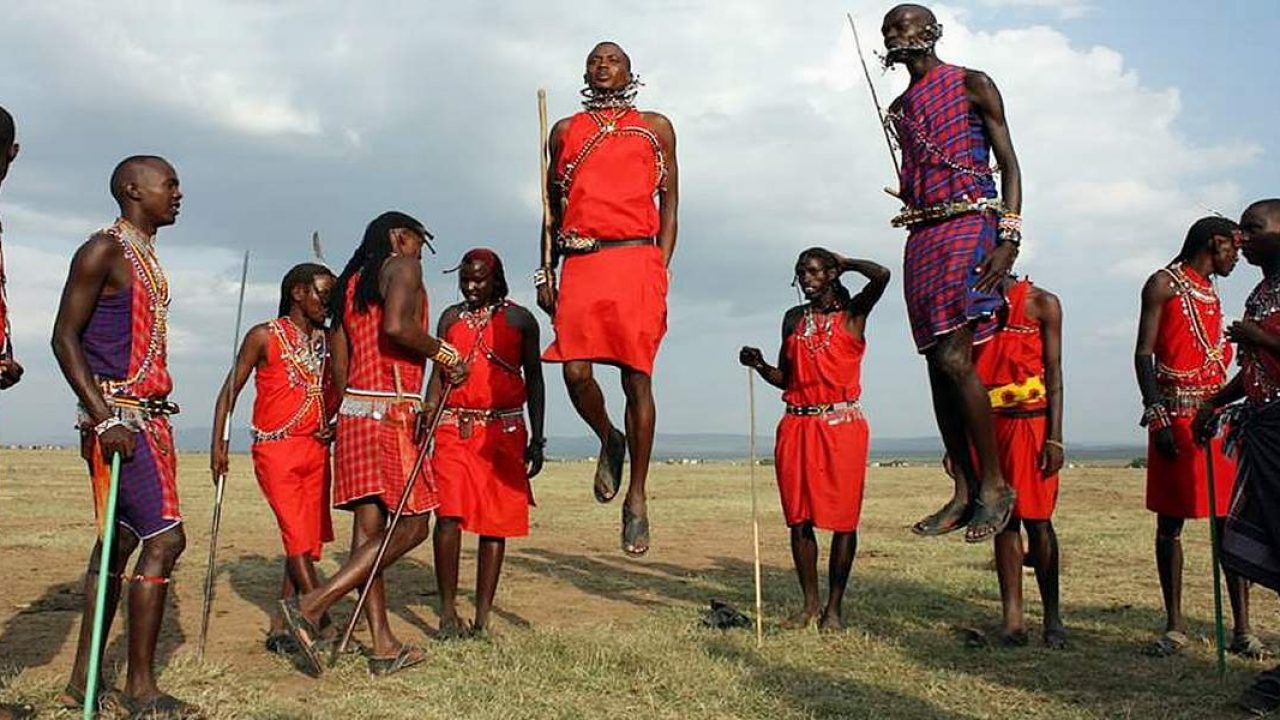
A Kenyan cultural safari offers a deep dive into the traditions, lifestyles, and rituals of over 40 ethnic communities. You can expect immersive village visits, traditional performances, and hands-on activities that highlight the connection between Kenya's people and its wildlife.
13-days-samburu-ol-pejeta-lake-nakuru-masai-mara-lake-naivasha-and-amboseli-kenya-safari
12-days-lake-nakuru-masai-mara-central-serengeti-ngorongoro-crater-amboseli-kenya-tanzania-safari
10-days-kenya-wildlife-safari-and-kenya-beach-holiday-at-diani-beach
10-days-africa-big-five-kenya-tanzania-safari-and-wildebeest-migration
8-day-best-kenya-tanzania-safari-vacation
Maasai manyatta visits
Manyatta visits among the Maasai—commonly offered around Amboseli, the Maasai Mara and other rangelands—are immersive cultural encounters centered on traditional homesteads constructed from mud, sticks and cow dung. Manyattas are family compounds organized around pastoral livelihoods: livestock corrals, sleeping huts (enkajijik), and communal spaces for cooking and storytelling. A typical visit begins with a formal greeting and blessing; elders explain the homestead layout, clan affiliations and customary protocols. Guests often watch or participate in the adumu (the famous Maasai “jumping dance”), which displays agility and communal coordination through vertical leaps accompanied by call-and-response singing and rhythmic clapping. Fire-making demonstrations are another highlight: guides show friction-based techniques (bow-and-drill or hand-drill methods) that underscore traditional material knowledge and spark conversation about low-tech survival skills. Women in manyattas commonly lead beadwork workshops—visitors learn to string and pattern jewelry while hearing how color schemes and motifs communicate age-set, marital status and clan identity. Hosts may share pastoral routines such as milking, herding preparation, and cattle management practices, and will explain how cattle underpin economic, social and ritual life. Ethically-run manyatta visits prioritize consent, fair compensation and reinvestment of proceeds into community projects such as schools or clinics. Photography etiquette is emphasized—always ask permission and avoid exploiting children for images. Safety and animal welfare are also important: visitors should follow guidance around livestock and never disturb grazing patterns. Well-managed visits can last from one hour to overnight homestays, where guests experience evening dances, communal meals and night-time storytelling. Through hands-on participation and respectful listening, a manyatta visit offers a vivid, human-scale understanding of pastoral culture, revealing how identity, mobility and ecology interlock in East African savanna life.
Samburu traditions
Samburu cultural experiences in northern Kenya offer a distinct pastoral perspective related to, but different from, Maasai traditions. The Samburu maintain semi-nomadic livelihoods focused on goat, sheep, cattle and camel herding adapted to the arid, thorn-bush landscapes north of Mount Kenya. A Samburu visit introduces visitors to intricate jewelry, vernacular architecture and age-set institutions that govern social roles. Jewelry—richly beaded collars, bracelets and headpieces—is not merely decorative; bead patterns, colors and assembly techniques convey a person’s marital status, age-set and clan identity. Workshops led by Samburu women teach bead-stringing, pattern logic and how trade networks historically influenced design. Camel herding is an important Samburu skill: visitors may accompany herders to observe camel management, understand water-finding practices, and learn camel milk processing—camel milk is nutritionally important and often fermented or mixed with blood in ritual contexts. Storytelling by elders is central to cultural transmission: narrative sessions recount migratory histories, clan origin myths and survival strategies for drought—these tales are often mnemonic devices for ecological knowledge. Samburu courtship and ceremonial dances vary from the slow, dignified movements of elders to more energetic performances by younger men; as with the Maasai, certain jumps and vocalizations signal prowess. Conservation and security concerns have shaped Samburu interactions with tourists—organized visits are usually arranged through community conservancies that link tourism revenue to grazing management, anti-poaching patrols and veterinary services. Ethical engagement requires booking through respected operators, ensuring host compensation, and following local protocols on photography and gift-giving. Visiting Samburu communities provides insight into adaptive pastoralism under climate stress, the relational aesthetics of beadwork, and the living institutions that sustain social cohesion in Kenya’s arid north.
Remote northern cultures: Turkana, Rendille, El Molo
For deeper cultural immersion, journeys to Kenya’s remote north—Lake Turkana and surrounding plateaus—connect travelers with distinct peoples: Turkana, Rendille and the small El Molo community. These groups have adapted to a harsh, arid environment with specialized survival knowledge. The Turkana are pastoralists noted for their mobile homesteads, beadwork, and tall, fortified kraals used to protect livestock from raiders and predators. A Turkana visit showcases pastoral mobility—seasonal movements to ephemeral waterholes, drought coping strategies, and specialized pastoral artistry such as ornamental bead collars and body decoration used in ceremonies. The Rendille, traditionally camel pastoralists, emphasize camel husbandry, caravan traditions and snuff-box decoration; camel caravans remain culturally important for transport and ceremonial prestige. Rendille homesteads highlight stone and thorn-enclosed compounds, and visitors learn about camel milk processing, herding coordination and mechanisms of inter-clan alliance-building. The El Molo—one of Kenya’s smallest ethnic groups—have a unique heritage tied to fishing along Lake Turkana. Visiting El Molo villages reveals specialized fishing techniques (dugout canoes, gill nets), fish preservation methods, and oral histories of assimilation pressures from neighboring pastoralists. Due to their small population and vulnerability, El Molo encounters require sensitive, limited-impact arrangements. Ecological and security challenges—scarce water, periodic resource conflict and limited infrastructure—mean trips must be carefully planned with experienced local guides, community consent, and provisions supporting community priorities. Health precautions and cultural sensitivity are crucial: these communities are often affected by marginalization, and tourism should not exacerbate pressures. Well-designed visits help sustain livelihoods through direct payments, purchase of crafts, or support for water and education projects. Experiencing Turkana, Rendille and El Molo cultures gives travelers rare insight into adaptive strategies in extreme environments, the cultural centrality of livestock and fish, and the fragile resilience of small, remote communities in northern Kenya.
Swahili coastal heritage: Lamu and Mombasa
The Swahili coast—epitomized by historic towns like Lamu Old Town and Mombasa—embodies a layered heritage produced by centuries of interaction among African, Arab, Persian and Indian traders. A cultural safari along the coast offers narrow-alleys heritage walks, architecture study, dhow sailing, and immersive culinary experiences rooted in fragrant spices and coastal produce. Lamu Old Town, a UNESCO World Heritage Site, showcases coral-stone architecture, intricately carved wooden doors, and a slow-paced town life centered around the waterfront and town square. Guided walks reveal Swahili urbanism—courtyards, recessed windows for privacy, and social customs shaped by Islamic practice. In Mombasa, Fort Jesus and Old Town provide colonial and precolonial context; the port’s cosmopolitan history is visible in mosque spires, Omani-style facades and Indian-influenced commercial quarters. Dhow sailing demonstrations connect visitors to the maritime traditions that facilitated trade across the Indian Ocean; trips often include lessons on dhow rigging, navigation by stars and coastal navigation techniques. Culinary classes focus on Swahili staples—pilau, biryani, coconut-based curries, tamarind sauces and spiced seafood—showing how cloves, cinnamon, cardamom and coconut shaped local palates. Spice market tours explain the provenance of seasonings and their integration into Swahili identity. Cultural experiences might include taarab music performances (an Arab-influenced coastal genre), Swahili poetry recitation, and visits to local boatyards and dhow builders. Ethical coastal tourism respects local religious practices—modest dress and considerate behavior during prayer times—and supports conservation of fragile coral ecosystems and mangroves. While Lamu offers a quieter, heritage-centered atmosphere with strict preservation rules, Mombasa provides a bustling, multi-layered urban experience. Together, the towns reveal the Swahili coast’s historical role as a cultural crossroads where oceanic trade shaped language, food, architecture and social life.
Signature Activities (Traditional music & dance; markets & crafts; culinary journeys; Bomas)
Signature cultural activities in East Africa provide concentrated, accessible ways to engage with regional traditions—most tours combine performance, craft, food and curated cultural centers to round out the experience. Traditional music and dance are vital: each community has distinct rhythmic vocabularies and ensemble formations. For example, the Isukuti drums of the Luhya produce syncopated, energetic beats for funeral and celebratory dances; western Kenya’s drumming ensembles create layered polyrhythms, while coastal taarab blends Arabic melodies with Swahili lyricism. Live performances reveal instruments, vocal techniques and the social roles of music—courtship, mourning, and ceremonial affirmation. Markets and crafts are the economic and artistic heart of towns and villages: visiting the Maasai Market in Nairobi, coastal spice stalls, or local village craft centers lets travelers purchase baskets, beadwork, ironwork and textiles directly from artisans. Market visits also teach local trading customs, seasonal food cycles and supply chains. Culinary journeys are sensory gateways to culture: sampling ugali (maize meal), nyama choma (grilled meat), coastal pilau or biryani, and street snacks like mandazi or roast maize connects taste to history and migration. Cooking classes often pair market shopping with hands-on preparation, reinforcing farm-to-table perspectives. Bomas of Kenya—cultural centers that display replicas of traditional homesteads and host daily performances—offer time-efficient, family-friendly overviews of the country’s ethnic diversity. The Bomas program provides organized dance showcases, short interpretive talks and craft stalls that are useful for visitors short on time. Across all signature activities, ethical best practices matter: confirm performer compensation, buy directly from artisans, ask permission before photographing individuals, and choose operators who reinvest in communities. These curated experiences serve as both introductions and springboards to deeper, community-based visits by giving accessible, respectful exposure to East Africa’s living cultural heritage.
Traditional dances you will see on a Kenya cultural safari
Traditional dances are among the most vivid and immediate ways visitors connect with Kenyan cultures. The Maasai adumu—often called the “jumping dance”—is emblematic: young men form a tightly packed circle while one by one they leap vertically, showing stamina and agility to the call-and-response singing of the elders. The cadence and vocal timbre are as important as the jumps; the display functions as social affirmation, entertainment and courtship ritual. In Samburu communities the celebratory dances emphasize color and rhythm: dancers wear ornate beadwork and patterned robes, often moving in sequences that mark rites of passage, weddings or communal feasts. Northern pastoralist groups such as the Turkana and Rendille present high-energy dances with vigorous stomping and ululation; their music often uses handheld percussion, throat singing and call-and-response vocal lines that echo life in arid landscapes. On the coast, Swahili taarab performances blend Arabic modal melodies with East African rhythms, featuring strings, oud-like instruments and sung poetry; the result is a urbane, lyrical soundscape used at weddings and communal gatherings. Luhya and other western Kenyan groups perform the Isukuti drum dances—rapid, syncopated drumming accompanied by dynamic footwork used at funerals and initiations. For visitors, dance performances are not only spectacles but living texts: gestures, costume and sequence encode social roles, age-sets, gender norms and historical memories. Ethical cultural-safari operators emphasize context—explaining what each dance marks, who may perform it, and when it’s appropriate for spectators. When joining village ceremonies, follow local guidance on seating, photography and participation; ask permission before photographing dancers or children, and never disrupt sacred sequences. Well-run cultural visits ensure performers are fairly compensated and community benefit is transparent, turning a dance viewing into a respectful cultural exchange rather than a commodified show.
Visiting a traditional Maasai village (manyatta) on a Kenya cultural safari
Visiting a Maasai manyatta offers an intimate window into pastoral lifeways anchored by cattle, kinship and mobility. Manyattas—compounds built from earth, sticks and cow dung—are purposely arranged around livestock enclosures; the layout reflects practical needs (shelter and safety) and social organization (household clusters and age-set spaces). A village visit typically begins with a greeting ritual where hosts explain customs and invite you into shared spaces. You’ll learn about day-to-day tasks: milking, herding preparation, and construction techniques used to repair huts after the rains. The iconic adumu jumping dance is often performed during greetings or special demonstrations; beyond spectacle, guides explain its cultural functions—display of bravery, courtship and community cohesion. Women’s roles are central: beadwork workshops are a common interactive experience where you can try stringing necklaces and learn how colors and patterns signal marital status and social rank. Men may take visitors on short walks to experience cattle management and grazing logic, describing stock valuation and how livestock circulate through bridewealth exchanges. Ethical visits prioritize consent and reciprocity. Reputable operators arrange agreed-upon fees that go directly to participating families, avoid bargaining with individuals in front of elders, and discourage giving loose cash or gifts that distort local economies. Photography etiquette is stressed—always ask before taking portraits, and be aware that children are vulnerable to exploitation through images. Overnight homestays are possible in some manyattas, providing a deeper sense of rhythm—cooking over open fires, hearing evening storytelling, and sleeping under mosquito nets in earthen huts. Remember health and safety: follow guidance about food, water, and interactions with livestock. A well-managed manyatta visit balances curiosity with respect, supporting community livelihoods while deepening visitors’ appreciation for Maasai knowledge, resilience and living traditions.
Learning artisan skills on a Kenya cultural safari (beadwork, wood carving, basket weaving
Artisan skills are cultural repositories: techniques, patterns and materials carry histories of trade, identity and ecological knowledge. On a Kenya cultural safari you’ll commonly encounter beadwork, wood carving and basket weaving—each with distinct regional styles and social meanings. Beadwork, prominent among Maasai and Samburu women, uses glass or locally made beads to produce collars, bracelets and headpieces. Workshops let visitors learn basic stringing and patterning while artisans explain symbolism—color codes indicating age-set, marital status or clan affiliation—and how bead sales support household income. Ethical tours encourage direct purchases from cooperatives, ensuring artisans receive fair pay and reinvestment into community projects. Wood carving is widespread: coastal craftsmen carve doors, masks and everyday items; Kenyan coastal carving draws on Swahili, Arab and Indian influences reflected in intricate geometric patterns and calligraphic motifs. In central and western regions, carvers craft utilitarian utensils and carved stools with stories of lineage embedded in form. Demonstrations may cover tool use, wood selection and sustainable harvesting practices—important for conserving threatened tree species. Basket weaving, often practiced by women in rural and lakeside communities, uses papyrus, sisal and other local fibers to create functional and decorative baskets. Workshops typically teach coiling and plaiting techniques and show how designs map to ethnic identity and market demand. Many community-based tourism initiatives pair skill demonstrations with micro-enterprises: visitors buy directly, attend cooperative-run shows, or participate in skills-exchange sessions that build lasting income streams. When taking part, follow cultural etiquette—ask before photographing, respect intellectual property (traditional designs), and avoid pressuring artisans for discounts. Consider bringing small denomination bills or buying through a secure cooperative to ensure proceeds reach producers. Participatory artisan experiences deliver hands-on appreciation of craft labor while contributing to cultural resilience and household livelihoods.
Eating traditional food on a Kenya cultural safari
Food connects history, environment and social life. On a Kenya cultural safari you can sample and sometimes help prepare regional specialties that reveal agricultural practices and cultural meanings. In the central highlands and Rift Valley, staples include ugali (a firm maize meal porridge) often eaten with sukuma wiki (collard greens), stewed greens, or nyama choma (grilled meat). Nyama choma is a communal event—meat roasted over an open flame, shared among families with side dishes and conversation; at restaurants like the famous Carnivore in Nairobi, tourists experience a theatrical version of the roast-meat feast, though village preparations emphasize local cuts and communal serving. On the coast, Swahili cuisine features coconut milk, spices (cloves, cardamom, cinnamon), and seafood: pilau and biryani reflect Indian Ocean trade histories, while coconut-based curries and mchicha (spinach with peanut or coconut) showcase local ingredients. Dishes are often accompanied by mandazi (fried dough) or chapati. Pastoralist communities like the Maasai and Samburu include milk, blood and meat in ceremonial contexts; while drinking fresh or fermented milk is common, blood-milk mixtures are reserved for ritual and are not typically served in tourist demonstrations unless specifically arranged with clear cultural context. Street food offers accessible tastes—samosas, grilled maize (mahindi choma), and rolex (chapati rolled with eggs and fillings) are ubiquitous and safe when eaten from reputable vendors. Many cultural-safari itineraries include cooking classes: you shop at local markets, learn spice blends and preparation techniques, and eat together—this links palate to provenance. Food-safety guidelines matter: drink bottled or well-treated water, request well-cooked food, and let guides advise on local hygiene standards. Respect dietary norms—coastal Muslim communities expect modest dress and abstaining during prayer times; also be mindful that certain ingredients may be taboo in specific contexts. Eating with hosts and participating in cooking offers a sensory, respectful way to understand daily life and the region’s trade and ecological histories.
Learning about Samburu culture on a Kenya cultural safari
Samburu culture, centered in northern Kenya’s semi-arid savanna, offers a distinctive pastoralist worldview related to but culturally distinct from the Maasai. Samburu households organize around livestock—cattle, goats, sheep and camels—whose movements and health structure social and economic life. A cultural-safari visit to Samburu communities provides direct exposure to their bright beadwork, age-set institutions and adaptive herding strategies. Beadwork workshops led by Samburu women reveal pattern logic: color choices and necklace configurations signal marital status, wealth and clan affiliation. Men frequently demonstrate herding techniques and discuss camel husbandry—camels are crucial in arid zones for transport, milk, and drought resilience. Camel milk, sometimes fermented, is nutritionally central and features in hospitality; visitors may taste fresh milk or see preservation methods used in long journeys. Storytelling sessions with elders pass on migratory histories, conflict-resolution customs and environmental knowledge—practical tales about water-finding, forage rotation and inter-clan alliances. Rituals and dances mark life transitions; young men perform energetic dances during celebrations while elders preside over initiation rites. Samburu governance relies on age-set and council systems that distribute responsibilities across life stages; learning about these institutions clarifies marriage arrangements, resource access and dispute settlement. Ethical visits prioritize community conservancies that manage grazing and tourism revenue: many Samburu communities partner with conservancies where visitor fees fund schools, livestock insurance and anti-poaching units. When visiting, book through reputable operators who ensure fair compensation, avoid voyeuristic photo practices, and respect privacy around sacred rituals. Health-wise, northern regions can be remote; follow guide advice on hygiene, water and safety. A respectful Samburu visit illuminates how pastoral knowledge, artistry and social institutions sustain livelihoods under climatic variability, offering both cultural insight and opportunities to support locally led conservation and development.
Swahili cultural (Mombasa, Lamu) tour components on a Kenya cultural safari
Swahili culture along Kenya’s coast is a layered product of centuries of Indian Ocean exchange—African, Arab, Persian and Indian influences fused into distinct architecture, music, food and social norms. A Swahili cultural tour in Mombasa or Lamu foregrounds historic urban planning, maritime traditions and culinary heritage. In Lamu Old Town, a UNESCO site, narrow alleyways open into carved wooden doors, intricately plastered coral-stone houses and shaded courtyards; guided heritage walks explain built-environment choices that balance climate, privacy and social life within predominantly Muslim communities. Mombasa’s Old Town and Fort Jesus provide a denser urban narrative: Portuguese, Omani and British layers are visible in fortifications, citadels, and mosque minarets. Dhow sailing demonstrations reconnect visitors with seafaring traditions that sustained long-distance trade—lessons in rigging, navigation, and dhow-building occur in boatyards where craftsmen shape planks by hand. Culinary experiences are essential: Swahili dishes—pilau, biryani, coconut curries and tamarind sauces—reveal spice routes; market tours through fish, coconut and spice stalls demonstrate ingredient provenance. Taarab music performances and coastal poetry nights showcase a lyrical tradition blending Arabic maqam with local rhythms; listening sessions often include instrumental ensembles (oud, qanun, violins) and sung Swahili poetry performed at weddings and social gatherings. Tours emphasize respectful engagement with religious customs: modest dress, avoiding public consumption during Ramadan hours, and following mosque protocols. Cultural conservation is active—local NGOs and heritage trusts work to preserve coral-stone buildings and manage tourism impact, especially in fragile island contexts like Lamu where infrastructure is limited. Choose operators who support local preservation and hire resident guides. A well-curated Swahili tour situates visitors within coastal lifeways: maritime history, syncretic music, aromatic cuisine, and the daily rhythms of towns shaped by centuries of oceanic connectivity.
Seeing cultural festivals on a Kenya cultural safari (Lake Turkana Festival, Maulidi in Lamu)
Timing a cultural safari to coincide with festivals deepens engagement: communal performances, craft markets, and ritual sequences reveal social values at scale. In northern Kenya, the Lake Turkana Festival gathers Turkana, El Molo, Rendille and neighboring groups to celebrate music, dance and pastoral heritage. The festival features camel races, traditional dances, folk songs and craft bazaars where artisans sell beadwork, leather goods and carved artifacts. It is both a tourist draw and a venue for inter-community exchange—visitors witness layered identities and seasonal pride displays while enjoying performances that vary by age and clan. On the coast, Maulidi (Mawlid) celebrations in places like Lamu mark the Prophet Muhammad’s birthday with processions, poetry recitals and religiously-inflected music; public life here combines devotional observance with communal feasting and illuminated streets in some neighborhoods. Beyond these marquee events, numerous regional festivals—music festivals, harvest feasts, and food celebrations—offer accessible cultural windows. Festival attendance has practical considerations: secure reputable local guides, respect religious observances (follow dress codes and photography restrictions), and be mindful of the crowd and safety logistics. Festivals also create economic opportunities: community-run stalls provide direct artisan income, and well-managed festival tourism channels funds into local conservation and cultural preservation. Ethical festival attendance means buying directly from vendors, seeking permission before photographing ritual acts, and avoiding exploitative interactions with performers. Festivals can also highlight tensions—resource competition, commercialization pressures, and cultural commodification—so choose events that demonstrate community ownership and transparent benefit-sharing. When planned well into an itinerary, festival visits enrich cultural understanding by situating dances and crafts within communal contexts and showing how tradition adapts to contemporary circumstances.
Seeing traditional homes on a Kenya cultural safari
Traditional homes are material biographies: their design, construction materials and spatial logic encode practical adaptation and social organization. On a Kenya cultural safari you can enter manyatta compounds, Swahili coral-stone houses, or pastoralist huts—each reveals how communities shape shelter around climate, security and social norms. Maasai manyattas are compact, low-profile structures made from a wattle framework coated with mud and cow dung; they cluster around a central kraal protecting livestock at night. Inside, sleeping spaces are simple and communal, with cooking done outside or in a small hearth; the arrangement emphasizes the centrality of cattle and communal living. Samburu and Rendille homesteads share similarities but reflect local materials and climatic adaptations—thorn-fenced enclosures and elevated sleeping platforms for ventilation in arid zones. Coastal Swahili homes use coral stone and mangrove timber, featuring high ceilings, inward-facing courtyards and decorative wooden doors designed for privacy and to catch sea breezes. Visiting homes typically includes learning about domestic routines—cooking techniques, storage solutions, and gendered spaces for craft and childcare. Ethical visits require prior permission: some rooms are private or sacred, and tourists should not touch religious objects or photograph without consent. Homestays are sometimes possible, offering deeper immersion—participating in food preparation, evening conversation and chores—but require clear agreements on payment, boundaries and cultural protocols. When visiting, observe hygiene and biosecurity: remove shoes where requested, accept food only if prepared by hosts under safe conditions, and follow guidance about interacting with children and animals. Responsible operators emphasize that fees go directly to host families and that visits are arranged with village leadership to avoid intra-community conflicts. A respectful home visit turns shelter into a teaching tool, highlighting resourcefulness, local craftsmanship and the ways architecture mediates social life.
Experiencing local storytelling on a Kenya cultural safari
Oral storytelling is a living archive—myths, genealogies and ecological knowledge are passed through narrative performance. On a Kenya cultural safari, evenings around a fire or a shaded communal space are ideal for elders to share tales that encode history, moral lessons and landscape knowledge. Stories often explain clan origins, sacred sites, or animal behavior—teaching younger generations how to read the environment and maintain social norms. For instance, pastoralist narratives narrate migration routes, water-finding legends and raids or peace agreements that shaped current grazing boundaries. Coastal storytellers may recount maritime tales of dhow voyages, pirate encounters and trade linkages that explain Swahili town development. Performance elements matter: stories are told with vocal modulation, call-and-response, song refrains and sometimes accompanying gestures or small instruments. Story sessions are interactive—listeners may interrupt with questions, or young people may perform parts—so they’re both pedagogical and communal. For tourists, these sessions offer context for dances, ritual acts and resource-use customs seen during the day, but ethical participation is essential: sit respectfully, offer small tokens of appreciation if culturally appropriate, and avoid pressing for sacred or secret narratives that communities reserve for initiates. Storytelling can be integrated with educational programs—community museums, schools or cultural centers often coordinate sessions that compensate elders and channel proceeds into local projects. Guides may translate and interpret motifs—helpful when metaphor and local references are dense. Practically, storytelling is best experienced in low-light, small-group settings where voices carry and listening is prioritized; large, commodified “story shows” can lose nuance. When arranged respectfully, storytelling on safari deepens understanding of how memory, identity and landscape are braided together in Kenyan communities.
Visiting local schools on a Kenya cultural safari
Visiting schools offers meaningful cultural exchange and direct community engagement—but such visits must be arranged respectfully and with clear benefit-sharing. Many cultural-safari operators coordinate school visits through village leaders or conservancy committees; these are structured to avoid classroom disruption and to ensure safety and consent, especially for children. A typical visit includes a short cultural presentation—students may sing or dance, and visitors give a brief talk or read in English—followed by interaction time under teacher supervision. Donations (books, stationery, sports equipment) are welcome when pre-arranged, but cash gifts to individuals can create inequities; contributions are best channeled through school accounts or local committees that manage resources transparently. Visits can also include showing visitors how local education works: classroom size, curriculum focus, and community involvement in school maintenance. In pastoralist areas, mobile or seasonal schooling arrangements explain how education adapts to herding cycles. Schools also provide insights into language use—how Kiswahili, English and local tongues coexist—and extracurricular activities like traditional dancing or craft clubs. Ethically, photographers should obtain parental and teacher consent, and avoid posting images of identifiable children without permission. Health protocols matter: respect school rules on footwear and cleanliness, and follow guidance on hand hygiene. Arrange visits during school hours agreed with administrators to prevent disruption and ensure that activities align with learning goals. Longer-term impact comes from sustainable partnerships: sponsoring scholarships, teacher training, or library resources in coordination with local leaders. Well-planned school visits reveal aspirations parents hold for children, how education interfaces with traditional livelihoods, and provide travelers a tangible way to contribute to community development without undermining local agency.
Significance of beadwork in Kenyan cultures
Beadwork is a visual language across multiple Kenyan communities, notably the Maasai and Samburu, where color, pattern and form communicate identity, status and life events. Necklaces, collars, bracelets and headpieces are not mere adornments—they are semiotic devices encoding age-set membership, marital status, fertility, and clan affiliation. Color meanings are culturally specific but commonly shared: red often symbolizes bravery or the blood that sustains cattle, blue may indicate energy or the sky, white references purity and cow’s milk, and green can indicate land and nourishment. Pattern complexity and layering reflect social investment: elaborate collars are time-intensive and demonstrate the maker’s skill and social significance of the wearer. Beadwork workshops led by women provide an opportunity to learn techniques—stringing, loom-work and color sequencing—while hearing stories about how designs change with trade contacts, market demand and contemporary aesthetics. Beyond symbolism, beadwork contributes to household economies: sales to tourists and export markets provide vital cash income managed often by women’s groups or cooperatives. Ethical engagement requires awareness: buy directly from artisans or cooperatives, avoid pressuring for “cheap” custom pieces, and ask how proceeds are shared locally. Cultural appropriation concerns are real—ask permission before reproducing designs for commercial use and respect intellectual property by crediting sources. Beadwork also intersects with rites of passage: certain pieces are only worn during initiation, weddings or funerals, and their display is regulated by community norms. Through careful listening and fair trade practices, observing beadwork becomes both an aesthetic pleasure and an avenue to support cultural continuity and women-led economic agency.
Learning about traditional medicine on a Kenya cultural safari
Traditional medicine is an embodied knowledge system integrating botanical know-how, ritual practice and community health strategies. On a Kenya cultural safari, guided nature walks with community healers or knowledgeable elders can introduce you to medicinal plants, preparation methods, and the cultural frameworks that guide use. Common themes include fever and wound remedies made from bark, leaves used as poultices for wounds, and herbal teas for digestive or respiratory ailments. Guides explain harvesting ethics—how certain plants are collected in rotation to avoid depletion—and taboos that protect sensitive species. Traditional knowledge often interlocks with spiritual practices: some remedies are applied alongside prayers or ritual acts, emphasizing social as well as physiological healing. In pastoralist areas, remedies for livestock diseases are equally important, as herd health underpins livelihoods; visitors may learn about trypanosomiasis management, wound treatments, and use of smoke or plants to repel pests. Ethical and safety considerations are paramount: never ingest or apply herbal preparations without explicit instruction and understanding of contraindications, and respect that some knowledge is sacred or restricted to initiates—questioners should accept refusals. Traditional medicine is complementary in many rural areas where biomedical services are limited; many healers collaborate with clinics, and community health programs sometimes integrate traditional practitioners. For researchers or travelers interested in deeper study, seek community consent, respect intellectual property rights, and consider benefit-sharing agreements if knowledge is documented. Hands-on demonstrations should prioritize sustainability: do not encourage destructive harvesting, and support conservation practices that protect medicinal plants. Learning about traditional medicine on safari reveals a pragmatic, place-based pharmacopeia that has sustained peoples and livestock for generations, and highlights the importance of preserving both biological and cultural diversity.
Kaya forest experience on a Kenya cultural safari (Mijikenda Kaya forests)
Kaya forests—sacred woodlands of the Mijikenda people along Kenya’s coast—are cultural and ecological treasures. These remnant patches of native forest served historically as ritual centers, governance hubs and repositories of ancestral memory. A Kaya visit combines spiritual landscape interpretation with biodiversity appreciation: elders explain taboos that governed access, rites performed beneath sacred trees, and the cosmology linking clan identity to specific forest groves. Ecologically, Kayas protect native flora and fauna: the undisturbed canopy supports endemic birds, medicinal plants, and rare tree species, making them valuable for both conservation and cultural tourism. Guided walks are typically led by community-appointed custodians who narrate oral histories, point out sacred groves and explain seasonal rituals—visitors learn why certain paths were restricted and how initiation rites, dispute settlement, and oaths were performed within the forest. Visiting protocols reflect reverence: modest dress, quiet movement, and asking permission before entering restricted areas. Kayas are UNESCO-recognized in some cases, and community-based management blends cultural preservation with eco-tourism income; entrance fees often support forest guardianship, education and local livelihoods. For travelers, Kaya experiences are more than nature walks: they illuminate the link between spiritual practice and sustainable resource management, showing that taboo systems once functioned as de facto conservation tools. Respect is essential—avoid taking artifacts, limit loud photography, and purchase crafts from authorized vendors rather than scavenging. Support conservation by choosing operators that contribute fees to the Kaya trust, and by following local guidance about permitted trails. A well-run Kaya visit deepens understanding of how sacred landscape frameworks can protect both biodiversity and cultural continuity.
How to show respect during a Kenya cultural safari (dress, photos, interactions)
Respectful behavior transforms tourism into reciprocal cultural exchange. On a Kenya cultural safari, follow local guidance on dress, photography and social interaction to honor hosts and minimize unintended offense. Dress codes vary: coastal and Muslim-majority areas favor modest clothing—cover shoulders and knees, and women may be asked to wear headscarves during mosque visits. Inland pastoralist communities may be less formal, but modest, non-flashy attire signals respect. Always ask permission before photographing people—many communities have privacy concerns or cultural prohibitions about images. If you receive consent, offer a small fee or buy something from the photographed person rather than treating images as transactional trophies. Avoid photographing children without parental permission. During greetings, follow local norms—stand when elders enter, accept offered greetings, and avoid direct confrontation or loud criticism. Gift-giving should be handled transparently: small, practical contributions (school supplies, community funds) coordinated through village leaders are preferable to individual handouts that can create tensions. Observe gendered spaces—men and women may have separate cooking or ceremonial responsibilities; don’t assume access. When participating in rituals or dances, let hosts indicate when visitors can join and follow their lead. Be mindful of sacred or restricted objects and places—ask before touching artifacts or entering shrines. Conserve resources: water is scarce in many regions, so ask before using local supplies. Support local economies ethically—buy crafts through cooperatives and ensure artisans receive fair prices. Finally, listen more than speak: ask open-ended questions, accept “no” gracefully, and reflect on how your presence affects daily life. Responsible safari operators brief travelers in advance about etiquette and ensure that fees and interactions are fair and transparent. Practiced attentiveness turns curiosity into respectful cross-cultural learning.
Booking Kenya cultural safari with us Roads of Adventure safaris
Experience the heart of Kenya with Roads of Adventure Safaris, offering bespoke cultural journeys that blend authentic community interactions with breathtaking wildlife encounters. Discover the rich traditions of the Maasai and Samburu people, explore historical coastal Swahili culture, and enjoy tailor-made adventures from the savannahs to the sea. With professional guides and curated experiences, we ensure a deep, respectful connection to Kenya's diverse heritage. Book your unforgettable cultural immersion today for a unique, intimate journey through East Africa’s vibrant landscapes, designed forexplorers seeking both excitement and local insights.
