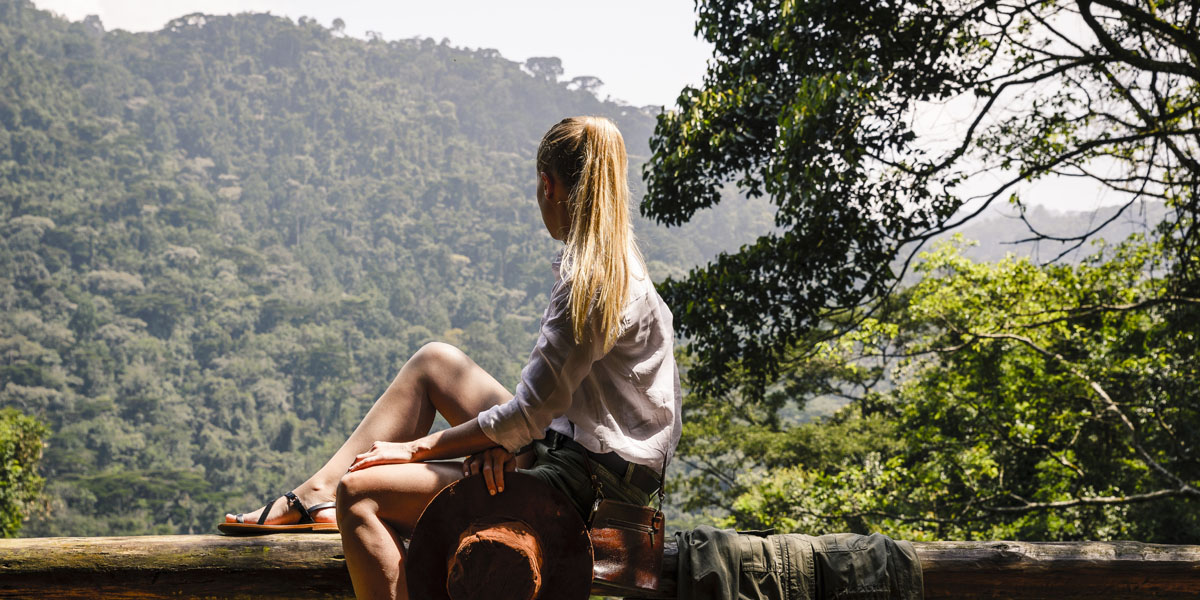
Uganda is a treasure trove of biodiversity, offering an unrivaled wildlife experience in the heart of Africa. From misty, ancient jungles to sprawling savannahs, the country's diverse landscapes provide a safe haven for some of the world's most spectacular creatures. Whether tracking endangered apes, cruising past massive crocodiles, or taking in sweeping panoramic views, the Pearl of Africa guarantees an unforgettable adventure. The top five national parks to explore are Bwindi Impenetrable National Park, Queen Elizabeth National Park, Murchison Falls National Park, Kibale National Park, and Kidepo Valley National Park.
3-days-chimpanzee-habituation-in-kibale-forest-park
3-days-gorilla-trekking-safari-and-lake-bunyonyi-relaxation-itinerary
3-days-murchison-falls-national-park-best-uganda-safari-road-trip
5-days-murchison-falls-safari-and-gorilla-trekking-in-bwindi
7-days-photography-uganda-safari-all-big-five-chimpanzee-and-gorillas
8-day-africa-big-five-safari-in-uganda-and-mabamba-swamp-shoebill
10-days-best-uganda-big-five-safaris-and-primate-experience
12-days-best-uganda-safari-big-five-and-uganda-primate-safari
Bwindi Impenetrable National Park
Bwindi Impenetrable National Park stands as the crown jewel of Uganda’s conservation achievements and a sanctuary of profound evolutionary significance. This ancient, mist-shrouded rainforest covers steep ridges and deep valleys, forming a dense, tangled canopy that has survived for over 25,000 years. As a UNESCO World Heritage site, it provides refuge to more than half of the world's remaining endangered mountain gorillas. The core appeal of Bwindi is the mountain gorilla trekking experience, an intensive foot safari that leads you through thick undergrowth, hanging vines, and muddy trails in search of one of the habituated gorilla families. Coming face-to-face with a massive silverback in his natural habitat is an intimate encounter that redefines your relationship with the natural world. Beyond the primates, the forest is a biodiversity hotspot sheltering 120 mammal species, over 350 species of birds—including 23 Albertine Rift endemics—and hundreds of rare butterflies.
Bwindi is located in the rugged southwestern corner of Uganda, approximately 500 kilometers from Kampala. Navigating to the park overland requires an immersive 8 to 9-hour drive via the Kampala-Mbarara highway, winding past terraced hillsides and rural villages. To optimize travel efficiency and eliminate long road transits, fly-in circuits are highly recommended. Scheduled and chartered bush flights operate daily from Entebbe International Airport, landing at either the Kihihi Airstrip for those tracking in the northern sectors (Buhoma and Ruhija) or the Kisoro Airstrip for the southern sectors (Rushaga and Nkuringo). The park is managed across these four distinct trekking sectors, each requiring specific permits, making advanced logistical planning essential for a seamless expedition.
Queen Elizabeth National Park
Nestled in the trough of the Great Rift Valley, Queen Elizabeth National Park presents a classic East African savannah tapestry framed by the snow-capped Rwenzori Mountains. The park’s unique geography includes sweeping acacia savannahs, thick ironwood forests, glassy crater lakes, and sprawling swamplands, allowing an incredible variety of wildlife to thrive. In the southern Ishasha sector, the park reveals one of its most famous mysteries: the iconic tree-climbing lions. Witnessing these apex predators lounging casually in the sprawling branches of ancient fig trees is a rare behavioral phenomenon that captivates wildlife photographers. The northern sectors offer exceptional big game tracking for massive Cape buffaloes, savannah elephants, leopards, and various antelopes. A defining highlight is a boat cruise along the Kazinga Channel, a natural waterway connecting Lake Edward and Lake George. Here, you will glide past one of the highest concentrations of hippos in Africa, giant Nile crocodiles, and an array of vibrant waterbirds.
Situated in western Uganda, Queen Elizabeth National Park lies roughly 400 kilometers from the capital city of Kampala. An overland transit typically takes between 6 to 7 hours, traveling through the scenic towns of Mbarara or Fort Portal, offering a beautiful look at the country's changing landscapes. For travelers prioritizing comfort and efficiency, domestic flight operations provide a swift alternative. Daily chartered and scheduled flights depart from Entebbe and land at the Kasese or Mweya airstrips, cutting travel time down to just over an hour. This ease of access makes it incredibly easy to combine Queen Elizabeth with primate tracking in neighboring forests.
Murchison Falls National Park
Murchison Falls National Park, Uganda’s oldest and largest protected area, offers a raw display of natural power and classic wilderness. The park is bisected by the historic Victoria Nile, which pumps life into a diverse landscape of rolling savannahs, borassus palm forests, and dense riverine woodlands. The defining feature of the park is the dramatic Murchison Falls itself. Here, the entire volume of the Nile is squeezed through a narrow 7-meter gorge before plunging forty-three meters into a churning pool below, creating a permanent mist and a thunderous roar that can be felt from afar. Game drives on the northern banks reveal immense herds of Rothschild's giraffes, elephants, lions, and countless Jackson's hartebeests. A boat safari heading upstream to the base of the falls provides close encounters with massive pods of hippos and heavy crocodiles, while a hike to the top of the falls offers an aerial perspective of the river’s explosive energy.
Located in northwestern Uganda, Murchison Falls sits approximately 300 kilometers from Kampala. The overland journey takes about 5 hours, traveling along a smooth tarmac road before entering the park's wilderness gates. The drive can be paired with a stop at the Ziwa Rhino Sanctuary en route, allowing you to track wild southern white rhinos on foot and tick off the first of the "Big Five" before entering the main park. For fly-in safaris, domestic flight options link Entebbe International Airport directly to Pakuba, Chobe, or Bugungu airstrips, reducing travel time to a brief, scenic 1-hour flight over the changing terrain.
Kibale National Park
Widely celebrated as the primate capital of the world, Kibale National Park is a lush, tropical rainforest that shelters an unparalleled density and diversity of primates. The park protects a stunning expanse of primary forest, shifting seamlessly from lowland marshes into montane woodland. Thirteen distinct primate species live within these borders, including red colobus monkeys, L'Hoest's monkeys, grey-cheeked mangabeys, and olive baboons. However, the undisputed focus of Kibale is its population of over 1,500 chimpanzees. Chimpanzee tracking excursions allow you to follow a habituated community as they swing through the high canopy, vocalize loudly, and interact on the forest floor. For a more intense experience, the Chimpanzee Habituation Experience (CHEX) allows you to spend a full day accompanying researchers, watching the chimps from the moment they wake up until they build their nests at night. The forest edge also blends into the Bigodi Wetland Sanctuary, a community-run boardwalk trail exceptional for spotting the great blue turaco and rare swamp mammals.
Kibale National Park is located in western Uganda near the attractive tourism hub of Fort Portal, about 320 kilometers from Kampala. The overland route is highly accessible and takes approximately 5 hours along well-maintained roads, passing through lush tea plantations and crater lake fields. Travelers looking to avoid driving can utilize daily domestic flights from Entebbe to the Kasese Airstrip. From Kasese, a comfortable 1-hour road transfer brings you directly into the heart of the forest. This strategic positioning makes Kibale a natural and highly efficient midpoint link when moving between Murchison Falls and Queen Elizabeth National Park.
Kidepo Valley National Park
For those seeking an untamed, isolated wilderness, Kidepo Valley National Park stands alone. Located in the remote Karamoja region, this park features a sweeping, semi-arid savannah flanked by rugged mountain ranges that look like an untouched Africa from a bygone era. The golden plains are punctuated by borassus palm groves and dry riverbeds that fill up during the short rains. Because of its remote location, Kidepo sees a fraction of the visitors that frequent the southern parks, providing an exclusive, undisturbed safari experience. The park holds species that cannot be found anywhere else in Uganda, including cheetahs, caracals, bat-eared foxes, and ostriches. Massive herds of Cape buffaloes—sometimes numbering in the thousands—roam the Narus Valley alongside lions, leopards, and elephants. Culturally, the park offers fascinating encounters with the traditional Karamojong pastoralists and the isolated Ik tribe living high on Mount Morungole, providing deep insight into the region's ancient heritage.
Tucked into Uganda's far northeastern corner along the borders of South Sudan and Kenya, Kidepo is the most logistically isolated park in the country. Travelling overland from Kampala is an adventurous undertaking, covering roughly 570 kilometers and requiring a grueling 10 to 12-hour drive that is typically broken up over two days. To maximize field time and avoid road fatigue, taking a fly-in circuit is highly recommended. Scheduled and chartered flights depart regularly from Entebbe International Airport, landing directly at the Lomej Airstrip inside the park within two hours. This aerial route glides over the changing landscapes of Uganda, delivering you directly into the heart of the valley.
When is the best time to visit Uganda national parks
The optimal window to explore Uganda’s national parks is during the dry seasons: from June to August and December to February. During these months, the diminished rainfall thins out the dense forest vegetation in Bwindi and Kibale, making mountain gorillas and chimpanzees significantly easier to track. Out on the savannahs of Queen Elizabeth and Murchison Falls, wildlife predictably congregates around permanent water sources like the Kazinga Channel and the Victoria Nile, offering exceptional game viewing. The dry tracks also make remote northern drives into Kidepo Valley smoother and more accessible. Conversely, the wet seasons from March to May and September to November are excellent for avid birdwatchers, as migratory birds arrive, the landscapes turn incredibly lush, and primate permits face lower demand.
Where to sleep in Uganda national parks
Accommodations within and around Uganda's national parks span a diverse range of styles tailored to their respective ecosystems. In primate sanctuaries like Bwindi Impenetrable Forest, you will find luxury eco-lodges and cozy tented camps built seamlessly into the steep canopy, offering private wooden decks with mist-shrouded forest views. Savannah destinations like Queen Elizabeth and Murchison Falls feature expansive safari lodges and riverfront camps positioned directly along active game corridors. Many of these properties overlook the Nile or the Kazinga Channel, allowing you to watch hippos and elephants drink from the comfort of your room or the swimming pool. In remote areas like Kidepo Valley, accommodation choices range from high-end wilderness lodges perched on rocky kopjes to well-maintained public campsites for a raw, fully immersive bush experience.
Booking Uganda national parks with us Roads of Adventure safaris
When you book your Ugandan expedition with Roads of Adventure Safaris, you are partnering with a passionate local team that understands these ecosystems intimately. Operating directly from our base in Kampala, we design customized itineraries that match your exact interests, whether you want an intense gorilla habituation experience or a remote fly-in circuit to Kidepo Valley. We handle all complex logistics, including securing competitive gorilla and chimpanzee trekking permits, arranging domestic bush flights, and booking top-tier eco-lodges. You will traverse the terrain in our custom-built 4x4 safari landcruisers, accompanied by our elite, professional local guides who possess a lifelong knowledge of tracking and regional conservation. We manage every fine detail, ensuring a seamless, deeply authentic, and impactful journey through the Pearl of Africa.
