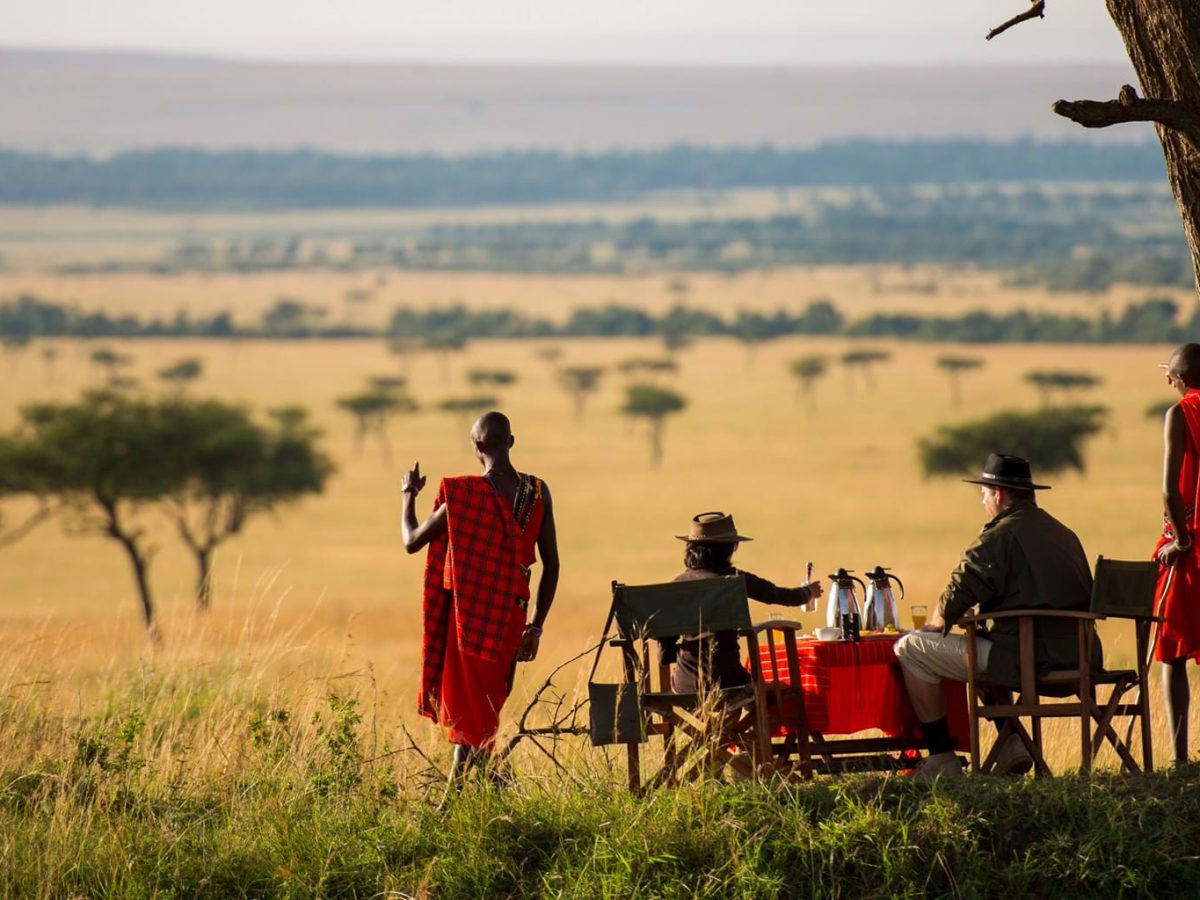
An unforgettable safari in Kenya immerses you in the raw beauty of East Africa. To experience the ultimate wilderness, your itinerary should not miss these six iconic destinations: the Maasai Mara National Reserve, Amboseli National Park, Lake Nakuru National Park, Samburu National Reserve, Tsavo National Parks, and Lake Naivasha
3-days-masai-mara-national-reserve-kenya-safari-tour-package
4-days-masai-mara-and-lake-nakuru-kenya-safari-tour-package
5-days-masai-mara-safari-lake-nakuru-and-hells-gate-national-park-kenya-tour
7-days-luxury-kenya-safari-holiday-vacation
1. Maasai Mara National Reserve
The Maasai Mara National Reserve is globally recognized as the crown jewel of African wildlife destinations. Spanning roughly 1,510 square kilometers, this boundless savannah ecosystem hosts the most incredible density of large mammals on earth. Travelers often contrast the open golden plains of the Mara with a safari in Uganda, where the landscapes are dominated by dense, tropical rainforests like Bwindi. The ultimate highlight here is the annual Great Wildebeest Migration, which occurs between July and October. During this period, over two million wildebeest, zebras, and gazelles travel north from the Serengeti, executing perilous crossings across the crocodile-infested Mara River.
Beyond the migration, the Maasai Mara is a haven for apex predators. It is one of the best places in the world to observe large lion prides, elusive leopards, and cheetahs hunting in the open plains. The reserve's fertile soils, enriched by ancient volcanic activity, support massive resident populations of elephants, buffaloes, and giraffes year-round. For an elevated experience, many visitors choose to stay in the surrounding private Maasai conservancies, which allow off-road tracking and night game drives. Whether you are floating over the plains in a hot-air balloon at sunrise or following a leopard through the acacia thickets, the Mara delivers the quintessential, high-octane drama of the African wilderness.
2. Amboseli National Park
Situated right on the border of Tanzania, Amboseli National Park provides one of the most visually stunning backdrops in all of Africa. The park is world-famous for its majestic views of Mount Kilimanjaro—the tallest free-standing mountain on Earth—which towers over the plains at 5,895 meters. While travelers looking for alpine trekking often choose a safari in Uganda to explore the snow-capped Rwenzori Mountains, Amboseli offers the unrivaled visual treat of watching giant wildlife move against a backdrop of permanent glacial peaks.
Amboseli is fondly known as the "Land of Giants" due to its remarkably dense population of free-ranging African elephants. Thanks to over four decades of continuous research at the Elephant Research Camp, these elephant families are highly accustomed to safari vehicles, allowing visitors to watch complex herd behaviors from just a few meters away. The park’s unique topography centers around the permanent swamps of Ol Okenya, which are continuously fed by underground freshwater springs melting off Kilimanjaro. These lush wetlands serve as a literal oasis amidst the surrounding dusty plains, drawing thousands of hippos, buffaloes, wildebeests, and vibrant flocks of waterbirds during the heat of the day.
3. Lake Nakuru National Park
Tucked safely within the floor of the Great Rift Valley, Lake Nakuru National Park is a compact, highly successful wildlife sanctuary. While a standard savanna safari in Uganda might require traveling long distances between rare animal sightings, Lake Nakuru offers exceptional wildlife viewing within a relatively small, highly accessible 188-square-kilometer area. Historically renowned for the millions of lesser flamingos that painted its shallow alkaline shores a vibrant neon pink, the park remains a premier birdwatching mecca with over 450 recorded avian species.
Today, the true triumph of Lake Nakuru is its status as a government-protected Rhino Sanctuary. Established in 1987 to combat rampant poaching, the heavily guarded park is now home to a thriving population of over 100 eastern black rhinos and southern white rhinos. Safari-goers are almost guaranteed close-up encounters with these prehistoric giants grazing along the lakeshore grasslands. Furthermore, the surrounding yellow-barked acacia woodlands and dramatic euphorbia forests protect the rare Rothschild’s giraffe, large prides of tree-climbing lions, and an unusually high concentration of leopards that utilize the dense canopy for hunting.
4. Samburu National Reserve
For travelers looking to venture off the well-trodden paths of southern Kenya, Samburu National Reserve offers a rugged, semi-arid wilderness experience. Located in the remote northern frontier, Samburu’s fierce, sun-baked landscape contrasts sharply with the lush, riverine settings found on a typical safari in Uganda. The lifeblood of this parched region is the muddy Ewaso Ng'iro River, which cuts through the red-dirt plains, attracting massive concentrations of wildlife to its palm-fringed banks.
Samburu is globally unique because it is home to the "Samburu Special Five"—a collection of rare, endemic species specially adapted to desert conditions that you won't find in the Mara or Serengeti. This exclusive group includes the heavily striped Grevy’s zebra, the beautifully geometric reticulated giraffe, the spear-horned Beisa oryx, the vivid blue-necked Somali ostrich, and the endearing gerenuk—an antelope with an incredibly long neck that stands fully upright on its hind legs to browse thorny acacia bushes. Sharing the terrain with these specialized herbivores are Kenya's formidable northern predators, including healthy populations of lions, leopards, and large packs of endangered African wild dogs.
5. Tsavo National Parks (East and West)
Combined, Tsavo East and Tsavo West form one of the largest protected wildlife areas in the world, covering a staggering 22,000 square kilometers of raw, unadulterated terrain. The sheer scale of Tsavo offers an expansive, untamed atmosphere that mirrors the vast wilderness regions encountered during a multi-day safari in Uganda. Tsavo East is characterized by flat, semi-arid plains and the iconic Yatta Plateau—the world’s longest fossilized lava flow. This sector is famous for its unique "red elephants," which take on a distinct crimson hue from dusting themselves in the park’s nutrient-rich, iron-red volcanic soil.
In contrast, Tsavo West is a dynamic landscape of volcanic cones, dramatic rocky outcrops, and sweeping acacia woodlands. The undisputed highlight of Tsavo West is Mzima Springs, a subterranean water source that filters millions of gallons of crystal-clear water daily through volcanic rock from the nearby Chyulu Hills. Here, visitors can enter a specially constructed underwater viewing chamber to watch hippos and crocodiles gliding effortlessly through the pristine waters alongside schools of barbel fish. Tsavo’s massive size and varied topography provide a dramatic, uncrowded safari experience where the wildlife feels exceptionally wild.
6. Lake Naivasha
Lake Naivasha is a beautiful freshwater lake sitting at the highest point of the Great Rift Valley, serving as the perfect tranquil interlude to a hectic game-drive itinerary. Much like the peaceful water excursions enjoyed during a safari in Uganda along the Kazinga Channel, Naivasha trades the traditional 4x4 vehicle for immersive boat safaris. Floating past massive pods of wallowing hippos and watching African fish eagles dive effortlessly to snatch tilapia from the water's surface provides a uniquely calming perspective on East African nature.
The lake is fringed by dense papyrus swamps and yellow-barked fever trees, creating a haven for more than 400 species of birds. A mandatory extension to any Naivasha visit is a walking safari on Crescent Island Game Sanctuary, a partially submerged volcanic crater located right in the lake. Because there are no large predators on the island, visitors can safely walk on foot alongside free-roaming zebras, wildebeests, impalas, and waterbucks. This intimate, ground-level interaction with wildlife provides a ref
What is the most efficient way to combine a safari in Kenya’s 6 top destinations with a gorilla tracking safari in Uganda?
An efficient combined itinerary requires balancing Kenya’s vast savannahs with Uganda’s dense rainforests. The most seamless route begins in Kenya to tackle the high-octane game viewing while you are fresh. Travelers typically fly into Nairobi, execute a loop encompassing Amboseli, Tsavo, Naivasha, Nakuru, and the Maasai Mara, and then connect to Uganda. Trying to drive across the border between the coastal Tsavo or southern Amboseli to Uganda is highly impractical due to the massive distances.
Instead, the optimal pivot point is from the Maasai Mara. From airstrips within the Mara, you can take a scheduled regional flight directly to Entebbe International Airport in Uganda (often routing seamlessly via Kisumu for customs). From Entebbe, travelers can either take a 45-minute domestic charter flight to the Kihihi or Kisoro airstrips or embark on an 8-hour scenic drive to Bwindi Impenetrable National Park. This strategic sequence minimizes downtime, keeping transit days to a minimum so that you do not waste precious holiday hours sitting in traffic.
How do park entry fees and permit costs compare between Kenya's top 6 destinations and a safari in Uganda?
Budgeting for an East African expedition requires understanding the stark differences in fee structures. Kenya’s national parks and reserves charge daily conservation entry fees. For instance, the Maasai Mara National Reserve, Amboseli, and Lake Nakuru have localized daily fees ranging from $80 to $200 USD per non-resident adult per day, depending on the season and whether they are managed by the national government or local counties. Over a 10-day Kenyan circuit across multiple parks, these entry fees accumulate steadily alongside vehicle and driver fees.
Conversely, a safari in Uganda introduces a heavily front-loaded cost structure dominated by activity permits. While standard savannah parks in Uganda (like Queen Elizabeth or Murchison Falls) charge comparable daily fees of around $40 to $45 USD, the primary draw is primate tracking. A single mountain gorilla trekking permit in Bwindi costs $800 USD, while a chimpanzee habituation or tracking permit in Kibale Forest costs around $250 USD. Therefore, while Kenya demands a consistent, moderate daily spend across its 6 top destinations, Uganda requires a significant, immediate capital layout for its exclusive primate encounters.
Which of the 6 Kenyan destinations offers the sharpest ecological contrast to a safari in Uganda?
The ultimate ecological foil to Uganda's tropical, rain-drenched environments is found in the rugged landscapes of Samburu National Reserve and the massive, volcanic plains of Tsavo East. Uganda is predominantly lush, characterized by dense, prehistoric canopy forests, crater lakes, and sprawling wetlands fed by the Nile. It is an environment built around water and thick vegetation, which dictates how you view wildlife—often on foot, peering through vines or dense foliage.
Samburu and Tsavo, by contrast, introduce travelers to the raw beauty of the semi-arid northern and eastern frontiers. Samburu features striking red dirt, sun-baked scrublands, and dramatic rocky inselbergs. The species here are entirely desert-adapted, showcasing survival adaptations completely foreign to Ugandan wildlife. Tsavo offers endless horizons of ancient lava flows (the Yatta Plateau) and dry whistling thorn bushes. Witnessing dust-red elephants in Tsavo or a blue-necked Somali ostrich sprinting across the parched earth of Samburu provides the ultimate environmental counterweight to the misty, emerald hills of a Ugandan primate tracking excursion.
What are the visa and health requirements when traveling between Kenya's top parks and Uganda?
Crossing international borders in East Africa requires meticulous paperwork, especially when moving between wilderness areas. To streamline this process, travelers should apply for the East Africa Tourist Visa. This single-entry, joint visa costs $100 USD and allows multi-country entry between Kenya, Uganda, and Rwanda for up to 90 days. It is vastly superior to purchasing separate visas for each country, which incurs higher costs and causes frustrating delays at border immigration counters or airports.
On the health front, a Yellow Fever vaccination certificate is an absolute, non-negotiable requirement when moving between Kenya and Uganda. Border officials at Entebbe Airport or land crossings like Busia will strictly verify your physical or digital Yellow Fever card. Additionally, malaria is prevalent across all 6 Kenyan destinations (particularly low-lying water zones like Lake Naivasha and Tsavo) and throughout most primate sectors during a safari in Uganda. Prophylactics are highly recommended, alongside standard updates for Hep A, Typhoid, and Tetanus.
How does predator viewing in the Maasai Mara differ from tracking predators on a safari in Uganda?
The Maasai Mara is arguably the easiest place on earth to spot large apex predators in plain sight. Its vast, wide-open grasslands offer zero concealment for prides of lions, coalitions of cheetahs, and leopards utilizing solitary acacia trees. The sheer biomass of grazing herbivores ensures that predators are abundant, highly active, and entirely habituated to the presence of open-sided safari vehicles, allowing for exceptional, unobstructed photography.
In contrast, tracking predators on a safari in Uganda is a far more nuanced, hide-and-seek adventure. In parks like Queen Elizabeth National Park, lions are famous for their unique behavior of climbing thick fig trees to escape heat and tsetse flies. The vegetation is notably thicker, featuring dense euphorbia bush and tall savannah grass. Lions and leopards in Uganda are found in smaller numbers and require skillful tracking by experienced rangers, often using radio-collars for experiential research tracking. The Mara offers guaranteed abundance, while Uganda offers the unique thrill of specialized arboreal feline tracking.
Can the unique birdlife of Lake Nakuru and Lake Naivasha be replicated on a Ugandan safari circuit?
The short answer is no—not in terms of sheer avian concentration, though Uganda holds its own in terms of unique species diversity. Kenya's Rift Valley lakes, specifically Nakuru and Naivasha, create localized alkaline and freshwater chemical environments that attract specialized bird populations on a staggering scale. The sight of tens of thousands of pink flamingos skimming Lake Nakuru, or dozens of African fish eagles nesting in the fever trees of Lake Naivasha, represents an intense concentration of specific waterbirds unmatched in its visual density.
However, a safari in Uganda appeals to a completely different type of birdwatching enthusiast. Uganda boasts over 1,000 recorded bird species due to its positioning at the convergence of the East African savannah and the West African Congolese rainforest. While you won't see a lake turned solid pink by flamingos, Uganda offers the Holy Grail of African birding: the prehistoric-looking Shoebill Stork, found in the swampy fringes of Lake Mabamba or Murchison Falls. Uganda also hosts magnificent forest endemics like the Great Blue Turaco, making Kenya better for raw spectacles and Uganda better for rare, forest-dwelling lifers.
How do the elephant herds of Amboseli compare to those encountered in Uganda’s national parks?
Amboseli National Park is unique because its elephant populations have lived completely undisturbed by poaching for decades, courtesy of the long-term Amboseli Elephant Research Project. Consequently, the herds here display incredibly relaxed, natural behaviors around vehicles. Furthermore, the gene pool has remained intact, meaning Amboseli is one of the few places left in Africa where you can reliably photograph iconic "Super Tuskers"—old bulls whose ivory tusks are so long they literally scrape the dusty ground.
When you look at elephants during a safari in Uganda, the experience and the animals themselves are ecologically distinct. Uganda’s main populations in Murchison Falls and Queen Elizabeth National Park are primarily savanna elephants, but because of Uganda's proximity to the Congo basin, parks like Kibale and Bwindi host distinct forest elephants (Loxodonta cyclotis). These forest elephants are smaller, have straighter, downward-pointing tusks, and live in smaller family groups hidden within deep jungle canopies, offering a stark contrast to Amboseli's giants roaming the open, marshy plains.
What makes the "Samburu Special Five" a necessary addition if a traveler has already booked a safari in Uganda?
If your itinerary is heavily weighted toward Uganda, adding Samburu National Reserve is essential for taxonomic completeness. Uganda is spectacular for primates, forest species, and classic riverine wildlife, but its geography cannot support arid-zone specialists. If you only visit Uganda and southern Kenya, you will completely miss out on a highly specialized branch of East African evolution that has adapted brilliantly to desert survival.
The "Samburu Special Five" consist of animals structurally modified for extreme heat and water scarcity. The Grevy’s zebra sports much narrower, mesmerizing stripes and large, rounded mule-like ears to dissipate heat. The Gerenuk features an elongated neck and modified hip joints allowing it to stand tall on its hind legs to reach moisture-rich desert leaves. The Reticulated giraffe displays striking, sharp-edged liver-colored patches, while the Beisa oryx boasts compact, heat-tolerant muscle structures and spear-like horns. Experiencing these unique creatures amidst Samburu’s parched earth adds an entirely new dimension of biodiversity that a rainforest-heavy Ugandan trip lacks.
Seasonal Dynamics & Packing Logistics
How do you align the best months for the Great Migration in the Mara with peak tracking seasons in Uganda?
Aligning a dual-country safari requires targeting the dry seasons of both nations, which fortunately overlap beautifully mid-year. The absolute sweet spot for this combined adventure falls between July and September. In Kenya, this window marks the peak of the dry season, forcing wildlife to congregate around permanent water sources. More importantly, it directly coincides with the Great Migration in the Maasai Mara, when massive herds of wildebeest take the ultimate gamble crossing the Mara River.
Simultaneously, June to September represents the long dry season in Uganda. This timing is absolutely critical for a safari in Uganda, particularly for gorilla trekking in Bwindi or chimpanzee tracking in Kibale. Dry weather means the steep, muddy forest trails are significantly less slippery, making the strenuous mountain hikes manageable. Furthermore, thinner jungle canopy vegetation dramatically improves your visibility and photography conditions once you locate the primate families. Booking your trip during these months ensures peak wildlife viewing conditions across both countries.
What are the packing challenges when transitioning from Kenya’s hot savannas to Uganda’s wet rainforests?
Packing for a combined Kenya and Uganda safari is a masterclass in preparing for climate extremes. Kenya’s top 6 destinations mostly demand classic savanna wear: light, breathable, neutral-colored clothing (khaki, beige, or olive green) to deflect the intense equatorial sun during daytime game drives. You will also need a warm fleece jacket for chilly, early morning starts in high-altitude zones like the Maasai Mara or the rim of the Rift Valley near Nakuru.
However, transitioning to a primate safari in Uganda requires highly technical, heavy-duty gear. For the dense jungles of Bwindi, you must pack sturdy, waterproof hiking boots with deep tread for traction on steep, muddy slopes. Long, thick trousers and moisture-wicking long-sleeved shirts are mandatory to protect against stinging nettles and biting insects. You will also need thick gardening gloves to grab thorn-covered vegetation while climbing, a fully waterproof rain jacket to withstand sudden tropical downpours, and tall gaiters to prevent safari ants from crawling up your legs.
How does the concept of a "walking safari" differ between Lake Naivasha and Uganda’s primate tracks?
A walking safari on Lake Naivasha's Crescent Island is a serene, relaxed experience. Because the island is completely devoid of large predators like lions, hyenas, or leopards, travelers can stroll casually through open pastures alongside herds of giraffes, waterbucks, zebras, and wildebeests. The terrain is flat, grassy, and easy to navigate, allowing you to get within a few meters of habituated herbivores without any physical strain or underlying sense of danger. Conversely, a walking safari or tracking excursion during a safari in Uganda is a physically demanding, adrenaline-fueled expedition led by armed park rangers. For gorilla or chimpanzee tracking, you are not strolling on manicured pathways; you are hacking through thick, trackless jungle using machetes, climbing slick mud walls, and scrambling over fallen logs at high altitudes. The emotional payoff is immensely profound, but it requires a solid level of physical fitness, making it a rugged wilderness trek compared to the gentle nature walks of Naivasha.
What are the accommodation style variations between Kenya's luxury camps and Uganda's eco-lodges?
Kenya's classic safari industry has perfected the art of the luxury tented camp, visible across the Mara, Amboseli, and Samburu. These accommodations seamlessly blend old-world romance with modern luxury. Guests stay in expansive canvas tents set on permanent raised wooden platforms, featuring polished hardwood floors, en-suite porcelain bathrooms, hot running water, and private verandas looking out over game-rich rivers or plains. They echo the golden age of exploration, emphasizing open-air dining under the stars and immersive proximity to the sounds of the African bush. In contrast, accommodation on a safari in Uganda leans heavily toward solid, architectural eco-lodges built to withstand cloudforest environments. Because properties near Bwindi or Kibale are perched on steep, misty ridges, they utilize local volcanic stone and heavy timber to create cozy, insulated chalets. These lodges focus on sustainability and thermal comfort, often featuring stone fireplaces to ward off the damp, high-altitude mountain chill. While Kenya offers sweeping views across open plains from a canvas terrace, Uganda provides an intimate, nest-like escape tucked directly into a vibrant jungle canopy.
How does water-based wildlife viewing at Lake Naivasha contrast with Uganda’s Kazinga Channel or Nile safaris?
Lake Naivasha offers an intimate, tranquil introduction to water-focused wildlife viewing. Utilizing small, motorized skiffs, travelers cruise past dense papyrus beds to observe large pods of resident hippos surfacing just meters away. The birdlife is spectacular, and the proximity to the shoreline allows you to see giraffes and antelopes drinking against the backdrop of the dramatic Rift Valley cliffs. It is a peaceful, boutique boat trip that perfectly breaks up a standard driving itinerary.
Taking a boat safari during a safari in Uganda, however, is conducted on a grander, more dramatic scale. Boat cruises along the famous Kazinga Channel in Queen Elizabeth National Park or the Nile River in Murchison Falls utilize large, double-decker vessels. Because these rivers serve as the primary water sources for miles during the dry season, the shorelines become packed with hundreds of massive Nile crocodiles, wallowing herds of buffaloes, and family groups of elephants bathing and swimming in the deep water. Uganda's water safaris offer a front-row seat to high-density, multi-species interactions, transforming a simple boat ride into a major game-viewing highlight.
Which Kenyan destination is easiest to pair with a short weekend getaway to Uganda, and why?
The Maasai Mara National Reserve is unquestionably the easiest Kenyan destination to pair with a quick excursion to Uganda. This accessibility is driven by highly specialized aviation infrastructure tailored for luxury travelers. During the peak summer travel months, regional safari airlines operate direct commercial flights connecting the Maasai Mara’s primary bush airstrips to Entebbe International Airport in Uganda.
Instead of wasting two full days driving back to Nairobi, catching an international flight, and clearing customs, a traveler can easily complete a morning game drive in the Mara, board a light aircraft, clear customs smoothly at the Kisumu lakeside border point, and land in Entebbe by mid-afternoon. From Entebbe, you are perfectly positioned to take a short domestic flight straight to the gorilla highlands or track chimpanzees nearby, making the transition incredibly seamless for travelers on tight schedules.
How do community-based conservation models differ between the Maasai Mara conservancies and Ugandan communities?
The private conservancies surrounding the Maasai Mara National Reserve utilize a highly sophisticated financial leasing model. Here, thousands of local Maasai landowners pool their private land parcels and lease them directly to boutique safari operators. In return, the Maasai receive guaranteed monthly rental payments, clear employment priority at the eco-lodges, and funded community development projects, regardless of seasonal tourism fluctuations. This structure provides a direct financial incentive to protect wildlife habitats from agricultural conversion.
During a safari in Uganda, community conservation operates primarily through structured government revenue-sharing programs. The Uganda Wildlife Authority (UWA) legally redirects 20% of all national park entry fees directly to the local communities living along the park borders. For every $800 gorilla permit sold, a direct portion funds local schools, clean water infrastructure, and health clinics in the surrounding villages. This model successfully transforms local communities from potential poachers into active forest guardians, ensuring that the local population benefits directly from the high-value primate tourism economy.
Booking safari in Kenya with us Roads of Adventure safaris
Booking a Kenya safari with Roads of Adventure Safaris offers tailored trips to iconic destinations like the Maasai Mara, Amboseli, and Lake Nakuru. Packages typically include private 4x4 Land Cruiser transport, expert local guides, accommodations, and park fees, with costs generally ranging from $150 to $10,000+ per day depending on your travel style.
