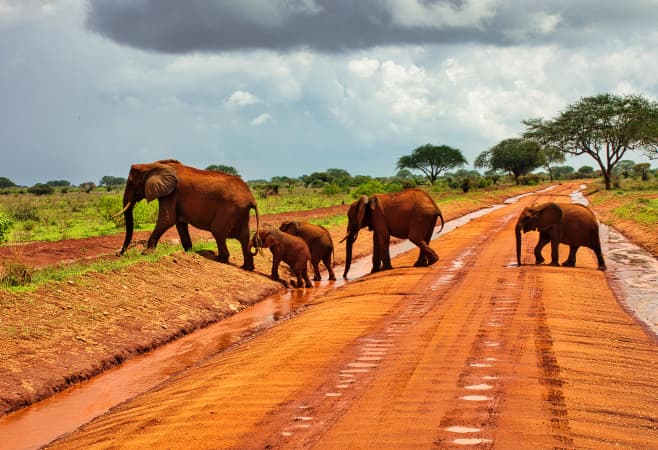
Top things to do in Tsavo National Park include thrilling game drives to spot the famous "red elephants" and Big Five, exploring the volcanic Shetani Lava Flows, visiting the crystal-clear Mzima Springs, and walking up Mudanda Rock for panoramic views. Visitors can also see the scenic Lugard Falls and visit the Ngulia Rhino Sanctuary.
3-days-tsavo-east-and-taita-hills-kenya-wildlife-safari-itinerary
3-days-tsavo-east-and-west-kenya-safari-from-diani-beach
3-days-luxury-kenya-safari-itinerary-from-mombasa-to-tsavo-east-and-tsavo-west
5-days-amboseli-tsavo-west-and-tsavo-east-kenya-wildlife-safari-tour
1) Game Drives
Tsavo East and Tsavo West offer some of Africa’s most iconic game-drive opportunities, with a diversity that satisfies both first-time visitors and seasoned safari lovers. Early morning drives start as the land wakes: the air is cooler, the animal sounds are clearer, and the first light casts long shadows across the savanna. Wildcats, antelope, and ungulates become more active, while predators such as lions and leopards often emerge from their daytime hideouts to hunt as the sun rises. In Tsavo East, the red-dusted elephants are a hallmark of the landscape, a reminder of how the park’s dry, dusty air paints the wildlife in striking, almost cinematic tones. Tsavo West, while famed for its rugged terrain and volcanic backdrops, also delivers dramatic predator-prey dynamics along riverine habitats and rocky outcrops.
Late afternoons bring the golden-hour spectacle: silhouettes of acacia trees punctuate the horizon as the savanna radiates warm amber hues. Water sources—springs, dams, and the Galana River—become hubs of activity, with elephants, buffalo, zebras, and impalas converging in anticipation of night. Night drives, where permitted by operator and park regulations, can reveal a different cast of characters—genets, civets, and nocturnal predators—under the glow of spotlights. For photographers, the combination of dusty light, dramatic baobabs, and a wide variety of species in relatively compact areas creates prime moments. A seasoned guide will optimize routes around known hotspots like Aruba Dam, perched high on the calendar of memorable sightings, while balancing the needs of conservation and wildlife distress signals. In short, a well-planned combination of early and late drives in both Tsavo East and West provides a broad, dynamic panorama of East Africa’s iconic wildlife.
2) Mzima Springs (Tsavo West)
Mzima Springs is a marvel where one of Tsavo West’s most enduring natural phenomena becomes a window into aquatic life. The springs maintain a steady outflow that sustains a lifelike ecosystem within a harsh savanna environment, and the underwater viewing hides provide a rare chance to observe hippos and crocodiles as they operate below the surface, seemingly unbothered by the world above. The experience blends the visceral thrill of watching powerful predators with the serene rhythm of a spring-fed landscape. From the dry season’s heat to the green flush of the wet season, Mzima Springs remains a constant pulse in the park’s heart, drawing wildlife in predictable patterns and offering visitors the kind of intimate animal encounter that feels almost cinematic.
As you approach the hides, you’ll notice the cool, chlorinated-spring air mingling with the open, arid world beyond. Hippos lounge in the shallows, their bodies bobbing with each breath, while crocodiles lie still, their opaque eyes catching the light as if they hold a narrative that only the water can testify to. The hides themselves are designed to minimize disturbance, with glass acting as a near-invisible barrier that invites close, low-angle observation. Guides often narrate the drama of life at the springs—how hippos create a chorus of vocalizations during feeding frenzies, or how crocodiles thermally regulate by arching into sunny perches. For photographers and wildlife enthusiasts alike, Mzima Springs is a rare, contemplative stop that emphasizes water as a life-giving thread through Tsavo’s arid tapestry.
3) Shetani Lava Flows (Tsavo West)
The Shetani Lava Flows represent one of Tsavo West’s most dramatic, otherworldly landscapes. This 50-kilometer expanse of jagged black lava invites visitors to walk and drive through a landscape that feels sculpted by ancient volcanic forces. The contrast between the obsidian ground and the surrounding savanna vegetation creates stark, surreal panoramas perfect for landscape photography and silent reflection. The lava flows also host a distinctive set of microhabitats where strange textures, fissures, and rock formations shelter a variety of reptiles, small mammals, and an abundance of birdlife that have adapted to these rugged substrates.
As you traverse the flows, tones shift with the sun: shadows lengthen in the late afternoon, and the lava’s surface takes on a tactile, charcoal-y glow. The terrain challenges the eye in the best possible way, inviting explorations of how geology shapes ecology. Wildlife tends to be found along edges where the lava meets more hospitable savanna—where green pockets, grasses, and water sources attract grazers and the predators that pursue them. Guides share insights about geological history, lava cooling patterns, and how the landscape influences travel routes for elephants and other large mammals. For nature lovers, the Shetani Lava Flows offer an arresting reminder that Africa’s wildlife exists not only in the animals but in the very ground they tread. The experience blends geology, ecosystem resilience, and a sense of awe at Earth’s deep time.
4) Mudanda Rock (Tsavo East)
Mudanda Rock towers over Tsavo East like a natural fortress, a cathedral-like inselberg that dominates the southern plains. Reaching a height that affords sweeping views of the surrounding ecosystem, Mudanda Rock is a magnet for wildlife, particularly elephants who gather at the natural pool below to drink during the heat of the day. The climb to the summit rewards visitors with panoramic vistas of the savanna, the distant Acacia groves, and the patches of riverine habitat that thread through the landscape. The pool beneath Mudanda Rock acts as a powerful focal point for animal behavior; elephants, buffalo, and other herbivores regularly converge to quench their thirst, sometimes participating in playful mud-bathing rituals that are a photographer’s dream.
The ascent is often integral to a day’s rhythm: early-morning starts can incorporate the climb before the heat peaks, offering refracted light across the rock’s weathered surface. As the day matures, shadow plays across the rock face and the surrounding plains, providing opportunities for dramatic silhouette photography and close-up moments with elephants drinking at the pool’s edge. The geology behind Mudanda Rock—its domed, rounded shape and the mineral-rich soils that sustain nearby vegetation—also informs the park’s ecology, influencing animal movement patterns and the distribution of plant communities around the inselberg. For visitors, Mudanda Rock delivers a quintessential Tsavo East experience: a monumental landmark, intimate wildlife moments, and expansive, timeless vistas that connect geologic wonder with living ecology.
5) Lugard Falls (Tsavo East)
Lugard Falls is a dramatic geological feature where the Galana River carves through a sequence of rocky gorges, creating a tapestry of rushing water, spray, and sculpted stone. The sightlines here are powerful: water thunders over rocky ledges, carving a dynamic course that feeds the park’s broader wet-dry seasonal rhythms. For visitors, Lugard Falls provides a kinetic contrast to the more sedate savanna and tree-lined riverine scenes elsewhere in Tsavo East. The roaring sound, cool spray, and the river’s turquoise gloss against weathered basalt make it a magnet for photographers seeking movement and intensity in a single frame.
Wildlife is never far away. The riverine corridor around Lugard Falls supports a range of species—buffalo and antelope pause along the banks; birds whet their beaks on the spray; and predators may exploit the density of herbivores drawn to the water. A well-timed visit can offer encounters with elephant herds traversing the river’s edge or grazing on the nearby woodland margins. Accessibility varies with weather and river conditions, so guides coordinate visits to maximize safety and viewing potential. Lugard Falls is a vivid reminder that Tsavo East’s life is rock-and-water as much as it is grass and acacia. Its dramatic setting enriches a safari with a sensory reminder of the power of nature’s forces to shape landscapes and wildlife behavior.
6) Ngulia Rhino Sanctuary (Tsavo West)
Ngulia Rhino Sanctuary stands as a beacon of conservation within Tsavo West, offering a rare glimpse into the protected world of Africa’s black rhinoceros. This sanctuary is designed to shield rhinos from poaching pressures that have imperiled many wild populations, providing curated viewing opportunities within a secure, managed landscape. A visit here blends wildlife observation with firsthand lessons in habitat management, anti-poaching strategies, and community-based conservation efforts that underpin modern wildlife protection. The presence of rhinos—indicators of ecological integrity—creates a poignant focal point on many itineraries, inviting visitors to reflect on the broader challenges facing Africa’s iconic megafauna.
In practical terms, Ngulia provides controlled, guided viewing experiences that emphasize safety, minimal disturbance, and maximum learning. Rangers and researchers are often on-site to monitor rhino health, movement, and the macroecology that supports their survival. While rhino sightings are not guaranteed due to the animals’ elusive and wary nature, the sanctuary’s secure design and management increase the likelihood of meaningful encounters. For conservation-minded travelers, a stop at Ngulia Rhino Sanctuary offers a powerful narrative thread—one that connects the thrill of wildlife viewing with the responsibilities and successes of protecting endangered species. It is a sobering, inspirational complement to the park’s other spectacles.
7) Bird Watching
Tsavo’s avifauna is a treasure for birders, with a diversity that spans open savanna, riverine habitats, swamps, and rocky outcrops. The park’s 500-plus species (and counting) make it a premier destination for both casual birders and hard-core lifers alike. Lilac-breasted roller, secretary bird, and a variety of bee-eaters, vultures, eagles, and weavers pepper the skies and tree canopies. The spectacle isn’t just about rarity; it’s the sheer breadth—from ground-dwelling sandgrouse to waterbirds skimming the river—creating a constant, immersive soundtrack of bird calls and behaviors.
Best listening and viewing hours are dawn and dusk, when many species are most active and vocal. Guided walks and vehicle-based safaris can be tailored to focus on bird-rich zones: swamp edges, riverbanks, and the groves along the park’s watercourses. Binoculars, a field guide, and a good birding app become essential companions, helping you identify plumage variations and seasonal migrants. The quiet moments—watching a lilac-breasted roller perform a mid-air flip, or a secretary bird perching serenely on a termite mound—highlight Tsavo’s ecological complexity as a shared home for birds and mammals alike. For serious birders, Tsavo East and West offer year-round opportunities, with peak counts during migration windows and the region’s favorable climate.
8) Historical Sites: World War I and the Man-Eaters of Tsavo
Tsavo East and West are steeped in history as much as wildlife, with World War I landmarks and the infamous Man-Eaters of Tsavo contributing to a haunting, enduring narrative. The World War I sites in the region offer a tangible link to the colonial era—military bridges, trenches, and battle remnants that tell stories of the campaign, logistics, and daily life of soldiers stationed amid the East African landscape. A guided excursion to these sites provides context for the park’s historical layer, enriching a safari with insights into the region’s broader geopolitical past. For history enthusiasts, these sites offer a compelling counterpoint to the wildlife spectacle, reminding visitors that the land has long been a stage for human drama alongside animal drama.
The Man-Eaters of Tsavo—the pair of man-eating lions that terrorized rail workers in 1898—remain one of Africa’s most enduring wildlife legends. Exploring locations associated with these events connects visitors to a story that has reverberated through literature, cinema, and the popular imagination. Modern guides discuss the evidence, the colonial railway project, and the wildlife management lessons drawn from the episode. While the lions themselves are memorialized in stories and museums rather than as live participants in today’s safari, the tale adds a powerful narrative thread to a Tsavo itinerary, illustrating how humans and wildlife have intersected in this arid landscape for more than a century.
9) Sundowners & Bush Walks
Sundowners and bush walks are cornerstones of a Tsavo safari experience, bringing a refined yet wild rhythm to a day in the field. Sundowners—sunset drinks in secluded spots—offer a ceremonial pause to honor the day’s wildlife sightings, drift of the light across the savanna, and the soft chorus of insects that signals the onset of evening. Lodges and mobile camps curate scenic vantage points at rolling hills, riverbanks, or atop rocky outcrops where guests savor beverages, canapés, and panoramic views as the world shifts from day to night. The ritual is more than a drink; it’s a moment of reflection, shared story-telling by guides, and the chance to capture the last light on a landscape famous for its dramatic colors and silhouettes.
Bush walks provide an intimate, slower pace that reveals the textures and rhythms of the ecosystem at foot level. Guided by trained rangers, these walks focus on spoor, plant uses, bird calls, and small wildlife—habits and signs often missed from a vehicle. The pace is deliberate, safety-centric, and deeply immersive: you’ll notice insects’ micro-dynamics, the scent of acacia leaves after a light rain, and the way grasses bend with the slightest breeze. While walking carries more risk than a vehicle drive, properly managed bush walks in Tsavo—conducted with clear safety protocols and local knowledge—offer a transformative perspective: you become part of the ecosystem’s conversation, sensing its heartbeat in a new, personal way. Sundowners and bush walks together craft a balanced itinerary that blends the social ritual of sunset with the primal intimacy of moving through the bush on foot.
1) Best way to see Tsavo's wildlife
Tsavo's wildlife viewing benefits from a mix of strategy, timing, and terrain. The most reliable approach is a series of guided 4x4 jeep game drives, ideally scheduled during the dry season when vegetation is thinner and animal sightings cluster around water sources. In Tsavo East, the expansive savannah and sparse cover mean you can cover more ground with a capable guide who knows where elephants, lions, cheetahs, and wild dogs tend to move as the day heats up or cools down. Tsavo West, with its rugged landscapes and riverine pockets, rewards patient spot-seeing and flexibility—some of the park’s most dramatic moments often arrive at waterholes, along the Galana River, or near ridgelines that overlook the plains.
A well-planned itinerary typically includes early morning drives, when animals are most active and the light is ideal for photography, followed by a midday break, and a late-afternoon excursion that capitalizes on cooler temperatures and the evening movement of predators and herbivores. Night drives are sometimes possible in specified private or conservancy areas, offering glimpses of nocturnal species such as genets, civets, and owls, though regulations vary by park and operator.
Key viewing hotspots include Aruba Dam and the Galana River corridor in Tsavo East, where dust-laden elephants and a spectrum of antelope gather, and the Mkombe corridor, waterholes, and riverine edges in Tsavo West’s more rugged zones. A skilled guide will read animal signs, track fresh footprints, and adjust itineraries in real time to maximize sightings while minimizing disturbance to wildlife. For the broadest experience, pair a day on the savannah with a short walking safari (where permitted) to understand the landscape from a different perspective, followed by a sunset drink overlooking a water source that often hosts dramatic wildlife assemblages.
2) Where to see Tsavo's famous red elephants
Tsavo East is the legendary home of the red elephants—the iconic elephants whose gray hides pick up a rich, rust-colored dust as they roam the arid scrub and dusty plains. The dust is not only a color; it helps protect their skin from the sun and parasites, and it sticks to their bodies as they move through the park’s dry grasses and red earth. If you’re aiming for the most dramatic red-elephant sightings, focus your game drives around the Galana River corridors, near Aruba Dam, and along the dry, dusty patches that draw elephants to wallow and dust-bathe in the late morning and late afternoon.
Early morning drives along the riverine belts and watercourses often yield groups of elephants dusting themselves with soil from exposed patches, kicking up a gentle cloud of red dust that makes for striking photographs. Aruba Dam, in particular, is a well-known hotspot where elephants, antelope, and other wildlife congregate around a reliable water source, presenting opportunities to capture the characteristic red hue as the animals move between shade and sun. Guides accustomed to the area can also read tracks and feeding trails that lead elephants toward preferred dusting grounds, maximizing your chances of encounter during your visit. For the most vivid experiences, plan a few drives at different times of day, especially around the dam and nearby riverbanks, and be prepared for close, respectful encounters that showcase these emblematic tusked giants in their signature sandstone-toned world.
3) Highlights of Tsavo West
Tsavo West is renowned for its dramatic landscapes, geological features, and conservation-focused highlights that complement the park’s wildlife watching. Three standout experiences define a visit: Mzima Springs, the Shetani lava flows, and the Ngulia Rhino Sanctuary.
Mzima Springs is the park’s underwater centerpiece—a network of clear, spring-fed pools feeding into a series of hides and viewing points. Here you can observe hippos and crocodiles from an underwater glass chamber, gaining a rare, almost cinematic perspective on predators and grazing animals as they move through the spring-fed waters. The experience blends scenery and wildlife viewing in a way that uniquely highlights water as the lifeblood of the ecosystem. It’s a calm, contemplative counterpoint to the savanna drives and a favorite for families and photographers seeking close, intimate encounters with aquatic wildlife.
The Shetani lava flows are a geological spectacle—rough, jagged black lava fields stretching across a vast area. This landscape invites exploration on foot and by vehicle, offering otherworldly photo opportunities and a sense of deep time. The lava formations create microhabitats for reptiles, birds, and small mammals, and the contrast with surrounding green vegetation showcases how geology shapes ecology in Tsavo. It’s also a dramatic backdrop for sunset silhouettes and wide-angle landscape photography.
Ngulia Rhino Sanctuary is a focused conservation area designed to protect the black rhino, one of Africa’s most endangered megafauna. The sanctuary provides guided viewing with safety and conservation in mind, offering visitors a rare chance to observe rhinos in a managed setting that emphasizes anti-poaching measures, health monitoring, and habitat management. While rhino sightings can never be guaranteed, Ngulia’s security and monitoring increase the likelihood of a meaningful encounter and a tangible understanding of the challenges facing rhino populations today.
Together, these three highlights illustrate Tsavo West’s blend of natural beauty, geological drama, and targeted conservation, making the park a well-rounded complement to Tsavo East’s open savannahs.
4) Can I see rhinos in Tsavo?
Yes. In Tsavo West, the Ngulia Rhino Sanctuary offers one of the most dependable opportunities to view black rhinos within a controlled, conservation-focused setting. The sanctuary is designed to protect rhinos from poaching and to support ongoing health monitoring, breeding programs, and habitat management. Visitors are typically guided through viewing areas under the supervision of rangers and conservation staff, with safety protocols in place to minimize disturbance to the rhinos while maximizing learning and observation opportunities.
It’s important to set expectations: black rhinos are elusive and wary by nature, so sightings are not guaranteed in any given visit. The Ngulia Rhino Sanctuary improves your odds by concentrating rhinos in a secure, managed area where anti-poaching measures are active and where visitors’ presence is carefully choreographed to minimize stress on the animals. If your trip centers on rhino viewing, coordinate with your guide in advance to plan timings around the animals’ likely activity periods and feeding times. In addition to Ngulia, other parts of Tsavo play a role in rhino conservation and cross-h park collaborations, but Ngulia remains the most reliable on-site option for seeing black rhinos in this region.
5) What is unique about Mzima Springs?
Mzima Springs stands out for its underwater viewing concept, which is rare in many African parks. The springs feed a chain of crystal-clear pools that sustain a surprising array of aquatic life and nearby wildlife throughout the year. The true centerpiece is the underwater viewing chamber, a glass-walled hide that allows visitors to observe hippos, crocodiles, and fish from below the surface, offering a perspective that is both intimate and cinematic.
This setup enables visitors to witness natural behaviors that are often hidden from plain sight: hippos surfacing for air, crocodiles gliding beneath the water’s surface, and fish schooling around underwater terrain. It also highlights the park’s water-driven ecology—how spring-fed systems support broader biodiversity in a harsh savanna environment. The experience blends tranquility with animal drama: you’re watching a world that remains largely unseen from the surface, yet is essential to the survival of many Tsavo species. The setting—cool, shaded hides with water’s reflective quality—provides a unique contrast to the heat and dust of the surrounding plains, making Mzima Springs a quintessential highlight for photographers, families, and wildlife lovers seeking a different lens on Tsavo’s life.
6) Best view in Tsavo
Many visitors cite Observation Hill in Tsavo West as one of the park’s best viewpoints for a panoramic overview. From this elevated vantage, you gain sweeping, far-reaching views across the volcanic plains, the scrubby vegetation, and the distant ridges that define Tsavo’s landscape. The broad perspective makes it possible to spot distant herds, predator silhouettes, and the theater of the landscape in one frame. It’s especially dramatic at sunrise or sunset, when light spills across the horizon and the plains glow with warm tones.
Another strong contender is the riverine and high-ground lookouts along the Tsavo West coastal/rover routes that run adjacent to Mzima Springs and the Ngulia region. These spots offer both wildlife activity and a sense of scale—sheer space that reminds you of how expansive East Africa’s wilderness truly is. Ultimately, the “best view” can vary with weather, the animal’s location, and your personal priorities (landscape photography, wildlife sightings, or a quiet moment of reflection). A seasoned guide can point you to current favorite overlooks near water sources, lava fields, and salt/grasslands that offer comparable, if not superior, vistas on particular days.
7) Are there waterfalls in Tsavo?
Yes, most notably Lugard Falls in Tsavo East, where the Galana River carves a dramatic, forceful course through a sequence of rocky ledges and gorges. The falls create a splashing, thunderous spectacle with spray that can reach the surrounding brush and offer photographers a sense of kinetic energy against the arid backdrop. The basalt and rock formations form a rugged, textured setting that contrasts with the broader savanna landscape.
Beyond Lugard Falls, Tsavo’s river systems contribute to seasonal cascades and rapids in different areas, but Lugard Falls is the most recognized waterfall-like feature within the park. The site is especially dramatic during the wet season when higher water volumes increase the roar and spray. Visitors can enjoy viewpoints from established overlooks and, with appropriate safety guidance, feel the power of the river as it carves its path through the bedrock. It’s a reminder that Tsavo’s wildlife isn’t limited to the plains but is also intimately connected to the park’s aquatic corridors.
8) Can I go for a walk in Tsavo?
Yes, guided nature walks are available in Tsavo, though they are typically more restricted and tightly controlled than vehicle-based safaris due to safety considerations. Walks are especially common around volcanic rock formations and along riverine edges where wildlife activity is more observable at foot level and where rangers can provide close-up insights into spoor, plant uses, bird life, and tracks. Walking safaris offer a slower, more intimate way to absorb the ecosystem’s textures—the scent of acacia leaves after rain, the soundscape of insects, and the micro-habitat diversity that isn’t as apparent from a vehicle.
Safety is paramount: expect a detailed pre-walk briefing, strict guidance on staying with your group, and awareness of puncture points in the landscape that could bring you into contact with wildlife. Walks are generally shorter than game drives and are designed to minimize impact on the environment while maximizing educational value. They’re ideal for visitors who want to connect more deeply with the bush’s rhythms, appreciate smaller-scale details (like spoor and plant medicinal uses), and enjoy the sense of stepping into a living ecosystem rather than observing it from a vehicle.
9) Best time to visit Tsavo
June to October is widely regarded as an excellent period for wildlife viewing in Tsavo, particularly for spotting animals around water sources. Dry-season conditions concentrate wildlife around remaining ponds, rivers, and waterholes, making sightings more reliable and photography more predictable. The air is cooler than the peak heat of mid-day, and vegetation is thinner, which improves visibility and animal detection from vehicles. Migratory patterns and breeding cycles may also align with this window, enhancing the diversity of species seen on drives.
That said, Tsavo is a year-round destination, and each season offers its own advantages. The wet season (roughly November to May, with some regional variation) can bring lush landscapes, more active birdlife, and dramatic rainbow-lit skies after afternoon showers. Timing preferences depend on your priorities: dramatic landscapes and dry-season concentrations, or lush scenery and abundant birdlife. When planning a visit, consider your wildlife goals (predators, elephants, birding, or rhino encounters) and coordinate with a knowledgeable guide to optimize your itinerary for the exact time and park conditions of your travel window.
Booking Safari in Kenya Tsavo with us Roads of Adventure safaris
Book your unforgettable Tsavo National Park adventure with Roads of Adventure Safaris, a verified Safari Bookings operator offering authentic Kenya experiences. Specializing in tailored wildlife, Big Five, and scenic tours, we provide personalized service for family, luxury, or group trips. Enjoy expert guiding through Tsavo's iconic landscapes. Contact us via our enquiry form or email info@roadsofadventuresafaris.com to customize your itinerary today. Experience personalized, immersive travel with a local team dedicated to turning your safari dreams into reality
