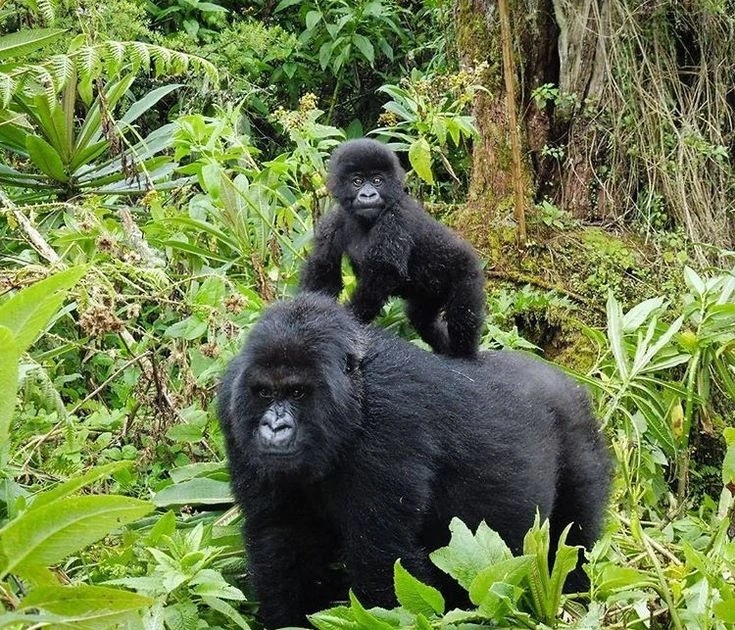
Uganda gorilla and chimp trekking itineraries typically range from 4 to 10+ days, centering on Kibale National Park (chimps) and Bwindi Impenetrable National Park (gorillas). Popular routes combine these with Queen Elizabeth National Park for big game, offering a complete wildlife experience.
3-days-bwindi-gorilla-trekking-tour-and-batwa-forest-dweller-cultural-visit
4-days-gorilla-trekking-and-gorilla-habituation-experience
4-days-budget-queen-elizabeth-park-and-chimpanzee-tracking-in-kalinzu-forest
4-days-ultimate-gorilla-and-uganda-safari-and-chimpanzee-tracking
5-days-uganda-big-five-safari-and-chimpanzee-tracking-in-kibale-forest-park
6-days-5-nights-midrange-uganda-safari-holiday-vacation
7-day-uganda-gorilla-trekking-chimpanzee-wildlife-safari-tour-and-culture
8-days-ultimate-uganda-gorilla-trekking-and-safari-in-uganda
9-days-best-of-uganda-and-rwanda-combined-tour-package
10-days-uganda-rwanda-primate-safari-vacation-and-game-drive-safari
The Classic 5-6 Day Primates Safari: An Unforgettable Journey
Uganda, the "Pearl of Africa," offers a profound encounter with nature that few places on Earth can match. This premier primate safari is meticulously designed for those who wish to witness the raw beauty of our closest relatives without the exhaustion of endless transit. By focusing on the lush corridors of Kibale Forest and the ancient mist of Bwindi Impenetrable National Park, this route prioritizes deep immersion in the wild.
You will transition from the rhythmic calls of chimpanzees in the canopy to the silent, soulful gaze of the mountain gorillas. Along the way, the landscape shifts from crater lakes to the sweeping savannahs of Queen Elizabeth National Park. This journey isn’t just a checklist of sightings; it is a sensory pilgrimage through Africa’s most diverse ecosystems. Prepare for an expedition that balances thrilling wildlife encounters with the serene, breathtaking landscapes of the Albertine Rift.
Day 1: Arrival in Entebbe
Your adventure begins on the shores of Lake Victoria. Upon arrival at Entebbe International Airport, the air is thick with the scent of the tropics. After a smooth transfer to your hotel, you can spend the afternoon shaking off the jet lag with a stroll through the Entebbe Botanical Gardens. Here, you’ll get your first taste of Uganda’s biodiversity, spotting Great Blue Turacos and perhaps some Vervet monkeys. As the sun sets over the world's largest tropical lake, enjoy a fresh tilapia dinner at a local lakeside restaurant. This is your evening to decompress and mentally prepare for the rugged terrain ahead. The quiet hum of Entebbe provides a gentle introduction to the warmth of Ugandan hospitality before you head into the deep wild of the western forests tomorrow morning.
Day 2: Transfer to Kibale Forest National Park
After an early breakfast, you’ll begin the scenic drive toward Fort Portal, a charming town nestled under the shadow of the Rwenzori Mountains, also known as the "Mountains of the Moon." The journey takes you through vibrant green tea plantations that carpet the rolling hills like velvet. As you approach the Kibale region, the air cools and the vegetation becomes denser. You’ll pass numerous volcanic crater lakes—shimmering turquoise pools that offer stunning photographic opportunities. By late afternoon, you will reach the fringes of Kibale Forest National Park. The sounds of the forest take over: the distant hoot of a monkey or the frantic chatter of birds. Settle into your lodge, surrounded by the sights and smells of the jungle, and enjoy a quiet evening under the canopy of one of Africa’s most ancient rainforests.
Day 3: Chimpanzee Trekking and Bigodi Swamp Walk
Today is dedicated to the "Primate Capital of the World." After a morning briefing, you’ll head into the forest to track Chimpanzees. Kibale hosts the highest density of primates in Africa, and hearing the deafening "pant-hoots" of a chimp community echoing through the trees is an adrenaline-surging experience. Once you locate them, you’ll spend an hour observing their complex social dynamics, grooming habits, and acrobatic displays. In the afternoon, the pace slows at the Bigodi Wetland Sanctuary. This community-led project is a birder’s paradise, home to the iconic Great Blue Turaco. As you walk the boardwalks, keep an eye out for rare plant species and other primates like the Red Colobus and Grey-cheeked Mangabey. It’s a day of intense biological discovery, capped off by a sunset over the forest edge.
Day 4: Travel to Bwindi via Ishasha
Leaving the rainforest behind, you’ll head south through the heart of Queen Elizabeth National Park. The landscape opens up into vast savannahs, framed by the distant peaks of the Rwenzoris. The highlight of this transit is the Ishasha Sector, world-famous for its unique tree-climbing lions. Unlike their cousins elsewhere, the lions here spend the heat of the day draped across the limbs of ancient fig trees—a sight that remains one of nature’s strangest mysteries. After a game drive to spot these regal cats, as well as elephants and topis, you will continue toward the high-altitude ridges of Bwindi Impenetrable National Park. The terrain becomes steeper and the forest more rugged. By evening, you’ll be perched on the edge of the gorilla’s home, watching the mist settle over the jagged green peaks.
Day 5: Gorilla Trekking in Bwindi
This is the pinnacle of the African safari experience. Bwindi is home to half of the world's remaining Mountain Gorillas. After a briefing from the park rangers, you will head into the thick, tangled undergrowth. The trek can be physically demanding, involving steep climbs through dense vines, but the reward is incomparable. Coming face-to-face with a 400-pound Silverback is a moment of pure, silent awe. For one hour, you are a guest in their family circle, watching mothers tend to infants and juveniles play. There are no fences and no barriers—only a few meters of forest air between you and these gentle giants. The emotional weight of this encounter often leaves travelers speechless. You’ll return to the lodge exhausted but exhilarated, carrying memories of a connection that transcends the boundaries of species.
Day 6: Return to Kampala/Entebbe
On your final day, enjoy a farewell breakfast overlooking the misty forest one last time. The long drive back to Entebbe offers a chance to reflect on the week’s transformative experiences. You will pass through the rolling hills of Mbarara and make a significant stop at the Equator crossing in Kayabwe. Here, you can stand in both the Northern and Southern Hemispheres simultaneously and grab some last-minute hand-crafted souvenirs from local artisans. As you approach the bustling streets of Kampala and eventually the quiet peninsula of Entebbe, the transition back to "civilization" feels surreal. You’ll arrive at the airport in time for your evening flight, leaving behind the emerald hills of Uganda but carrying the spirit of the primates with you. It is a journey that ends, but a story that stays for a lifetime.
8-Day Uganda Primates and Wildlife Safari: The Complete Circuit
This eight-day expedition is curated for those who seek the perfect harmony between Uganda’s famous forest dwellers and its classic savannah icons. By introducing Lake Mburo and the Kazinga Channel into the route, the pace becomes more rhythmic, allowing for a deeper appreciation of the "Pearl of Africa’s" diverse topographies. You will journey from the acacia-dotted plains of the south to the prehistoric depths of the Albertine Rift, experiencing a comprehensive wildlife masterclass.
The itinerary is designed to build anticipation, starting with intimate game drives before culminating in the life-altering encounters with mountain gorillas and chimpanzees. Beyond the primates, you will witness the majesty of the African elephant, the stealth of the leopard, and the incredible density of hippos along the waterways. This safari offers a 360-degree view of Uganda’s natural heritage, ensuring that every evening spent under the vast African sky is filled with stories of discovery and wonder.
Day 1: Arrival in Entebbe
Your journey commences in the leafy, lakeside town of Entebbe. Upon arrival, you will be met by the refreshing breeze of Lake Victoria, the largest tropical lake in the world. After a short transfer to your accommodation, the day is yours to unwind and acclimatise to the tropical pace. If time permits, a visit to the Entebbe Wildlife Education Centre provides an excellent primer on the species you will soon encounter in the wild. Alternatively, a sunset boat cruise on the lake offers a serene introduction to the region's birdlife. The evening is spent enjoying a quiet dinner, perhaps sampling local tilapia, as you prepare for the grand circuit ahead. The atmosphere is relaxed, providing the perfect buffer before the early morning departure into the heart of the Ugandan wilderness tomorrow.
Day 2: Drive to Lake Mburo National Park
Heading southwest, the landscape transforms from urban bustle to the open grazing lands of the Ankole cattle. Your destination is Lake Mburo National Park, a gem of a park known for its sculpted hills and tranquil lakes. This is the only place in southern Uganda where you can see Impala and Burchell’s Zebra. After checking into your lodge, you’ll head out for an afternoon game drive. The park’s compact size makes for high-quality sightings of eland, warthogs, and buffalo. As dusk approaches, the park takes on a golden hue, perfect for photography. The lack of large predators like lions creates a peaceful atmosphere, allowing you to appreciate the smaller details of the bush. End the day with a sundowner overlooking the park's wetland systems, listening to the evening chorus of bushshrikes.
Day 3: Game Drive and Travel to Bwindi
The morning begins with a final exploration of Lake Mburo’s tracks, often rewarding guests with sightings of the elusive leopard or the majestic African finfoot along the water's edge. Following this, you will continue your journey further west, ascending into the Kigezi Highlands. The scenery shifts dramatically as you enter the "Switzerland of Africa," where steep, terraced hillsides are shrouded in mist. The drive is a cultural tapestry of local markets and roadside stalls selling fresh produce. By late afternoon, the air turns crisp and cool as you reach the perimeter of Bwindi Impenetrable National Park. The ancient, tangled forest appears like a wall of green, hiding the world's most famous primates. Tonight, the sounds of the jungle provide a thrilling backdrop as you prepare for tomorrow’s monumental trek into the forest.
Day 4: Gorilla Trekking in Bwindi
Today stands as the emotional heart of your safari. After a briefing at the park headquarters, you will enter the prehistoric foliage of Bwindi in search of a habituated Mountain Gorilla family. Led by expert trackers, you will navigate through dense ferns and steep ridges. The moment you find them, time seems to stand still. For one hour, you are permitted to observe these gentle giants as they feed, play, and communicate. The sheer size of a Silverback is humbling, yet their expressive eyes reveal a profound intelligence and gentleness. This encounter is often described as a spiritual experience, fostering a deep connection to the natural world. After the trek, you can visit a local Batwa community to learn about the forest’s original inhabitants, ending a day of profound human and wildlife connection.
Day 5: Queen Elizabeth National Park and Kazinga Channel
Descending from the mountains, you travel to Queen Elizabeth National Park, a region of craters and vast savannahs. The afternoon highlight is a boat launch along the Kazinga Channel, a natural waterway connecting Lake Edward and Lake George. This is arguably one of the best wildlife experiences in Africa. From the safety of the boat, you will see hundreds of hippos basking in the shallows, while massive Nile crocodiles sun themselves on the banks. Elephants and buffalo frequently come down to drink, providing spectacular close-up viewing. The birdlife is equally staggering, with kingfishers, pelicans, and fish eagles patrolling the waters. The cruise offers a relaxed way to view big game without the dust of the road, finishing with a stunning sunset over the water before heading to your lodge.
Day 6: Kyambura Gorge and Travel to Kibale
The morning takes you to the "Underground Forest" of Kyambura Gorge. This 100-metre-deep tectonic gash in the savannah floor is home to a secluded community of chimpanzees. Trekking here is a unique experience; you descend from the sunny plains into a humid, tropical riverine forest. The echoes of chimp screams bouncing off the canyon walls create a cinematic atmosphere. After your trek, you will drive north toward the Kibale region. This journey takes you through the Kasenda Crater Lakes area, where dozens of ancient volcanic cones are now filled with sparkling water. The drive offers some of the most beautiful vistas in East Africa. By evening, you will arrive at the edge of Kibale Forest, ready for a second, deeper encounter with our closest relatives in the "Primate Capital."
Day 7: Chimpanzee Trekking in Kibale Forest
Kibale Forest National Park is home to 13 different primate species, but the stars are undoubtedly the Chimpanzees. Today’s trek offers a different perspective than Kyambura, as the forest here is flatter and more expansive. Following the loud hoots and barks of the chimps, you’ll track them as they move through the high canopy or forage on the forest floor. Observing their human-like gestures and complex social hierarchies is endlessly fascinating. In the afternoon, you will visit the Bigodi Wetland Sanctuary. This community-run boardwalk tour is essential for spotting endemic monkeys like the Red Colobus and the L’Hoest’s monkey, as well as the magnificent Great Blue Turaco. It is a day of total immersion in the primate world, highlighting the incredible biodiversity that makes Uganda a global leader in forest conservation.
Day 8: Return to Kampala/Entebbe
On your final day, the journey back to the capital begins. You’ll wind through the lush tea estates of Fort Portal, a town known for its cleanliness and spectacular views of the Rwenzori Mountains. The drive back to Kampala provides a final opportunity to appreciate the rural beauty of Uganda, passing through small trading centres and expansive farmlands. You will stop for a celebratory lunch along the way, reflecting on the incredible variety of wildlife encountered, from the smallest kingfisher to the largest silverback. Arriving in Kampala or Entebbe by late afternoon, you’ll be transferred to the airport for your departure or to your hotel for an overnight stay. You leave with a full camera and an even fuller heart, having completed the definitive Ugandan primate and wildlife circuit.
Comprehensive 10-14 Day Safari: The Ultimate Nature Expedition
For the dedicated nature enthusiast, this extended journey is the definitive way to experience the full spectrum of Uganda’s ecological wonders. Spanning the length of the country, this route transcends the "highlights" to offer a deep dive into the diverse habitats of the Albertine Rift and the northern savannahs. You will traverse from the thunderous cascades of the Nile to the ancient, misty heights of the gorilla highlands, witnessing the transition of flora and fauna in real-time.
This itinerary is designed for a slower, more immersive rhythm, allowing for multiple nights in each flagship park. This patience is rewarded with rare sightings—perhaps a Shoebill stork in the wetlands, a leopard on a night drive, or a family of lions in the golden light of Kidepo or Murchison. Beyond the wildlife, the expedition focuses on the intricate details of the landscape: volcanic crater lakes, tea-clad hills, and the cultural heritage of the people who co-exist with these wild spaces. It is a journey of total transformation.
Day 1: Arrival and Exploration of Entebbe
Your expedition begins on the shores of Lake Victoria. Upon arrival, you are greeted by the lush, tropical gardens and colonial charm of Entebbe. The first day is purposefully relaxed to allow for acclimatisation. You may choose to visit the Entebbe Botanical Gardens, a haven for birders where you can spot the Great Blue Turaco and various sunbirds amongst towering century-old trees. Alternatively, the Uganda Wildlife Education Centre offers a meaningful introduction to the nation's conservation efforts. As evening falls, enjoy a quiet dinner overlooking the lake, watching the local fishermen set out in their wooden canoes. This evening serves as the quiet "breath before the plunge" into the deep wilderness, offering a chance to meet your guide and finalise the details of the grand circuit that awaits you starting tomorrow morning.
Day 2: Ziwa Rhino Sanctuary and Murchison Falls
Leaving the capital behind, you head north toward the vast plains of Murchison Falls National Park. The journey is punctuated by a vital stop at the Ziwa Rhino Sanctuary, the only place in Uganda where you can track wild southern white rhinos on foot. Walking through the bush to find these prehistoric giants is a heart-pounding introduction to the "Big Five." After lunch, you continue to Murchison, entering through the southern gates. The drive concludes with a visit to the Top of the Falls, where the world’s longest river, the Nile, is forced through a narrow seven-metre gap. The sheer power of the water creates a permanent rainbow and a thunderous roar that can be felt in your chest—a dramatic welcome to Uganda’s largest and oldest protected wilderness area.
Day 3: Murchison Falls Game Drive and Nile Boat Cruise
The morning begins in the northern sector of the park, a mosaic of Borassus palms and savannah. On a game drive, you’ll search for massive herds of Rothschild’s giraffes, elephants, and Cape buffalo. This is also your best opportunity to spot lions and the elusive leopard as they finish their morning hunts. In the afternoon, the perspective shifts as you board a boat for a cruise up the Victoria Nile. From the water, you will see pods of hippos, massive Nile crocodiles, and thirsty wildlife lining the banks. The boat takes you to the base of the falls, providing a spectacular view of the water’s descent. For birders, keep an eye out for the Red-throated Bee-eater and the iconic African Fish Eagle as they patrol the river’s edge.
Day 4: Transfer to Kibale Forest National Park
This is a "transit day" that is a destination in itself. You will travel south from Murchison toward the "Primate Capital of the World," Kibale. The route takes you along the Albertine Rift, offering staggering views of the escarpment and, on clear days, the distant Blue Mountains of the Congo. You’ll wind through the vibrant town of Fort Portal and into a landscape of endless tea plantations, which appear as a manicured green sea against the backdrop of the Rwenzori Mountains. Along the way, you’ll stop at local markets to sample fresh tropical fruits and witness the rhythmic daily life of rural Uganda. By late afternoon, the air cools as you enter the Kibale region, where the dense rainforest canopy begins to dominate the horizon, signalling your arrival in primate territory.
Day 5: Chimpanzee Trekking and Bigodi Swamp
Today is dedicated to our closest living relatives. Kibale Forest holds the highest density of primates in Africa, and tracking a habituated chimpanzee community is an unforgettable sensory experience. You’ll follow their "pant-hoots" through the undergrowth, observing their complex social interactions and agile movements high in the fruit trees. After a morning of high-energy tracking, the afternoon offers a gentler pace at the Bigodi Wetland Sanctuary. This community-led initiative is a prime example of successful local conservation. As you walk the boardwalks, you are likely to spot several other primate species, such as the Red Colobus and Grey-cheeked Mangabey, alongside an incredible array of butterflies and rare birds. It is a day of deep immersion into the intricate layers of the tropical rainforest ecosystem.
Day 6: Queen Elizabeth National Park Exploration
The journey continues south to Queen Elizabeth National Park, a UNESCO Biosphere Reserve. You will drive through the Ndali-Kasenda crater area, where dozens of ancient volcanic lakes are nestled in the hills. Upon entering the park, the landscape shifts back to open savannah and acacia woodlands. After an afternoon game drive to spot kobs and waterbucks, you will head to the Kazinga Channel for a boat cruise. This waterway, connecting Lake Edward and Lake George, boasts the highest concentration of hippos in the world. You’ll also see elephants bathing and hundreds of bird species, including pelicans and kingfishers. The evening ends at your lodge, where the distant roar of a lion or the grunt of a hippo serves as a reminder that you are in the heart of the wild.
Day 7: Ishasha Sector and Tree-Climbing Lions
Heading toward the southern tip of Queen Elizabeth National Park, you enter the remote Ishasha Sector. This area is world-renowned for its tree-climbing lions, a unique behavioural phenomenon where the prides spend their days resting on the low-hanging branches of ancient fig trees to escape the ground heat and insects. Spotting these regal cats draped across the limbs like heavy rugs is a highlight for any photographer. The sector is also home to large herds of topi and the rare Shoebill stork in the marshes. After a picnic lunch in the bush, you will begin the ascent into the Kigezi Highlands. The road winds upward, revealing terraced hillsides that earned this region the nickname "the Switzerland of Africa," eventually leading you to the edge of the Bwindi Impenetrable Forest.
Day 8: Gorilla Trekking in Bwindi
This is the day most travellers dream of. Bwindi Impenetrable National Park is a prehistoric sanctuary home to roughly half of the world's remaining mountain gorillas. The trek through the dense, vine-covered slopes can be challenging, but the moment you encounter a gorilla family, the effort vanishes. For one hour, you will sit in silence just meters away from these gentle giants. Watching a Silverback calmly oversee his family while juveniles tumble through the ferns is a profound, life-altering experience that defies description. The sense of kinship felt in their presence is overwhelming. Following the trek, you’ll receive a certificate of participation and spend the evening in quiet reflection, perhaps sharing stories with fellow trekkers around a roaring fire as the forest mist settles over the ridges.
Day 9: Lake Bunyonyi Relaxation
After the physical intensity of gorilla trekking, you move to the serene shores of Lake Bunyonyi. Known as the "Place of Many Little Birds," this is one of the deepest and most beautiful lakes in Africa, dotted with 29 emerald islands. There are no hippos or crocodiles here, making it one of the few lakes in the region safe for swimming. You can spend the day canoeing in a traditional dugout, visiting "Punishment Island" to learn about local folklore, or simply relaxing on your balcony with a book. The terraced hills reflecting in the still, mirror-like water provide a peaceful atmosphere for mental decompression. It is the perfect midpoint for reflection, allowing you to process the incredible wildlife encounters of the previous week before the final leg of the journey.
Day 10: Lake Mburo National Park
The final park on your circuit is Lake Mburo, a charming savannah park that offers a different palette of wildlife. This is the best place in Uganda to see the massive Eland antelope, as well as Topi and Burchell’s Zebra. Because the park lacks elephants and lions, it is one of the few places where you can engage in a walking safari or a horseback ride. Being on foot in the African bush provides a completely different perspective; you notice the tracks, the insects, and the intricate plant life that are often missed from a vehicle. In the afternoon, a boat ride on the lake offers sightings of the African Finfoot and various kingfishers. The day ends with a bush dinner, celebrating the final night of your Ugandan expedition under a canopy of stars.
Day 11-14: Return to Entebbe and Departure
The final days are a gradual return to the capital, allowing for cultural stops and last-minute discoveries. You will cross the Equator at Kayabwe, where you can participate in water flow experiments and browse for hand-crafted souvenirs. Depending on your flight schedule, the final days can include a tour of Kampala’s historic sites, such as the Kasubi Tombs or the bustling Nakasero Market, offering a glimpse into the vibrant heart of Ugandan urban life. Your safari concludes with a transfer back to Entebbe. As you prepare for your flight home, you carry with you not just photographs, but a deep-seated connection to the landscapes and lives you’ve encountered. You leave the "Pearl of Africa" with the knowledge that you have experienced one of the most comprehensive and diverse natural journeys on the planet.
What is the best time for Uganda gorilla and chimp trekking?
The optimal window for an expedition into Uganda’s rainforests is during the two dry seasons: June to September and December to February. During these months, the forest floors are significantly less muddy, making the steep, tangled trails of Bwindi much easier to navigate. Clearer skies also mean better lighting for photography, as the dense canopy can otherwise make it quite dark. However, it is important to remember that these are rainforests; rain can occur at any time.
While the dry season is popular, the "Green Seasons" (March–May and October–November) have their own charm. For 2026, some lodges offer reduced rates during these months to encourage travel. While the terrain becomes more slippery and the hikes potentially more strenuous due to rain, the lush, vibrant vegetation provides a stunning backdrop. Furthermore, food is often more abundant at lower altitudes during the rainy season, which can sometimes mean shorter treks as the primates don't have to travel as far to forage.
How much do Uganda gorilla and chimp trekking permits cost?
As of April 2026, the cost for a Gorilla Trekking Permit in Uganda is $800 per person for foreign non-residents. This fee is a direct contribution to the conservation of the species and the support of the communities surrounding the parks. It is worth noting that a price adjustment to $1,000 has been proposed for the 2027 season, so booking your 2026 adventure now locks in the current rate.
Chimpanzee permits vary by location. In Kibale Forest, the premier site, a permit costs $250. If you are looking for a more budget-friendly option, trekking in Budongo Forest or Kyambura Gorge typically costs between $100 and $150. These permits include park entrance fees for the day of the trek and the services of armed rangers and expert guides. Always ensure you are booking through an authorised tour operator or directly with the Uganda Wildlife Authority (UWA) to ensure your permit is valid.
How far in advance should I book Uganda gorilla and chimp trekking permits?
It is highly recommended to secure your permits 4 to 6 months in advance. For peak season dates—specifically July, August, and late December—permits often sell out a year ahead. Each gorilla family can only be visited by a maximum of eight people per day, and with a limited number of habituated families, the daily "supply" of permits is strictly capped to protect the animals' well-being.
Waiting until you arrive in Uganda to book is risky and often leads to disappointment. By booking early, you also have the luxury of choosing your preferred sector in Bwindi (Buhoma, Ruhija, Rushaga, or Nkuringo), which can influence the difficulty of your hike and your choice of accommodation. In 2026, UWA has streamlined their online booking system, but the demand remains record-breakingly high, so early planning is the cornerstone of a successful safari.
How long do Uganda gorilla and chimp trekking sessions take?
A Gorilla Trek is an unpredictable adventure that can last anywhere from 1 to 8 hours. The duration depends entirely on where the gorillas chose to sleep the previous night and how far they have moved in search of food. You will hike through thick undergrowth and up steep ridges until you find them. Once you make contact, you are permitted exactly one hour to observe and photograph them. This "golden hour" is strictly enforced to minimise stress on the family.
Chimpanzee trekking in Kibale is generally more contained, usually lasting 3 to 4 hours in total. Chimps are much more vocal and active than gorillas, making them easier to track by sound. Like the gorillas, the actual observation time is limited to one hour. Because chimpanzees spend a lot of time in the high canopy, your session will involve a lot of neck-stretching as you watch them swing through the trees, occasionally descending to the forest floor for social grooming.
What is the age limit for Uganda gorilla and chimp trekking?
The official minimum age for both gorilla and chimpanzee trekking is 15 years. This age limit is strictly enforced by the Uganda Wildlife Authority. The primary reason is the vulnerability of the primates to human childhood diseases (such as mumps or chickenpox), to which they have no natural immunity. Additionally, the physical demands of the trek—navigating dense, uneven terrain for several hours—require a level of stamina and discipline that is generally expected of older teenagers and adults.
In rare and specific circumstances, a waiver may be granted for a child who is nearly 15, provided they are physically fit and the parent assumes full responsibility. However, for most families travelling with younger children, there are alternative activities available. Many lodges offer "Kid’s Clubs" or guided nature walks outside the park boundaries where children can learn about the local flora and fauna while the adults are in the forest.
Can I do Uganda gorilla and chimp trekking in 5 days?
Yes, a 5-day itinerary is a popular "express" option for those with limited time. A typical route involves flying into Entebbe and then taking a domestic flight or a scenic drive to Kibale Forest for chimpanzees on Day 2. You would then transfer to Bwindi on Day 3, trek the gorillas on Day 4, and return to Entebbe on Day 5 for your departure.
While this schedule is tight, it is highly rewarding. To make this work comfortably, many travellers choose to fly between Entebbe and the small airstrips near the parks (like Kasese or Kisoro). This saves roughly 8 to 9 hours of driving each way, allowing more time for relaxation at the lodges. If you prefer driving, the 5-day route is still possible but involves long hours on the road, which offers a great, if brief, look at the beautiful Ugandan countryside and its vibrant trading centres.
What should I pack for Uganda gorilla and chimp trekking?
Packing the right gear is essential for your comfort and safety in the rainforest. First and foremost, you need sturdy, waterproof hiking boots with good ankle support and grip. The terrain is often steep and slippery. Long trousers and long-sleeved shirts are mandatory to protect your skin from stinging nettles, thorny branches, and biting insects. A lightweight rain jacket or poncho should always be in your daypack, as a downpour can happen at any moment.
One of the most overlooked items is a pair of gardening gloves. These allow you to grab onto vines and branches for support without getting stung by nettles. Additionally, bring high-quality insect repellent, a wide-brimmed hat, and plenty of water. Because you will be in the forest for several hours, a "packed lunch" provided by your lodge is a standard part of the kit. Finally, don't forget your camera with a good zoom lens, but remember: no flash photography is allowed!
Is Uganda gorilla and chimp trekking safe?
Trekking is an incredibly safe activity, managed with military-grade precision. Every trekking group is accompanied by at least two armed park rangers and an expert lead guide. The rangers are there primarily to ensure the safety of both the tourists and the primates, occasionally firing a shot into the air to scare away wild forest elephants if they get too close. The primates themselves are "habituated," meaning they have been gradually accustomed to human presence over several years and do not view humans as a threat.
Safety also extends to your health. The guides are trained in first aid, and they move at the pace of the slowest person in the group. Porters are available for hire at the start of every trek (for a small fee of about $20). We highly recommend hiring one; they not only carry your heavy bags but also provide a steady hand during difficult sections of the trail. This support makes the trek accessible and safe even for those who are not seasoned hikers.
What is the difference between trekking and habituation in Uganda?
The primary difference lies in the time spent with the primates and the nature of the group. Standard Trekking involves visiting a group that is already fully habituated to humans. You spend exactly one hour with them, observing their natural behaviour from a distance of about 7 to 10 metres. This is the most common experience and is excellent for those who want a guaranteed, relatively calm encounter.
Habituation, on the other hand, is an immersive, 4-hour experience. You accompany researchers and rangers as they follow a primate group that is still in the process of becoming accustomed to human presence. This allows you to witness more "raw" behaviours and learn about the science behind primate conservation. In 2026, a Gorilla Habituation permit in the Rushaga sector of Bwindi costs $1,500, while a Chimpanzee Habituation permit in Kibale is roughly $300-$400. It is a longer, more demanding day, but for true enthusiasts, it offers an unparalleled depth of connection.
Where is the best location for Uganda gorilla and chimp trekking?
For Mountain Gorillas, Bwindi Impenetrable National Park is the undisputed top choice. It is a UNESCO World Heritage site and home to roughly half of the world's remaining population. Bwindi is divided into four sectors: Buhoma (the oldest), Ruhija (the highest), and Rushaga and Nkuringo (the most mountainous). Alternatively, Mgahinga Gorilla National Park offers trekking on the slopes of the Virunga Volcanoes, which provides a different, more open landscape, though there is only one habituated family there.
For Chimpanzees, Kibale Forest National Park is the "Primate Capital of the World," boasting the highest density and diversity of primates in Africa. Its success rate for sightings is over 95%. However, if your itinerary is focused on Queen Elizabeth National Park, Kyambura Gorge offers a dramatic "sunken forest" experience. While the success rate there is slightly lower (around 60-70%), the scenery of trekking in a 100-metre-deep canyon is breathtaking. Budongo Forest near Murchison Falls is another excellent, high-success alternative.
Do I need to be fit for Uganda gorilla and chimp trekking?
You do not need to be an elite athlete, but a basic level of physical fitness is highly recommended. Bwindi, in particular, lives up to its name; it is "impenetrable" and very hilly. You will be hiking at altitudes between 1,160m and 2,607m, where the air is thinner. The trails can be steep, involve crossing small streams, and require stepping over fallen logs. If you are comfortable walking for 3 to 4 hours on uneven terrain, you should be fine.
For those with significant physical limitations or disabilities, Uganda is surprisingly accommodating. You can hire a "sedan chair" (often nicknamed the "African Helicopter"), where a team of eight porters carries you through the forest on a comfortable stretcher-like seat. This service costs between $300 and $500 and ensures that the magic of seeing a silverback is available to everyone, regardless of their age or physical ability.
Can I see gorillas and chimpanzees on the same trip?
Absolutely. In fact, most travellers to Uganda do exactly this. A "Primate Double-Header" is the hallmark of a great Ugandan safari. Because the two parks—Kibale and Bwindi—are only a 5-to-6-hour drive apart (with Queen Elizabeth National Park sitting conveniently in the middle), it is very easy to combine them. A standard 7-to-10-day trip allows you to see both, with enough time to include savannah game drives and boat cruises.
Combining the two offers a fascinating comparison. You move from the high-energy, vocal, and acrobatic world of the chimpanzees in the Kibale canopy to the quiet, dignified, and terrestrial world of the mountain gorillas in Bwindi. This contrast provides a complete picture of Africa’s great apes. Many itineraries also include a stop at the Ngamba Island Chimpanzee Sanctuary on Lake Victoria for a different perspective on chimp conservation and rescue efforts.
Are there any restrictions on Uganda gorilla and chimp trekking?
Yes, strict rules are in place to ensure the safety of the primates and the visitors. Most importantly, you must maintain a distance of 7 to 10 metres from the animals. While the primates might sometimes move closer to you, you must never attempt to touch them. Furthermore, sick visitors are not allowed to trek. Because we share 98% of our DNA with these apes, they are highly susceptible to human illnesses like the common cold, flu, or even COVID-19.
Other rules include: no flash photography (it scares the animals), no eating or drinking near the primates, and keeping your voice low. You are also required to bury any human waste deeply (the guides carry a trowel for this purpose). In 2026, many sectors still recommend or require the wearing of a surgical mask when you are in close proximity to the primates to further reduce the risk of respiratory transmission. Following these rules is essential for the long-term survival of these endangered species.
What is the chance of seeing primates in Uganda?
The success rates for primate trekking in Uganda are remarkably high, often cited as over 95%. This is not left to chance; "advance trackers" leave the park headquarters at dawn, long before the tourists start their trek. These trackers go to the location where the primates were last seen the previous evening and follow their trail until they find them. They then radio the location to your guide.
This means that by the time you start your hike, your guide usually already knows exactly where the group is. The only challenge is the time it takes for you to walk to that location. Whether it's the gorillas in the mountains or the chimps in the forest, the infrastructure of the Uganda Wildlife Authority ensures that almost every visitor leaves with a successful sighting. It is one of the few wildlife experiences in the world where a "guarantee" is almost a reality.
Can I combine other activities with trekking?
Uganda is incredibly diverse, and trekking is often just the beginning. You can easily add classic savannah game drives in Queen Elizabeth National Park to see tree-climbing lions, or in Murchison Falls to see giraffes and elephants. A boat cruise on the Kazinga Channel or at the base of Murchison Falls is a must for seeing hippos and crocodiles. For birders, the Shoebill Stork in the Mabamba Wetlands is a bucket-list species that can be tracked by canoe.
For those looking to relax after their treks, Lake Bunyonyi—the deepest and most beautiful lake in Uganda—is the perfect spot for canoeing and resting. You can also engage in cultural tourism, such as visiting the Batwa Pygmies to learn about their ancient forest-dwelling heritage. Whether it's white-water rafting on the Nile in Jinja or hiking the foothills of the Rwenzori Mountains, Uganda offers a wealth of activities that perfectly complement the primate experience.
Booking Uganda gorilla and chimp trekking with us Roads of Adventure safaris
Book your unforgettable Uganda gorilla and chimpanzee trekking adventure with Roads of Adventure Safaris. As a specialized local operator, we curate tailor-made, seamless itineraries featuring Bwindi Impenetrable and Kibale National Parks. We handle all logistics, including securing, gorilla and chimp permit, private 4x4 transportation, and comfortable accommodation. Whether you choose a 4-day quick trek or an extended 17-day wildlife safari, our expert guides ensure safe, immersive, and memorable encounters with endangered mountain gorillas and chimps. Experience Uganda’s premier primate tracking with a trusted team focused on personalized, high-quality service. Contact us today to start your adventure.
