Scaling the legendary "Mountains of the Moon" offers an unparalleled African alpine adventure. For anyone seeking a truly raw and unforgettable trek, a Mountain Rwenzori hike is the ultimate bucket-list experience. Straddling the border of Uganda and the Democratic Republic of Congo, this dramatic range isn't your average tropical trek. It is a surreal world where snow-capped peaks defy the equator and misty valleys feel entirely frozen in time.
Whether you are an elite mountaineer eyeing a grueling multi-day expedition or a casual hiker wanting to explore lush, lower-slope trails, the Rwenzoris deliver pure magic. The journey takes you through distinct ecological zones, each more fascinating than the last. You will traverse rushing glacial streams, conquer steep ridges, and wander through otherworldly afro-alpine forests straight out of a fantasy novel. From catching a glimpse of rare, vibrant wildlife to standing atop towering glaciers, a Mountain Rwenzori hike promises a profound connection with nature and an adrenaline-pumping journey you will look back on for a lifetime.
Some of the popular Mountain Rwenzori hiking trips
15-days-rwenzori-hiking-safari-and-mountain-gorilla-trekking-vacation
11-days-best-rwenzori-mountain-hike-to-margherita-peak
7-days-mountain-rwenzori-mountain-climbing-active-adventure-to-margherita-peak
5-days-rwenzori-hike-to-either-mountain-sepeke-baker-or-luig-di-savoia
2-days-rwenzori-trek-to-nyabitaba-camp
Summiting Margherita Peak
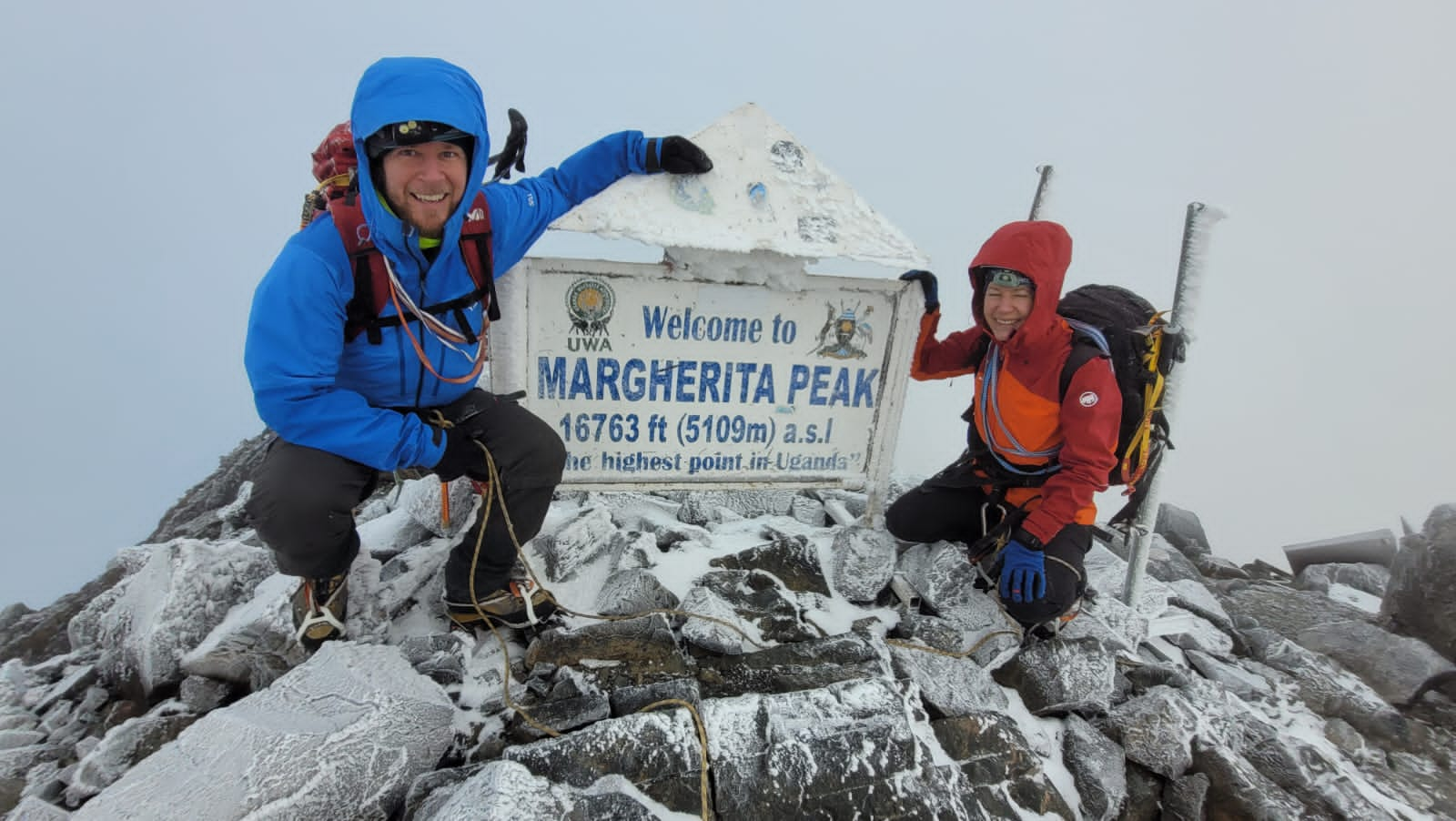
For true thrill-seekers, the ultimate crown jewel of a Mountain Rwenzori hike is standing on Margherita Peak. This isn’t a standard walk in the park; it is a demanding, world-class mountaineering expedition that typically spans 7 to 10 days depending on whether you choose the historic Central Circuit or the rugged Kilembe Trail. Towering at an impressive 5,109 meters (16,762 feet) above sea level on Mount Stanley, Margherita is officially Africa's third-highest peak. What makes it unique compared to Kilimanjaro or Mount Kenya is its technical, glaciated terrain.
As you push toward the summit, you aren't just trekking; you are navigating real, shifting glaciers using crampons, ice axes, and safety ropes. The final push usually begins in the freezing, pitch-black hours of the early morning from Elena Hut (4,541 meters). Hikers must traverse the steep Elena Glacier before tackling the Margherita Glacier itself, crossing deep crevasses and scrambling up exposed rock faces. The physical toll is real, with temperatures dropping below freezing (often between -2°C to -5°C), and oxygen levels dropping significantly. However, the payoff is spectacular. When the sun rises, it illuminates a vast sea of clouds stretching across the border of Uganda and the Democratic Republic of Congo. Standing next to the iconic summit sign, surrounded by ancient ice right at the equator, gives you an unmatched sense of personal triumph that few destinations on earth can match.
River Crossing & Hand-Fishing
If you want to experience the mountain's wild spirit without committing to a grueling week-long summit push, the lower slopes offer a completely different, deeply grounding adventure. A vital part of any entry-level Mountain Rwenzori hike involves navigating the roaring network of rivers and streams fed by the melting glaciers high above. Streams like the Mubuku and Nyamwamba cascade furiously through the lower valleys, requiring hikers to cross suspension bridges or carefully balance across moss-covered logs over rushing, icy waters.
But the real magic happens when you slow down to try traditional hand-fishing, a culturally rich activity guided by local Bakonzo hosts who have lived in these foothills for generations. Stepping into streams where water temperatures sit at a brisk 8°C to 12°C, you learn the art of reading the water. Instead of using modern rods and reels, guides teach you how to move silently, sliding your bare hands under submerged rocks and riverbanks where mountain trout hide in the cold currents. It requires immense patience, quick reflexes, and a willingness to embrace the numbing cold. Successfully catching a fish with your bare hands connects you instantly to the ancient survival skills of the mountain's indigenous people, making it a memorable, hands-on highlight of the lower-altitude trails.
Botanical "Triffid" Hunting
Stepping into the Afro-Alpine zone during a Mountain Rwenzori hike feels less like an African safari and more like waking up on a completely different planet. Often called a botanical wonderland, this ecological zone—spanning altitudes between 3,500 and 4,500 meters—is famous for its display of "botanical gigantism." Because of the unique combination of high acidity in the soil, intense equatorial sunlight, and near-constant evening frosts, everyday plants grow to monstrous, sci-fi proportions.
As you trek through areas like the upper Bigo Bog, you will find yourself walking among towering giant lobelias (Lobelia deckenii) that shoot up to 6 meters (nearly 20 feet) into the misty air like massive, prehistoric pillars. Alongside them are the surreal groundsels (Senecio) and twisted tree heathers draped in thick, ghostly Spanish moss. Walking through these silent, fog-shrouded forests feels like hunting for fictional "Triffids." The scale of the flora is mind-boggling; heather bushes that you might find in a European garden at knee-high length grow here as massive, gnarled trees reaching heights of 10 meters. Touching the thick, furry leaves of a giant lobelia—designed naturally to trap moisture and insulate the plant from freezing nighttime temperatures—is a vivid reminder of how beautifully life adapts to the harshest environments on earth.
Wildlife and Primate Tracking
While the Rwenzoris are famous for ice and rock, the lower montane and dense bamboo forests between 1,500 and 3,000 meters are teeming with rare, endemic biodiversity. A Mountain Rwenzori hike doubles as a world-class wildlife safari if you keep your eyes peeled and move quietly through the canopy. The park is home to over 70 mammal species and 217 bird species, many of which can be found nowhere else on the globe.
As you hike the muddy trails, the forest comes alive with the crashing sounds of primates moving through the trees. You are highly likely to spot troops of elegant black-and-white colobus monkeys swinging effortlessly through the branches, alongside the more elusive, bearded L'Hoest's monkeys foraging on the forest floor. Birdwatchers will be spellbound by the flashes of bright red and teal from the spectacular Rwenzori turaco, a bird native to these high-altitude rifts. Down on the paths and tree trunks, look closely for the region's most famous resident: the prehistoric-looking three-horned chameleon (Trioceros johnstoni). Seeing a bright green, triple-horned reptile slowly navigating a mossy branch right in front of you feels like discovering a miniature dinosaur, adding an incredible layer of natural discovery to the physical trek.
Waterfall Hikes and Camping
For those who love the soothing sound of rushing water and the romance of sleeping under a canopy of stars, the Kilembe Trail offers an unforgettable route through the dramatic Nyamwamba Valley. This specific variation of the Mountain Rwenzori hike emphasizes dramatic vertical drops and pristine water features, carving a path past a series of breathtaking, hidden waterfalls that crash down from the glacial lakes hidden higher up the ridges.
Trekkers push through deep valleys where sheer cliff faces frame dramatic cascades dropping 20 to 50 meters into deep, rocky pools below. The mist from these waterfalls keeps the surrounding canyons incredibly lush, vibrant green, and filled with wild ferns. After a day of challenging ascents, nothing beats arriving at established alpine camps like Sinekamp (2,596 meters) or Kalalama Camp (3,134 meters). Here, the experience becomes beautifully rustic. Hikers gather around a crackling campfire to dry their gear, share stories with local guides, and watch the fog roll into the valleys below. Falling asleep inside a tent to the distant, rhythmic roar of a mountain waterfall, with the crisp, clean alpine air dropping down to a chilly 5°C, provides a sense of peace and isolation that modern life rarely allows.
Mahoma Lake Day Hikes
Not everyone has a week to spare or the physical desire to tackle high-altitude glaciers, which is exactly why the Mahoma Lake trail is such a gem. Starting from the central trailhead at Nyakalengija (near Kasese town), this route offers a perfectly condensed version of a Mountain Rwenzori hike that can be completed as a rewarding 2-day loop or a challenging single-day trek, reaching a maximum altitude of around 2,500 to 3,000 meters.
The trail leads you away from the farmlands and directly into a pristine, misty rainforest. You will cross the roaring Mubuku River via a suspension bridge before climbing up a steep, forested ridge. The ultimate destination is Lake Mahoma, a strikingly beautiful, crystal-clear crater lake cradled by steep, green ridges and frequently draped in a layer of ethereal morning mist. At an altitude of roughly 2,600 meters, the lake feels completely hidden from the rest of the world. The echo of tropical birds across the water and the sight of monkeys jumping through the canopy on the far shore create an incredibly peaceful atmosphere. It is the perfect option for families, casual adventurers, or travelers on a tight schedule, offering a rich taste of the Rwenzori’s signature rainforest scenery, dramatic topography, and misty charm without the intense physical toll of the high-altitude peaks.
When is the best time for Mountain Rwenzori hike
Timing is everything when you are heading into a mountain range famous for its mist and rain. The absolute best windows for a Mountain Rwenzori hike are during the dry seasons: from June to August and from December to February. During these months, the weather is more stable, the trails are less muddy, and you get much clearer skies. Clearer skies mean breathtaking, unobstructed views of the snow-capped peaks and stunning photography opportunities.
That said, because the Rwenzoris are an equatorial rainforest, you should always expect a bit of rain, even in the dry season. If you choose to hike during the wet seasons (March to May and September to November), the challenge increases significantly. The trails turn into slippery mud channels, the iconic bogs swell, and heavy fog can obscure the views. However, if you are an experienced trekker who loves solitude, the wet season offers empty trails and an incredibly raw, mysterious atmosphere. For most travelers, sticking to the dry months ensures a much safer, more comfortable, and visually rewarding alpine experience.
Where to stay on Mountain Rwenzori hike
Where you rest your head depends entirely on whether you are on the trail or preparing for the journey. Before and after your Mountain Rwenzori hike, you will stay in comfortable base-camp lodges around Kasese or Nyakalengija. Options like Equator Snow Lodge offer cozy, stone cottages with fireplaces to keep you warm, while budget-friendly community lodges provide great hospitality and a chance to meet fellow trekkers.
Once you officially begin your trek into the national park, your accommodation shifts to the mountain’s network of wooden cabins and alpine huts managed along the Central Circuit and Kilembe Trail. These huts, like John Matte, Elena, or Sine Camp, are rustic but provide essential shelter from the freezing alpine elements. You will sleep on bunk beds with foam mattresses inside shared wooden cabins. There are no luxury amenities up here—cooking is done by your porter team, and facilities are basic long-drop toilets. Falling asleep to the sound of whispering winds or rushing streams, wrapped tightly in a heavy-duty sleeping bag inside a mountain hut, is an authentic part of the wilderness adventure that you will never forget.
What to pack for Mountain Rwenzori hike
Packing for a Mountain Rwenzori hike requires preparing for two entirely different worlds: a hot, humid tropical rainforest at the base, and a freezing, glaciated arctic environment at the summit. Layering is your best friend. You will need high-quality moisture-wicking base layers, insulating fleece mid-layers, and a heavy-duty, waterproof outer shell jacket and trousers to protect you from the frequent downpours and biting winds.
For your feet, broken-in, waterproof hiking boots with excellent ankle support are non-negotiable. Because of the famous, knee-deep mud bogs, a pair of tall rubber boots (gumboots) is also an absolute lifesaver for the lower sections. For the summit push on Margherita Peak, technical gear like crampons, ice axes, climbing harnesses, and helmets are mandatory—though these can usually be hired at the base camp. Don’t forget a rated four-season sleeping bag, warm gloves, a beanie, a headlamp, and a solid 30-to-40-liter daypack. Your porters will carry the bulk of your gear in a waterproof duffel bag, leaving you free to focus on finding your footing.
How to get to Mountain Rwenzori hike
Getting to the start of your Mountain Rwenzori hike is an adventure in itself, taking you deep into western Uganda near the border of the Democratic Republic of Congo. The main trailheads are located near the town of Kasese. The most common way to get there is by driving from Kampala or Entebbe. The road journey takes about 6 to 8 hours, offering a scenic drive past lush tea plantations, rolling hills, and local villages via Fort Portal or Mbarara.
If you prefer to skip the long drive and maximize your time on the mountain, you can book a domestic scheduled or charter flight. Airlines like AeroLink operate daily flights from Entebbe International Airport to the Kasese Airstrip, which takes just about 1 hour and 15 minutes. From the airstrip, it is a short, bumpy 40-minute drive to the main park gates at Nyakalengija or the Kilembe base camp. Whichever route you choose, watching the massive, jagged wall of the Rwenzori mountains slowly appear on the horizon is the perfect way to build anticipation for the trek ahead.
Booking Mountain Rwenzori hike with us Roads of Adventure safaris
Planning an expedition to Africa's most complex mountain range shouldn't be stressful, and that is where we come in. Booking your Mountain Rwenzori hike with us at Roads of Adventure Safaris ensures that every logistical detail is handled with absolute precision. We don't just book trips; we craft personalized, seamless adventures that prioritize your safety, comfort, and enjoyment from the moment you land in Uganda until you return home with a summit medal.
When you book with us, we take care of all park entry permits, professional mountain guides, experienced chefs, and the incredible team of local porters who make the trek possible. We organize your ground transportation, domestic flights, and comfortable base-camp accommodations. Our deep connection with the local Bakonzo communities means you get an authentic cultural experience alongside top-tier mountain safety protocols. Whether you want to conquer the 10-day Margherita Peak expedition or enjoy a gentle 2-day nature walk, our team will tailor the itinerary to match your fitness level and goals. Let us handle the logistics so you can focus entirely on the breathtaking beauty of the Mountains of the Moon.
