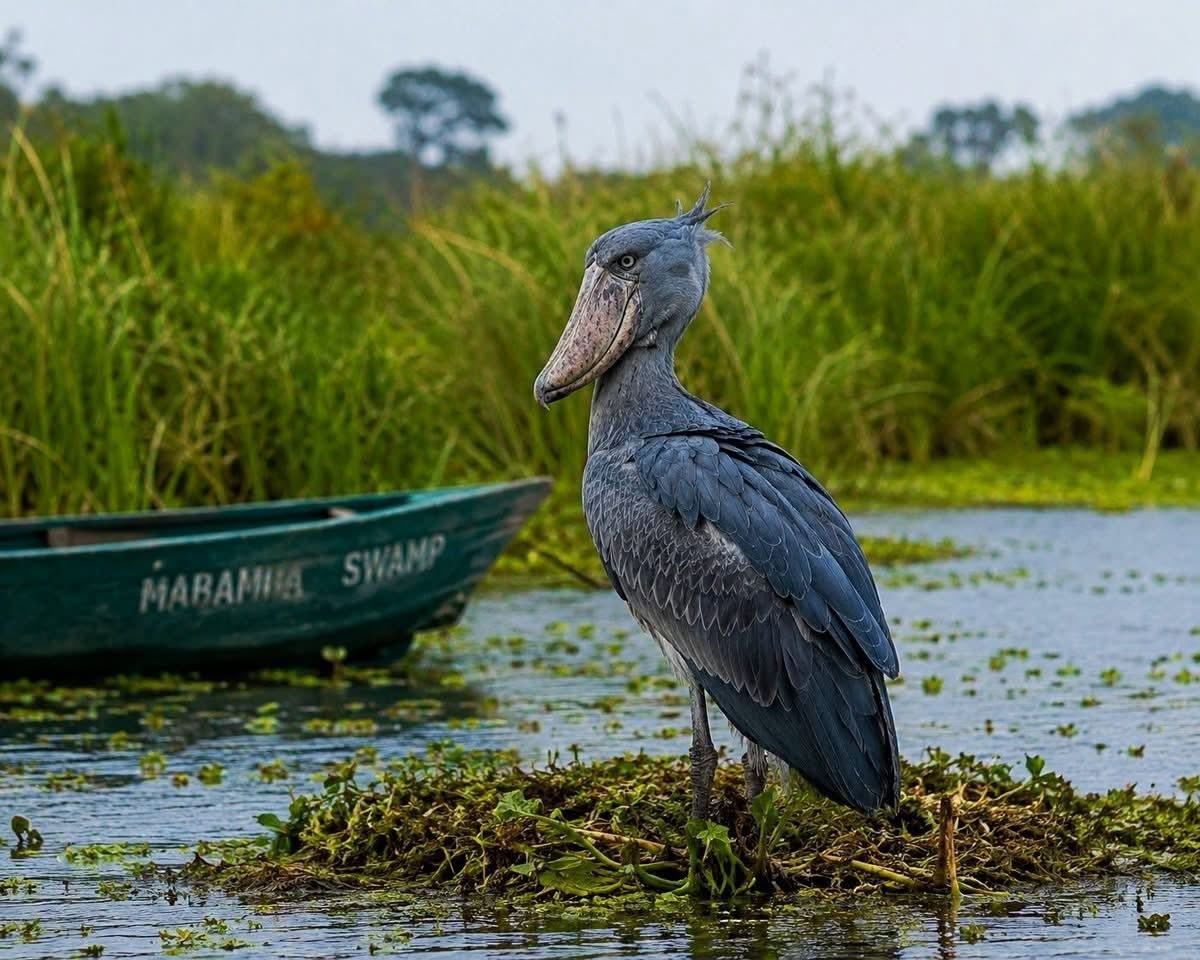
Uganda is home to over 1,000 bird species across wetlands, savannahs, and rainforests. Top targets on a Uganda birding safari include the Shoebill, Green-breasted Pitta, Great Blue Turaco, African Green Broadbill, and Grey Crowned Crane. Here are ten memorable species to look for, along with where and how to search for them. Bird sightings are never guaranteed, so check current conditions with a knowledgeable local guide.
1-day-perfect-mabamba-swamp-shoebill-stork-uganda-birding-safari
5-days-uganda-bird-watching-safari-lake-victoria-shores-and-lake-mburo
9-days-classic-uganda-birding-safari-tourn
13-days-uganda-birding-safari-and-wildlife
20-days-uganda-birding-safari-to-uganda-national-park
21-days-uganda-birding-safari-extravaganza-to-best-uganda-safari-parks
10-days-best-uganda-birding-safari-and-wildlife-experience
9-days-best-uganda-birding-safari-tour-from-swamps-to-savannah-eastern-route
30-days-best-uganda-birding-safari-extravaganza-and-wildlife-safari
25-days-complete-uganda-birding-safari-extravaganza-with-wildlife-viewing
1. Shoebill (Balaeniceps rex)
The Shoebill is one of the most sought-after birds on a Uganda birding safari. Tall, grey and almost prehistoric in appearance, it is instantly recognisable by its enormous, shoe-shaped bill. Shoebills can stand motionless for long periods in shallow water, watching for fish. Their stillness makes them easy to miss among papyrus and reeds, so scan slowly and follow your guide’s directions.
Mabamba Swamp, near Entebbe, is Uganda’s best-known place to look for a Shoebill. Local guides take visitors through the wetland by boat, often at a quiet pace that allows time to watch the channels and vegetation. The Nile Delta in Murchison Falls National Park is another birding area to ask about, depending on your itinerary and conditions.
An early start, binoculars and a patient approach can make the outing more enjoyable. Keep noise low, maintain a respectful distance and avoid pressuring the bird for a photograph. Ask about current water levels, access and boat arrangements before setting out.
2. Green-breasted Pitta (Pitta reichenowi)
The Green-breasted Pitta is a prized bird for visitors exploring Uganda’s tropical forests. Its bright plumage is striking, but this elusive species spends much of its time close to the forest floor, moving through leaf litter and dense undergrowth. A quick flash of colour may be all you see at first. Listening carefully is important, and an experienced guide can help you interpret calls and choose where to watch.
Kibale Forest National Park is a well-known place to search for the Green-breasted Pitta. Birders often head into the forest early, when activity is beginning and the air is cooler. The bird may call from thick vegetation before appearing in a more open patch, so patience is part of the experience.
Wear comfortable walking shoes and clothing suited to a shaded, sometimes damp forest. Keep voices low and remain on permitted trails. Avoid trying to flush a bird into view; let your guide manage the search. A sighting is never certain, but a slow, guided walk can reveal plenty of other forest birds. Allow enough time in your itinerary rather than treating the pitta search as a quick stop.
3. Great Blue Turaco (Corythaeola cristata)
The Great Blue Turaco is a spectacular canopy bird and one of Uganda’s most memorable forest residents. It is the largest turaco, with a distinctive mix of blue, green and yellow plumage, a prominent crest and a red bill. Look for its large shape moving between branches, or listen for its deep, echoing calls. Even when foliage hides the bird, its size and voice can give it away.
Birders often look for Great Blue Turacos around Kibale Forest and nearby Bigodi Wetland Sanctuary. A local guide can help you scan the canopy and keep track of birds as they move through the trees. Early morning is a good time to be alert, though turacos may be active at other times too.
Bring binoculars and, if you enjoy photography, a camera suited to low-light conditions beneath the forest canopy. Rather than focusing only on getting a photograph, watch how the birds travel through the treetops. Great Blue Turacos feed mainly on fruit, so their presence is also a reminder of the importance of healthy forest. Keep a respectful distance and follow your guide’s advice.
4. African Green Broadbill, or Grauer’s Broadbill (Pseudocalyptomena graueri)
The African Green Broadbill, also known as Grauer’s Broadbill, is one of the most sought-after birds of the Albertine Rift. Its compact shape, vivid green plumage and broad bill make it distinctive, but locating it in dense montane forest may take time. It can sit quietly among foliage, so even a bright bird may be difficult to pick out. Patient listening and careful scanning are often more useful than covering ground quickly.
In Uganda, Bwindi Impenetrable National Park is an important place to search, particularly the Ruhija sector and the Mubwindi Swamp trail. Ask a knowledgeable local guide about current trail access, recent sightings and the best approach for your visit.
Forest walks can be steep, muddy or physically demanding, so wear supportive footwear and bring water and rain protection. Keep to established trails and let your guide lead the search. The broadbill is not guaranteed, but Bwindi’s rich forest birdlife makes the time in the field worthwhile even if this particular target stays hidden. (See the Albertine Rift birding guide.)
5. Grey Crowned Crane (Balearica regulorum)
The Grey Crowned Crane is Uganda’s national bird and one of the country’s most recognisable species. Its golden crown of stiff feathers, grey body, white cheeks and red facial patch create an unmistakable profile. In open grassland or wetland, it is a graceful sight. If you are lucky, you may see a pair displaying—bowing, leaping and spreading their wings.
Look for Grey Crowned Cranes in suitable wetland and grassland habitats, including parts of Queen Elizabeth National Park and Lake Mburo National Park. They may occur elsewhere in Uganda too, but sightings depend on habitat and local conditions. A guide can help you find birds without disturbing them.
The species faces pressure from habitat loss and other human impacts, so responsible wildlife viewing matters. Do not approach nests, feed cranes or crowd them for photographs. Use binoculars and give the birds space to behave naturally. Seeing Uganda’s national bird in the wild is a memorable experience; learning about the wetlands and grasslands it depends on makes the encounter even more meaningful.
6. Standard-winged Nightjar (Caprimulgus longipennis)
The Standard-winged Nightjar is a distinctive target for birders exploring Uganda’s savannah and open woodland. The male is famous for its exceptionally long wing feathers, which form striking “standards” during the breeding season. These feathers are not always visible, so what you see can depend on the season and whether the bird is male or female. During the day, its mottled plumage helps it blend into the ground.
Murchison Falls National Park is one area to ask about when planning a search. A guided outing at dusk or dawn can be rewarding, especially when the guide knows suitable habitat and recent activity. Nightjars may be detected by their calls or by careful scanning as they become active in the fading light.
Ask your guide when the male’s display feathers are most likely to be visible. Use a torch sparingly and avoid repeated playback, which can disturb birds. A nightjar outing also offers a chance to experience the changing sounds of the African bush after a daytime game drive. Bring a light layer, binoculars and patience—the bird may appear briefly before disappearing back into the darkness.
7. Fox’s Weaver (Ploceus spekeoides)
Fox’s Weaver is a special target for birders because it is often described as Uganda’s only bird species endemic to the country. Its restricted range makes it particularly appealing to visitors hoping to see a species found nowhere else. It is associated with seasonal wetlands and nearby grassland or acacia habitats in eastern Uganda. Because it can be locally elusive, planning with a guide who knows the area is worthwhile.
Birders may ask about sites around Lake Bisina and the Pian Upe region. The most suitable location can depend on the season, access and recent reports, so ask your tour operator to confirm current conditions before travelling.
When searching, look and listen around wetland vegetation and nearby feeding areas. Binoculars can help you pick out birds among reeds and grasses. Avoid approaching nests or disturbing a colony for a closer view. Fox’s Weaver may not offer the dramatic encounter of a Shoebill, but its limited range makes the search a rewarding part of an eastern Uganda birding itinerary. Allow extra time in your schedule, as finding a specialist bird can take patience.
8. Bar-tailed Trogon (Apaloderma vittatum)
The Bar-tailed Trogon is a colourful forest bird that rewards patient observers. Its green or blue-green upperparts, red underparts and finely barred tail can be striking when it perches in an open patch of foliage. It may also sit quietly and partly concealed, so check shaded branches carefully. Calls can reveal its presence before you spot it.
In Uganda, birders may look for the species in suitable highland and montane forest, including Bwindi Impenetrable National Park. A local guide can recommend trails based on habitat, access and recent sightings. Mpanga Forest is another site to ask about, but confirm local conditions before planning a visit specifically for the trogon.
Binoculars are useful beneath the forest canopy, where light can be low and birds may perch above eye level. Move slowly and give your eyes time to adjust. Avoid approaching a perched bird or using repeated playback to force a response. A patient forest walk may reveal many other species too, so include the Bar-tailed Trogon as one of several targets rather than the sole reason for visiting a site.
9. Shelley’s Crimsonwing (Cryptospiza shelleyi)
Shelley’s Crimsonwing is a highly sought-after bird of the Albertine Rift. This elusive finch often keeps to dense vegetation, making it a challenging sighting even for experienced birders. Males show vivid crimson tones, while females are more subdued. The bird may remain low or concealed, so careful listening and the knowledge of a local guide can be valuable.
In Uganda, birders may search for it in high-altitude montane forest, especially around Bwindi’s Ruhija sector and in the Rwenzori region. Ask a guide which trails and habitats are suitable for your visit, since access and recent bird activity can change.
Bring binoculars that perform well in dim forest light and wear sturdy shoes for steep or muddy trails. Rather than rushing between calling points, stop and listen while your guide interprets what you hear. A sighting is never guaranteed, but time in these mountain forests is rewarding in its own right. Shelley’s Crimsonwing works best as part of a wider Albertine Rift birding itinerary that includes other forest specialties.
10. Black-breasted Barbet (Pogonornis rolleti)
The Black-breasted Barbet is an unusual target for Uganda birders because its range is concentrated in northeastern Africa, with records extending into northern Uganda. It is associated with woodland and scattered trees rather than the high-altitude forests where many Albertine Rift birds are found. Its bold dark breast and reddish belly can make it striking when seen well.
If you hope to see this species, ask a local birding guide about suitable northern Uganda locations for your travel dates. Its distribution is local, and sightings may be sparse, so current advice is more useful than relying on a broad national checklist. A guide can also advise whether a search fits your route and the time available.
Barbets often feed in trees, so scan fruiting branches and listen for calls as you move through suitable woodland. Binoculars help, and a camera with a zoom lens can be useful if the bird is distant. Keep expectations realistic: a specialist target may take time and is never guaranteed. Combining the search with other regional birds can make the outing rewarding even if the barbet remains elusive. For current taxonomy and Uganda records, consult the Uganda bird checklist on Avibase and ask a local guide for recent information.
What birds should I look for on a Uganda birding safari?
Uganda has more than 1,000 recorded bird species, so choosing a few favourites can help shape your trip. Some of the most memorable targets include the Shoebill, Green-breasted Pitta, Great Blue Turaco, African Green Broadbill (also called Grauer’s Broadbill), and Grey Crowned Crane.
Your list might also include Fox’s Weaver, a species endemic to Uganda, or forest birds such as the Bar-tailed Trogon and Shelley’s Crimsonwing. In the savannah and open woodland, you could ask your guide about the Standard-winged Nightjar and Black-breasted Barbet.
The best birds for your itinerary depend on where you plan to travel, how much time you have, and which habitats interest you most. A Shoebill search in a wetland is a very different outing from a slow walk-through montane forest looking for a broadbill.
It’s worth sharing your target list with a local guide before you travel. They can suggest realistic locations and help you balance specialist searches with time to enjoy the wider birdlife. Sightings are never guaranteed, but a flexible plan makes the experience rewarding even when a particular bird stays hidden.
Where is the best place to see a Shoebill in Uganda?
Mabamba Swamp, near Entebbe, is Uganda’s best-known place to look for the Shoebill. Visitors usually explore the wetland by boat with a local guide, moving slowly through channels bordered by papyrus and other vegetation. The quiet pace is part of the experience: Shoebills can stand motionless for long periods, and a careful scan may reveal one where you first saw only reeds.
The Nile Delta in Murchison Falls National Park is another area to ask about when planning a birding trip. Whether it suits your itinerary depends on your route, access and local conditions. Before setting out, check current water levels and boat arrangements with your operator.
An early start can make the outing more comfortable and give you time to watch the wetland without rushing. Bring binoculars, keep voices low and follow your guide’s instructions. If you see a Shoebill, give it room to behave naturally rather than asking a boat to crowd it for a photograph. No site can promise a sighting, but a knowledgeable local guide can help you search thoughtfully and make the most of the wetland’s other birds too.
Can I see the Green-breasted Pitta in Kibale Forest?
Kibale Forest National Park is a well-known place to search for the Green-breasted Pitta. The species is a favourite among birders, but it is not an easy bird to find. It spends much of its time close to the forest floor, moving through leaf litter and dense undergrowth. You might hear a call or glimpse a flash of colour before getting a clear view.
Pitta searches often begin early, when forest activity is picking up and the air is cooler. A guide familiar with the area can help you listen for calls and choose suitable places to wait. The bird may stay concealed even when it is nearby, so patience matters more than covering ground quickly.
Wear comfortable shoes and clothing for a shaded forest walk that may be damp underfoot. Stay on permitted trails, keep your voice down and let your guide manage the search. Trying to flush a bird out of cover can disturb it and is not a good way to birdwatch.
Allow enough time in your itinerary rather than treating the pitta as a quick stop. Even if you do not see it, Kibale offers a rich forest experience and many other birds to look for.
What makes the Great Blue Turaco special?
The Great Blue Turaco is one of Uganda’s most striking forest birds. It is the largest turaco, with a substantial body, a prominent crest, a red bill and colourful blue, green and yellow plumage. When it moves between branches, its size can make it easier to notice than some smaller canopy birds, though leaves may still hide it from view.
Birders often look for it around Kibale Forest and nearby Bigodi Wetland Sanctuary. A local guide can help you scan the treetops and follow a bird as it moves through the canopy. Its deep, echoing calls may also reveal its presence when the foliage is thick.
Bring binoculars and give your eyes time to adjust to the dimmer light beneath the forest canopy. If you are taking photographs, a camera that performs well in low light can be useful, but don’t let the search become only about getting a picture. Watching the bird move and feed is rewarding in itself.
Great Blue Turacos feed mainly on fruit, making them a reminder of how important healthy forest is to wildlife. Keep a respectful distance, follow your guide’s advice and enjoy the wider forest around you, not just the next sighting.
Where can I look for African Green Broadbills in Uganda?
The African Green Broadbill, also known as Grauer’s Broadbill, is one of the most sought-after birds of the Albertine Rift. In Uganda, Bwindi Impenetrable National Park is an important place to search. Birders often ask about the Ruhija sector and the Mubwindi Swamp trail, but the most suitable route can depend on access and conditions at the time of travel.
The bird’s vivid green colour may sound easy to spot, but dense montane forest can make even a bright species hard to pick out. It may sit quietly among leaves, so listening carefully and scanning patiently are often more useful than hurrying along the trail. A knowledgeable local guide can advise on recent sightings and help you search without disturbing the bird.
Forest walks in Bwindi can be steep, muddy and physically demanding. Wear supportive footwear and bring water and rain protection. Stay on established trails and let your guide lead.
A sighting is never certain, so it helps to plan the walk as a chance to experience Bwindi’s wider forest birdlife too. Ask about current access before you travel, and allow enough time in your itinerary for an unhurried visit.
Where might I see Uganda’s Grey Crowned Crane?
The Grey Crowned Crane, Uganda’s national bird, is associated with suitable wetland and grassland habitats. Birders may look for it in parts of Queen Elizabeth National Park and Lake Mburo National Park, among other areas. Where you have the best chance will depend on the season, habitat and local conditions, so it is worth asking your guide for current advice.
With its golden crown, grey body, white cheeks and red facial patch, the crane has a distinctive profile. It can be especially memorable in open country, where you may be able to watch it from a respectful distance. Occasionally, a pair may display with bows, leaps and outstretched wings, though behaviour varies and such moments should never be expected on demand.
Use binoculars rather than walking closer for a photograph. Do not feed the birds, crowd them or approach nests. The species faces pressure from habitat loss and other human impacts, so considerate viewing matters.
You might also ask your guide about the wetlands or grasslands you visit and how local communities are working to protect them. Seeing Uganda’s national bird in the wild is special; understanding the habitat it depends on can make the encounter more meaningful.
When can I see the Standard-winged Nightjar in Uganda?
The Standard-winged Nightjar is a bird to ask about when visiting Uganda’s savannah and open woodland. Murchison Falls National Park is one area where birders may plan a search. Nightjars are often most noticeable around dusk or dawn, when they become active, and a guide familiar with the habitat can help you listen for calls or scan carefully in fading light.
The male is famous for exceptionally long wing feathers that form distinctive “standards” during the breeding season. Those feathers are not always visible: what you see depends on the bird’s sex, age and season. During the day, its mottled plumage can blend remarkably well with the ground, so it may be difficult to find even when it is nearby.
Ask your guide when the display feathers are most likely to be seen and whether a night outing suits your itinerary. Bring binoculars and a light layer for the evening. Use a torch sparingly and avoid repeated playback, which can disturb birds.
A nightjar search offers more than a chance to see one species. It lets you experience the changing sounds of the bush after a daytime game drive. Keep expectations flexible, since the bird may appear only briefly—or not at all.
Why is Fox’s Weaver a special bird to look for?
Fox’s Weaver is often described as Uganda’s only bird species endemic to the country, which makes it a particularly appealing target for birders. It has a restricted range and is associated with seasonal wetlands and nearby grassland or acacia habitats in eastern Uganda. Because it can be locally elusive, a little planning can make the search more worthwhile.
Birders may ask about sites around Lake Bisina and the Pian Upe region. The best location can vary with season, access and recent reports, so it is sensible to confirm conditions with a local guide before travelling. A broad checklist cannot tell you whether a particular site is currently accessible or productive.
When searching, scan wetland vegetation and nearby feeding areas, and listen for activity around reeds and grasses. Binoculars are useful for picking out birds without approaching too closely. As with other nesting birds, avoid disturbing colonies or trying to get closer for a photograph.
Fox’s Weaver may not offer the dramatic wetland encounter of a Shoebill, but its limited range gives the search a special purpose. Allow extra time in your eastern Uganda itinerary and treat the outing as a chance to explore the region’s wider birdlife too. A sighting is never guaranteed, but a careful search can be rewarding.
Where should I look for Bar-tailed Trogons and Shelley’s Crimsonwings?
Both the Bar-tailed Trogon and Shelley’s Crimsonwing are forest birds that can be challenging to see. Birders may look for them in suitable highland and montane forest, including Bwindi Impenetrable National Park. For Shelley’s Crimsonwing, the Ruhija sector and the Rwenzori region are areas to ask a local guide about. Access, habitat and recent sightings can change, so current advice is useful.
Bar-tailed Trogons can perch quietly in shaded branches. Their colourful plumage may stand out in an open patch, but foliage and low light can make them easy to miss. Shelley’s Crimsonwing often stays in dense vegetation; males show vivid crimson tones, while females are more subdued. Listening patiently can help, especially when a guide can interpret the calls.
Wear sturdy shoes for steep or muddy trails and bring binoculars that work well in low light. Walk slowly, stop to listen and avoid repeated playback or approaching a perched bird. A rushed search is rarely the most enjoyable way to explore forest.
Neither species is guaranteed, so include them as part of a broader Albertine Rift birding itinerary. Time spent in the forest can be rewarding even when a particular target does not appear.
Can I see the Black-breasted Barbet in northern Uganda?
The Black-breasted Barbet is a specialist bird to ask about when planning time in northern Uganda. Its range is concentrated in northeastern Africa, with records extending into northern Uganda, and it is associated with woodland and scattered trees rather than the high-altitude forests that attract many Albertine Rift birders.
Because its distribution is local and sightings may be sparse, current advice from a local birding guide is more helpful than relying only on a general national checklist. Ask whether a search fits your route and how much time you should allow. Your guide can also advise on access and suitable habitat for your travel dates.
Barbets often feed in trees, so scan fruiting branches and listen for calls while moving through woodland. Binoculars can help when a bird is distant or partly hidden. A zoom lens may be useful for photography, but it is best to avoid moving closer if that would disturb the bird.
Keep expectations realistic: a specialist target may take time, and sightings are never guaranteed. Combining the search with other regional birds can make the outing worthwhile even if the barbet stays out of sight. For Uganda records and current taxonomy, consult a reliable checklist and ask for recent local information.
How should I prepare for a Uganda birding safari?
Start by sharing your target list, travel dates and preferred pace with your tour operator or guide. Uganda’s birding sites are spread across the country, and a realistic route depends on how much time you have. Some targets call for a slow forest walk, while others are best searched for in wetlands, open woodland or savannah. Allow enough time at each site rather than trying to cover too much ground.
Pack comfortable walking shoes, lightweight clothing, rain protection and binoculars. Forest trails can be steep or muddy, and mornings or evenings may feel cool. A camera can be enjoyable, but binoculars often make it easier to observe birds without disturbing them. Carry water and any personal essentials your guide recommends.
A local guide can help you identify calls, locate suitable habitat and understand current access. They can also advise when a specialist search is worthwhile. Bird sightings are never guaranteed, so include a mix of target species and general birding time in your plans.
While in the field, keep noise low, stay on permitted trails and avoid repeated playback or approaching nests. A thoughtful birding trip is not just about ticking species off a list; it is also about enjoying Uganda’s varied habitats responsibly.
How can I book a Uganda birding safari with Roads of Adventure Safaris?
If you would like to plan a Uganda birding safari with Roads of Adventure Safaris, begin by sharing your travel dates, group size, preferred pace and the birds you most hope to see. You can mention specialist targets such as the Shoebill, Green-breasted Pitta, African Green Broadbill or Fox’s Weaver, along with the places you are already considering.
Ask the team to suggest a route that fits your time and interests. Uganda’s birding locations are spread across the country, so it helps to discuss travel distances, time at each site, accommodation preferences and whether you want to combine birding with other wildlife experiences. You can also ask which locations and trails are suitable for your dates and what arrangements are needed for wetland or forest excursions.
Before confirming, request a clear itinerary and information about what is included, any additional costs, cancellation terms and practical preparation. Share any mobility needs or other requirements in advance.
No operator can guarantee a particular wild bird sighting. A good plan allows time for searching while keeping the trip enjoyable if a target does not appear. Contact Roads of Adventure Safaris directly to discuss your priorities and confirm current availability and arrangements.