A 7-day Uganda safari typically combines top primate tracking—mountain gorillas in Bwindi/Mgahinga and chimpanzees in Kibale—with savanna game drives in Queen Elizabeth National Park to see big game like lions, elephants, and leopards. Key activities include trekking gorillas, boat cruises on the Kazinga Channel, and visiting the Equator.
A 7-day Uganda safari is an intense, high-contrast journey that moves from the steam of the tropical rainforest to the heat of the golden savannah. Known as the "Pearl of Africa," Uganda offers a more intimate and lush experience compared to the sprawling plains of its neighbors. Here is a detailed look at what you can expect across the key pillars of this week-long expedition.
7-days-murchison-falls-uganda-safari-trip-via-ziwa-rhinos-kidepo-valley-and-jinja
7-days-best-family-uganda-safari-with-primates-and-big-five
7-days-photography-uganda-safari-all-big-five-chimpanzee-and-gorillas
7-days-uganda-tour-to-murchison-falls-via-ziwa-kibale-and-queen-elizabeth-national-park
7-days-best-uganda-birding-safari-tour
7-days-perfect-uganda-primate-safari-itinerary
7-days-uganda-honeymoon-safari-holiday-vacation
7-days-best-uganda-wildlife-safari-and-culture
7-days-best-gorilla-trekking-and-safari-in-uganda-to-see-big-fives
7-days-safari-to-uganda-queen-elizabeth-park-gorillas-trekking-and-lake-mburo
7-day-best-uganda-safari-holiday-true-escape
7-days-budget-uganda-safari-tour-package
7-days-honeymoon-uganda-safari-and-primate-tour-vacation-holiday
7-days-perfect-road-trip-uganda-safari-tour
7-days-best-uganda-safari-tour-to-popular-safari-parks
7-day-uganda-safari-to-kidepo-valley-via-jinja-and-sipi-falls
7-day-uganda-gorilla-trekking-chimpanzee-wildlife-safari-tour-and-culture
7-days-uganda-safari-chimpanzee-tracking-and-jinja-white-water-rafting
7-day-ultimate-uganda-primate-safari-chimpanzees-and-game-drives
Gorilla & Chimp Tracking
The absolute pinnacle of a Ugandan safari is the dual primate experience. Most 7-day itineraries dedicate the final half of the trip to Bwindi Impenetrable National Park for mountain gorillas and the earlier half to Kibale National Park for chimpanzees. Kibale is famously dubbed the "Primate Capital of the World," boasting 13 different species. Tracking chimpanzees here is a high-energy affair; you follow the echoing "pant-hoots" through the canopy, witnessing the complex social hierarchies and high intelligence of our closest living relatives.
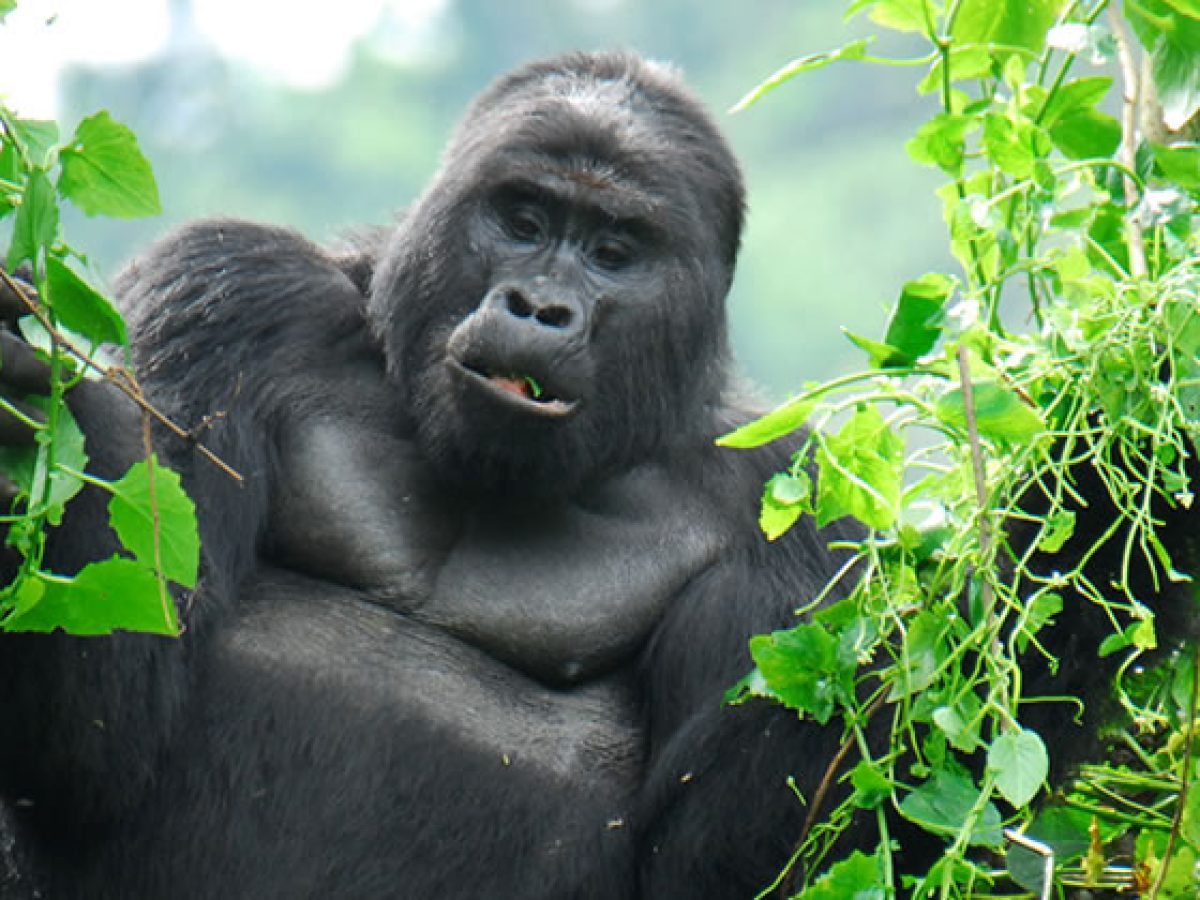
Trekking in Bwindi, however, is a more somber and spiritual encounter. The "impenetrable" forest lives up to its name, with rangers often hacking through thick vines to reach a gorilla family. When you finally sit with a 400-pound Silverback, the world seems to go silent. You are allowed one hour to observe them, and the sheer humanity in their eyes—the way a mother cradles an infant or a juvenile playfully goads an adult—is an experience that transcends traditional wildlife viewing. It is physically demanding but remains the most sought-after wildlife encounter on the continent.
Big Game Viewing
While Uganda is famous for its primates, its savannah parks offer a unique and less crowded "Big Game" experience. Queen Elizabeth National Park is the centerpiece of game viewing on a 7-day tour. Nestled between Lake Edward and Lake George, the park’s open plains are home to the Uganda kob—a handsome antelope that serves as a primary prey for the park's predators. You will track large herds of buffalo, savannah elephants, and if you are lucky, leopards draped over acacia branches.
The most iconic highlight of Ugandan game viewing occurs in the Ishasha sector of Queen Elizabeth. This is one of the only places in the world where lions have a habitual tendency to climb trees. Seeing a pride of lions lounging in the massive limbs of a sycamore fig tree is a surreal sight. Experts believe they do this to escape the heat on the ground or to avoid the pesky tsetse flies. Regardless of the reason, it provides a photographic opportunity unlike any other in East Africa.
Boat Safaris
Water is the lifeblood of Uganda, and a boat safari offers a tranquil yet thrilling break from the dust of the road. The most famous water excursion is the cruise along the Kazinga Channel. This 32-kilometer-long natural channel connects Lake Edward and Lake George and boasts one of the world's highest concentrations of hippos. From the water, you are just meters away from massive pods of hippos grunting and jostling for space.
The channel is also a magnet for Nile crocodiles, which bask on the banks with their mouths agape to regulate body temperature. For birders, this is paradise; you will see African fish eagles, pied kingfishers, and various herons. Elephants often come down to the water’s edge in the late afternoon to drink and bathe, providing a "front-row seat" to their social lives. The perspective from a boat allows for closer proximity than a vehicle ever could, offering a calm yet intimate look at the density of life at the water's edge.
Diverse Scenery
The visual transition on a 7-day safari is staggering. You aren't just looking at one type of landscape; you are moving through a kaleidoscope of ecosystems. To the west, the Rwenzori Mountains (the "Mountains of the Moon") provide a dramatic, mist-covered backdrop with their jagged, snow-capped peaks. The foothills are dotted with emerald-green crater lakes, formed by ancient volcanic activity, which now offer serene spots for hiking and photography.
Often, the journey begins with a visit to the Ziwa Rhino Sanctuary. This is the only place in Uganda where you can see rhinos in the wild, and the experience is unique because you track them on foot. This transition—from the dry, rhino-inhabited bush of the north to the jagged mountains of the west and finally the deep, prehistoric rainforests of the south—ensures that the scenery remains fresh and surprising every single day. Uganda’s landscape is a testament to the country's unique position at the meeting point of the East African savannah and the West African jungle.
Cultural Experiences
A Ugandan safari is deeply rooted in the people who protect these lands. A major highlight is visiting the Bigodi Wetland Sanctuary, located on the edge of Kibale Forest. This community-led project is a shining example of how conservation can benefit local livelihoods. A guided walk through the swamp not only yields sightings of the Great Blue Turaco and various monkeys but also supports the local community who manage the sanctuary.
Travelers often have the chance to visit local schools, coffee plantations, or traditional homesteads. Engaging with the Maasai’s counterparts in Uganda, such as the Bakiga or Batooro people, offers insight into their nomadic history and their modern-day efforts to coexist with wildlife. These encounters provide a soulful dimension to the trip, illustrating that the "Pearl of Africa" is as much about its vibrant, welcoming people as it is about its famous primates.
Itinerary Flow
Logistically, a 7-day safari is a well-oiled machine. Most tours start and end in Entebbe or Kampala, the country's central hubs. The route typically moves in a "Southern Loop." After leaving the city, you may head north to Ziwa before cutting west toward the Rift Valley. A definitive "safari moment" occurs at the Equator line in Kayabwe, where travelers stop for the obligatory photo with one foot in the Northern Hemisphere and the other in the Southern.
From the Equator, you descend into the crater lake regions, spend time in the savannah of Queen Elizabeth, and finally climb into the high-altitude forests of Bwindi. The return journey to Entebbe is often a long but scenic drive through the "Switzerland of Africa," characterized by terraced hills and winding roads. This flow ensures a gradual crescendo, starting with smaller wildlife and culminating in the powerful, life-changing encounter with the mountain gorillas before your departure.
7-day Uganda safari
A 7-day Uganda safari is a profound expedition into the "Pearl of Africa," a land where the vibrant East African savannah meets the emerald depths of the Central African rainforest. This itinerary is masterfully structured to deliver a "Primate Double Bill," featuring the high-energy social world of chimpanzees and the quiet, soulful majesty of mountain gorillas. Beyond the primates, you will navigate the diverse landscapes of the Great Rift Valley, from the predator-rich plains of Queen Elizabeth National Park to the mist-shrouded peaks of the Rwenzori foothills. This journey is as much about water as it is land, featuring boat safaris along channels teeming with hippos and walks through bird-rich tropical swamps. Designed for those who seek deep immersion in nature, these seven days offer a comprehensive look at Uganda’s ecological wonders, ensuring every sunrise brings a new encounter with some of the rarest creatures on the planet.
Day 1: Entebbe to Kibale National Park
Your adventure begins with a scenic drive west from the shores of Lake Victoria toward the lush tea plantations of Fort Portal. As you leave the bustle of Entebbe, the landscape transforms into a tapestry of rolling green hills and rural homesteads. This journey takes you into the heart of the "Primate Capital of the World," Kibale National Park. Along the way, you’ll catch glimpses of the distant "Mountains of the Moon," a jagged range that signals your entry into the Albertine Rift. Arriving in the afternoon, the air turns cool and fragrant with the scent of tropical vegetation. You’ll check into your lodge nestled on the forest fringe, where the evening air is filled with the rhythmic calls of tree hyraxes and distant monkeys, setting the stage for tomorrow’s primate encounter.
Day 2: Chimpanzee Tracking and Bigodi Swamp
The morning begins with the echoing pant-hoots of chimpanzees as you enter Kibale’s dense canopy. Led by expert trackers, you’ll follow these highly intelligent primates through the forest, witnessing their complex social structures and playful interactions. After a thrilling hour with our closest relatives, the afternoon shifts to the community-led Bigodi Wetland Sanctuary. This swamp walk is a birder’s paradise, most famous for sightings of the vibrant Great Blue Turaco. As you navigate the boardwalks, you’ll likely spot several other primate species, including the Red Colobus and Grey-cheeked Mangabey. This day perfectly balances the raw adrenaline of the deep forest with a serene exploration of wetland biodiversity, all while supporting vital local conservation initiatives that provide livelihoods for the people living alongside the national park.
Day 3: Queen Elizabeth Park and Crater Lakes
Leaving the rainforest behind, you head south toward Queen Elizabeth National Park. This drive offers some of Uganda’s most dramatic scenery as you pass through the Kasenda Crater Field. You’ll stop to explore these ancient volcanic "explosion craters," which have since transformed into shimmering, emerald-green lakes surrounded by steep, forested walls. The views from the rim provide a stunning contrast between the jagged Rwenzori peaks and the vast Rift Valley floor. As you enter the park, the vegetation thins into golden savannah, and you’ll catch your first glimpses of Uganda kob, buffalo, and perhaps a distant elephant herd. Your evening concludes at a lodge overlooking the vast expanse of the park, where the sun sets over the horizon, painting the sky in shades of violet and gold.
Day 4: Game Drive and Kazinga Channel Boat Safari
Dawn brings a classic African safari experience on the Kasenyi Plains. Your guide will track the park's resident lion prides and elusive leopards as they move through the morning mist. This area is a primary breeding ground for kobs, making it a high-traffic zone for predators. In the afternoon, the focus shifts to the water for a boat safari along the Kazinga Channel. This 32-kilometer natural waterway connects Lake Edward and Lake George and hosts one of the world's highest concentrations of hippos. From the boat, you’ll observe massive pods of hippos, Nile crocodiles basking on the banks, and elephants coming down for their evening bath. The channel is also an avian haven, with hundreds of species of kingfishers, eagles, and pelicans lining the shore.
Day 5: Ishasha Tree-Climbing Lions to Bwindi
Today you head to the remote Ishasha sector in the southern part of the park, world-renowned for its unique tree-climbing lions. You’ll scan the massive limbs of ancient sycamore fig trees, where these predators often lounge during the heat of the day to escape tsetse flies and enjoy the breeze. Seeing a pride draped over the branches is one of Africa’s most surreal photographic opportunities. After the game drive, you begin the climb into the Kigezi Highlands, often referred to as the "Switzerland of Africa." The landscape shifts dramatically into steep, terraced hillsides and mist-covered valleys. By late afternoon, you arrive at the edge of the prehistoric Bwindi Impenetrable National Park, where the dense, tangled vines house the world’s last remaining mountain gorillas.
Day 6: Gorilla Trekking in Bwindi
This is the pinnacle of your Ugandan journey. After a morning briefing, you’ll enter the ancient, high-altitude rainforest in search of a mountain gorilla family. The trek can be physically demanding, involving steep climbs through thick vegetation, but the moment you find them, the effort vanishes. You are granted one hour to observe these gentle giants. Watching a 400-pound Silverback calmly oversee his troop, or seeing infants tumble through the foliage, is a profound, soul-stirring experience that defies description. The silence of the forest is broken only by the sound of breaking bamboo and the gorillas' deep vocalizations. This intimate connection with our wild relatives is often described as life-changing, leaving you with an indelible sense of wonder as you return to the lodge to reflect on the encounter.
Day 7: Return to Entebbe and the Equator
Your final day involves a scenic drive back through the rolling hills of southwestern Uganda. This journey offers a final chance to appreciate the country’s diverse geography as you transition from the high-altitude forests back to the central plateau. A definitive stop occurs at the Equator line in Kayabwe, where you can stand in both the Northern and Southern Hemispheres simultaneously and watch the "Coriolis effect" water demonstration. After a final safari lunch and some souvenir shopping for local crafts and fabrics, you continue to Entebbe. Arriving in the late afternoon, you’ll be transferred to the airport for your departure. As you fly out over Lake Victoria, you carry with you the wild spirit of the rainforest and the memory of the "Pearl of Africa’s" magnificent primates.
1. What is the best way to spend 7-day Uganda safari itinerary covering primates?
The most efficient way to structure a 7-day primate-focused safari is to follow the Southwestern Circuit. This route minimizes travel fatigue by moving in a logical progression from the rainforests to the savannah and back to the mountains. Typically, the journey begins with a drive from Entebbe to Kibale National Park, the "Primate Capital of the World," for chimpanzee tracking. After two nights in the forest, you transition to the open plains of Queen Elizabeth National Park for a mix of big game viewing and boat safaris.
The climax of the trip is usually reserved for the final days in Bwindi Impenetrable National Park. By placing gorilla trekking at the end, the itinerary builds toward a grand finale. This structure ensures that you experience the high-energy social behavior of chimps first, followed by the diverse wildlife of the savannah, and finally the soulful, quiet encounter with the mountain gorillas. The return journey to Entebbe often includes a stop at the Equator, providing a well-rounded mix of primates, predators, and cultural landmarks.
2. Can I experience both gorilla trekking and chimpanzee tracking within seven days in Uganda?
Yes, experiencing both is not only possible but is the primary reason most travelers choose a 7-day package. Uganda is one of the few places on earth where you can witness both our closest relatives—chimpanzees and mountain gorillas—in their natural habitats within a single week. The proximity of Kibale and Bwindi via the Rift Valley floor makes this a logistical reality.
In Kibale, you track chimpanzees through relatively flat terrain under a dense canopy, focusing on their vocalizations and social hierarchies. Just a few days later, you ascend into the high-altitude, prehistoric forests of Bwindi for a completely different physical and emotional experience with the gorillas. This "Primate Double Bill" provides a fascinating comparative look at primate evolution and behavior, making a 7-day Uganda safari one of the most intellectually and emotionally rewarding wildlife trips available.
3. How long do we get to spend with gorillas during a 7-day Uganda safari?
Standard conservation protocols dictate that you are allowed exactly one hour of contact time with a mountain gorilla family once you have located them. This rule is strictly enforced by the Uganda Wildlife Authority (UWA) to minimize the stress on the animals and to limit their exposure to human-borne diseases. While one hour may sound brief, it is often described by travelers as the "most powerful sixty minutes of their lives."
During this hour, you are typically stationed about seven to ten meters away from the group. This is ample time to observe the Silverback’s protective nature, the playful antics of the juveniles, and the quiet grooming sessions of the females. If you desire more time, some 7-day itineraries can be modified to include the Gorilla Habituation Experience in the Rushaga sector of Bwindi. This specialized trek allows for four hours of contact time alongside researchers, providing a deeper look into the process of acclimating these wild giants to human presence.
4. Is it possible to see tree-climbing lions during a 7-day Uganda safari trip?
Yes, seeing the famous tree-climbing lions is a core highlight of most 7-day Ugandan itineraries. These elusive cats are found in the Ishasha sector, located in the southern part of Queen Elizabeth National Park. Most tours pass through Ishasha while transitioning from the northern sector of the park toward Bwindi, making it a natural and exciting "stopover" on the fifth day of the trip.
Unlike most lions, those in Ishasha have a habitual tendency to spend their afternoons draped over the massive limbs of sycamore fig trees or acacia trees. While there are several theories as to why they do this—including escaping the heat of the ground or avoiding tsetse flies—the result is a surreal photographic opportunity. While sightings are never 100% guaranteed, your guide will spend several hours scanning the tree canopies in this region, often providing one of the most unique big cat encounters in all of Africa.
5. Which national parks are generally included in a 7-day Uganda safari itinerary package?
A standard 7-day "Best of Uganda" itinerary almost always includes a trio of iconic parks: Kibale National Park, Queen Elizabeth National Park, and Bwindi Impenetrable National Park. Together, these three parks represent the best of Uganda's rainforest, savannah, and montane ecosystems.
Sometimes, a fourth park, Lake Mburo National Park, is added as a "buffer" stop on the return journey from Bwindi to Entebbe. Lake Mburo is excellent for seeing species not found in the other western parks, such as zebras, impalas, and the massive eland. If the itinerary is focused more on northern wildlife and water, it might replace Queen Elizabeth and Kibale with Murchison Falls National Park, though this is less common for those prioritizing the "primate circuit."
6. Are boat cruises part of the 7-day Uganda safari and where are they located?
Boat safaris are a signature element of a 7-day Uganda tour, offering a refreshing and intimate perspective on wildlife that is impossible to achieve from a vehicle. The most famous cruise is located on the Kazinga Channel within Queen Elizabeth National Park. This 32-kilometer natural waterway connects Lake Edward and Lake George and is home to one of the world's highest concentrations of hippos.
During a two-hour afternoon cruise, you will glide past massive pods of grunting hippos and Nile crocodiles sunning themselves on the banks. The channel is also a magnet for elephants, buffaloes, and waterbucks that come down to drink and bathe in the late afternoon. For birders, it is a world-class experience, with sightings of African fish eagles, pied kingfishers, and pelicans. If your 7-day tour heads north instead, you would enjoy a boat trip to the base of Murchison Falls, where the Nile forces itself through a tiny gap in the Rift Valley escarpment.
7. Is 7 days sufficient to see all the "Big Four" mammals in Uganda’s national parks?
While the "Big Five" (lion, leopard, elephant, buffalo, and rhino) is the goal, a 7-day western safari typically allows you to see the "Big Four" with high frequency. In Queen Elizabeth National Park, lions, elephants, and buffaloes are commonly sighted on the Kasenyi plains and during the Kazinga Channel boat safari. Leopards, being nocturnal and solitary, are more elusive but are frequently spotted draped in trees or moving through the thickets in the early morning.
To see the fifth member, the rhino, most 7-day itineraries include a stop at the Ziwa Rhino Sanctuary on the first day if heading north, or they focus on the four if staying strictly in the southwest. However, even without the rhino, the "Big Four" sightings in Uganda are supplemented by the presence of mountain gorillas and chimpanzees—animals you won't find on a standard Big Five safari in other countries—making the 7-day wildlife count incredibly diverse.
8. What is the maximum number of people allowed to track a gorilla family on a 7-day safari?
Conservation is the priority in Bwindi, which is why the Uganda Wildlife Authority (UWA) limits the number of visitors to eight people per gorilla family per day. This small group size is designed to protect the gorillas from over-exposure to humans and to ensure a quiet, respectful atmosphere during the encounter. It also ensures that every participant has an unobstructed view and plenty of space to take photographs.
When you book a 7-day safari, your permit is secured for a specific sector of the forest (such as Buhoma, Ruhija, Rushaga, or Nkuringo). On the morning of your trek, you will be assigned to a specific habituated group. Being part of a small group of eight makes the experience feel very personal; it allows you to hear the gorillas' breathing and the sound of them stripping bamboo, creating a deep sense of intimacy with the family you are visiting.
9. Can I visit a local community or the Batwa pygmies during my 7-day safari holiday?
Yes, cultural immersion is a key component of a 7-day Uganda safari. One of the most poignant experiences is visiting the Batwa (Pygmy) community near the edges of Bwindi or Mgahinga. The Batwa were the original "Keepers of the Forest" who lived in Bwindi for millennia before it became a national park. A visit to their community allows you to learn about their traditional hunting and gathering techniques, medicinal plants, and ancient folklore through music and dance.
Additionally, many itineraries include a visit to the Bigodi Wetland Sanctuary near Kibale. This is a community-run project where a local guide takes you on a walk through a tropical swamp. You’ll see rare birds and monkeys, but you’ll also see how tourism revenue supports local schools and women’s craft cooperatives. These cultural stops provide a vital human context to your trip, showing how the people of Uganda are the true guardians of its wildlife.
10. What is the best time of year to book a 7-day Uganda gorilla trekking tour?
Uganda is a year-round destination, but for the most comfortable trekking conditions, you should book during the dry seasons. These run from June to September and December to February. During these months, the forest trails in Bwindi and Kibale are less muddy and slippery, making the hike to find the primates significantly easier. Additionally, the clear skies are better for photography, and wildlife in Queen Elizabeth tends to congregate more predictably around water sources.
That said, the "wet seasons" (March to May and October to November) have their own charms. The landscape is a vibrant, lush emerald green, and many lodges offer discounted rates. Furthermore, because there are fewer travelers, you often have the "Impenetrable Forest" to yourself. Regardless of when you book, Bwindi is a rainforest—so you should always be prepared for a sudden downpour, even in the "dry" months.
11. Do 7-day safari itineraries offer bird watching opportunities in locations like Lake Mburo?
Absolutely. Uganda is a premier destination for birders, with over 1,070 species recorded. If your 7-day safari includes Lake Mburo National Park, you are in for a treat. The park’s mixture of acacia woodlands and wetlands makes it a hotspot for species like the African Finfoot, the Red-faced Barbet, and the majestic Crested Crane (Uganda’s national bird).
Even if you don't visit Lake Mburo, birding is integrated into the entire week. In Kibale, you’ll look for the Great Blue Turaco; in Queen Elizabeth, you’ll see thousands of waterbirds along the Kazinga Channel; and in Bwindi, you’ll search for Albertine Rift Endemics that are found nowhere else on earth. For many travelers, the birdlife becomes an unexpected highlight of the trip, providing a constant flurry of color and song between the larger mammal sightings.
12. Is it possible to do a nature walk on foot during a 7-day Uganda tour?
Yes, nature walks are a core part of the 7-day experience, offering a break from the safari vehicle. Lake Mburo is the best place for this, as it is one of the few parks in Uganda where you can take a guided walking safari. Walking among zebras, impalas, and giraffes without the barrier of a car is a grounding experience that heightens your senses to the sounds and smells of the bush.
Other nature walks are typically included in the Bigodi Wetland Sanctuary (for monkeys and birds) or the Maramagambo Forest in Queen Elizabeth Park (famous for its "Bat Cave" and pythons). Of course, gorilla and chimpanzee tracking are essentially guided nature walks themselves, albeit with a very specific and exciting goal. These walks allow you to appreciate the "small fry" of the African wilderness—butterflies, orchids, and tracks—that you might otherwise miss.
13. Do I need to be in very high physical condition for a 7-day Uganda safari?
You do not need to be a marathon runner, but you should have a reasonable level of fitness for a 7-day safari, particularly for the gorilla trekking. Bwindi Impenetrable Forest is characterized by steep ridges and tangled vegetation. Depending on where the gorillas are located, you may be hiking for anywhere from two to six hours at altitudes reaching 2,500 meters.
If you have mobility issues, there are options: you can hire porters to carry your gear and assist you over difficult terrain, or even be carried in a "sedan chair" by a team of local porters (for an extra fee). Chimpanzee tracking in Kibale is generally much easier as the terrain is flatter. The rest of the safari involves sitting in a vehicle or boat, so as long as you can manage a moderate hike on uneven ground, you will be able to enjoy the full 7-day experience.
14. Is it possible to visit the Nile River during a 7-day Uganda wildlife safari tour?
While the "Southwestern Circuit" (Bwindi/Kibale/Queen Elizabeth) is the most popular 7-day route, it is entirely possible to customize a 7-day trip to focus on the Nile River by heading north to Murchison Falls National Park. In this version of the itinerary, you would replace Queen Elizabeth with Murchison Falls.
Here, you would take a boat trip to the base of the world's most powerful waterfall, where the entire Victoria Nile is squeezed through a seven-meter gap. You can also take a boat to the Nile Delta to search for the prehistoric-looking Shoebill Stork. This northern route still allows for chimpanzee tracking in Budongo Forest and big game viewing on the northern banks of the Nile, though it usually means you would have to choose between the Nile and the mountain gorillas unless you utilize domestic bush flights to save travel time.
15. What accommodation options are available during a 7-day safari—lodge or camping?
Uganda’s tourism infrastructure has expanded significantly, offering a wide range of accommodations for every budget. On a 7-day safari, most travelers choose Lodge or Tented Camp options.
- Luxury Lodges: These are world-class boutique properties, often built with local materials, offering gourmet dining, swimming pools, and stunning views of the forest or savannah.
- Mid-Range Tented Camps: These provide a classic "under canvas" feel but with all the comforts of a hotel, including en-suite bathrooms and comfortable beds. They offer a great balance of price and immersion.
- Budget/Camping: While there are basic campsites for the adventurous, most "budget" safaris use clean, comfortable guesthouses located just outside the park boundaries.
Regardless of the tier, almost all safari accommodations are Full Board, meaning your breakfast, lunch, and dinner are included, allowing you to focus entirely on the wildlife.
Booking Uganda safari with us Roads of Adventure safaris
Roads of Adventure Safaris is a specialized Uganda operator focusing on gorilla trekking, chimpanzee tracking, and wildlife tours, offering customizable itineraries in Bwindi, Queen Elizabeth, and Murchison Falls. They provide 4x4 transport, experienced guides, and lodge bookings, with a 30% deposit required to secure bookings, contactable via info@roadsofadventuresafaris.com or WhatsApp +256 701041637
