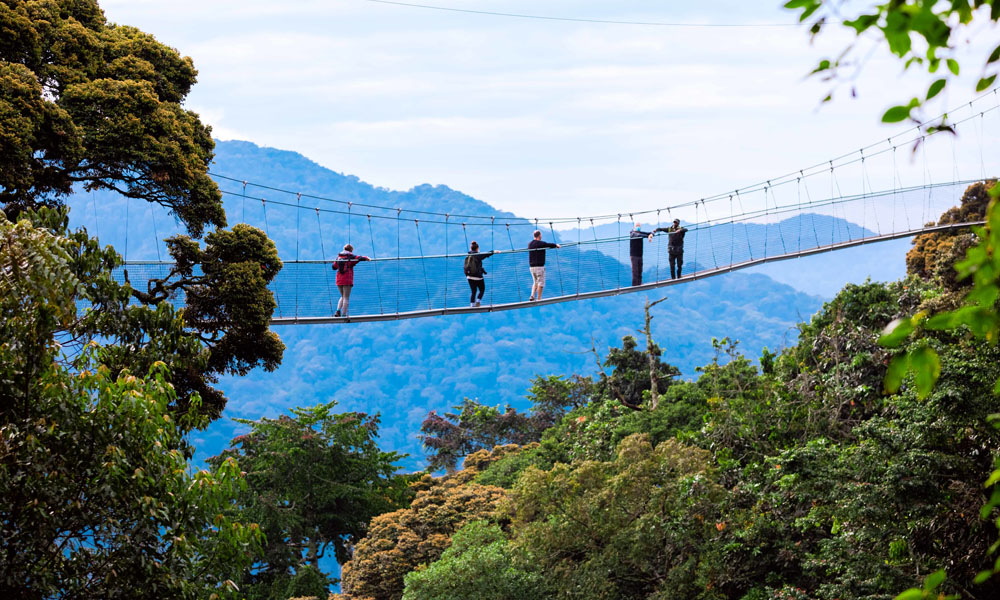
A 6-day Rwanda safari typically combines premier primate trekking (mountain gorillas and chimpanzees) with savanna game drives in Akagera National Park, cultural experiences, and relaxation by Lake Kivu. Key highlights include tracking mountain gorillas in Volcanoes National Park, a canopy walk in Nyungwe Forest, and visiting the Kigali Genocide Memorial
6-days-5-nights-rwanda-midrange-itinerary-nyungwe-volcanoes
6-days-rwanda-gorilla-trekking-chimpanzee-tracking-and-birdwatching
6-days-rwanda-safari-to-akagera-and-nyungwe-chimpanzee-tracking
6-days-gorillas-trekking-chimpanzee-tracking-and-golden-monkeys-safari-in-rwanda
6-days-unmatched-rwanda-honeymoon-safari-holiday
6-days-budget-gorilla-trekking-and-safari-in-rwanda
6-days-akagera-safari-and-volcanoes-gorilla-trekking-and-ibi-wacu-cultural-village
6-days-classic-uganda-rwanda-safari-tour-package-holiday
6-days-best-gorilla-and-rwanda-safari-tour-package
6-days-luxury-rwanda-gorilla-trekking-safari-tour-vacation
1. Primate Trekking & Wildlife Encounters
Mountain Gorilla Trekking
The mist-shrouded slopes of Volcanoes National Park offer what many consider the ultimate wildlife encounter: a face-to-face meeting with endangered mountain gorillas. This experience is governed by strict conservation protocols to ensure the safety of the primates, who share roughly 98% of human DNA. The journey begins early in the morning with a briefing at the park headquarters, followed by a hike through dense bamboo forests and steep terrain. The physical challenge of the trek is instantly forgotten the moment you encounter a silverback and his family. The $1,500 permit fee is high, but it directly funds the protection of these magnificent creatures and the development of local communities. Watching them groom, play, and forage in silence for one hour is a profound, life-altering experience.
Chimpanzee Tracking
In the southwestern corner of Rwanda lies Nyungwe Forest National Park, one of the oldest rainforests in Africa and home to a thriving population of chimpanzees. Tracking these primates is a high-energy affair; unlike gorillas, chimps are highly mobile and vocal, often swinging through the high canopy or racing across the forest floor. The trek requires an early start—often before dawn—to catch them as they wake. The forest air is filled with their pant-hoots and screams, creating a thrilling atmosphere. While the dense vegetation can make sightings a game of patience, the reward of seeing our closest relatives navigating their complex social structures in the wild is unmatched.
Golden Monkey Tracking
Living in the same high-altitude bamboo forests as the gorillas, the golden monkeys (Cercopithecus kandti) are a vibrant contrast to their larger cousins. These primates are endemic to the Albertine Rift and are distinguished by their striking orange-gold coats. Golden monkey tracking is generally less strenuous than gorilla trekking, as they tend to stay in the lower reaches of the forest. They are incredibly active and playful, often leaping between bamboo stalks or foraging on the ground just a few meters away from visitors. Their fast-paced nature makes them a favorite for photographers looking to capture dynamic wildlife shots against the lush green backdrop.
Big Five Safari
Akagera National Park represents one of Africa’s greatest conservation success stories. Once depleted of its wildlife, the park now boasts the "Big Five": lions, leopards, rhinos, elephants, and buffaloes. Located in the eastern lowlands, Akagera’s landscape of savannah, woodlands, and wetlands offers a classic safari experience. A game drive here provides the chance to see lions lounging in the grass or a herd of elephants grazing by the water’s edge. The reintroduction of black rhinos and lions has restored the ecological balance, making Akagera a premier destination for those seeking a diverse wildlife experience within Rwanda’s borders.
Colobus Monkey Tracking
Nyungwe Forest is not just for chimpanzees; it also hosts spectacular troops of black-and-white colobus monkeys. What makes this experience unique is the sheer size of the groups—sometimes numbering over 300 individuals. This is one of the largest arboreal primate groups in Africa. Watching a sea of monochrome fur move through the emerald green canopy is a visual marvel. These monkeys are relatively relaxed in the presence of humans, allowing for excellent observation of their social interactions. The trek is typically gentler than chimpanzee tracking, making it a perfect addition for those who want to fully explore Rwanda’s primate diversity.
2. Adventure & Nature Activities
Nyungwe Canopy Walk
Suspended 70 meters above the forest floor, the Nyungwe Canopy Walkway is a feat of engineering that offers a bird’s-eye view of the ancient rainforest. The 160-meter-long bridge is divided into three sections, with the middle stretch providing the most dizzying and breathtaking perspectives. As you walk, you are level with the tops of giant hardwood trees, offering a rare chance to spot birds and primates that rarely descend to the ground. The sway of the bridge adds a touch of adrenaline to the experience, while the panoramic views of the misty valleys and rolling hills remind you why Rwanda is called the "Land of a Thousand Hills."
Boat Safari at Lake Kivu
Lake Kivu, one of Africa’s Great Lakes, provides a serene escape from the rugged highlands. A boat safari on its emerald waters is the best way to appreciate its jagged coastline and numerous islands. Popular stops include Napoleon Island, famous for its massive colony of fruit bats, and Amahoro Island, where you can enjoy a quiet lunch. The lake is unique because it is "bilayered" and free of hippos and crocodiles, making it safe for swimming and kayaking. Watching the sunset over the distant Congolese mountains while local fishermen sing traditional songs as they head out in their three-hulled boats is a quintessential Rwandan moment.
Boat Trip in Akagera
A cruise on Lake Ihema in Akagera National Park offers a different perspective on the African wilderness. As the boat glides past the papyrus swamps, you are almost guaranteed to see large pods of hippos huffing in the water and massive Nile crocodiles basking on the banks. The lake is also an ornithologist's dream; you might spot the prehistoric-looking shoebill stork, kingfishers, and fish eagles. The gentle pace of the boat allows for close-up photography of wildlife that is often hidden from view during land-based game drives, providing a peaceful yet exciting aquatic safari.
Hiking & Nature Walks
For those who love to lace up their boots, Rwanda offers world-class hiking. The trek to Dian Fossey’s grave is a pilgrimage for many, located between the volcanic peaks of Karisimbi and Bisoke; it offers a somber look at the history of gorilla conservation. For the more adventurous, hiking Mount Bisoke is a highlight. This dormant volcano features a stunning crater lake at its summit (3,711 meters). The climb is steep and can be muddy, but the views from the top, looking out over the Virunga Massif and into the Democratic Republic of Congo, are a massive reward for the physical exertion required.
3. Cultural & City Experiences
Kigali City Tour
Kigali is widely regarded as the cleanest and safest capital city in Africa, and a tour here reveals a blend of tragic history and vibrant modern growth. The Kigali Genocide Memorial is a mandatory, albeit emotional, stop; it provides essential context for Rwanda’s journey toward reconciliation. Moving into the city’s brighter present, a visit to the Kimironko Market offers a sensory explosion of colorful fabrics, fresh produce, and local crafts. Exploring the hilly neighborhoods reveals trendy coffee shops and art galleries like Inema Arts Center, showcasing a city that is rapidly transforming into a cosmopolitan hub of innovation and creativity.
Iby’Iwacu Cultural Village
Located just outside Volcanoes National Park, the Iby’Iwacu Cultural Village (also known as the Gorilla Guardians Village) offers an immersive look at traditional Rwandan life. This community-led initiative was started by former poachers who turned to conservation. Visitors can participate in activities such as grinding grain with stones, shooting traditional bows and arrows, and learning about ancient herbal medicine. The highlight is the Intore dance performance, where dancers adorned with long white manes move to the rhythmic beat of drums. It is a joyful celebration of Rwanda’s heritage that directly supports the livelihoods of local families.
Ethnographic Museum Visit
Located in Huye (formerly Butare), Rwanda’s Ethnographic Museum is often cited as one of the best in East Africa. The museum was a gift from Belgium in 1989 and houses seven galleries that meticulously document the country’s social and cultural history. From pre-colonial architecture—including a full-scale reconstruction of a traditional royal hut—to intricate basketry, woven textiles, and ancient hunting tools, the museum provides a deep dive into the Rwandan psyche. It is an essential stop for anyone wishing to understand the complex social structures and artistic traditions that existed long before the modern era.
6 Days Rwanda safari tour
Embark on a transformative six-day odyssey through Rwanda, a nation defined by its breathtaking landscapes and remarkable ecological resilience. Known as the "Land of a Thousand Hills," this itinerary offers a perfect equilibrium between high-adrenaline primate encounters and serene natural beauty. Your journey begins in the vibrant, spotless streets of Kigali before venturing into the mist-shrouded peaks of Volcanoes National Park, home to the majestic mountain gorilla. From the volcanic north, you will travel to the azure shores of Lake Kivu and into the ancient, deep-green canopy of Nyungwe Forest. This safari is more than a wildlife tour; it is an immersive cultural experience that connects you with the warmth of the Rwandan people and the country's inspiring story of rebirth. Whether tracking chimpanzees or standing eye-to-eye with a silverback, these six days promise a profound connection with the natural world in one of Africa’s most captivating destinations.
Day 1: Arrival and Kigali Cultural Immersion Upon arrival at Kigali International Airport, your journey begins with a deep dive into Rwanda’s heart. Kigali is a city of remarkable order and beauty, characterized by its rolling hills and clean boulevards. You will visit the Kigali Genocide Memorial, a moving tribute that provides essential historical context and highlights the nation’s incredible path toward peace. Afterward, explore the vibrant Kimironko Market, where the sights of colorful "kitenge" fabrics and the scents of fresh local produce create a sensory feast. Visit the Inema Arts Center to witness the contemporary creative spirit of Rwanda’s youth. As evening falls, enjoy a traditional dinner at a local restaurant, overlooking the glittering lights of the city. This first day sets a tone of reflection and discovery, preparing you for the wild adventures that lie ahead in the countryside.
Day 2: Transfer to Volcanoes National Park Leaving the urban energy of Kigali behind, you will head north toward the towering peaks of the Virunga Massif. The scenic drive offers spectacular views of terraced hillsides and rural villages, showcasing the agricultural heart of the country. Upon reaching the outskirts of Volcanoes National Park, you will visit the Iby’Iwacu Cultural Village. Here, you can engage directly with local traditions, from learning the art of traditional medicine to watching the powerful Intore dancers. This community-led project, run largely by former poachers, demonstrates the successful integration of tourism and conservation. In the afternoon, take a guided nature walk to the Twin Lakes, Burera and Ruhondo. The deep blue waters framed by steep volcanic slopes offer a tranquil setting for photography and reflection before your big trek tomorrow. Overnight near the park, surrounded by the sounds of the mountain forest.
Day 3: The Ultimate Gorilla Trekking Experience This is the highlight of your safari. After an early briefing at the park headquarters, you will be assigned to a gorilla family and begin your trek into the dense bamboo forests. Guided by expert trackers, you will navigate steep terrain until you find these gentle giants. Coming face-to-face with a mountain gorilla is a spiritual experience; for one hour, you are a silent observer of their daily lives—watching mothers nurse their young and silverbacks maintain order. The silence of the forest is broken only by their rhythmic chewing and occasional grunts. The physical challenge of the hike is instantly rewarded by the profound connection felt in their presence. After the trek, return to your lodge to relax and share stories of your encounter. This day provides a rare glimpse into the lives of one of the world’s most endangered and magnificent species.
Day 4: Golden Monkeys and Lake Kivu Serenity Start your morning back in the forest for a livelier encounter: tracking the rare and beautiful golden monkeys. These energetic primates, with their striking orange coats, are endemic to the Albertine Rift. Unlike the somber majesty of the gorillas, golden monkeys are constantly in motion, leaping through the bamboo canopy and foraging on the ground. Their playful nature makes for a delightful and fast-paced morning. Following the trek, you will depart the volcanic region and drive toward Gisenyi on the shores of Lake Kivu. This Great Lake offers a stark contrast to the mountains. Spend your afternoon on a relaxing boat safari, visiting islands and watching the "singing fishermen" prepare their boats for the night. The calm, fresh waters and the backdrop of the Congolese mountains provide a perfect environment for physical and mental recovery.
Day 5: Nyungwe Forest and the Canopy Walk Your journey continues south along the scenic Kivu Belt road to Nyungwe National Park, one of the oldest and best-preserved rainforests in Africa. This massive ecosystem is a biodiversity hotspot, home to 13 primate species and hundreds of bird varieties. The afternoon’s adventure takes you to the famous Canopy Walkway. Suspended 70 meters above the forest floor, this metal bridge offers a breathtaking perspective of the ancient treetops. Walking among the clouds, you may spot various monkeys and colorful Turacos that rarely descend to the ground. The mist rolling over the hills and the deep silence of the primary forest create an atmosphere of prehistoric wonder. The air is crisp and oxygen-rich, a true tonic for the soul. Evening is spent at a forest lodge, where the sounds of the jungle provide a soothing soundtrack for your penultimate night.
Day 6: Chimpanzee Tracking and Departure On your final day, head into the heart of the forest for an exhilarating chimpanzee tracking experience. These primates are our closest relatives, and their intelligence and social complexity are evident in every screech and gesture. Unlike the gorillas, chimps are highly vocal and fast-moving, making the trek a thrilling chase through the undergrowth. Hearing their "pant-hoots" echoing through the trees is a spine-tingling experience. After emerging from the forest, you will begin your drive back toward Kigali. En route, stop in Huye to visit the Ethnographic Museum, home to one of Africa’s finest collections of cultural artifacts. This final stop connects the wildlife experiences of the week back to the human history of Rwanda. Your tour concludes with a transfer to Kigali International Airport, carrying with you memories of a land that is as beautiful as it is resilient.
1. What is the highlight of a 6-day Rwanda safari tour?
The main highlight is usually mountain gorilla trekking in Volcanoes National Park, where you spend one hour with the endangered gorillas. This experience is often described as life-changing, offering a rare opportunity to enter the natural habitat of one of the world’s most majestic primates. The trek begins with an early morning briefing at the park headquarters, where visitors are assigned to a habituated gorilla family based on their fitness levels. As you hike through the mist-covered bamboo forests and steep volcanic slopes, the anticipation builds until you finally come face-to-face with a silverback and his troop.
During the sixty minutes allowed with the gorillas, you can observe their strikingly human-like behaviors—mothers nursing infants, juveniles playing, and the dominant silverback maintaining a watchful eye over the family. The permit fee is a critical contribution to the survival of the species, funding round-the-clock protection from poachers and supporting local community health and education programs. This "high-value, low-volume" tourism model has allowed the mountain gorilla population to slowly increase, making Rwanda a global leader in conservation. Beyond the physical encounter, the trek offers a profound sense of connection to the natural world. The silence of the forest, broken only by the rustle of leaves and the gentle grunts of the gorillas, creates a spiritual atmosphere that stays with travelers long after they leave the "Land of a Thousand Hills." It is the emotional and logistical centerpiece of any Rwandan itinerary, providing the ultimate reward for those who navigate the rugged terrain of the Virunga Massif.
2. Can I do a Big Five safari on a 6-day Rwanda safari tour?
Yes, by visiting Akagera National Park for game drives to see lions, rhinos, giraffes, elephants, and buffaloes. Located in the eastern part of Rwanda along the border with Tanzania, Akagera represents a successful story of ecological restoration. After being nearly depleted of wildlife following the 1994 genocide, the park has seen a remarkable resurgence through the reintroduction of lions in 2015 and black rhinos in 2017. Today, it stands as Rwanda’s only savannah-based park, providing a classic African safari experience that beautifully complements the forest-based primate trekking found in the west.
A 6-day safari typically dedicates at least one full day to exploring Akagera’s diverse ecosystems, which include acacia woodlands, open grasslands, and a complex system of lakes and papyrus swamps. In the northern sector of the park, visitors can find large herds of zebras, impalas, and topis, while the southern part is often favored for spotting elephants and the elusive leopard. The presence of both black and white rhinoceroses makes Akagera one of the few places in East Africa where the Big Five can be found in a relatively small and accessible area. Furthermore, the park is home to over 500 bird species, making it a paradise for birders. Whether you are taking a sunrise game drive to catch predators on the hunt or a sunset boat cruise on Lake Ihema to see hippos and crocodiles, Akagera ensures that a Rwandan safari is a comprehensive wildlife journey.
3. Does a 6-day Rwanda safari tour include chimpanzee tracking?
Yes, usually on day 4, you can track chimpanzees in Nyungwe Forest National Park. Nyungwe is one of the oldest and largest montane rainforests in Africa, and it serves as a critical refuge for 13 different primate species. Chimpanzee tracking here is a high-energy, exhilarating adventure that differs significantly from gorilla trekking. Because chimpanzees are highly mobile and spend much of their time in the high canopy, the trek is often faster-paced and more vocal. Visitors often hear the "pant-hoots" of the chimps echoing through the dense foliage long before they actually see them.
The experience begins at dawn, as trackers move through the forest to locate the nests where the chimpanzees spent the night. Once found, you have an hour to witness our closest living relatives interacting in their social groups. You might see them grooming each other, swinging with incredible agility through the treetops, or even descending to the forest floor to hunt or forage. Their intelligence and social complexity are readily apparent in their facial expressions and vocalizations. Because Nyungwe’s terrain can be steep and the vegetation thick, a good level of physical fitness is recommended. Beyond the chimps, the trek often rewards visitors with sightings of other primates like the L’Hoest’s monkey or the silver monkey. The inclusion of chimpanzee tracking adds a dynamic layer to the safari, showcasing the incredible biodiversity of Rwanda's southwestern highlands and providing a fascinating comparison to the more serene experience of mountain gorilla trekking.
4. What is the canopy walk experience on a 6-day Rwanda safari tour?
It’s a 90-meter-long walkway 70 meters above the forest floor in Nyungwe, offering incredible bird's-eye views. This suspended bridge is the only one of its kind in East Africa and is designed to give visitors a unique perspective on the ancient rainforest ecosystem. For most travelers, the canopy walk is both a highlight and a test of nerves, as the bridge sways gently over a deep, lush canyon. The walk is divided into three sections, with the middle section being the longest and highest, providing a panoramic vista that extends across the rolling green hills of the park.
Walking through the "upper story" of the forest allows you to observe wildlife that rarely descends to the ground. This is the realm of the Great Blue Turaco and various other colorful forest birds, as well as several species of monkeys that can be seen jumping between the giant hardwood trees. The experience is highly educational, as guides explain the different layers of the rainforest and the specific roles each plant and animal plays in maintaining the ecological balance. Even if you are not a birding enthusiast, the sheer scale of the forest from this height is awe-inspiring. The mist rolling through the valleys below and the ancient trees rising up to meet the walkway create a prehistoric atmosphere. It is an essential adventure for anyone visiting Nyungwe, offering a sense of scale and wonder that is impossible to achieve from the forest floor alone, making it a standout feature of a comprehensive 6-day Rwandan itinerary.
5. What other primates can I see on a 6-day Rwanda safari tour?
Besides gorillas and chimps, you can spot golden monkeys in Volcanoes National Park. These striking primates, characterized by their bright orange-gold fur, are endemic to the Albertine Rift and are found exclusively in the Virunga volcanic mountain range. Golden monkey tracking is often described as a more "playful" experience compared to gorilla trekking. The monkeys live in large troops, sometimes numbering over 100 individuals, and inhabit the bamboo forests at the base of the volcanoes. Because they stay at lower altitudes, the hike to find them is generally less strenuous than the climb required for gorillas.
Once located, the golden monkeys are a flurry of activity. They are incredibly agile, leaping from bamboo stalk to bamboo stalk and foraging for shoots, fruit, and insects. They are also quite curious and habituated to humans, often coming within just a few meters of visitors. This makes them excellent subjects for photography, as they provide constant movement and social interaction. Beyond the golden monkeys, a safari through Nyungwe Forest can reveal other rare primates, such as the Ruwenzori colobus, which often moves in massive "super-groups" of several hundred individuals—one of the largest arboreal primate groupings in Africa. You may also spot L’Hoest’s monkeys along the roadsides or the elegant Grey-cheeked mangabeys in the deep forest. The sheer variety of primates available in such a small geographic area is what makes Rwanda a premier destination for wildlife enthusiasts, ensuring that every day of a 6-day tour offers a new and distinct biological encounter.
6. Are there cultural experiences on a 6-day Rwanda safari tour?
Yes, many tours include a visit to the Iby’iwacu Cultural Village near Volcanoes National Park. Also known as the Gorilla Guardians Village, this community-led project offers a fascinating and immersive look into traditional Rwandan life. The village was founded as a way to provide alternative livelihoods for former poachers, transforming them into conservationists who now protect the mountain gorillas they once hunted. A visit here is highly interactive and allows travelers to engage with the local community in a meaningful way while learning about the customs that have shaped the nation.
Visitors can participate in a wide range of activities, such as grinding grain with traditional stones, shooting bows and arrows, and learning about the use of local herbs from a traditional healer. One of the highlights is the performance of the Intore dance, a powerful and rhythmic traditional dance originally performed by the king’s court. Dressed in long white grass manes and carrying spears and shields, the dancers move with incredible energy to the beat of large drums. You may even be invited to join in the dance yourself. Furthermore, the village features a reconstruction of a King’s House, where you can learn about the ancient monarchy and social structures of Rwanda. These cultural stops are vital to a 6-day safari because they provide context to the landscape, showing how the history and traditions of the people are inextricably linked to the conservation of the land and its wildlife.
7. Can I visit Lake Kivu on a 6-day Rwanda safari tour?
Yes, you can include a boat ride or canoe trip on Lake Kivu, particularly in Gisenyi or Kibuye. Lake Kivu is one of the African Great Lakes and serves as the beautiful western border of Rwanda. Its emerald-green waters are surrounded by steep, terraced hillsides, offering some of the most scenic views in the country. After several days of intensive trekking in the mountains or game drives in the savannah, Lake Kivu provides a perfect "relaxation" phase for a 6-day safari. The lake is unique because it is "bilayered" and lacks the hippos and crocodiles found in most other African Great Lakes, making its waters safe for swimming and water sports.
A boat ride on Lake Kivu often involves visiting various islands, such as Napoleon Island (known for its massive colony of fruit bats) or Amahoro Island. You can also witness the famous "singing fishermen" of Lake Kivu. In the late afternoon, these fishermen head out in their unique three-hulled boats, paddling in synchronization and singing rhythmic traditional songs to keep their pace. For those who prefer more active leisure, kayaking along the coastline provides a quiet way to explore hidden coves and small fishing villages. The towns of Gisenyi and Kibuye offer a variety of lodges ranging from luxury resorts to cozy boutiques, many of which provide stunning sunset views over the water toward the mountains of the Democratic Republic of Congo. Including Lake Kivu in a 6-day tour ensures a well-rounded itinerary that balances high-adventure wildlife encounters with the serene, natural beauty of the Rwandan rift valley.
8. What can I do in Kigali on a 6-day Rwanda safari tour?
Most itineraries include a Kigali city tour, visiting the Kigali Genocide Memorial. As the gateway to the country, Kigali is often the first and last stop on a safari, and it is widely regarded as one of the cleanest, safest, and most organized capital cities in Africa. A city tour provides a vital window into Rwanda’s history and its remarkable modern transformation. The Kigali Genocide Memorial is a mandatory stop for any visitor; it is a somber but essential place of reflection that documents the 1994 genocide against the Tutsi and explains the nation's incredible journey toward reconciliation and unity.
Beyond the memorial, Kigali offers a vibrant contemporary culture. You can visit the Kimironko Market, the city's busiest and most colorful marketplace, where you can buy everything from fresh local passion fruit to hand-woven Agaseke baskets and custom-made clothing. Art lovers can explore the Inema Arts Center or Ivuka Arts, where local painters and sculptors showcase the modern creative spirit of Rwanda. The city is also known for its excellent coffee culture; a stop at a local cafe to taste world-class Rwandan bourbon coffee is a must. Many tours also include a drive through the hilly suburbs to see the Parliament building and the Kigali Convention Centre, which glows with traditional "basket" patterns at night. By spending time in Kigali, travelers gain a deeper appreciation for the resilience of the Rwandan people, seeing firsthand how a tragic past has been replaced by a vision of a bright and innovative future.
9. Can I go birding during my 6-day Rwanda safari tour?
Yes, Nyungwe and Akagera offer excellent bird watching opportunities. Rwanda is a hidden gem for ornithologists, boasting over 700 bird species within its small borders, including 29 Albertine Rift endemics. Nyungwe Forest is arguably the premier birding destination in the country. Its high-altitude rainforest is home to the stunning Great Blue Turaco, the elusive Handsome Francolin, and the Regal Sunbird. Birding in Nyungwe often requires patience and a good pair of binoculars, but the reward of spotting a rare endemic among the ancient hardwood trees is unparalleled, especially from the vantage point of the canopy walkway.
In contrast, Akagera National Park provides a completely different birding environment. Its wetlands and savannahs are teeming with waterbirds and raptors. One of the most sought-after sightings in Akagera is the prehistoric-looking Shoebill stork, which can occasionally be found in the papyrus swamps around Lake Ihema. Other common sightings include the African Fish Eagle, various kingfishers, and the colorful Lilac-breasted Roller. Because the park features such a wide variety of habitats—from open water to thick acacia scrub—the diversity of birds is staggering. Many 6-day tours can be tailored to include specialized birding guides who know the calls and nesting spots of the most rare species. Whether you are an expert birder or a casual nature lover, the vibrant colors and varied songs of Rwanda’s avian life add a rich soundtrack and visual beauty to every leg of the safari journey.
10. How long is the gorilla trek during a 6-day Rwanda safari tour?
The trek can take from 2 to 6 hours depending on the gorilla family's location. This variability is due to the fact that mountain gorillas are wild animals that move daily in search of food. Every morning, park trackers head out into the forest before dawn to find the exact location where the gorillas nested the previous night. They then follow the trail of broken bamboo and flattened grass to find the troop's current position. When you arrive at the park headquarters, the rangers use this real-time information to assign you to a group.
If you are assigned to a "close" family, you might only hike for 30 to 45 minutes through relatively flat terrain before encountering them. However, if the gorillas have moved deep into the forest or higher up the slopes of the volcanoes, the trek can become a strenuous multi-hour climb through thick brush and muddy paths. Regardless of the duration, the pace is always dictated by the slowest member of the group, and there are frequent stops for water and to admire the scenery. Porters are available for hire at the trailhead, and they are highly recommended; not only do they help carry your gear and navigate slippery sections, but hiring them provides direct economic support to the local community. The "search" is part of the adventure, and the physical effort involved makes the final moment of reaching the gorillas feel even more rewarding. Once found, the "trekking" stops, and your one-hour observation period begins.
11. Are game drives available on a 6-day Rwanda safari tour?
Yes, full-day or morning game drives are standard in Akagera National Park. Game drives are the primary way to explore the vast landscapes of Akagera and are typically conducted in 4x4 safari vehicles with pop-up roofs for optimal wildlife viewing. A morning game drive usually begins at sunrise, which is the best time to see predators like lions and leopards while they are still active before the heat of the day sets in. The soft morning light also provides the best conditions for photography, highlighting the golden savannah and the shimmering lakes.
A full-day game drive allows you to travel from the southern entrance of the park all the way to the northern plains. This cross-park journey is highly recommended because the scenery changes dramatically as you move north, transitioning from rocky hills and thick woodlands to open, expansive grasslands. This variety of terrain ensures you see a wider range of species, from the hippos in the south to the massive herds of plains game in the north. Guides in Akagera are highly skilled at spotting camouflaged animals and can provide fascinating information about the park's ecology and the behavior of the animals you encounter. Between the drives, most visitors enjoy a packed picnic lunch at a scenic viewpoint overlooking one of the many lakes. These game drives provide the classic "safari" element of the 6-day tour, offering a sense of vastness and wildness that contrasts perfectly with the intimate, focused nature of primate tracking in the forests.
12. Can I climb a volcano on a 6-day Rwanda safari tour?
Yes, you can hike Mount Bisoke, which is often incorporated into longer volcano itineraries. Mount Bisoke is a dormant volcano in the Virunga Range, standing at an elevation of 3,711 meters. The hike to the summit is one of the most popular day-trips in Volcanoes National Park for those who want a physical challenge beyond gorilla trekking. The ascent takes about 3 to 4 hours through varying vegetation zones, including bamboo forests and hypericum woodlands. The primary draw of Mount Bisoke is the stunning, deep-green crater lake located at its summit, which is often shrouded in a dramatic mist.
While the hike is steep and can be very muddy, it does not require professional climbing equipment or technical skills—just a good level of fitness and sturdy hiking boots. Along the way, you might even be lucky enough to spot golden monkeys or signs of mountain gorillas, though the hike's focus is on the landscape and the geological wonder of the volcano itself. The descent is usually faster, taking about 2 hours, but it requires careful footing. For travelers on a 6-day safari who want to "conquer" one of the thousand hills, Bisoke provides a perfect one-day adventure. Alternatively, for those with more time and extreme fitness, a two-day hike of Mount Karisimbi (the highest peak in Rwanda) can be arranged. Including a volcano climb adds a rugged, mountaineering dimension to the safari, allowing visitors to stand on the edge of a crater and look out over the border into the Democratic Republic of Congo.
13. Is it possible to take a boat cruise on a 6-day Rwanda safari tour?
Yes, boat trips are offered on Lake Ihema in Akagera to see hippos and crocodiles. A boat cruise provides a refreshing and different perspective on the wildlife of Akagera National Park. While game drives are excellent for spotting land animals, many of the park's most interesting inhabitants are found in or around its water systems. Lake Ihema, the second-largest lake in Rwanda, is particularly famous for its high density of hippos. During a cruise, you can get surprisingly close to these massive animals as they lounge in the water or huff on the banks.
The boat trip is also the best way to see the park’s enormous Nile crocodiles, often seen basking with their mouths open on the muddy shores. For birders, the boat cruise is an absolute must. The edges of the lake and the surrounding papyrus swamps are home to hundreds of waterbird species, including the African Fish Eagle, Malachite Kingfisher, and various herons and egrets. If you are lucky, you might even spot the rare and shy Shoebill stork. The cruises typically last about an hour and are scheduled several times a day, with the sunset cruise being particularly popular for its stunning light and the sight of animals coming down to the water to drink. The calm, steady movement of the boat allows for excellent photography and a peaceful break from the bumpy roads of the savannah, making it a highly recommended activity for any 6-day Rwandan itinerary.
14. What is the best time for a 6-day Rwanda safari tour?
The dry seasons—June to September and December to February—are best for trekking and game viewing. These periods are widely considered the "peak seasons" for tourism in Rwanda. During the dry months, the forest paths in Volcanoes National Park and Nyungwe are less muddy and slippery, making the treks for gorillas and chimpanzees significantly easier and more enjoyable. Additionally, because the vegetation is less dense during the dry season, wildlife is often easier to spot. In Akagera National Park, animals tend to congregate around the permanent water sources like Lake Ihema when other water holes dry up, which makes for spectacular and predictable game viewing.
However, the "wet seasons" (March to May and October to November) have their own unique advantages. The landscape is incredibly lush and green, which is perfect for landscape photography. Furthermore, these months are often considered "low season," meaning that lodges may offer discounted rates and the popular trekking spots are less crowded. It is also worth noting that chimpanzee tracking can sometimes be better in the wet season, as the chimps tend to stay at lower altitudes where fruit is more abundant, rather than moving deep into the high forest. Regardless of when you visit, Rwanda’s tropical highland climate means that temperatures are relatively temperate year-round, usually ranging from 15°C to 27°C. While rain can fall at any time in a rainforest, the well-defined dry seasons provide the most reliable conditions for a multi-destination 6-day safari.
15. What should I bring on a 6-day Rwanda safari tour?
Pack hiking boots, long trousers, rain gear, a camera, and bug repellent. Proper gear is essential for ensuring your comfort and safety during the varied activities of a Rwandan safari. For primate trekking, sturdy, waterproof hiking boots with good grip are a must, as the terrain can be steep and slippery. You should also pack long, lightweight trousers and long-sleeved shirts to protect your skin from stinging nettles and thorny bushes in the forest. Many travelers also find that wearing "gaiters" (or simply tucking their trousers into their socks) helps prevent ants and other insects from crawling up their legs.
Since you will be visiting rainforests, high-quality rain gear—specifically a lightweight, breathable waterproof jacket—is necessary even during the dry season. For game drives in Akagera, a hat, sunglasses, and high-SPF sunscreen are vital to protect against the equatorial sun. Don't forget a good pair of binoculars for birding and wildlife spotting, and a camera with a versatile zoom lens to capture those close-up moments with gorillas and chimps. Because of the risk of malaria in certain areas, particularly near Akagera and Lake Kivu, bug repellent with DEET is highly recommended. Finally, a small daypack is useful for carrying water, snacks, and your camera gear during treks. Dressing in layers is the best strategy, as the mornings can be quite chilly in the mountains, while the afternoons can become warm and humid. Packing appropriately ensures that you can focus entirely on the incredible wildlife and landscapes without being distracted by physical discomfort.
Booking 6 Days Rwanda safari with us Roads of Adventure safaris
To book a 6-day Rwanda safari with Roads of Adventure Safaris, you can contact their team directly via WhatsApp at +256 701041637 or email info@roadsofadventuresafaris.com. They specialize in private, tailored itineraries that typically cover Rwanda's "Big Three" national parks: Volcanoes, Nyungwe, and Akagera
