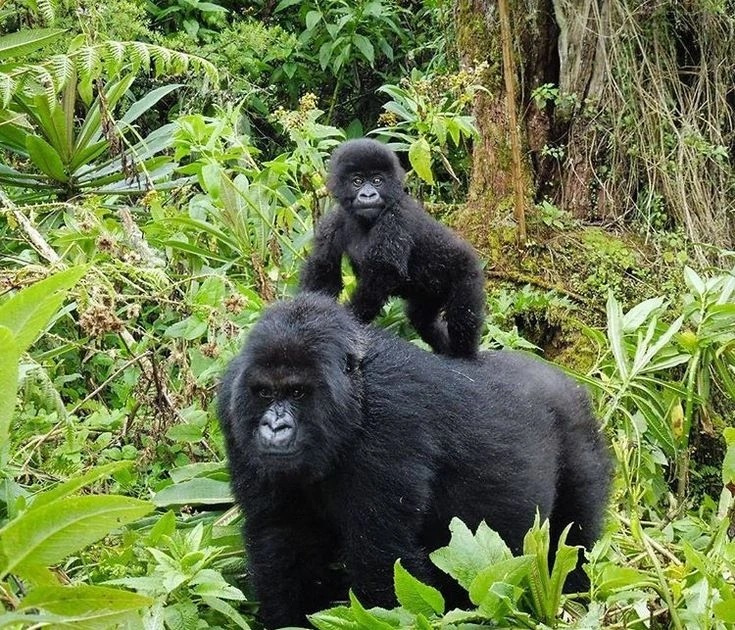
Things to do on Combined 12 Days Uganda Rwanda safari tour package, A combined 12-day Uganda and Rwanda safari packs diverse, high-octane adventures into a single trip. The ultimate itinerary spans primate tracking (mountain gorillas, chimpanzees, and golden monkeys), big-game savannah safaris, boat cruises, and immersive cultural tours across the region's top national parks
12-days-best-uganda-rwanda-primate-safaris-and-akagera-big-five-safaris
12-days-classic-rwanda-uganda-africa-safari-tour-package-combo
12-days-rwanda-uganda-safari-and-rwenzori-climb-and-hiking
12-days-rwanda-primate-safari-vacation-and-akagera-national-park
Combined 12 Days Uganda Rwanda safari tour package
The Combined 12 Days Uganda Rwanda safari tour package is the ultimate East African expedition, seamlessly fusing the region's finest wilderness spectacles into one transformative journey. Crossing from the lush, rolling landscapes of Uganda into Rwanda’s iconic "Land of a Thousand Hills," this comprehensive route eliminates backtracking while maximizing your time in the bush. You will journey from deep equatorial rainforests to wide-open savannah plains, discovering the incredible biodiversity of the Albertine Rift. Designed for avid wildlife enthusiasts, this itinerary masterfully pairs intense, high-energy primate encounters with classic big-game viewing and serene water safaris. By starting in Uganda and concluding in Rwanda, you witness an inspiring story of conservation and community resilience. Every day presents a new horizon, making this joint safari a definitive African milestone.
Where do I start and end a 12-day combined safari?
To maximize field time, the Combined 12 Days Uganda Rwanda safari tour package is best executed as a one-way journey. You fly into Entebbe International Airport (EBB) in Uganda and fly out of Kigali International Airport (KGL) in Rwanda. This smart layout allows you to move steadily south-westward through Uganda's top national parks before smoothly crossing the land border into northern Rwanda. By avoiding a long, exhausting return drive to your starting point, you save an entire day of travel. The journey wraps up effortlessly with a short, scenic 2.5-hour drive from Rwanda's gorilla highlands back to Kigali for your evening flight home.
Can I see both mountain gorillas and chimpanzees?
Yes, seeing both of these incredible great apes is the crown jewel of this joint itinerary. Your primate exploration begins in Uganda’s Kibale National Park, the primate capital of the world, which offers a 95% success rate for tracking wild chimpanzee troops through the rainforest. Later, your route transitions to the misty volcanic slopes of either Uganda's Bwindi Impenetrable Forest or Rwanda's Volcanoes National Park for a peaceful encounter with endangered mountain gorillas. Observing the playful, high-energy dynamics of chimpanzees alongside the quiet majesty of a gorilla family highlights the fascinating evolutionary differences between our closest wild relatives.
What is involved in gorilla trekking?
Gorilla trekking is an immersive, active rainforest expedition. Your morning begins with a vital safety and etiquette briefing at the park headquarters, where you are assigned to a habituated gorilla family. Accompanied by expert rangers and trackers, your small group hikes into the dense jungle, navigating steep, muddy ridges and thick undergrowth. The hike can last between 2 and 8 hours depending on where the gorillas nested the previous night. Once the trackers locate the family, you put down your walking sticks and spend exactly one unforgettable hour observing and photographing these gentle giants from a safe distance.
What other primates can I see on this trip?
Beyond the famous great apes, the Combined 12 Days Uganda Rwanda safari tour package is a paradise for primate lovers. In Rwanda’s Volcanoes National Park, you can track endangered golden monkeys, known for their striking golden-orange coats and playful acrobatics within the bamboo canopies. Meanwhile, a guided walk through Uganda’s community-run Bigodi Wetland Sanctuary reveals an abundance of smaller monkeys. Here, you can easily spot up to eight different species on a single afternoon trail, including vibrant Central African red colobus monkeys, elegant black-and-white colobus, grey-cheeked mangabeys, and L'Hoest's monkeys.
Are savannah safaris included in this 12-day package?
Yes, classic savannah game drives are seamlessly integrated to give you a complete African wildlife experience. Uganda’s premier conservation area, Queen Elizabeth National Park, features prominently on this route. Set against the dramatic backdrop of the Rwenzori Mountains, its sprawling plains are home to large herds of elephants, Cape buffaloes, Ugandan kobs, and leopards. The defining highlight of this savannah sector is exploring the remote southern Ishasha plains. Here, you will search the low, sprawling branches of ancient sycamore fig trees to spot the park's world-famous tree-climbing lions escaping the midday heat.
What is a Kazinga Channel boat cruise?
The Kazinga Channel boat cruise is a peaceful water safari through the heart of Queen Elizabeth National Park. This natural 32-kilometer waterway connects Lake Edward and Lake George, drawing an immense concentration of wildlife to its fertile shores. During the two-hour boat launch, you glide safely past massive, huffing pods of hippos and giant Nile crocodiles basking on the banks. As animals converge on the channel to drink and bathe in the afternoon heat, you will enjoy front-row views of elephant herds and buffaloes, alongside over 60 vibrant waterbird species.
How do I travel between Uganda and Rwanda?
Traveling between the two countries is a seamless and highly scenic overland journey in a private 4x4 safari vehicle. Your expert guide manages all logistics at the Katuna or Cyanika border posts, ensuring a smooth transition. The 4-to-6-hour drive is an attraction in itself, taking you through the terraced green hillsides of southwestern Uganda—affectionately called the "Switzerland of Africa"—before crossing into Rwanda's famous "Land of a Thousand Hills." This road journey provides an authentic window into rural East African life, past vibrant markets and lush tea estates.
What should I wear for trekking?
Dressing for protection and utility is vital when navigating dense equatorial rainforests. You need long-sleeved shirts and sturdy, lightweight long trousers to shield your skin from sharp thorns and stinging nettles; neutral earth tones are highly recommended. High-quality, waterproof hiking boots with deep tread and excellent ankle support are essential for handling steep, slippery terrain. You should also tuck your trousers into long socks to block safari ants. Finally, a pair of durable leather gardening gloves is an absolute lifesaver, allowing you to safely grip wet vines and branches for balance.
When is the best time to go on a combined safari?
The dry seasons—stretching from June to September and December to February—are ideal for a Combined 12 Days Uganda Rwanda safari tour package. During these months, minimal rainfall leaves forest hiking trails drier and easier to navigate. Thinning vegetation and drying waterholes in the savannah also cause wildlife to gather around permanent water sources, making game viewing spectacular. However, traveling during the wetter "green seasons" (March to May and October to November) rewards you with lush, vibrant landscapes for photography, excellent birdwatching, lower crowds, and better lodge availability.
Do I need visas for both countries?
Yes, valid entry visas are required for both destinations. The most convenient and cost-effective approach for this combined itinerary is the East Africa Tourist Visa. This single-entry joint visa costs $100 and allows seamless, cross-border travel between Uganda, Rwanda, and Kenya for up to 90 days. You must apply for it online through the electronic visa portal of the country you enter first—which is Uganda for this specific route. Alternatively, you can secure separate single visas, though this requires independent applications and additional processing time at the border.
Are there cultural experiences included?
Rich cultural connections form the heart of this combined package. In Uganda, you can join the indigenous Batwa Pygmy community near Bwindi to discover their ancestral forest heritage, learning how they once hunted, harvested wild honey, and used forest plants for medicine. In Rwanda, a visit to the Iby’iwacu Cultural Village outside Volcanoes National Park offers a lively celebration of local traditions. Here, you can watch energetic Intore cultural dances, explore a replica of a traditional royal palace, and learn about community-led conservation initiatives that support former poachers.
Can I visit Dian Fossey’s grave?
Yes, history and conservation enthusiasts can add a poignant pilgrimage to Dian Fossey’s grave in Volcanoes National Park. This strenuous yet beautiful 3-to-4-hour mountain hike climbs above 3,000 meters into the saddle between Mount Bisoke and Mount Karisimbi. Your park guide will share stories of Fossey’s legendary life, her groundbreaking gorilla research, and her fierce anti-poaching battles. At the historic site, you will explore the ruins of her original Karisoke Research Center and visit the gorilla graveyard where she rests alongside her favorite silverback, Digit.
Is photography allowed during the treks?
Photography is warmly encouraged on all wildlife and primate treks, offering the chance to capture spectacular environmental portraits. However, strict ethical guidelines apply to protect the animals. Flash photography is strictly prohibited at all times because sudden, bright lights can easily startle or anger gorillas and chimpanzees. Since you will be shooting beneath a thick, dark forest canopy, you will want a fast camera lens with a wide aperture and a high ISO capability to capture sharp images in low light without disturbing the primates.
What should I do in Kigali before flying home?
Your final afternoon in Kigali provides a powerful and reflective conclusion to your journey. A city tour of Rwanda's clean, modern capital must include a respectful visit to the Kigali Genocide Memorial, which honors the victims of the 1994 tragedy and showcases the nation's inspiring path toward reconciliation and economic renewal. Afterward, you can explore the city's vibrant modern side by browsing the colorful stalls of Kimironko Market for handcrafted souvenirs, visiting contemporary art galleries, or enjoying local Rwandan coffee at a hillside café.
What is the luggage limit for internal flights?
If your Combined 12 Days Uganda Rwanda safari tour package includes domestic flight hops to skip long drives, you must pack strictly according to bush aviation rules. Light aircraft have rigid weight restrictions, limiting total luggage to 15–20 kg (33–44 lbs) per person, which includes your hand luggage. Furthermore, all baggage must be packed in soft-sided duffel bags without rigid frames or hard wheels. Hard-shelled suitcases cannot bend to fit into the aircraft’s small cargo holds, making compact, flexible packing a necessity for regional air travel.
Ultimate Primate Tracking
Gorilla Trekking
Embarking on a 12 Days Uganda Rwanda safari tour brings you face-to-face with humanity’s closest wild relatives, deep within the ancient, mist-covered rainforests of East Africa. Mountain gorilla trekking is an unforgettable, transformative journey hosted primarily in two iconic strongholds: Uganda’s Bwindi Impenetrable National Park and Rwanda’s Volcanoes National Park. The dense canopy and rugged terrains of these parks protect roughly half of the world's remaining wild gorilla population.
Navigating the steep, tangled slopes requires patience and physical stamina, but the moment you breach the thick undergrowth to find a habituated family group, the exertion vanishes. You are granted one awe-inspiring hour to observe these gentle giants. Watching a massive silverback watchfully guard his family while juveniles tumble playfully through the vines is a masterclass in raw, vulnerable nature.
For many travelers mapping out their 12 Days Uganda Rwanda safari tour, the choice between destinations comes down to style and budget. Rwanda positions itself as a premium, luxury destination; standard permits stand at $1,500, offering short, highly accessible road transfers from Kigali. Conversely, Uganda provides an exceptional value-focused alternative with permits at $800, though it involves longer drives or domestic flights from Entebbe to the southwest. Both countries strictly funnel these permit revenues back into community development and anti-poaching initiatives, ensuring that your footstep in the forest actively funds the survival of these majestic primates.
Chimpanzee Habituation & Tracking
No flagship primate route is complete without experiencing the chaotic, thrilling energy of wild chimpanzees. Kibale Forest National Park in Uganda serves as the primate capital of the world, housing over 1,500 chimpanzees within its lush, tropical boundaries. Tracking these expressive primates offers a stark, high-energy contrast to the quiet majesty of a gorilla trek.
Standard chimpanzee tracking involves walking deep into the rainforest with expert rangers, following a cacophony of pant-hoots, screams, and drumming tree roots. Once found, you spend an hour observing them as they feed, groom, and swing effortlessly through the upper canopy at dizzying heights. Because they are highly habituated, they move comfortably around human observers, providing incredible photographic opportunities.
For a deeper immersion on your 12 Days Uganda Rwanda safari tour, the Chimpanzee Habituation Experience (CHEX) allows you to join researchers and guides for a half-day or full-day encounter. You enter the forest before dawn to watch the chimps wake up from their nests, follow them through their daily foraging routines, and observe them nesting down at dusk. This extended time teaches you to recognize individual behaviors, facial features, and family dynamics, making it an absolute highlight for wildlife enthusiasts who want to look beyond the surface of standard tourism.
Golden Monkey Tracking
Hidden within the towering, mist-shrouded Virunga Mountains lies another rare and precious primate: the vibrant golden monkey. Serving as an indispensable primate tracking highlight on a 12 Days Uganda Rwanda safari tour, golden monkey trekking is primarily conducted within Rwanda's famed Volcanoes National Park. Listed as endangered by the International Union for Conservation of Nature (IUCN), these highly active and deeply captivating primates live exclusively within the specialized bamboo ecosystems of this specific volcanic rift valley.
Compared to the grueling, deep-jungle treks required to locate mountain gorillas, tracking golden monkeys offers a significantly more relaxed and enjoyable hiking experience. Accompanied by experienced park rangers, travelers begin their journey by walking through beautiful local farmlands before entering the thick, towering bamboo zones. Boasting striking golden-orange coats and distinct facial markings, these monkeys stand out beautifully against the bright green hues of the bamboo forest. They typically live in large social troops of up to a hundred individuals and possess a playful, high-energy nature that makes them remarkably comfortable around human observers.
During your permitted one-hour encounter, you will watch them swing gracefully through the canopy, leaping effortlessly between bamboo stalks at dizzying speeds, or sitting peacefully on the forest floor expertly peeling away fresh bamboo shoots for dinner. Their curious facial expressions and acrobatic antics offer wildlife photographers the perfect opportunity to capture lively, close-up action shots. Combining a golden monkey trek with a classic gorilla safari dramatically enriches the ecological variety of your 12 Days Uganda Rwanda safari tour, adding an exciting, multi-layered dimension to your ultimate Albertine Rift primate exploration.
🦁 Big Five & Savannah Game Drives
Akagera National Park (Rwanda)
As the sole savannah alternative in a land famous for forested mountains, Akagera National Park completes the diverse puzzle of a 12 Days Uganda Rwanda safari tour. Positioned along Rwanda’s eastern border with Tanzania, Akagera is one of Africa’s most remarkable conservation success stories. Managed in partnership with African Parks, this scenic reserve features a complex mosaic of wide-open plains, rolling clay hills, acacia woodlands, and a vast labyrinth of papyrus swamps fed by a chain of lakes.
A morning or evening game drive through Akagera offers excellent opportunities to tick off classic African wildlife. After successfully reintroducing lions in 2015 and eastern black rhinos in 2017, Akagera officially regained its status as a Big Five destination. Visitors can watch herds of elephants cooling off near the water's edge, buffaloes lounging in the wallows, and sleek leopards resting in the branches of sausage trees.
The park is also home to towering Masai giraffes, zebras, topis, and the elusive sitatunga antelope hidden deep within the wetlands. Traversing the park from southern acacia forests to northern open savannah plains allows travelers to witness how thoughtfully protected habitats can bounce back to life. Adding Akagera to your joint itinerary balances the deep forest tracking of the Virungas with classic, sun-drenched game viewing.
Queen Elizabeth & Murchison Falls National Parks (Uganda)
Uganda's savannah jewels, Queen Elizabeth National Park and Murchison Falls National Park, deliver sprawling classic safari experiences that beautifully contrast with Rwanda's compact landscapes. Including both in a 12 Days Uganda Rwanda safari tour ensures a comprehensive deep-dive into East Africa’s rich biodiversity, taking you from northern rift valley stretches down to the crater-pocked western countryside.
Murchison Falls National Park, sliced in two by the iconic Victoria Nile, features rolling open savannahs dotted with Borassus palm trees. Game drives here yield massive herds of Rothschild’s giraffes, elephants, Cape buffaloes, and abundant Jackson’s hartebeests. Further south, Queen Elizabeth National Park spreads across the foot of the Rwenzori Mountains, showcasing open savannah fields, crater lakes, and rich wetlands.
The true crown jewel of Queen Elizabeth National Park lies within its remote southern pocket: the Ishasha Sector. This wild region is world-famous for its unique tree-climbing lions. On hot afternoons, these magnificent predators lounge lazily in the sprawling branches of ancient fig trees to escape the ground heat and biting insects. Spotting a pride of lions draped over heavy branches like leopards is an unforgettable highlight that rewards sharp-eyed safari enthusiasts.
Rhino Tracking
Before plunging into Uganda's major national parks, a stop at the Ziwa Rhino Sanctuary provides a crucial, hands-on wildlife milestone for any 12 Days Uganda Rwanda safari tour. Located in the Nakasongola district, this 7,000-hectare sanctuary is the only place in Uganda where you can see rhinos in the wild. Following years of severe poaching, wild rhinos were declared extinct in Uganda by 1983. Founded in 2005, Ziwa is spearheading a highly successful breeding program to eventually reintroduce southern white rhinos back into Murchison Falls and Kidepo Valley national parks.
The highlight of a visit to Ziwa is the rare opportunity to track these prehistoric giants on foot. Led by highly trained, armed rangers, you drive to a starting point before walking through the wooded savannah bush. As you approach a family of rhinos resting under an acacia tree, the sheer size of these 2-ton creatures becomes breathtakingly clear.
Rangers guide you to a safe distance of about 30 feet, allowing you to quietly photograph them, listen to them crunch through the brush, and learn about their individual personalities and conservation challenges. This encounter offers an intimate, grounded perspective that you simply cannot get from an open-top safari vehicle, making it the perfect strategic checkpoint to kick off your regional wildlife circuit.
🚤 Boat Cruises & Water Adventures
Kazinga Channel (Uganda)
Cutting straight through the heart of Queen Elizabeth National Park, the Kazinga Channel is a natural 32-kilometer-long waterway connecting Lake Edward and Lake George. A boat cruise along this oasis is a premier highlight of a 12 Days Uganda Rwanda safari tour, providing a relaxed, front-row seat to one of the highest concentrations of hippos and massive Nile crocodiles on earth.
As the double-decker safari boat glides smoothly along the muddy banks, the sheer density of wildlife is staggering. Pods of huffing hippos submerge and resurface just meters away, while giant crocodiles bask in the sun with open jaws along the shoreline. During the dry season, the channel becomes a vital watering hole, drawing heavy elephant bulls, buffalo herds, and waterbucks down the hills to drink, bathe, and play in the shallows.
For birdwatchers, the channel is nothing short of paradise. The riverbanks are alive with over 60 species of waterbirds, including elegant African skimmers, pink-backed pelicans, saddle-billed storks, and bright kingfishers darting over the water. This water safari offers a peaceful break from standard, bumpy overland game drives, allowing you to capture stunning, low-angle wildlife photographs with the blue Rwenzori Mountains framing the horizon.
Nile River Cruise (Uganda)
The boat cruise along the Victoria Nile to the base of Murchison Falls stands out as an iconic, dramatic water journey on a 12 Days Uganda Rwanda safari tour. Departing from Paraa, the launch trip takes you three hours upriver, tracing the historic waters of the world's longest river as it pushes toward the Mediterranean Sea. The journey builds anticipation as the gentle river currents gradually give way to a swirling, white-water churn.
Along the riverbanks, the wilderness unfolds seamlessly. Massive hippos claim territory in the shallows, while giant Nile crocodiles guard the banks. Elephants, giraffes, and waterbucks frequently step out of the bush to drink from the river, offering spectacular viewing from the safety of the boat. The birdlife is equally dazzling, featuring nesting colonies of red-throated bee-eaters, fish eagles, and occasionally the rare, prehistoric-looking shoebill stork.
The ultimate climax of the cruise is pulling up to the turbulent "Fools’ Corner," where the boat stops just short of the base of Murchison Falls. From here, you look up to witness the entire Nile River squeezing through a narrow 7-meter rocky gorge before plunging 43 meters into the pool below. The sheer sound and cool mist rising off the water showcase nature's raw power, creating a spectacular backdrop for an unforgettable safari memory.
Lake Kivu & Lake Bunyonyi
After days spent navigating bumpy dirt roads and trekking through humid forests, winding down along the tranquil shores of Lake Kivu and Lake Bunyonyi adds the perfect touch of relaxation to a 12 Days Uganda Rwanda safari tour. These two stunning water bodies, stretching across the borders of Rwanda and Uganda, offer peaceful landscapes, cool lake breezes, and a glimpse into local lake life.
Lake Kivu, one of Africa's Great Lakes, forms Rwanda’s western border. Fringed by steep, terraced hillsides, its emerald waters are entirely free from bilharzia, hippos, and crocodiles, making it safe for swimming and water sports. Relaxing at lakeside towns like Rubavu or Karongi allows you to kayak, board a sunset catamaran cruise, or watch the iconic singing fishermen paddle out into the mist in their traditional three-hulled canoes.
Further across the border in southwestern Uganda lies Lake Bunyonyi, beautifully framed by lush, green terraced hills. Known as the "Place of Many Little Birds," Bunyonyi is dotted with 29 peaceful islands, each steeped in fascinating local history and folklore. Exploring the calm waters in a traditional dugout canoe allows you to slip past mist-shrouded islands, spot elegant otters, and enjoy quiet, slow-paced moments that refresh your spirit before heading home.
🌍 Cultural Immersions & Scenic Hikes
Batwa Cultural Experience
Tucked away along the outer edges of Bwindi Impenetrable National Park, the Batwa Cultural Experience offers a profound, human connection that enriches any 12 Days Uganda Rwanda safari tour. The Batwa pygmies are among the oldest surviving indigenous tribes in Africa. For thousands of years, they lived in perfect harmony inside the forest as hunter-gatherers, relying entirely on the canopy for food, shelter, and medicine. When the national park was established in 1991 to protect endangered mountain gorillas, the Batwa were displaced, leaving them to adapt to a changing world on the forest fringes.
This guided cultural walk allows the Batwa to re-enter their ancestral lands to demonstrate how they once thrived. Walking down the forest trails with a Batwa elder, you see firsthand how they harvested wild honey, crafted bows and arrows, and set traps for small game. They demonstrate how ordinary leaves and roots were used to cure ailments or stitch wounds, showing a deep, ancestral understanding of the forest.
The experience wraps up with traditional songs and dances inside a hidden cave, sharing folklore that keeps their rich history alive for younger generations. Participating in this tour provides vital income directly to Batwa households and ensures their unique heritage is preserved, giving travelers a deep appreciation for the human history of these ancient forests.
Kigali City Tour (Rwanda)
A thoughtful city tour of Kigali, Rwanda's clean, organized, and progressive capital, serves as the perfect historical anchor for a 12 Days Uganda Rwanda safari tour. Kigali is widely recognized as one of the safest and most attractive cities in Africa, with lush, rolling hillsides and modern architecture that reflect the nation's bright future. However, truly understanding Rwanda's modern success requires a respectful look back at its challenging past.
The emotional heart of the city tour is a visit to the Kigali Genocide Memorial at Gisozi, the final resting place for over 250,000 victims of the 1994 Genocide against the Tutsi. The memorial features educational exhibits, historical photographs, and moving video testimonies that guide visitors through the dark history, the tragic execution of the genocide, and the international community's silence.
While the exhibits are deeply moving, the final section focuses heavily on Rwanda’s inspiring path toward unity, forgiveness, and economic renewal. Beyond the memorial, a drive through Kigali takes you to vibrant local markets like Kimironko, bustling art galleries like Inema, and historic neighborhoods. This blend of history and modern life leaves travelers with a deep respect for the resilience and spirit of the Rwandan people.
Volcano Hiking & Nature Walks
For travelers seeking fresh air and a physical challenge, the scenic hikes and nature walks across the Albertine Rift form an exhilarating part of a 12 Days Uganda Rwanda safari tour. The regional topography shifts dramatically from jagged volcanic peaks to lush, low-lying wetlands, offering a wide array of trekking options tailored to different fitness levels and travel styles.
Conquering the Virunga Volcanoes, such as Mount Bisoke ($75 permit fee), is a popular option for high-energy hikers. This strenuous day-long climb leads you through distinct bamboo zones and hypericum forests to a breathtaking crater lake at the 3,711-meter summit, often offering distant views of the misty Congo border.
If you prefer a gentler pace, a guided walk through the Bigodi Wetland Sanctuary on the edge of Kibale Forest offers a fantastic alternative. This community-run swamp network is an eco-tourism hotspot, home to 8 distinct primate species, including black-and-white colobus monkeys and grey-cheeked mangabeys. It is also a haven for birdwatchers, famous for spotting the spectacular Great Blue Turaco. These varied outdoor excursions reward you with panoramic views, fresh mountain air, and closer looks at the delicate ecosystems that make East Africa unique.
Where do I start and end a 12-day combined safari?
To make the absolute most of your travel time and completely eliminate the headache of long, backtracking drives, the most efficient strategy is to structure your 12 Days Uganda Rwanda safari tour as an open-jaw (one-way) route. You will start by flying into Entebbe International Airport (EBB) in Uganda and wrap up your journey by flying out of Kigali International Airport (KGL) in Rwanda. Entering through Entebbe puts you in the perfect position to smoothly journey westward through Uganda's prime primate forests and sprawling savannahs before naturally crossing the southern land border into Rwanda.
Starting in Uganda and moving south allows your itinerary to build up naturally in excitement, transitioning smoothly from savannah wildlife drives to chimpanzee tracking, and finally culminating in the dramatic mountain terrains where the mountain gorillas reside. Attempting to loop back to your original starting point would require an exhausting, 10-to-12-hour overland drive across rugged mountain roads, effectively burning a whole day of your vacation just staring at tarmac.
By flying out of Kigali instead, your safari ends with incredible ease. Volcanoes National Park sits just a scenic, comfortable 2.5-hour drive from Rwanda's capital on beautifully paved roads. This allows you to comfortably enjoy a morning activity or a relaxed breakfast in the mountains, take a smooth afternoon drive to the city, and easily catch an international evening flight home. This smart layout ensures that every single day of your 12-day package is filled with genuine exploration and discovery rather than repetitive, unnecessary highway transit.
Can I see both mountain gorillas and chimpanzees?
Absolutely. A primary reason travelers choose a combined 12 Days Uganda Rwanda safari tour is the rare opportunity to see the region's two most famous great apes in their natural habitats. Because these primates live in completely different forest environments, combining both countries gives you a front-row seat to the full spectrum of African primate behavior, from the high-energy acrobatics of chimpanzees to the calm majesty of mountain gorillas.
Your chimpanzee adventure typically unfolds in Uganda’s Kibale National Park, widely recognized as the primate capital of the world. With a population of over 1,500 chimpanzees, Kibale offers an exceptional 95% success rate for tracking. Watching a troop of habituated chimpanzees is a high-energy experience; you will follow them as they swing through the high canopy, communicate with dramatic pant-hoots, and socialise on the forest floor.
Later in the itinerary, you will transition to the ancient, misty forests that shelter the world's remaining mountain gorillas. You can track these gentle giants in either Uganda’s Bwindi Impenetrable National Park or Rwanda’s Volcanoes National Park. In contrast to the noisy, fast-paced chimpanzees, a gorilla encounter is a deeply peaceful experience. Finding a family group allows you to spend an hour sitting just meters away from a massive, watchful silverback and protective mothers nursing playful infants. Seeing both species on a single trip highlights the incredible evolutionary differences between our closest wild relatives and stands out as a definitive wildlife milestone.
What is involved in gorilla trekking?
Gorilla trekking is a thrilling, deeply rewarding adventure that combines an active wilderness hike with a profound wildlife encounter. On the morning of your trek, you will gather at the park headquarters around 7:00 AM for a vital safety briefing. Here, park rangers will review forest etiquette and assign you to a specific habituated gorilla family based on your physical fitness level. You will then set off into the forest in a small, intimate group of no more than eight travelers, accompanied by armed rangers and expert trackers.
The trek itself is an active journey through dense, untamed rainforest. Depending on where the gorilla family nested the night before, your hike can last anywhere from 2 to 8 hours. You will navigate steep, muddy ridges, tangled vines, and thick underbrush, making the journey an authentic expedition. Advanced advance trackers move out ahead of the group at dawn to locate the family, keeping your guides updated via radio to ensure a successful trek.
The moment your guide signals you to put down your walking sticks and prepare your camera, the anticipation peaks. You are allowed exactly 1 hour to quietly observe, photograph, and marvel at the gorillas from a safe distance of 7 to 10 meters. Watching these gentle giants groom each other, play, and look back at you with deep awareness is a moving experience that makes every bit of the challenging hike entirely worth it.
What other primates can I see on this trip?
While mountain gorillas and chimpanzees naturally steal the spotlight, a 12 Days Uganda Rwanda safari tour is a paradise for primate lovers, offering opportunities to spot up to a dozen other unique species. The Albertine Rift ecosystem features incredible biodiversity, meaning your walks through forests, swamps, and bamboo thickets will be filled with fascinating primate encounters from start to finish.
A major highlight of the Rwandan portion of your trip is tracking the rare and beautiful golden monkeys in Volcanoes National Park. These endangered, playful primates live exclusively within the high-altitude bamboo forests of the Virunga massif. Traveling in large, active troops of up to 100 individuals, their striking golden-orange coats offer a spectacular contrast against the bright green bamboo canopy. Watching them jump effortlessly from branch to branch and cheekily peel open fresh bamboo shoots adds a wonderful energy to your primate safari.
In Uganda, a guided walk through the community-run Bigodi Wetland Sanctuary—which borders Kibale National Park—delivers fantastic wildlife viewing. This rich swamp ecosystem is home to eight distinct primate species. On a single afternoon walk, you can easily spot acrobatic Central African red colobus monkeys, elegant black-and-white colobus monkeys, L'Hoest's monkeys with their unique white beards, grey-cheeked mangabeys, and playful olive baboons. Keeping your eyes on the tree canopy reveals a lively, continuous display of primate behavior that perfectly rounds out your great ape expeditions.
Are savannah safaris included in this 12-day package?
Yes, classic savannah safaris are a core part of this combined itinerary, providing a wonderful change of pace from the dense primate rainforests. Including Uganda’s premier savannah destinations ensures that your 12 Days Uganda Rwanda safari tour delivers a complete African wildlife experience, beautifully balancing deep forest treks with traditional, wide-open game drives.
Queen Elizabeth National Park is typically a major highlight of this joint route. Positioned against the dramatic backdrop of the Rwenzori Mountains, the park’s diverse ecosystems—ranging from open plains and crater lakes to rich wetlands—shelter an abundance of classic big game. Early morning and late afternoon game drives offer excellent opportunities to view large herds of Cape buffaloes, African elephants, defassa waterbucks, and elegant Ugandan kobs grazing across the plains. Keep a close eye on the thickets, as these drives are also prime time for spotting elusive leopards and prides of savannah lions on the hunt.
The ultimate highlight within Queen Elizabeth National Park lies in its remote southern pocket: the Ishasha Sector. This wild region is world-famous for its unique population of tree-climbing lions. On hot afternoons, these magnificent predators climb high into the sturdy branches of ancient sycamore fig trees to enjoy cool breezes and escape biting ground insects. Spotting a pride of lions lounging lazily along heavy tree limbs like leopards is an iconic safari sight that adds incredible excitement to your overland journey.
What is a Kazinga Channel boat cruise?
The Kazinga Channel boat cruise is a premier highlight of the Ugandan safari circuit, offering a relaxing, water-based wildlife experience right through the heart of Queen Elizabeth National Park. This natural 32-kilometer-long waterway links Lake Edward and Lake George, drawing an incredible variety of animals to its fertile shores and providing a peaceful break from standard, bumpy overland game drives.
During this standard 2-hour boat safari, you will glide smoothly along the riverbanks in a safe, double-decker viewing vessel. The sheer density of wildlife along the water's edge is spectacular. The channel is home to one of the world's largest concentrations of hippos, and you will get to observe and photograph massive, huffing pods as they splash and yawn just meters away. Alongside them, giant Nile crocodiles bask in the sun with open jaws along the muddy banks.
As the afternoon heat peaks, the channel becomes a bustling oasis. You will watch family herds of elephants wade into the shallows to bathe and play, while Cape buffaloes wallow in the mud to cool off. For birdwatchers, the cruise is an absolute dream, featuring over 60 species of waterbirds. You can easily spot elegant African skimmers skimming the water, pink-backed pelicans, vivid kingfishers, and majestic African fish eagles perched on the branches above, making this cruise an unforgettable photographic journey.
How do I travel between Uganda and Rwanda?
Traveling between Uganda and Rwanda on a 12 Days Uganda Rwanda safari tour is a seamless and exceptionally scenic overland journey. Rather than dealing with airport lines and short regional flights, you will travel in a private, comfortable 4x4 safari vehicle with a pop-up roof, driven by an expert guide who handles all the logistics and border crossings for you.
The drive between the primate parks of southwestern Uganda (like Bwindi) and northern Rwanda (like Volcanoes National Park) takes roughly 4 to 6 hours, depending on your specific lodges and border traffic. You will cross the border using either the Cyanika or Katuna border posts. Your guide will walk you through the customs and immigration desks, making the border transition straightforward and efficient.
Far from being just transit time, this drive serves as a beautiful, scenic journey. You will travel through the rolling terraced hillsides of southwestern Uganda—often called the "Switzerland of Africa"—before crossing into Rwanda's famous "Land of a Thousand Hills." The route takes you past lush green tea plantations, bustling roadside markets, and misty mountain passes, offering an authentic look at rural East African life. Traveling by road allows you to experience the changing landscapes at a relaxed pace, turning a standard travel day into a memorable part of your safari adventure.
What should I wear for trekking?
Dressing correctly is vital for enjoying your primate treks, as the rainforests of Uganda and Rwanda are wonderfully wild, humid, and physically demanding. To stay comfortable and protected while searching for mountain gorillas and chimpanzees, you need to pack durable, functional clothing designed to handle thick undergrowth, sharp thorns, and sudden tropical downpours.
Your baseline clothing should feature long-sleeved shirts and lightweight, durable long trousers. These are essential for protecting your skin against stinging nettles, sharp branches, and biting insects. Avoid wearing camouflage or military-style clothing, as this is illegal for civilians in East Africa; instead, stick to neutral earth tones like khaki, green, and tan. A lightweight, breathable, waterproof rain jacket is another daily essential, as mountain downpours can start instantly even during the dry season.
For your footwear, high-quality, sturdy waterproof hiking boots with deep tread and good ankle support are absolutely non-negotiable for navigating steep, muddy slopes safely. Pair these with long hiking socks, and tuck your trousers directly into your socks to prevent safari ants from crawling up your legs. Finally, pack a pair of durable leather gardening gloves. These might look unusual, but they are incredibly helpful for allowing you to firmly grab onto wet vines, roots, and thorny branches for balance without scratching your hands, keeping you safe and stable throughout your forest trek.
When is the best time to go on a combined safari?
Choosing when to embark on your 12 Days Uganda Rwanda safari tour depends on your preferred travel style, though East Africa’s equator-adjacent climate makes it a fantastic year-round destination. The year is divided into two distinct dry seasons and two wet seasons, each offering unique advantages for wildlife viewing and forest trekking.
The dry seasons (June to September and December to February) are widely considered the ideal times for a combined safari. During these months, rainfall is minimal, meaning forest hiking trails are much less slippery and easier to navigate. In the savannah parks like Queen Elizabeth, thin vegetation makes wildlife easier to spot, and animals naturally gather around permanent water holes, leading to spectacular game viewing. However, because this is peak travel season, gorilla and chimpanzee permits must be booked many months in advance, and lodges operate at full capacity.
Conversely, the wet seasons (March to May and October to November) offer a quieter, beautifully intimate safari experience. While afternoon downpours are common, they often clear quickly to reveal bright blue skies. The rain transforms the landscapes into a lush, vibrant green, providing stunning backdrops for photography. Primate tracking can be more physically demanding due to muddy trails, but the gorillas often stay on the lower slopes where food is abundant. Traveling off-season rewards you with uncrowded parks, greater lodge availability, and a peaceful sense of wilderness solitude.
Do I need visas for both countries?
Yes, you must have valid entry visas for both Uganda and Rwanda to enjoy a hassle-free journey. Because you are crossing an international border mid-trip, managing your travel documents correctly ahead of time ensures a smooth entry at both airport arrivals and overland border stations.
The smartest and most economical solution for this itinerary is applying for the East Africa Tourist Visa. This special single-entry joint visa allows tourists to travel seamlessly between Uganda, Rwanda, and Kenya for up to 90 days. It costs $100 and allows you to cross between these borders multiple times without buying separate visas for each nation. You must apply for this visa online through the immigration portal of the country you enter first—which, for this specific layout, would be the Uganda Electronic Visa system.
If you choose not to get the joint visa, you will need to buy separate single-entry tourist visas for each country. Uganda requires all visas to be approved online in advance through their e-visa portal before arrival. Rwanda offers the convenience of getting a 30-day tourist visa upon arrival at Kigali International Airport or land borders for $50, or you can apply online in advance. Whichever option you choose, ensure your passport is valid for at least six months beyond your travel dates and has at least two blank pages, keeping your border crossings quick and stress-free.
Are there cultural experiences included?
Yes, rich cultural immersions are a vital part of a well-rounded 12 Days Uganda Rwanda safari tour. These experiences allow you to look beyond the wildlife and connect deeply with the warm hospitality, living history, and diverse traditions of the people who call East Africa home.
In Uganda, a major highlight is spending time with the indigenous Batwa Pygmy community near Bwindi Impenetrable National Park. As the original hunter-gatherer inhabitants of the ancient forest, the Batwa lived in harmony with the canopy for generations before the national park was established. On a guided cultural walk, Batwa elders demonstrate their traditional forest survival skills, showcasing how they harvested wild honey, crafted hunting bows, and used specialized forest plants for medicine, keeping their vibrant heritage alive through song and storytelling.
In Rwanda, you will experience local traditions at the Iby’iwacu Cultural Village (also known as the Gorilla Guardians Cultural Village) right outside Volcanoes National Park. This community project successfully employs former poachers as conservation guides and cultural performers. During your visit, you can tour a replica of a traditional Rwandan royal palace, watch energetic Intore dance performances, try your hand at traditional archery, and learn how local families grind millet and brew banana beer. Participating in these cultural tours ensures your travel directly supports local communities, adding a beautiful human connection to your wild safari.
Can I visit Dian Fossey’s grave?
Yes, you can absolutely add a historic hike to Dian Fossey’s grave and her original Karisoke Research Center during the Rwandan portion of your itinerary. Located in Volcanoes National Park, this pilgrimage is an excellent addition for history buffs and conservation enthusiasts, offering a deep look into the legacy of the pioneering primatologist who dedicated her life to saving mountain gorillas.
The trek is a beautiful yet physically demanding hike that takes you high into the saddle between Mount Bisoke and Mount Karisimbi, climbing to an altitude of over 3,000 meters. As you hike through lush hypericum forests and bamboo thickets, your park guide will share fascinating stories of Fossey's groundbreaking research, her fierce battles against poaching, and her deep bond with the gorillas. The round-trip hike typically takes 3 to 4 hours, requiring a steady fitness level to comfortably handle the steep, often muddy mountain trails.
At the historical site, you will explore the ruins of the Karisoke Research Center, which Fossey established in 1967. Nearby lies the gorilla graveyard where she laid her favorite silverback, Digit, to rest, alongside her own final resting place beneath a simple plaque. Standing in this quiet mountain clearing surrounded by old-growth forest is a powerful experience, giving you a profound appreciation for the global conservation efforts that keep these gorillas safe today.
Is photography allowed during the treks?
Yes, photography is warmly welcomed and encouraged on all primate treks, offering an incredible opportunity to capture world-class wildlife shots. Looking into the soulful eyes of a mountain gorilla or capturing the dynamic expressions of a chimpanzee through your lens will surely yield the standout photographs of your entire journey.
However, to protect the well-being of the primates, you must follow strict ethical photography rules. The most important rule is that flash photography is strictly prohibited at all times. Sudden, bright flashes can startle, stress, or agitate chimpanzees and gorillas, potentially triggering a defensive response from a dominant silverback. You must turn off your camera's automatic flash and assist lamps before entering the forest, relying instead on natural light filtering through the canopy.
Because you will be shooting under a dense forest canopy where lighting can be dim and unpredictable, setting up your camera gear correctly is key. You will want to use a fast lens with a wide aperture (such as f/2.8 or f/4) and comfortably raise your ISO setting to maintain fast shutter speeds without getting blurry images. A versatile zoom lens (like a 70-200mm) is ideal, allowing you to capture tight facial portraits and wide environmental shots without needing to change lenses in damp air. Remember to pack a waterproof cover for your gear, and take a moment to step out from behind the lens to fully enjoy the magic of the moment with your own eyes.
What should I do in Kigali before flying home?
Spending your final day exploring Kigali is a wonderful way to wrap up your safari, offering a brilliant look into the heart of modern Rwanda. Kigali is celebrated across the continent as an exceptionally clean, safe, and progressive capital, with its beautiful rolling hillsides and modern architecture reflecting a bright, optimistic future.
The most important stop in the city is the Kigali Genocide Memorial at Gisozi. This deeply moving historical site serves as the final resting place for over 250,000 victims of the 1994 Genocide against the Tutsi. The memorial features educational exhibits, historical photographs, and touching video testimonies that provide essential historical context on the country's past struggle, while highlighting Rwanda’s inspiring modern journey toward national unity, forgiveness, and economic renewal.
After visiting the memorial, spend your afternoon celebrating the vibrant energy of the city. You can visit bustling local hubs like the Kimironko Market to browse colorful stalls filled with hand-woven Agaseke baskets, vibrant kitenge fabrics, and local coffees. If you love art, stop by the Inema Arts Center to view contemporary African paintings and meet local artists. Wrapping up your evening dining at a panoramic hilltop restaurant allows you to look out over the glittering lights of the city, providing the perfect, reflective finale to your African adventure.
What is the luggage limit for internal flights?
If you choose to add domestic light aircraft flights to your itinerary—such as flying from Entebbe to small airfields near Bwindi to skip long overland drives—you must follow strict luggage rules. Due to the small size and weight configurations of these safari aircraft, luggage is strictly limited to 15 to 20 kg (33 to 44 lbs) per person.
This weight limit includes both your checked bag and your small cabin daypack. More importantly, airlines strictly require all cargo to be packed in soft-sided bags (such as duffel bags made of canvas or soft synthetic fabrics) with no rigid frames or hard plastic wheels. Hard-shelled suitcases cannot flex or fit into the small, unusually shaped cargo holds of light aircraft, and bringing them can lead to travel delays or expensive cargo fees.
Packing smart and light is the best way to manage these limits. Focus on packing versatile, lightweight layers that you can easily wash and dry throughout your trip, as most safari lodges provide quick overnight laundry services. Keep your heaviest gear—like your camera body, lenses, and binoculars—safely inside your daypack to keep them protected during the flight. Adhering to these aviation rules ensures a smooth, stress-free boarding experience as you hop between safari destinations.
Booking Combined 12 Days Uganda Rwanda safari tour package with us Roads of Adventure safaris
To book your 12-Day Uganda and Rwanda Safari with Roads of Adventure Safaris, the most direct path is to visit the Roads of Adventure Safaris Enquiry page to submit your preferred travel dates and interests.
