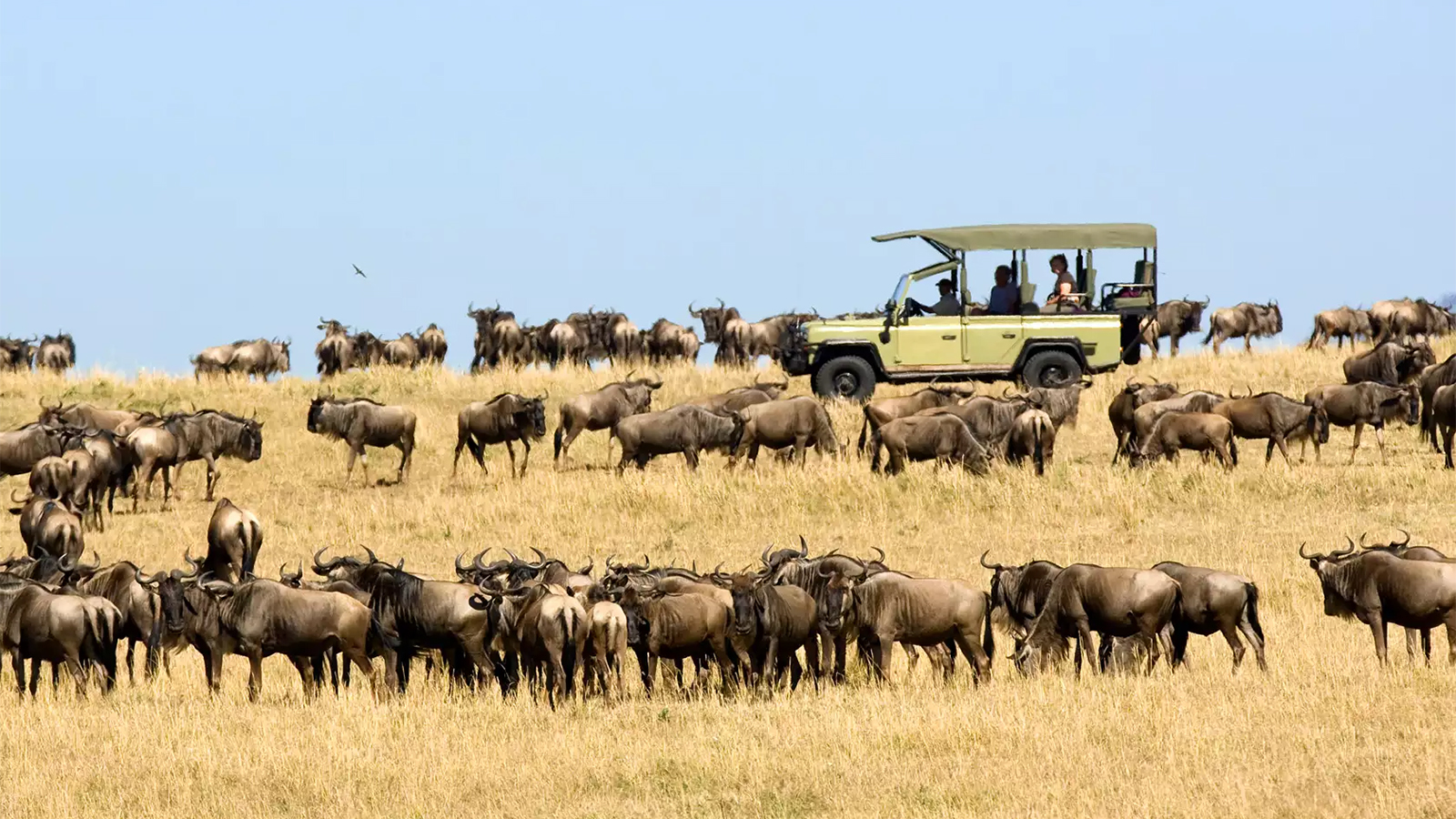
A 6-day all-inclusive Tanzania safari typically focuses on the "Northern Circuit," offering game drives in Serengeti National Park, Ngorongoro Crater, and Tarangire or Lake Manyara. Activities include searching for the Big Five, watching the Great Migration, exploring the crater floor, visiting Masai villages, and enjoying luxury tented camp amenities, all handled by expert guides
6-days-ultimate-budget-tanzania-safari-tour-holiday-vacation
6-days-lake-manyara-ngorongoro-crater-and-serengeti-tour-package
6-days-perfect-zanzibar-beach-holiday-tour-package-itinerary
6-days-zanzibar-beach-holiday-to-mnemba-island-spice-tour-safari-blue-and-mikumi-national-park
6-days-best-northern-circuit-tanzania-safari-to-best-tanzania-safari-parks
6-days-best-northern-circuit-tanzania-safari-to-best-tanzania-safari-parks
6-days-fly-in-safari-from-zanzibar-tarangire-serengeti-ngorongoro-crater-and-lake-manyara
6-days-best-of-tanzania-safari-to-nyerere-mikumi-and-udzungwa-mountains
6-days-ultimate-kilimanjaro-climb-via-machame-route
6-days-kilimanjaro-climb-via-umbwe-route
6-days-best-kilimanjaro-climb-via-marangu-route
6-days-ndutu-migration-and-tanzania-safari-itinerary
Key Activities & Highlights
Extensive Serengeti Game Drives
The Serengeti National Park is the crown jewel of African wildlife viewing, spanning roughly 15,000 square kilometers of protected land. Game drives here are a quest for the "Big Five"—lions, leopards, elephants, buffalo, and rhinos. Most safaris focus on the Seronera Valley, known as the "Big Cat Capital," where prides of lions and solitary leopards are frequently spotted on granite outcrops called kopjes.
The defining highlight is the Great Wildebeest Migration. Depending on the season, travelers can witness over 1.5 million wildebeest and hundreds of thousands of zebras moving across the plains. Early morning drives are essential, as this is when predators like cheetahs and hyenas are most active. Many 6-day packages, such as those from Roads of Adventure safais, include specialized vehicles with pop-up roofs to ensure unobstructed 360-degree photography of these dramatic scenes.
Ngorongoro Crater Exploration
Often called the "Eighth Wonder of the World," the Ngorongoro Crater is the largest inactive, intact volcanic caldera on Earth. Descending 600 meters to the floor reveals a self-contained ecosystem that hosts approximately 25,000 large animals. It is one of the best places in Tanzania to spot the rare black rhinoceros, which finds refuge within the crater's steep walls.
The crater floor is a tapestry of forests, swamps, and a central soda lake (Lake Magadi), which often teems with pink flamingos. Visitors can witness predators like golden-maned lions and spotted hyenas coexisting with massive herds of Cape buffalo and wildebeest. Because the wildlife is resident year-round, game viewing is consistently excellent. Most itineraries include a full-day floor drive with a picnic lunch at the Hippo Pool, allowing for an immersive experience in this "natural zoo."
Tarangire National Park Wildlife
Tarangire is defined by its iconic baobab trees and the Tarangire River, the primary water source for wildlife during the dry season. This park is famous for having the highest concentration of elephants in North Tanzania, with herds sometimes numbering in the hundreds. Visitors often see these giants bathing in the river or using their tusks to dig for water in dry riverbeds.
Beyond elephants, Tarangire is a haven for bird watchers, with over 500 recorded species. The park's varied landscape—ranging from seasonal swamps to open savannah—supports unique residents like the fringe-eared oryx and long-necked gerenuk. Activities often include afternoon game drives or guided bush walks, which provide a more intimate look at the flora and smaller fauna. For those looking for more active exploration, GetYourGuide offers various tour combinations that include Tarangire's rugged beauty.
Lake Manyara National Park
Located at the base of the Great Rift Valley escarpment, Lake Manyara National Park offers a lush contrast to the open plains of the Serengeti. It is world-renowned for its tree-climbing lions, a rare behavioral trait believed to be a way for the cats to escape biting insects or enjoy a cooling breeze. The park begins with a dense groundwater forest inhabited by large troops of baboons and blue monkeys.
As the forest opens up, the landscape transitions into a soda lake that covers two-thirds of the park. Thousands of flamingos and other water birds like pelicans and storks gather at the water’s edge. The park is also home to large herds of buffalo, giraffe, and hippos that can be seen at the "Hippo Pool" viewpoint. Despite its smaller size, Manyara’s diverse habitats—forest, marshland, and lake—ensure a high density of wildlife sightings in a short timeframe.
Hot Air Balloon Safari
A hot air balloon flight offers a perspective of the Serengeti that ground vehicles simply cannot match. Lifting off at dawn, passengers drift silently over the plains, watching the sun rise over the horizon and illuminate the vast herds below. It is a particularly moving experience during the migration, as you can see the true scale of the wildebeest columns stretching for miles.
The flight typically lasts about an hour and concludes with a traditional "bush breakfast." Guests land in a remote part of the park to find a table set with white linen, where they enjoy a full hot breakfast accompanied by champagne. This luxury activity is a popular add-on for 6-day tours and is frequently listed as a top outdoor activity on platforms like Tripadvisor.
Cultural Maasai Visits
Engaging with the Maasai people provides a deep cultural layer to any Tanzanian safari. The Maasai have coexisted with wildlife for centuries, and a visit to a boma (village) allows travelers to learn about their semi-nomadic lifestyle. Highlights often include the "Adumu" jumping dance, where warriors compete to see who can leap the highest, and demonstrations of traditional fire-making.
Visitors can tour the circular mud-and-thatch huts and learn about the intricate beadwork created by the village women, which often serves as a primary source of income. Some cultural tours also visit local community projects, such as schools or water wells, providing insight into the challenges and triumphs of modern Maasai life. These visits are usually integrated into the drive between Arusha and the Ngorongoro Conservation Area.
Walking Safaris
For those who want to "feel" the African bush under their boots, walking safaris are an exhilarating alternative to traditional drives. In the Ngorongoro Conservation Area, guided walks along the crater rim offer breathtaking views and a chance to track animals on foot with an armed ranger. These walks focus on the "small five"—ant lions, leopard tortoises, elephant shrews, rhinoceros beetles, and buffalo weavers—as well as medicinal plants used by local tribes.
In Tarangire or specialized concessions near the Serengeti, walking safaris allow you to approach wildlife like giraffes or zebras with a heightened sense of awareness. You learn to read tracks in the dust and interpret the alarm calls of birds. These activities, often highlighted by Murchison Falls National Park Uganda, provide a sensory connection to the wilderness that is impossible to achieve from behind a window.
Photography & Night Drives
Photography is a cornerstone of the safari experience, and many all-inclusive packages cater to this by providing private vehicles with beanbags for camera stability and guides who understand lighting and positioning. Whether capturing a cheetah's sprint or the silhouette of a baobab at sunset, the Northern Circuit provides endless inspiration.
While most national parks close at sunset, night drives are permitted in certain private concessions and specifically in Tarangire. These drives use powerful spotlights to reveal the "secret life" of the bush. It is the best time to spot elusive nocturnal creatures like leopards, aardvarks, honey badgers, and various species of owls and nightjars. Watching a predator hunt under the cover of darkness adds a thrilling, high-stakes dimension to the safari journey.
6 Days Tanzania safari tour packages all inclusive
Experience the ultimate African adventure with a 6-day all-inclusive Tanzania safari, meticulously designed to showcase the crown jewels of the Northern Circuit. This comprehensive journey traverses the iconic Serengeti National Park, the breathtaking Ngorongoro Crater, and the elephant-rich plains of Tarangire. Guests enjoy seamless logistics, from airport pickups to luxury lodge stays, ensuring every moment is focused on the wild. Expert guides lead you through diverse ecosystems, offering a front-row seat to the Great Migration and the "Big Five." Whether you are marveling at tree-climbing lions in Lake Manyara or enjoying sundowners overlooking the savannah, this tour balances high-octane wildlife tracking with refined comfort. All meals, park fees, and private 4x4 transportation are included, allowing for a worry-free immersion into the heart of the wilderness. This itinerary is perfect for photography enthusiasts, families, and honeymooners alike, providing an unforgettable encounter with the world’s most spectacular natural theatre and its vibrant local cultures.
Day 1: Arrival and Tarangire National Park
Your adventure begins in Arusha, where your private guide meets you for a scenic drive to Tarangire National Park. Known as the "Home of Giants," this park is famous for its ancient baobab trees and massive elephant herds. You will spend the afternoon navigating the Tarangire River circuit, where wildlife congregates for water. Keep your binoculars ready for fringe-eared oryx and diverse birdlife. As the sun sets, casting a golden glow over the savannah, you will head to your all-inclusive lodge. Here, you can unwind with a cold drink and enjoy a gourmet dinner under the stars, listening to the distant calls of the African bush. The quiet majesty of Tarangire provides the perfect introduction to the wild, setting a serene yet exciting tone for the days ahead. Your first night in the wilderness is spent in total comfort.
Day 2: Lake Manyara and the Rift Valley
After a hearty breakfast, you head toward Lake Manyara National Park, a gem tucked at the foot of the Great Rift Valley escarpment. The day starts with a drive through a lush groundwater forest where troops of baboons and blue monkeys play in the canopy. As you reach the alkaline lake, you are greeted by a pink hue of thousands of flamingos. The park is legendary for its tree-climbing lions; spotting one perched on an acacia branch is a true safari highlight. You will enjoy a picnic lunch at a scenic viewpoint overlooking the water before continuing your search for hippos and giraffes. In the late afternoon, you will ascend the escarpment toward the cooler highlands of Karatu. The evening offers a chance to relax at your lodge, surrounded by coffee plantations and vibrant gardens.
Day 3: Journey to the Great Serengeti
Today you travel into the world-famous Serengeti National Park, passing through the Ngorongoro Conservation Area. A brief stop at the crater viewpoint offers a staggering panorama before you descend into the "endless plains." The transition from the highlands to the flat, golden savannah is a visual masterpiece. As you enter the Serengeti, your first game drive begins immediately. Your guide will navigate the Seronera Valley, a prime habitat for big cats. Lions are often seen lounging on granite kopjes, while leopards drape themselves over sausage tree branches. The sheer volume of wildlife is overwhelming, with gazelles, zebras, and impalas dotting the horizon. You will reach your luxury tented camp in time for a traditional safari "sundowner." Dinner is served in a communal mess tent, where you can swap stories of the day’s sightings with fellow travelers.
Day 4: Full Day Serengeti Exploration
A full day in the Serengeti allows you to venture deeper into the wilderness. You have the option of a pre-dawn game drive to witness predators on the hunt, followed by a bush breakfast. The focus today is on the Great Migration, depending on the season, as you track the massive herds of wildebeest moving across the plains. Your expert guide will interpret animal behaviors, from the territorial displays of hippos to the intricate social structures of elephant families. If you’ve opted for a hot air balloon safari, this morning provides a silent, bird’s-eye view of the migration below. The afternoon may be spent exploring different habitats, such as riverine forests or open grasslands, searching for the elusive cheetah. Returning to camp, you’ll enjoy the unique atmosphere of a Serengeti night, marked by the hooting of owls and the distant roar of lions.
Day 5: Ngorongoro Crater Floor Descent
Leaving the Serengeti behind, you head toward the Ngorongoro Crater for what many consider the highlight of the tour. You will descend 600 meters into the caldera for a full-day game drive in this self-contained Eden. The crater floor is home to over 25,000 large animals, including the highly endangered black rhino. Because the walls act as a natural enclosure, the wildlife density is unparalleled. You will see prides of lions, massive bull elephants, and pods of hippos in the Magadi Lake swamps. The landscape changes rapidly from yellow fever tree forests to open plains. Lunch is served by a hippo pool, offering a unique "theatre" while you eat. By late afternoon, you will ascend the steep walls back to the rim. Your final night is spent at a lodge overlooking the crater, providing a spectacular view of the sunset over the caldera.
Day 6: Cultural Visit and Departure
On your final day, you enjoy a leisurely breakfast before visiting a traditional Maasai Boma. This cultural encounter allows you to learn about the ancient customs, vibrant beadwork, and rhythmic dances of the Maasai people. It is a profound way to connect with the human history of this landscape. Afterward, you begin your return journey to Arusha. Along the way, you can stop at the African Heritage Gallery for high-quality souvenirs and local art. Your guide will provide a final lunch in Arusha before transferring you to Kilimanjaro International Airport (JRO) for your flight home or your onward journey to Zanzibar. You leave Tanzania with a full camera roll and a deep appreciation for the natural world, having experienced the very best of the Northern Circuit in just six unforgettable days.
1. What is included in a 6-day all-inclusive Tanzania safari?
An all-inclusive 6-day safari is designed to be a "turn-key" vacation where every logistical detail is handled from the moment you land at Kilimanjaro International Airport (JRO). The primary inclusion is accommodation, which ranges from luxury lodges perched on crater rims to "glamping" style tented camps in the heart of the Serengeti. These camps provide the comfort of a hotel—including beds and en-suite bathrooms—while keeping you immersed in the sounds of the bush.
Transport is another cornerstone. You are provided with a customized 4x4 Land Cruiser featuring a pop-up roof for 360-degree wildlife viewing. This vehicle is your mobile sanctuary, equipped with a fridge for cold drinks, charging stations for your camera, and a high-frequency radio. Your professional driver-guide is perhaps the most valuable inclusion; they are experts in animal behavior, botany, and navigation, ensuring you find the hidden leopards or the start of a migration crossing.
Meal plans are "Full Board," meaning breakfast, lunch, and dinner are covered. While in the parks, you’ll typically have "bush lunches"—picnics set up in scenic areas so you don’t have to return to the lodge and miss wildlife action. Furthermore, all Government Taxes and National Park Fees (which can be several hundred dollars per person) are pre-paid. This includes the Ngorongoro Crater service fee, a specific levy for vehicles entering the caldera. Finally, most packages include unlimited bottled water during game drives to keep you hydrated in the equatorial sun.
2. Which parks are best for a 6-day safari?
For a 6-day window, the Northern Circuit is the gold standard because the parks are relatively close to one another, minimizing transit time and maximizing "eyes-on-animals" time. The journey typically begins with Tarangire National Park. Often called the "Home of Giants," it is famous for its massive elephant herds and ancient baobab trees. It serves as a perfect introduction to the Tanzanian wilderness.
From there, you move to the Serengeti National Park, the crown jewel of African safaris. Spanning nearly 15,000 square kilometers, its endless plains host the most diverse ecosystem on earth. Because of its size, a 6-day itinerary usually spends at least two or three nights here to cover the central (Seronera) or northern regions, depending on the season.
The Ngorongoro Crater is the third essential stop. As the world’s largest intact volcanic caldera, it acts as a natural enclosure for over 25,000 large mammals. Finally, many tours include Lake Manyara National Park. While smaller, it offers a lush groundwater forest and a soda lake that attracts thousands of flamingos. This combination of parks provides a "highlights reel" of Africa, moving from the dense forests of Manyara to the baobabs of Tarangire, the volcanic walls of Ngorongoro, and the infinite horizons of the Serengeti.
3. What is the top activity in the Serengeti?
The undisputed top activity is witnessing the Great Migration. This is not a single event but a year-round circular movement of over 1.5 million wildebeest, 200,000 zebras, and 300,000 Thomson's gazelles. In a 6-day safari, your guide will position you in the region where the herds are most concentrated. Between June and October, the focus is on the Northern Serengeti, where the dramatic Mara River crossings occur. Watching thousands of animals plunge into crocodile-infested waters is a raw, heart-stopping display of nature’s power.
Even if you visit during the "off-season," the Serengeti offers world-class predator tracking. Because the prey is so abundant, the park has the highest concentration of lions and hyenas in Africa. You might spend an hour quietly watching a pride of lions strategizing a hunt or a leopard draped over a sausage tree branch guarding its kill.
Beyond the animals, the landscape photography is unparalleled. The Serengeti is famous for its kopjes—giant granite rock formations that stick out of the plains like islands. These are favorite haunts for lions and cheetahs. The shifting light at dawn and dusk over the golden grass creates a "National Geographic" backdrop that makes every game drive feel like a professional shoot. Whether it's the thundering hooves of the migration or the silent stare of a cheetah, the Serengeti's activity is defined by the scale of its life.
4. What is unique about a Ngorongoro Crater game drive?
The Ngorongoro Crater is often called the "Eighth Wonder of the World" for good reason. What makes a game drive here unique is the density and containment of the wildlife. When you descend 600 meters down the steep crater walls, you enter a self-contained ecosystem. Because the walls are so high, many animals stay within the 260-square-kilometer floor year-round. This means that unlike the vast Serengeti where animals can be spread out, in the Crater, you are almost guaranteed to see a high volume of wildlife in a very short time.
It is the best place in East Africa to see the Black Rhino. While rhinos are elusive and critically endangered elsewhere, a small, protected population thrives here, often seen grazing near the Lerai Forest. The Crater is also famous for its "Tuskers"—ancient bull elephants with ivory so long it nearly touches the ground.
The scenery adds a surreal layer to the experience. You can be watching a pride of lions near a salt lake white with flamingos, with the dramatic, mist-covered crater walls rising in the background. It feels like a prehistoric "Lost World." Because the animals are so habituated to vehicles, they often walk right alongside the Land Cruiser, providing intimate encounters that are harder to find in larger, more rugged parks. It is the ultimate "one-day safari" experience.
5. Are hot air balloon safaris included?
In almost all "all-inclusive" packages, the hot air balloon safari is listed as an optional extra. This is because it is a premium experience with a high price tag (roughly $550–$600 per person) due to the massive logistics involved in operating balloons in a remote wilderness. However, it is the most highly recommended upgrade for a 6-day tour.
The experience begins before dawn. You are driven to the launch site in the dark, where you watch the balloons inflate against the morning stars. You take off just as the sun peeks over the horizon, painting the Serengeti in shades of pink and gold. From the air, the perspective is entirely different. You can see the patterns of the migration paths, the winding riverbeds, and animals that might be hidden from a vehicle, like hippos returning to the water or leopards moving through the tall grass.
The flight is silent, save for the occasional roar of the burner, allowing you to hear the sounds of the bush from above. After about an hour in the air, you land on the plains for a traditional champagne bush breakfast. A full kitchen is set up under an acacia tree, featuring linen tablecloths, fine china, and hot breakfast cooked to order. While it is an added cost, it is often cited by travelers as the single most memorable moment of their entire Tanzanian journey.
6. What is a cultural "Maasai visit" activity?
A visit to a Maasai Boma (village) offers a profound human connection to the landscape you’ve been exploring. The Maasai are one of the few tribes that have maintained their traditional way of life despite the encroachment of the modern world. In a typical 6-day safari, this visit often happens in the Ngorongoro Conservation Area, where the Maasai live in harmony with the wildlife.
Upon arrival, you are usually greeted with a welcoming song and the "adumu" (jumping dance). You’ll be invited into their homes—sturdy huts made of mud, sticks, and cow dung—to see how they live, cook, and sleep. The experience is an educational exchange; they will explain their social structure, the significance of their colorful "shuka" robes, and their intricate beadwork.
You might see how they make fire using only two sticks or learn about their cattle-centric economy. While some worry about these visits feeling "touristy," they are a vital source of income for these communities and help preserve their heritage. It provides context to the land, reminding visitors that the African bush is not just a wildlife sanctuary, but a home to a resilient and vibrant culture that has existed for centuries. It’s a chance to step away from the binoculars and engage with the people who have been the stewards of this land long before it became a national park.
7. What can I do in Lake Manyara National Park?
Lake Manyara is often the "hidden gem" of the 6-day circuit. Though smaller than the Serengeti, its biodiversity is staggering. The park is most famous for its tree-climbing lions. While lions typically stay on the ground, the prides in Manyara have developed a unique habit of lounging on the sturdy branches of acacia trees to escape the heat and biting insects. Spotting a lion tail dangling from a tree limb is a highlight for any photographer.
The park is also a haven for elephants and baboons. In fact, Manyara has one of the highest concentrations of baboons in the world; you will see massive troops interacting along the roadside. The landscape transitions quickly from a lush, jungle-like groundwater forest (fed by underground springs) to open floodplains.
For bird enthusiasts, the soda lake is a major draw. Depending on the water levels, the shores can be turned pink by thousands of Lesser Flamingos. There are also pelicans, storks, and kingfishers. Many 6-day tours also offer a canopy walkway (treetop walk) in Manyara. This is a series of suspension bridges that allow you to walk through the forest at bird’s-eye level, offering a unique perspective on the flora and primates. It’s a tranquil, scenic park that offers a "softer" safari experience compared to the ruggedness of the Serengeti.
8. What is a walking safari?
A walking safari is the ultimate way to engage your senses. While game drives are about covering distance to find large animals, a walking safari is about intimacy and detail. Led by an armed ranger and a professional guide, you step out of the vehicle and onto the earth. This activity is commonly offered in Tarangire or the Ngorongoro Highlands.
On foot, you notice things you’d miss from a car: the intricate architecture of a termite mound, the medicinal uses of local plants, and the "news" of the bush written in animal tracks and droppings (scat). Your guide will teach you how to tell how long ago a lion passed by or which bird call signifies an alarm.
Safety is paramount. You are not "hiking" in the traditional sense; you are stalking quietly through the bush. The thrill of being on the same level as the wildlife—even if it's just a zebra or a giraffe 50 meters away—is electric. It strips away the barrier of the metal vehicle and reminds you of your place in the ecosystem. It is a peaceful, meditative experience that provides a deeper understanding of the African wilderness. Most walks last 2–3 hours and are conducted in the cool of the early morning.
9. When is the best time for a 6-day safari?
Timing is everything for a safari. The Long Dry Season (June to October) is widely considered the best time. Because there is no rain, the vegetation thins out, making it much easier to spot animals through the brush. More importantly, water sources like the Tarangire River and Serengeti waterholes become magnets for wildlife. You don't have to search for the animals; you simply wait by the water, and they come to you. This is also when the Great Migration is most active in the Central and Northern Serengeti.
The "Short Dry Season" (January to March) is the second peak. This is the calving season in the Southern Serengeti. Within a two-week window, roughly 500,000 wildebeest calves are born. This abundance of vulnerable prey draws in every predator in the region, leading to high-action sightings.
The "Green Season" (April and May) is the rainy period. While some lodges close, this is the best time for budget-conscious travelers and birdwatchers. The landscape is emerald green, the dust is gone, and the parks are nearly empty of other tourists. However, some roads can become muddy and difficult to navigate. For a 6-day tour where time is limited, the dry seasons are usually preferred to ensure the highest volume of sightings in a short window.
10. What kind of food is served on an all-inclusive safari?
You might expect "roughing it" food, but safari dining is surprisingly sophisticated. In an all-inclusive package, the food at lodges and tented camps is usually of a high international standard. Breakfast is often a full spread: fresh tropical fruits (mangoes, papayas), cereals, yogurts, and a "hot station" where chefs prepare eggs, pancakes, and sausages to order.
Lunch is frequently a "lunch box" enjoyed in the middle of a national park. These aren't just sandwiches; they usually include a piece of roasted chicken, a hard-boiled egg, fresh fruit, a juice box, and perhaps a savory pastry or salad. Some luxury tours even set up "hot lunches" in the bush with tables and chairs.
Dinner is the social highlight. It is usually a multi-course affair served in a communal dining tent or under the stars. You’ll find a mix of international cuisine (pastas, steaks, fish) and Tanzanian specialties. You might try Ugali (a maize staple), Nyama Choma (grilled meat), or coconut-based curries influenced by the coast. Dietary restrictions (vegan, gluten-free, halal) are easily accommodated, provided you notify the operator in advance. The quality of the food—often sourced from local farms near Karatu—is a consistent surprise for most first-time safari-goers.
11. What to pack for a 6-day safari?
Packing for a safari requires a balance of practicality and "layering." The most important rule is to stick to neutral colors—khaki, tan, olive, and brown. Avoid bright whites (which get dusty) and dark blues or blacks (which attract Tsetse flies). Camouflage patterns are also discouraged as they can be associated with military personnel.
The weather fluctuates wildly. Early morning game drives can be surprisingly cold (around 10°C/50°F), especially in the Ngorongoro Crater, so a fleece or light puffer jacket is essential. By noon, the temperature can soar to 30°C (86°F), so you’ll want light, breathable shirts underneath.
Essential Gear:
- Binoculars: Even if your guide has a pair, having your own means you don't miss a second of a distant leopard.
- Camera: A lens with at least 300mm zoom is recommended for wildlife.
- Protection: High-SPF sunscreen, a wide-brimmed hat, and polarized sunglasses are non-negotiable under the equatorial sun.
- Health: Insect repellent (with DEET) and your prescribed anti-malarials.
- Footwear: You don't need heavy hiking boots unless you're doing extensive walking; comfortable sneakers or sturdy sandals are fine for the vehicle.
- Finally, remember that most safari planes have a 15kg weight limit in soft-sided bags, so pack light!
12. Is it safe to do a safari?
Tanzania is one of the safest and most politically stable countries in Africa, and its safari industry is highly regulated. The primary safety "risk" involves the wildlife, but these risks are mitigated by strict protocols. You are accompanied at all times by a professional guide who is trained to read animal body language. They know exactly how close a vehicle can get to an elephant or a lion without causing stress.
When you are in the vehicle, you are safe. Animals generally perceive a safari vehicle as a single, large, non-threatening object. They don't associate the "humans" inside as prey as long as you don't stand on seats or wave your arms outside the windows.
Lodge Safety: Most camps in the Serengeti are "unfenced." This means animals can and do wander through the camp. This is why you are always escorted to and from your tent at night by an armed guard or a "Maasai askari." They use high-powered flashlights to ensure the path is clear. It’s an exhilarating feeling to hear a lion roar while you are tucked safely in your bed, but as long as you follow the camp rules—never walk alone at night and keep your tent zipped—you are perfectly secure.
13. What is a "flying" safari option?
A "flying safari" (or "Fly-in Safari") is an upgrade that swaps long dusty drives for short hops in light aircraft. In a standard 6-day drive-in safari, the journey from the Serengeti back to Arusha can take 7 to 8 hours. With a flying option, you board a bush plane at an airstrip like Seronera and land in Arusha just 50 minutes later.
This option is perfect for those who want to maximize their time. It allows you to spend an extra morning on a game drive rather than in transit. The flights themselves are an "activity"—flying low over the Great Rift Valley, the Ngorongoro Crater, and the shifting sands of the Serengeti provides breathtaking aerial views that you simply can't get from the ground.
However, there are trade-offs. Flying is more expensive, and you have to adhere to strict luggage limits (usually 15kg in soft bags). Also, part of the "safari charm" is the drive through local villages and changing landscapes. Many travelers choose a hybrid approach: they drive into the parks to see the country but take a "fly-back" flight on Day 6 to save time and end the trip on a high note.
14. What to do if I want to see the "Big Five"?
The "Big Five" (Lion, Leopard, Elephant, Buffalo, and Rhino) were originally named by hunters as the most dangerous animals to hunt on foot, but today they are the "must-see" list for photographers. To check all five off your list in 6 days, you must visit the Ngorongoro Crater. It is the most reliable place in East Africa to see the Black Rhino, which is the hardest of the five to find.
Lions and Buffalos are almost guaranteed in both the Serengeti and Ngorongoro. They are social animals and are often seen in large numbers. Elephants are the stars of Tarangire, where they congregate in herds of hundreds during the dry season.
The Leopard is the most elusive. They are solitary, camouflaged, and often spend their days in trees. Your guide will look for "leopard-friendly" trees (like Sausage trees or Yellow-barked acacias) and watch for the flick of a tail. The Central Serengeti (Seronera Valley) is famous for its high leopard density. To see the Big Five, patience is key. Tell your guide early on that this is your priority so they can spend extra time in known rhino territories or leopard-heavy river circuits.
15. Can I combine my 6-day safari with Zanzibar?
Combining the "Bush and Beach" is the most popular way to experience Tanzania. After 6 days of early mornings, dusty roads, and high-adrenaline wildlife sightings, the white sands and turquoise waters of Zanzibar offer the perfect contrast.
Most 6-day all-inclusive packages are designed to end at an airstrip or in Arusha, where you can catch a direct flight to Stone Town or Zanzibar's beaches (a roughly 1 hour and 15-minute flight). You can go from watching a lion hunt in the morning to sipping a cocktail on a tropical beach by sunset.
In Zanzibar, you can explore the historic winding alleys of Stone Town, take a spice farm tour, or go snorkeling in the Mnemba Atoll. Most travelers add 3 to 4 days in Zanzibar after their safari. Many tour operators offer "all-in-one" bundles that include the safari, the internal flight, and a beach resort stay. It is a seamless transition; your safari guide drops you at the airport, and a resort driver meets you on the island. It’s the ultimate "best of both worlds" African vacation.
Booking 6 days Tanzania safari with us Roads of Adventure safaris
Book a 6-day Tanzania safari with Roads of Adventure Safaris for a tailored Northern Circuit experience, focusing on the Serengeti, Ngorongoro Crater, and Tarangire. Packages include private, expert-guided, budget-to-luxury options, covering accommodation, transport, and park fees, starting with a briefing upon arrival in Arusha.
