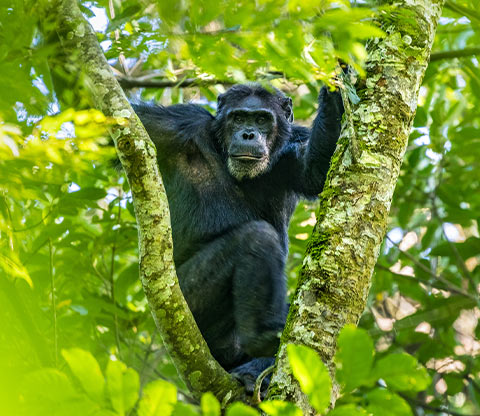
A 3-day Kibale Forest safari primarily offers thrilling chimpanzee trekking to see habituated chimps, complemented by a guided Bigodi Wetland Sanctuary swamp walk, nature walks, and community cultural tours. Located near Fort Portal, this trip allows visitors to experience the "Primate Capital of the World," seeing up to 13 primate species, including red colobus and grey-cheeked mangabeys
3-days-chimpanzee-tracking-to-kibale-forest-national-park
3-days-chimpanzee-habituation-in-kibale-forest-park
3-days-chimpanzee-tracking-in-kibale-forest-park-from-kigali
1. Chimpanzee Tracking (Main Activity)
Chimpanzee tracking is the undisputed highlight of any visit to Kibale National Park, an experience that offers a profound connection with our closest biological relatives. The adventure begins at the Kanyanchu Visitors Center, where you are assigned to a small group led by an expert Uganda Wildlife Authority (UWA) ranger. These rangers are highly skilled in forest navigation and primate behavior, often using auditory cues like the "pant-hoot" calls to locate the troop. Because Kibale is home to over 1,500 chimpanzees and several fully habituated communities, the success rate for finding them is exceptionally high, making it the premier location for this activity in East Africa.
The trek itself can last anywhere from two to five hours, depending on where the chimpanzees nested the previous night and how far they have traveled in search of fruiting trees. Once you locate the troop, you are granted exactly one hour of observation time. This time limit is strictly enforced to minimize human impact and ensure the primates do not become overly stressed or habituated to the point of behavioral change. During this hour, you will witness the raw complexity of their social lives—mothers nursing their young, high-ranking males displaying their strength through bark-drumming on giant mahogany trees, and young juveniles playing in the canopy.
The experience is visceral; the sound of their vocalizations echoing through the damp forest air and the sight of their expressive, intelligent eyes creates a lasting memory. Observing their dexterous hands as they groom one another or use sticks as tools provides a striking reminder of our shared evolutionary history. To ensure a safe encounter, you must maintain a distance of at least eight meters and wear a mask if requested. This activity is not just a tourist highlight; it is a vital conservation tool, as permit fees directly fund the protection of the forest and the monitoring of the chimpanzee populations.
2. Bigodi Wetland Sanctuary Walk
Located just outside the boundaries of Kibale National Park, the Bigodi Wetland Sanctuary is a shining example of community-based conservation at its finest. This 4.5-kilometer nature walk takes you through a lush swamp ecosystem that acts as a vital corridor for wildlife moving in and out of the park. Managed by the Kibale Association for Environmental Conservation (KAFE), the sanctuary provides a different perspective of the rainforest, focusing on the dense papyrus reeds and palm-filled wetlands that contrast with the deep primary forest of Kibale.
The sanctuary is famously known as a birdwatcher's paradise. It is the best place in the region to spot the magnificent Great Blue Turaco, a large, vibrant bird with striking blue, yellow, and red plumage. As you navigate the boardwalks and forest paths, your local guide will help you identify some of the 200+ bird species recorded here, including hornbills, kingfishers, and the elusive papyrus gonolek. The walk is also incredible for primate viewing; it is common to see up to eight different species in a single afternoon, including the Grey-cheeked Mangabey, L’Hoest’s monkey, and the acrobatic Black-and-white Colobus.
What makes Bigodi truly special is the environmental impact of your visit. The funds generated from the walking tours are reinvested into the community, supporting local schools, clean water initiatives, and women’s groups. The guides are often residents who have grown up on the edge of the swamp, and their knowledge of the local flora and fauna—including the medicinal uses of various plants—is exhaustive. An afternoon walk here is the perfect, tranquil complement to the high-energy chimpanzee trek, offering a slower pace and a deeper look at the smaller, intricate details of the Ugandan ecosystem.
3. Bigodi Community Village Tour
For those looking to understand the human heartbeat of the region, the Bigodi Community Village Tour is a must. This cultural immersion takes you beyond the wildlife and into the daily lives of the Batooro and Bakiga people who inhabit the edges of the forest. This is an interactive experience designed to showcase traditional skills and heritage that have been passed down through generations. It is a warm, welcoming tour that bridges the gap between conservation and the livelihoods of the people who make it possible.
A highlight of the tour is witnessing the traditional process of banana beer making. You’ll see how specific varieties of bananas are ripened, mashed, and fermented to create a potent local brew—a staple of social gatherings in rural Uganda. Similarly, you can participate in a coffee-making experience, tracing the journey of the bean from the red cherry on the tree to a hand-ground, aromatic cup of coffee roasted over an open fire. These activities provide a sensory connection to the land and highlight the importance of sustainable agriculture in the region.
The tour often includes a visit to a traditional healer, who explains the ancient use of forest roots, barks, and leaves in treating various ailments. This provides a fascinating look at the "pharmacy" that the forest has provided for centuries. You may also visit a local primary school or a women's basket-weaving group, where you can see the incredible craftsmanship required to turn dried papyrus and palm leaves into intricate, colorful art. By participating in this tour, you aren't just a spectator; you are actively contributing to the economic empowerment of the community, ensuring that the local people see the direct benefits of tourism.
4. Nature Walks & Hiking
While chimpanzees are the star attraction, Kibale National Park offers a vast network of trails designed for general nature walks and hiking. These excursions are perfect for travelers who want to explore the forest's biodiversity at a more contemplative pace. Walking through the primary rainforest, with its towering ancient trees and filtered emerald light, is a spiritual experience. These hikes allow you to appreciate the sheer scale of the mahogany and fig trees that form the "green cathedral" of Kibale.
During these walks, your focus shifts to the broader community of the forest. You are likely to encounter various other primate species that are often more relaxed than the fast-moving chimps. The Red-tailed monkeys are a frequent sight, known for their distinct white nose-spots and playful behavior. You may also see Olive baboons patrolling the forest edges or Blue monkeys foraging in the mid-canopy. Your guide will also point out smaller creatures, such as the giant forest hogs, various duiker species, and the colorful array of butterflies that congregate in sun-drenched clearings.
Hiking in Kibale also provides a unique opportunity to learn about forest ecology. Guides explain the complex relationships between the flora and fauna, such as how certain trees rely on primates for seed dispersal. For the more adventurous, night walks are occasionally available, offering a chance to see nocturnal inhabitants like the Pottons and Galagos (bushbabies) with their large, glowing eyes. Whether you are doing a short two-hour stroll or a more intensive half-day hike, the trails of Kibale reveal a world of hidden wonders that many visitors miss when focused solely on the chimpanzees.
5. Crater Lake Hiking
The area surrounding Kibale and Fort Portal is part of the Ndali-Kasenda Crater Lake field, a landscape of dramatic beauty created by ancient volcanic activity. On the first day of many 3-day safaris, a hike around these craters is a popular way to stretch your legs and take in the scenery. There are over 50 crater lakes in the region, each with its own unique shape, depth, and color—ranging from deep turquoise to emerald green. Unlike many volcanic regions, these craters are lush and fertile, with local farms and forests clinging to their steep inner walls.
The most famous hike leads to the "Top of the World" viewpoint. This is a relatively moderate climb that rewards you with a 360-degree panorama of the entire region. On a clear day, you can see the snow-capped peaks of the Rwenzori Mountains (the Mountains of the Moon) to the west, the sprawling canopy of Kibale Forest to the east, and several shimmering crater lakes nestled in the valleys below. The view is particularly spectacular at sunset, as the light reflects off the water and the mountains turn a deep purple.
Along the trail, you will pass through local villages and smallholdings growing tea, bananas, and vanilla. This provides a wonderful "unfiltered" look at Ugandan rural life outside of the national park gates. Many of the crater lakes are safe for swimming (as they are free of Bilharzia and crocodiles), and some lodges offer canoeing or paddleboarding. Including a crater lake hike in your itinerary adds a necessary sense of scale to your trip, showing you the geological forces that shaped this fertile corner of the Albertine Rift.
6. Visit Amabere Ga Nyina Mwiru Caves
Located just a short drive from Fort Portal, the Amabere Ga Nyina Mwiru Caves offer a fascinating blend of geological science and ancient folklore. The name translates to "The Breasts of Nyina Mwiru," and the site features impressive stalactites and stalagmites that, according to local legend, represent the breasts of a king’s daughter. The story goes that her father cut off her breasts to make her less attractive to suitors after a prophecy foretold that her son would overthrow him. Today, the "milky" water (calcium carbonate) dripping from the cave ceiling is said to be her milk.
Geologically, the caves are a subterranean wonder, formed within a limestone outcrop and hidden behind a beautiful waterfall known as the Natural Waterfall. As you explore the cool, damp interior of the caves, you can see the intricate rock formations that have taken thousands of years to grow. The surrounding area is lush and mossy, creating a prehistoric feel. The sound of the waterfall crashing into the plunge pool outside adds to the atmospheric nature of the site.
A visit here is usually combined with a hike to the nearby hills, providing a full afternoon of exploration. It is an excellent stop for those interested in ethnogeology—how local cultures interpret natural landmarks through myth and storytelling. The site is managed by local guides who are passionate about keeping their heritage alive while explaining the karst topography of the region. It is a cooling, mystical experience that provides a nice break from the tropical heat of the forest and adds a layer of historical depth to your 3-day safari.
7. Cultural Experience at Nakayima Tree
Often visited as a stopover during the drive between Kampala and Kibale, the Nakayima Tree in Mubende is one of Uganda’s most significant historical and spiritual landmarks. This ancient tree, estimated to be over 400 years old, is a massive incense tree (Canarium schweinfurthii) with an incredible buttress root system that has formed natural "rooms" at its base. It is named after Nakayima, a legendary priestess of the Bachwezi dynasty who was said to have supernatural powers and the ability to heal the sick.
For centuries, the tree has served as a traditional shrine and a place of pilgrimage for people seeking blessings, fertility, and healing. Even today, you will likely see local people and traditional healers performing rituals, burning incense, and offering sacrifices at the base of the tree. The site is a living museum of Ganda culture and the ancient Empire of Kitara. Exploring the different "rooms" formed by the roots, you can see where various spirits are said to reside and where the priestess once sat to give counsel.
Visiting the Nakayima Tree is a powerful reminder that the landscapes of Uganda are deeply intertwined with spiritual and ancestral history. It provides a stark contrast to the modern world and even the scientific conservation efforts in the national parks. The site is situated on a high hill, offering great views of the surrounding countryside. Taking an hour to stop here en route to Kibale enriches your journey, providing a historical "prologue" to the natural wonders you are about to encounter in the forest.
8. Bird Watching
With a record of over 375 bird species, Kibale National Park and the adjacent Bigodi Wetland are among the most important birding destinations in East Africa. The park’s diverse habitats—ranging from lowland tropical forest to montane forest and swamp—attract a staggering variety of avian life. For bird enthusiasts, a 3-day trip is often centered entirely on checking off "Albertine Rift endemics"—species found only in this specific geographical region.
The undisputed "Holy Grail" for birders in Kibale is the Green-breasted Pitta. This elusive bird is notoriously difficult to spot, as it lives in the dense undergrowth and is most active during a very short window at dawn. Expert birding guides in the park are specialized in finding this species, often listening for its distinct wing-flutter during the breeding season. Other forest specials include the African Grey Parrot, the Black-billed Turaco, and various species of sunbirds, barbets, and wood hoopoes that fill the canopy with color and song.
The Bigodi Wetland serves as the perfect secondary birding site, specializing in water and papyrus-dwelling species. Here, you can easily see the Great Blue Turaco, the Ross's Turaco, and the Papyrus Gonolek. The transition zones between the forest and the surrounding farmland also attract raptors and weavers. Whether you are a casual observer or a serious "lister," the sheer density of birdlife in Kibale is overwhelming. Even if you aren't a birder, the constant soundtrack of the forest—the trumpeting of hornbills and the melodic calls of forest robins—adds an essential layer of magic to the safari experience.
3 Days Kibale forest park Chimpanzee tracking safari
Escape into the lush, emerald depths of Kibale National Park, a tropical rainforest sanctuary celebrated as the "Primate Capital of the World." This 3-day chimpanzee tracking safari offers an intensive and intimate journey into one of Africa’s most biodiverse ecosystems, home to an incredible 13 species of primates. Your adventure centers on the high-adrenaline experience of tracking our closest living relatives—the chimpanzees—observing their complex social hierarchies and vocal communications within their natural habitat. Beyond the primates, the park is a haven for rare forest birds, vibrant butterflies, and ancient mahogany trees. You will also experience the serene beauty of the Bigodi Wetland Sanctuary and the dramatic landscapes of the surrounding crater lakes. Combining expert-led forest treks with meaningful community encounters, this safari provides a profound connection to the wild. Prepare for an unforgettable expedition into the misty canopies and vibrant trails of Uganda’s premier rainforest destination.
Day 1: Arrival and Crater Lake Exploration
Your journey begins with a scenic drive toward the foothills of the Rwenzori Mountains, passing through the vibrant greenery of tea plantations near Fort Portal. After settling into your lodge on the edge of Kibale Forest, you will spend the afternoon exploring the dramatic Ndali-Kasenda crater lakes. These ancient volcanic calderas, now filled with shimmering turquoise water, offer some of the most beautiful landscapes in Uganda. A guided hike to a prominent viewpoint provides a 360-degree panorama of the forest canopy and the "Mountains of the Moon" in the distance. This excursion serves as a perfect introduction to the region's unique geography and allows you to spot your first forest birds and monkeys. As evening falls, enjoy a quiet dinner accompanied by the nocturnal symphony of the rainforest, resting up for the primary tracking adventure that begins early tomorrow morning.
Day 2: Chimpanzee Tracking and Bigodi Wetland
After an early breakfast, you head to the Kanyanchu Visitors Center for a briefing before entering the dense rainforest. Led by expert rangers, you will track a community of habituated chimpanzees, following the echoes of their "pant-hoot" calls through the undergrowth. Once located, you are granted an unforgettable hour to observe them as they groom, play, and forage. In the afternoon, the adventure shifts to the Bigodi Wetland Sanctuary, a community-managed project and a birdwatcher’s paradise. As you navigate the boardwalks, keep an eye out for the magnificent Great Blue Turaco and various primate species, such as the Red-colobus and Grey-cheeked Mangabey. This day offers a dual perspective of Kibale’s biodiversity, combining the raw excitement of the deep forest with the tranquil beauty of the swamp, while directly supporting local community conservation initiatives through your visit.
Day 3: Cultural Encounters and Departure
On your final morning, you will engage with the local Batooro and Bakiga communities that reside on the forest fringes. A guided village walk offers a glimpse into traditional life, including visits to a local primary school, a traditional healer, and a women’s craft group specializing in intricate basket weaving. You might also see the traditional processes of coffee roasting or banana beer making, providing a sensory connection to the local heritage. This cultural exchange highlights the vital relationship between the local people and the long-term conservation of the forest. After a final traditional lunch in the heart of the countryside, you begin your return journey. As you leave the misty shadows of Kibale behind, you carry with you the vivid memories of the chimpanzees' intelligent gazes and the vibrant, untamed spirit of the Ugandan rainforest.
1. What is included in a 3-day Kibale Chimpanzee safari?
A standard 3-day safari to Kibale is designed to be a comprehensive, hassle-free experience. Most packages include the chimpanzee tracking permit, which is the most critical component as it grants you access to the park and the habituated chimp communities. Logistically, the safari covers ground transport in a specialized 4x4 safari vehicle, often with a pop-up roof for better visibility during the drive. You are accompanied by a professional English-speaking driver-guide who handles all navigation and provides deep insights into Ugandan culture and wildlife.
The package also typically includes full-board accommodation for two nights, ranging from luxury lodges overlooking crater lakes to eco-friendly forest camps. Meals are provided from lunch on day one through to lunch on day three. In addition to the main trek, the Bigodi Wetland Sanctuary walk is usually included as a standard afternoon activity. Finally, the service covers airport transfers and all park entrance fees. It is worth noting that international flights, visa fees, and personal tips for your guides or porters are generally excluded, so it’s wise to have some extra cash on hand for those personal touches.
2. What is the age limit for chimpanzee tracking in Kibale?
To ensure the safety of both the visitors and the primates, the Uganda Wildlife Authority (UWA) has set a strict minimum age limit of 15 years for chimpanzee tracking. This rule is primarily in place because children are more likely to carry common human illnesses, such as colds or coughs, to which chimpanzees have no natural immunity. Because we share about 99% of our DNA with these apes, the risk of cross-species disease transmission is a serious conservation concern.
Beyond health, the physical and behavioral demands of the trek play a role. Tracking requires a degree of maturity to follow ranger instructions implicitly, such as remaining quiet and maintaining a 7–8-meter distance. A child’s unpredictable movements or noises could startle a troop. For families traveling with younger children, many lodges offer supervised childcare, or you can opt for the Bigodi Wetland walk, which is less restrictive and allows younger children to see other monkey species and birds in a more relaxed environment.
3. How long do I spend with the chimpanzees?
Once your group successfully locates the chimpanzee troop, you are permitted a maximum of one hour of direct observation. This "golden hour" is a strict conservation regulation designed to minimize the stress on the animals and prevent them from becoming overly dependent on or frustrated by human presence. During this time, you can watch them interact, forage, groom, and socialized. The hour begins the moment you find the main group, and your ranger will keep a close eye on the clock.
While one hour might seem short after a trek that could take several hours, it is an incredibly intense and rewarding window. Chimpanzees are highly active, and a lot can happen in 60 minutes—from dramatic vocalization displays to quiet moments of maternal care. The limitation ensures that the chimps maintain their wild behaviors and social structures without constant human interference. If you find that one hour isn't enough, you might consider the Chimpanzee Habituation Experience (CHEX), which allows for a much longer duration of four to six hours in the forest.
4. Can I take photos of the chimpanzees?
Photography is not only allowed but highly encouraged, provided you follow the park's safety protocols. The most important rule is that flash photography is strictly prohibited. Chimpanzees have sensitive eyes, and the sudden, bright burst of a flash can startle, agitate, or even blind them momentarily, leading to aggressive behavior or causing the troop to flee. Because the forest canopy is often dark, you should prepare by using a camera with good low-light performance and a high ISO setting.
It is also recommended to use a telephoto or zoom lens (at least 200mm to 400mm). This allows you to capture tight, detailed shots of their expressive faces and nimble fingers while maintaining the required 8-meter safety distance. For smartphone users, try to use the "optical zoom" rather than digital to maintain clarity. Remember to stay behind your ranger and move slowly; sudden movements to get "the perfect shot" can be interpreted as a threat. Keeping your gear in a waterproof bag is also essential, as the misty forest environment can be tough on electronics.
5. What is the difference between tracking and habituation?
Chimpanzee Tracking is the standard activity included in most 3-day safaris. It typically lasts between 2 and 4 hours, depending on the movement of the primates. Once you find them, you spend one hour observing them. This is perfect for the average traveler who wants a high probability of a sighting (over 90% success rate) without the physical exhaustion of an all-day trek. The tracking focuses on communities that are already well-accustomed to human presence.
Chimpanzee Habituation (CHEX), on the other hand, is an immersive, all-day experience. You join researchers and trackers as they follow a community that is still in the process of being habituated (trained to be comfortable around humans). This can last from 6:00 am until the chimps nest for the night. While it offers significantly more time (4-6 hours), it is much more physically demanding and requires a higher permit fee. Habituation is ideal for researchers, professional photographers, or primate enthusiasts who want to witness the full spectrum of chimp daily life, from waking up to building their evening nests.
6. What other activities can I do in 3 days?
A 3-day trip to Kibale is surprisingly versatile. Aside from the main chimp trek, the Bigodi Wetland Sanctuary is the top choice for an afternoon excursion, offering a chance to see eight different monkey species and the Great Blue Turaco. For those interested in geology and folklore, a visit to the Amabere Ga Nyina Mwiru Caves near Fort Portal provides a mystical look at stalactites and stalagmites hidden behind a beautiful waterfall.
If you enjoy hiking, the Crater Lake Field offers trails around ancient volcanic calderas with stunning views of the Rwenzori Mountains. For a more relaxed pace, you can go cycling or walking through the Mpanga Tea Estates, where the bright green rows of tea bushes make for excellent photography. Some travelers also opt for a community village tour to learn about traditional banana beer making and coffee processing. These activities ensure that your three days are packed with a balanced mix of wildlife, scenery, and culture.
7. Is it guaranteed to see chimpanzees?
In the world of wildlife, "guaranteed" is a strong word, as these are wild animals in a vast, unfenced rainforest. However, Kibale National Park boasts a success rate of over 90%, which is the highest in Africa. This reliability is due to the park's large population of over 1,500 chimpanzees and the incredible skill of the UWA rangers. These rangers track the chimps' nesting sites every evening and head out at dawn to find them, maintaining constant radio communication.
Because there are multiple habituated groups, if one troop is moving too fast or is in an inaccessible area, the rangers can often redirect you to another group. While it is rare to miss them entirely, their visibility can vary based on food availability; during fruiting seasons, they are often on the ground and easy to spot, whereas, at other times, they may stay high in the canopy. Regardless, your 3-day itinerary is built to maximize your chances, making Kibale the most "reliable" destination for anyone serious about seeing our primate cousins in the wild.
8. What is the best time to track chimpanzees in Kibale?
Chimpanzee tracking is possible year-round, but the dry seasons—from June to September and December to February—are generally considered the best times. During these months, there is significantly less rainfall, which means the forest trails are firmer and less slippery. This makes the trekking experience much more comfortable and reduces the physical strain of the hike. Low humidity also makes the forest air feel fresher for the trekker.
From a photography perspective, the dry season offers better light as there are fewer heavy clouds. However, the "wet seasons" (March–May and October–November) have their own advantages. The forest is at its most lush and green, which is beautiful for scenery. Additionally, food is often more abundant during the rains, meaning the chimps don't have to travel as far to find fruit, sometimes resulting in shorter treks. If you travel during the wet season, you’ll also find fewer tourists and potentially lower lodge prices, provided you don't mind a bit of mud and a sturdy rain jacket.
9. How many people are allowed in a tracking group?
To maintain a peaceful environment for the animals and to provide an intimate experience for visitors, chimpanzee tracking groups are strictly limited to a maximum of 8 people per group. This small group size ensures that everyone can hear the ranger’s explanations and get a clear view of the chimpanzees without crowding. It also helps minimize the human "footprint" in the forest, reducing noise levels and the potential for disturbing the primates’ natural behavior.
When you arrive at the Kanyanchu briefing center, you are divided into these small groups, each led by a ranger and often accompanied by an armed guard for safety. This manageable size allows for a more personalized experience, where you can ask questions and move through the forest more efficiently. If you are traveling as a larger group or family, you will simply be split into two or more separate tracking groups. This regulation is a key part of Uganda's sustainable tourism model, prioritizing the well-being of the forest and its inhabitants over mass tourism.
10. What should I wear and pack for the safari?
Preparation is the key to a comfortable trek. You should wear long-sleeved shirts and long trousers made of lightweight, breathable fabric. This isn't just for the weather; it’s essential protection against stinging nettles, thorny branches, and insects. Tucking your trousers into long socks is a classic ranger trick to keep safari ants from crawling up your legs. For footwear, sturdy waterproof hiking boots with good ankle support are a must for navigating the uneven, often muddy forest floor.
In your daypack, you should carry a lightweight rain jacket or poncho, as it can rain at any time in the rainforest. Insect repellent is vital to ward off mosquitoes and tsetse flies. Don't forget your camera (without flash), extra batteries, and a pair of binoculars for spotting chimps and birds high in the trees. Finally, carry at least two liters of water and some high-energy snacks. Since you’ll be in the sun during crater lake hikes or community walks, a hat and sunscreen are also recommended to round out your packing list.
11. Is Kibale Forest safe for tourists?
Yes, Kibale Forest is considered very safe for international tourists. The park is managed by the Uganda Wildlife Authority (UWA), and safety is their top priority. Every tracking group is accompanied by a professional armed park ranger who is trained not only in wildlife behavior but also in security. The presence of the firearm is a standard precaution—not because of human threats, but to scare off large animals like forest elephants or buffaloes if they become aggressive by firing a shot into the air.
In terms of health safety, the rangers are well-versed in the terrain and will set a pace that is comfortable for the group, ensuring no one gets lost or injured on the trails. Uganda as a whole has a well-established tourism infrastructure, and the Fort Portal/Kibale region is one of the most peaceful and welcoming parts of the country. As long as you follow your guide’s instructions—such as staying with the group and not eating in front of the primates—you can enjoy your safari with complete peace of mind.
12. How far is Kibale from Kampala?
The journey from Kampala to Kibale (or the nearby town of Fort Portal) typically takes between 6 and 7 hours by road. The distance is roughly 300 kilometers (about 185 miles). While that sounds like a long time, the drive is incredibly scenic and is a highlight for many travelers. You’ll leave the bustling city of Kampala behind and transition into the rolling green hills of the Ugandan countryside, passing through vibrant local markets, tea plantations, and small villages.
The most common route is via Mityana and Mubende. Most 3-day safaris include a stopover at the Nakayima Tree in Mubende for a cultural break or a lunch stop in Fort Portal, which is often called Uganda’s "tourism city" due to its cleanliness and beautiful mountain backdrop. The roads are generally paved and in good condition, though the final stretches toward the forest lodges can be bumpy. For those who prefer to save time, there are scheduled domestic flights from Entebbe to the Kasese airstrip, which is followed by a shorter 1.5-hour drive to the park.
13. What is the Bigodi Wetland Sanctuary Walk?
The Bigodi Wetland Sanctuary Walk is a community-run conservation project located on the edge of Kibale National Park. This 4.5km guided nature walk takes you through a lush swamp and secondary forest area that acts as an important wildlife corridor. It is famous for its incredible biodiversity, particularly its primates and birds. Because the environment is more open than the deep forest of Kibale, it is often much easier to get clear photos of monkeys and colorful birds here.
The sanctuary is home to eight different primate species, including the Black-and-white Colobus, Red-tailed monkey, and the Grey-cheeked Mangabey. Birders will be in heaven, as the wetland is the best place to spot the magnificent Great Blue Turaco. What makes this walk truly special is that it is a community initiative; the proceeds from your tour go directly toward funding local schools, clean water projects, and women's groups in the Bigodi village. It provides a perfect, tranquil afternoon activity to complement the morning's chimpanzee trek.
14. Are there other primates in Kibale?
Kibale is not called the "Primate Capital of the World" without reason; it hosts one of the highest densities and diversities of primates on the planet. While the chimpanzees are the primary draw, the park is home to a total of 13 different primate species. This includes the rare L’Hoest’s monkey, the acrobatic Black-and-white Colobus, and the Red-colobus monkey (which is unfortunately a favorite prey of the chimpanzees). You are also likely to see large troops of Olive baboons patrolling the forest roads.
Other residents include the Red-tailed monkey, the Blue monkey, and the Grey-cheeked mangabey. For those who venture out on guided night walks, the forest reveals its nocturnal inhabitants: the Pottons and several species of Galagos (also known as bushbabies), which can be spotted by the reflection of their large eyes in the flashlight. This incredible variety means that even when you aren't with the chimpanzees, the trees are almost always alive with movement and the chatter of our primate cousins.
15. Can I combine Kibale with a Gorilla Safari?
Absolutely, and this is one of the most popular ways to experience Uganda. Combining a 3-day Kibale trek with a 3-day Bwindi Gorilla trek creates a 5 to 7-day "Primate Extravaganza." These two iconic parks are located in the western part of the country and are roughly a 5–6-hour drive apart. The route between them often takes you through Queen Elizabeth National Park, allowing you to add a savannah wildlife safari and see tree-climbing lions along the way.
Starting with the chimpanzees in Kibale is often recommended as the treks are generally shorter and less strenuous than the steep mountain hikes required for gorillas in Bwindi. This allows you to "warm up" your hiking legs. Seeing both of our closest relatives—the energetic, vocal chimpanzees and the calm, majestic mountain gorillas—in a single trip provides a profound perspective on the natural world. Most tour operators seamlessly link these destinations, handling all permits and transport, making it an easy and unforgettable addition to your Ugandan itinerary.
Booking 3 Days Chimpanzee tracking in Kibale Forest Park with us Roads of Adventure safaris
A 3-day chimpanzee tracking safari in Kibale Forest National Park with Roads of Adventure Safaris typically includes private transportation, accommodation, park permits, and expert guiding for a fully managed experience. The itinerary involves a transfer from Entebbe, a full morning of tracking habituated chimps, and visits to the Bigodi Wetlands or crater lakes, costing roughly ($1,277)–($1,453) per adult based on group size.
