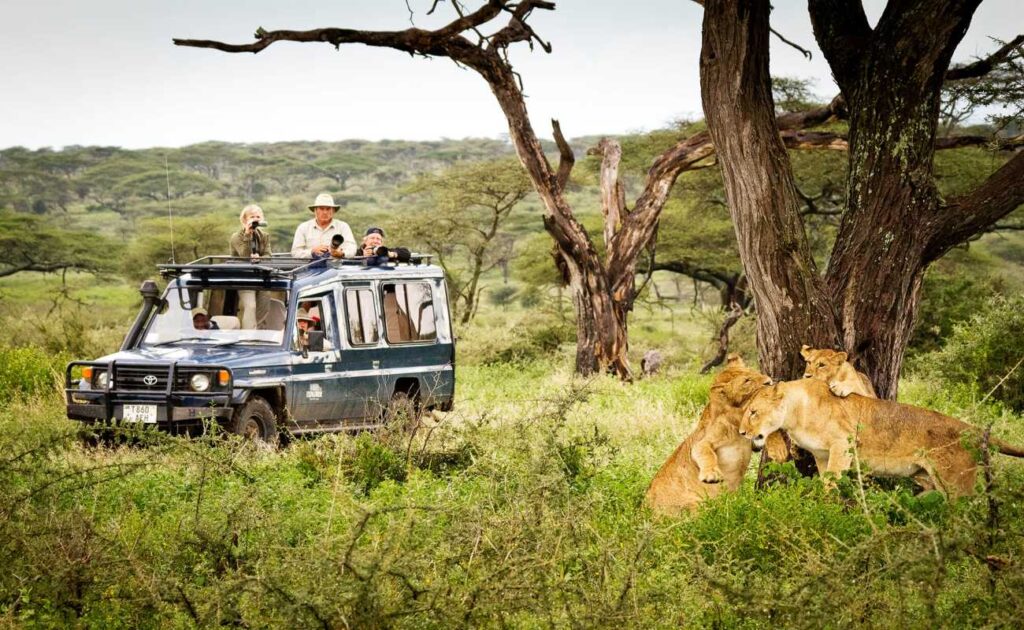
If you’re dreaming of standing in the path of the world's most magnificent predators, a Tanzania big cats safaris adventure belongs right at the top of your bucket list. Tanzania holds the highest concentration of large predators in Africa, meaning your chances of watching a pride of lions strategize a hunt or spotting a elusive leopard draped over an acacia branch are incredibly high.
But planning this kind of trip usually comes down to one big decision: do you head north or south? Both offer jaw-dropping encounters, but they feel like entirely different worlds.
10-days-perfect-tanzania-safari-itinerary
11-day-tanzania-safari-to-tarangire-lake-naron-serengeti-ngorongoro-and-lake-eyasi
8-days-tanzania-wildlife-safari-and-cultural-visit-to-masai-community
8-days-great-mara-river-crossing-hadzabe-tribe-and-optional-hot-air-balloon-tanzania-safari
7-days-epic-africa-big-five-safari-in-tanzania-top-best-parks
6-days-best-northern-circuit-tanzania-safari-to-best-tanzania-safari-parks
5-days-tanzania-safari-to-tarangire-serengeti-ngorongoro-and-lake-manyara
Top Tanzania big-cats safari Destinations
If you are planning a journey around Africa's premier wildlife, choosing the right destination is everything. Here is a breakdown of the top four hotspots that make Tanzania big cats safaris so legendary, each offering a distinct landscape and unique animal behavior.
Serengeti National Park: The Endless Theatre
The Serengeti is the undisputed crown jewel of Tanzania big-cats safaris. Its name translates to "endless plains," and that open horizon provides zero hiding places for the millions of wildebeest and zebras moving through it. Naturally, the apex predators follow close behind. If you want to see a cheetah hit top speed or witness a massive pride of lions working together on a hunt, this is the place. Head toward the Seronera River Valley, where the dense acacia trees provide the perfect canopy for elegant leopards to drag their meals safely away from scavengers.
Ngorongoro Crater: The Natural Caldera
Imagine a volcanic eruption millions of years ago collapsing in on itself, leaving a perfect, 100-square-mile bowl filled with lush grass and fresh water. That is the Ngorongoro Crater. Because the walls are so steep, a permanent population of animals lives right on the crater floor. It has one of the densest populations of lions on Earth, and they are incredibly used to safari vehicles. You might find a pride sleeping right in the shadow of your jeep. For leopards, keep your eyes glued to the yellow-barked trees of the Lerai Forest.
Ruaha National Park: The Rugged Frontier
For travelers who want raw, unfiltered wilderness without the crowds, Ruaha is the ultimate prize. Located in Tanzania’s southern interior, this park holds roughly 10% of the world’s entire wild lion population. The dry climate forces wildlife down to the Great Ruaha River, setting up intense, high-stakes wildlife encounters. Ruaha is famous for its massive mega-prides, sometimes numbering over 20 lions, which have adapted to hunt huge game like buffalo. The dramatic rocky outcrops (kopjes) and ancient baobab trees also provide excellent vantage points for solitary leopards tracking their next move.
Tarangire & Manyara: The Tree-Dwellers
While Tarangire is famous for its colossal elephant herds, the dry season transforms its marshes into a magnetic playground for predators. Lions here display fascinating, opportunistic hunting behaviors along the drying riverbeds. However, the real magic happens when you pair it with nearby Lake Manyara. This region is internationally renowned for its unusual population of tree-climbing lions. No one knows exactly why they do it—perhaps to escape the heat of the ground or avoid biting flies—but seeing a massive apex predator casually napping on a high acacia branch is an unforgettable sight.
5 Days Classic Tanzania Big -cats safaris
If you have five days to witness Africa’s most powerful predators in the wild, you need an itinerary that cuts out the fluff and puts you exactly where the action happens. This fast-paced, highly efficient northern loop is designed specifically for Tanzania big-cats safaris, taking you from the shade of ancient baobabs to the endless horizons of the savannah. By focusing your time on dynamic ecosystems where predators and prey cross paths every single day, you maximize your chances of seeing real, raw wildlife behavior—from strategic stalkings to playful cubs. Pack your long lenses and your sense of adventure; this route is a front-row seat to the dramatic, real-life theater of the African bush. Let's break down how each day unfolds.
1.Day 1: Arusha to Tarangire National Park (The Tree-Dwellers)
Your adventure kicks off with a morning drive from Arusha straight into Tarangire, a park dominated by giant baobab trees and sprawling marshes. While the elephants usually steal the initial spotlight, keep your eyes trained on the low branches of the acacia trees. Tarangire’s lions have a famous habit of climbing into the canopy to catch a breeze and escape the flies, looking surprisingly graceful for their size. Leopards also love the dense riverine forests here, using the high branches to spot prey moving toward the waterlines. You will spend the afternoon tracing the Tarangire River, watching how the resident prides position themselves for ambush as the sun dips low, before heading to your lodge for an evening surrounded by the sounds of the African night.
2.Day 2: Tarangire to the Serengeti Plains (Entering the Endless Horizons)
Today you journey deeper into the wild heart of East Africa. Leaving Tarangire behind, your route winds up and over the lush Ngorongoro highlands before opening up into the legendary, sweeping grasslands of the Serengeti. This transition is breathtaking; the trees disappear, and the sky seems to expand forever. As you enter the southern and central plains, you are officially in big cat territory. This afternoon serves as your introduction to the Serengeti's endless predator-prey dynamics. Your guide will navigate the open tracks, looking for telltale signs of activity—like a sudden hush over a herd of gazelles or vultures circling in the distance. You'll enjoy a late-afternoon game drive, tracking predators as they begin to wake up from their midday naps, before arriving at your central safari camp.
3.Day 3: Full Day in the Central Serengeti (Tracking the Big Three)
This entire day is dedicated to exploring the Seronera River Valley, the absolute sweet spot for Tanzania big cats-safaris. Because water flows here year-round, it supports a massive population of resident wildlife, making it a permanent buffet for apex predators. You will set out at first light when lions are at their most active, often walking right down the center of the dirt roads. Next, you will scan the massive granite rock formations, called kopjes, which cheetahs and lions use as elevated scouting towers to map out hunts. Your guide will also check the sausage trees along the riverbanks, where leopards routinely store their kills. From watching tiny lion cubs tumble in the grass to witnessing a cheetah scan the plains for a target, today is all about deep immersion.
4.Day 4: Central Serengeti to Ngorongoro Rim (Morning Hunts and Highland Views)
Wake up early for one final morning game drive in the Serengeti, a time when the air is crisp and predators are finishing up their nighttime hunts. This is your best chance to witness dramatic, high-energy action before the heat of the day forces the cats back into the shade. After a classic bush breakfast, you will slowly game-drive your way back toward the park gates, keeping a sharp lookout for any final wildlife encounters. In the afternoon, you will leave the plains behind and ascend the steep, winding roads up to the jagged rim of the Ngorongoro Crater. Arriving at your accommodation on the rim, you will be treated to a spectacular, panoramic sunset over the ancient volcanic caldera below, knowing you will be descending into that lost world tomorrow morning.
5.Day 5: Ngorongoro Crater Floor to Arusha:(the Ultimate Arena)
Your final day begins with an early morning descent down the steep, 2,000-foot crater wall into a self-contained wildlife paradise. The crater floor acts like a natural amphitheater, packing an incredible density of animals into a small space. Because the landscape is completely open grassland, tracking lions here is almost effortless. You will spend the morning watching the crater’s resident prides interact, completely unfazed by your presence. There is also a strong chance of spotting the elusive black rhino grazing in the distance, while leopards can often be found resting in the yellow-barked trees of the Lerai Forest. After a picnic lunch by a hippo pool, you will make the ascent back up the crater walls and enjoy a relaxed drive back to Arusha, concluding an unforgettable journey.
Which areas of the Serengeti National Park offer the best year-round opportunities for viewing large lion prides and leopards?
The Central Serengeti, specifically the Seronera River Valley, is the absolute gold standard for year-round predator viewing. Because the Seronera River provides a permanent water source, vast numbers of resident herbivores like zebras, waterbucks, and impalas never leave. This reliable food supply supports massive, stable resident lion prides, such as the famous Seronera pride. The valley's network of riverine forests, lined with mature sausage and yellow-barked acacia trees, also creates an ideal, high-density habitat for leopards who rely on the thick canopy to store their kills away from hyenas.
Additionally, the central region's iconic granite kopjes—like Simba Kopjes and Moru Kopjes—serve as permanent, elevated lookout points and denning sites for big cats year-round. While the migratory herds move across the park, these geological formations remain highly active predator hubs. Even in the dry season, when other areas of the park thin out, the Central Serengeti remains an incredibly reliable destination for Tanzania big cats safaris, ensuring travelers can witness Africa's top predators without relying on the unpredictable timing of the Great Migration.
What time of year is best to witness cheetahs hunting young wildebeest calves in the southern plains of the Serengeti?
To witness cheetahs hunting young wildebeest calves, you need to plan your trip between January and March, with February serving as the absolute peak. During this brief window, the Great Migration settles into the short-grass plains of the southern Serengeti and the Ndutu region. In a synchronized natural phenomenon, over 400,000 wildebeest calves are born within a three-week span, transforming the open landscape into a massive, high-stakes nursery.
This predictable influx of vulnerable, clumsy calves acts like a magnet for cheetahs. The southern plains feature incredibly short grass and wide-open volcanic soils, which offer optimal conditions for the cheetah’s high-speed hunting style. With zero trees or thick brush to obstruct their line of sight or trip them up mid-sprint, cheetahs can easily spot isolated calves and utilize their unmatched acceleration. For photographers and wildlife enthusiasts tracking Tanzania big cats safaris, this wet-season window offers unparalleled, high-energy action as resident cheetah mothers work overtime to feed their own cubs, resulting in some of the most dramatic, visible chases anywhere on the continent.
How does the unique topography of the Ngorongoro Crater create a high-density, captive-like environment for resident lion prides?
The Ngorongoro Crater is the world’s largest intact, unfilled volcanic caldera, and its dramatic geography shapes a completely unique ecosystem. The crater floor sits enclosed by steep, unbroken walls that rise 2,000 feet above the basin. This sheer vertical barrier creates a natural amphitheater spanning roughly 100 square miles. While the walls are not entirely impassable, they act as a profound psychological and physical boundary, discouraging the vast majority of the crater's 25,000 large mammals from ever leaving.
Because the volcanic soil is extraordinarily fertile and fed by permanent freshwater springs, the crater floor maintains a rich, year-round carpet of nutritious grass. This constant abundance of food supports dense populations of resident wildebeests, zebras, and buffalos that have no need to migrate. Consequently, the crater's resident lion prides enjoy a permanent, non-migratory buffet packed into a highly confined space. This high concentration of prey results in one of the densest lion populations on Earth. The open, flat terrain offers nowhere to hide, giving the environment an incredibly intimate, high-visibility feel where territorial predator interactions occur continuously right in front of visitors.
Where can I find the famous tree-climbing lions in Lake Manyara National Park, and what time of day are they most active?
In Lake Manyara National Park, the famous tree-climbing lions are most frequently located within the central and southern sections of the park, where the dense groundwater forest transitions into patchy acacia woodlands and open savannah edges. To spot them, you or your guide should carefully scan the large, horizontal branches of mature umbrella acacias and ancient sausage trees, typically between three and five meters off the ground.
While you can spot general wildlife at dawn, these lions are most active in the trees during the late morning and hot midday hours, roughly between 10:00 AM and 3:00 PM. They climb into the canopy primarily to escape the stifling ground heat and catch the cooler upper breezes. Additionally, the elevated branches lift them well above the thick swarms of biting insects and tsetse flies that plague the forest floor. Seeing a 300-pound lion casually sprawling along a branch with its legs dangling on either side is a highlight of Tanzania big cats safaris, though finding them requires a patient, eagle-eyed guide who knows their favorite resting groves.
During the Great Migration, how do lion prides strategize and position themselves along major river crossings?
When the Great Migration reaches the formidable river crossings—such as the Grumeti River in the Western Corridor or the deadly Mara River in the north—lion prides adapt their hunting strategies to exploit the chaos. Unlike crocodiles that strike from within the water, lions use the riverbanks as complex tactical ambush zones. They intimately know the specific, well-worn entry and exit points where the herds bunch up, look for paths down the steep banks, and hesitate out of fear.
Rather than attacking the massive, moving columns in the open, a pride will strategically position itself in the thick riverine thickets, tall reeds, or deep erosion gullies lining the banks. They wait patiently for hours while the herd builds up "mob courage." Once the frantic crossing begins and animals start scrambling back up the slick, muddy exit banks on the other side, the lions strike. They target exhausted, injured, or panicked individuals struggling up the slippery slopes. By using the natural choke points of the river terrain, the pride can cut off escape routes easily, turning a highly chaotic crossing into an incredibly efficient, high-success hunting arena.
What is the difference in habitat preference and hunting behavior between leopards and cheetahs in the central Seronera Valley?
In the central Seronera Valley, leopards and cheetahs share the same ecosystem by occupying entirely different ecological niches to avoid direct competition and conflict. Leopards are masters of structure and cover. They strongly prefer riverine woodlands, dense thickets, and rocky kopjes. A leopard relies heavily on stealth and camouflage, stalking within close range before launching a powerful ambush. Once they make a kill, their specialized muscle structure allows them to hoist carcasses twice their weight up into the forks of large trees, securing their meal from lions and hyenas.
Cheetahs, by contrast, are creatures of the wide-open spaces. They completely avoid dense woodlands where ambush predators hide, preferring the short-grass plains and open savannah edges. A cheetah’s hunting style relies on sight and explosive speed rather than pure stealth; they scan the horizon from termite mounds, slowly walk toward a herd, and trigger a high-speed chase that can top 60 miles per hour. Because they cannot climb trees and lack the strength to fight off larger predators, cheetahs hunt during the bright midday hours when lions and leopards are asleep, eating their kills rapidly on the open ground before scavengers notice.
Are there specialized photographic safaris or walking tours available that get visitors closer to big cat territories while ensuring safety?
Yes, highly specialized photographic safaris and wilderness walking tours are readily available on the northern circuit, though they operate under strict legal frameworks to ensure absolute safety. For photographers, operators utilize custom-designed 4x4 vehicles fitted with dropped side-panels, rotating camera mounts, and low-angle viewing hatches that allow you to capture dramatic, eye-level perspectives of big cats.
For those seeking an intimate adventure, the Tanzania National Parks Authority (TANAPA) permits guided walking safaris in specific zones within Tarangire and the Serengeti highlands. These walks are forbidden in high-density ambush zones like the Seronera Valley floor. Under strict safety mandates, every single walking group is accompanied by a highly trained, licensed naturalist guide and an armed TANAPA park ranger. Groups are capped at six guests, and walks take place strictly during the cool morning hours before 10:00 AM. Guides utilize wind-checks and strict distance minimums—keeping at least 150 meters away from lions—ensuring you can safely experience the adrenaline of tracking big cats on foot by reading paw prints and alarm calls without ever disturbing the animals.
What kind of safari vehicles are best equipped for off-road predator tracking in remote areas like the Ndutu plains?
For off-road predator tracking in rugged, remote environments like the Ndutu plains, the undisputed industry standard is a specially modified, heavy-duty 4x4 Toyota Land Cruiser or Land Rover Defender. These vehicles are custom-built with reinforced heavy-duty suspensions, high ground clearance, and specialized underbody skid plates to withstand the continuous stress of navigating uneven terrain, deep ruts, and hidden holes. They are equipped with permanent four-wheel-drive systems, differential locks, and high-flotation, all-terrain tires that prevent sinking into the soft, volcanic ash soils during the green calving season.
Inside, these tracking vehicles feature extended, customized bodies with large, pop-up roofs or completely open sides. This design provides unobstructed, 360-degree visibility for photographers capturing dynamic Tanzania big cats safaris action. Crucially, they carry essential self-recovery gear—including dual spare tires, high-lift jacks, heavy-duty sand tracks, and electric winches. This equipment ensures that if your vehicle bogs down in deep cotton mud while tracking a cheetah or a lion pride far off the main tracks, your guide can quickly extract the vehicle safely without disrupting the wildlife.
How do conservation fees and anti-poaching initiatives in Tanzania protect endangered big cat populations across the northern circuit?
The conservation fees built into every northern circuit safari permit play a direct, critical role in keeping Tanzania’s big cats safe. A significant portion of the daily park entry, camping, and concession fees goes directly to funding TANAPA and the Ngorongoro Conservation Area Authority (NCAA). This revenue sustainably funds large-scale anti-poaching initiatives, allowing authorities to deploy armed, well-equipped ranger patrols that actively sweep remote sectors of the Serengeti and Tarangire to remove illegal wire snares that can severely injure or kill roaming predators.
These funds also support specialized K9 tracking units, aerial drone surveillance, and mobile veterinary teams that can rapidly dart and treat injured lions or leopards in the field. Beyond direct protection, conservation revenue funds community outreach programs along park borders. By building schools, drilling wells, and sharing tourism income with local Maasai villages, conservation initiatives transform local communities into active guardians of wildlife. This financial incentive reduces human-wildlife conflict, mitigating retaliatory predator poisonings when lions target community livestock and ensuring large carnivore populations can safely thrive across the landscape.
What is the ideal duration and pacing for a multi-day itinerary to see all three major African big cats (lions, leopards, and cheetahs)?
To confidently view lions, leopards, and cheetahs without spending your entire vacation rushing from park to park, the ideal duration is a 7 to 9-day itinerary. Pacing is everything; rushing through a different park every single day causes severe travel fatigue and reduces your actual time in the field during the golden hours when big cats are most active.
A perfectly paced itinerary spends one night in Tarangire or Lake Manyara for tree-climbing lions, followed by a mandatory three-night stay in the Central Serengeti (Seronera). Dedicating three full days to a single, predator-dense region allows your guide to deeply track specific prides, monitor known leopard trees, and explore the open plains where cheetahs hunt. Afterward, you should spend two nights in the southern Ndutu plains (if traveling between January and March) or move directly to the Ngorongoro Crater rim for a dedicated, full-day crater floor descent. This balanced pacing ensures you spend less time traveling on bumpy highways and more time positioned in the best wildlife viewing zones during prime dawn and dusk hunting windows.
Booking Tanzania big-cats safaris with us Roads of Adventure safaris
Booking a Tanzania big cats safaris with Roads of Adventure Safaris is an incredible way to target Africa's ultimate apex predators. Specializing in highly tailored, private itineraries across Tanzania’s legendary Northern Circuit, we design your journey around peak predator activity. Whether you are desperate to see a leopard lounging in an acacia tree or a lion pride out on a hunt, our packages position you in the exact regions—like the Serengeti, Tarangire, and the Ngorongoro Crater—where these moments happen daily.
Because we believe a safari should adapt to the wild rather than a rigid calendar, you can fully customize your trip to line up with spectacular seasonal events. For instance, we can route you straight into the Ndutu plains during the green calving season. This unique window draws massive concentrations of lions, cheetahs, and hyenas tracking vulnerable newborn calves, creating high-energy wildlife encounters right in front of your vehicle.
If you are looking for the gold standard, our highly rated 11 Days Best Africa Big Cats Safari in Tanzania is a perfect choice. This meticulously paced, immersive itinerary takes you deep into the heart of big cat country, giving you multiple days to explore diverse habitats without ever feeling rushed. From the tree-climbing lions of Tarangire to the dense resident prides of the Serengeti and Ngorongoro, it is the ultimate front-row seat to the dramatic theater of the African bush.
