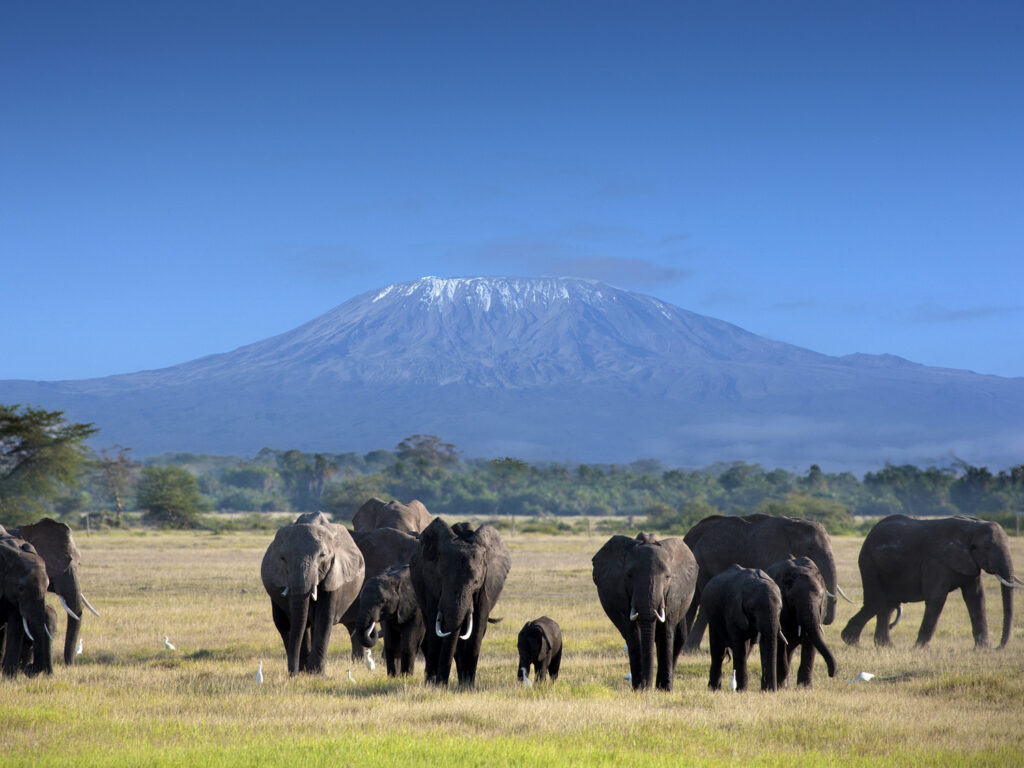
Amboseli isn’t just a wildlife sanctuary; it’s an iconic canvas where massive tuskers roam beneath the towering, snow-capped peak of Mount Kilimanjaro. Covering nearly 400 square kilometers of dusty, open plains and vibrant, spring-fed swamps, this legendary park brings you face-to-face with Africa's gentle giants. How you choose to experience this raw landscape completely shapes your journey. Whether you're tracking lion prides on a classic 4x4 game drive, feeling the earth beneath your boots on a guided bush walk with Maasai warriors, or taking in sweeping 360-degree panoramas from Observation Hill, every angle reveals a whole new side of the wild. Ready to explore? Here is how to make the absolute most of your Amboseli adventure
Popular Amboseli safari tour packages
2-days-best-amboseli-safari-in-kenya
3-days-best-amboseli-tour-package
4-days-luxury-amboseli-national-park-from-nairobi
5-days-best-of-kenya-wildlife-safari-to-masai-mara-lake-nakuru-and-amboseli-national-park
5-days-amboseli-tsavo-west-and-tsavo-east-kenya-wildlife-safari-tour
5-days-best-of-amboseli-tsavo-and-mombasa-beach-holidays
7-days-amboseli-kenya-and-serengeti-fly-in-tanzania-safari
4x4 Game Drives (Morning, Full-Day, and Night)
Game drives in a heavy-duty 4x4 Toyota Land Cruiser are the primary way to explore Amboseli National Park’s 392 square kilometers of open savannah and dusty plains. Featuring open pop-up roofs, these custom safari vehicles give photographers and sightseers a 360-degree, standing vantage point. Early morning game drives typically depart camp at dawn around 6:00 AM, capturing crisp light before the heat creates haze over the iconic, snow-capped backdrop of Mount Kilimanjaro. This is also when big cats—like lions and cheetahs—are actively hunting along the margins of the Enkongo Narok and Ol Okenya swamps before retreating from the heat.
Full-day drives venture deeper across the dry Lake Amboseli basin, equipped with packed picnic lunches enjoyed at designated rest sites. You’ll regularly encounter large herds from the park's famous population of over 1,600 free-ranging African elephants, including legendary "Super Tuskers" bearing massive ivory. While night game drives are strictly prohibited inside the main Kenya Wildlife Service (KWS) reserve to safeguard resting wildlife, booking a stay in adjacent private conservancies—such as Selenkay or Kimana—allows you to head out after dark. Guided by powerful red spotlights, night drives reveal elusive nocturnal species, including leopards, servals, genets, and bat-eared foxes.
2. Guided Walking Safaris
Taking to the bush on foot offers a grounded, sensory perspective of the African wilderness that is completely lost from inside a vehicle. Because foot traffic is restricted inside the core national park for safety, walking safaris take place in private group ranches and conservancies surrounding Amboseli, such as Selenkay. These intimate, 2-to-3-hour morning excursions are led jointly by an armed KWS ranger and an expert local Maasai guide who has spent a lifetime decoding the signals of the bush.
Walking at a deliberate, quiet pace sharpens every sense. Your Maasai tracker will guide you through reading fresh animal tracks in the fine soil—distinguishing between the deep, heavy pads of a lion and the swift prints of a spotted hyena. You'll inspect fresh elephant dung to learn about their seasonal diet, observe the complex social structures inside sprawling termite mounds, and discover how local trees—like the umbrella acacia and tooth-brush bush (Salvadora persica)—provide traditional medicine. Walking alongside native wildlife while learning age-old bushcraft directly from Maasai elders turns passive game viewing into an active, deeply educational immersion.
3. Observation Hill Hikes
Rising dramatically out of the flat, western section of the park, Observation Hill (Normatior in the local Maa language) offers the only designated location in Amboseli where visitors can safely step out of their vehicles and stretch their legs. A short, well-maintained stone staircase leads you up the pyramid-shaped volcanic hill to an elevated lookout point topped with a shaded wooden canopy.
Once at the summit, you are rewarded with a breathtaking, 360-degree panoramic view across the entire ecosystem. Looking east and south, you’ll watch massive elephant herds, hippos, and buffaloes wading through the lush, emerald-green reeds of the permanent Enkongo Narok swamp, fed continuously by underground meltwater from Kilimanjaro. Looking west, the stark, shimmering white expanse of the dry Lake Amboseli bed stretches toward the horizon. It is a premier spot for birdwatchers equipped with binoculars to scan for some of the park’s 400+ avian species, including pelicans, crowned cranes, and flamingos. Spending an hour at the summit puts the immense scale of the Amboseli ecosystem into clear, stunning context.
4. Cultural Village Visits
A visit to a traditional Maasai Manyatta (homestead) provides an authentic cultural grounding to your wildlife safari, highlighting the human side of the Amboseli landscape. Located just beyond the park boundaries in surrounding community group ranches, these traditional villages are built in circular layouts and protected by dense, thorny acacia fences (bomas) to keep livestock safe from predators at night.
Your visit begins with a high-energy welcome performance featuring traditional singing and the Adumu—the iconic jumping dance performed by young Maasai warriors (Morans). A local host then guides you inside a mud-and-thatch home (nkaji), constructed entirely by Maasai women using earth, wood, and thatch. Sitting inside, you’ll engage in open conversations about their semi-nomadic pastoralist lifestyle, cattle-herding heritage, and how the community works alongside conservation groups to protect roaming wildlife. Village visits generally last 1 to 2 hours, with entry fees paid directly to community leaders to fund local clean water projects, healthcare, and schools. Before leaving, you can browse handmade beadwork and crafts made by local women artisans.
What makes 4x4 Land Cruisers ideal for an Amboseli Kenya wildlife safari?
Navigating Amboseli National Park’s 392 square kilometers of dusty terrain requires a heavy-duty vehicle designed for unpredictable wilderness conditions. Heavy-duty 4x4 Toyota Land Cruisers feature custom pop-up roof hatches that open fully, providing photographers and sightseers with an elevated, 360-degree, standing view. This open-top design is crucial for capturing unobstructed photos of giant elephant herds grazing against the magnificent backdrop of Mount Kilimanjaro without glass or vehicle frames blocking your shot.
A 4x4 vehicle is also essential for tackling Amboseli's contrasting landscapes. During dry seasons, the vehicle glides smoothly across the fine volcanic dust of the Lake Amboseli basin. When seasonal rains turn low-lying tracks near the Enkongo Narok swamp into thick mud, high ground clearance and four-wheel drive keep your safari moving safely. Equipped with dual spare tires, long-range fuel tanks, and two-way radios for guides to coordinate animal sightings, a 4x4 Land Cruiser ensures you can track lions, cheetahs, and plains game comfortably across every corner of the park on your Kenya wildlife safari.
How early do morning game drives start on Amboseli Kenya wildlife safari?
Morning game drives on an Amboseli Kenya wildlife safari typically begin right at first light around 6:00 AM, as the Kenya Wildlife Service (KWS) gates open. Departing camp early is key because dawn provides the highest probability of seeing Mount Kilimanjaro clear of cloud cover. As the sun rises, heat transforms snowmelt from the peak into heavy clouds, making early morning the prime window for photographing elephant families framed against Africa’s highest mountain.
The crisp morning air—often hovering around  (
( )—also aligns with peak predator activity. Lions and cheetahs take advantage of cool temperatures to hunt along swamp edges before hiding from the equatorial sun. As your 4x4 moves across the savannah, you’ll catch hyenas returning to their dens and large tuskers marching out from acacia thickets toward permanent marshes. Wrapping up in a light jacket or fleece blanket provided by your guide makes the brisk, early start completely comfortable, rewarding early risers with pristine light, active wildlife, and unbeatable mountain views.
Are night game drives allowed inside Amboseli on Kenya wildlife safari?
If you are exploring strictly within the official boundaries of Amboseli National Park, night game drives are prohibited by KWS regulations to protect resting animals from vehicle lights and stress. However, you can experience the savannah after dark by staying in private conservancies bordering the park, such as the 60-square-kilometer Selenkay Conservation Area or Kimana Conservancy.
Stepping into the bush after the sun dips below the horizon unveils an entirely different layer of your Kenya wildlife safari. Accompanied by a professional driver-guide and a local Maasai tracker operating a specialized red-filtered spotlight, you’ll scan the brush for nocturnal species that sleep through the heat of the day. Night drives offer rare opportunities to spot elusive predators like leopards, servals, genets, and civets, alongside unusual creatures like bat-eared foxes and white-tailed mongooses. Hearing the distant roar of a lion or the eerie call of a spotted hyena under a star-filled sky makes a night drive in a private conservancy an unforgettable addition to your journey.
Why is Observation Hill a highlight on Amboseli Kenya wildlife safari?
Observation Hill, known locally in the Maa language as Normatior, is the only location in Amboseli National Park where visitors can safely step out of their vehicles and explore on foot. Formed by ancient volcanic activity connected to Mount Kilimanjaro, this pyramid-shaped hill features a well-maintained stone staircase with roughly 100 steps leading up to an elevated wooden viewing shelter at the summit.
Reaching the top rewards you with a breathtaking, 360-degree panoramic view across the entire ecosystem. Looking east, you'll gaze down upon the emerald-green reeds of the Enkongo Narok and Ol Okenya swamps, where massive elephant herds, hippos, and Cape buffaloes wade through permanent waters fed by Kilimanjaro's underground springs. Looking west, the stark, white expanse of the dry Lake Amboseli stretches toward the horizon. It is an incredible vantage point for birdwatchers equipped with binoculars to spot some of the park's 400+ avian species—including pelicans, crowned cranes, and flamingos—making it an essential stop on any Kenya wildlife safari.
What can you see during guided walking safaris in Amboseli?
Guided walking safaris offer a grounded, sensory immersion into the wild that you simply cannot experience from inside a vehicle. Because walking is restricted inside the core national park for safety, these 2-to-3-hour morning excursions take place in neighboring private conservancies like Selenkay, led jointly by an armed ranger and a local Maasai tracker.
Stepping onto the earth sharpens every sense. Without the barrier of a vehicle, your Maasai guide will teach you how to decode subtle signs of the bush: distinguishing fresh lion tracks pressed into damp soil from hyena prints, identifying fresh elephant dung to determine their seasonal diet, and interpreting the alarm calls of impalas. You’ll discover how native plants like the toothbrush bush (Salvadora persica) are used in traditional medicine and inspect the engineering of sprawling termite mounds. Walking alongside plains game while learning age-old bushcraft directly from Maasai warriors turns passive game viewing into an active, deeply educational highlight of your Kenya wildlife safari.
What makes Amboseli famous for elephants on Kenya wildlife safari?
Amboseli National Park is world-renowned as one of the best places in Africa to observe free-ranging African elephants up close. Monitored continuously for over 50 years by researchers at the Amboseli Elephant Research Project, the ecosystem is home to a thriving population of over 2,000 individual elephants. Because they have been protected from poaching for decades, these elephants are remarkably calm around vehicles, allowing for extraordinarily close and peaceful encounters on your Kenya wildlife safari.
The park is especially famous for hosting some of Africa’s last remaining "Super Tuskers"—rare, mature bulls carrying ivory tusks so long they nearly touch the ground. Every day, massive family herds led by experienced matronly females march along well-worn paths from dusty woodland thickets toward the central swamps to drink, bathe, and socialize. Watching tiny calves play in the mud while giant matriarchs quietly graze on marsh grasses—all framed by Mount Kilimanjaro—is widely considered one of the most iconic wildlife spectacles in East Africa.
What should you expect during a Maasai village visit?
Visiting a traditional Maasai Manyatta (homestead) in the community group ranches surrounding Amboseli adds a rich human dimension to your Kenya wildlife safari. These circular villages are enclosed by thick, thorny acacia fences (bomas) designed to keep livestock safe from lions and spotted hyenas at night.
Upon arrival, villagers welcome you with high-energy singing and the Adumu—the famous jumping dance performed by young Maasai warriors (Morans). A host then guides you inside a mud-and-thatch home (nkaji), constructed by Maasai women using earth, wood, and thatch. Inside, you'll engage in open discussions about their semi-nomadic pastoralist lifestyle, cattle-herding heritage, and how the community works alongside wildlife organizations to protect roaming animals. Visits generally last 1 to 2 hours, with entry fees paid directly to village elders to fund clean water projects, healthcare, and local schools. Before leaving, you can browse handmade beadwork and crafts crafted by local women artisans, providing a direct way to support host communities.
How long is the drive from Nairobi to Amboseli?
Traveling overland from central Nairobi to Amboseli National Park covers approximately 220 to 240 kilometers (136 to 150 miles) and takes about 4 to 5 hours by road. The route heads south along the paved A104 highway toward the Namanga border town, taking you through changing rural landscapes, small market towns, and open plains where Maasai herdsmen tend cattle along the roadside.
Depending on your entry gate, your driver will turn off the highway onto unpaved dirt (murram) roads to reach gates like Meshanani or Kimana. While the final stretch can be dusty and bumpy, traveling overland provides a localized view of Kenya's transitioning environment. Alternatively, travelers short on time can choose a quick 35-minute domestic bush flight from Nairobi’s Wilson Airport (WIL) directly to the Amboseli Airstrip. However, taking the scenic highway route is a budget-friendly and rewarding start to a Kenya wildlife safari, offering authentic glimpses of local life before you reach the park gates.
What bird species can you spot on Amboseli Kenya wildlife safari?
While big mammals draw the most attention, Amboseli National Park is a world-class birding destination, recognized as one of Kenya’s Important Bird Areas (IBAs). The park's diverse habitats—spanning dry lake basins, open savannahs, acacia woodlands, and permanent freshwater swamps—host over 400 distinct avian species, including more than 40 species of raptors.
A day out with a binoculars-equipped guide on your Kenya wildlife safari yields incredible birding sightings. Near the Sinet Delta and marshlands, you’ll spot giant water birds like Great White Pelicans, African Fish Eagles, Grey Crowned Cranes, and Saddle-billed Storks wading through shallow waters. In the acacia scrub, keep an eye out for colourful Lilac-breasted Rollers, Superb Starlings, and Yellow-necked Spurfowls. During the wet season between November and April, migratory birds from Europe and North Africa arrive in large numbers, transforming the seasonal lakes into vibrant hubs filled with flamingos and shorebirds.
How do private conservancies complement an Amboseli Kenya wildlife safari?
Including a private conservancy—such as Selenkay or Kimana—alongside the main national park elevates your Kenya wildlife safari into an exclusive, low-density wilderness experience. Conservancies are protected wildlife corridors leased directly from local Maasai landowners, creating a successful conservation model where tourism revenues directly support local families.
The primary advantage for visitors is flexibility and privacy. While the core national park restricts vehicles to established dirt tracks and daytime operating hours, private conservancies allow off-road driving to follow major predator sightings responsibly. They also limit the number of tourist vehicles permitted at any single animal sighting, ensuring you never feel crowded. Best of all, conservancies unlock special activities that aren't allowed inside the national park, including nighttime spotlight game drives, quiet bush walks on foot, and private wilderness dining. Balancing game drives in the national park with stays in a private conservancy offers the ideal mix of iconic views and authentic, crowd-free exploration.
Booking Kenya wildlife safaris in Amboseli with us Roads of Adventure safaris
Ready to bring your dream trip to life? Booking your trip with Roads of Adventure Safaris makes crafting the perfect itinerary effortless. Whether you want a quick getaway or a comprehensive multi-park circuit, their team builds custom packages tailored to your exact pace and style.
Pair iconic stops—like combining Amboseli with the Masai Mara and Lake Naivasha on a popular 7-day circuit—with handpicked stays at premier properties like Ol Tukai Lodge Amboseli. Every package includes private 4x4 Land Cruisers with pop-up roofs, all park entrance fees, and expert local guides, guaranteeing a seamless, stress-free journey from start to finish.
