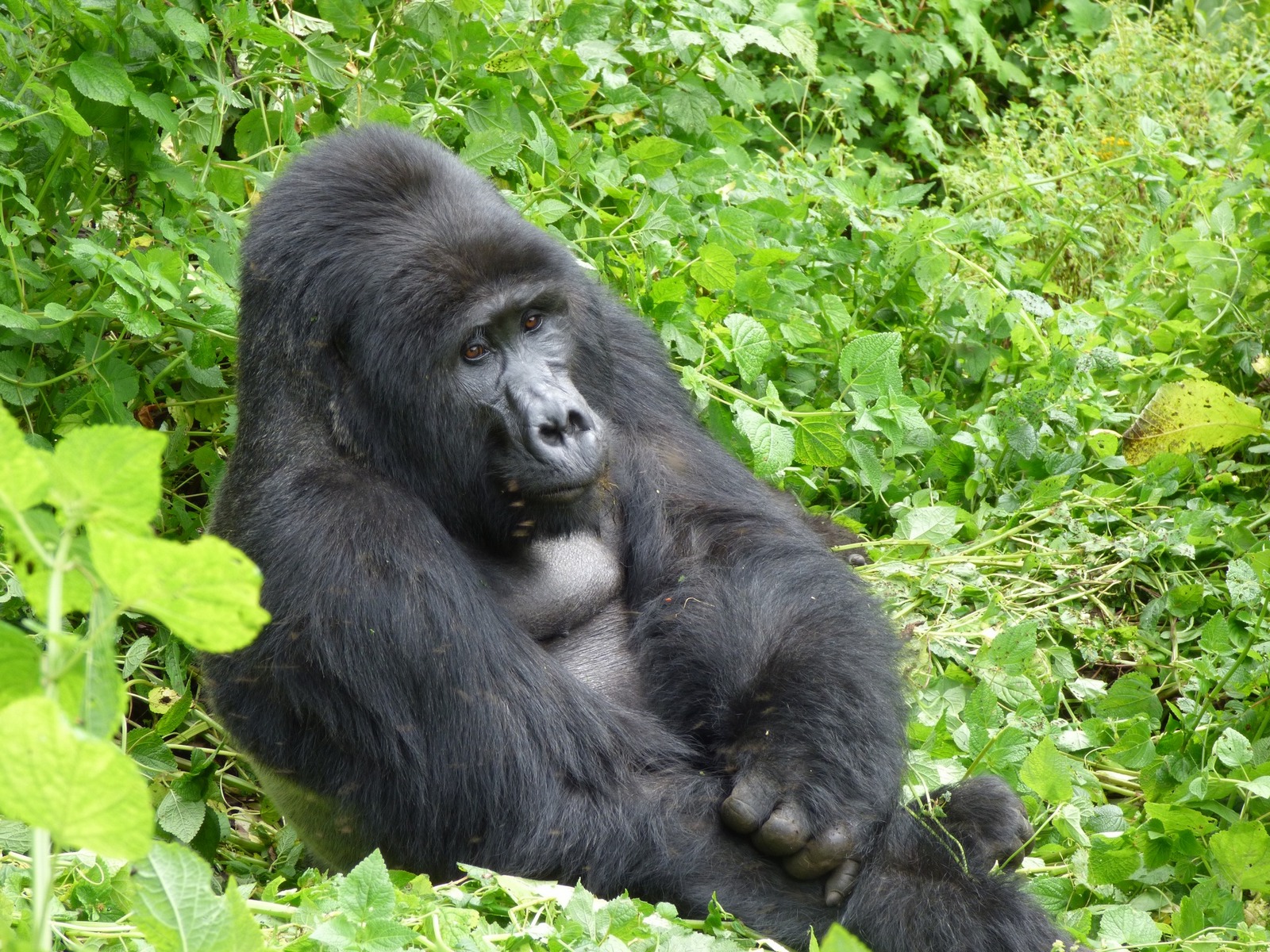
Securing a last-minute gorilla trekking permit in Uganda requires immediate action through a registered local tour operator who can purchase it directly from the Uganda Wildlife Authority (UWA). Permits cost ($800) for foreign non-residents and must be paid rapidly to lock in the remaining availability
3-days-fly-in-uganda-gorilla-habituation-africa-safari-tour-package
2-days-best-gorilla-trekking-safari-tour-via-kigali-to-bwindi-impenetrable-forest-park
3-days-gorilla-trekking-safari-and-lake-bunyonyi-relaxation-itinerary
3-days-affordable-uganda-budget-gorilla-trekking-via-kigali
4-days-ultimate-gorilla-and-uganda-safari-and-chimpanzee-tracking
4-days-ultimate-gorilla-and-uganda-safari-and-chimpanzee-tracking
4-days-uganda-gorilla-safari-with-golden-monkey-tracking-from-rwanda
4-days-luxury-gorilla-trekking-safari-in-bwindi-fly-in-all-inclusive-tour
5-days-gorilla-and-uganda-safari-and-golden-monkey-trekking-tour-from-kigali
5-days-un-matched-uganda-gorilla-safari-and-chimpanzee-tour-itinerary
6-days-gorilla-and-uganda-safari-to-see-big-five
7-day-ultimate-uganda-primate-safari-chimpanzees-and-game-drives
Why Use a Local Tour Operator like Roads of Adventure safaris
Direct Access
The digital infrastructure for booking primate permits in East Africa often lags behind the fast-paced demands of spontaneous travelers. While a traveler sitting at home might refresh a public-facing website only to see a "sold out" notice, that screen rarely reflects the true, fluid reality of park registries. Cancelations occur constantly, and refunded permits are fed back into the system manually.
Local operators bypass the sluggish online queue completely by leveraging physical proximity. Agency staff frequently visit the Uganda Wildlife Authority (UWA) headquarters in Kampala in person. By walking directly up to the reservation desks, they can check real-time database updates, speak face-to-face with booking clerks, and flag immediate cancelations the second they hit the registry. Once an opening is spotted, they can pay for and print the physical permit vouchers instantly. On a tight timeline, having a representative physically standing at the source of authority transforms a low-probability online gamble into a secured, tangible booking within minutes.
Logistics
Securing a last-minute permit is only half the battle; it becomes completely useless if you cannot physically reach the trailhead in time for the mandatory morning safety briefing. Uganda’s premier mountain gorilla habitats are tucked away in the remote southwestern corner of the country. Reaching Bwindi Impenetrable National Park or Mgahinga Gorilla National Park from the main gateway at Entebbe requires navigating an intensive 9-to-10-hour drive across winding roads, or coordinating a highly specific 1-hour domestic scheduled flight.
A local tour operator provides immense value by instantly bundling your emergency permit with a seamless logistical framework. Within hours of your booking, they can coordinate an experienced driver-guide, prep a specialized 4x4 safari vehicle, align internal flight availability, and map out routes that maximize safety and speed. Furthermore, because Bwindi is divided into four distinct trekking sectors miles apart, your accommodation must match your exact permit location. Operators use their local lodging networks to instantly secure a room near your assigned sector gate, ensuring you don't wake up at 4:00 AM to drive across treacherous mountain switchbacks.
Alternative Slots
When standard gorilla trekking permits—which strictly cap group sizes at eight visitors per habituated family for a single hour of interaction—are completely exhausted, an independent traveler hits a wall. However, a knowledgeable local agent knows how to dig deeper into the park's alternative allocation registries, specifically targeting Gorilla Habituation Permits.
The Gorilla Habituation Experience is a specialized program managed by UWA that allows visitors to accompany researchers and trackers as they train wild gorilla families to tolerate human presence. Because these permits carry a higher price point of $1,500 USD, they are less frequented by mass-market tour groups and occasionally have remaining slots when standard permits are entirely sold out.
Opting for this alternative completely alters the dynamic of your safari. Instead of the standard one-hour viewing limit, a habituation permit grants you a profound 4 hours in the presence of the gorillas. You get to watch the complex social dynamics unfold over half a day, observing how researchers read body language and vocalizations. A local operator can quickly pivot your inquiry to these premium slots, salvaging an otherwise impossible itinerary.
Steps to Book Today
Choose an Agency
When you need to secure a high-stakes, time-sensitive permit today, you cannot afford to gamble on an unverified provider. The international travel space is filled with digital middlemen who market safaris online but outsource operations to third parties, causing critical delays in communication. To find an authentic, on-the-ground team, you should head directly to highly trusted industry review platforms like SafariBookings or TripAdvisor.
Look specifically for highly rated, local Ugandan tour operators who maintain physical offices in Kampala or Entebbe. Pay close attention to recent reviews that explicitly mention "responsiveness," "last-minute coordination," or "communication." An operator with an established reputation will have the financial liquidity to purchase your permit immediately and the deep-seated network connections required to fix logistical roadblocks on short notice. Reading the experiences of recent travelers provides the social proof needed to hand over payment details with confidence.
Be Flexible
The biggest mistake a last-minute traveler can make is arriving with an unyielding, rigid plan. Bwindi Impenetrable National Park is not a single, centralized destination; it is managed across four distinct, widely separated sectors: Buhoma, Ruhija, Rushaga, and Nkuringo. Each sector has its own dedicated gorilla families, distinct terrain types, and independent permit registries.
To maximize your chances of success, you must explicitly tell your operator that you are open to trekking in any available sector. If you demand to stay only in Buhoma (the most famous and heavily booked sector), you will likely leave empty-handed. However, if you allow your agent to scan the registries for Rushaga or Nkuringo in the south, or Ruhija in the east, your statistical odd of finding an open slot multiplies by four. This flexibility requires you to trust your operator’s ability to adjust your lodging and transport routes on the fly, but it ensures you actually get to see the primates.
Expedite Payment
In a high-stakes, last-minute booking scenario, a permit is never truly yours until it is paid for in full; the UWA registry will not hold a slot on a promise. The final hurdle is moving funds instantly across borders, and traditional international wire transfers are completely out of the question because they can take three to five business days to clear into a Ugandan bank account. By the time the funds show up, another agency will have snapped up the permit.
To secure your spot before another traveler grabs it, you must use expedited payment channels. Reliable local operators will provide a secure, direct online credit card payment link (using trusted platforms like Pesapal or DPO). While these digital payment gateways often carry a small surcharge (typically 3% to 5%), the transaction clears instantly, allowing the operator's Kampala team to secure the permit immediately. Alternatively, if you are already on the ground in East Africa, presenting clean, un-torn US Dollar bills printed after 2013 allows the operator to deposit cash directly at the central desk without delay.
1. Why is it so challenging to secure a Uganda gorilla permit at the last minute?
The primary obstacle comes down to strict conservation caps matching high global demand. To protect mountain gorillas from human stress and disease transmission, UWA limits access to a maximum of eight visitors per habituated family daily for a single hour. Bwindi Impenetrable National Park and Mgahinga Gorilla National Park have a finite number of habituated groups, meaning total daily permits are strictly limited.
During peak travel seasons, these slots sell out up to six months in advance. When you attempt a last-minute booking, you are not looking at open inventory; you are hunting for rare anomalies—such as emergency cancellations, unutilized agent allocations, or travelers rescheduling due to missed flights. Navigating this fast-shifting pool independently is incredibly difficult because public databases do not update instantly.
2. How do local operators like Roads of Adventure Safaris find "invisible" permit openings?
Established local tour operators have an invaluable advantage because they maintain physical proximity and direct, daily relationships with the UWA reservation headquarters in Kampala. When an international group cancels its tour at the eleventh hour, those permits are returned to the system. Local operators are alerted to these openings instantly via internal networks or direct messaging groups shared with reservation clerks.
Furthermore, tour operators often purchase blocks of permits months in advance for their own scheduled safari circuits. If a particular tour doesn't sell out completely, that operator will hold a surplus permit in their internal company inventory. Because these permits are held privately, they never appear on public registries, making local agencies the best channel for uncovering hidden availability.
3. What is the current price of a last-minute Uganda gorilla permit, and are there discounts?
A standard mountain gorilla trekking permit in Uganda costs $800 USD for international non-residents, $700 USD for foreign residents with valid work permits, and 250,000 UGX for East African citizens. It is a common misconception that last-minute permits are heavily discounted by the government to fill empty slots; UWA maintains a completely fixed pricing structure regardless of how close you are to the trekking date.
The price remains exactly the same whether you book a year in advance or walk into the office on the morning of the trek. The only scenario where you might secure a lower rate is if a desperate tour operator is trying to cut their losses on a pre-purchased internal permit that they cannot sell, occasionally offering it slightly below cost to avoid losing the entire investment.
4. How does Bwindi’s sector-based geography impact a last-minute permit booking?
Bwindi Impenetrable National Park is not a single, cohesive destination that you can navigate from one central gate; it is divided into four distinct, widely separated sectors: Buhoma, Ruhija, Rushaga, and Nkuringo. Each sector has its own independent permit registry, dedicated gorilla families, and park entry gates located hours apart over rough mountain roads.
When booking at the last minute, you cannot afford to be picky about your sector. You must buy whatever permit is available across the entire park ecosystem. However, this creates an immediate logistical domino effect: your lodging and transport must be instantly aligned with your specific assigned sector. Buying a permit for the northern Buhoma sector while booking a lodge in the southern Rushaga sector would require an impossible 4-hour mountain drive at 4:00 AM on the day of the trek.
5. Why is maximum sector flexibility your greatest asset during a last-minute search?
If you tell your tour operator that you will only accept a permit in Buhoma—the most famous and easily accessible sector—your chances of a successful last-minute booking drop drastically. Buhoma’s proximity to standard road routes means its registry fills up first and remains locked down.
By explicitly stating that you are highly flexible and willing to trek in any sector—including the steep ridges of Nkuringo, the high-altitude forests of Ruhija, or the southern valleys of Rushaga—you multiply your statistical odds of finding a cancellation by four. This flexibility requires you to completely hand over control of your daily itinerary and lodging choices to your local guide, but it ensures you actually get your hands on a physical permit voucher.
6. Can I pivot to Mgahinga Gorilla National Park if Bwindi is completely sold out?
Absolutely. Mgahinga Gorilla National Park is Uganda’s smallest national park, located in the Virunga volcanic chain, and it serves as the ultimate safety net for last-minute travelers. Mgahinga features a single habituated gorilla family known as the Nyakagezi group. Historically, this group was famous for wandering across borders into Rwanda and the DRC, which made pre-booking their permits highly risky.
Today, the Nyakagezi family has permanently settled back into Ugandan territory, and their tracking success rate is practically 100%. Because mass-market tour companies heavily favor Bwindi due to its larger volume, Mgahinga’s permit pool is frequently overlooked, meaning UWA registers often have last-minute openings available for this spectacular volcanic bamboo forest.
7. How does the Gorilla Habituation Experience serve as a premium last-minute backup?
When standard gorilla trekking permits—which limit you to one hour with the primates—are completely exhausted, a savvy agent will immediately check the availability of Gorilla Habituation Experience permits. This specialized program takes place exclusively in the southern Rushaga sector of Bwindi and allows visitors to accompany researchers as they train wild gorilla groups to tolerate human presence.
A habituation permit costs $1,500 USD. Because of this premium price point, these permits are rarely bought in bulk by standard tour companies and often sit unallocated right up to the final week. Choosing this route completely elevates your safari; instead of the standard one-hour limit, you are granted a profound 4 hours in the presence of the gorillas, watching complex social dynamics unfold.
8. What payment methods must be used to secure a last-minute permit instantly?
In an emergency booking scenario, a permit is never guaranteed until it is paid for in full; UWA clerks will not hold an open slot on a verbal promise. The biggest operational pitfall for spontaneous travelers is trying to use traditional international bank wire transfers. These transactions routinely take three to five business days to clear into a Ugandan corporate account, and by the time the funds arrive, the permit will have been snatched up by a local competitor.
To secure a spot today, you must use instant payment channels. You should expect your local operator to send a secure, direct digital payment link (via Pesapal or DPO) to charge a credit card immediately. While these platforms carry a standard 3% to 5% processing surcharge, the payment reflects instantly, allowing the Kampala team to print your physical permit voucher within minutes.
9. What are the grueling transport logistics of a spontaneous road safari to Bwindi?
A last-minute permit is completely useless if you cannot physically arrive at the park gate by the mandatory 7:30 AM morning briefing. Bwindi and Mgahinga are tucked away in the remote southwestern corner of Uganda. Driving from the international gateway at Entebbe or Kampala takes an intensive 9 to 10 hours across winding tarmacs and rough, unpaved mountain switchbacks.
If you clear a last-minute permit today for a trek tomorrow morning, you face an immediate logistical emergency. A private 4x4 vehicle with a relief driver must be deployed instantly to drive through the night, or you must quickly reorganize your route to fly into the region. Spontaneous road travel requires extreme physical stamina and an experienced driver who knows how to navigate rural roads safely in the dark.
10. How can domestic flight connections salvage a time-sensitive, last-minute itinerary?
If your permit clears at the very last minute and you cannot afford to waste a full day on a 10-hour road drive, you must immediately book a domestic flight. Local wilderness airlines, such as AeroLink Uganda, operate daily scheduled flights from Entebbe International Airport to airstrips surrounding the gorilla parks.
- Flying into Kihihi Airstrip services the northern sectors of Bwindi (Buhoma and Ruhija).
- Flying into Kisoro Airstrip services the southern sectors (Rushaga and Nkuringo) and Mgahinga.
These flights take just 1 to 1.5 hours, instantly transforming a grueling all-day journey into a smooth, scenic aerial transfer over the terraced hills of Kigezi. An operator can coordinate an airstrip pickup where a 4x4 vehicle meets you to transfer you straight to your lodge, saving vital energy for the trek.
11. Why is visiting during the low/wet seasons the easiest way to book last-minute?
If your spontaneous travel falls during Uganda’s low or wet seasons—specifically March to May or October to November—your search for a last-minute permit becomes exponentially easier. During these rainy months, international tourism drops significantly, and the pressure on UWA permit registries completely eases.
Instead of dealing with waitlists, you can frequently walk directly into the UWA offices or contact an agent a few days prior and find plenty of open slots across all sectors. Furthermore, the wet season offers hidden safari perks: the forest becomes incredibly lush, and wild fruits ripen on the lower slopes, which often coaxes the gorilla families down to lower altitudes, making your physical hike significantly shorter and easier.
12. How do physical fitness demands vary across Bwindi’s sectors on short notice?
Because a last-minute search forces you to accept whatever sector is available, you must be physically prepared for varying terrain challenges. The northern Buhoma sector sits at a lower altitude and features relatively gentle slopes, making it the least physically demanding area to track. Conversely, the southern Nkuringo sector starts on a high ridge at over 7,000 feet, requiring a steep, strenuous vertical climb at the end of your trek when you are already exhausted.
During the morning briefing, your guide can communicate your physical limitations to the park rangers. Rangers thoughtfully divide visitors into groups based on fitness levels, assigning elderly or less agile hikers to gorilla families currently located closer to the park boundary, while sending avid hikers deep into the rugged interior.
13. What strict health regulations could invalidate your permit at the park gate?
Before investing funds into a non-refundable last-minute permit, you must conduct an honest self-assessment of your health. Mountain gorillas share approximately 98.4% of our DNA and are highly susceptible to human airborne pathogens. Because they lack immunity to common human illnesses, a simple virus can devastate an entire wild family.
When you arrive at the park headquarters for your morning briefing, park wardens and rangers monitor all guests closely. If you display obvious symptoms of a contagious illness—such as a persistent cough, heavy cold, flu, or an active stomach bug—the park authorities reserve the absolute right to revoke your tracking privileges on the spot. Protecting the primates is the park’s absolute priority, and showing up sick will result in being turned away.
14. How should you pack efficiently for a spontaneous gorilla trekking day?
Spontaneous travel means you might not have spent weeks compiling a meticulous packing list, but missing essential gear will ruin your day on the mountain. To trek comfortably, you must source a few non-negotiable items before heading into the forest.
First, you need sturdy, waterproof hiking boots with deep traction; standard running sneakers will slide dangerously on muddy volcanic slopes. Second, you must wear long trousers and a long-sleeved shirt to protect your skin from stinging nettles and sharp branches. Finally, pack a lightweight waterproof rain jacket, a pair of thick gardening gloves to pull yourself up via vines, and long socks to tuck your pants into, which acts as a barrier against biting safari ants.
15. Why should you always hire a local porter at the trailhead?
When your trek begins at the forest boundary, you will be met by local porters from the surrounding communities offering their carrying services for a standard fee of $20 USD (plus an optional tip). You should always hire a porter, regardless of your fitness level or the weight of your pack.
Practically, a porter carries your heavy camera gear, rain gear, and lunch, allowing you to walk completely unburdened and focus entirely on your balance. More importantly, porters provide physical support, offering a steady hand to guide you across slippery logs or pull you up steep mud banks. Socio-economically, hiring a porter is a direct investment in local conservation. Many porters are former poachers or rely on this income to feed their families, ensuring the local community directly benefits from keeping the gorillas alive.
16. What are the essential behavioral rules for your hour with the gorillas?
Once trackers locate the mountain gorilla family, your viewing time is strictly limited to 60 minutes. To ensure safety and respect for the animals, you must follow the guide’s instructions perfectly. You must maintain a minimum distance of 23 feet (7 meters) from the gorillas at all times, though curious infants may occasionally approach closer on their own.
Keep your voice to a low whisper and avoid making sudden, erratic movements or pointing aggressively. Flash photography is strictly forbidden under all circumstances, as sudden bursts of light can startle a silverback and provoke a defensive charge. If you feel a cough or sneeze coming on, you must turn your head completely away and cover your mouth to minimize the risk of disease transmission.
17. How can you optimize camera settings quickly for tricky rainforest lighting?
The thick, multi-layered canopy of Bwindi creates incredibly challenging photographic conditions, characterized by low light, deep shadows, and sudden patches of bright contrast. Because your time is capped at an hour, you do not want to waste moments adjusting menus.
- Set your camera to a relatively high ISO (anywhere from 800 to 3200) to ensure your shutter speed stays fast enough (at least 1/250s) to eliminate blur from hand shake or moving animals.
- Use a versatile zoom lens, like a 24-70mm or 70-200mm, which allows you to frame wide family interactions or tight facial portraits without needing to change lenses in the dirt.
- Verify multiple times that your internal flash is completely disabled, and turn off all operational camera beeps to keep the forest silent.
18. What passport and visa entry rules must be met for an emergency trip?
An emergency permit is useless if you get blocked at immigration. To enter Uganda, your passport must be valid for at least six months beyond your date of arrival and contain at least one completely blank page. Uganda has transitioned entirely away from issuing physical visas upon arrival at Entebbe airport; you must apply for and receive an e-Visa online prior to boarding your international flight.
If you are planning a multi-country spontaneous itinerary—such as landing in Kigali, Rwanda, and driving across the land border into southern Uganda—you should apply for the East Africa Tourist Visa. This specialized $100 USD visa grants you 90 days of multiple-entry travel across Uganda, Rwanda, and Kenya, allowing you to cross borders seamlessly to follow a last-minute permit.
Booking Last minute gorilla trekking with us Roads of Adventure safaris
To book a last-minute gorilla trekking adventure with Roads of Adventure Safaris, you need to immediately contact their team to check real-time Uganda Wildlife Authority (UWA) permit availability in Bwindi or Mgahinga. A standard permit costs ($800) per person
