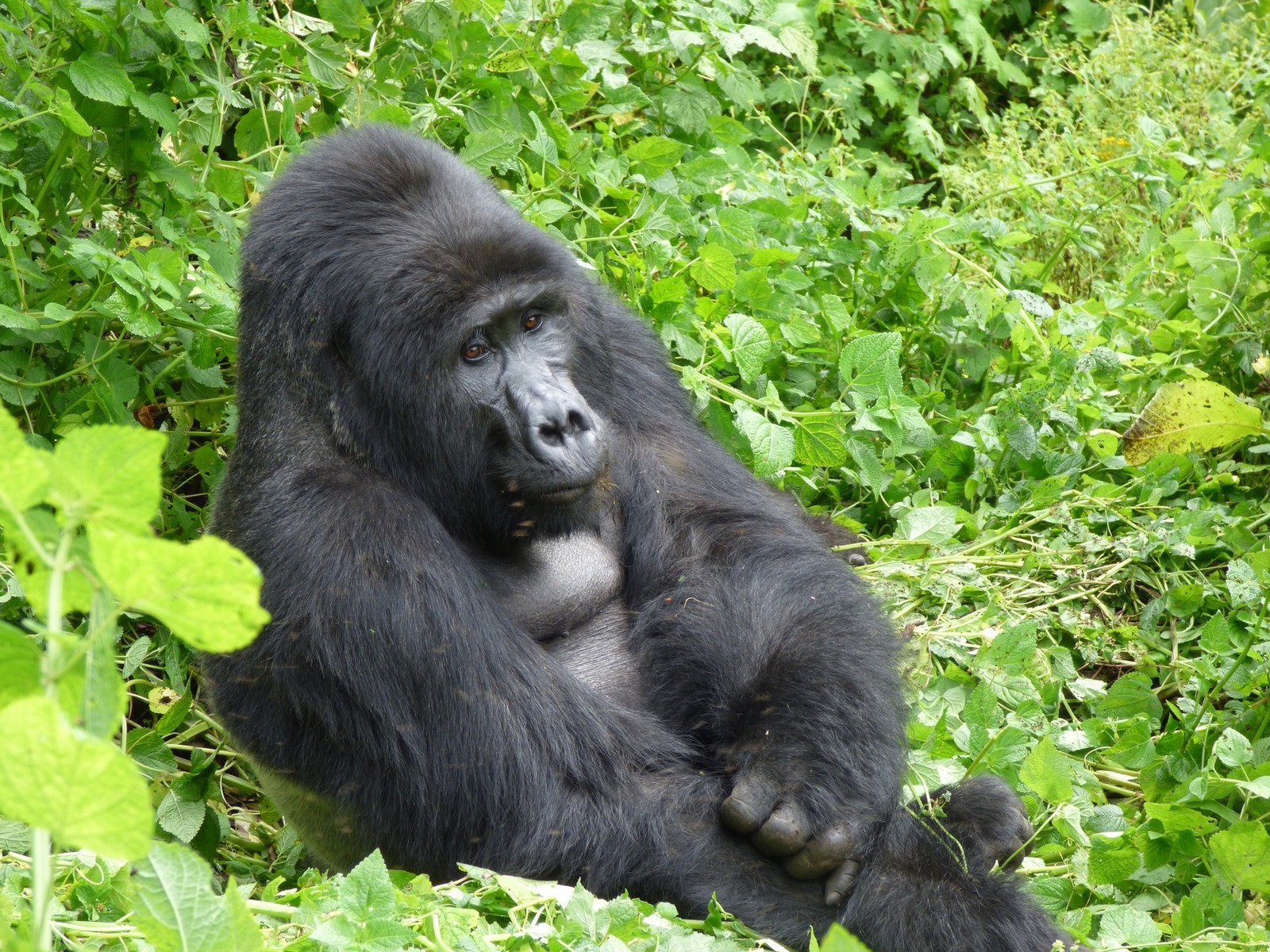
A 2-day Uganda gorilla trek from Kigali is the most time-efficient and cost-effective way to see mountain gorillas. You cross into Bwindi Impenetrable National Park or Mgahinga Gorilla National Park via the Katuna or Cyanika borders
2-days-best-gorilla-trekking-safari-tour-via-kigali-to-bwindi-impenetrable-forest-park
2-days-quick-escape-to-bwindi-impenetrable-to-trek-mountain-gorilla-from-kigali
Tour highlights for 2 Days Uganda gorilla trekking from Kigali
Kigali hotel pickup
Scenic border crossing
Bwindi forest arrival
Expert ranger briefing
Misty jungle trek
Mountain gorilla encounter
One unforgettable hour
Return to Kigali
Day by day 2 Days Uganda gorilla trekking from Kigali
Day 1: Kigali Pickup and Border Crossing to Bwindi
Your adventure begins early as your professional driver-guide picks you up from your hotel or the airport in Kigali. Take a brief, poignant tour of the Kigali Genocide Memorial to pay respects to the country’s history. Afterward, embark on a scenic 4 to 5-hour road trip through Rwanda’s famous rolling hills, widely known as the "Land of a Thousand Hills." You will cross the border into Uganda—typically using the Katuna or Cyanika border points—where the landscape shifts into the breathtaking Kigezi Highlands. You will arrive at your lodge near the edge of Bwindi Impenetrable National Park in the late afternoon. Take the evening to relax, enjoy a hot meal, and prepare physically and mentally for the demanding yet rewarding trek ahead. Ensure you have all your essential gear ready for an early start.
Day 2: Gorilla Trekking and Return to Kigali
You will wake up before dawn for an early breakfast before transferring to the designated Bwindi park headquarters for registration and a comprehensive pre-trekking briefing. Park rangers will assign you to a specific habituated gorilla family. The hike into the dense, misty jungle can take anywhere from 2 to 7 hours depending on the gorillas' movements. Once your group locates the gorillas, you will spend one unforgettable hour observing these incredible creatures as they forage, socialize, and care for their young. After your magical hour in their presence concludes, you will hike back to the base to receive your official gorilla trekking certificate. You will then meet your driver-guide for the return journey across the border, arriving back in Kigali in the evening to catch your departing flight or transfer to your hotel.
1. How can I secure a last-minute gorilla trekking permit for Uganda?
Securing a last-minute gorilla permit for Uganda when booking a two-day safari from Kigali requires immediate, decisive action. The Uganda Wildlife Authority issues a strictly limited number of permits daily to protect the endangered mountain gorillas, and these frequently sell out months in advance. However, last-minute spots often open up due to cancellations, tour operators releasing unsold inventory, or seasonal drops in demand. To lock down a permit within days of your intended travel date, your best and most reliable option is to contact a licensed local tour operator registered with the Association of Uganda Tour Operators. These agencies have direct access to the live booking system and often hold internal packages or have professional networks to track down floating permits. You must be prepared to pay the full permit fee immediately via electronic transfer or credit card, as permits cannot be reserved without full payment. Additionally, you need to provide a high-quality scanned copy of your passport right away, as the Uganda Wildlife Authority binds the permit directly to your passport details. Flexibility is absolutely paramount for last-minute success; you should be open to trekking in any of Bwindi Impenetrable National Park's four distinct sectors—Buhoma, Ruhija, Rushaga, or Nkuringo—or even Mgahinga Gorilla National Park. Your itinerary starts in Kigali because it is only a four-hour drive to the southern sectors of Bwindi, making Rushaga and Nkuringo your most practical and strategic targets for a last-minute booking. If a permit is available there, snap it up immediately, as delays of even a few hours will result in losing the opportunity to another traveler.
2. What are the passport and visa requirements for crossing the Rwanda-Uganda border?
Navigating the border crossing between Rwanda and Uganda is a core component of a two-day gorilla trekking itinerary starting from Kigali. Because you will be entering Rwanda, crossing into Uganda, and returning to Rwanda, traditional single-entry visas will complicate your journey and increase your overall travel expenses. The ultimate solution for this specific route is the East African Tourist Visa. This special joint visa costs one hundred dollars and allows multiple-entry access to Rwanda, Uganda, and Kenya for up to ninety days. You must apply for this visa through the immigration portal of the country you enter first. Since your trip begins at Kigali International Airport, you will apply through the Rwandan Electronic Visa Application System. When filling out the form, ensure you explicitly select the East African Tourist Visa option rather than the standard Rwandan tourist visa. Your passport must be valid for at least six months from your date of entry and contain at least two blank pages for stamps. On day one of your safari, your driver-guide will escort you to either the Katuna or Cyanika border post. At the border, you will clear Rwandan customs, walk across the neutral zone, and present your passport and visa approval at the Ugandan immigration desk. On day two, after your trek, you will repeat this process in reverse to re-enter Rwanda. It is also mandatory to carry a valid Yellow Fever vaccination certificate, as immigration officials at both borders frequently demand to see proof of immunization before granting entry.
3. Why is the route from Kigali to Bwindi preferred over Entebbe for a 2-day trip?
The two-day gorilla trekking itinerary is only logistically viable because it begins in Kigali, Rwanda, rather than Entebbe, Uganda. Geography is the primary reason for this preference. Bwindi Impenetrable National Park is located in southwestern Uganda, right along the border with Rwanda. Driving from Entebbe International Airport or Kampala to Bwindi is an grueling, exhausting journey that takes between eight and ten hours each way. Attempting a two-day trip from Entebbe would require you to spend nearly twenty hours in a vehicle, leaving virtually no time for the actual trek or adequate rest. In stark contrast, Kigali International Airport is located exceptionally close to the Ugandan border. The drive from Kigali to the southern sectors of Bwindi, such as Rushaga or Nkuringo, takes only four to five hours, including the time spent clearing immigration at the border. This significantly shorter driving distance completely transforms the dynamics of your trip. It minimizes travel fatigue, reduces your carbon footprint, saves on fuel costs, and ensures you arrive at your lodge on day one with plenty of daylight left to relax. Furthermore, the road from Kigali to the border is smoothly paved and incredibly scenic, offering beautiful views of Rwanda's rolling hills. By leveraging Kigali as your entry point, you can realistically compress a world-class wildlife bucket-list experience into a tight, highly efficient forty-eight-hour window without compromising your safety or physical well-being.
4. What physical fitness level is required for a last-minute Bwindi trek?
A last-minute gorilla trek in Bwindi Impenetrable National Park demands a reasonable to high level of physical fitness, a factor you must honestly assess before booking. Bwindi lives up to its name; the terrain consists of steep, muddy ridges, thick tangled undergrowth, and deep valleys with no marked walking trails. The trekking elevation ranges from one thousand three hundred to over two thousand four hundred meters above sea level. This high altitude makes the air noticeably thinner and causes hikers to tire much faster than usual. Because this is a last-minute booking, you will not have months to train on stair-climbers or go on long preparatory hikes. Therefore, you must rely on your current baseline stamina. The duration of the trek is entirely unpredictable; you might find your assigned gorilla family in two hours, or you might hike for up to seven hours through challenging wilderness. You will be walking on uneven ground, stepping over fallen logs, and pushing through dense vines. If you have chronic knee, ankle, or heart problems, this rapid itinerary can put severe strain on your body. To mitigate these physical challenges on short notice, you should communicate your fitness level openly to your guide during the morning briefing on day two. The park rangers can assign you to a gorilla family that is known to be closer to the park boundaries. Additionally, you should hire a local porter at the trailhead for a small fee. Porters are invaluable; they carry your heavy backpack and provide a stabilizing hand during steep climbs.
5. What essential gear should I pack for a short-notice gorilla safari?
When packing on short notice for a two-day gorilla safari from Kigali to Bwindi, you must focus entirely on utility, protection, and climate adaptability. The weather in Bwindi is notoriously erratic; a bright sunny morning can instantly transform into a torrential downpour. Your footwear is the single most critical choice. You need sturdy, waterproof hiking boots with deep tread and excellent ankle support to navigate slippery clay slopes. Pair these with long, thick socks, and tuck your trousers into your socks to prevent safari ants and stinging nettles from crawling up your legs. Wear lightweight, quick-drying long-sleeved shirts and durable trekking pants to protect your skin from sharp thorns and branches. A high-quality, breathable waterproof rain jacket is absolutely non-negotiable, as it rains frequently throughout the year. Bring a pair of heavy-duty gardening gloves; you will frequently need to grab onto branches, vines, and thorny bushes for balance during steep climbs. Pack a lightweight backpack to carry your lunch box, camera gear, and a minimum of two liters of drinking water. Do not forget a wide-brimmed hat, sunglasses, and insect repellent containing DEET to guard against mosquitoes and flies. Since this is a fast two-day trip, pack light and keep everything in a small duffel bag. Finally, ensure your camera or smartphone has plenty of storage space and a fully charged spare battery, as the cold jungle air drains camera batteries surprisingly fast.
6. How does the weather in Bwindi affect a 2-day trekking itinerary?
The weather in Bwindi Impenetrable National Park exerts a massive influence over your two-day trekking itinerary, especially when rushing on a last-minute schedule. Bwindi is a tropical rainforest, meaning rainfall is an regular occurrence regardless of whether you visit during the dry or wet seasons. Uganda experiences two dry spells: from June to August and from December to February. During these months, the forest trails are drier, less slippery, and the overall trekking experience is physically less demanding. This predictability makes dry seasons highly popular, meaning last-minute permits are exceptionally rare and difficult to secure. Conversely, the rainy seasons run from March to May and September to November. During these months, heavy downpours are common, turning the steep mountain slopes into muddy, slick slides that slow down your pace significantly. However, traveling during the wet season vastly increases your chances of booking a last-minute tour, as permits are readily available due to lower tourist numbers. Furthermore, gorillas often descend to the lower slopes during the rainy season because food is abundant there, which can actually shorten your trekking time. The weather also impacts your day one drive from Kigali. Heavy rain can cause mist to settle over the Kigezi Highlands, reducing visibility and slowing down your border-crossing journey. Understanding these dynamics helps you set realistic expectations for your forty-eight-hour window, ensuring you remain patient and positive whether navigating a sunny ridge or a muddy deluge.
7. What should I expect during the border crossing at Katuna or Cyanika?
The border crossing between Rwanda and Uganda is the most logistically intense portion of your first day traveling from Kigali to Bwindi. Depending on the specific sector where your gorilla permit is allocated, your driver-guide will route you through either the Katuna border post or the Cyanika border post. Katuna is the busier, more commercial crossing, frequently utilized for journeys heading toward the Kabale and Ruhija regions. Cyanika is much quieter and offers a direct, highly scenic route past the Virunga Volcanoes into the Kisoro, Rushaga, and Nkuringo areas. When you arrive at either border, your vehicle will park, and your guide will direct you to the Rwandan immigration office. Here, you will present your passport to clear your exit from Rwanda. Next, you will walk across the designated neutral zone to the Ugandan immigration building. You will fill out an arrival card and present your passport, East African Tourist Visa, and your Yellow Fever immunization card. The immigration officers will take your biometric fingerprints and digital photos before stamping your passport. The entire process can take anywhere from thirty minutes to two hours, depending on passenger queues and computer network speeds. Because this is a last-minute, tightly scheduled two-day trip, any delay at the border directly cuts into your evening relaxation time at the lodge. Having your paperwork flawlessly organized is essential to ensure a smooth transition.
8. What are the rules and guidelines for interacting with mountain gorillas?
Strict conservation rules govern your one-hour encounter with the mountain gorillas on day two to ensure the safety of both the travelers and these critically endangered primates. Mountain gorillas share roughly ninety-eight percent of human DNA, making them highly susceptible to human respiratory illnesses and infections. If you are suffering from a cold, flu, coughing fits, or diarrhea on the morning of your trek, you are required by law to volunteer this information; you will be disqualified from trekking to protect the troop. When you locate the gorilla family in the dense forest, you must maintain a minimum distance of ten meters from them at all times. This buffer zone prevents accidental physical contact and keeps the wild animals calm. You must keep your voice at a low whisper throughout the encounter to avoid startling the silverback or the mothers. Flash photography is strictly forbidden under all circumstances, as the sudden bright light can be perceived as an threat, provoking a defensive, dangerous charge from the dominant male. If a gorilla moves toward you, you must stand still, cast your eyes downward in a submissive posture, and allow the rangers to gently guide you back. Eating, drinking, or smoking within two hundred meters of the gorillas is completely prohibited to eliminate any risk of food dropping and transmitting bacteria. Following these rules perfectly guarantees a safe, respectful, and deeply profound wildlife experience.
9. Is it safe to undertake a last-minute road trip from Kigali to Uganda?
Embarking on a last-minute road trip from Kigali to southwestern Uganda is highly secure, provided you travel with a reputable agency. Rwanda is globally recognized as one of the safest, most stable countries in Africa, boasting exceptionally low crime rates and well-enforced traffic laws. The highway leaving Kigali toward the northern border posts is perfectly paved, clearly marked, and heavily patrolled by traffic police. Once you cross the border into Uganda's Kigezi region, the safety profile remains high. The local communities living around Bwindi Impenetrable National Park are incredibly welcoming to international tourists, as gorilla tourism directly funds local schools, hospitals, and infrastructure projects. The primary safety considerations on this route are road conditions and driving habits rather than security threats. The roads winding through the Ugandan highlands are steep, narrow, and filled with sharp hairpin turns that require expert navigation. Because this is a last-minute itinerary where time is short, attempting to drive yourself in a standard rental car is highly discouraged. A professional driver-guide who knows the local terrain, understands the border bureaucracies, and operates a well-maintained four-wheel-drive safari vehicle is an absolute necessity. Traveling with an expert ensures you navigate the mountainous curves safely, handle unexpected weather conditions smoothly, and arrive at your destination completely stress-free.
10. How much does a last-minute 2-day Uganda gorilla trek from Kigali cost?
A last-minute two-day Uganda gorilla trekking tour from Kigali is a premium travel experience, and understanding the cost breakdown helps you budget effectively on short notice. The single largest expense is the official Uganda gorilla trekking permit, which costs eight hundred dollars for foreign non-residents. This permit fee is fixed by the government and must be paid in full to secure your spot. The remaining costs comprise transport, accommodation, and guiding fees. Hiring a private four-wheel-drive safari vehicle along with a professional driver-guide for two days generally ranges between three hundred and five hundred dollars, covering fuel, insurance, and border entry fees. Accommodation around Bwindi caters to various budgets: budget lodges cost around one hundred dollars per night, mid-range properties range from one hundred fifty to three hundred dollars, and luxury eco-lodges can easily exceed six hundred dollars per night on a full-board basis. When booking at the last minute, you must also factor in a premium for administrative urgency, as operators may incur extra costs to source a floating permit or secure a room on short notice. Therefore, a complete mid-range package for a solo traveler typically totals between one thousand four hundred and one thousand seven hundred dollars. If you travel as a couple or small group, the per-person price drops significantly because you share the vehicle and fuel costs.
11. What accommodation options are available near Bwindi for quick bookings?
Finding accommodation near Bwindi Impenetrable National Park on a last-minute basis requires strategic flexibility, as lodging must match the specific sector where your gorilla permit is allocated. Bwindi is a massive forest with four distinct trailheads located hours apart: Buhoma in the north, Ruhija in the east, Rushaga and Nkuringo in the south. If your permit is for Rushaga but you accidentally book a lodge in Buhoma, you will face an impossible three-hour drive across the forest before dawn on day two. For a quick booking from Kigali, the southern sectors of Rushaga and Nkuringo are your best targets due to their geographic proximity to the border. In the Rushaga sector, mid-range options like Rushaga Gorilla Lodge or Ichumbi Gorilla Lodge frequently accommodate short-notice travelers and offer excellent full-board amenities. For a more budget-conscious traveler, Gorilla Valley Lodge provides clean comfort right on the park boundary line. If your permit places you in the upscale Nkuringo sector, Clouds Mountain Gorilla Lodge offers ultra-luxury villas with stunning views of the Virunga chain, though last-minute availability here is rare. When making an urgent booking, always opt for a full-board package. This ensures your dinner on day one, breakfast on day two, and a packed lunch box for the trek are completely handled by the lodge staff without any logistical delays.
12. How do local communities benefit from your short-notice gorilla safari?
Your last-minute two-day gorilla trekking safari from Kigali delivers profound socioeconomic benefits to the local communities living around the borders of Bwindi. Historically, communities around the forest relied heavily on the jungle for firewood, bushmeat, and agricultural land, which led to severe poaching and habitat degradation. The introduction of regulated gorilla tourism completely transformed this dynamic. Today, the Uganda Wildlife Authority diverts exactly twenty percent of all gorilla permit revenue directly into local community development funds. This steady stream of tourism capital builds modern schools, funds clean water projects, constructs local health clinics, and paves access roads in the remote Kigezi region. Furthermore, your safari directly creates essential jobs. The driver-guide who picks you up in Kigali, the lodge chefs, the housekeepers, and the park rangers are almost exclusively recruited from the surrounding communities. When you hire a porter at the trailhead for twenty dollars on day two, that money goes directly into a local household to pay for children's school fees or purchase livestock. By choosing to visit Bwindi, you provide an direct financial incentive for local people to protect the forest and its wildlife, turning former poachers into passionate conservation champions who guard the mountain gorillas for future generations.
13. Can I combine a Kigali city tour with this fast-paced safari itinerary?
Integrating a concise Kigali city tour into your fast-paced two-day gorilla itinerary is highly feasible and adds immense cultural depth to your travel experience. Kigali is widely celebrated as the cleanest, safest, and most organized capital city on the African continent, making it an absolute pleasure to explore. On day one of your itinerary, your driver-guide can pick you up early from your hotel or airport and take you on a condensed two-hour morning city tour before you hit the road for Uganda. The absolute focal point of this morning tour is the Kigali Genocide Memorial in Gisozi. This deeply moving museum provides vital historical context about the 1994 tragedy and showcases Rwanda’s extraordinary journey of reconciliation, healing, and modern development. If time permits, you can also take a quick drive through the vibrant neighborhood of Nyamirambo to experience local life, or stop by the Inema Arts Center to view contemporary African paintings. Because you have a four-to-five-hour drive to the Bwindi border ahead of you, this city exploration must be tightly managed and completed by mid-morning. Incorporating these urban highlights ensures your short forty-eight-hour journey provides a beautiful balance between Rwanda’s inspiring modern history and Uganda’s spectacular natural wilderness.
14. What happens if no gorillas are found during my trek?
The fear of not finding mountain gorillas during your trek on day two is a common anxiety, but the actual probability of this happening is less than one percent. Mountain gorillas are wild animals that move freely through a dense rainforest, meaning their exact location can never be completely guaranteed in advance. However, the Uganda Wildlife Authority utilizes an highly effective tracking system to ensure success for visitors. Every single morning, long before you finish your breakfast at the lodge, a dedicated team of advanced park rangers sets off into the forest. These expert trackers head directly to the exact location where the gorilla family was spotted nesting the previous evening. They then follow the fresh footprints, broken vegetation, and dung to locate the moving troop in real-time. Once they find the gorillas, they radio the coordinate details back to your specific group guide at the park headquarters. This seamless communication ensures your trekking group walks directly toward a known location rather than searching blindly. In the incredibly rare event that a gorilla family vanishes into an inaccessible ravine or crosses an international border into Congo on your trekking day, the park management will exhaustively look for alternatives or offer a refund/rebooking options according to their conservation policies.
15. What are the tipping guidelines for guides, rangers, and porters on this tour?
Tipping is an integral aspect of the safari culture in East Africa, and preparing your gratuities on this fast-paced two-day journey shows meaningful appreciation for the hard work of your support team. Because your itinerary moves quickly across borders, carrying crisp, clean US Dollar bills printed after 2013 or local currency is highly recommended. Your private driver-guide accompanies you through the entire forty-eight-hour trip, handling border logistics and mountain driving; a standard tip ranges from fifteen to twenty-five dollars per day from the group. On day two at Bwindi, you will interact with park trackers and rangers who protect you in the forest. It is customary to give a collective tip of twenty to thirty dollars to your main group guide, which is later shared among the entire tracking team. If you hire a local porter to carry your backpack and assist you on the steep slopes, the mandatory base fee is twenty dollars, but adding a five-to-ten-dollar tip for exceptional assistance is a wonderful gesture. Finally, do not forget the lodge staff who cook your meals and look after your room; a tip of ten to fifteen dollars left in the communal staff tip box at checkout is highly appreciated. Budgeting for these tips ensures you reward the local individuals who make your last-minute gorilla encounter a seamless success.
Booking 2 Days Uganda gorilla trekking from Kigali with us Roads of Adventure safaris
Booking a 2-day Uganda gorilla trekking tour from Kigali with Roads of Adventure Safaris is a highly efficient way to see mountain gorillas. The express trip costs approximately ($800) for the gorilla permit alone, and involves a 4 to 5-hour drive from Kigali to Bwindi Impenetrable National Park
