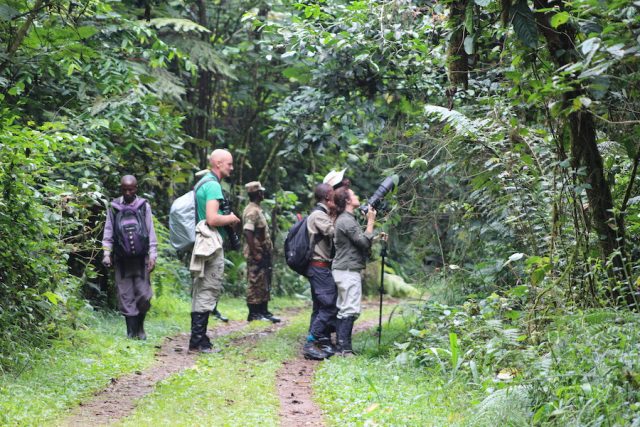
Yes, Kibale Forest National Park is the premier destination for chimpanzee habituation in Uganda. The Chimpanzee Habituation Experience (CHEX) allows you to spend up to 4 to 6 hours or a full day accompanying researchers and guides to help acclimate wild chimpanzees to human
3-days-chimpanzee-habituation-in-kibale-forest-park
The Habituation Experience Breakdown
Here is an in-depth, detailed expansion on each aspect of the Chimpanzee Habituation Experience (CHEX) in Kibale Forest National Park, tailored for travelers looking for a deeper, more immersive primate encounter.
1. The Goal: The Science & Conservation Behind Habituation
The Long Road to Trust
The core objective of the Chimpanzee Habituation Experience is fundamentally different from a standard wildlife viewing track. Instead of visiting primates that already view humans as a neutral, harmless presence, habituation is the deliberate, highly scientific process of gradually introducing wild chimpanzees to human observers over a period of two to three years. The ultimate goal is to win their trust so completely that they continue their daily routines—foraging, hunting, mating, and socializing—without altering their natural behaviors or fleeing in fear when humans enter their territory. This patient work is the bedrock of both long-term primate conservation and sustainable eco-tourism in East Africa.
When travelers participate in this experience, they are not passive tourists; they are actively contributing to an ongoing research initiative. By accompanying Uganda Wildlife Authority (UWA) researchers, primatologists, and trackers, your presence helps maintain the consistency required for the chimps to normalize human contact. Researchers use this time to carefully record individual behaviors, map out family lineages, monitor health conditions, and study complex social structures. This data provides invaluable insights into primate intelligence and ecology.
Furthermore, habituation serves as a critical defense framework against poaching and habitat loss. The continuous, daily presence of researchers and eco-tourists in the deep forest acts as a powerful deterrent to illegal logging and the setting of wire snares, which frequently injure young chimps. Over time, once a community is successfully habituated, it opens up a sustainable stream of tourism revenue. This revenue directly funds the permanent protection of Kibale Forest and provides vital financial support to the surrounding communities, proving that the forest is far more valuable alive than destroyed.
2. Duration: A Full-Day Journey from Dawn to Dusk
From Nest to Nest
The Chimpanzee Habituation Experience is an intense, physically demanding, full-day expedition that completely immerses you in the natural rhythm of the rainforest. Your journey begins in the pitch black of early dawn, typically gathering at the Kanyanchu Tourism Centre by 6:00 AM for an essential briefing with your assigned UWA researchers. From there, you plunge into the dew-soaked trails of Kibale Forest while the jungle is just waking up. The immediate objective is to hike deep into the territory to reach the exact location where the chimpanzee community built their overnight nests the previous evening.
Arriving just as the first morning light filters through the dense mahogany canopy is an unforgettable experience. You will sit quietly in the dim light, listening to the forest transition from night to day until the silence is broken by the rustling of leaves and the first morning vocalizations. Watching the chimpanzees stretch, yawn, and descend from their nests thirty meters up in the trees marks the official start of your four-hour clock of direct interaction, though the entire tracking adventure encompasses the whole day.
As the chimps drop to the forest floor, the real adventure begins. Unlike a standard one-hour trek where you visit a relatively stationary group, CHEX requires you to dynamically follow the community as they move through the jungle. You will spend the morning tracking them as they forage for wild figs, groom one another in sunny clearings, and occasionally engage in high-speed patrols to defend their territory. The pace can be fast and unpredictable, requiring you to navigate thick undergrowth, swampy hollows, and steep ridges. The experience concludes late in the afternoon, leaving you thoroughly exhausted but deeply fulfilled by a complete, unscripted day in the wild.
3. Permit Costs: Clarifying the Financial Investment
Understanding the Tariff Restructuring
When planning an itinerary for 2026 and beyond, it is vital to note a recent and significant structural update regarding Uganda Wildlife Authority (UWA) permit pricing. While standard chimpanzee tracking permits (which grant a single hour with a fully habituated community) are priced at $250 USD for Foreign Non-Residents, the more immersive Chimpanzee Habituation Experience (CHEX) requires a slightly higher, premium investment of $300 USD per person for Foreign Non-Residents. For Foreign Residents holding valid work permits or residency visas within East Africa, the CHEX permit sits at $250 USD, while East African Community (EAC) Citizens from countries like Uganda, Kenya, and Tanzania pay 250,000 UGX.
This tiered pricing structure is intentionally designed to balance global tourism demand with regional accessibility. The premium fee charged to international travelers reflects the highly exclusive and specialized nature of the experience. Because CHEX groups are strictly capped at just four tourists per day plus researchers—compared to the eight guests allowed on standard tracks—you are paying for an intimate, low-crowd encounter that significantly minimizes the ecological footprint and stress placed on the wild primate community.
Every dollar generated from these permits is directly reinvested back into the park’s strict conservation infrastructure. A substantial portion pays the competitive salaries of the dedicated UWA rangers, researchers, and anti-poaching patrols who live in the forest to protect these communities. Crucially, 20% of all permit revenue is legally distributed to the local communities living along the borders of Kibale. This funding builds schools, funds health clinics, and supports local agricultural projects, ensuring that local residents see tangible, life-changing benefits from choosing to protect the forest and its chimpanzees.
What to Expect chimpanzee habituation in Kibale Forest Park
1. Deep Tracking: Navigating the Remote Jungle Terrain
The Challenge of the Untamed Forest
Deep tracking during a Chimpanzee Habituation Experience is a thrilling, fast-paced challenge that stands in stark contrast to standard primate tracking. Because the chimpanzee communities selected for habituation are still in the process of becoming accustomed to human presence, they do not remain near the easily accessible trail networks of the park. Instead, these semi-wild groups live deep within the dense, interior sectors of Kibale’s primary rainforest. They are highly active, agile, and mobile, meaning that once you locate them, you must be prepared for a physically demanding trek that adapts entirely to the chimps' movement.
Following a semi-habituated community requires travelers to venture completely off-the-beaten-path. You will leave the established walking trails behind, following armed rangers and machete-wielding trackers as they cut paths directly through thick undergrowth, tangled vines, and muddy forest floors. Chimpanzees can cover ground with incredible speed; if a dominant male decides to lead a patrol or if the community hears an alpha group calling from a distant ridge, they will move rapidly through the high canopy or along the ground.
To keep pace, visitors must be fit enough to jog or hike briskly over uneven, slippery terrain, scramble over massive fallen mahogany trunks, and navigate steep-sided forest ravines. The air beneath the canopy is humid and thick, which amplifies the physical exertion. This is a raw, sweat-inducing jungle adventure where the forest dictates the rules. It is perfectly suited for active travelers who view the physical challenge as an exciting, authentic part of tracking wild animals in their native habitat.
2. Intimate Observation: A Four-Hour Window into Primate Life
Unscripted Moments in the Canopy
The reward for the challenging trek is a generous four-hour window of direct observation, offering an incredibly deep and intimate look into chimpanzee society that a standard one-hour trek simply cannot match. Over the course of four hours, the initial excitement of seeing a chimpanzee settles into a fascinating, long-term observation of their complex daily routines. You are given the rare privilege of watching an unscripted, real-time soap opera play out in the middle of the African rainforest.
During this extended window, you will witness the full spectrum of chimpanzee behavior. You might spend the first hour quietly sitting under a massive fig tree, watching mothers tenderly groom their young juveniles or listening to the explosive vocalizations of the alpha male asserting his dominance over rivals. If you are lucky, you may witness highly coordinated hunting behaviors, where the community works together to trap small monkeys in the upper branches.
As the heat of the afternoon sets in, the group will descend to the forest floor to rest and play, allowing you to observe their deeply expressive facial expressions, hand gestures, and tool-using habits, like using cracked sticks to fish for safari ants. Finally, as the session draws to a close, you will see the fascinating process of nest-building, as individuals skillfully fold and weave branches together to create comfortable platforms high in the trees for the night. This extended time allows you to truly connect with the individual personalities within the community, offering a profound appreciation for their intelligence and social bonds.
3. Group Size: Preserving the Exclusivity and Integrity of the Study
The Science of Low-Impact Tourism
To protect the well-being of the chimpanzees and preserve the strict scientific integrity of the ongoing habituation study, the Uganda Wildlife Authority enforces a strict limit of a maximum of four tourists per session. This makes the Chimpanzee Habituation Experience one of the most exclusive and intimate wildlife encounters on earth. By keeping the group size incredibly small, the park ensures that the human presence remains a low-impact element in the environment, rather than an overwhelming or threatening disruption to the wild community.
From a scientific standpoint, semi-habituated chimpanzees are highly sensitive to changes in their surroundings. A large crowd of humans can easily trigger defensive behaviors, induce stress, or cause the community to flee deeper into inaccessible terrain, which could set back years of careful habituation work. A small group of four allows the researchers, trackers, and guests to move quietly, blend into the background, and maintain a respectful, safe distance. This low-profile approach encourages the chimps to accept humans as a neutral, non-threatening part of their forest home.
For the traveler, this small group size completely transforms the safari experience. There are no crowded viewing lines or competing camera lenses to block your view. Instead, you enjoy a quiet, personalized interaction where you can easily speak with the lead primatologists and UWA researchers. You can ask detailed questions about individual chimp behaviors, learn how researchers identify specific animals by their unique facial features, and gain a profound understanding of the conservation strategies protecting Kibale Forest. It feels less like a standard tourist excursion and more like a private invitation into an active field research camp.
1. Is there an active chimpanzee habituation experience available for tourists in Kibale Forest National Park?
Yes, Kibale Forest National Park operates a highly structured, world-renowned Chimpanzee Habituation Experience (CHEX) managed by the Uganda Wildlife Authority (UWA). While standard chimpanzee trekking allows visitors to spend a single hour with a primate community that is already completely accustomed to human presence, the habituation experience is a distinct, immersive program. It allows travelers to actively participate in the multi-year process of acclimating wild, semi-habituated chimpanzees to human observers. This program runs daily alongside ongoing primatological research within the park.
Kibale is globally recognized as the "Primate Capital of East Africa," protecting a population of over 1,500 wild chimpanzees within its rich, tropical rainforest. The habituation program is specifically designed to expand the number of communities available for sustainable eco-tourism and scientific study. When you book a habituation permit, you are granted permission to accompany UWA researchers, trackers, and habituators into the deep interior of the forest, where you will spend an extended period following a community that is still learning to trust humans.
For travelers planning safaris in 2026, 2027, and 2028, this experience represents the pinnacle of primate encounters in East Africa. It transforms a standard holiday into an active, hands-on contribution to international conservation science. Because the program requires specialized field management, availability is exceptionally limited compared to regular trekking. It offers an authentic look into the patience, effort, and scientific dedication required to protect endangered wild primates while creating a sustainable economic model that benefits the surrounding local communities.
2. What is the primary scientific purpose of habituating wild chimpanzees in Kibale Forest?
The primary scientific purpose of habituating wild chimpanzees in Kibale Forest National Park is twofold: to facilitate long-term primatological research and to establish low-impact, sustainable eco-tourism streams that fund park boundaries. Habituation is the systematic, gradual introduction of human observers to a wild primate community over a period of two to three years. The scientific goal is achieved when the chimpanzees completely normalize human presence, continuing their complex daily routines—such as foraging, hunting, mating, and border patrolling—without altering their natural behaviors or exhibiting signs of stress.
From a research perspective, successful habituation allows international primatologists and UWA biologists to collect invaluable field data that would be impossible to gather from frightened, fleeing animals. Researchers use this proximity to study complex chimpanzee social hierarchies, vocal communication systems, medicinal plant usage, and tool-manufacturing techniques. It also allows veterinary teams to closely monitor the health of the community, tracking the spread of respiratory diseases and intervening if a member is injured by illegal poachers' wire snares hidden in the undergrowth.
From a conservation standpoint, habituation creates an economic shield around the park. When a chimpanzee community becomes habituated, it allows for controlled tourism, which generates substantial revenue. Under Ugandan law, a significant portion of this revenue is shared directly with the local communities living along the park borders. By transforming these wild primates from perceived agricultural threats into vital economic assets that fund local schools and clinics, the habituation process directly turns neighboring communities into active guardians of the rainforest ecosystem.
3. How long does the entire chimpanzee habituation process take before a community is ready for standard tourism?
The process of habituating a wild chimpanzee community in Kibale Forest National Park is a monumental exercise in patience, typically taking anywhere from two to five years of continuous, daily effort. Unlike mountain gorillas, which tend to be relatively cohesive and ground-dwelling, chimpanzees live in large, highly dynamic fission-fusion societies. This means that a community of over one hundred individuals rarely stays together in a single group; instead, they constantly split into smaller, unpredictable foraging parties throughout the day, significantly complicating the habituation timeline.
In the initial phase, which can last up to a year, researchers and trackers simply follow the community from a distance, using specific, non-threatening vocal cues to announce their presence. During this stage, wild chimpanzees are highly defensive and fearful; they will frequently scream, drum on the massive buttress roots of mahogany trees, drop branches from the canopy, or flee rapidly through the thick undergrowth the moment humans are detected. The field teams must persistently locate them every morning to show that humans are neutral, non-threatening elements.
As the months progress into the second and third years, dominant individuals—particularly the alpha male and high-ranking matriarchs—begin to tolerate the researchers' presence at a distance of about twenty to thirty meters. Once these key leaders stop fleeing, the rest of the community gradually copies their calm behavior. The habituation process is only considered complete when the chimpanzees allow human observers to sit within a safe ten-meter radius on the forest floor without interrupting their grooming, resting, or feeding habits, marking the point where the group can safely transition to standard one-hour tourism tracks.
4. What is the current permit price for the Chimpanzee Habituation Experience in Kibale for 2026–2028?
For the 2026, 2027, and 2028 travel cycles, the Uganda Wildlife Authority (UWA) has set the permit pricing for the Chimpanzee Habituation Experience (CHEX) to reflect its highly exclusive and specialized nature. For Foreign Non-Residents, a single habituation permit is priced at $300 USD. For Foreign Residents who hold valid work permits or official residency visas within East Africa, the permit cost is $250 USD. For East African Community (EAC) Citizens from Uganda, Kenya, Tanzania, Rwanda, Burundi, South Sudan, and the DRC, the rate is 250,000 UGX.
It is crucial for safari operators and independent travelers to note that this pricing is distinct from the standard chimpanzee tracking permit, which sits at $250 USD for Foreign Non-Residents. The extra $50 USD investment for the habituation experience grants an incomparably deeper encounter, extending your time with the primates from a single hour to a generous four-hour window of direct interaction, while expanding the overall excursion into a full-day field adventure.
These fees are managed under strict sustainable tourism frameworks. Because the habituation experience limits guest numbers to a maximum of four tourists per session, the premium cost helps offset the low volume of visitors, ensuring that the financial model remains viable without increasing human pressure on the semi-wild primates. Every permit purchased directly funds the field research, pays the salaries of the UWA trackers and researchers who live in the forest, and finances community development initiatives along the park's perimeter, making the investment a direct contribution to conservation.
5. How far in advance should I secure a chimpanzee habituation permit for Kibale Forest?
Because of the extreme exclusivity of the Chimpanzee Habituation Experience in Kibale Forest National Park, securing your permits 6 to 10 months in advance is highly recommended, particularly if you are planning to travel during the peak dry seasons. The Uganda Wildlife Authority enforces a strict conservation cap, allowing a maximum of only four tourists per habituation session per day. This means that on any given date, there are only four available slots for the entire global traveling public, making these permits some of the most sought-after conservation tickets in East Africa.
During the peak travel windows—which run from June to September and December to February—slots sell out almost immediately after UWA opens the booking windows. If you are traveling as a couple or a small private group and wish to share the exact same habituation session, waiting until the last minute is an enormous gamble that almost always results in disappointment. Booking nearly a year out allows your tour operator to lock down these finite permits before building out the rest of your western Uganda itinerary.
If you choose to travel during the low or rainy seasons (March to May and October to November), you might find flexibility closer to your arrival date, occasionally up to 2 to 3 months out. However, even during the shoulder months, the low daily limit means that availability can vanish unexpectedly due to small research groups or specialized documentary film crews booking out the slots. To ensure a seamless, stress-free safari, treat the habituation permit as the primary anchor of your itinerary and secure it before booking flights or lodging.
6. What is the maximum group size allowed for the Chimpanzee Habituation Experience in Kibale?
To preserve the scientific integrity of the ongoing research and protect the health and emotional well-being of the primates, the Uganda Wildlife Authority strictly limits the group size to a maximum of four tourists per session. This tiny group size makes the Chimpanzee Habituation Experience (CHEX) one of the most private, exclusive, and uncrowded wildlife encounters available on the global safari market today.
Semi-habituated chimpanzees are highly sensitive to environmental changes and are acutely aware of human numbers. A large group of people moving through the dense jungle can easily be perceived by an alpha male as a rival troop or a significant threat, triggering defensive aggression, distress calls, or causing the entire community to flee into inaccessible forest sectors. Limiting the tourist count to four allows the human group—which includes the guests, two armed UWA rangers, and two lead researchers—to maintain a low physical and auditory profile, blending quietly into the forest background.
For the traveler, this strict capacity constraint completely elevates the quality of the safari. There are no crowded viewing lines, whispering crowds, or competing camera lenses to block your view. Instead, you enjoy an intimate, highly personalized field experience. You can walk side-by-side with the lead primatologists, engaging in deep conversations about specific chimp behaviors, learning how individual animals are identified by their unique facial wrinkles or ear notches, and gaining an unfiltered look into the realities of wildlife conservation research.
7. What is the typical daily timeline for a traveler participating in the Kibale habituation experience?
The Chimpanzee Habituation Experience in Kibale Forest National Park is an immersive, full-day commitment that follows the natural biological clock of the rainforest from dawn until dusk. The adventure begins in the crisp, pitch-black dark of the early morning, with travelers required to gather at the Kanyanchu Tourism Centre by 6:00 AM sharp for an essential safety and behavioral briefing conducted by the lead UWA research teams.
By 6:30 AM, just as the very first morning light begins to pierce the upper layers of the canopy, you plunge directly into the forest trails. The immediate goal is to hike out to the exact coordinates where the chimpanzee community constructed their overnight nests the previous evening. Arriving at the nesting site just as the chimps are waking up is a magical experience. You will stand quietly in the dim light, listening to the forest stir until the silence is broken by morning vocalizations and the rustling of leaves as the primates descend from their nests thirty meters up.
Once the chimpanzees reach the forest floor, your official four-hour clock of direct interaction begins. You will spend the morning and early afternoon following the community across the forest floor as they forage, groom, and socialize. After the four-hour viewing session concludes, your guides will begin the trek back out of the deep forest, incorporating educational discussions on forest ecology, tree species, and bird identification along the way. Most participants arrive back at the Kanyanchu headquarters between 2:00 PM and 4:00 PM, thoroughly exhausted but deeply rewarded by a complete day in the wild.
8. How does the physical demand of chimpanzee habituation compare to standard chimp trekking?
Participating in the Chimpanzee Habituation Experience (CHEX) is significantly more physically demanding, intense, and unpredictable than a standard one-hour chimpanzee trek. While standard trekking utilizes well-maintained, clear trail networks to locate a fully habituated community that routinely visits predictable areas, habituation takes you deep into the untamed, primary interior of Kibale Forest, where the terrain is rugged and entirely unmanaged.
Because semi-habituated chimpanzees do not follow human pathways, keeping up with them requires travelers to venture completely off-the-beaten-path. You will spend hours scrambling over massive fallen mahogany trunks, pushing through thick walls of tangled vines, and navigating muddy, slippery ravines and swampy hollows. Chimpanzees can move with incredible speed when they choose to; if the community decides to conduct a territorial border patrol or rushes off to hunt small monkeys, you must be prepared to jog or hike briskly through the dense brush to keep pace with the research team.
The climate beneath the dense rainforest canopy adds to the physical challenge. The air is consistently humid, thick, and warm, which rapidly accelerates physical exhaustion and dehydration. There are no rest stops or picnic benches; you eat your packed lunch on the move or while sitting on damp logs. This experience requires a good level of physical fitness, excellent balance, and mental resilience. It is an authentic jungle expedition perfectly suited for active travelers who view the physical challenge as a core part of the adventure.
9. What specific chimpanzee behaviors can a traveler expect to witness during the four-hour habituation window?
The extended four-hour window granted during the Chimpanzee Habituation Experience allows travelers to witness the full, unscripted spectrum of primate behavior, revealing a fascinating look into their complex social lives. Over four hours, the initial novelty of seeing a chimpanzee settles into a deep observation of individual personalities, social alliances, and daily survival strategies playing out in real time.
In the early morning hours, you will primary witness feeding and social bonding behaviors. You will watch chimps skillfully climb into the high branches of wild fig trees to forage, or sit in small, intimate groups on the forest floor engaging in intense grooming sessions, which serve to reinforce political alliances within the community. You will observe the deep expressiveness of their facial features, their complex hand gestures, and their sophisticated use of tools, such as using crushed sticks to extract safari ants from deep tree hollows or using flat stones to crack open hard nuts.
As the day progresses, you may witness the dramatic, high-energy dynamics of chimpanzee politics. This includes explosive displays where the dominant alpha male beats his chest, stamps on buttress roots, and screams to assert his authority over rising rivals. If you are incredibly lucky, you might witness a highly coordinated, strategic group hunt, where the community works together to surround and capture small red colobus monkeys in the canopy. The sheer length of the habituation session ensures that you see these animals as complex, intelligent individuals navigating an intricate social world.
10. What is the specific forest environment and terrain like during a Kibale habituation trek?
The environment of Kibale Forest National Park during a habituation trek is a classic example of a rich, multi-layered tropical rainforest ecosystem. Located in western Uganda at an elevation of roughly 1,100 to 1,600 meters above sea level, the park features a humid, montane-endemic climate. The forest canopy is dominated by towering, ancient hardwood trees—including giant mahoganies, ironwoods, and wild fig trees—that stretch up to sixty meters into the sky, creating a dense shield that filters out direct sunlight and traps moisture below.
The terrain beneath this canopy is highly variable, uneven, and physically challenging. The forest floor is a complex matrix of exposed root systems, slippery decomposing leaf litter, and thick undergrowth composed of ferns, wild ginger, and sharp thorns. Because the habituation experience requires leaving the established tourist footpaths, walkers must navigate steep-sided ridges, slippery mudflats, and low-lying swampy hollows where water can rise to mid-shin level, particularly after a morning downpour.
The atmosphere inside the deep forest is incredibly alive and sensory. The air is consistently damp and heavy with the scent of rich earth and tropical vegetation. Visually, you are surrounded by varying shades of deep green, punctuated by colorful orchids and giant fungi growing on decaying logs. Auditorily, the forest is filled with an orchestral soundtrack—the constant buzz of cicadas, the calls of over 370 bird species, and the distant, echoing screams of primates moving through the upper canopy, creating an intensely immersive wilderness experience.
11. What is the essential packing list and gear requirement for the full-day Kibale habituation experience?
Packing correctly for a full-day Chimpanzee Habituation Experience in Kibale requires gear designed for protection, durability, and comfort within a wet rainforest environment. Your most critical piece of equipment is a pair of sturdy, broken-in hiking boots with deep tread and excellent ankle support to safely navigate the slippery, root-filled forest floor.
For clothing, you must prioritize full skin protection against sharp thorns, stinging nettles, and biting insects. Wear lightweight, breathable, long-sleeved safari shirts and durable, long trousers. A vital trail technique is to tuck your trousers directly into your long hiking socks, which creates an effective barrier against aggressive safari ants crawling up your legs. Bring a pair of lightweight, durable gardening gloves; these are incredibly useful for safely gripping wet vines, rough bark, and muddy branches during steep climbs or fast movements through the brush.
A high-quality, breathable waterproof rain jacket is mandatory, as tropical downpours can occur unexpectedly at any time of day, even during the dry season. Pack a comfortable, lightweight daypack containing a minimum of three liters of clean drinking water, a high-energy packed lunch, and personal snacks to sustain you through eight hours of physical exertion. Finally, protect your expensive camera gear and binoculars with waterproof dry bags, and bring a wide-brimmed safari hat, high-SPF sunscreen, and an insect repellent containing a high concentration of DEET.
12. Are there local porters available to assist travelers during the Kibale habituation experience?
Yes, local porters are available for hire at the Kanyanchu visitors center trailhead before you set off on your Chimpanzee Habituation Experience. Hiring a porter is one of the most highly recommended operational choices a traveler can make, regardless of their personal fitness level or hiking experience, as it directly improves both trail comfort and local conservation efforts.
The primary role of a porter is to carry your heavy daypack, which contains your essential three liters of water, packed lunch, rain gear, and personal items, instantly relieving you of significant weight during a long, physically demanding day in the jungle. Furthermore, porters are expertly trained to protect your expensive camera equipment and binoculars, keeping them safe in waterproof bags and managing them during sudden downpours or when navigating steep, slippery terrain where you need both hands free to balance. They also provide a physical, steadying hand during difficult climbs or river crossings.
The minimum fee to hire a local porter for the day is $20 USD, though adding an extra tip for exceptional service is highly encouraged. Beyond the immediate physical benefits on the trail, hiring a porter is a vital, direct act of community conservation. Most porters are residents living in the immediate villages bordering Kibale Forest. By hiring them, your safari investment provides an immediate, reliable livelihood to a local family. This financial security directly reduces the economic temptation to engage in illegal forest poaching or logging, turning local residents into dedicated allies of the park's conservation mission.
13. How do the habituation rules regarding health and disease transmission protect the chimpanzees?
Because chimpanzees share roughly 98.7% of their identical DNA blueprint with humans, they are extraordinarily susceptible to human infectious diseases, particularly respiratory illnesses like the common cold, flu, and COVID-19. What manifests as a mild cough or a passing virus in a human adult can easily mutate into a catastrophic, fatal epidemic when introduced to a wild primate community that completely lacks natural biological immunity. Therefore, the Uganda Wildlife Authority enforces strict health rules during the habituation experience.
The most critical rule is a mandatory minimum viewing distance of 10 meters (roughly 33 feet) from the chimpanzees at all times. This distance is carefully designed to minimize the airborne transmission of respiratory droplets during observation. Furthermore, if you feel unwell, have a persistent cough, a runny nose, or a fever on the morning of your trek, you are legally and ethically obligated to declare your illness to the UWA medical officers and step down from the experience to protect the primates from potential outbreaks.
Additionally, travelers are strictly prohibited from eating, drinking, or smoking within a 250-meter radius of the chimpanzees, as dropped food scraps or discarded items can easily introduce dangerous bacteria into their habitat. If you need to sneeze or cough while near the primates, you must turn your face completely away and cover your mouth and nose with your inner elbow or a clean handkerchief to prevent droplets from drifting into the air. Following these guidelines ensures that tourism remains a safe, protective force for primate survival.
14. How does the Kibale Chimpanzee Habituation Experience compare directly to the Gorilla Habituation Experience in Bwindi?
While both the Chimpanzee Habituation Experience (CHEX) in Kibale and the Gorilla Habituation Experience in Bwindi Impenetrable National Park grant an extended four-hour window with the primates, they differ significantly regarding terrain, animal behavior, and the overall pace of the adventure. Understanding these differences helps travelers choose the encounter that best aligns with their personal physical capabilities and expectations.
The primary difference lies in animal behavior and movement. Mountain gorillas are large, heavy, and primarily ground-dwelling leaf-eaters. Once a gorilla family is located, they tend to remain relatively stationary within a small localized area, spending their four hours quietly resting, grooming, and chewing on bamboo shoots. This allows for a slow-paced, steady photographic session. Chimpanzees, conversely, are highly active, fast-moving, and arboreal omnivores. They spend a large portion of their time leaping through the upper canopy or traveling quickly along the ground, making the chimp habituation experience a dynamic, high-energy pursuit where you must constantly move to keep up.
The terrain also presents different challenges. Bwindi features extreme elevations (up to 2,600 meters) with steep, vertical mountain ridges that require slow, intense climbing. Kibale is lower in elevation and flatter overall, but it features a much denser, more tangled interior forest wall, requiring travelers to navigate thick undergrowth completely off-the-beaten-path. Finally, pricing differs: a gorilla habituation permit in Bwindi costs $1,500 USD, making the $300 USD Kibale chimp habituation permit an exceptionally high-value investment for wildlife enthusiasts seeking an extensive, immersive primate encounter.
15. How can I ensure my participation in the Kibale habituation experience is ethical and sustainable?
Ensuring your participation in the Kibale Chimpanzee Habituation Experience is ethical and sustainable requires a commitment to responsible eco-tourism practices, respecting wildlife boundaries, and supporting the local economy. By traveling mindfully, your presence becomes a powerful tool for environmental preservation.
First, always book your safari through a licensed operator registered with the Association of Uganda Tour Operators (AUTO). Ethical operators prioritize hiring local, certified guides, use well-maintained vehicles that minimize emissions, and select eco-lodges that operate on solar energy, practice composting, and implement strict water conservation policies. When choosing your accommodations around Kibale, look for community-inclusive lodges that source their food supplies from neighboring smallholder farms, ensuring tourism revenue directly benefits the local agricultural economy.
Second, respect the rules of the forest by following all instructions given by your UWA rangers and researchers without question. Maintain the mandatory 10-meter distance, never use flash photography (which can blind or terrify semi-wild primates), keep your voice to a low whisper to minimize stress on the community, and pack out every piece of trash you bring into the forest. Finally, actively support community-led side excursions, such as taking a guided walk through the nearby community-run Bigodi Wetland Sanctuary. This ensures that your travel spending provides direct livelihoods to local families, strengthening their commitment to protecting Kibale Forest for generations to come.
Booking chimpanzee habituation in Kibale Forest Park with us Roads of Adventure safaris
Booking a Chimpanzee Habituation Experience (CHEX) in Kibale Forest National Park with Roads of Adventure Safaris involves a dedicated, multi-day trek where you spend up to 4 hours with researchers and semi-habituated chimpanzees
