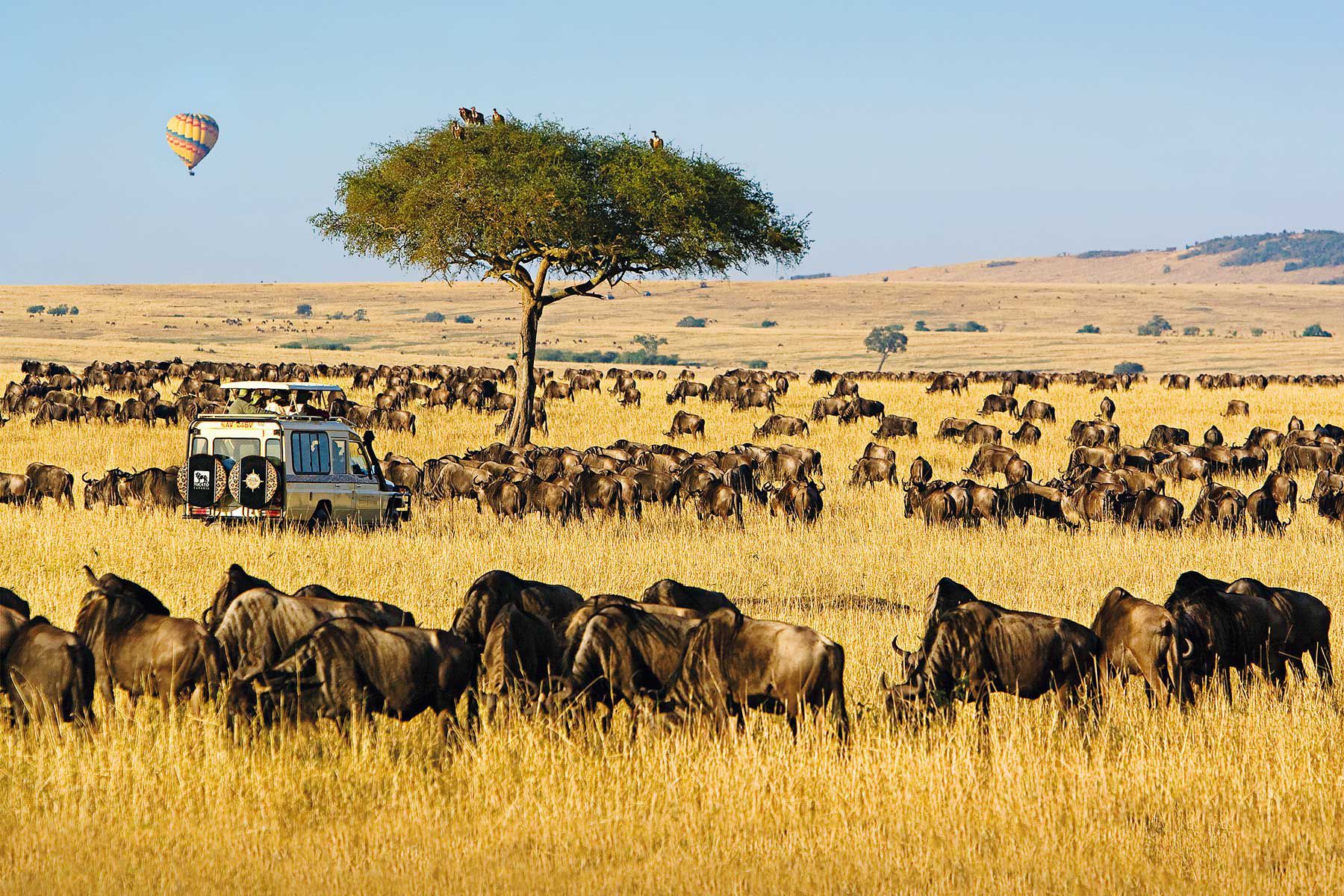
There is a very good reason why Tanzania consistently holds the crown as Africa’s ultimate classic safari destination, offering a raw, cinematic wilderness experience that is simply unmatched. The heart of its magic lies in the legendary Great Migration, where over two million wildebeest and zebras thunder across the plains, spending the vast majority of their annual cycle right here on Tanzanian soil. When you pair that grand spectacle with world-class natural wonders like the endless Serengeti savannah and the dramatic, wildlife-packed amphitheater of the UNESCO-listed Ngorongoro Crater, you get the most concentrated and breathtaking game viewing on earth. But what truly sets Tanzania apart is its incredible versatility; you can easily transition from a traditional Big Five game drive to tracking wild chimpanzees in the remote forests of the Mahale Mountains, and then wrap up the entire adventure by brushing off the bush dust on the pristine, white-sand beaches of Zanzibar.
12-day-tanzania-family-safari-holiday-vacation
11-day-tanzania-safari-to-tarangire-lake-naron-serengeti-ngorongoro-and-lake-eyasi
10-days-incredible-tanzania-wildlife-safari-and-cultural-experience
9-days-8-nights-midrange-safari-in-tanzania-east-africa-safari
8-days-tanzania-wildlife-safari-and-cultural-visit-to-masai-community
7-days-epic-africa-big-five-safari-in-tanzania-top-best-parks
6-days-best-northern-circuit-tanzania-safari-to-best-tanzania-safari-parks
5-days-tanzania-safari-to-tarangire-serengeti-ngorongoro-and-lake-manyara
4-days-central-serengeti-safari-tour-and-mara-river-crossing-in-northern-serengeti
3-ultimate-budget-serengeti-safari-tour-package
Why Tanzania is Africa safaris’ Top destination
Unmatched Wildlife Density
There is a moment on safari when the engine cuts out, the dust settles, and the sheer magnitude of the African wilderness hits you. In Tanzania, this isn’t a rare occurrence; it’s the daily rhythm. The country doesn't just host wildlife; it overflows with it. Walking into its national parks feels less like visiting a sanctuary and more like stepping into an ancient, uninterrupted world where animals, not humans, hold the lease.
Holding all the pieces of the legendary "Big Five"—the lion, leopard, elephant, buffalo, and rhino—Tanzania offers a raw, front-row seat to nature's most intense dramas. Here, you aren't just scanning the horizon with binoculars hoping for a distant glimpse of a tail. You are watching a pride of lions resting in the amber grass of the Ngorongoro Crater, or tracking the silent, lethal grace of a leopard draped over an acacia branch. The density of predators is staggering, driven by the sheer volume of prey that populates these lands.
But look beyond the heavy hitters, and you’ll find a vibrant, chaotic world in the skies and trees. Tanzania is a paradise for birdwatchers, where over a thousand species inject brilliant bursts of color and song into the landscape. From the shocking pink of thousands of flamingos carpeting the alkaline lakes to the majestic sweep of a martial eagle cutting through the thermal currents, the avian life is hypnotic. It’s this multi-layered density—the subtle rustle of a hidden bird, the thundering steps of an elephant herd, and the tense silence before a predator strikes—that makes the Tanzanian wilderness feel so vibrantly alive and deeply unforgettable.
The Great Migration
To truly understand the heartbeat of the African continent, you have to witness the Great Migration. This isn't just a seasonal event; it is a relentless, year-round journey of survival, a circular pilgrimage of over two million wildebeest, zebras, and gazelles moving in lockstep with the rains. It is a spectacle of collective instinct, beautiful in its grand scale and heartbreakingly raw in its individual struggles.
If you travel to the northern reaches of the Serengeti during the dry season, you will witness the ultimate test of courage: the dramatic river crossings. Thousands of animals gather on the banks of the Mara or Grumeti Rivers, hesitated by fear. When the first brave soul plunges into the churning waters, a chaotic avalanche of life follows. You can feel the tension in the air as they battle the fierce currents and dodge the jaws of massive, patient Nile crocodiles. The sound is an unforgettable symphony of splashing water, frantic grunts, and desperate collective energy.
Contrast that high-stakes adrenaline with the tender vulnerability of the calving season in the southern Serengeti plains. Over a few short weeks, hundreds of thousands of new calves are born into the world. The plains transform into a vast, fragile nursery. It is a time of immense tenderness as mothers fiercely protect their wobbly-legged young, balanced against the ever-present threat of cheetahs and hyenas waiting in the fringes. To witness the migration is to look directly into the eyes of nature’s most powerful force: the unyielding, beautiful will to endure.
Diverse Ecosystems
One of the greatest misconceptions about an African safari is that the landscape is uniform. Tanzania shatters this illusion entirely. Designing a safari here is like reading an anthology of completely different worlds, where each chapter introduces a brand-new climate, topography, and atmosphere, moving far beyond the boundaries of smaller, fenced-in reserves.
In the north, your journey begins in the classic, endless golden savannahs of the Serengeti—a landscape so vast it seems to curve into the horizon. Here, the sky feels larger than life. But head south, and the entire character of the wild shifts. In the remote expanses of Nyerere National Park (formerly Selous) and Ruaha National Park, the open plains give way to rugged, untamed terrains. Here, the mighty Rufiji River carves through the earth, creating a lush, watery labyrinth where hippos jostle for space and boat safaris offer a completely different vantage point.
The vegetation changes from scattered acacias to ancient, bloated baobab trees that stand like silent sentinels against a bruised sunset. The air feels different here—wilder, more secretive, and blissfully uncrowded. You can transition from the cool, mist-shrouded rim of the Ngorongoro Crater to the dry, sun-baked bush of Tarangire in a matter of days. This incredible ecological diversity means that your safari never feels repetitive; every morning sunrise illuminates a completely new face of the continent, keeping your sense of wonder entirely alive.
Iconic Landmarks
While the wildlife initially draws travelers to Tanzania, it is the country's breathtaking landmarks that anchor its soul. Tanzania is home to extremes that capture the human imagination, offering a profound sense of place that bookends your dusty days in the bush with awe and profound relaxation.
Rising majestically above the shimmering plains is Mount Kilimanjaro, the "Roof of Africa." As the world’s tallest free-standing mountain, its snow-capped peak is a permanent, ethereal fixture on the horizon. For some, Kilimanjaro is a siren song for adventure—a grueling, life-changing trek through five distinct climate zones, from tropical rainforest to arctic desert, culminating in a triumphant sunrise above the clouds. For others, it is simply a magnificent, humbling backdrop to their safari, a reminder of the earth's raw geological power.
Once the dust of the bumpy safari tracks has settled and the early morning wake-up calls are behind you, Tanzania offers the ultimate counterweight to the rugged bush: the mystical spice island of Zanzibar. Leaving the mainland behind, you are greeted by the warm, turquoise waters of the Indian Ocean and powder-white beaches that feel like silk beneath your feet. Walking through the winding, stone-walled alleys of Stone Town, the scent of cloves and cinnamon fills the air, telling stories of centuries-old trade. It is the perfect, soulful place to unwind, allowing the adrenaline of the wild to gently wash away as you watch traditional dhow sailboats drift across a fiery tropical horizon.
What is the best time to visit to witness the Great Migration?
The Great Migration is a year-round, fluid journey, so the "best" time depends entirely on what dramatic chapter you want to read. To witness the high-octane, heart-stopping river crossings, you should aim for July to October, when millions of wildebeest and zebras risk the predator-filled waters of the Mara River in the northern Serengeti. If you prefer a more tender but equally intense spectacle, head to the southern Serengeti plains between January and March. This is the calving season, where hundreds of thousands of wobbly-legged newborns enter the world over a few short weeks, triggering an absolute frenzy of predator activity as lions, cheetahs, and hyenas watch from the fringes.
Which parks offer the best chance of spotting the Big Five?
For the ultimate chance of ticking off the entire legendary "Big Five"—lion, leopard, elephant, buffalo, and rhino—the Ngorongoro Crater is unmatched. This ancient, collapsed volcano forms a natural sanctuary with an incredibly dense wildlife population, making it one of the few places on earth where you might see all five in a single day, particularly the elusive black rhino. Combine the crater with the vast Serengeti National Park, renowned for its massive lion prides, leopards draped over acacia branches, and endless herds of elephants and buffaloes, and your chances of a clean sweep skyrocket.
What is the difference between Tanzania's famous Northern Circuit and the remote Southern Circuit?
The difference between Tanzania’s safari regions comes down to infrastructure versus raw isolation. The famous Northern Circuit (Serengeti, Ngorongoro, Tarangire) features iconic, postcard-perfect landscapes, exceptionally high wildlife density, and a wide array of world-class lodges. However, its popularity means you will share sightings with other vehicles. The remote Southern Circuit (Nyerere and Ruaha) offers a brutal, untamed wilderness. Here, you trade open savannahs for rugged baobab forests and rushing rivers. The wildlife is spread out and wilder, but you get a deeply exclusive experience, often tracking animals for hours without seeing another human soul.
How does the cost of a private luxury lodge safari compare to a group camping safari?
Comparing a private luxury lodge safari to a group camping safari is like comparing a boutique penthouse to a rugged backpacking expedition. A group camping safari keeps costs minimal by sharing a vehicle, utilizing public campsites, and having a camp chef prepare meals around a fire. A private luxury lodge safari, by contrast, can easily cost five to ten times more. This premium grants you a completely private 4x4 vehicle tailored to your rhythm, alongside stays in opulent, canvas-walled permanent suites featuring plunge pools, fine dining, and absolute privacy deep within the bush.
Is it safe to combine a mainland wildlife safari with a beach trip to Zanzibar?
It is incredibly safe, highly seamless, and actually one of the most popular travel combinations in Africa—often called the classic "bush to beach" itinerary. Mainland safari operators regularly coordinate smooth connections via short, reliable domestic flights from bush airstrips directly to Zanzibar. While the mainland offers a highly managed, guided wildlife environment, Zanzibar is a relaxed island destination. Standard travel safety common sense applies: keep an eye on your belongings in busy areas like Stone Town, use trusted transport, and respect local cultural norms by dressing modestly when exploring historical villages.
What are the specific rules and regulations for visitors at the Ngorongoro Conservation Area?
To protect its delicate crater ecosystem and ensure visitor safety, the Ngorongoro Conservation Area Authority enforces strict regulations. All vehicles must strictly stick to authorized tracks—absolutely no off-road driving is permitted. The crater gates operate strictly from 06:00 AM to 06:00 PM, and all visitors must be accompanied by a licensed guide. You must never leave your vehicle except at explicitly designated picnic areas. Additionally, to prevent crowding around wildlife, no more than five vehicles are allowed to cluster around a single animal or predator kill at any given time.
What is the difference between a 4x4 land cruiser and a minivan for game drives?
The choice between a specialized 4x4 safari Land Cruiser and a standard minivan dictates your physical comfort and off-road capability. The Land Cruiser is the undisputed king of the African bush; built with heavy-duty suspension and high ground clearance, it effortlessly conquers deeply rutted, muddy, or rocky terrain, providing a smoother ride on rough roads. Minivans are a budget-friendly alternative that work perfectly fine on smooth tarmac and well-maintained main park roads. However, they lack the rugged power, clearance, and ultimate traction required to comfortably navigate Tanzania's more remote, challenging tracks.
Are there opportunities to visit and interact with local communities like the Maasai people?
Tanzania offers incredible opportunities for meaningful, ethical cultural encounters. Visitors can visit authentic Maasai bomas (homesteads) to learn about their ancient pastoralist lifestyle, vibrant traditional dances, and intricate beadwork. Beyond the Maasai, you can travel to the rugged landscapes around Lake Eyasi to meet the Hadzabe, one of the last remaining hunter-gatherer tribes on the continent, and the Datoga blacksmiths. To ensure these interactions remain respectful, mutually beneficial, and sustainable, it is always best to visit communities through a responsible, locally connected safari operator.
What vaccinations and health precautions are required for travelers entering Tanzania?
While Tanzania does not generally mandate vaccines for direct arrivals from non-endemic zones, a Yellow Fever vaccination certificate is legally required if you are arriving from or transiting through a country with a risk of transmission. Health professionals strongly recommend ensuring routine immunizations (Tetanus, MMR, Typhoid, and Hepatitis A) are fully up to date. Since malaria is prevalent across most safari regions, taking prescription antimalarial prophylactics, wearing long sleeves at dusk, and applying high-quality insect repellent are essential daily precautions to keep yourself protected in the bush.
How many days are typically recommended for a comprehensive, first-time Tanzania safari experience?
For a comprehensive, rewarding first-time safari that balances jaw-dropping wildlife viewing with a relaxed travel pace, a duration of 7 to 10 days on the mainland is highly recommended. This window allows you to comfortably explore the highlights of the Northern Circuit—such as spending a day in Tarangire, a night on the spectacular rim of the Ngorongoro Crater, and three solid days deep within the Serengeti—without feeling rushed by long transit times. If you wish to seamlessly append a relaxing beach escape to Zanzibar, you should plan for a total travel window of 10 to 14 days.
Booking Africa safari in Tanzania with us Roads of Adventure safaris
Planning your Tanzanian dream trip with Roads of Adventure Safaris means stepping away from cookie-cutter travel and into a journey shaped entirely around your rhythm, budget, and style. Starting right from Arusha, we craft beautifully tailored itineraries that bring you face-to-face with Africa’s most legendary spectacles, whether you want to watch the endless horizons of the Serengeti unfold or look down into the majestic Ngorongoro Crater. Our team loves connecting the dots across East Africa, specializing in the iconic Northern Circuit—including Tarangire and Lake Manyara—as well as epic cross-border expeditions, like our signature 15-day journey weaving through the very best of Uganda, Kenya, and Tanzania. Whether your perfect safari means falling asleep under canvas on an authentic budget-friendly expedition or unwinding in the absolute opulence of a luxury property like the Four Seasons Safari Lodge, everything is completely taken care of by our hands-on team. When you are ready to start mapping out your next great adventure, you can connect directly with Jesca and the team by emailing us at info@roadsofadventuresafaris.com or giving us a call at +256 701041637 to bring your safari vision to life.
