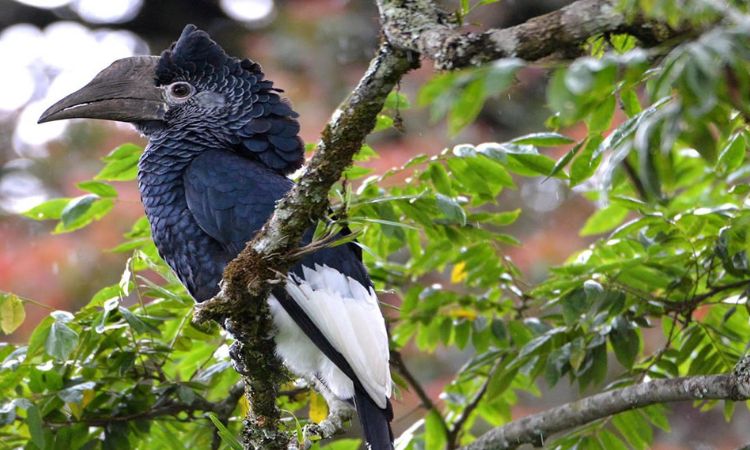
Yes, bird watching in Nyungwe Forest National Park is highly worthwhile and a highlight of any Rwanda birding safari. As a premier UNESCO World Heritage Site, it hosts over 310 bird species, including 26+ Albertine Rift endemics, making it one of the best locations in Africa for biodiversity.
17-days-rwanda-birding-safari-and-uganda-birding-tour-combined-vacation
16-days-exclusive-rwanda-bird-watching-safari-extravaganza
15-days-classic-rwanda-birding-safari-and-gorilla-and-chimpanzee-tracking
12-days-perfect-rwanda-birding-safari-itinerary
10-days-best-rwanda-birding-safari-combined-with-rwanda-gorilla-trekking-vacation
5-days-perfect-rwanda-birding-safari-and-wildlife-and-gorilla-trekking
- High Endemism
Rwanda sits in the heart of the Albertine Rift, a biodiversity hotspot where isolation by mountains and unique climate conditions have produced an unusually high concentration of endemic species. For birders, this means the chance to see species that are found nowhere else on Earth. The Red-collared Mountain Babbler (sometimes referenced as a localized montane species), Grauer’s Swamp Warbler, Neumann’s Warbler, and the Kivu Ground Thrush are prime examples of the specialized avifauna that make Rwanda indispensable for serious life-listers. Each of these birds occupies a narrow ecological niche: the Grauer’s Swamp Warbler is tied to high-altitude peat bogs and swampy margins; Neumann’s Warbler prefers dense, mossy undergrowth in old-growth forest gullies; the Kivu Ground Thrush is a shy, terrestrial species of the forest floor; and the Red-collared Mountain Babbler is associated with mid-elevation montane thickets and bamboo transitions. Finding these birds often requires skill, patience, and local knowledge—calls and behavior can betray their presence long before they’re visible. That’s why Rwanda’s endemic suite rewards guided, focused searches along specific trails and microhabitats. Beyond the thrill of ticking rare taxa, endemic species are barometers of ecosystem health: their presence signals intact, functioning habitats. Conservation in the Albertine Rift has been bolstered by community-based initiatives and protected area management, so sightings carry the added satisfaction of knowing you’re witnessing the recovery and persistence of unique evolutionary lineages. For photographers, endemic species also offer striking, distinctive subjects—colors, calls, and behaviors not seen elsewhere. In short, high endemism transforms a Rwanda birding trip from a generic wildlife holiday into a targeted, conservation-rich quest for global rarities.
- Top Locations
The success of a birding trip hinges as much on where you go as on what you look for, and Rwanda’s best locations are compact, accessible, and phenomenally productive. Nyungwe Forest National Park is the crown jewel: areas like Uwinka, Gisakura, and Kamiranzovu each present different microhabitats and species assemblages. Uwinka’s trails and the famous Canopy Walkway place observers at mixed-species flock level, where canopy specialists such as the Rwenzori Batis, Blue-headed Sunbird, and Black-billed Turaco move with predictable regularity. Gisakura’s buffer-zone gardens and tea-plantation edges produce excellent “edge-effect” birding for species like the Great Blue Turaco and Double-collared Sunbird, where forest and cultivated land meet. Karamba and other remote trails cut into deeper forest, where furtive understorey specialists such as Neumann’s Warbler and the Kivu Ground Thrush are most often located. The Kamiranzovu Swamp and other high-altitude peat bogs require more effort but reward patient birders with Grauer’s Swamp Warbler and other bog specialists. What makes these locations exceptional is not just species richness, but the diversity of vertical strata—canopy, mid-story, understory, and forest floor—each supporting different target species within a compact area. Moreover, Rwanda’s trails are well-maintained and guided by expert local ornithologists whose knowledge of calls, behavior, and seasonal movement patterns substantially increases encounter rates. Logistically, the short drives between habitats maximize field time: you can be at a canopy walkway in the morning, hunt endemics in the mid-day mixed flocks, and try a swamp or ridge in the afternoon. That concentration of high-quality sites within a manageable itinerary is a major reason Rwanda is such a high-value destination for targeted birding.
- Unique Habitat
Nyungwe Forest and the broader Albertine Rift represent far more than just a list of species; they are living archives of Africa’s deep ecological history. Nyungwe is among the oldest rainforests on the continent, with continuous forest cover that has persisted through climatic shifts for millennia. This antiquity has allowed intricate forest structures to develop—massive, multi-layered canopies, abundant epiphytes, moss-laden branches, and stable microclimates in ravines and gullies. These structural complexities create myriad niches, supporting specialists from canopy-dwelling sunbirds to cryptic, ground-foraging thrushes. High-altitude components—mossy Hagenia stands, bamboo belts, and peat bogs—add additional habitat types uncommon elsewhere in tropical Africa. The peat bogs, for example, form a rare wetland community above 2,000 meters, hosting specialists such as Grauer’s Swamp Warbler and providing crucial water regulation services in the landscape. The cool, moist climate at altitude slows decomposition and promotes thick moss layers and epiphyte growth, which in turn support unique invertebrate communities and specialized foraging strategies among birds and primates. From a conservation perspective, these habitats are irreplaceable: the loss of old-growth forest would mean the global disappearance of habitat for many endemics. For visitors, the sensation of walking through an ancient forest—where sound carries differently, light filters through a cathedral of green, and species interactions play out in tight, three-dimensional space—is both humbling and exhilarating. The habitats themselves are primary attractions: the chance to experience and document life in one of Africa’s oldest and most structurally complex rainforests is a compelling reason to travel to Rwanda.
- Combined Activities
One of Rwanda’s great travel strengths is how seamlessly different experiences can be combined into a single compact itinerary: world-class birding alongside chimpanzee tracking and mountain gorilla trekking. This synergy amplifies the trip’s value, especially for travelers constrained by time but eager for multiple wildlife highlights. Birding in Nyungwe pairs naturally with chimp tracking because both activities take place within the same ancient forest systems; early-morning chimp searches often coincide with peak bird activity, giving guests dual opportunities in a single outing. Conversely, the Virunga Massif around Volcanoes National Park offers gorilla trekking at high altitude amid a different avifauna, so the trip becomes a cross-sectional survey of Albertine Rift biodiversity. The mixed-format days—canopy walks, swamp hikes, primate treks, and boat rides when included—keep the itinerary varied and physically manageable for many travelers. For photographers, the combination is a major bonus: you can produce a portfolio that spans intimate portraiture of primates, dramatic habitat shots in montane forests, and detailed avian images from canopy to understory. Conservation-minded visitors also benefit: park fees for chimps and gorillas directly support protected area management and community programs, so combining activities ensures your tourism dollar has broad impact. Finally, blending activities increases the odds of meaningful wildlife encounters regardless of weather or seasonal fluctuations—if a target bird is quiet one morning, a chimp sighting or a gorilla trek can still deliver an unforgettable highlight. This integrative approach makes Rwanda uniquely efficient as a biodiversity-focused destination, delivering maximum ecological and emotional returns within a short timeframe.
Is bird watching in Nyungwe National Park really worth it for an international birder?
Nyungwe Forest is widely regarded as one of Africa’s premier birding destinations and is absolutely worth the trip for international birders. The park’s combination of high species richness, a high concentration of Albertine Rift endemics, and accessible trails compressed into a relatively small area creates exceptional value for visitors. Bird diversity is boosted by the park’s elevational range (about 1,600–2,950 m), which creates multiple habitat zones—low montane, mid-elevation mossy forest, bamboo belts, Hagenia stands, and high-altitude swamps—each supporting different avian assemblages. This vertical diversity means you can sample canopy sunbirds and turacos in the same day that you search for understory thrushes and swamp specialists, maximizing sightings per hour afield. From a life-list perspective, Nyungwe offers opportunities to see species that are highly localized to the Albertine Rift and rarely encountered elsewhere, such as the Red-collared Mountain Babbler, Neumann’s Warbler, and Grauer’s Swamp Warbler. For photographers, the dense forest and canopy layers create both challenges and rewards: low-light conditions demand fast lenses and high-ISO performance, but the resulting images—close-up sunbirds, colorful turacos against mossy backdrops, shy thrushes on leaf-litter—are distinctive and memorable. The presence of primates (chimpanzees, colobus monkeys, L’Hoest’s monkeys) adds further interest and flexibility; a “mixed” day might deliver primate behavior and rare birds within the same outing. Nyungwe’s trails, including the Canopy Walkway at Uwinka, give unique vantage points that are otherwise rare in African forests. Finally, Rwanda’s excellent road access and supportive park infrastructure (guides, permits, lodges) make Nyungwe unusually accessible for international birders who want concentrated endemics without long overland transfers. In sum, for anyone prioritizing Albertine Rift endemics, specialized montane species, or canopy-level bird photography, Nyungwe is more than worth the journey.
How many bird species are typically recorded within the protected area of Nyungwe Forest?
Nyungwe Forest National Park supports an impressive avifauna—over 300 bird species have been recorded within the protected area. This figure is remarkable given the park’s geographic size relative to some larger East African reserves; it reflects both habitat heterogeneity and the park’s location within the Albertine Rift biodiversity hotspot. These records include numerous residents, elevational migrants, seasonal visitors, and a suite of Albertine Rift endemics and near-endemics. The checklist is broad: canopy frugivores and turacos, sunbirds and flycatchers in the mid-storey, ground-dwelling thrushes and francolins on the forest floor, and specialized swamp species in high-altitude peat bogs. Part of the richness comes from vertical stratification—many species segregate by canopy height or microhabitat (gully versus ridge versus swamp). Nyungwe’s recorded species list is dynamic; periodic surveys and improved observer coverage continue to add rare and vagrant species to the list. For practical planning, expect several dozen daily species on well-guided half-day excursions and 100+ species over 3–4 intensive full days of guided birding, depending on season and effort. The park’s high species total makes it an ideal destination for both target-driven birders seeking endemics and generalists who appreciate variety and photographic opportunity. Many tour operators and local guides keep updated species lists and recent sighting logs—consulting them prior to travel provides a current snapshot of seasonally abundant or newly recorded species.
What are the top Albertine Rift endemic bird species to see in Nyungwe National Park?
Nyungwe hosts many of the Albertine Rift’s most sought-after endemics. Top targets include Neumann’s Warbler, Grauer’s (Rwenzori) Swamp Warbler, Red-collared Mountain Babbler (sometimes listed under regional taxonomies), Kivu Ground Thrush, Rwenzori Batis, Rwenzori Turaco (or their Albertine relatives), and the Strange Weaver. Other high-priority endemics and near-endemics include the Yellow-eyed Black Flycatcher, Archer’s Robin-Chat, Red-faced Woodland Warbler, and the Dusky Crimsonwing. Each species occupies its own niche: Neumann’s Warbler skulks in dense understory and gully habitats and is most reliably detected by call; Grauer’s Swamp Warbler is a specialist of high-altitude peat bogs (Kamiranzovu); the Kivu Ground Thrush is a shy forest-floor thrush often found in mossy gullies; and Rwenzori Batis and Rwenzori Turaco tend toward mid-canopy and canopy levels, respectively. Because many Albertine endemics are range-restricted and habitat-specific, guided searches on known trails yield the best outcomes. Encounter rates depend on season, time of day, and local microhabitat conditions, but with an experienced local guide and focused effort, international birders commonly notch several of these endemics during a 3–5 day Nyungwe-focused itinerary. For photographers and life-listers, these endemics are the main draw and justify dedicated time in the park.
Which specific trails in Nyungwe National Park are best for spotting forest birds?
Several Nyungwe trails stand out for birding productivity and habitat variety. Uwinka (Canopy Walkway) is arguably the single most famous site; the walkway and surrounding trails place you at canopy level where Blue-headed and Regal Sunbirds, Black-billed Turaco, and mixed-species flocks are commonly seen. Gisakura and Kitabi trails near the Gisakura Tea Estate provide excellent edge-effect birding where forest species meet cultivated areas—perfect for Great Blue Turaco, Double-collared Sunbird, and forest-adjacent feeders. Karamba is a classic deep-forest route favored for understorey specialists like Neumann’s Warbler and Kivu Ground Thrush; it demands more effort but rewards with quiet, quality sightings. Kamiranzovu Swamp trail targets bog specialists including Grauer’s Swamp Warbler and high-altitude passerines. Bigugu Mountain (Bigugu Ridge) and surrounding ridge trails offer high-altitude species and panoramic vantage points for scanning mixed flocks and sunbird activity. For canopy and mid-storey species, the Nyungwe main road and Murehe trails also yield steady sightings when mixed-species flocks pass through. The choice of trail should reflect your primary targets: canopy and sunbird photography favors Uwinka and Bigugu ridges; understory endemics and skulking species require Karamba and off-track gullies; swamp specialists need Kamiranzovu. Practically, guided itineraries often combine two or more of these trails in a single day to maximize species turnover.
What is the best time of year to visit Nyungwe for birding and photography?
The best time to visit Nyungwe for birding and photography is during the dry seasons—June to September and December to February—when trails are more accessible, birds are easier to locate, and light conditions are relatively stable. Dry-season birding reduces the noise and movement of heavy rains, which improves detectability and makes photography easier; muddy trails are less common, and canopy visibility improves when foliage is less water-laden. That said, Nyungwe’s montane climate can be cool and misty even in the dry season, producing soft, diffused light that is often ideal for forest photography. The shoulder months (March–May and October–November) include the main rainy season (March–May), which brings increased insect abundance and heightened vocal activity among many species—this can be excellent for locating skulking understory birds, but field conditions are wetter and more challenging for equipment. Migratory and seasonal movements are less pronounced here than in lowland East Africa, but certain altitudinal shifts and breeding behaviors occur seasonally; for instance, some species may be more territorial or conspicuous during breeding. If your priorities are broad species lists and prime photographic conditions with reliable trail access, target June–September or December–February. If you seek heightened vocal activity and don’t mind wet conditions for the chance to catch breeding displays or higher insectivore activity, consider the shoulder rainy months. Always carry waterproof protection for gear, fast lenses (f/2.8-f/4) for low light, and high-ISO-capable bodies to handle interior forest conditions.
Are professional birding guides necessary for identifying the Albertine endemics in this park?
While not strictly mandatory, professional birding guides are strongly recommended—and for most international birders effectively necessary—if you aim to connect reliably with Albertine Rift endemics in Nyungwe. These species are often vocal or cryptic, with many endemics identified more readily by call than by sight. Local guides possess intimate knowledge of microhabitat preferences, seasonal movement patterns, and the subtle variation in vocalizations that separate look-alikes. A guide’s ability to interpret mixed-species flock behavior, predict where certain endemics will forage, and position observers for optimal viewing dramatically increases encounter rates. Guides also handle logistics—trail selection, pacing, and communication with park authorities—which is important in a rugged montane forest where time and energy are limited. For photographers, a guide familiar with local light windows and hide opportunities can make the difference between a fleeting record shot and a high-quality portrait. Additionally, professional guides contribute to conservation: fees support local livelihoods, and ethical guiding minimizes disturbance to sensitive species and habitats. If you are an extremely experienced forest birder very familiar with Albertine Rift calls and behavior, you might still benefit from a local guide’s knowledge of current territories and trail conditions. In short, hiring a professional birder-guide is highly advisable for maximizing rare endemic encounters, improving safety and logistics, and ensuring your visit supports local conservation and communities.
Can I combine my bird watching tour with chimpanzee trekking in Nyungwe?
Yes—combining bird watching with chimpanzee trekking in Nyungwe is straightforward and highly recommended. Both activities occur within the same forest systems, which makes scheduling efficient and enriches each day with mixed wildlife opportunities. Chimp tracking in Nyungwe (Cyamudongo section and other habituated groups) typically starts early when chimps are most active; these dawn hours are also peak bird activity periods, increasing your chance to score high-value bird sightings en route. Many tour operators design itineraries that pair a morning chimp trek with an afternoon canopy walk or targeted birding session on a specific trail to pursue endemics. Combining activities is logistically simple—permits and guiding are arranged through park authorities, and most lodges near Uwinka, Gisakura, and Cyamudongo facilitate both experiences. There are a few practical considerations: chimp trekking follows strict protocols and may be physically demanding; ensure you are fit enough for forest hiking and can tolerate muddy, steep trails. Timing and permit availability are additional constraints—chimp and gorilla permits are limited and require advance booking. For photographers, combining both activities yields diverse portfolios—primates in action and specialized avifauna in one trip. Overall, a combined chimp-and-birding itinerary maximizes the ecological and experiential return on time spent in Nyungwe and is a hallmark of well-rounded Albertine Rift itineraries.
How does the canopy walk experience improve birding opportunities at higher altitudes?
The Canopy Walkway at Uwinka is a transformative birding platform because it places observers directly within canopy strata that are otherwise difficult to access. Many montane species—turacos, sunbirds, some flycatchers, and mixed-species flock leaders—frequent the upper layers of forest where fruiting trees and nectar sources are abundant. From the walkway, you gain eye-level access to canopy behaviors: feeding, territorial displays, and mixed-flock dynamics. This reduces the usual problems of high-angle shooting (pointing upward from the forest floor) and noisy understorey transit that can flush birds. At higher altitudes, canopy microclimates and floral composition often differ from mid-storey and understory zones, supporting specialized species that are more consistent in the canopy. The walkway also provides stable platforms for photography, allowing longer lens setups and steadier compositions than hand-held shots from below. In addition to direct sightings, the walkway is a superb listening post; canopy birds are often highly vocal and using the elevated position you can more easily triangulate calls and guide the rest of the group. Because the walkway connects to trails, it is easy to combine canopy-level observations with immediate mid-story and understorey searches, offering a vertical slice of forest in a compact time window. For most visitors, the Canopy Walkway drastically improves the efficiency of seeing canopy specialists and increases the likelihood of photographing species that would otherwise be frustratingly distant or obscured.
What are the special bird species I should look out for in the Kamiranzovu Swamp?
Kamiranzovu Swamp is a high-altitude peat bog and a critical microhabitat within Nyungwe that supports rare specialists. The headline species here is Grauer’s (Rwenzori) Swamp Warbler, a peat-bog specialist that is far less likely to be seen elsewhere in the park. The swamp edges and adjacent shrub zones also harbor the Albertine Boubou, localized apalis species (e.g., Kungwe Apalis where present), and the Kivu Ground Thrush in nearby mossy gullies. Water-associated species such as the African Rail or marsh warblers are less common but the bog’s unique vegetation supports insectivores adapted to wet sedge and sphagnum mats. Because the swamp is high-altitude, you should also watch for montane specialists using adjacent tussock and heath zones—strange weavers and certain highland sunbirds may forage along scrubby margins. The habitat’s acoustic profile—tetchy, high-pitched warbler calls and swamp-edge rattles—often provides clues to presence long before visual contact. Fieldwork in this bog requires patience and care: the habitat is sensitive and trails can be narrow and muddy. Guided searches, often at dawn or early morning when vocal activity peaks, provide the best chance to connect with the Grauer’s Swamp Warbler and associated specialists. For photographers, low-angle approaches from stable ground or short hides can yield pleasing portraits, but remember that the swamp is a fragile ecosystem—minimize trampling and follow guide instructions.
Is the Karamba trail better for beginner birders compared to other Nyungwe trails?
Karamba trail sits among the park’s classic deep-forest routes and is rewarding but not necessarily the easiest for absolute beginners. The trail penetrates quiet understorey and gullies where many skulking species and endemics—Neumann’s Warbler, Kivu Ground Thrush—are found. While these birds are rewarding targets, they are often shy, detected by call before sight, and typically photographed or observed in low-light, cluttered conditions that challenge inexperienced observers. For beginners, trails with a mix of edge and canopy opportunities—like Gisakura (tea-plantation edge) and the Uwinka area with the Canopy Walkway—are often more immediately gratifying. On those routes, species can be more visible, light is generally better for photography, and mixed-species flocks present a steady stream of birds rather than the patience-demanding skulking encounters on Karamba. That said, Karamba is not technically hard; it is more about habitat difficulty for novices. If a beginner is accompanied by an experienced local guide who can interpret calls and position the group, Karamba becomes much more accessible and highly educational. In short, Karamba is excellent for motivated beginners with a good guide and patience; for immediate “bang-for-buck” sightings and easier photography, consider starting at Gisakura or the Canopy Walkway and then progressing to Karamba with confidence.
Are there specific permits required for birding in Nyungwe National Park in Rwanda?
For general birding in Nyungwe, visitors pay park entrance fees and day-visit fees administered by the Rwanda Development Board (RDB). These standard permits cover walking and guided birding on the park’s trails. Specialized activities—chimpanzee tracking, gorilla trekking, or any research-related access—require separate, specific permits reserved through the park office, and those permits are limited and must be booked in advance. The Canopy Walkway has its own fee and access regulations, which are typically included in guided visit packages. For groups or professional filming/photography, additional permits and higher fees may apply—especially if tripods, drones, commercial equipment, or extended filming are involved. Always confirm current fees and permit procedures through an official tour operator or directly from RDB/park authorities well ahead of travel dates because policies and rates can change. Guides and lodges often handle permits and payments on your behalf, simplifying logistics. Carry documentation of payments and permits during your park visit to avoid administrative issues at trailheads. In summary: standard birding requires park entrance fees and canopy walk fees; primate tracking and commercial photography/filming need separate permits booked in advance.
What unique birds can be seen in the Bigugu Mountain trail area of the park?
Bigugu Mountain and its ridge trails are prime high-altitude birding zones in Nyungwe that showcase montane specialists and spectacular vistas. On Bigugu and adjacent ridges you can expect species adapted to cooler, more exposed high-elevation conditions: Mountain Sooty Boubou, Cinnamon-chested Bee-eater near streams, and various sunbirds (Regal Sunbird, Blue-headed Sunbird) that exploit ridge-top nectar sources. Ridge habitats also provide opportunities for scanning mixed-species flocks that include Rwenzori Batis and certain flocks of turacos or barbets moving along canopy tops. Because Bigugu offers elevation and exposure differences, it is a strategic spot for seeing altitudinal migrants and species that use forest edges and tea-plantation margins. The broad ridgelines make it easier to spot and photograph birds compared to deep gullies; open patches and flowering shrubs often attract conspicuous feeders and flocks. Bigugu is also a good vantage for watching flight-call activity and for catching species that move through the canopy at dawn. For photographers, the light on the ridges can be excellent—soft morning sun and backlit mist create dramatic compositions of sunbirds and flycatchers against cloud banks. If you aim to combine landscape and species shots, Bigugu yields a satisfying blend. Keep in mind that ridge weather can be changeable and colder; bring windproof layers and be prepared for fast-moving mist that can alter visibility quickly.
Is the Kivu ground thrush easily seen on a 2-day birding trip in Nyungwe?
The Kivu Ground Thrush is a shy, forest-floor specialist and is not guaranteed on a brief 2-day trip, but it is certainly possible with targeted effort. Sightings are more likely in quiet, mossy gullies and near stream courses within deeper forest—areas like Karamba and some sections near Bigugu ridges can produce encounters. The thrush is often detected by its subtle vocalizations and movements in leaf litter rather than easily observed in open view. For a 2-day trip to be successful, you need highly focused itineraries that prioritize known recent territories of the species, an experienced local guide familiar with current sightings, and flexible timing (dawn and dusk searches improve chances). Also, lower group noise levels, patient scanning of gullies, and willingness to linger at promising spots increase odds. Many birders prefer at least 3 full days in Nyungwe to cover canopy, mid-story, swamp, and gully habitats; this breadth raises the probability of the Kivu Ground Thrush as part of a larger endemic “hit list.” In short, a 2-day trip can produce the species with the right conditions and guiding, but additional time substantially improves success rates.
What are the best accommodation options located close to birding trails in Nyungwe?
Several lodges and camps provide immediate access to prime Nyungwe birding trails, balancing comfort with trail proximity. Top choices include Nyungwe House (luxury with convenient access to Uwinka and the Canopy Walkway), Gisakura Guest House (excellent for edge-effect birding and tea-estate access), and One&Only Nyungwe House or similar high-end properties offering guided packages and easy trail access. Mid-range and eco-lodge options like Nyungwe Top View and other community-run lodges place you near key trailheads such as Gisakura and Bigugu ridges while offering authentic local hospitality. Camps and basic bandas near trailheads are available for more budget-conscious birders who want early starts. Many lodges organize guided bird walks, handle permits, and liaise with park authorities, which simplifies planning. For photographers requiring flexible early-morning departures, select accommodation that offers packed breakfasts and immediate trail access—Uwinka-area lodges are ideal for this. Consider seasonal availability and book well in advance, particularly during peak birding months and holiday seasons. Your choice should reflect the birds you most want to see (canopy vs. swamp vs. ridge), lodging comfort level, and the logistical convenience of early starts.
How does the biodiversity of Nyungwe differ from other East African birding spots?
Nyungwe’s biodiversity is distinct from more classic East African birding areas (such as the Serengeti-Masai Mara, Lake Victoria wetlands, or coastal forests) because it represents a montane, Albertine Rift-centered assemblage rather than lowland savannahs or floodplain systems. Where savannahs host grassland specialists, large raptors, and open-country species, Nyungwe’s species composition emphasizes montane forest-adapted birds: canopy turacos, specialized sunbirds, ground thrushes, and peat-bog warblers. The park’s high endemism—many species restricted to the Albertine Rift—is a key difference: species you might not find in Tanzania’s Eastern Arc or Kenya’s highlands are often present in Nyungwe. Structurally, Nyungwe’s multi-layered, mossy, and epiphyte-rich canopy contrasts strongly with the sclerophyllous or gallery forests elsewhere; soundscapes differ too—the dense forest muffles long-range calls and favors high-frequency, short-range vocalizations. Birding techniques also vary: in Nyungwe you rely heavily on call recognition and patient understory work, whereas East African open-country birding often uses long-range scanning, silhouette ID, and scope work. Nyungwe’s mammal complement (chimpanzees, colobus monkeys, L’Hoest’s monkeys) adds a primate dimension that many East African savannah itineraries lack. Finally, the logistics and seasonality differ: dense forests demand different photographic gear (fast lenses, high ISO bodies) and field patience, while savannahs favor long lenses and flatter light. In sum, Nyungwe offers a unique, endemic-rich, montane forest birding experience that complements—rather than duplicates—the classic East African birding circuit.
Booking Rwanda birding safari in Nyungwe with us Roads of Adventure safaris
Book your ultimate Rwanda birding safari in Nyungwe National Park with Roads of Adventure Safaris. Experience premier birding in East Africa, spotting species like the Red-collared Mountain Warbler and Grauer’s Swamp Warbler, alongside thrilling canopy walks and chimpanzee tracking. We offer expert guides, comfortable transport, and tailored itineraries covering top trails like Bigugu and Karamba.的最佳 time for birding is March to May or October to November. Let us handle all logistics—accommodation booking at local lodges and permits—to ensure a smooth, unforgettable, and rewarding avian adventure. Book today for specialized, safe, and professional birding tours.
