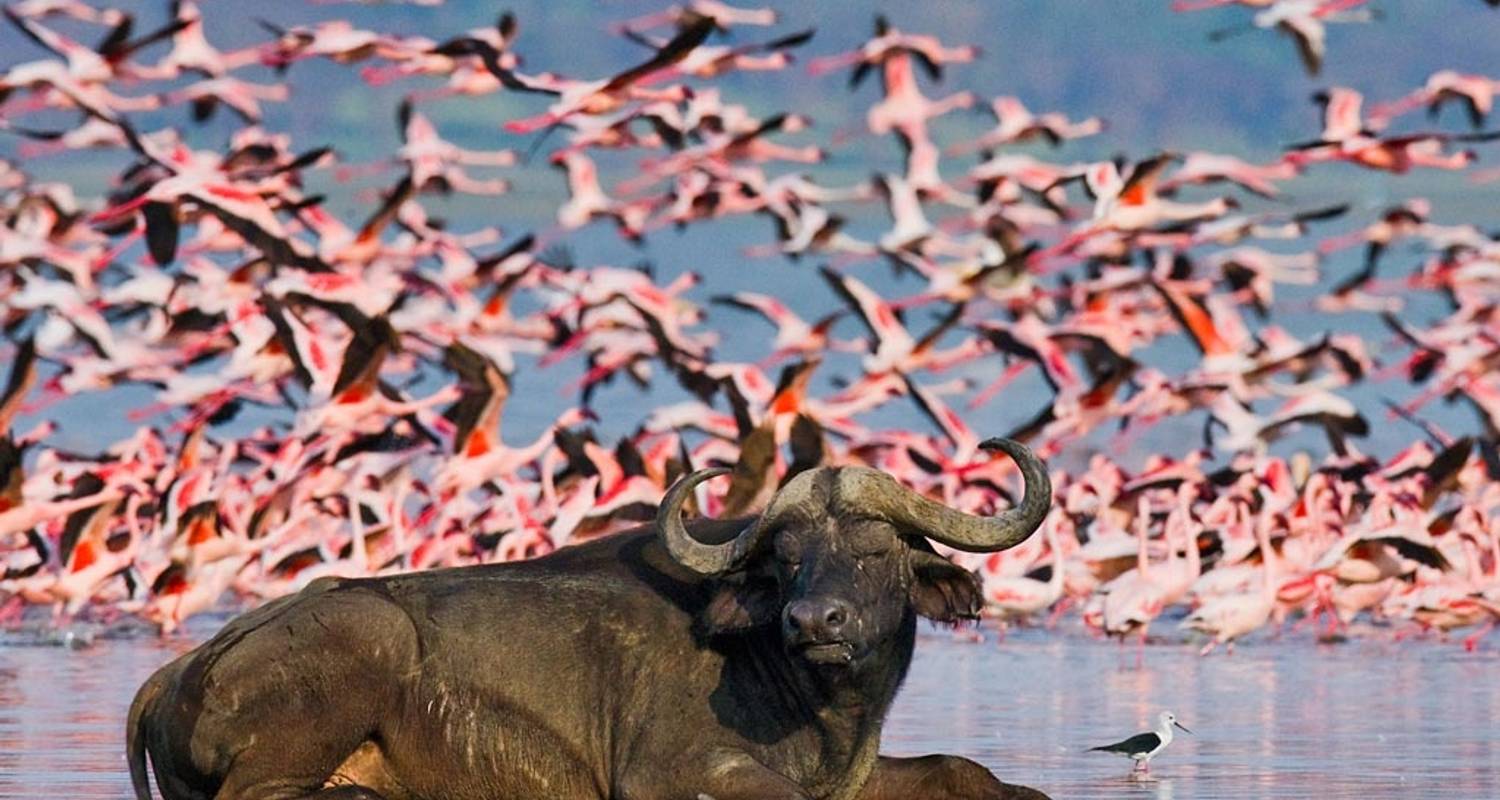
A 14-day budget Kenya wildlife safari can be achieved for approximately $150–$250 per person daily by choosing camping, traveling in a shared group van, and visiting during the low season (April-May, Nov-early Dec). Focus on iconic parks like Masai Mara, Nakuru, and Amboseli, using local,budget-friendly tented camps.
Managing a 14-day itinerary across Kenya’s vast landscapes requires a balance between ambition and economics. While Kenya is often associated with high-end luxury, it is a remarkably accessible destination for those who apply a strategic approach to their budget. Here is how to navigate the costs of a two-week expedition in 2026.
14-days-2-week-exclusive-kenya-tanzania-safari-tour-holiday-combined-vacation
14-days-ultimate-kenya-tanzania-safari-to-zanzibar-beach-beach-holidays
14-days-kenya-birding-safari-and-wildlife-watching
14-days-best-of-kenya-safari-holiday-2-weeks-africa-kenya-safari-vacation
Opt for Camping Safaris
The single most effective way to slash your expenses over 14 days is to shift your accommodation strategy from permanent luxury lodges to budget tented camps or public campsites. In 2026, the "glamping" trend has expanded, offering middle-ground options where you can enjoy a comfortable bed and en-suite facilities inside a canvas tent for a fraction of the price of a stone-and-mortar lodge. These camps are often located just outside park gates, significantly lowering the nightly rate while still placing you minutes away from the dawn game drives.
For the true adventurer, public campsites within the national parks (managed by the Kenya Wildlife Service) offer the most economical path. While these require more self-sufficiency—often involving shared facilities—they provide an immersive wilderness experience where you can hear the nocturnal calls of lions and hyenas from your tent. By choosing camping for even half of your 14-day trip, you can save enough to splurge on a "bucket list" experience, like a hot air balloon flight over the Maasai Mara, without exceeding your total budget.
Travel in Groups (Shared Vehicles)
Safari costs are largely driven by the "vehicle rate." A 4x4 Land Cruiser or safari van comes with a fixed daily cost that includes the vehicle hire, the professional guide’s fee, and fuel. If you travel solo or as a couple, you bear this entire cost alone. However, by joining a group safari, you distribute these expenses across 6 to 7 people. This "seat-in-bus" model can reduce your daily transport costs by up to 70%, making a 14-day trip financially viable for solo travelers and budget-conscious families alike.
Beyond the savings, group travel offers a social dimension, allowing you to share the excitement of sightings with fellow travelers. In 2026, many local operators specialize in "Open Group" departures with fixed dates, ensuring you don't have to organize the group yourself. While you sacrifice the total flexibility of a private vehicle, the trade-off is a significantly lower price point that allows you to extend your stay from a week to a full 14 days.
Travel by Road
While domestic "fly-in" safaris are convenient, they are the most expensive way to move between parks. For a 14-day itinerary, traveling by road is the most economical choice. You have two primary options: the classic 4x4 Land Cruiser or the Safari Van (Minibus). The van is the most budget-friendly vehicle in Kenya; it features a pop-up roof for wildlife viewing and is perfectly capable of navigating the main circuits of the Maasai Mara, Amboseli, and Lake Nakuru.
Road travel also turns your transit days into "cultural game drives." You will pass through vibrant rural towns, cross the Great Rift Valley, and see the changing topography of the country—experiences you miss at 10,000 feet. In 14 days, the driving distances are manageable if the route is planned logically (e.g., Nairobi to Nakuru to Mara). By choosing the road over the air, you can save hundreds of dollars in flight tickets, which can then be redirected toward longer park stays or higher-quality meals.
Self-Drive or Local Operators
In 2026, the self-drive safari has become a popular option for independent travelers. Hiring a well-equipped 4x4 (like a Toyota Hilux or Land Cruiser) generally costs between $50 and $120 per day. This allows you to set your own pace, choose your own campsites, and avoid the high markups associated with international tour agencies. However, this requires a high degree of confidence in navigating Kenyan roads and a basic understanding of animal behavior for safety.
If self-driving feels too daunting, the next best strategy is to book directly with local Kenyan operators rather than international wholesalers. Local companies have lower overheads and direct relationships with lodges, allowing them to pass those savings on to you. By cutting out the "middleman," you ensure that more of your money goes directly into the local economy and toward the conservation efforts of the parks you are visiting. Always look for operators registered with the Kenya Association of Tour Operators (KATO) to ensure reliability.
Seasonality
Timing is everything when it comes to safari pricing. Traveling during the "Green Season" (April to June) or the "Short Rains" (November to early December) can result in massive savings. During these periods, many luxury lodges drop their rates by 30% to 50% to attract visitors. Park fees remain constant, but the "cost-per-day" of your accommodation and vehicle will be at its lowest.
Beyond the cost, the low season offers a different kind of luxury: exclusivity. Instead of sharing a lion sighting with twenty other vehicles in the Maasai Mara, you might have the pride all to yourself. The landscapes are lush and green, the air is dust-free (ideal for photography), and the birdlife is at its peak with migratory species. While there is a higher chance of rain, the showers are usually short and followed by clear skies. For a 14-day trip, the "shoulder season" (late October or June) offers the perfect middle ground of good weather and discounted prices.
14-day Budget Kenya Wildlife Safari
This 14-day Budget Kenya Wildlife Safari is meticulously designed for travelers who seek the raw, unfiltered beauty of East Africa without the luxury price tag. By prioritizing authentic bush experiences over extravagant lodges, this 14 days Kenya wildlife safari itinerary spans the country’s most diverse ecosystems—from the arid northern frontier to the legendary savannas of the south. You will traverse the rugged Samburu landscapes, witness the rhino sanctuaries of the Great Rift Valley, and spend several nights in the world-renowned Maasai Mara. This journey utilizes affordable tented camps and strategic road travel, ensuring every dollar is directed toward maximizing wildlife encounters. You will see the "Big Five" and the "Samburu Special Five," all while supporting local communities and conservation efforts. It is a profound two-week narrative of discovery, proving that a comprehensive Kenyan adventure is accessible to those with a spirit for exploration and a focus on the natural world’s true wonders.
Day 1: Arrival in Nairobi
Your budget adventure begins in Nairobi, East Africa’s vibrant safari hub. Upon arrival at Jomo Kenyatta International Airport, you will be met by your guide and transferred to a comfortable, budget-friendly guesthouse in the city. The afternoon offers an optional visit to the David Sheldrick Elephant Orphanage or the Giraffe Centre, where conservation comes to life at a low cost. Nairobi is unique as the only city in the world with a national park on its doorstep. For those arriving early, a walk through the Karura Forest provides a serene introduction to Kenya’s flora. Dinner can be enjoyed at a local eatery, offering a taste of authentic Kenyan "Nyama Choma" (roasted meat). This first day is about acclimating to the local pace and preparing for the early morning departure to the northern frontier, all while keeping costs low through local guesthouses.
Day 2: Nairobi to Samburu National Reserve
Departing Nairobi early in a shared safari van, you head north toward the semi-arid plains of Samburu. The drive itself is a highlight, crossing the Equator and offering spectacular views of Mount Kenya’s peaks on a clear day. You will arrive at a budget-friendly permanent tented camp located just outside the reserve in time for a late lunch. The afternoon game drive introduces you to a landscape far removed from the lush south. Samburu’s red-earth terrain and the lifegiving Ewaso Ng’iro River host species found nowhere else in the country. As the sun sets, the temperature drops, and you will enjoy a communal dinner at the camp. Choosing camps outside the park gates significantly reduces costs while providing the same access to the wildlife-rich riverbanks where elephants and leopards often roam.
Day 3: Exploring Samburu’s "Special Five"
A full day in Samburu is dedicated to tracking the "Special Five": the reticulated giraffe, Grevy’s zebra, Somali ostrich, Beisa oryx, and the long-necked gerenuk. These desert-adapted species are the stars of the north. Using a shared 4x4 or safari van with a pop-up roof, you will explore the riverine forests and open scrubland. The dry environment makes wildlife spotting easier as animals congregate near the water. During the heat of midday, you will return to camp to rest, echoing the behavior of the predators you are tracking. An optional visit to a local Samburu village offers a deep cultural immersion at a fraction of the cost of commercialized tours. This day emphasizes the evolutionary marvels of the northern frontier, providing a rugged, authentic safari experience that remains affordable through smart lodging choices and group transport.
Day 4: Samburu to Ol Pejeta Conservancy
Leaving Samburu, you head to the Ol Pejeta Conservancy, a private sanctuary known for its world-class rhino conservation. To keep within a budget, you will stay at a nearby campsite or a basic lodge. Ol Pejeta is home to the world’s last remaining northern white rhinos and a protected chimpanzee sanctuary. Your afternoon game drive offers a high probability of seeing the "Big Five," as the conservancy has one of the highest predator densities in Kenya. The park’s flat plains make it ideal for photography and easy spotting. By staying just outside the conservancy or using their public campsites, you save significantly on the "conservancy fees" often bundled with luxury stays. Evening is spent around a campfire, sharing stories of the day’s sightings under a vast, unpolluted African sky, epitomizing the spirit of a budget safari.
Day 5: Ol Pejeta to Lake Nakuru National Park
The journey continues into the Great Rift Valley to Lake Nakuru National Park. Known primarily for its rhino sanctuary and diverse birdlife, Nakuru offers a compact yet intense wildlife experience. You will check into a budget hotel in the nearby Nakuru town, which is a strategic way to avoid the high prices of lodges inside the park. The afternoon game drive takes you through yellow-fever tree forests where leopards are known to lounge. You will visit the lake’s edge to see flamingos and pelicans, and the cliffs for a panoramic view of the soda lake. Nakuru is one of the best places in Kenya to see both black and white rhinos in a single drive. By basing yourself in the city, you enjoy the comforts of urban amenities while being only minutes away from prime wilderness.
Day 6: Lake Nakuru to Lake Naivasha
A short drive brings you to the freshwater serenity of Lake Naivasha. This stop is a budget traveler’s dream, offering low-cost activities that get you out of the vehicle. You will stay at a lakeside campsite or a backpacker-friendly lodge. The highlight here is Hell’s Gate National Park, where you can rent a bicycle and ride among zebras and giraffes—one of the few parks in Kenya where this is possible. Later, an affordable boat safari on the lake provides close-up encounters with hippos and magnificent fish eagles. Walking on Crescent Island among herbivores without a guide or vehicle fee further stretches your budget. Naivasha serves as a physical and financial "reset," allowing you to stretch your legs and enjoy a more relaxed pace before the high-intensity game drives of the Maasai Mara.
Day 7: Naivasha to Maasai Mara National Reserve
Today you head to the legendary Maasai Mara, the climax of any Kenyan safari. To maintain a budget over a 14-day period, you will stay in a "tented camp" in the Talek or Sekenani area. These camps offer permanent tents with beds and basic en-suite bathrooms at a fraction of the cost of the luxury lodges inside the reserve. You will arrive in time for lunch and an afternoon game drive. The Mara’s rolling golden grasslands are home to Africa’s greatest concentration of predators. Within hours, you are likely to spot lions, cheetahs, or even a leopard. The sheer abundance of herbivores—wildebeest, zebras, and topis—ensures that every drive is action-packed. Staying on the periphery of the park allows you to experience the same world-class wildlife while supporting local community-run tourism initiatives.
Day 8: Full Day in the Maasai Mara
A full day in the Mara allows you to venture deeper into the reserve, perhaps toward the Mara River. To save money, your camp will provide a packed "bush lunch," allowing you to stay out all day without returning for a meal. You will track the "Big Five" and witness the complex social structures of the resident lion prides. If your 14-day trip falls between July and October, you may witness the dramatic river crossings of the Great Migration. Even outside those months, the Mara is a year-round theater of life and death. Your guide will navigate the vast plains, using radio communication with other budget operators to locate rare sightings. This day is about the raw power of nature, where the quantity of wildlife sightings provides incredible "value for money" on your safari investment.
Day 9: Mara Cultural and Wilderness Immersion
This day balances wildlife viewing with cultural discovery. You can start with an early morning game drive to catch predators while they are still active. In the afternoon, visit a traditional Maasai Manyatta (village). While there is usually a small entry fee, the experience of learning about their ancient pastoralist lifestyle, warrior traditions, and beadwork is invaluable. For budget travelers, this is a chance to buy authentic souvenirs directly from the artisans. The rest of the day can be spent relaxing at your camp or taking a guided nature walk along the park boundary, which is often free or very low-cost. By staying three nights in the Mara, you reduce the "per day" cost of transport and enjoy a more immersive experience in the world’s most famous wildlife sanctuary without the rush.
Day 10: Maasai Mara to Amboseli National Park
This is a long transit day, traveling from the southwest to the southeast toward the border of Tanzania. To keep costs down, you will travel by road back through Nairobi and down to Amboseli. You will check into a budget-friendly camp with spectacular views of Mount Kilimanjaro. Amboseli is famous for its massive "tuskers"—large herds of elephants that have been studied for decades. Arriving in the late afternoon, you will catch the mountain as the clouds often clear at sunset, providing the iconic African postcard view. By using road travel instead of a domestic flight, you save hundreds of dollars, which allows for the 14-day duration of this trip. The evening is spent in the shadow of Africa's highest peak, enjoying a simple but hearty meal at your campsite.
Day 11: Amboseli’s Elephant Empire
A full day in Amboseli offers the chance to see elephants wallowing in the Enkongo Narok swamps against the backdrop of snow-capped Kilimanjaro. The park’s flat, dusty pans make wildlife incredibly easy to spot. You will visit Observation Hill for a panoramic view of the entire park, including the hippos in the marshes below. To maximize your budget, you will spend the midday hours at your camp’s shaded lounge rather than paying for extra excursions. Amboseli’s compact size means you don't need to drive long distances to see the "Big Five." The proximity of your budget camp to the park gate ensures you are among the first in and last out of the park, maximizing your game-viewing hours. This day provides some of the most photogenic moments of the entire 14-day circuit.
Day 12: Amboseli to Tsavo West National Park
You head east into the rugged, volcanic landscape of Tsavo West. This park offers a dramatic change in scenery, with ancient lava flows and hilly terrain. You will visit Mzima Springs, where millions of gallons of crystal-clear water gush from the ground, creating an oasis for hippos and crocodiles. To stay on budget, you will utilize the public campsites or budget-friendly self-catering bandas (huts) provided by the Kenya Wildlife Service. Tsavo West is home to the Ngulia Rhino Sanctuary, providing another chance to see these rare animals. The red volcanic soil gives the elephants a distinct reddish hue as they dust-bathe. This park is less crowded than the Mara or Amboseli, offering a sense of "wild Africa" that feels exclusive despite the low cost of the accommodation.
Day 13: Tsavo East’s Red Savanna
The penultimate day takes you into Tsavo East, one of the largest and oldest parks in the world. Known for its expansive, flat plains and the Yatta Plateau, Tsavo East offers a feeling of true isolation. You will search for the "Man-eaters of Tsavo" lion prides and large buffalo herds near the Galana River. Budget travelers typically stay at campsites near the Voi gate or in modest lodges just outside. The park’s red earth provides a striking contrast to the blue sky, making it a photographer’s paradise. You will visit the Aruba Dam, a magnet for wildlife during the dry season. Tsavo East represents the raw, untamed spirit of the Kenyan savanna, providing a rugged and authentic conclusion to your 14-day wildlife adventure before your final return to the capital.
Day 14: Tsavo to Nairobi and Departure
On your final day, you will enjoy a final early morning game drive in Tsavo East, catching the predators at their most active. After a simple breakfast at your camp, you begin the drive back to Nairobi. For a unique budget-friendly twist, you can opt to take the Madaraka Express train from Voi to Nairobi, which is an affordable and scenic way to cross the plains while looking for wildlife from the window. You will arrive in Nairobi by late afternoon, where your guide will transfer you to Jomo Kenyatta International Airport for your flight home. You depart Kenya with a full camera, a deep understanding of its diverse ecosystems, and the satisfaction of having experienced a world-class 14-day safari through smart, budget-conscious planning and local engagement.
What is the best time for a 14-day budget Kenya wildlife safari?
The timing of your trip is the most significant factor in determining the overall cost. For a budget traveler, the low season (April to June) and the shoulder season (November to early December) are the best windows. During these periods, often referred to as the "Green Season," luxury lodges and mid-range camps frequently slash their prices by 30% to 50% to fill empty rooms.
Furthermore, some tour operators offer discounted "low season" packages to keep their vehicles and staff active. While these months coincide with the rains, it rarely rains all day. The landscapes are lush and green, the dust is minimal, and most importantly, the parks are not crowded. You can enjoy the same wildlife sightings as peak-season travelers but at a fraction of the cost. If your goal is to save money, avoiding the July–October Great Migration window is essential, as prices for transport and lodging skyrocket during that peak period.
How can I find affordable accommodation for a 14-day budget Kenya wildlife safari?
Accommodation is typically the second-highest expense after park fees. To keep costs down, you should look beyond the famous lodges located inside park boundaries. Public campsites managed by the Kenya Wildlife Service (KWS) are the most affordable option, costing significantly less than permanent structures. You will need to bring or rent camping gear, but it allows you to stay within the heart of the wilderness.
Outside the gates of major parks like the Masai Mara or Amboseli, you will find many budget tented camps and hostels. These often provide basic but clean facilities, including hot showers and shared dining areas. Another growing trend for budget travelers is staying in homestays or local guesthouses in gateway towns like Narok, Mtito Andei, or Naivasha. By staying slightly further from the main gates and using apps to compare prices, you can find rooms for $30–$50 per night, which is a massive saving compared to the $200+ per night charged by inner-park lodges.
Is it cheaper to do a self-drive or group tour for a budget Kenya wildlife safari?
For most travelers, a group joining safari is the most cost-effective option. In Kenya, the cost of the vehicle and the driver-guide is a fixed daily rate (usually between $150 and $250). If you are a solo traveler or a couple, a private safari means you bear that entire cost alone. However, joining a group of six people allows you to split that cost, bringing your daily transport expense down to $30–$40.
Self-driving can seem attractive, but it often comes with hidden costs and risks. Renting a capable 4x4 is expensive, and fuel prices in Kenya are significant. Additionally, without a professional guide who has a radio to communicate with other drivers, you may spend hours searching for elusive animals like leopards or rhinos, wasting both time and fuel. Group tours take the logistical pressure off and ensure you are sharing the "safari overhead" with fellow travelers, making it the gold standard for budget planning.
Which national parks are best for a 14-day budget Kenya wildlife safari?
To maximize value, focus on parks that offer high wildlife density and lower logistical costs. Hell’s Gate National Park is a top budget choice because you can explore it on a bicycle rather than in an expensive vehicle, saving on both car hire and fuel. Lake Nakuru National Park is excellent because it is compact and easily accessible from the main highway, meaning you can see a high volume of rhinos and flamingos in a single day.
Amboseli National Park is another great option due to its flat terrain, which makes wildlife spotting easy and reduces the amount of "searching" time required. Nairobi National Park should also be on your list; because it is located on the edge of the capital, you save on the multi-day accommodation and long-distance travel costs associated with the more remote parks. By selecting parks that are geographically close to one another—such as a circuit of Nairobi, Naivasha, Nakuru, and the Mara—you minimize transit time and maximize your wildlife viewing hours.
How do I save on food during my 14-day budget Kenya wildlife safari?
Food at safari lodges is notoriously expensive, often costing $20–$40 for a single buffet meal. To avoid this, budget travelers should opt for self-catering or local eateries. If you are camping, you can buy supplies at large supermarkets in Nairobi (like Carrefour or Naivas) and cook over a portable stove. This allows you to eat for less than $10 a day.
When you are on the road, look for "Nyama Choma" (roasted meat) joints or local cafes in transit towns. A plate of Ugali, Sukuma Wiki (kale), and beef is nutritious, filling, and usually costs less than $5. Most group tours include meals in their price, but it is always worth checking if you can opt-out of the "lodge lunch" and instead bring your own packed sandwich. Buying snacks and bulk water in the city rather than at park gates or hotel bars will also save you a significant amount over 14 days.
Can I use public transportation (matatus) for a budget Kenya wildlife safari?
Yes, using matatus (minibuses) or long-distance buses like Easy Coach or Modern Coast is the cheapest way to travel between Kenyan towns. You can easily take a bus from Nairobi to towns like Narok (for the Mara), Mtito Andei (for Tsavo), or Naivasha. This costs a fraction of the price of a private transfer or a domestic flight.
However, keep in mind that public transport will only get you to the town near the park, not into the park itself. Most national parks prohibit entry on foot for safety reasons. Therefore, the best budget strategy is to use public transport to reach the park's gateway and then hire a local taxi-jeep or join a pre-arranged game drive from your budget camp. This "hybrid" approach—public transport for the long hauls and shared jeeps for the actual safari—is the most effective way to cut down on total trip costs.
What is the "12-hour rule" for budget Kenya wildlife safari park fees?
The "12-hour rule" refers to the way some parks, most notably the Masai Mara National Reserve, calculate their entry fees. In the Mara, a park fee (currently $100–$200 depending on the season and location) is typically valid for one entry within a 12-hour window (usually 6:00 AM to 6:00 PM).
This is a critical distinction from the 24-hour rule used by KWS-managed parks (like Amboseli or Nakuru). For the budget traveler, this means you need to be strategic. If you enter the Mara at 4:00 PM for an evening drive, your "day" is essentially used up in two hours. To get the best value, you should plan for full-day game drives. Enter as the gates open at 6:00 AM and stay until they close at 6:00 PM. This ensures you get 12 full hours of wildlife viewing for a single permit fee, making your daily cost-per-hour much more efficient.
What is a realistic daily cost for a 14-day budget Kenya wildlife safari?
For a "true" budget experience involving camping, public transport, and some group-joining game drives, you should budget between $60 and $100 per day. This breaks down roughly as follows: $20–$30 for basic accommodation or camping fees, $15–$20 for food and water, and the remainder allocated to park entry fees and shared transport.
Keep in mind that park fees are often the most expensive component, with some parks charging $70–$100 per day for foreign non-residents. Therefore, on the days you are inside a park, your daily spend might spike to $150, but on "transit days" or days spent in lower-cost areas like Naivasha, you might only spend $40. Over 14 days, a total budget of $1,200 to $1,500 (excluding international flights) is a realistic target for a traveler who is comfortable with basic amenities and communal living.
Are there free or low-cost activities for a budget Kenya wildlife safari?
Yes, Kenya offers several activities that provide great value without the high price tag of a major savanna park. Hell’s Gate National Park has one of the lowest entry fees and allows for cycling and hiking, which are cheaper than renting a jeep. Walking in the Karura Forest in Nairobi is very inexpensive and offers great birding and waterfall views.
You can also visit the Nairobi Giraffe Centre for a modest fee, or take a walk along the Nairobi Safari Walk, which provides a boardwalk view of various animals for a fraction of the cost of a full park entry. Another great tip is to visit the public beaches in Diani or Watamu at the end of your trip. While the safari portion is expensive, a few days spent on a public beach only costs you the price of your food and a cheap guesthouse, helping to bring down the average daily cost of your 14-day itinerary.
How can I avoid hidden fees on my budget Kenya wildlife safari?
Hidden fees can quickly ruin a budget. The most common surprise costs are VAT (Value Added Tax), which is sometimes not included in quoted lodge prices, and concession fees, which are separate from park entry fees at some private conservancies. Always ask your operator if the quote is "fully inclusive of all taxes and park fees."
Another hidden cost is tipping. In Kenya, tipping your driver-guide is customary and expected (usually $10–$15 per day per group). If you don't account for this over 14 days, it can be a significant unplanned expense. Finally, be wary of "free" cultural visits. Often, a driver will offer to take you to a Maasai village; while the drive is free, the village will charge an entry fee (usually $20–$30). Always ask for the price of any "extra" activity before you agree to go.
Do I need to pay for a guide on a budget Kenya wildlife safari?
In some parks, a guide is mandatory; in others, it is optional but recommended. For a budget traveler, the best approach is to utilize the guides provided by the park or join a group tour where the guide's salary is shared. At Hell’s Gate, you do not need a guide to cycle the main road, but you might want to hire a local community guide for $10–$15 to navigate the narrow gorges safely.
In the large savanna parks, the "guide" is usually your driver. While you could technically drive yourself, a guide's knowledge of animal tracks and their radio contact with other rangers is what ensures you actually see the wildlife. For a budget safari, the "cost" of the guide is built into your group joining fee, which is much cheaper than trying to hire a freelance specialist guide separately.
What should I pack for a budget Kenya wildlife safari?
Packing correctly can save you a lot of money "in the field." Buying sunscreen, insect repellent, or batteries at a lodge gift shop will cost you triple the price of a city supermarket.
- Essentials: Bring a reusable water bottle with a built-in filter (like a Grayl or LifeStraw) to avoid buying expensive bottled water every day.
- Snacks: Pack high-energy snacks like nuts, protein bars, and dried fruit from home.
- Clothing: Bring a universal sink plug and travel detergent so you can wash your own clothes in your room or at the campsite, avoiding expensive lodge laundry fees.
- Power: A large capacity power bank is vital for campers who may not have consistent access to charging points. By being self-sufficient, you avoid the small daily "convenience fees" that can add up over two weeks.
Is it better to pay in USD or Kenyan Shillings (KES) for a budget Kenya wildlife safari?
For a budget traveler, carrying Kenyan Shillings (KES) is almost always better for day-to-day expenses. While park fees and large tour balances are often quoted in USD, using dollars for small purchases (like water, tips, or local meals) will result in a very poor exchange rate.
Most local vendors will round up the dollar price significantly. It is best to withdraw Shillings from an ATM (like KCB, Stanbic, or Absa) upon arrival. This ensures you get the official bank rate. However, ensure your USD bills for the park fees are printed after 2006 and are in pristine condition; Kenyan banks and the KWS often reject old or torn US currency. Having a mix—USD for the "big" fees and KES for the "small" life—is the most financially savvy approach.
How do I choose the best budget Kenya wildlife safari operator?
The best way to choose an operator is to look for local Kenyan companies rather than international travel agents. International agents often sub-contract the work to local companies and add a 20% commission on top. Use platforms like SafariBookings to compare reviews and look specifically for "Group Joining" itineraries.
Check if the operator is a member of KATO (Kenya Association of Tour Operators), which provides a level of financial protection and accountability. A good budget operator should be transparent about the type of vehicle (Safari Van vs. Land Cruiser) and the exact camps you will be staying in. Don't be afraid to ask for a breakdown of what is included. If a price seems "too good to be true," it often means park fees are excluded, so read the fine print carefully before sending a deposit.
How can I save on park entry fees for my budget Kenya wildlife safari?
Park fees are fixed and non-negotiable, but you can save by being selective about which parks you visit. For example, the Masai Mara and Amboseli have some of the highest fees ($100–$200 per day). If you spend your entire 14 days in these "premium" parks, your budget will vanish.
Instead, mix these premium parks with lower-tier KWS parks like Lake Nakuru, Tsavo, or Mount Kenya, which often have lower entry fees for foreign non-residents. You can also save by spending more time in private conservancies or community-run areas that might offer "multi-day" discounts or lower conservation fees. Another tip is to look for "circuit" tickets if available, or simply stay for one long day in an expensive park rather than three short days, maximizing your wildlife sightings per dollar spent on entry.
Booking 14 Days budget Kenya safari with us Roads of Adventure safaris
Book a 14-day budget Kenya safari with Roads of Adventure Safaris to explore Masai Mara, Amboseli, and more, focusing on cost-effective, high-experience travel. Options include group camping tours and budget lodges, typically spanning Masai Mara, Amboseli, and Lake Nakuru
