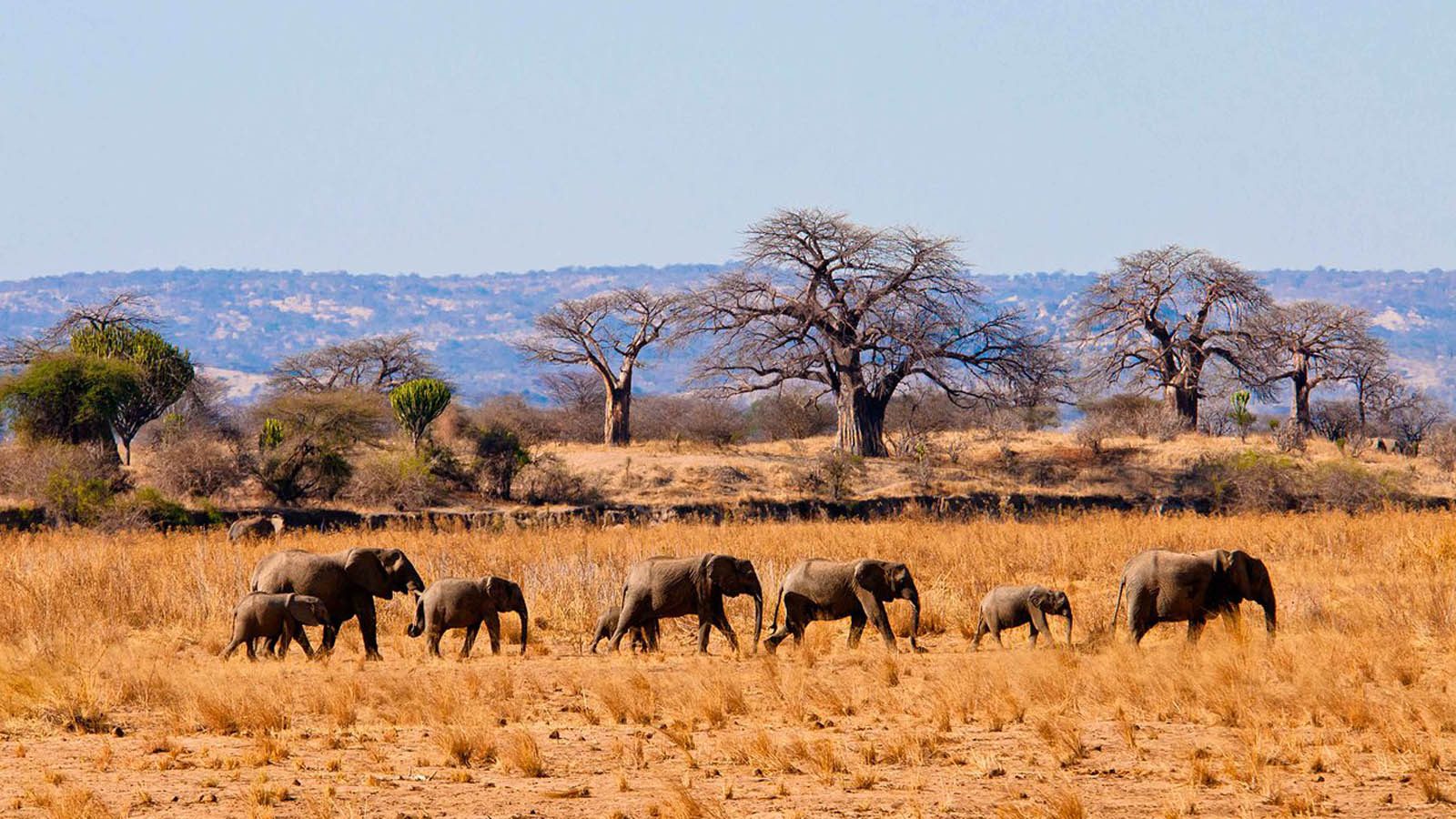
A 6-day Tanzania safari typically covers the Northern Circuit—Serengeti, Ngorongoro Crater, and Tarangire or Lake Manyara—starting and ending at Kilimanjaro International Airport (JRO). Best visited from June–October (dry season), you can optimize this trip with a private guide or by flying between parks to save time on long drives
6-days-ultimate-budget-tanzania-safari-tour-holiday-vacation
6-days-lake-manyara-ngorongoro-crater-and-serengeti-tour-package
6-days-perfect-zanzibar-beach-holiday-tour-package-itinerary
6-days-zanzibar-beach-holiday-to-mnemba-island-spice-tour-safari-blue-and-mikumi-national-park
6-days-best-northern-circuit-tanzania-safari-to-best-tanzania-safari-parks
6-days-best-northern-circuit-tanzania-safari-to-best-tanzania-safari-parks
6-days-fly-in-safari-from-zanzibar-tarangire-serengeti-ngorongoro-crater-and-lake-manyara
6-days-best-of-tanzania-safari-to-nyerere-mikumi-and-udzungwa-mountains
6-days-ultimate-kilimanjaro-climb-via-machame-route
6-days-kilimanjaro-climb-via-umbwe-route
6-days-best-kilimanjaro-climb-via-marangu-route
6-days-ndutu-migration-and-tanzania-safari-itinerary
Typical 6-Day Northern Tanzania safari Circuit Itinerary
The Northern Tanzania Safari Circuit is a world-class pilgrimage into the heart of the African wilderness, offering an unparalleled concentration of wildlife and breathtaking landscapes. This iconic route traverses some of the most celebrated natural wonders on the planet, including the legendary Serengeti National Park and the awe-inspiring Ngorongoro Crater. Over the course of six days, travelers are treated to a diverse tapestry of ecosystems, from the ancient baobab-studded plains of Tarangire to the lush, groundwater forests of Lake Manyara. This journey is not merely a vacation but a profound immersion into the rhythms of the wild, where the "Big Five" roam free and the Great Migration paints the landscape with movement. Designed for those seeking a balance of adventure and comfort, the northern circuit provides the quintessential safari experience, combining expert-led game drives with the enchanting atmosphere of the African bush. It is a bucket-list expedition that promises memories to last a lifetime.
Day 1: Arusha to Tarangire National Park
Your adventure begins with a scenic drive from Arusha to Tarangire National Park, a hidden gem often referred to as the "Home of Giants." As you enter the gates, you are immediately greeted by the park’s most striking feature: ancient, towering baobab trees that dwarf the landscape. Tarangire is famous for hosting one of the largest concentrations of elephants in Africa, and it is not uncommon to see herds numbering in the hundreds congregating along the Tarangire River. This permanent water source acts as a magnet for wildlife, attracting wildebeest, zebras, giraffes, and various antelope species. Predatory cats like lions and leopards are frequently spotted lounging in the shade or scanning the plains for their next meal. After a full day of exploration and a picnic lunch overlooking the river, you will head to your lodge or camp to enjoy your first evening under the vast African stars.
Day 2: Lake Manyara National Park
After breakfast, you will travel to Lake Manyara National Park, a relatively small but incredibly diverse park nestled at the base of the Great Rift Valley escarpment. The park is dominated by a shimmering alkaline lake that attracts thousands of flamingos, painting the shoreline pink. As you drive through the lush groundwater forest, keep an eye out for troops of baboons and blue monkeys playing in the canopy. Lake Manyara is also legendary for its unique tree-climbing lions, a rare behavior that continues to fascinate researchers and visitors alike. Beyond the lions, the park is home to large pods of hippos wallowing in the Simba River and a variety of plains game. The afternoon provides ample opportunities for birdwatching, with over 400 species recorded here. You will finish the day by ascending the rift wall for breathtaking views of the valley below before retiring.
Day 3: Journey to the Serengeti
Today you venture into the crown jewel of Tanzania: Serengeti National Park. The drive takes you through the Ngorongoro Conservation Area, offering a glimpse of Maasai life as you pass traditional boma settlements. As you descend into the Serengeti, the trees vanish, replaced by the "endless plains" that give the park its name. This ecosystem is home to the most spectacular wildlife show on Earth: the Great Migration. Depending on the time of year, you may find yourself surrounded by millions of wildebeest and zebras. Even outside of migration season, the Serengeti’s resident wildlife is staggering. You will spend the afternoon searching for the Big Five—lion, leopard, elephant, buffalo, and rhino—along with cheetahs and hyenas. The vast horizons and golden light of the Serengeti provide a dramatic backdrop for photography. You will spend the night in a tented camp in the heart of the wilderness.
Day 4: Full Day in the Serengeti
A full day in the Serengeti allows you to delve deeper into its remote corners. You might opt for an early morning game drive to catch predators while they are still active in the cool dawn air. This is the best time to see lions on a kill or a leopard dragging its prey into an acacia tree. Your expert guide will navigate the Seronera Valley or move toward the western or northern regions depending on animal movements. The Serengeti’s diversity is immense; you might encounter massive crocodiles in the rivers, elegant giraffes browsing the treetops, or playful topi on the hillsides. A picnic lunch in the middle of the bush offers a moment of serenity amidst the wild. The sheer scale of the landscape is humbling, providing a sense of isolation and peace that is hard to find elsewhere. As the sun sets, the plains turn a fiery orange, marking the end of another incredible day.
Day 5: Serengeti to Ngorongoro Crater Rim
After a final morning game drive in the Serengeti to spot any elusive species you may have missed, you will begin your journey toward the Ngorongoro Highlands. The landscape shifts from flat savannah to rolling green hills and dense forests. Upon reaching the Ngorongoro Conservation Area, you will head to the crater rim. The Ngorongoro Crater is the world’s largest inactive, intact, and unfilled volcanic caldera, and the view from the top is nothing short of miraculous. Standing at the viewpoint, you can see the entire 600-meter-deep floor spreading out below you like a lost world. The afternoon can be spent relaxing at your lodge, soaking in the panoramic vistas, or visiting a local Maasai village to learn about their ancient culture and traditions. The cool mountain air at this altitude provides a refreshing contrast to the heat of the plains, setting the stage for your final descent.
Day 6: Ngorongoro Crater Floor and Departure
Your final day features a descent into the "Eden of Africa." The crater floor is a self-contained ecosystem where wildlife remains year-round due to the constant water supply. Within the 20-kilometer-wide caldera, you have the best chance of spotting the endangered black rhino, completing your "Big Five" checklist. The concentration of predators here is the densest in the world, with large prides of lions and numerous hyenas frequently seen. You will visit Lake Magadi to see hippos and waterbirds before enjoying a final picnic lunch on the crater floor. The steep walls of the caldera create a natural amphitheater, making every sighting feel intimate and spectacular. In the afternoon, you will ascend the crater walls and begin the drive back to Arusha. You will arrive in the evening, filled with stories and photos, ready for your flight home or onward to Zanzibar.
What is the best time for a 6-day Tanzania safari holiday?
The dry season, spanning from late June to October, is widely considered the premier window for a Tanzanian safari. During these months, the weather is predictable and temperate, with clear blue skies and minimal rainfall. This lack of rain causes the vegetation to thin out and water sources to dry up, forcing animals to congregate around remaining permanent water holes and riverbanks. This makes wildlife exceptionally easy to spot. If your primary goal is the Great Migration, June and July are the "golden months" when the herds move through the Central Serengeti toward the Western Corridor and eventually the North. However, the "Short Dry Season" in January and February is also spectacular, particularly in the Southern Serengeti, where the wildebeest calving season takes place, attracting high levels of predator activity. While the "Green Season" (March to May) brings heavier rains, it offers lush emerald landscapes, fewer crowds, and lower prices, though some remote tracks may become impassable.
Which parks should I visit during a 6-day Tanzania safari holiday?
With only six days, the "Northern Circuit" is your best bet to minimize road time and maximize animal encounters. The Serengeti National Park is non-negotiable; it is the heart of the ecosystem and requires at least two nights to truly appreciate its scale. The Ngorongoro Crater is equally essential, offering a unique "natural zoo" experience where you can see the Big Five in a single day. To round out the trip, Tarangire National Park is highly recommended, especially during the dry season, for its world-famous elephant populations and iconic baobab trees. If you are a bird enthusiast or want to see tree-climbing lions, Lake Manyara National Park is a fantastic alternative or addition. These parks are geographically close to one another, allowing for a seamless transition between different habitats—from dusty savannahs to lush groundwater forests and volcanic highlands—without requiring domestic flights.
What does a 6-day Tanzania safari holiday usually cost?
The cost of a safari is a "sliding scale" based on your preferred level of comfort and the season of travel. For a mid-range, private 6-day safari, you can expect to pay between $2,000 and $3,500 per person. This price typically covers a private 4x4 vehicle, a professional English-speaking guide, all park entrance fees (which are significant in Tanzania), high-quality meals, and accommodation in permanent tented camps or lodges. Budget safaris can drop to $1,200–$1,500 by utilizing public campsites where you sleep in basic tents and travel in shared vehicles. On the other end, ultra-luxury safaris featuring fly-in options to exclusive boutique camps can easily exceed $7,000 per person. It is important to note that January, June, and July are peak pricing months, while April and May often see "low season" discounts of 20% to 30% on accommodation.
Do I need a visa for my Tanzania safari holiday?
Yes, the vast majority of foreign nationals, including citizens of the US, UK, Canada, and the EU, require a visa to enter Tanzania. The most efficient way to handle this is through the official Tanzania e-Visa portal online. It is recommended to apply at least two to three weeks before your departure to allow for processing time. While "Visa on Arrival" is still available at major airports like Kilimanjaro (JRO) and Dar es Salaam (DAR), the queues can be extremely long, sometimes taking over two hours after a long flight. A standard tourist visa typically costs $50 for most nationalities, though US citizens are required to purchase a multiple-entry visa for $100. Always ensure your passport is valid for at least six months beyond your departure date and has at least two blank pages for stamps.
Is a 6-day Tanzania safari holiday long enough to see the Big Five?
Absolutely. While wildlife sightings are never guaranteed in the wild, a well-structured 6-day itinerary focuses on the two areas with the highest animal density: the Serengeti and the Ngorongoro Crater. The Ngorongoro Crater is perhaps the best place in East Africa to see the endangered Black Rhino, which is usually the hardest of the Big Five to check off your list. Lions and buffalo are incredibly common throughout the northern circuit, and elephants are almost a certainty in Tarangire and the Serengeti. The leopard remains the most elusive, but experienced guides are experts at spotting them draped over acacia branches in the Seronera Valley of the Serengeti. Six days provides enough "game drive hours" to significantly increase your statistical chances of seeing all five, especially if you spend multiple days in the Serengeti.
What vaccinations are needed for a Tanzania safari holiday?
Health preparations should begin at least a month before your flight. While Tanzania does not always require specific vaccinations for entry, you must show a Yellow Fever vaccination certificate if you are arriving from a country where the disease is endemic (including layovers of more than 12 hours in countries like Kenya or Ethiopia). Routine shots like Hepatitis A, Hepatitis B, and Typhoid are strongly recommended due to differences in food and water hygiene. Most importantly, Tanzania is a malaria-risk zone. You should consult a travel clinic to obtain a prescription for anti-malarial prophylaxis (such as Malarone or Doxycycline). Additionally, using DEET-based repellent and wearing long sleeves at dusk are vital preventative measures. Always check the latest CDC or WHO guidelines, as health requirements can shift.
What should I pack for a 6-day Tanzania safari holiday?
Packing for a safari is about utility and "layering." The mornings in the highlands (like Ngorongoro) can be surprisingly cold, often dipping near freezing, while the afternoons in the Serengeti can be scorching. Bring a warm fleece or light down jacket for early game drives. Clothing should be in neutral tones—khaki, tan, and olive—to blend into the environment; avoid bright colors that startle animals and dark blue or black, which attract biting tsetse flies. Essential gear includes high-quality binoculars (8x42 is the standard), a camera with a telephoto lens, and extra memory cards. Don't forget a wide-brimmed hat, high-SPF sunscreen, and a reusable water bottle. Since most safari vehicles have limited space, use a soft-sided duffel bag rather than a hard suitcase.
What type of accommodation is available on a Tanzania safari holiday?
Tanzania offers a spectrum of lodging that caters to every "vibe." Budget travelers use public campsites, which provide basic shared bathroom facilities and a communal dining area where your private chef prepares meals. Mid-range travelers typically stay in "tented camps." These are not your average camping tents; they feature wooden floors, real beds, ensuite bathrooms with hot showers, and solar power. They offer an immersive "bush" experience where you can hear lions roaring at night. Luxury lodges and "super-luxury" camps offer the amenities of a five-star hotel—infinity pools, fine dining, and air conditioning—often in stunning locations like the rim of the Ngorongoro Crater. Choosing a mix of tented camps and lodges is often the best way to experience both the ruggedness and the comfort of the region.
Should I book a private or group 6-day Tanzania safari holiday?
This decision depends on your budget and desired level of control. A private safari gives you exclusive use of the 4x4 vehicle and the undivided attention of your guide. You decide when to start your day, how long to stay at a specific leopard sighting, and when to head back to camp. This is ideal for families, photographers, or couples on a honeymoon. Group safaris (joining a pre-scheduled tour) are significantly more affordable as you split the costs of the vehicle, fuel, and guide with other travelers. However, you must adhere to a fixed schedule and may have to compromise on which animals to track. For a 6-day trip, a private safari is often worth the extra investment to ensure you get the exact experience you want without compromise.
How do I get around during my Tanzania safari holiday?
The primary mode of transport is a specially modified 4x4 Land Cruiser. These vehicles are built to handle the rugged, unpaved "African massage" roads of the national parks. They feature heavy-duty suspension and, most importantly, a pop-up roof that allows you to stand up and have an unobstructed 360-degree view for photography and wildlife spotting. Most safaris begin and end in Arusha, with your guide driving you between the parks. However, for those looking to save time, you can book "fly-in" safaris where you take a small Cessna or Caravan aircraft from Arusha directly to an airstrip in the Serengeti, meeting your vehicle there. While flying is more expensive, it eliminates the 6–8 hour drive back to Arusha at the end of the trip.
Is it safe to go on a Tanzania safari holiday?
Tanzania is widely regarded as one of the safest and most stable countries in Africa for tourism. The safari industry is highly regulated, and professional guides are trained not only in wildlife spotting but also in safety protocols and bush mechanics. Within the parks, the primary "danger" is the wildlife, but as long as you follow your guide’s instructions—staying inside the vehicle and not making loud noises—there is virtually no risk. In cities like Arusha, standard travel precautions apply: avoid walking alone at night and keep your valuables in a hotel safe. Most safari operators are deeply invested in your safety, providing 24/7 support and vehicles equipped with long-range radios to stay in contact with park rangers and other guides.
What should I expect from a 6-day Tanzania safari holiday itinerary?
A typical itinerary is an exhilarating but tiring "marathon" of nature. You will generally spend 2 days in the Serengeti, 1 day in the Ngorongoro Crater, and 2 days split between Tarangire and Manyara or travel time. Expect early wake-up calls (around 6:00 AM) because the first two hours of daylight are when animals are most active. You will spend roughly 6 to 8 hours a day inside the vehicle. Some days involve "transit" game drives, where you view wildlife while moving from one park to the next. Lunch is often a "picnic" at a designated site in the middle of the park, allowing you to stay in the field longer. Evenings are for "sundowners" (drinks at sunset), hearty dinners, and sharing stories around a campfire before an early bedtime.
Are meals included in a 6-day Tanzania safari holiday?
Yes, almost all Tanzania safari packages are "full-board," meaning breakfast, lunch, and dinner are included in the price. Breakfast is usually served at the lodge or camp and consists of fruit, eggs, and coffee. For lunch, especially on full-day game drives, your guide will provide a "lunch box" containing sandwiches, chicken, fruit, juice, and snacks. Dinner is typically a three-course affair at your accommodation, featuring a mix of international cuisine and local Tanzanian dishes like ugali or nyama choma. Most operators also provide an unlimited supply of bottled drinking water inside the safari vehicle. If you have dietary restrictions (vegan, gluten-free, etc.), Tanzanian chefs are remarkably accommodating, provided you notify your tour operator at the time of booking.
What kind of vehicle is used for a Tanzania safari holiday?
The "workhorse" of the Tanzanian safari is the 4x4 Toyota Land Cruiser. These are not standard SUVs; they are custom-built for the bush. They feature six or seven passenger seats, all of which are window seats to ensure everyone has a clear view. The most critical feature is the pop-up roof, which provides shade while allowing you to stand and film wildlife. Vehicles are equipped with high-frequency (HF) radios to communicate with other guides about rare sightings (like a cheetah on the move). Most modern safari cruisers also come with internal charging ports (USB or plug sockets) so you can charge your camera and phone batteries while on the move. Some luxury operators even provide a small fridge in the vehicle to keep your drinks cold during the heat of the day.
Can I combine a 6-day Tanzania safari holiday with a beach vacation?
This is the most popular way to end a Tanzanian trip, often called the "Bush to Beach" experience. After six days of dusty roads and early mornings, the white sands of Zanzibar are the perfect antidote. There are daily direct flights from the Serengeti (Seronera or Kogatende airstrips) or Arusha to Zanzibar. The flight takes about 1.5 to 2 hours. This allows you to go from watching a lion hunt in the morning to sipping a coconut on a tropical beach by late afternoon. Most travelers add 3 to 5 days in Zanzibar to explore the historic Stone Town and relax at a coastal resort. It provides a beautiful contrast and a chance to decompress before the long flight back home.
Booking 6 Days Tanzania safari with us Roads of Adventure safaris
To book your 6-Day Tanzania Safari with Roads of Adventure Safaris, you can choose from their specialized itineraries that cover the iconic Northern Circuit. Their packages typically include visits to Serengeti National Park, Ngorongoro Crater, and Tarangire National Park.
