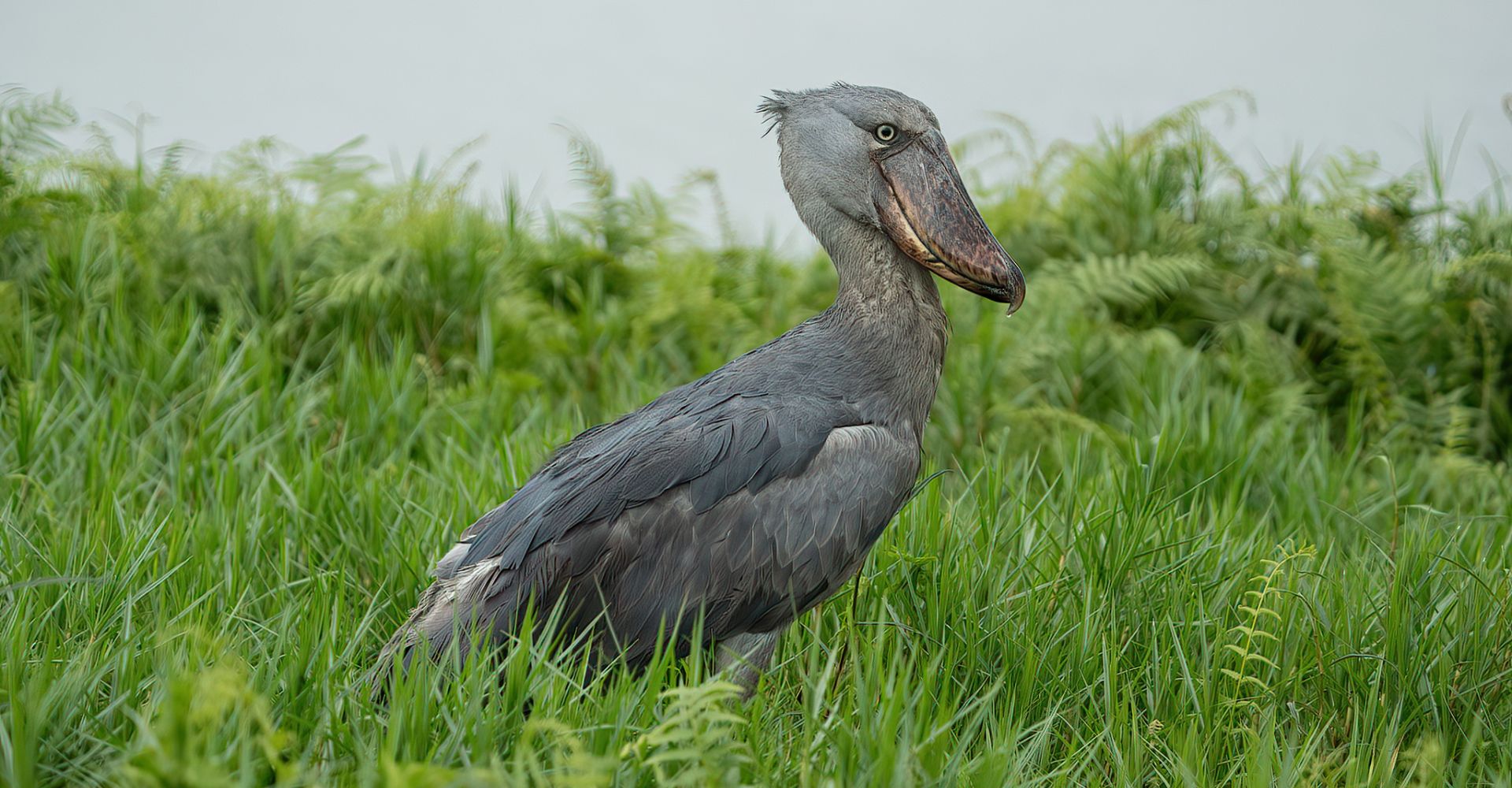
A 17-day Uganda birding safari is an immersive, guided 4x4 road trip covering key birding hotspots—Mabamba Swamp, Budongo Forest, Murchison Falls, Kibale, Semuliki, Queen Elizabeth, and Bwindi. It focuses on Albertine Rift endemics, forest specialists, and the Shoebill, while offering optional gorilla/chimp trekking.
30-days-best-uganda-birding-safari-extravaganza-and-wildlife-safari
25-days-complete-uganda-birding-safari-extravaganza-with-wildlife-viewing
22-days-best-uganda-primate-and-birding-safari-adventure
21-days-uganda-birding-safari-extravaganza-to-best-uganda-safari-parks
20-days-uganda-birding-safari-wildlife-gorilla-and-chimpanzee-tracking
20-days-uganda-birding-safari-to-uganda-national-park
19-days-best-photography-uganda-birding-safari-and-wildlife-adventure
8-days-best-uganda-birding-safari-and-wildlife-watching-tour-package
7-days-best-uganda-birding-safari-tour
5-days-uganda-bird-watching-safari-lake-victoria-shores-and-lake-mburo
Core Travel & Logistics
- Transport: A dedicated 4x4 safari vehicle with a pop-up roof for birding is used, often involving long drives, though some itineraries now offer flying options between distant parks.
- Guides: A specialized birding guide is crucial for identifying species in dense forests like Budongo and Bwindi.
- Accommodation: Lodges and campsites are generally included, ranging from mid-range to luxury, often located near park boundaries.
- Best Time: Birding is great year-round, but June-September is drier, while March-May and October-November can be wet (best for bird breeding).
17-Day Uganda Birding Safari: The Ultimate Equatorial Avian Odyssey
Uganda is indisputably Africa’s premier birding destination, boasting a checklist of over 1,000 species within a territory the size of Great Britain. This 17-day comprehensive safari is a masterclass in biodiversity, meticulously designed to traverse the nation’s most critical birding corridors. From the prehistoric Shoebill in the papyrus swamps of Lake Victoria to the Albertine Rift endemics of the misty Bwindi Impenetrable Forest, this journey offers a deep dive into every major East African ecosystem.
Guided by expert local ornithologists, you will explore the legendary Royal Mile, navigate the Congo-biome forests of Semuliki, and cruise the wildlife-rich Kazinga Channel. This 17 day itinerary balances high-intensity "listing" with iconic African experiences, including Gorilla tracking and savannah game drives. Whether you are a dedicated "twitcher" hunting for the African Green Broadbill or a nature enthusiast marveling at the Great Blue Turaco, this 17-day expedition provides an unparalleled encounter with the "Pearl of Africa."
Day 1: Arrival at Entebbe & Botanical Gardens Your avian adventure begins at the lush Entebbe peninsula. After a warm welcome, the afternoon is spent at the historic Entebbe Botanical Gardens. This serves as a perfect "soft landing," offering sightings of the Orange-tufted Sunbird, Golden-backed Weaver, and the prehistoric-looking Black-and-white-casqued Hornbill in the towering canopy. You will scan the shores of Lake Victoria for the Long-tailed Cormorant and the Yellow-billed Duck. Overhead, the Bat Hawk often emerges at dusk to hunt near the gardens. This gentle introduction allows you to acclimatise to the tropical humidity while immediately ticking off several Lake Victoria Basin specialists. The evening is spent in a quiet lodge, soundtracked by the distant calls of African Wood Owls, preparing you for the intensive wetland exploration of the following morning.
Day 2: Mabamba Swamp & The Shoebill Quest Today is dedicated to the "Holy Grail" of African birding: the Shoebill. You depart early for Mabamba Wetland, a RAMSAR site where you board traditional wooden canoes to navigate narrow papyrus channels. The Shoebill’s prehistoric silhouette is a career-defining sighting for any birder. Beyond the giant, the swamp is a haven for the Papyrus Gonolek, Blue-breasted Bee-eater, and the African Pygmy Goose. Keep a sharp eye out for the Malachite Kingfisher darting between the lilies and the Lesser Jacana walking on floating vegetation. In the afternoon, you bird the nearby forest patches and cultivation areas for the Great Blue Turaco and the Lizard Buzzard. This day focuses on the unique specialised adaptations of wetland birds, providing a high-stakes start to your comprehensive 17-day checklist.
Day 3: Transfer to Budongo & The Royal Mile Leaving the lakeside, you head north toward the Masindi district, the gateway to the Budongo Forest. This transit day includes birding along the "Butiaba Escarpment" for rift valley specialists. By late afternoon, you reach the fringes of Budongo, one of the largest mahogany forests in East Africa. The primary target here is the Royal Mile, widely considered the single best forest birding track in Africa. The wide, flat road provides excellent visibility into the mid-stratum and canopy. As the sun sets, you may spot the White-crested Turaco or hear the haunting call of the Chocolate-backed Kingfisher. The shift from wetland to lowland tropical forest introduces a completely different suite of species, emphasizing the incredible habitat diversity that makes a 17-day Uganda safari so rewarding.
Day 4: Birding the Royal Mile & Budongo Forest A full day is spent on the legendary Royal Mile. This site is famous for the Chocolate-backed Kingfisher, Ituri Batis, and the Lemon-bellied Crombec. The towering mahogany trees are a playground for the Nahan’s Partridge—a globally threatened species—and the Sabine’s Spinetail. Your expert guide will lead you in "ear birding," identifying the subtle whistles of the Fire-crested Alethe and the Blue-shouldered Robin-chat in the dense undergrowth. You will also look for the Dwarf Kingfisher and the African Crowned Eagle soaring above the canopy. The Royal Mile’s flat terrain allows for hours of patient, productive birding without the physical strain of steep forest trails. In the afternoon, you may also encounter Chimpanzees and Black-and-white Colobus monkeys, adding a primate dimension to your forest exploration.
Day 5: Murchison Falls & Savanna Specialists You enter Murchison Falls National Park, where the Nile River explodes through a seven-metre gorge. The focus shifts to savannah and riverine species. A morning game drive across the northern Borassus palm forest reveals the Abyssinian Ground Hornbill, Denham’s Bustard, and the Black-billed Barbet. The park is also a stronghold for the Secretary Bird and various vultures. In the afternoon, a boat cruise to the base of the falls provides sightings of the Red-throated Bee-eater nesting in the riverbanks and the African Skimmer on the sandbanks. The combination of big-game wildlife—elephants, giraffes, and lions—with high-volume birding makes Murchison Falls a sensory masterpiece. The day concludes with a visit to the "Top of the Falls," where the sheer power of the water is a dramatic backdrop for spotting Rock Pratincoles.
Day 6: Transfer to Kibale Forest The journey south toward Fort Portal is a long but bird-rich transit through the Albertine Rift. You will drive through undulating tea plantations and remnant forest patches, stopping to look for the Western Banded Snake-eagle and the Augur Buzzard. As you approach Kibale National Park, the "Primate Capital of the World," the birding focus intensifies on forest-edge species like the Double-toothed Barbet and the Speckled Tinkerbird. This region is famous for its crater lakes, which provide habitat for the Great Crested Grebe and the Giant Kingfisher. Arriving at your forest lodge, you are greeted by the raucous calls of the Grey-cheeked Mangabey and the Black-and-white-casqued Hornbill. This transition sets the stage for the next three days of intensive forest birding and the search for the elusive Green-breasted Pitta.
Day 7: Kibale Forest & The Green-breasted Pitta The day begins before dawn as you head into the interior of Kibale Forest. The objective is the Green-breasted Pitta, a bird famous for its secretive dawn "display" flight. Witnessing this rare event requires extreme patience and the expert ears of your guide. Once the sun rises, the forest comes alive with the Joyful Greenbul, Grey-winged Robin-chat, and the Crowned Eagle. Kibale is also the best place to combine birding with a Chimpanzee tracking experience, where you can tick off forest species while observing our closest relatives. In the afternoon, you visit the Bigodi Wetland Sanctuary, a community-run project that is a haven for the Great Blue Turaco, Papyrus Gonolek, and the White-winged Swamp Warbler. This day highlights the successful integration of community conservation and high-end birding tourism.
Day 8: Semuliki National Park – Congo Biome A full day is spent in Semuliki National Park, a lowland forest that represents the easternmost extension of the vast Congo Basin. This is a unique "connoisseur’s" birding site, home to over 40 species found nowhere else in East Africa. You will trek the Kirumia Trail to find the Black-casqued Wattled Hornbill, Piping Hornbill, and the Nkulengu Rail. The humid, primeval atmosphere is perfect for spotting the African Piculet and the Maxwell’s Black Weaver. Semuliki is also famous for its Sempaya Hot Springs, where the surrounding steam-filled forest hosts the Crested Guinea Fowl and the Blue-billed Malimbe. Because this biome is so distinct, a single day in Semuliki can add dozens of West African specialists to your 17-day Uganda checklist, making it an essential chapter for the serious lister.
Day 9: Transfer to Queen Elizabeth National Park The safari continues south toward the foothills of the "Mountains of the Moon" (the Rwenzoris). You will cross the Equator and enter Queen Elizabeth National Park, a UNESCO Biosphere Reserve. En route, you scan the marshy edges of Lake George for the Lesser Flamingo and the Saddle-billed Stork. The park’s diverse habitats—ranging from volcanic crater lakes to open savannah—host over 600 species. An afternoon game drive on the Kasenyi Plains focuses on raptors like the Martial Eagle and the Bateleur, alongside the Grey Crowned Crane, Uganda’s national bird. The scenery is spectacular, with the snow-capped Rwenzori peaks providing a dramatic backdrop for spotting the Red-necked Spurfowl and the Temminck’s Courser. This transition day perfectly blends classic African big-game viewing with high-quality savannah birding.
Day 10: Kazinga Channel & Mweya Peninsula The highlight of Day 10 is a boat launch on the Kazinga Channel, a 40-kilometre natural waterway connecting Lake Edward and Lake George. This is arguably the most concentrated birding experience in Africa. You will glide past thousands of Great White Pelicans, Yellow-billed Storks, and African Skimmers. The banks are lined with Pied Kingfishers and Goliath Herons, while massive pods of hippos and basking crocodiles provide a wild foreground. On the Mweya Peninsula, you search for the Diederik Cuckoo and the Slender-billed Weaver. In the late afternoon, you explore the "Crater Drive," where the unique volcanic landscape is home to the Verreaux’s Eagle-owl and the Black-headed Gonolek. The sheer volume of birds on the water makes this day a favourite for photographers and casual birders alike.
Day 11: Ishasha Sector – Tree Climbing Lions You head to the southern Ishasha Sector of Queen Elizabeth Park. While Ishasha is globally famous for its tree-climbing lions, for birders, it is a land of massive fig trees and riverine forests. You will search the Edward Flats for the Shoebill (if missed earlier) and the Senegal Plover. The riverine canopy is home to the Broad-billed Roller and the Black-capped Apalis. Birding here is done at a relaxed pace, scanning the sprawling branches of ancient sycamore figs for both lions and the Ross’s Turaco. The Ishasha River provides a natural border with the DR Congo, and you may spot the Cassin’s Flycatcher flitting over the water. This sector offers a wilder, more remote feel than the northern plains, providing a tranquil bridge before you ascend into the high-altitude forests of Bwindi.
Day 12: Bwindi – Ruhija & High Altitudes The safari ascends into the "Impenetrable" Bwindi Forest, specifically the high-altitude Ruhija sector (2,300m). Ruhija is the gateway to the Albertine Rift endemics. Your arrival is marked by the cooler mountain air and the sighting of the Rwenzori Turaco—a psychedelic beauty with brilliant red wing patches. You will bird the road fringes for the Regal Sunbird, Mountain Masked Apalis, and the Handsome Francolin. The forest here is ancient and moss-draped, creating a mystical atmosphere. Ruhija is also excellent for the Stripe-breasted Tit and the Strange Weaver. As you settle into your lodge overlooking the misty valleys, the diversity of Bwindi becomes apparent. This is the start of the most intensive "endemic hunting" phase of the trip, where every trail has the potential to reveal a bird found nowhere else on earth.
Day 13: Gorilla Tracking in Bwindi While Day 13 focuses on the life-changing experience of Gorilla tracking, it remains a productive birding day. As you trek through the dense undergrowth to find these gentle giants, you will encounter forest specialists like the Short-tailed Warbler and the Kivu Ground Thrush. The gorillas themselves are often found in clearings where the Many-colored Bush-shrike and the Black-billed Turaco are active. After the thrill of spending an hour with the gorillas, the afternoon is dedicated to a community walk or birding the forest edges for the Doherty’s Bush-shrike. Combining world-class primatology with high-end birding is the hallmark of a 17-day Uganda safari. The adrenaline of the gorilla encounter, coupled with the serene beauty of the forest, makes this day the emotional peak of the entire journey.
Day 14: Mubwindi Swamp – African Green Broadbill Today is a pilgrimage to the Mubwindi Swamp, the most important birding site in Bwindi. The target is the mythic African Green Broadbill, a tiny, neon-green bird that is one of Africa’s rarest endemics. Reaching the swamp requires a steep hike, but the rewards are immense. You will also look for the Grauer’s Rush Warbler, Caruthers’s Cisticola, and the African Hill Babbler. The swamp is a unique micro-habitat within the forest, hosting the Blue-headed Sunbird and the Archer’s Robin-chat. This is "intensive listing" at its best, requiring focus and a high level of physical fitness. Your expert guide will use playback (ethically) and their sharp ears to track down these secretive residents. Descending back to the lodge, you will have ticked off some of the most range-restricted species on the planet.
Day 15: Lake Mburo – Acacia & Water Specialists The safari moves to Lake Mburo National Park, Uganda’s smallest savannah park and the only place in the south to find certain acacia-associated species. En route, you cross the terraced hills of Kigezi, often called the "Switzerland of Africa." Upon arrival in Mburo, a boat trip on the lake is essential for spotting the shy African Finfoot and the White-backed Night Heron. The park is also a stronghold for the Red-faced Barbet, a regional endemic. On land, you will search for the Tabora Cisticola and the Emerald-spotted Wood-dove. Lake Mburo’s gentle terrain allows for walking birding, where you can approach ground-dwellers like the Yellow-throated Longclaw and the Crested Francolin on foot. This relaxed pace is a welcome change after the steep trails of Bwindi, providing a high species-per-mile ratio.
Day 16: Lake Mburo Savanna & Papyrus A final full day is spent exploring the varied habitats of Lake Mburo. A morning game drive targets the Brown-chested Lapwing (if visiting during the migration) and the Coqui Francolin. You will visit the park’s numerous swamps to look for the Papyrus Yellow Warbler and the Greater Swamp Warbler. The park’s acacia woodlands are home to the Green-capped Eremomela and the Grey-capped Social Weaver. Because Mburo lacks elephants and lions (save for the occasional wanderer), the birding feels intimate and peaceful. You will also see large herds of Impalas and Elands, adding to the classic safari aesthetic. As your final full day in the wild, this is the time to fill any remaining gaps in your checklist and enjoy the golden light of the African savannah before the return to the city.
Day 17: The Equator & Departure from Entebbe On your final day, you begin the journey back to Entebbe. The drive includes a stop at the Equator crossing, a great spot for souvenir shopping and a final celebratory lunch. You will keep your binoculars ready for en-route birding, looking for the Long-crested Eagle and the Augur Buzzard on the roadside poles. Arriving in Entebbe, you may have time for a final scan of the lake for Lesser Black-backed Gulls before your evening departure. You leave Uganda with a massive checklist—often exceeding 400 species—and memories of prehistoric storks, neon broadbills, and the misty forests of the Albertine Rift. This 17-day comprehensive tour concludes, having provided the definitive experience of the "Pearl of Africa" and cementing its status as the world’s ultimate birding destination.
What is the best time for a 17-day Uganda birding safari?
Timing a 17-day Uganda birding safari involves balancing trail accessibility with the specific species you hope to see. The dry seasons (June to August and December to February) are widely considered the peak windows for visiting. During these months, the forest floors of Bwindi and Kibale are less slippery, and the savannah tracks in Murchison Falls remain navigable for your safari vehicle. The clearer skies also provide the best light for photography, particularly when trying to capture the subtle iridescent plumage of sunbirds or the majestic flight of a Martial Eagle.
However, Uganda is an equatorial destination, meaning birding is spectacular year-round. If your goal is to maximize your "life list" with migratory species, the period from November to April is incomparable. During this time, millions of Palearctic migrants from Europe and Asia—such as various harriers, bee-eaters, and warblers—flood the wetlands and savannahs. Furthermore, many resident birds are in their vibrant breeding plumage during the wetter months, and their vocal displays are at their most frequent, making "ear birding" much more productive. While you should expect daily tropical rain, it often clears quickly, leaving the air fresh and the landscapes a vibrant emerald green.
Which key birding sites are covered in a 17-day Uganda birding safari?
A 17-day Uganda birding safari is designed to be a comprehensive "circuit" that touches every major ecological zone in the country. The journey typically begins at the Mabamba Swamp on Lake Victoria, a RAMSAR site critical for wetland specialists. From there, you head north to the Murchison Falls ecosystem and the Budongo Forest, specifically the "Royal Mile," which is arguably the best lowland forest birding track in Africa. These sites offer a mix of savannah raptors and rare forest kingfishers.
As the safari moves west, you enter the Kibale Forest (the primate capital) and the lowland tropical jungles of Semuliki, which host several Congo-biome species found nowhere else in East Africa. The journey then continues to the volcanic craters and open plains of Queen Elizabeth National Park before ascending into the "Impenetrable" Bwindi Forest. Bwindi is the heart of the trip, offering a high density of Albertine Rift endemics. The circuit finally rounds off at Lake Mburo, the premier spot for acacia-associated birds and the elusive African Finfoot. This multi-habitat approach ensures that by Day 17, your checklist represents the full spectrum of Uganda’s 1,000+ recorded species.
Can I see the Shoebill stork on this 17-day Uganda birding safari?
Yes, the Shoebill is the undisputed "celebrity" of a 17-day Uganda birding safari. This prehistoric-looking bird, often described as a "living fossil," is a primary target for almost every birder visiting the Pearl of Africa. Most 17-day itineraries prioritize a visit to the Mabamba Swamp near Entebbe within the first two days of the trip. Navigating the narrow papyrus channels in a traditional wooden canoe allows for a silent approach, often bringing you within just a few meters of this giant bird as it stands motionless, waiting to strike at lungfish.
While Mabamba is the most reliable site, a 17-day duration provides multiple "safety nets" for a Shoebill sighting. If weather or water levels make a sighting difficult at Mabamba, your guide may look for them again in the delta of Murchison Falls National Park or the southern reaches of Queen Elizabeth National Park. Seeing a Shoebill is a profound experience; its massive, clog-shaped bill and steady, ancient gaze are unlike any other avian encounter. The length of this safari allows for the patience required to observe the bird’s unique behaviors, such as its rhythmic bill-clattering, ensuring you leave with more than just a "tick" on your list.
Is a 4x4 vehicle necessary for a 17-day Uganda birding safari?
A specialized 4x4 safari vehicle is a mechanical necessity for a 17-day Uganda birding safari. While Uganda’s main highways are generally well-paved, the "birding roads" that lead deep into the Budongo Forest, the remote sectors of Bwindi, or the sandy tracks of Murchison Falls require high ground clearance and four-wheel drive. These vehicles are specifically customized for birders, featuring pop-up roofs that provide a 360-degree vantage point—essential for spotting raptors in the sky or starlings in the acacia canopy without leaving the safety of the car.
Beyond just traction, the vehicle serves as a mobile birding blind. Birds in national parks are often habituated to the sound of engines, allowing you to get much closer in a car than you could on foot. A professional safari vehicle also comes equipped with charging points for your camera batteries and a built-in cooler for bottled water, ensuring you stay powered and hydrated during long days in the field. Your vehicle is your home for 17 days, and its ability to navigate muddy forest inclines or flooded savannah pans is what ensures you don't miss a single "target" species due to logistical failures.
How physically demanding is a 17-day Uganda birding safari?
A 17-day Uganda birding safari is a rewarding but physically intensive undertaking. Birding is an "early bird" sport; you will typically be awake before dawn to catch the "morning chorus" when birds are most active and vocal. The days involve a combination of long drives between national parks and several hours of walking on uneven, often steep forest trails. In Bwindi, for example, searching for the African Green Broadbill involves a hike down to the Mubwindi Swamp and back up—a trek that requires a moderate level of cardiovascular fitness and steady footing.
The humidity of the lowland forests in Semuliki and the equatorial sun in the savannahs can also be draining. However, the pace of birding is generally slow—you spend a lot of time standing still and scanning the canopy—which helps manage fatigue. Most 17-day tours are "paced" to include a few boat cruises (on the Nile or Kazinga Channel), which provide a physical break while still offering high-volume birding. If you choose to combine the trip with Gorilla trekking, be prepared for a potentially strenuous hike that can last anywhere from two to seven hours. Overall, a basic level of fitness and a sense of adventure are required to get the most out of the diverse terrains you will encounter.
Do I need a specialist guide for a 17-day Uganda birding safari?
Hiring a specialized birding guide is perhaps the single most important investment you can make for your 17-day Uganda birding safari. While a general safari guide is excellent at finding lions and elephants, a birding specialist is trained in the high-stakes art of "ear birding." In the dense, multi-layered rainforests of Uganda, identifying a bird by a distant "chip" or "whistle" is often the only way to locate secretive endemics like the Green-breasted Pitta or the various illadopses.
These guides are part of an elite community of experts who share real-time data on nesting sites, fruiting trees, and rare sightings across the country. On a 17-day trip, your guide manages the "flow" of the journey, knowing exactly which trails to prioritize based on the weather and the time of year. They also carry high-quality spotting scopes, allowing you to see the fine details of a raptor's plumage from hundreds of yards away. A specialist guide transforms your safari from a simple viewing trip into an educational expedition, providing deep insights into the ecological roles and behaviors of the species you encounter.
What camera gear should I pack for a 17-day Uganda birding safari?
Photography on a 17-day Uganda birding safari presents unique challenges, particularly the low-light conditions of the rainforest canopy and the distance of birds in the savannah. You will need a high-quality DSLR or mirrorless camera with a fast autofocus system. The most critical piece of gear is a telephoto lens with a focal length of at least 400mm to 600mm. A zoom lens (like a 100-400mm or 200-600mm) is often more versatile than a prime lens, allowing you to quickly frame a bird that pops out of a nearby thicket.
Because many forest species reside in the dark mid-stratum, a lens with a wide aperture (f/4 or f/5.6) is beneficial. You should also pack a sturdy monopod or a lightweight tripod for stability, especially when waiting for a Shoebill to move or during long forest walks. Don't forget multiple spare batteries and high-speed memory cards; you will likely take thousands of photos over 17 days. A rain cover for your camera is also essential, as tropical downpours can occur without warning. Finally, a small "point-and-shoot" or a wide-angle lens is great for capturing the breathtaking landscapes and the gorillas, should you choose to track them.
What clothing is appropriate for a 17-day Uganda birding safari?
Dressing for a 17-day Uganda birding safari requires a strategy of layering and protection. Neutral-colored clothing (greens, tans, and khakis) is essential for blending into the environment; bright colors can startle sensitive birds and are more likely to attract unwanted attention from insects. Long-sleeved shirts and trousers are mandatory, even in the heat, to protect against the sun, thorny vegetation, and biting flies (like Tsetse flies in certain parks).
For the montane forests of Bwindi, you will need a light fleece or sweater for the chilly mornings and evenings. A high-quality, breathable rain jacket is an absolute necessity, as rain is a possibility every single day in the rainforest. Footwear is the most important choice: you need waterproof hiking boots with excellent grip for the slippery forest trails. Some birders also find a wide-brimmed hat and polarized sunglasses helpful for the open savannah sections. Because you will be in the field for 17 days, pack moisture-wicking fabrics that dry quickly. Many lodges offer laundry services, so you don't need to bring 17 separate outfits—focus on quality and durability instead.
Are binoculars essential for a 17-day Uganda birding safari?
Yes, high-quality binoculars are the primary tool of the trade for a 17-day Uganda birding safari. In fact, many experts argue that binoculars are more important than your camera. Forest birding often involves spotting small, fast-moving warblers or sunbirds in a dense, multi-story canopy; without good optics, these birds remain mere silhouettes. A pair with 8x42 or 10x42 magnification is the "sweet spot" for African birding, providing the perfect balance of magnification and a wide field of view.
When choosing binoculars, look for those with superior light-gathering capabilities (multi-coated lenses), which are vital for seeing detail in the shadows of the Budongo or Bwindi forests. They should also be waterproof and fog-proof, as you will be moving between humid forests and cool mountains. A comfortable neck strap or a harness is a small but vital accessory, as you will be wearing your binoculars for up to 10 hours a day over the course of the 17-day safari. Your binoculars are your "eyes" on the Pearl of Africa; they turn a distant "LBJ" (Little Brown Job) into a vividly colored masterpiece.
What is the accommodation like on a 17-day Uganda birding safari?
Accommodation on a 17-day Uganda birding safari is strategically chosen to minimize travel time and maximize birding "on the doorstep." You will stay in a variety of comfortable lodges, boutique hotels, and luxury tented camps. These are often located right on the edge of national parks or within Important Bird Areas (IBAs). Many lodges have resident birds habituated to humans, meaning you can often tick off species like the Great Blue Turaco or various sunbirds while having your morning coffee on the veranda.
While the lodges vary from "mid-range" to "ultra-luxury," they all cater to the specific needs of birders. This includes early-morning "breakfast to go" and packed lunches for long days in the field. Most lodges offer en-suite facilities, mosquito netting, and 24-hour security. In more remote areas like Semuliki or the Ishasha sector, you might stay in a tented camp; these offer a true "bush experience" where you can fall asleep to the sounds of owls and nightjars. Having a comfortable, quiet place to recharge and review your checklist each evening is a vital component of maintaining your energy over a 17-day itinerary.
Do I need to pack specific gear for forest trekking during a 17-day Uganda birding safari?
Yes, forest trekking in Bwindi, Kibale, and Semuliki requires specific "technical" gear beyond standard safari wear. Sturdy, waterproof hiking boots with deep treads are essential for the steep, muddy inclines. You should also pack lightweight gaiters; these prevent mud, debris, and "safari ants" from entering your boots or crawling up your legs. Long, thick socks that you can tuck your trousers into are a simple but effective defense against biting insects on the forest floor.
Many birders also find a collapsible walking stick helpful for stability on uneven terrain (though wooden sticks are often provided at park gates). Because you will be carrying water, snacks, binoculars, and perhaps a rain jacket, a small, waterproof daypack is essential. If you are a photographer, consider a "dry bag" or a specialized rain cover for your camera bag. Lastly, a pair of lightweight gardening gloves can be a lifesaver when trekking through Bwindi, as they allow you to grab onto vegetation (like ferns or vines) for balance without worrying about thorns or stinging nettles. This gear ensures you stay comfortable and safe while focusing on the endemics in the canopy.
Is a 17-day Uganda birding safari combined with other activities?
A 17-day Uganda birding safari is rarely a "birds-only" event; it is a holistic wildlife experience. Because the best birding sites overlap with the best mammal habitats, you will naturally encounter a wide array of Africa’s iconic wildlife. Most 17-day itineraries include Gorilla trekking in Bwindi and Chimpanzee tracking in Kibale. These are profound emotional highlights that complement the avian focus of the trip.
In the savannah parks like Murchison Falls and Queen Elizabeth, you will participate in traditional game drives to see lions, leopards, elephants, and Rothschild’s giraffes. The boat cruises on the Nile and the Kazinga Channel are equally famous for their massive pods of hippos and Nile crocodiles. Cultural encounters are also often integrated, such as visiting a local community project or a Batwa "forest people" settlement. This variety ensures that the safari remains engaging and dynamic; even the most dedicated birder appreciates the break provided by a close-up encounter with a Silverback or a pride of lions.
What health precautions are needed for a 17-day Uganda birding safari?
Health preparation is mandatory for a safe and successful 17-day Uganda birding safari. The most critical requirement is a Yellow Fever vaccination certificate; you will likely be asked to present this upon arrival at Entebbe International Airport. Uganda is also a high-risk area for Malaria, so it is essential to consult your doctor and begin a course of prophylactics (such as Malarone or Doxycycline) before your trip.
During the safari, you must drink only bottled or purified water and be cautious with raw fruits and vegetables unless they can be peeled. Use high-quality insect repellent containing DEET to protect against mosquitoes and Tsetse flies. It is also wise to ensure your routine vaccinations (Hepatitis A, Typhoid, and Tetanus) are up to date. While your guide will carry a basic first-aid kit, you should bring your own supply of personal medications, rehydration salts, and basic pain relief. By taking these precautions, you minimize the risk of illness and ensure that your 17-day journey is defined by the birds you see, not the health issues you face.
How do I obtain a visa for a 17-day Uganda birding safari?
Navigating the visa process is a straightforward but essential part of your pre-trip planning. As of 2026, Uganda has fully transitioned to an Electronic Visa (e-visa) system. You should apply online through the official Directorate of Citizenship and Immigration website at least two to three weeks before your departure. You will be required to upload a copy of your passport, a recent photo, and your Yellow Fever certificate. Once approved, you will receive an "Approval Letter" to print and present upon arrival at Entebbe.
If your birding safari is part of a larger East African journey (for example, if you are also visiting Rwanda or Kenya), the East Africa Tourist Visa is a brilliant option. This $100 multi-entry visa allows you to travel freely between Uganda, Rwanda, and Kenya for 90 days. Regardless of the visa type, ensure your passport is valid for at least six months from your date of entry. Having your paperwork in order before you land ensures a smooth transition through the airport, getting you into the Mabamba Swamp and behind your binoculars as quickly as possible.
What is the typical daily routine during a 17-day Uganda birding safari?
The rhythm of a 17-day Uganda birding safari is dictated by the activity of the birds. A typical day begins with an early wake-up call around 5:30 AM for a quick coffee and snack. You are usually in the field or on the trail by sunrise to catch the dawn chorus. The morning session (6:00 AM to 11:00 AM) is often the most productive, focusing on high-energy foraging and vocalization. After a late breakfast or a packed lunch in the field, the heat of the midday is often used for transit between sites or a short rest at the lodge.
The afternoon birding session usually begins around 3:30 PM and lasts until dusk, focusing on different habitats or evening displays. After returning to the lodge, the evening is a cherished ritual: dinner is followed by the "checklisting" session, where you and your guide review the day’s sightings and cross-reference them with your field guide. Some days might include an evening bird walk or night drive to look for owls and nightjars. This routine is demanding, but it ensures you are always in the right place at the right time to catch the unique light and life of the Pearl of Africa.
Booking Uganda birding safari with us Roads of Adventure safaris
Experience the ultimate Uganda birding safari with Roads of Adventure Safaris. Uganda is a birder’s paradise, home to over 1,000 species, including the prehistoric Shoebill Stork and the endemic Great Blue Turaco. Our expert-led tours take you through diverse habitats—from the lush Bwindi Impenetrable Forest to the vast wetlands of Mabamba Swamp. We specialize in tailored itineraries that balance professional birdwatching with authentic African wilderness. With our local knowledge and passion for conservation, we ensure every sighting is a memory for a lifetime.
