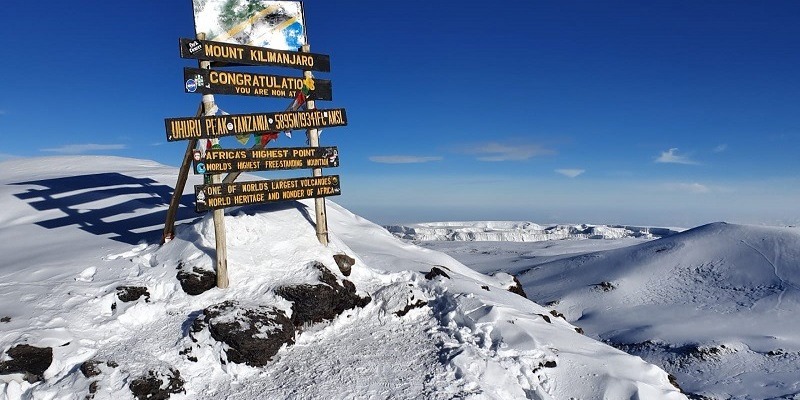
Planning a 7-day Kilimanjaro climb involves four main steps: choosing a route (like the Machame or Lemosho), booking a licensed local operator, budgeting $2,500–$6,000, and training your cardio for at least 3-6 months. Avoid the rainy seasons of April-May and November.
7-days-kilimanjaro-hike-and-tanzania-safari-combo
7-days-perfect-kilimanjaro-climb-and-hiking-safari-via-lemosho-route
7-days-kilimanjaro-climb-and-hiking-safari-ascent-to-peak
Step 1: Select Your 7-Day Route
For first-time trekkers, the choice between the 7-day Machame and 7-day Lemosho routes is often debated, yet both are excellent when executed with proper pacing. The Machame Route, frequently dubbed the "Whiskey Route" due to its challenging reputation, is highly scenic and diverse. While traditionally a 6-day trek, the 7-day variation is strongly recommended; it adds a critical buffer day for acclimatization, which significantly improves your chances of summiting while preventing the "rush" that can lead to excessive fatigue before the final ascent. It is a robust, efficient choice that balances mountain scenery with a logical elevation gain.
The Lemosho Route, by contrast, is often considered the premier choice for those seeking a more gradual introduction to the mountain. Approaching from the western side, it offers a quieter, more remote experience in the initial days as you trek through pristine rainforests and the vast Shira Plateau before merging with the southern circuit. This route is widely praised for its superior acclimatization profile, as its gentler early incline allows your body to adjust to thinning oxygen levels more naturally.
Ultimately, the "best" route is the one that leaves you with sufficient energy for summit night. While Lemosho provides a smoother ascent, the 7-day Machame is a highly capable alternative that respects the mountain's demands without requiring the extended expedition time of an 8-day itinerary. If you prioritize a quieter, more scenic start and a more gradual physiological transition, Lemosho is your best bet. If you value efficiency and want a classic, high-intensity mountain experience that still offers adequate rest, the 7-day Machame is an ideal fit. Both routes leverage the same southern approach to Uhuru Peak, ensuring the final, spectacular stages of your journey are equally rewarding.
Step 2: Choose a Licensed Operator
In Tanzania, booking your climb through a registered local operator is not just a suggestion—it is a legal requirement. Tanzanian law mandates that all trekking expeditions be managed by licensed companies to ensure the safety of climbers and the welfare of mountain staff. When researching operators in Moshi or Arusha, you are vetting your primary support system; a high-quality, licensed company provides the critical infrastructure that determines whether your climb is a safe, life-changing adventure or an avoidable struggle.
Prioritize operators that are transparent about their safety protocols. A professional agency will provide certified mountain guides who possess Wilderness First Responder (WFR) training, ensuring they can handle emergencies, perform daily health checks with pulse oximeters, and administer oxygen if needed. Furthermore, look for evidence of ethical treatment of porters. Compliant operators typically adhere to the standards of the Kilimanjaro Porter Assistance Project (KPAP), which ensures fair wages, proper gear, and reasonable load limits for the men and women who make your ascent possible.
Once you have identified a reputable operator, the booking process involves securing your permits and climbing dates. You will typically be required to pay a deposit of 20% to 30% of the total cost. This deposit is crucial as it allows the agency to pay the Tanzania National Parks (TANAPA) fees in advance to guarantee your slot on the mountain. Do not be tempted by cut-rate, unlicensed providers; on Kilimanjaro, a "cheap" price often masks poor-quality equipment, inexperienced guides, and inadequate emergency support. By choosing a licensed, ethical operator, you are investing in the professionalism and experience necessary to navigate one of the world's highest non-technical peaks with confidence and peace of mind.
Step 3: Physical Training and Gear
Mount Kilimanjaro does not require technical mountaineering skills, but it does demand significant physical stamina. Start your training 3 to 6 months in advance, focusing on building a "base" of endurance. The most effective preparation is consistent cardiovascular exercise—aim for 40 to 60 minutes of activity, 4 to 5 times per week. While gym work like stair climbing is helpful, nothing replicates the mountain quite like actual hiking. Whenever possible, go for long walks or hikes on hilly terrain while wearing the boots you intend to use and carrying a loaded daypack to condition your muscles for the weight of your supplies.
Regarding gear, you do not need to purchase a full expedition kit. Reputable operators in Moshi or Arusha provide high-quality rental services for bulky, technical equipment such as sub-zero sleeping bags, insulated parkas, and trekking poles. Renting these items is often more economical and convenient, especially for those who do not trek frequently.
However, there are items you should absolutely own and break in before you arrive. Waterproof, well-fitted hiking boots are the most important investment; wearing brand-new boots on the trail is a recipe for debilitating blisters that could end your trek. Additionally, pack high-quality, moisture-wicking base layers made of Merino wool or synthetic fabrics. These will regulate your body temperature as you transition through the five climate zones of the mountain. By investing in the items that touch your skin and renting the heavy-duty technical gear, you create a balanced kit that is both comfortable and cost-effective. Always consult your operator’s recommended packing list, as it will be tailored to the specific route and the time of year you are climbing.
Step 4: Book Flights and Logistics
Your journey to the roof of Africa begins at Kilimanjaro International Airport (JRO). This airport is the gateway to northern Tanzania, situated conveniently between the major trekking hubs of Moshi and Arusha. Numerous international carriers, including KLM, Qatar Airways, and Ethiopian Airlines, offer regular service to JRO, making it relatively accessible from most major global cities. Once you have booked your flights, ensure your travel itinerary provides at least one or two "buffer days" before your climb is scheduled to begin.
These arrival buffer days are essential for several reasons. After a long-haul flight, your body needs time to recover from travel fatigue and potential jet lag. Arriving early also provides a necessary safety margin in case of flight delays or, worse, lost luggage—a rare but possible occurrence that would leave you without your critical clothing. During this time, you will meet your head guide in Moshi or Arusha for a mandatory gear-check briefing. This session ensures that your equipment is ready, your questions are answered, and your mind is focused on the task ahead.
Finally, do not overlook your Tanzania tourist visa. Most international travelers must secure a visa to enter the country. The most efficient method is to apply for an e-Visa through the official Tanzanian immigration website weeks in advance. Have your passport—which must be valid for at least six months beyond your departure date—and a printed copy of your e-Visa confirmation ready for immigration upon arrival. Handling these logistics well before you leave home removes unnecessary stress and allows you to land in Tanzania ready to transition immediately into the focused, meditative state required for your Kilimanjaro ascent
7 Days mtn Kilimanjaro climb
Embarking on a 7 Days mtn Kilimanjaro climb is a transformative journey to the "Roof of Africa." Standing at 5,895 meters, Mount Kilimanjaro is the world's tallest free-standing mountain, offering a unique opportunity to traverse five distinct ecological zones—from lush tropical rainforests to the desolate, arctic-like summit. This 7-day expedition, typically via the popular Machame Route, is carefully designed to balance physical challenge with essential acclimatization. By choosing a seven-day itinerary over shorter versions, you significantly increase your success rate through the "climb high, sleep low" strategy. Throughout this trek, you will be supported by a dedicated crew of guides, cooks, and porters who manage the logistics, allowing you to focus entirely on your ascent. Whether you are an experienced hiker or a first-time adventurer, this iconic climb offers a profound test of endurance, mental fortitude, and a deeply rewarding connection to the untamed wilderness of East Africa.
Day 1: Machame Gate to Machame Camp
Your 7 Days mtn Kilimanjaro climb officially begins with a scenic drive from your hotel to the Machame Gate, located at the base of the mountain. After completing the mandatory park registration, you will enter the verdant, moss-draped Afromontane rainforest. This first stage is a gentle yet steady introduction to the mountain's terrain, winding through towering trees and dense ferns. Keep an eye out for unique wildlife, including colobus and blue monkeys, as you navigate the sometimes muddy path. By late afternoon, you will arrive at the Machame Camp, situated at 3,010 meters. Here, your professional support crew will have already set up your tents, providing a warm and inviting base. As evening settles, enjoy a hot meal, perform your first health check, and get plenty of rest, as the true ascent into higher altitudes begins tomorrow morning.
Day 2: Machame Camp to Shira Camp
On the second day of your 7 Days mtn Kilimanjaro climb, the landscape undergoes a dramatic transformation as you leave the rainforest behind. The trail ascends steeply along a rocky ridge, transitioning into the heath zone, where the vegetation becomes sparser and more resilient. You will see beautiful displays of giant lobelias and heather against the backdrop of the mountain's volcanic slopes. The hike today is a steady climb toward the Shira Plateau, a vast, ancient caldera that offers stunning panoramic views of the Western Breach and, on clear days, the distant Mount Meru. Reaching Shira Camp at approximately 3,845 meters, you will feel the air thinning. It is essential to drink plenty of water and move at a relaxed pace. Spend your afternoon resting in camp, soaking in the crisp, high-altitude air and preparing for the increasing demands of the days ahead.
Day 3: Shira Camp to Lava Tower to Barranco Camp
Day three is perhaps the most critical for your acclimatization during your 7 Days mtn Kilimanjaro climb. You will trek eastward toward the imposing Lava Tower, a massive volcanic plug often referred to as the "Shark's Tooth," standing at 4,640 meters. This section is a classic example of the "climb high, sleep low" strategy; by reaching this high elevation before descending into the Barranco Valley, you allow your body to better adapt to the oxygen-depleted environment. The trail eventually descends through the unique "Garden of the Senecios," featuring giant groundsel plants that look like they belong on another planet. You will arrive at Barranco Camp (3,960 meters) by late afternoon. Surrounded by towering cliffs, this is one of the most scenic campsites on the entire mountain. Tonight, your rest is crucial to recover from the day’s significant elevation gain.
Day 4: Barranco Camp to Karanga Camp
Today begins with one of the most iconic challenges of your 7 Days mtn Kilimanjaro climb: the scramble up the Great Barranco Wall. While it looks formidable from the campsite, the ascent is more of a fun, hands-on trek than a technical climb. Once you reach the top, you will be rewarded with spectacular views of the southern glaciers of Kibo. From here, the path continues through undulating ridges and valleys. You will cross several small streams before reaching the Karanga Valley, which serves as a vital transition point. This day is intentionally kept shorter in distance to promote recovery and further acclimatization. Arriving at Karanga Camp by early afternoon gives you ample time to hydrate, eat a nutritious lunch, and enjoy the quiet majesty of the alpine desert. Your guides will conduct thorough health checks to ensure you are ready for the final ascent phases.
Day 5: Karanga Camp to Barafu Camp
The fifth day of your 7 Days mtn Kilimanjaro climb marks the final push toward the base camp. The hike to Barafu Camp is relatively short but takes you deep into the harsh, desolate environment of the high-altitude alpine desert. The terrain is mostly rock and scree, and the vegetation has all but disappeared. As you climb higher, the air becomes noticeably colder and thinner. Upon arriving at Barafu Camp (4,640 meters), you will have reached the southern base of the summit cone. The rest of the day is dedicated to resting, gear organization, and mental preparation for the summit push. You will have an early dinner before attempting to sleep for a few hours. Your guides will provide a detailed briefing on the midnight departure, emphasizing the need for multiple layers and a positive, steady mindset for the ultimate challenge that awaits you.
Day 6: Barafu Camp to Uhuru Peak to Mweka Camp
Summit day is the pinnacle of your 7 Days mtn Kilimanjaro climb. You will wake around midnight and begin the challenging ascent under the stars. The climb is physically demanding, characterized by steep, winding paths of loose scree and sub-zero temperatures. You will move slowly, following your guide’s steady pace. By dawn, you will likely reach Stella Point (5,669m) on the crater rim, where you are greeted by an unforgettable sunrise. A final, flatter push along the rim leads you to Uhuru Peak (5,895m), the highest point in Africa. After celebrating your achievement and taking photos, you will begin the long, careful descent. You will bypass the higher camps and head down to Mweka Camp, where you will finally rest, feeling the oxygen levels return with every step. Exhausted but triumphant, this is a day you will remember for the rest of your life.
Day 7: Mweka Camp to Mweka Gate
On the final morning of your 7 Days mtn Kilimanjaro climb, you wake up with a sense of relief and accomplishment. The remaining trek is a gentle, downward stroll through the lush, rain-soaked forests of the lower slopes. The air feels rich and warm, and the return of dense vegetation provides a peaceful conclusion to your journey. You will reach the Mweka Gate, where you will officially sign out of the national park and be presented with your hard-earned summit certificates. This is the moment to say farewell to the porters, cooks, and guides who made your success possible. After a celebratory lunch and perhaps a local beer or two, you will be transferred back to your hotel in Moshi or Arusha. A hot shower and a soft bed are your final rewards for completing one of the world's most spectacular and demanding mountain adventures.
1. Which is the best route for a 7-day climb?
For a 7-day expedition, the Machame Route and the Lemosho Route are widely considered the gold standard. The Machame Route, often called the "Whiskey Route," is a classic choice. It is renowned for its stunning scenery and diversity of landscapes, taking you through five distinct ecological zones. While it is physically demanding due to its steeper sections, the 7-day itinerary adds a vital buffer day for acclimatization, which makes a world of difference in your overall success and comfort.
The Lemosho Route is frequently favored by those seeking a more remote and pristine experience. Beginning on the western side of the mountain, it offers less traffic in the early days and passes through the incredibly beautiful Shira Plateau. Lemosho is often cited as having a slight edge in success rates because its approach is even more gradual than Machame’s, allowing for a more natural physiological adjustment to the decreasing oxygen levels.
Both routes utilize the "climb high, sleep low" principle effectively. By ascending to higher altitudes during the day and sleeping at slightly lower elevations, you force your body to adapt safely. Whether you choose the classic, high-energy Machame or the quieter, more scenic Lemosho, both provide the time necessary to properly prepare for the summit. The "best" route is ultimately a matter of preference—Machame for those who want a tried-and-true classic, and Lemosho for those who value solitude and a gentler ascent profile. Regardless of your choice, the 7-day duration is the most important factor in ensuring you are in the best possible shape when you reach the final push toward Uhuru Peak.
2. When is the best time to climb?
Timing your 7-day climb is essential for both your safety and your enjoyment. Because Kilimanjaro is a high-altitude mountain, your experience is entirely dependent on the weather. The most favorable periods fall within Tanzania’s two distinct dry seasons. The primary window is from January to mid-March. This is often considered the best time for those who prefer warmer temperatures and clearer, more reliable skies. While there is always a chance of a shower, the days are generally pleasant, and the views are spectacular.
The second major window is the long dry season from June to October. This is the most popular time to climb. July, August, and September are particularly reliable, offering cool, crisp air, very low humidity, and excellent visibility. This is arguably the best time for photography, as the lack of cloud cover allows for breathtaking vistas of the surrounding savannah. However, be prepared for colder temperatures on the mountain during these months, especially at night.
It is highly recommended to avoid the "long rains" (April and May) and the "short rains" (November). During these periods, trails can become extremely muddy and slippery, and the summit is often shrouded in thick, freezing clouds. Not only does this make the hiking miserable, but it also increases the risks associated with mountain safety and hygiene. Choosing your dates within the dry seasons guarantees that you can focus on your acclimatization and the beauty of the landscape rather than struggling with wet, heavy gear or freezing rain. Always plan your dates early, as the most popular operators fill up quickly during these prime seasonal windows.
3. How much fitness training do I need?
You do not need to be an elite athlete to summit Kilimanjaro, but you do need to be "mountain fit." Training should begin 3 to 6 months in advance, focusing on building cardiovascular endurance and leg strength. The goal is to prepare your body to handle repetitive, low-intensity exertion for 4 to 6 hours a day over seven consecutive days.
Start with consistent aerobic exercise. Running, cycling, or swimming are excellent for building heart and lung capacity. However, the best training is hiking. Spend your weekends on local trails, especially those with significant elevation gain. It is crucial to wear the boots you plan to use on the mountain to ensure they are fully broken in. Practice hiking with a weighted daypack—start with 5 kg and gradually increase to 8–10 kg to simulate the pack you will carry on the mountain. This conditions your back and core muscles, which will be working hard every day.
In the gym, focus on functional strength. Exercises like lunges, step-ups, and squats build the quad and glute strength necessary for steep ascents and descents. Incorporate core work, as a stable core will help you maintain balance on rocky terrain. Use the stair-master or incline treadmill to simulate long periods of climbing.
Remember, the training is just as much about mental endurance as it is about physical capacity. It is about becoming comfortable with being "on your feet" for long durations. If you can maintain a steady, slow pace for several hours without needing excessive rest, you have the baseline fitness required to succeed. Consult with a trainer if you have specific fitness concerns, and always listen to your body to prevent overtraining or injury before the trip even begins.
4. What is the success rate for a 7-day climb?
The statistical evidence for a 7-day itinerary is overwhelming: it is one of the most effective ways to ensure you reach Uhuru Peak. Studies show that extending your climb to 7 days increases your summit success rate by roughly 37% compared to 5-day itineraries. This difference is not due to luck; it is a direct result of biological adaptation.
Kilimanjaro’s greatest challenge is altitude. In shorter, 5-day climbs, the pace is often too fast to allow your body to naturally produce the necessary red blood cells to carry oxygen efficiently in the thin air. This leads to high rates of Acute Mountain Sickness (AMS). By taking 7 days, you are essentially buying yourself time—time for your body to adjust to the decreasing oxygen pressures at each campsite.
On a 7-day climb, the pace is significantly slower, adhering to the pole pole (slowly) mantra. This reduced intensity keeps your heart rate in a manageable zone, preventing the rapid onset of fatigue. Furthermore, the 7-day schedule allows for essential "acclimatization hikes" where you climb to a higher elevation during the day before returning to a lower camp to sleep. This "climb high, sleep low" method is the single most important technique in mountain medicine.
While no one can guarantee a summit—as factors like individual biology and weather are unpredictable—the 7-day route puts the odds firmly in your favor. It transforms the mountain from a race against time into a sustainable, enjoyable journey. If your goal is to stand on the Roof of Africa, do not cut corners. Choosing the 7-day itinerary is the single smartest investment you can make in your own success.
5. How much does a 7-day trek cost?
A high-quality 7-day expedition to Kilimanjaro typically costs between $2,500 and $4,000+ per person. While this may seem like a significant investment, it is important to understand what that money covers and why paying for quality is non-negotiable. This fee includes mandatory national park entrance fees, camping fees, professional mountain guide services, a full support crew (porters and cooks), three hot meals a day, and high-quality tents.
When you choose an operator, you are hiring a safety team. Reputable companies invest in emergency oxygen systems, pulse oximeters, and medical-grade first aid kits. More importantly, they invest in their people. Ethical operators pay their staff fair, living wages and provide them with the gear they need for their own health and safety. If a quote seems "abnormally cheap" (e.g., under $2,000 for 7 days), it is a massive red flag. Extremely low prices are usually achieved by underpaying porters, skimping on meal quality, or providing inadequate safety oversight.
Never compromise on your safety or the ethical standards of your tour. A reputable operator will be transparent about their costs and their commitment to porter welfare. In addition to the base price, you must budget for extra expenses such as tips for the crew, gear rentals (if you don't bring your own), and personal items. Think of your trek as a major professional expedition rather than a casual holiday. By paying for a high-quality service, you are essentially paying for the logistical support that will guide you through the harsh alpine environment and maximize your chances of a safe and successful summit.
6. Do I need to book in advance?
Yes, booking your 7-day climb well in advance is highly recommended. For popular routes like the Lemosho or Machame, you should aim to finalize your operator and secure your permits at least 3 to 6 months before your intended departure. Kilimanjaro is a global bucket-list destination, and the best, most reputable guides and high-quality equipment are in high demand throughout the year.
The booking process is not just about choosing dates; it involves locking in your national park permits. Tanzanian law requires that all climbers be registered through a licensed agency. These agencies must submit your details to the Kilimanjaro National Park Authority (TANAPA) to secure your space. If you wait until the last minute, you risk finding that the best operators are fully booked or that specific start dates are closed due to permit quotas.
Booking early also gives you time to handle the logistical aspects of your trip, such as coordinating international flights, arranging travel insurance, and ensuring your visa documentation is in order. It also provides a buffer to have in-depth discussions with your agency regarding gear lists, dietary requirements, and specific acclimatization questions.
If you are traveling in a group or have specific dates that cannot be moved, booking even further out is wise. Reputable companies appreciate early bookings because it allows them to organize their porter teams and logistics effectively. Treat your Kilimanjaro trip like any major professional commitment; the earlier you lock in your arrangements, the more confident and prepared you will feel when you finally arrive at the mountain gate. Don't leave your dream trip to chance—secure your spot early.
7. How do I get to the mountain?
The gateway to your Kilimanjaro expedition is Kilimanjaro International Airport (JRO). This airport is ideally situated in northern Tanzania, between the two main hubs of Moshi and Arusha, both of which serve as the base for almost all trekking operations. Many international carriers, including KLM, Qatar Airways, and Ethiopian Airlines, offer regular, convenient flights to JRO, making it easily accessible from nearly any part of the world.
Once you arrive at JRO, your trekking operator will typically handle the rest of your logistics. They will arrange a private transfer to your hotel, which usually takes between 1 to 2 hours depending on your destination in Moshi or Arusha. This transfer is included in most comprehensive tour packages.
It is highly recommended that you plan to land at JRO at least two days before your climb begins. This "cushion" is vital. It allows you to recover from your long-haul flight and deal with any unexpected travel mishaps, such as delayed flights or lost luggage. Most importantly, it gives you time for a thorough gear-check briefing with your lead guide. During this briefing, you will review your equipment, rent anything you might have forgotten, and get a clear picture of the safety protocols for the upcoming week.
After the climb, your operator will also arrange for your transfer back from the park gate to your hotel. Many travelers choose to spend an extra night in Tanzania post-climb to enjoy a well-deserved hot shower and a celebration meal before flying back out of JRO. The logistics are seamless when you work with an established agency, allowing you to focus entirely on the mountain rather than navigating local transport.
8. Do I need a visa and vaccinations?
Yes, travel logistics for Tanzania are straightforward but require attention to detail. Most international travelers, including those from the U.S., UK, Canada, and Australia, are required to obtain a tourist visa to enter Tanzania. The most modern and efficient way to do this is by applying for an e-Visa through the official Tanzanian government website. It is best to apply several weeks in advance to ensure you have the printed approval letter ready upon your arrival at the airport.
Regarding health, visit a travel clinic at least 8 to 10 weeks before your departure. You will need to ensure your routine vaccinations (Tetanus, Hepatitis A, and Typhoid) are up to date. A Yellow Fever vaccine is a specific requirement if you are traveling from or transiting through an endemic country (like Uganda or Kenya). You must carry your original Yellow Fever vaccination certificate (the "Yellow Card") to present at customs.
Additionally, malaria prophylaxis is strongly recommended, as the lowland areas of Moshi and Arusha are malaria-endemic. Discuss the best medication options—such as Malarone—with your doctor, as some anti-malarials can have side effects that might interact with the stress of high-altitude trekking.
Finally, remember that the mountain environment is very different from the lowland climate. While vaccinations protect you from local illnesses, your primary health concern on the mountain will be altitude. Keep a copy of your immunization records and health information readily available. Being prepared on the health and visa front ensures that your entry into Tanzania is smooth and that you can transition immediately into your pre-climb briefing without any avoidable stress.
9. What kind of medical insurance is required?
Medical insurance for a Kilimanjaro expedition is not a luxury—it is a critical safety component. Standard travel insurance policies are often insufficient because they frequently contain exclusions for "high-altitude trekking" or "mountaineering." Your policy must explicitly state that it covers high-altitude trekking up to 6,000 meters. Kilimanjaro stands at 5,895 meters, and any policy that caps coverage at 3,000 or 4,000 meters will leave you completely vulnerable.
Your policy must also include provisions for emergency helicopter evacuation. In the rare but serious event of an injury or advanced altitude illness, the only way to reach a hospital quickly is by air. Without insurance that covers this, you could face medical costs exceeding tens of thousands of dollars.
When searching for a provider, look for policies designed specifically for adventure travelers. Some companies provide "adventure sports" riders that can be added to standard policies. It is worth taking the time to read the fine print; if a policy mentions "climbing" or "mountaineering" as an exclusion, it likely considers Kilimanjaro a high-risk activity.
Always carry your insurance policy details—including the emergency contact number, your policy number, and the coverage limits—in both your physical gear bag and your digital documents. Your tour operator will also ask for this information, as they need to have it on file before you set foot on the mountain. Having proper, high-limit insurance is the ultimate form of peace of mind. It ensures that if something does go wrong, your only focus will be on your health and recovery, rather than worrying about the logistics or financial ruin of a medical crisis.
10. What does a typical 7-day itinerary look like?
A 7-day Machame Route itinerary is a masterpiece of logical, altitude-optimized trekking. Each day is designed to guide you through the mountain's changing ecosystems while enforcing the "climb high, sleep low" rule.
- Days 1–2: You begin in the lush, humid rainforest. The ascent is steady, leading you through towering trees and mossy landscapes into the moorland zone, characterized by giant heathers and open spaces.
- Day 3: This is the most crucial acclimatization day. You trek to the base of the massive Lava Tower (4,640m) before descending into the Barranco Valley. This profile forces your body to experience high altitude and then "rest" at a lower elevation.
- Day 4: You conquer the Barranco Wall—a fun, scrambling challenge—before traversing across ridges to the Karanga Camp.
- Day 5: A relatively short hike brings you to the Barafu Base Camp (4,640m). This is your launchpad. You will spend the afternoon eating, hydrating, and trying to rest before the midnight wake-up call.
- Day 6: The summit push. You start at midnight and climb through the freezing night, reaching Stella Point at dawn, then moving along the rim to Uhuru Peak (5,895m). After the summit, you begin the long descent to Mweka Camp for your final night.
- Day 7: A celebratory, easy walk through the forest brings you back to the Mweka Gate.
This schedule is the perfect balance. It is rigorous enough to be an adventure but deliberate enough to be safe. By the time you reach the summit, your body has had the maximum amount of time possible within a week to adapt to the thin air.
11. What does "Pole Pole" mean on the climb?
"Pole pole" (pronounced poh-leh poh-leh) is the most important phrase you will learn in Swahili. It literally translates to "slowly, slowly." On Kilimanjaro, pole pole is more than just a suggestion—it is the guiding principle of your expedition. Your guides will repeat it constantly, and it is the single most effective tool for managing your heart rate and your oxygen intake in the thin air.
Beginners often make the mistake of trying to walk at their "normal" pace or at a pace that feels comfortable at sea level. This is a trap. In the low oxygen environment of Kilimanjaro, even a moderate pace can cause your heart rate to spike, leading to premature fatigue and, more importantly, preventing your body from acclimatizing. Walking pole pole forces you to conserve your energy, breathe deeply, and keep your exertion level consistent.
It is a meditative way to travel. When you walk slowly, you have time to actually observe the changes in the flora, the shifting weather patterns, and the stunning views. It turns the hike from a race into an experience. Your guides are professionals at this—they have climbed the mountain dozens of times and know exactly how fast you should be moving. Trust them. If they tell you to slow down, do it immediately.
Embracing pole pole requires a mental shift. You are not competing against other hikers or the mountain; you are managing your own physiology. If you can master the art of moving pole pole, you will find that you arrive at each camp feeling fresher, more energetic, and far more likely to successfully reach the summit. It is the secret rhythm of the mountain.
12. Will I get altitude sickness?
Altitude sickness, or Acute Mountain Sickness (AMS), is a possibility for every climber. Because you are ascending to nearly 6,000 meters, your body must adjust to a significant decrease in oxygen. Common symptoms include mild headaches, fatigue, nausea, dizziness, and difficulty sleeping. These symptoms are your body's way of telling you it needs more time to adapt.
A 7-day climb is your best defense against serious illness. By taking the extra time, you allow your body to naturally produce more hemoglobin and adapt to the environment at a sustainable rate. However, even with the best itinerary, you may still feel the effects of the altitude. This is why hydration is non-negotiable—drink 3–4 liters of water daily, as dehydration mimics and exacerbates altitude sickness.
Many climbers choose to use Diamox (Acetazolamide) as a preventative measure. Diamox helps the body acclimatize faster by forcing the kidneys to excrete bicarbonate, which helps balance the acidity of your blood. If you decide to use it, consult your doctor well in advance to test it for any allergic reactions.
Most importantly, you must be 100% honest with your guides. If you have a headache or feel nauseous, tell them immediately. Your lead guide is trained to monitor your pulse and oxygen saturation daily. They can advise you on whether to take a rest day, increase your water intake, or take medication. Never hide your symptoms to "keep up." Altitude sickness is only dangerous if it is ignored. With open communication, a steady pace, and proper hydration, most climbers manage minor symptoms successfully and continue their ascent to the summit.
13. What should I pack for a 7-day climb?
Packing for Kilimanjaro is all about mastering the "layering system." You are essentially traveling from the equator to the Arctic in one week. You need to be prepared for the hot, humid rainforest at the base, the crisp moorlands, and the freezing, wind-swept environment of the summit.
Start with your base layers. These should be moisture-wicking Merino wool or synthetic fabrics. Avoid cotton entirely, as it holds moisture, makes you cold, and doesn't dry. You will need a fleece mid-layer for warmth and a high-quality, waterproof, and windproof outer shell (both jacket and pants). For summit night, when temperatures can drop to -15°C or lower, a high-loft, down-filled parka is essential.
For your feet, invest in sturdy, broken-in, waterproof hiking boots. They must be comfortable and provide excellent ankle support. Pair these with moisture-wicking hiking socks and liners to prevent blisters.
Your daypack should be roughly 30 liters. This is the bag you carry every day; it should hold your rain gear, extra warm layers, camera, snacks, and a 3-4 liter hydration bladder (like a CamelBak). A bladder is much better than a bottle because it allows you to sip water constantly without stopping, which is critical for acclimatization.
Finally, don't forget the "summit accessories": a warm beanie, waterproof gloves, high-SPF sunscreen (the sun is incredibly strong at high altitudes), polarized sunglasses, and a powerful, reliable headlamp with spare batteries. Request a comprehensive packing list from your tour operator and stick to it—they know exactly what the specific conditions of your route require. Packing light but packing right is the key to comfort.
14. What are the sleeping arrangements?
On the popular trekking routes like the Machame and Lemosho, your sleeping arrangements are typically managed by your tour operator, and the standard is a high-quality, 4-season mountain tent. These are specialized tents designed to withstand the high winds, rain, and freezing temperatures of the mountain environment. They are significantly more robust than a standard camping tent.
Your tour operator is responsible for all the heavy lifting. A team of porters will carry the tents, poles, and flysheets from one campsite to the next. When you arrive at camp in the afternoon, your tents will usually already be pitched and ready for you to settle in. This service is a crucial part of the trekking experience, allowing you to focus entirely on resting and acclimatizing.
Inside the tent, you will be sleeping on a foam or inflatable sleeping pad, which provides essential insulation from the cold ground. Most operators include these in the package, but double-check your booking to be sure. The most important piece of gear for your sleep is a high-quality, sub-zero-rated sleeping bag. If you do not own one, most reputable operators offer them for rent.
While the "communal hut" experience is popular on the Marangu Route, the tented experience on the Machame and Lemosho routes is generally considered more authentic. It offers more flexibility, and the tents are often more comfortable and private than the dormitory-style huts. Your camp will also include a "mess tent" or dining tent, where you will eat your meals, socialize, and receive your daily briefings from the guide. It is a simple, effective, and deeply memorable way to live for a week.
15. How much cash should I bring for tipping?
Tipping is an integral part of the Kilimanjaro trekking culture and is considered the standard way to express gratitude for the incredible service of your crew. Your trekking team—which often includes a lead guide, assistant guides, a cook, and multiple porters—works exceptionally hard to ensure your safety and success. Tipping is a major part of their income and is deeply appreciated.
You should budget roughly $250 to $350 USD per climber for the 7-day duration. This amount is generally divided among the entire crew at the end of the trip. The lead guide will usually help facilitate the distribution to ensure everyone is tipped appropriately based on their role and contribution.
Bring your tip money in crisp, clean, new U.S. dollar bills. Avoid bills that are torn, marked, or older than 2006, as they are often difficult to exchange in Tanzania. It is helpful to bring a variety of denominations so you can distribute the tips easily. If you feel that a particular porter or guide went above and beyond, you are welcome to give them an additional bonus, but the base amounts are the industry standard.
You will typically have a "tipping ceremony" on the final morning at the Mweka Gate, right before you head back to your hotel. It is a great moment to say thank you and hear the crew sing their traditional songs. If you are ever unsure about how much to tip, consult your lead guide; they are accustomed to these questions and can ensure the process is fair and transparent. Being generous with your tipping is the best way to show respect for the people who literally carry your bags and prepare your meals in some of the world's most challenging conditions.
Booking 7 Days mtn Kilimanjaro climb with us Roads of Adventure safaris
Booking a 7-day climb with Roads of Adventure Safaris is an excellent choice to experience Mount Kilimanjaro. They typically use the Machame Route or Lemosho Route to give you the best combination of scenic beauty and safe acclimatization for reaching Uhuru Peak
